Posted in encouragement, follow

Set your course for the New Year: Follow Jesus

By Elizabeth Prata

I’ve mentioned before that I lived on a yacht and sailed around for two years. We sailed north. We sailed south. We sailed coastal. We sailed offshore. We sailed fast and we sailed slow. We sailed during the day and we sailed at night.

I remember one night passage in particular. We had been anchored at Nassau’s Paradise Island and had upped anchor to scoot to nearby Rose Island. Rose Island is a long, skinny palm tree-lined island with no roads and no houses. A daily excursion boat playing a steel drum version of Yellow Bird arrived every day. We’d hear Yellow Bird coming, we’d hear Yellow Bird staying, we’d hear Yellow Bird going. I liked hearing the distant calypso steel drums, their notes winding around the palm tree leaves before bouncing off to arrive at our swaying boat to serenade us. In between it was quiet. Very quiet.

When we decided to leave, we wanted to head back north to Great Abaco Island. We plotted our trip on the chart. It necessitated scooting around the western tip of Rose island we were anchored behind, turning north, making a deep water passage, and then turning west to get inside the Abaco island chain. There were no navigational aids to mariners. We’d have to sail in between dodgy narrow cliffs with shallow waters dotted with deadly coral heads. Coral is sharp, it could rip a hole in the bottom of your boat faster than a blink.

It’s easy to see coral heads if the sun is behind your back, you’re wearing polarized sunglasses, and you stand far forward on the bow or even better, higher up if you have a wheelhouse. Unfortunately, this meant that to arrive in time for the sun to be behind our back in order to navigate the coral, we’d have to get there before noon. And that meant sailing overnight to arrive at sunrise.

Our Boat

We left Rose Island at dusk, and as the sun set, turned our vessel toward Great Abaco. Our heading was 0 degrees, due north.

Compass set for 0 degrees captain. Easy enough. The sky darkened, turned blue, then purple, then black. The stars came out. Absent any competing light, they were bright. However, one star stood out. It hung off our left spreader. The spreader is the cross-spar halfway up the mast. Our mast was unusual for a modern boat, it was wooden.

If I pointed the left spreader with the star just at the end of it, I could maintain my true north, 0 degree course. That is because the star was the North Star, and the north star never moves. All the other stars rotate around it, but Polaris never moves.

A long exposure photo of Polaris & neighbouring stars
(exposure time 45 min),taken in Ehrenbürg
(Walberla) in 2001. Source

The North Star is a pole star, and it’s called Polaris. There is only one, the North Star. Wiki says, “While other stars’ apparent positions in the sky change throughout the night, as they appear to rotate around the celestial poles, pole stars’ apparent positions remain virtually fixed. This makes them especially useful in celestial navigation: they are a dependable indicator of the direction toward the respective geographic pole although not exact; they are virtually fixed, and their angle of elevation can also be used to determine latitude. … The North Star has historically been used for navigation since Late Antiquity, both to find the direction of north and to determine latitude.

We did not sail by celestial navigation, even though we had a sextant. We didn’t have a GPS either but we used the compass and the charts and eyeball and Loran. (Yes, that’s how old we are). We loved using the North Star as our navigational aid. It made us feel like sailors of antiquity, brave and adventurous, casting off to parts unknown and getting there using only what was set in the heavens.

Little did I know that in truth, that ten years later I’d come to know the real God who set the stars in the heavens. (Genesis 1:16). Now my adventures are more biblical, casting off for spiritual parts unknown, and following my North Star, who never moves from His position, and is always bright.

My New Year wish for you is that you follow the North Star. Always, always keep your heading to true north. Always check for drift and for undersea hazards that can rip your keel off and sink you in a blink. It is Jesus who never moves, never changes, and all other beings, planets, and stars rotate around HIM. You cannot go wrong with a compass heading as true as that. Follow Him, whether it is night or day, or whether there are rough or smooth waters. Navigate by His brightness, and the course that is set will see you there safely.

“I, Jesus, have sent my angel to testify to you about these things for the churches. I am the root and the descendant of David, the bright morning star.” (Revelation 22:16)

Happy New Year.

Posted in theology

Exploring the Beauty of Beach Treasures, & Praising God for them

By Elizabeth Prata

Even though it’s Fall and heading into Thanksgiving, Christmas, and deep winter, I never stop thinking about the ocean. During the Fourth of July long weekend, lots of families take vacations, and many choose to go to the beach. I used to as well.

Shells, sea glass, rocks, coral, barnacles, and pottery from the sea, collected from Labrador to the Bahamas. EPrata photo

I used to take a week off at Christmas and head to Florida, and the week of the 4th I’d go to my favorite spot in Maine, Lubec. If you see the map of Maine as a profile of a dog, Lubec is at the dog’s nose. It borders Canada separated only by a narrow inlet. The bridge from Lubec takes you to Campobello Island on the Canadian island of New Brunswick.

As you might guess, the beaches on the hardy, rockbound and foggy coast of Maine are wild. As a matter of fact, Dr Beach, AKA Stephen Leatherman, several years ago rated a beach near Lubec as the most wild in America.

In December, I took my vacation at Venice FL, where the sand beaches are white and the ocean is azure and gentle at the Gulf coast.

Beaches around the US and around the world all have their own personalities. Each one yields up its own treasures. At Jasper Beach in Machias Maine, the beach has no sand! There’s only smoothly polished rocks of rhyolite and jasper. I’ve taken home many smooth, glittering rocks from Jasper Beach. At Lubec’s Globe Cove, the sea yields sea glass, from the hundreds of years the fishing fleet used to throw over their glass bottles. At Venice FL, the sea yields up shark’s teeth in great numbers. At the deserted beaches in The Bahamas, you find coral washed up, bleached and in interesting twisted shapes. In Labrador, you find scallop shells bigger than your hand! All you need is one of these for dinner!

You rule over the surging sea; when its waves mount up, you still them. (Psalm 89:9)

And of course, there’s shells!

If you ever have headed to the beach, here are a few facts I find fascinating. As you amble along the borderline between ocean and ground, as you wade in the waters to cool your tired feet, as you shield your eyes and gaze out to the limitless blue expanse, praise God for making such a beautiful habitation, and its creatures so complex and wondrous.

My favorite shell is the moon snail. He has a lot of cousins. They all have that sweet spiral, so pleasing to the eye. Their hushed colors of slate grey or moon blue are also pleasing. In the US’s warmer waters and the tropics the shell colors are brighter. Some think this is because of the temperature of the ocean. Others think it’s because of the different food available that translates through digestion to the calcium the shells are made of. Scientists still aren’t sure what kinds of pigments the mollusks are using. The reasons for shell coloration and variation are a mystery to scientists, but God created them all. In one day! He knows why their colors and shaes are so varied. Perhaps to create a palette of beauty that glorifies Him.

Juvenile whelk, collected Gulf Coast Florida. EPrata photo

Moon snails for all their delicate beauty are actually rapacious predators. The holes you see on other snail shells are made by the moon snail. He climbs on top of a shell, spits acid, uses his tongue lined with teeth to drill a hole, then spews acid onto the hapless mollusk inside. He waits for his prey to melt a little, then inserts his stomach into the hole and absorbs the prey.  Ouch! Yuck!

This is what the LORD says, he who appoints the sun to shine by day, who decrees the moon and stars to shine by night, who stirs up the sea so that its waves roar— the LORD Almighty is his name: (Jeremiah 31:35)

Did you know that the moon snail is hatched with a little shell attached already? That’s the point at the start of the spiral. So cool.

Moon snail, collected Maine. Prata photo

Scallops can grow into the size of dinner plates, their age shown by lines on the shell – just like the rings of a tree. I found that one in the photo at the top, in Blanc Sablon at the border of Labrador/Newfoundland, Canada.

He is the Maker of heaven and earth, the sea, and everything in them— he remains faithful forever. (Psalm 146:6)

The Bahamas has been described as having the third most extensive coral reef system in the world. Did you know? Andros Island has a 140-mile Barrier Reef – and that is one of the longest coral reefs in the world.

Coral. The Bahamas. EPrata photo

Did you know? Corals are in fact animals, not plants. Coral reefs are the largest structures on earth of biological origin.

Sea glass is becoming rarer.

Did you know? Sea glass takes 20 to 40 years, and sometimes as much as 100 years, to acquire its characteristic texture and shape. Sea glass begins as normal shards of broken glass that are then persistently tumbled and ground until the sharp edges are smoothed and rounded. In this process, the glass loses its slick surface but gains a frosted appearance over many years.
Naturally produced sea glass (“genuine sea glass”) originates as pieces of glass from broken bottles, broken tableware, or even shipwrecks, which are rolled and tumbled in the ocean for years until all of their edges are rounded off, and the slickness of the glass has been worn to a frosted appearance.

This article talks about the best places to find sea glass and mentions Jasper Beach in Machiasport, Maine among other beaches Downeast. That’s where you find the round and tumbled stones. Some glass can be found there, too. But if you’re going that far, drive just a bit further to Lubec, and walk the small beach at Globe Cove. That’s where even more sea glass treasure can be found.

If you spot some sea glass, salute our God who made the ocean and currents’ motion so strong that over time his waters will wear away hard glass.

See the barnacles on the scallop? Apparently in Labrador they grow ’em big! Barnacles are a sea creature that attaches to things, like they did to the underside of our sailboat. Enough of them get on there and it slows down the boat considerably, creating a lot of drag. Occasionally you have to pull the boat out of the water at a marina and scrape them off.

Barnacles on a scallop. They make it hard for the scallop to swim, too. Prata photo

Did you know that the cement barnacles use is stronger than anything man can make synthetically? How barnacles did it was a mystery from time immemorial until 2014. The US Navy has been intensely interested in barnacles, partly because of the issue of slowing the boats when barnacles grow on the hull, and also because the cement the creatures use is so sticky in salt water!!

When you’re walking on a pier and see the barnacles on the pilings, salute our God who made them so super strong.

Jasper Beach Machiasport ME. Prata photo

Whether it’s shark’s teeth, shells, rocks, sea glass, pottery, or any other treasure you find on vacation, praise God who made it all in 6 days by the power of His word and the creativity of His intellect.

Below you’ll find some resources I’ve enjoyed to help me learn more about the wonderful finds you find at the beach!

Conchologists of America, information about the shells and the animals that inhabit them. Conchologist is a shell collector.

Anne Morrow Lindbergh wrote a books of poems and thoughts called Gift from the Sea. Here is the link to the 70th anniversary edition

Remembering Lubec: Stories from the Easternmost Point (American Chronicles) 
is a short book about life in that harsh but beautiful climate and location

This is a good book, and pretty, too: Pure Sea Glass: Discovering Nature’s Vanishing Gems

Posted in theology

Exploring Biblical Boats: From Noah’s Ark to Roman War Ships

By Elizabeth Prata

Mt. Hermon from Sea of Galilee – Public domain image. Dry plate negative. Galilean fishing Ships didn’t evolve much since Jesus’ day. This was taken in the very early 1900s and would have been very similar to the disciples’ boat.

Boats are often mentioned in the Bible. Aside from the Ark that carried Noah and his family, a once in a history boat, there is a lot of shipping going on, much traveling on boats, shipwrecks, and references to boats. There is also the symbolism of boats. Let’s dig in.

The port city of Tyre was known for his boats, shipping, and valuable products. Ezekiel 27:3, and say to Tyre, who sits at the entrance to the sea, [ports, harbors] merchant of the peoples to many coastlands, ‘This is what the Lord GOD says: “Tyre, you have said, ‘I am perfect in beauty.

1 Kings 9:26-27 also mentions not only ships, but a navy. Solomon used these ships to bring in much gold and silver. King Solomon also built a fleet of ships in Ezion-geber, which is near Eloth on the shore of the Red Sea, in the land of Edom. And Hiram sent his servants with the fleet, sailors who knew the sea, along with the servants of Solomon. 

Numbers 24:24 also mentions ships, “And ships shall come from the coast of Chittim, and shall afflict Asshur, and shall afflict Eber, and he also shall perish for ever.

Grain boats of Egypt. Nile River. The boats used for carrying freight are built with a narrow keel, the stern and prow, as in ancient time, rising high above the water. They are usually managed by three or four men and carry what is known as the lateen sail. This is a large triangular sail. In Joseph’s day Egypt was the great granary of the world. Source: Earthly Footsteps of the Man of Galilee, p. 47

In the New Testament also there are mentions of shipping and passenger travel. Famously, Paul was shipwrecked. Acts 27:14-44 describes in some detail a difficult passage, and Paul’s ship eventually wrecked.

What kind of boats were these? Seagoing merchant ships, Galilean fishing boats, slave triremes, pirate ships, ferries (2 Samuel 19:18) …all types.

In 1986 in the Sea of Galilee a boat was discovered. The drought had caused waters on this freshwater large lake to recede and a 27′ long, flat bottomed boat was revealed. They call it the “Jesus boat” not because it has any connection to Jesus but the style of boat dates it to about Jesus’ time. It was about 7 feet wide and could hold 10 passengers if used as a ferry boat. If used as a fishing boat it could hold about five crew members and a catch of 600 pounds up to a ton of fish. It had 4 rowing stations and a mast for a sail.

remnants of ancient boat called Jesus boat.

We usually think of these kind of boats but the ancients were masters of shipbuilding. Aside from camel or donkey, ships were the only other mode of travel. They excelled at finding way to construct large vessels to get goods or people where they needed to go.

We read at Answers in Genesis,

In the writings of Pliny the Elder (AD 23–79), I discovered the table (below) about ships of antiquity. This documents the rapid advances the ancients made in ship-building technology in just a few centuries. The time period in the table is from about the seventh century BC to the end of the third century BC.

Jonah’s ship was large enough so he could ‘go down to the lowest part of the ship’ and fall asleep. (Jonah 1:5).

Below is a modern reconstruction of a Roman War Ship docked near Ephesus from Holy Land Photos. It is called a penteconter. You see the box-like structure along the side, that is where the oars would poke out. The holes above are for light and ventilation for the oarsmen. These ships typically lacked a full deck. “They were versatile, long-range ships used for sea trade, piracy and warfare, capable of transporting freight or troops. A penteconter was rowed by fifty oarsmen, arranged in a row of twenty-five on each side of the ship” says Wikipedia. These ships evolved into the more famous triremes. 

There is a ‘ram’ at the bow just under the surface of the water.

There were skiffs, highly maneuverable smaller boats used to transport goods, rowboats, smaller sailboats… In fact the Romans were so good at shipbuilding they became experts at building piers to dock the many ships. Some of their piers are stronger than ours built today. How?

How Roman concrete became strong: (AI overview)
“Roman concrete was made from volcanic ash, lime, volcanic rock, and seawater. When seawater interacted with the concrete, it dissolved components of the volcanic ash. This allowed new minerals to grow, including aluminous tobermorite and phillipsite. These minerals reinforced the cementing matrix, making the concrete stronger. This process continues over thousands of years.”

Paul used some maritime references to the faith. Though the Hebrew people were pastoral and agricultural, showing no inclination to become seafaring, they did know what these terms meant. In 1 Timothy 1:19, Paul wrote that some have rejected the faith ‘keeping faith and a good conscience, which some have rejected and suffered shipwreck in regard to their faith‘.

Jude warns in Jude 1:12 that false teachers are like hidden reefs which would cause the ship to be torn apart from stem to stern and sink.

Newfoundland: the skiff rounds the point widely, avoiding the visible rocks and the further hidden reef under the surface. Art high tide the rocks would be covered. EPrata photo

Hebrews 2:1 reminds us that we must pay close attention lest we “drift away”. Isaiah 57:20 refers to the wicked being like the sea itself, But the wicked are like the tossing sea, For it cannot be quiet, And its waters toss up refuse and mud.

Larry Pierce said in his article at Answers in Genesis, Just because we cannot duplicate something that was done thousands of years ago, it does not mean the ancients could not do it either!

The biblical world was full of coming and going. The ancients were experts in many things, some of which we can’t even discern how they did it! Pyramids, anyone? The ancient world is fascinating, including maritime advances.

Further reading

A Day in the Life of a Fisherman

The Galilean fishermen and their boats (and calming of the storm)

Posted in creation, Uncategorized

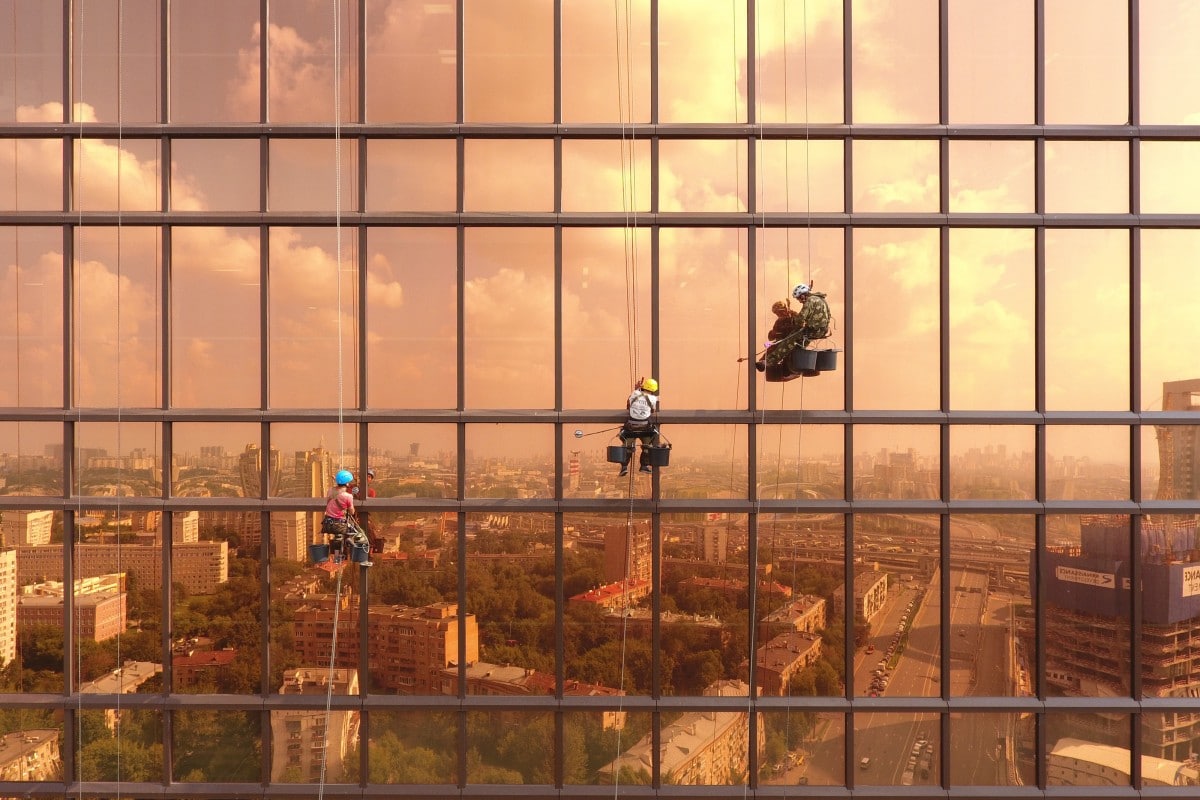
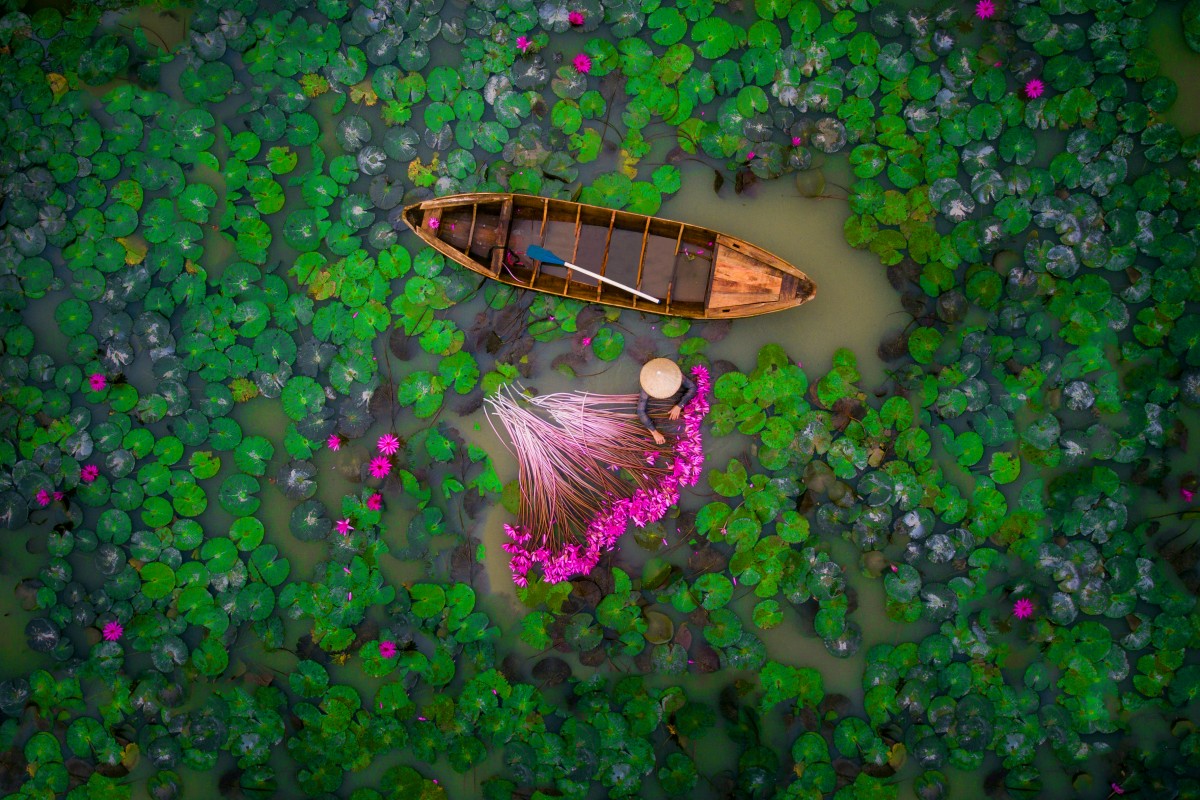
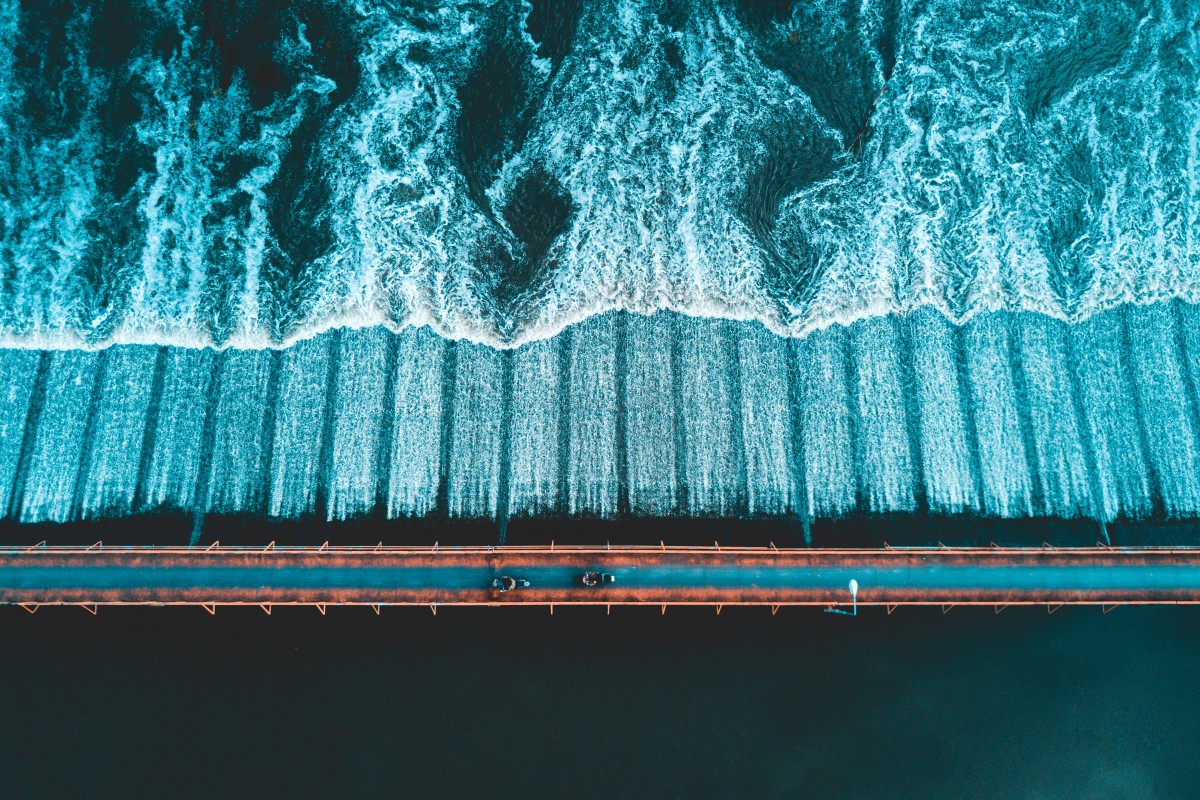
Spectacular earth as seen in low flying drone photos

The headline hooked me

20 of the Most Spectacular Drone Photographs of 2017

The photos stunned me.

I have always loved the view from above. When I was small, maybe between 6 or 8 years old, we started vacationing on Cape Cod during summers. At some point we ended up in Provincetown. This is a town at the very tip of that arms that curls out into Massachusetts Bay. It’s the end of the Cape. At the elbow is a lighthouse called Wood End.

In one of these vacations, my father paid for a scenic plane ride. Barnstormers with biplanes were popular then and one of them appealed my dad and he and I and my brother went up. I’ll never forget the utter beauty of the scene. The winds were calm and so the Bay was calm too. Vivid blue bay with a curling arm of green dune grass fringed by tan sand until the tip, where the sand trailed off into the ocean like a dream fragment. The short lighthouse was at the elbow, dune grass waving all around it but the lighthouse motionless as a sentinel. One lone man sat nestled against the lighthouse, his back to it and knees drawn up, staring out to sea. It was a serene moment, and the memory of it from above stays with me.

I love photos from above.

So, intrigued, I clicked on My Modern Met’s link of the spectacular drone pics of 2017. With drones becoming a personal item even the layman can use, photos from above are becoming more popular. I looked at the pictures, admiring the loveliness of God’s earth. I love maps, topography, satellite photos, all of it. Drone pics are right up my alley.

The photos display the wonder and variety of earth. If you think about Genesis 1, God made it all inside of a week. It’s astounding to think of His creation from the perspective of a saved person. I can attribute all of it to Him, which is a relief and a joy.

I wonder what God thinks of us as he looks down. We truly are children from His daunting perspective. Even from the perspective of a few hundred feet up, we look like children on a playground.

I hope you enjoy these photos, and there are more at the link. Praise our God for His creaive wonders of earth, plants, seas, flowers, animals, and people. Enjoy His might in upholding it all with a word. Just enjoy the prettiness.

By the word of the Lord the heavens were made,
their starry host by the breath of his mouth.
Psalm 33:6

More at the link

dronestagram-best-aerial-photos-2017-4

dronestagram-best-aerial-photos-2017-6

dronestagram-best-aerial-photos-2017-11

dronestagram-best-aerial-photos-2017-16

Posted in picture mixture, Uncategorized

Picture Mixture Saturday

Neat pictures from around the web for you. I plan to make this a regular feature.

From Dr Steven Lawson’s Instagram (drstevenjlawson):
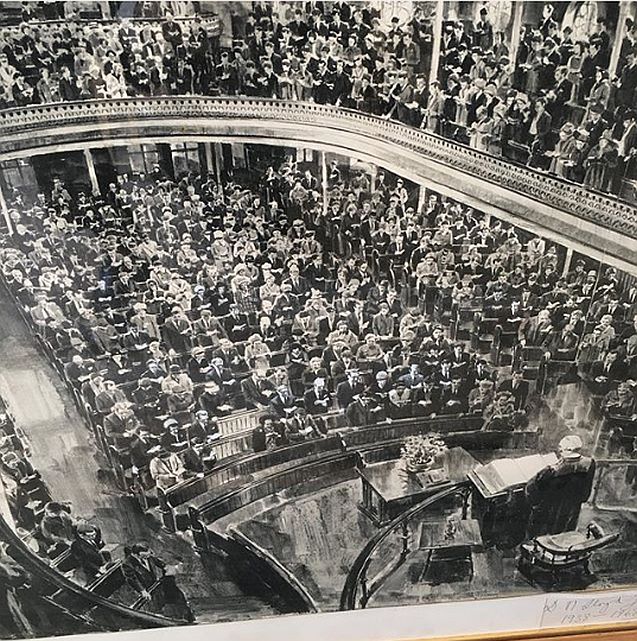
“Here is a great picture of Dr. Martyn Lloyd-Jones preaching to a full congregation at the Westminster Chapel. I saw this picture yesterday at The Banner of Truth office in Edinburgh.”

MLJ’s sermons were recorded and can be heard here.

mlj

~~~~~~~~~~~~~~~~~~~~~~

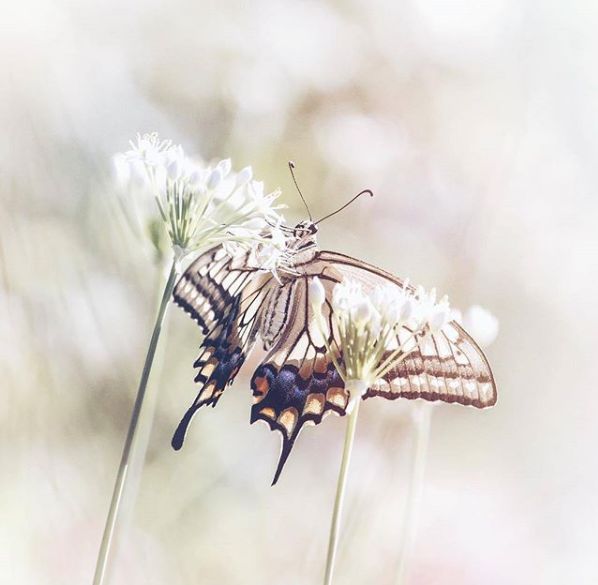
Pixlr is one of my favorite free picture editing apps, and people submit their photos after having used the app. Gorgeous. I would love to go to Georgia’s Callaway Gardens Blue Morpho Month September event. Anyway, Pixlr said: “Such an exquisite photo of a butterfly. Thanks @tbisdd for sharing it with us!”

butterfly

~~~~~~~~~~~~~~~~~~~~~~

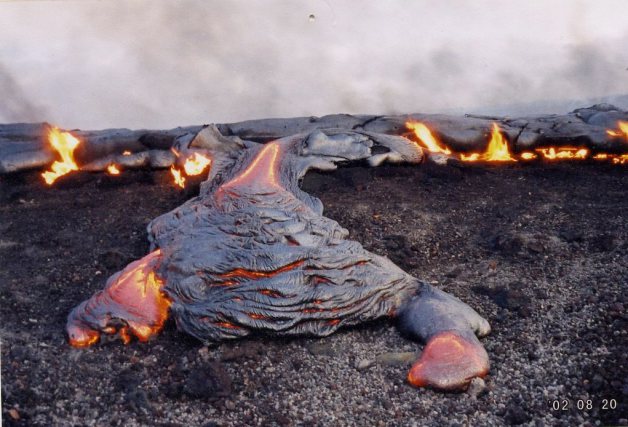
Photo from A Day in the Life of volcanologists seriesmoderated by Sandie Will. This is a lava flow in Hawaii, from Volcanologist Dr. Rebecca Williams @Volcanologist: A Day in the GeoLife Series #geolife #geology

Lava-flow-hawaii

~~~~~~~~~~~~~~~~~~~~~~

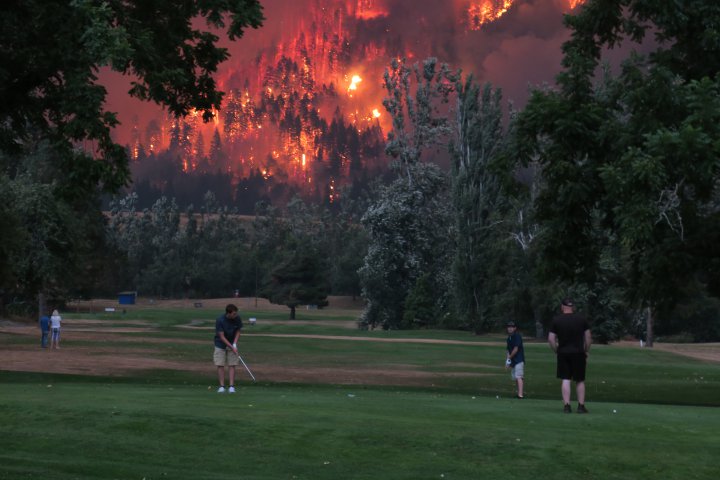
Speaking of fire, this is a non-photoshopped, real live picture of men finishing their golf game with the hills ablaze behind them. The person who took the shot explains how it happened and its context, which if possible, is even more crazy-surreal than the photo!

fire golf

~~~~~~~~~~~~~~~~~~~~~~

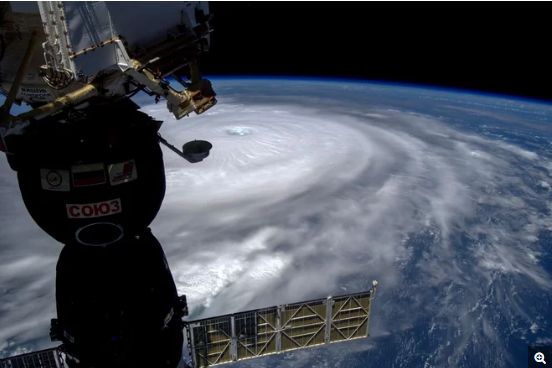
Hurricane Irma from space. Caption: “Russian cosmonaut Sergey Ryazanskiy took this photo of Hurricane Irma from orbit on Sept. 7, 2017 while he flew overhead aboard the International Space Station. A Soyuz crew capsule is visible at left. Credit: Roscosmos/Sergey Ryazanskiy”. At the time Irma was a category 5 storm.

I’m glad God is in control, yet, His we fear when it’s manifested and evident in seeing the scope of his power and the ease with which He ordains these events.

irma from space

~~~~~~~~~~~~~~~~~~~~~~

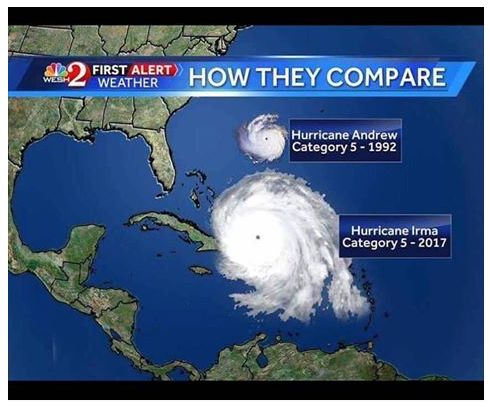
Hurricane Irma and Hurricane Andrew comparison. We traveled on our yacht to Florida after Andrew and Hugo and the devastation was still evident.

“Hurricane Andrew was a Category 5 Atlantic hurricane that struck the Bahamas and Florida in mid-August 1992, the most destructive hurricane to ever hit the state. Wikipedia.”

hurricane

~~~~~~~~~~~~~~~~~~~~~~

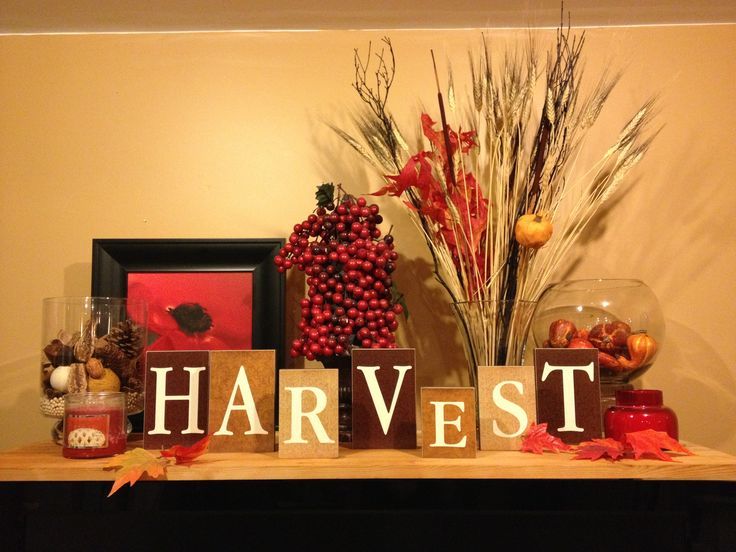
It’s Fall. I love this season. For many people the decorating motif changes with the seasons. Even if you don’t have a mantel, you can use these ideas for fall tablescapes or vignettes in and among your home, for your hospitality or your Bible study group.

40 Brilliant Mantel Decoration Ideas for Thanksgiving

fall

Blessings to you, all the readers.