Posted in theology

Reading Leviticus and Remembering the Cross: From Unending Sacrifices to the Perfect Sacrifice

By Elizabeth Prata

Like many others, I read the Bible in a year through an annual Bible Reading Plan. I am currently using the John MacArthur Daily Bible. And like many others, I find Leviticus hard to get through. I become confused with all the sacrifices. I think about the burdensome level of the priestly work, the relentlessness of the People needing to know and perform the offerings…it’s a bit much. I needed to sort through these once and for all.

A friend sent me a link to a sermon she had heard at Grace Community Church in the Sundays in July series held there. It’s by Abner Chou and he preaches a survey of the difficult books of the Old Testament, including Leviticus. I found this very helpful. I’ll link to it here, it is called “The Road Less Traveled“. I summarize part of it below. These are near quotes but not total quotes.

From Abner Chou: ‘There are 5 major sacrifices presented in the book of Leviticus and 3 of them are not for sin. That means only 2 are for sin. What are the other 3 for? They are for worship. These 5 sacrifices then mix and match in different combinations for the purpose of theology. So if you understand the underlying theology of these 5 you’ve got the theology behind all of them’.

Mainly, Leviticus is about God’s holiness.

  1. Burnt offering. The whole offering is burned, representing our desire to wholly offer ourselves to God. It represents Dedication.
  2. Grain offering. Grain was commonly cultivated and represents how God took care of them and provided, so it is for thanks. It represents Thanksgiving.
  3. Peace offering. (Fellowship offering). Thanking God that we have a relationship with Him. This sacrifice represents Fellowship.
  4. Sin offering, it’s about Sin.
  5. Guilt offering. Different from sin offering because it includes times when restitution has to be made. It involves times when repentance deals with how you sinned against God or your neighbor in a way that has injured them, and part of repentance is making that right in an economic fashion. (In Isaiah 53:10 we read Jesus offered himself as a guilt offering, and this is because He dealt with sin AND its consequences on the cross).

While other Old Testament sacrifices focused on specific aspects of redemption—the burnt offering on self-surrender, the sin offering on guilt removal—the guilt offering uniquely emphasized restitution and the restoration of what sin had damaged,” says Don K. Campbell, “Sacrifice,” in The Theological Wordbook, ed. Charles R. Swindoll and Roy B. Zuck (Nashville, TN: Word Publishing, Inc., 2000), 311–312.

Back to Chou from his sermon: ‘The sacrifices show “the way we become holy must be holy”. We can’t just do the sacrifices any which way we want; we can’t go about salvation any which way I want, it has to be done God’s way and it has to satisfy HIM. And He has a standard. The example is Nadab and Abihu killed for offering strange fire. What is strange fire? It’s fire that deviates in any fashion from what God prescribes. They were supposed to mix the incense and ingredients in a certain way through certain steps. Any one that is off or different makes it strange. If you don’t offer the right sacrifice, you become the sacrifice.”‘

I also used my Logos Software to look up the offerings. Here is a short summary and the addresses for each of the 5 main offerings mentioned above:

Burnt: Lev. 9:2. Its purpose was to make an atonement for sin, Lev. 1:4; 7. Ordinances concerning, Ex. 29:15–18; Lev. 1; 5:7–10; 6:9–13; 17:8, 9; 23:18, 26–37; Num. 15:24, 25; 19:9; 28:26–31; 29. Accompanied by other offerings, Num. 15:3–16. Skins of, belonged to priests, Lev. 7:8. Offered daily, morning and evening, Gen. 15:17; Ex. 29:38–42; Lev. 6:20; Num. 28; 29:6; 1 Chr. 16:40; 2 Chr. 2:4; 13:11; Ezra 3:3; Ezek. 46:13–15. Music with, Num. 10:10.

Grain: The grain offering in ancient Israel functioned primarily as an act of worship and dedication rather than atonement. Unlike sacrifices that addressed sin, the grain offering’s purpose centered on worship, allowing Israelites to express their relationship with God through voluntary giving.

Peace: Laws concerning, Ex. 29:19–22, 31; Lev. 7:11–15, 18; 9:3, 4, 15–21; 23:19; Num. 6:14; 10:10.

Sin: Ordinances concerning, Ex. 29:10–14 with Heb. 13:11–13; Lev. 4; 5; 6:1–7, 26–30; 9:1–21; 12:6–8; 14:19, 22, 31; 15:30; 23:19; Num. 6:10, 11, 14, 16; 8:8, 12; 15:27; 28:15, 22–24, 30; 29:5, 6, 11, 16–38. Temporary, Dan. 11:31; Heb. 9, 10.

Trespass: (AKA in certain translations the Guilt Offering). Ordinances concerning, Lev. 5; 6:1–7; 7:1–7; 14:10–22; 15:15, 29, 30; 19:21, 22; Num. 6:12; Ezra 10:19. To be eaten by the priests, Lev. 7:6, 7; 14:13; Num. 18:9, 10. Offered by idolaters, 1 Sam. 6:3, 8, 17, 18. See SIN OFFERING, above.


Here are other offerings mentioned in Leviticus-

Vow: Lev. 7:16, 17; 22:17–25; Deut. 23:21–23.

Wave: Placed in the hand of the priest and waved before the Lord. Ordinances concerning, Ex. 29:22, 26–28; Lev. 7:29–34; 8:25–29; 9:19–21; 10:14, 15; 23:10, 11, 17–20; Num. 5:25; 6:19, 20. Belonged to the priests, Ex. 29:26–28; Lev. 7:31, 34; 8:29; 9:21; 23:20; Num. 18:11, 18. To be eaten, Lev. 10:14, 15; Num. 18:11, 18, 19, 31.

Wood: Fuel for the temple, Neh. 10:34; 13:31.

Thank: Ordinances concerning, Lev. 7:11–15; 22:29; Deut. 12:11, 12.

Drink: Libations of wine offered with the sacrifices, Gen. 35:14; Ex. 29:40, 41; 30:9; Lev. 23:13, 18; Num. 6:17; 15:24; 28:5–15, 24–31; 29:6–11, 18–40; 2 Kin. 16:13; 1 Chr. 29:21; 2 Chr. 29:35; Ezra 7:17.

Free Will: Must be perfect, Lev. 22:17–25. To be eaten by priests, Lev. 7:11–18. With meal and drink offerings, Num. 15:1–16. Obligatory when signified in a vow, Deut. 16:10; 23:23.

Heave: Given to the priests’ families as part of their emoluments, Lev. 10:14; Num. 5:9; 18:10–19, 24. Consecrated by being elevated by the priest, Ex. 29:27. Consisted of the right thigh or hind quarter, Ex. 29:27, 28; Lev. 7:12–14, 32, 34; 10:15; spoils, including captives and other articles of war, Num. 31:29, 41. When offered, Lev. 7:12–14; Num. 6:20; 15:19–21. In certain instances this offering was brought to the tabernacle, or temple, Deut. 12:6, 11, 17, 18. To be offered on taking possession of the land of Canaan, Num. 15:18–21.

Meal (or Meat): Ordinances concerning, Ex. 29:40, 41; 30:9; 40:29; Lev. 2; 5:11, 12; 6:14–23; 7:9–13, 37; 9:17; 23:13, 16, 17; Num. 4:16; 5:15, 18, 25, 26; 8:8; 15:1–16, 24; 18:9; 28:5, 9, 12, 13, 20, 21, 26–31; 29:3, 4, 14. To be eaten in the holy place, Lev. 10:13; Num. 18:9, 10. Offered with the sacrifices, Num. 15:3–16. Not mixed with leaven, Lev. 2:4, 11; 6:14–18; 10:12, 13; Num. 6:15, 17. Storerooms for, in the temple reconstructed by Ezra, Neh. 12:44; 13:5, 6; provided for in the vision of Ezekiel, Ezek. 42:13.

Special Sacrifices: In consecration of the altar, see ALTAR; of priests, see PRIESTS; of the temple, see TEMPLE, DEDICATION OF; for leprosy, see LEPROSY; for defilement, see DEFILEMENT.

Animal Sacrifices: A type of Christ, Psa. 40:6–8, with Heb. 10:1–14; Isa. 53:11, 12, with Lev. 16:21; John 1:29; 1 Cor. 5:7; 2 Cor. 5:21; Eph. 5:2; Heb. 9:19–28; 10:1, 11, 12; 13:11–13; Rev. 5:6.


Jesus warned that any sacrifice whether Old Testament or New testament is worthless if unaccompanied by repentance. Rote offerings without the heart involved are rejected:

Unavailing When not Accompanied by Piety: 1 Sam. 15:22; Psa. 40:6; Psa. 50:8–14; Psa. 51:16, 17; Prov. 21:3, 27; Isa. 1:11–14; Isa. 40:16; Isa. 66:3; Jer. 6:20; Jer. 7:21–23; Jer. 14:12; Hos. 6:6; Hos. 8:13; Amos 5:21–24; Mic. 6:6–8; Mark 12:33

Swanson, J., & Nave, O. (1994). New Nave’s Topical Bible. Logos Research Systems.


My overwhelming thoughts as I read through Leviticus are several: Blood-blood-blood. It definitely makes us remember the verse in Hebrews 9:22, “And almost all things are cleansed with blood, according to the Law, and without the shedding of blood there is no forgiveness.”

Holy-holy-holy- as we read through this book we should have a solid understanding about how holy God is- and how UNholy we are.

It makes me think of how burdensome it was to attempt to atone for sins through endless sacrifices, which of course makes us value and understand the necessity of Jesus to make a once-for-all sacrifice (of Himself!) for our sins AND to declare us righteous through His imputed righteousness. If you watch a lot of cops videos or court TV we understand the recidivism rate is high. We may be declared innocent, or not guilty in court, but then how many people turn right around and go sin/break the law again?

As Chou mentioned there was a once-a-year reset on the Day of Atonement, but if you sinned the next day, what then?

Leviticus makes me grateful. The Lord saw fit to knit me in my mother’s womb in 1960 AD and not 960 BC when I would be under the Law in Solomon’s time.
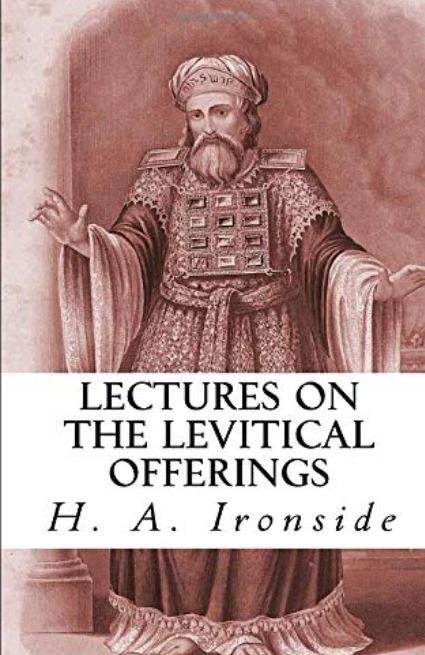
As HA Ironside wrote in his 1929 book “Lectures on the Levitical Offerings, “He had been so continually misrepresented by the first man to whom He had committed lordship over the earth, and by all his descendants, that it was necessary that some man should be found who would live in this scene wholly to His glory. God’s character must be vindicated; and the Lord Jesus Christ, the Second Man, the Lord from heaven, was the only one who could do that.

Praise God he sent His Son to atone for us and impute His righteousness unto us! Jesus FULLY glorified God. Our blessing is that if we repent and submit to Him, we will be saved.

Posted in christmas, judgment, wrath

The Gospel’s Bookends: Wrath and Love

By Elizabeth Prata

SYNOPSIS

I reflect on God’s love with His righteous wrath, using Daniel’s compassion toward Nebuchadnezzar. The essay argues that the Gospel begins with wrath against sin and ends with redeeming love, urging believers to love enemies while warning that repentance is essential for salvation.

Continue reading “The Gospel’s Bookends: Wrath and Love”
Posted in theology

The Hypocrisy of Hollow Obedience

By Elizabeth Prata

SYNOPSIS

In Jeremiah 34, King Zedekiah and the Israelites promise to free their servants, hoping to gain God’s favor during Babylon’s siege. Once danger lifts, they break their vow, re-enslaving them. This hypocrisy exposes false repentance. God condemns such deceit, reminding believers that vows to Him must be sincere and kept.

Continue reading “The Hypocrisy of Hollow Obedience”
Posted in theology

Little Known Bible Characters: Gehazi- The Man Who Should Be Better

By Elizabeth Prata

SYNOPSIS

The post explores Gehazi, a lesser-known biblical figure and servant to Prophet Elisha, highlighting his tragic downfall due to greed and dishonesty. Despite witnessing God’s miracles, Gehazi’s actions led to his leprosy and a curse upon his descendants, illustrating the dangers of moral failings and the desire for earthly treasures.

Continue reading “Little Known Bible Characters: Gehazi- The Man Who Should Be Better”
Posted in theology

The Man of God didn’t check with God!

By Elizabeth Prata

SYNOPSIS

In 1 Kings 13, a ‘Man of God’ is sent to rebuke King Jeroboam but later falls prey to an old prophet’s deception, leading to his demise. The narrative emphasizes the importance of discernment for believers, urging them to verify teachings against scripture, as false prophets can mislead even the faithful.

Continue reading “The Man of God didn’t check with God!”
Posted in theology

Jesus’ Oracles: Woes on Cities

By Elizabeth Prata

Recently I wrote about what oracles are. Oracles are mentioned in both the Old Testament and the New. These are divine communications from God to man, usually sought by man in answer to a specific question. Many Old Testament oracles involved political type queries to God from a King asking if he will win a battle, and the like.

Quite often in the discernment world, if I call out a false doctrine or a false teacher, replies pour in charging me with being mean, and I “should be more like Jesus.” These commenters do not seem to know or to remember that Jesus is God, and He is love, yes, but He is also wrath for sin.

In the New Testament, Jesus pronounced oracular woes. He pronounced doom for peoples, individuals, nations, kings. He also predicted doom for entire cities!

NYC.jpg
NYC as seeen from the East River. Photo by EPrata

Of those cities that reject Him, He said-

be sure of this: The kingdom of God is near. I tell you, it will be more bearable on that day for Sodom than for that town. (Luke 10:11b-12).

Jude wrote that the destruction of Sodom was for sin but also for an example to the ungodly. (Jude 1:7).

Woe to you, Chorazin! Woe to you, Bethsaida! For if the mighty works done in you had been done in Tyre and Sidon, they would have repented long ago, sitting in sackcloth and ashes. (Luke 10:13).

In both verses, the Jude and the Luke verse, we read that the ‘mean Old Testament God’ destroyed cities but that the ‘nice New Testament Jesus’ will also destroy cities. They are the same God, in character and in holiness.

And the sense of the whole is, that though the iniquities of Sodom and Gomorrah were very great, and their punishment very exemplary; yet, as there will be degrees of torment in hell, the case of such a city, which has been favoured with the Gospel, and has despised and rejected it, will be much worse than the case of those cities, which were devoured by fire from heaven; and than that of the inhabitants of them in the future judgment, and to all eternity; See Gill on Matthew 10:15. Gill’s Exposition of the Entire Bible

Scoffers set a city aflame,
but the wise turn away wrath.
(Proverbs 29:8)

And what IS wisdom? Fear of the LORD. Nineveh was wise:

Then the people of Nineveh believed in God; and they called a fast and put on sackcloth from the greatest to the least of them. When the word reached the king of Nineveh, he arose from his throne, laid aside his robe from him, covered himself with sackcloth and sat on the ashes. He issued a proclamation and it said, “In Nineveh by the decree of the king and his nobles: Do not let man, beast, herd, or flock taste a thing. Do not let them eat or drink water. But both man and beast must be covered with sackcloth; and let men call on God earnestly that each may turn from his wicked way and from the violence which is in his hands. Who knows, God may turn and relent and withdraw His burning anger so that we will not perish.” (Jonah 3:5-9)

Bethsaida and Corazin were not wise, they were scoffers at the Gospel presented to them. Therefore, whole cities will come under judgment!

The oracles of Jesus are also interesting to me for the sake of the false notion that the OT God and the NT God are different. People often point to a meek and gentle Jesus speaking softly to the woman at the well about her adulteries, or mournfully but silently pitying the Rich Young Ruler who rejected Him because he wanted his own lands and wealth more than eternal life. But Jesus pronounced DOOM for entire cities, that means populations of thousands if not millions. The five Cities of the Plain were a connected, sprawling metropolis with enormous populations. When Sodom and Gomorrah were smote for their sin the doom also included the cities of Admah and Zeboiim. (Deuteronomy 29:23). Four of the Five Cities of the Plain gone. Zoar was also meant to be destroyed but Lot begged to take haven there so the angel relented.

Jesus came in humility the first time, as a servant offering the Gospel and warning about rejecting it. He will come in wrath the second time. He is Jesus, and He hates sin.

nyc1
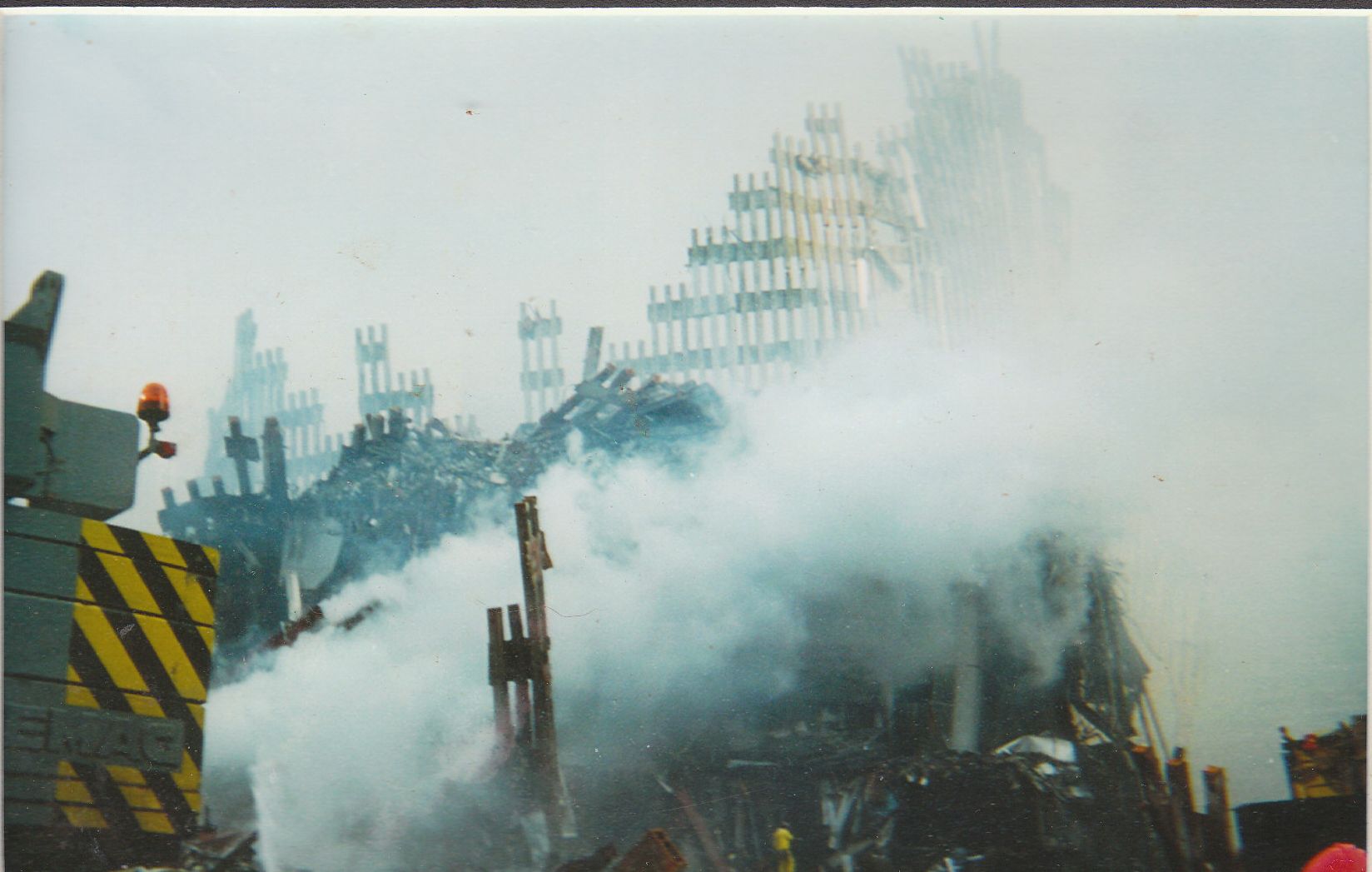
NYC on 9/11/2001

Posted in theology

The Role of Almonds in Biblical Texts

By Elizabeth Prata

Why almonds? They appear a lot in the Bible. There must be some kind of symbolism to almonds, almond blossoms, and almond trees.

Then he made the lampstand of pure gold. He made the lampstand of hammered work, its base and its shaft; its cups, its bulbs, and its flowers were of one piece with it. There were six branches going out of its sides; three branches of the lampstand from the one side of it and three branches of the lampstand from the other side of it; three cups shaped like almond blossoms, a bulb and a flower on one branch, and three cups shaped like almond blossoms, a bulb and a flower on the other branch—so for the six branches going out of the lampstand. And on the lampstand there were four cups shaped like almond blossoms, its bulbs and its flowers; and a bulb was under the first pair of branches coming out of it, and a bulb under the second pair of branches coming out of it, and a bulb under the third pair of branches coming out of it, for the six branches coming out of the lampstand. Their bulbs and their branches were of one piece with it; the whole of it was a single hammered work of pure gold. And he made its seven lamps with its tongs and its trays of pure gold. He made it and all its utensils from a talent of pure gold. (Exodus 37:17-24).

Aaron’s Rod sprouted ripe almonds:

Now on the next day Moses went into the tent of the testimony; and behold, Aaron’s staff for the house of Levi had sprouted and produced buds and bloomed with blossoms, and it yielded ripe almonds.  (Numbers 17:8).

The LORD used almond trees in speaking to Jeremiah:

And the word of the Lord came to me, saying, “What do you see, Jeremiah?” And I said, “I see a branch of an almond tree.” 12 Then the Lord said to me, “You have seen well, for I am watching over My word to perform it.” (Jeremiah 1:11-12).

What do almonds mean in biblical symbolism?

The early-appearing white bloom of the almond apparently serves as a picture of the early graying of a person’s hair, pointing the writer of Ecclesiastes to the certainty of death (Eccles. 12:5). The early blossom meant for Jeremiah that the almond watched for spring and gave the prophet a wordplay on the almond (Hb. shaqed) and his task to watch (Hb. shoqed) (Jer. 1:11). Source: Holman Illustrated Bible Dictionary

The reference to the image white hair of age is conspicuous, since the almond blossoms in early February, sometimes January, and the white blossoms would stand out as the only color on the hillside, as nothing else was blooming or growing yet.

The almond is Amygdalus communis (N.O. Rosaceae), a tree very similar to the peach. The common variety grows to the height of 25 feet and produces an abundant blossom which appears before the leaves; …This early blossoming is supposed to be the origin of the name shāḳēdh which contains the idea of “early.” The masses of almond trees in full bloom in some parts of Palestine make a very beautiful and striking sight. The bloom of some varieties is almost pure white, from a little distance, in other parts the delicate pink, always present at the inner part of the petals, is diffused enough to give a pink blush to the whole blossom. (The International Standard Bible Encyclopaedia (Vols. 1–5, p. 100), 1915.).

Barnes’ Notes says, “The name almond in Hebrew denotes the “waking-tree,” the “waking-fruit;” and is applied to this tree, because it blossoms early in the season. It serves here, as in Jeremiah 1:11-12, to set forth the speed and certainty with which, at God’s will, His purposes are accomplished. So again the blossoming and bearing of Aaron’s rod, naturally impotent when severed from the parent tree, may signify the profitableness, because of God’s appointment and blessing, of the various means of grace (e. g. the priesthood, the sacraments), which of themselves and apart from Him could have no such efficacy”

The beautiful almond trees are in full bloom once again in Northern Israel, and this year our mountaintop city is virtually covered in a blanket of pink and white blooms! The almond trees are the first to bloom, signaling that spring is on it’s way, and it’s so very exciting every time! Source

Beautiful!

Posted in theology

“The more things change, the more they stay the same”

By Elizabeth Prata

1 Samuel 4:1-11

Now Israel went out to battle against the Philistines. They encamped at Ebenezer, and the Philistines encamped at Aphek. 2The Philistines drew up in line against Israel, and when the battle spread, Israel was defeated before the Philistines, who killed about four thousand men on the field of battle. 3And when the people came to the camp, the elders of Israel said, “Why has the LORD defeated us today before the Philistines? Let us bring the ark of the covenant of the LORD here from Shiloh, that it may come among us and save us from the power of our enemies.” 4So the people sent to Shiloh and brought from there the ark of the covenant of the LORD of hosts, who is enthroned on the cherubim. And the two sons of Eli, Hophni and Phinehas, were there with the ark of the covenant of God.

5As soon as the ark of the covenant of the LORD came into the camp, all Israel gave a mighty shout, so that the earth resounded. 6And when the Philistines heard the noise of the shouting, they said, “What does this great shouting in the camp of the Hebrews mean?” And when they learned that the ark of the LORD had come to the camp, 7the Philistines were afraid, for they said, “A god has come into the camp.” And they said, “Woe to us! For nothing like this has happened before. 8Woe to us! Who can deliver us from the power of these mighty gods? These are the gods who struck the Egyptians with every sort of plague in the wilderness. 9Take courage, and be men, O Philistines, lest you become slaves to the Hebrews as they have been to you; be men and fight.”

10So the Philistines fought, and Israel was defeated, and they fled, every man to his home. And there was a very great slaughter, for thirty thousand foot soldiers of Israel fell. 11And the ark of God was captured, and the two sons of Eli, Hophni and Phinehas, died.

~~~~~~~~~~~~~~~~~~~~~~

So many of the things…

Hindsight is golden, isn’t it?

In verse 3a, we see that the Israelites are aware that it is the LORD who gives them the victory in any particular battle. So they are aware of the LORD and His power and His presence. That’s good.

But then they show their misguidedness in verse 3B. The defeat of their army was a sure sign that the LORD was displeased. They acknowledged the LORD’S power, but then went on a misconceived plan of action. They did not consult the LORD. They embarked on a course absent His will.

1 Samuel is a record of an actual event, with real people in a real place, in a past actual time. Picture the hills and the camp all around. Picture the Israelites in their gear going to and fro in hastened activity. Picture their confidence and their purposefulness as they decide to bring the ark. Picture the men being selected to go up to Shiloh, and then came back down in a great burst of energy, carrying the ark. The ark arrived in camp and all the preparations had been made ready. As it was settled to its place, there was a great shout from the Israelites.

Their feeling was, ‘NOW we have the ark! NOW we will be victorious! We are doing the right thing!’

Wrong.

They thought they were worshiping. They thought they were obeying. They thought they were going to have what they wanted, which in this case, was victory over an army that they hated. Yet was it only a wayward scheme full of self-reliance and self-assurance.

How often is it that we see some kind of massive Christian event going on, just like this one depicted in 1 Samuel? IHOP OneThing. An Angus Buchan Mighty Men event. The Send. Benny Hinn Holy Spirit Miracle Healing Service.

We see the hustle and bustle of the people there. They think they are worshiping. They think they are obeying. They think they will soon be in favor with the Lord. They think they will be able to obtain what they want.

The Israelites in 1 Samuel had made two fatal errors. These are the same errors that we see today in the large-scale events of the wrong-headed.

1. They failed to consult God before embarking on their plan to go to war. They acknowledged God, but then did not consult Him. Classic example of Proverbs 14:12,

There is a way that seems right to a man, but its end is the way to death.

And

In those days there was no king in Israel. Everyone did what was right in his own eyes. (Judges 21:25).

2. They substituted the power of God from God for a talisman, good luck charm in the form of the ark. The ark itself had no power. God had made a conditional covenant with the people of Israel through Moses. It was an if-then promise. If you do this, then that will happen. If you do not do this, then that will happen. As a sign of this promise, He told the Israelites to make a box according to His design and in it was placed the ten commandments. The ark was a sign. When you’re traveling on the highway and you see “Welcome to Maine” it’s announcing something, but the sign is not the state of Maine. That’s something else entirely. There is a vast difference between the sign of God and Gd Himself.

Today we see a focus on seeking signs. When they allegedly manifest, the sign is worshiped. Today’s people (many of them) have substituted the sign for the reality.

As French writer Jean-Baptiste Alphonse Karr said, “The more things change, the more they stay the same.”

change the same

Posted in encouragement, Uncategorized

Parables in the Old Testament

We know and love Jesus’ New Testament parables. Here is the parable of the mustard seed.

The Parable of the Mustard Seed
And he said, “With what can we compare the kingdom of God, or what parable shall we use for it? It is like a grain of mustard seed, which, when sown on the ground, is the smallest of all the seeds on earth, yet when it is sown it grows up and becomes larger than all the garden plants and puts out large branches, so that the birds of the air can make nests in its shade”. (Mark 4:30-34)

The seed is the word of God.

The work of grace is small in its beginnings, but comes to be great and considerable at last (v. 30–32); “Whereunto shall I liken the kingdom of God, as now to be set up by the Messiah? How shall I make you to understand the designed method of it?” Christ speaks as one considering and consulting with himself, how to illustrate it with an apt similitude; With what comparison shall we compare it? Shall we fetch it from the motions of the sun, or the revolutions of the moon? No, the comparison is borrowed from this earth, it is like a grain of mustard-seed; he had compared it before to seed sown, here to that seed, intending thereby to show, Source: Matthew Henry’s commentary on the whole Bible

The illustration is, that the smallest seed takes root and grows to something that is strong and fruitful- even mighty. Who doesn’t look on a strong, tall, might tree and feel awe and marvel at its strength, symmetry, and beauty? The seed does not do this of itself, the Grower grows it.

I stopped on my way to work at dawn to admire this tree in the pasture, cows around it, ground mist rising, pond glittering, sky just pinkening:

dawn in ne ga

The parable/allegory of trees is seen in Old Testament texts as well. Yes, the OT has parables! The use of the words parable and allegory are specifically stated in Ezekiel 17:1-2 (NIV). Then the LORD continues after verse 1 in relating to Ezekiel the parable Ezekiel is to relate to the Israelites. From Ezekiel 17:3-10 the parable of the tree continues, with the trees representing kings. In the latter part of the chapter, the LORD explained the parable to Ezekiel (and us!)

There are still other symbolic comparisons to trees in the Old Testament. In Ezekiel 31 in its entirety reveals Assyria’s fate. Here, the tree is likened to nations. In Ezekiel 17 the tree was likened to kings.

Daniel 4 also has a parable of a tree. This time the LORD did not say it as a parable but gave it in a dream to King Nebuchadnezzar. The king did not understand it. He called for Daniel to interpret the dream, which Daniel graciously did, thanks to wisdom from God. In this case, the tree was Nebuchadnezzar, whose kingdom had grown strong and tall, will be cut down, but the stump is banded, and will grow strong once again.

The righteous shall flourish like a palm tree, He shall grow like a cedar in Lebanon. (Psalm 92:12 NKJV).

I have seen the wicked in great power, And spreading himself like a native green tree. (Psalm 37:35 NKJV).

When we say we would like to “dig deeper”into God’s word, this is one way. We can ponder the symbols and parables and allegories in both the Old Testament and the New Testament. Did you know there were parables in the OT? The Bible is rich in learning for us, lyrical as a written form, full of depth and power.

Most important of all, it is where we find truth and life.