By Elizabeth Prata
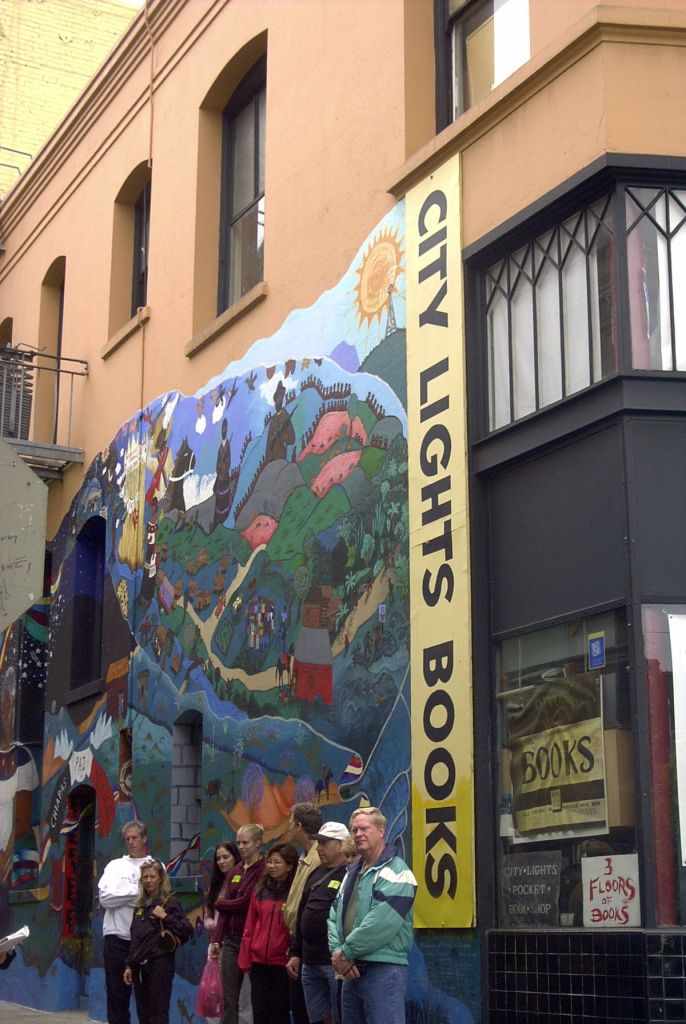
It happened 59 years ago. It was summer, flower children ‘hippies’ were on the rise, the Viet Nam war had become full blown, and an entire subculture was born. It was dubbed the “Summer of Love”.
The generation born Post-WWII in the late 1940s and 1950s and their parents experienced economic prosperity, technological advances, and a feeling of hopefulness since the dark World War was ended.
As with any culture, the hopefulness evaporated as the Cold War entered. The cultural highs went to lows. Nuclear fears, Russia fears, and general feelings of concern with what rapid consumerism and technology was doing to the country sparked the now teenage and young adult Baby Boomer generation to “question authority” and reject the old way of living.
Then the Viet Nam war happened, and with it, the fairly new technology called television, showing its satellite images from jungles of death halfway around the world now added to the generation’s discontent. The newsman Walter Cronkite intoning at the end of every nightly newscast the number of dead and injured in the war added to the prevailing mood of uneasiness.

The rejection of the way things were into a way the hippies wanted things to be, came together to ignite The Summer of Love.
The hippies were also called Flower Children. They advocated for peace and love, art and poetry, spiritual transcendence- usually drug induced- and community.
Sounds good, right?
Remember, anything obtained outside of God is vanity, empty, and vain.
The Summer of Love was an event where over 100,000 hippies converged on Haight-Ashbury neighborhood in San Francisco. These were kids seeking a new way of life, some were drifting runaways, and others just came for the drugs. But they came, did they ever. They wanted to re-structure civilization through peace and love. “To find a new way for humanity” as the gentleman says below. Could they even “restructure society”? For a while, yes, they did. We still feel the effects of that summer today, nearly 60 years later.

Part of that new way for humanity was the hippies were taught to “question authority” and “turn on, tune in, drop out” by LSD drenched counterculture-man Timothy Leary. Leary was-
“One of the most influential icons in the counterculture movement which formed in the late 1960s out of opposition to the Vietnam War’s escalation, Leary gained influence among much of the youth by advocating the use of LSD as a way of mind expansion and the revelation of personal truth.” (Source).
The truth of it is, the entire movement was demonic. The youth did drop out, of society, of college, from families. They wandered, spiritually and physically, into new realms. Realms of depravity such as experimenting with homosexuality and lesbianism. Realms of mind-altering drugs. Realms of different living situations such as polygamy or ‘free love’ communes.
It’s easy to write off the hippie movement as essentially unserious. Most of them were young; few of them were sober; they said things like “groovy” and “far out.” And in part, the hippies were animated by psychic impulses that weren’t new: the youthful rejection of the apparent mundanity of adulthood, and good old hedonism.
But lurking beneath the shallow motifs – flowers in the hair, acid [LSD] on the tongue – was a serious philosophical protest. “At the deepest level,” writes W. J. Rorabaugh, in one of the few good histories of the movement, the hippies expressed “a crisis of belief.”
Source above, essay “The Terrible Optimism of the Hippies” published in The Independent (UK) 2019.
The Preacher in Ecclesiastes teaches us something about the pointless search for meaning and a satisfying lifestyle that are apart from God.
Further, in W. J. Rorabaugh’s retrospective book, American Hippies (Cambridge Essential Histories) we read of the,

“massive upheavals of the 1960s, which included civil rights, Black Power, feminism, and gay liberation, as well as looser sexual mores, the end of censorship, street protests, political radicalism, and environmentalism. Collectively, these movements profoundly changed the United States. Second, the hippie counterculture was large. Hundreds of thousands of young Americans were, at least for a time, hippies, and millions adopted some if not all hippie beliefs and practices. The numbers mattered. Third, hippie values represented a generational break with traditional middle-class culture. When hordes of people concentrated in a single youth generation simultaneously adopted new thoughts and behaviors, mainstream culture was forced to pay attention. In the long run, hippies played a significant role in transforming American society.”
A LOT was going on in the 1960s! That ‘Summer of Love’ was a startling and visible opening to this upheaval. A crisis of belief. A yearning for something missing from American life. A seeking of a new way.
Don’t all of those reflect back to Ecclesiastes? King Solomon wrote of the yearning of the human heart and its vain seeking, apart from God. God defines love. Disaffected youths do not define love.
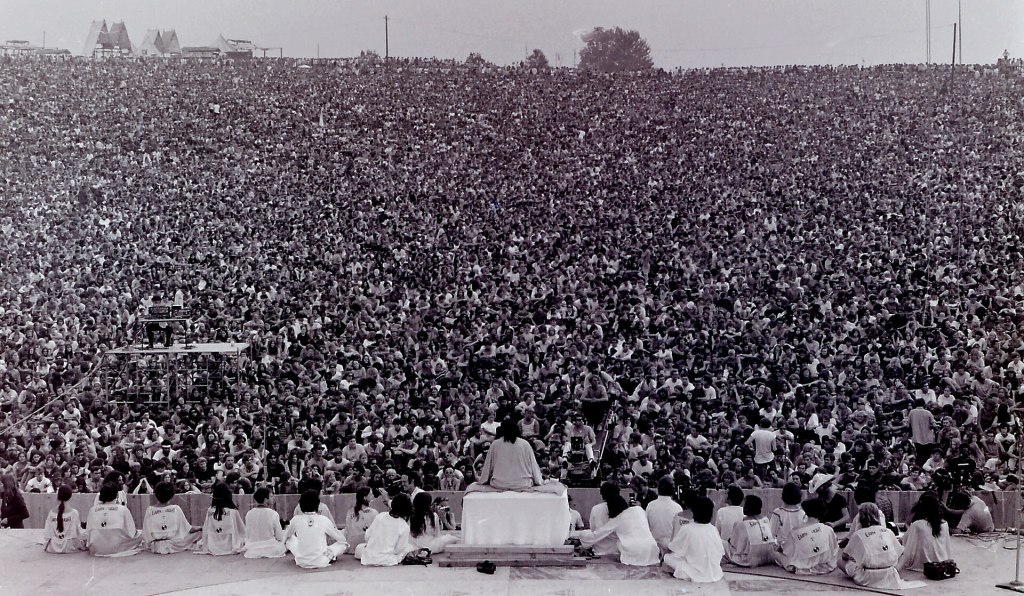
What is love? The hippies thought they had unlocked the secret to spiritual fulfillment. They believed, with the help of LSD and mushrooms, that they could access the transcendent divine, and become one with the universe, in love. Many turned to Eastern religions and their music sounded forth with flutes and zithers.
However, God defined love through His word. His is the only and the final word on the subject. The hippies, mainly middle-class white Americans, really did have it good. Two parent households with a mom and a dad, two car homes with garage, creature comforts, church-going, sexual normalcy, and clean living. Rejecting all that for a mystical union with a drug induced divine was for a time, unrestrained disorder nationwide.
What IS love?
Love is patient, love is kind, it is not jealous; love does not brag, it is not arrogant. It does not act disgracefully, it does not seek its own benefit; it is not provoked, does not keep an account of a wrong suffered, it does not rejoice in unrighteousness, but rejoices with the truth; it keeps every confidence, it believes all things, hopes all things, endures all things. Love never fails; … But now faith, hope, and love remain, these three; but the greatest of these is love. (1 Corinthians 13: 4-8a, 13).
God is love, and those who love Him know love, for God IS love.
The one who has My commandments and keeps them is the one who loves Me; and the one who loves Me will be loved by My Father, and I will love him and will reveal Myself to him. (John 14:21).
There is no fear in love, but perfect love drives out fear, because fear involves punishment, and the one who fears is not perfected in love. (1 John 4:18).
I can’t overstate the rapidity with which the hippies’ concepts and philosophies changed America for the worse. Sadly, many of the hippies descended into homelessness and drug addiction. Others came up with sexually transmitted diseases and unwanted pregnancies. Others discovered that free love meant their loved one moved on to the next partner without a thought, leaving broken hearts and disillusionment in their wake. Free love, apparently, wasn’t free.
When humans define love it always misses the mark. As is natural with the natural man, the hippie culture descended quickly to depravity and a worship of self. Self-evolution, the divine within, freedom of self-expression, and a self-involved love were at the core, and thus, destined to fail.
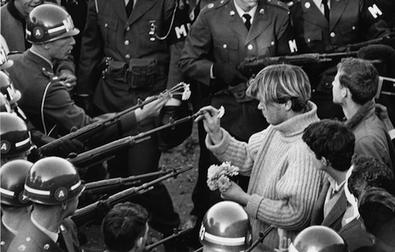
The hippies’ counter-culture movement was historically a new approach. Not blind ambition of the Caesar era. Not Machiavellian scheming of the feudal lords. Not evil malevolence of the dictator times. This time, satan tried a gentle naivete that rushed the love culture into the American summer. For a while, it worked.
Fair use, https://en.wikipedia.org/w/index.php?curid=37905458
The Preacher said in Ecclesiastes 12:1a, “Remember also your Creator in the days of your youth,“… and Ecclesiastes 12:13-14,
Only God can change a culture for the good. Let’s conclude with the Preacher’s conclusion-
The conclusion, when everything has been heard, is: fear God and keep His commandments, because this applies to every person. For God will bring every act to judgment, everything which is hidden, whether it is good or evil.



 the-end-time.org