Posted in discernment, Uncategorized

VBS season, Child Conversion, and Baptisms

The visible church today is seeing a flood of false Christian adults. They profess Christ, but either by lack of fruit, a sinful walk, or outright eventual repudiation, in many sad cases it becomes obvious they never possessed Him.

One place that false conversions caneasily happen is with children. And VBS is the most dangerous season of all. Wikipedia gives a history of VBS, known as Vacation Bible School:

Vacation Bible School (VBS) is a specialized form of religious education which focuses on children. Churches usually hold the week-long events during the summer, though the lengths of such programs may vary, and they are sometimes held during other times of the year. he origins of Vacation Bible School can be traced back to Hopedale, Illinois in 1894. Sunday school teacher D. T. Miles, who also was a public school teacher, felt she was limited by time constraints in teaching the Bible to children. So, she started a daily Bible school to teach children during the summer. The first Bible school enrolled forty students and lasted four weeks. …

Today, many churches run their own Vacation Bible School programs without being under the umbrella of a national organization. Some churches opt to use themed curriculum programs from their respective denominations or independent publishing houses which provide easy preparation and include marketing tools. Modern programs usually consist of a week-long program of religious education which may employ Bible stories, religious song, arts and crafts, skits, or puppet shows which cater toward elementary school-aged children.

However either in sincere love for Christ and a desire to see people saved, or due to outright deception due to worldly church growth strategies, some churches are quick to accept a child’s profession in Christ and they quickly baptize them thereafter- declaring them saved. Many VBS volunteers, without knowing the devastating consequences of a false profession, at the end of a VBS session with children, simply ask a few superficial questions such as “Do you want to go to heaven when you die?” or “Do you accept Jesus into your heart?” and then declare the child converted and even write the date into the Bible. Baptisms quickly follow, with pastors trumpeting the “success” on social media such as Facebook with lots of Woo-hoos, PTL’s, and exclamation marks.

These children grow up believing they are truly saved, yet by the time they are adults, have not borne fruit, aren’t growing in knowledge of the grace of Jesus Christ, have no godly sorrow over sin, care not for personal holiness etc. Some of them go away from the faith when they become teens or young adults, only to come back in their late 20s or early 30s to “rededicate their lives to Christ.” As Peters says in his new teaching, he believes for most of these people, the rededication is actually the conversion.

Here is a wonderful teaching from Justin Peters on the “A Biblical and Theological Understanding of Childhood Conversion”. He admits that the teaching goes against the grain of common practice. However, when he shows from scripture why it’s wise to wait in declaring a person saved, especially children, the clarity of the teaching becomes apparent and foundationally attractive.

Many of you have sent me messages and emails concerning your children, asking questions about baptism, home devotionals, and VBS. I’m grateful that the Lord led me to this wonderful resource and I happily pass it along to you.

Do Not Hinder Them: A Biblical and Theological Understanding of Childhood Conversion
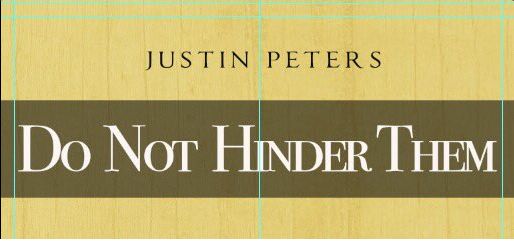
The link is the first time Pastor Peters delivered this teaching, he said, and he has since honed it into a book, upcoming for publication. Be on the lookout for the book. The link brings you to an hour and 21 minutes’ teaching, but the first few minutes are recommendations of other books and the end is a Q&A. Peters as always is humble, kind, and delivers his teaching in a quiet but scripturally persuasive manner. If you as a parent have questions about the credibility of your child’s conversion, especially during this energetic VBS season when child conversion is at the forefront of church activity, then by all means please check it out.


Posted in Uncategorized

“Study the Bible using stickers!”

A female blogger named Rachel wrote about Bible stickers. She wrote that there were 4 reasons you ladies need stickers in order to study God’s word.

1. Studying a favorite passage using stickers provides quick visible images to help you memorize a verse
No, the verse is a visible image to help you memorize the verse. (1 John 2:27, John 14:27).

2. Using a tangible item that I can feel with my hands provides a sense of reality to relate to God’s Word.
If you don’t already have a sense of reality to relate to God’s word when you study, stickers are not going to help. (Romans 12:2).

3. Adding colored or designed stickers draws attention to how God is speaking to my heart.
No, obeying His word in life is how the Spirit draws attention to the Word He applied to your mind. Stickers are just stickers. (1 John 4:12, Romans 8:3-4)

4. Meditating on God’s Word while using stickers actually gives me a faith that sticks!
No, stickers don’t give you eternal faith. Jesus does. (Romans 8:30Romans 8:38-39)

You see all the methods and reasonings that are designed to distract you ladies from studying the word in a credible, consistent, Spirit-filled way. In the earlier part of the blog, the lady had said that she needs to frequently vary her studying methods in order to remember what she had learned. Hmmm. This lady’s method is a method that turns you from the wordto a purchasable item.

Can you picture yourself telling an aborigine Kimyal from Papua New Guinea that they need stickers to study the Word? Tell these people their faith isn’t complete unless they buy stickers. Or maybe, they should tell us what it’s all about:

PS: The reason I discovered the sticker lady is that BibleGateway, who sadly claims they are the most read bible site, promoted it on Twitter. I’ve seen them lately promote some very uncredible teachers, sites, and ideas. I have to say now, of BibleGateway – use heightened discernment.

Posted in Uncategorized

Why responding to a discernment essay by saying “only God knows the heart” is totally wrong and displays a total lack of discernment

When I do a discernment essay, I am often treated to an old chestnut of a comment that is becoming practically standard for those without discernment to post:

He alone is sovereign and fully knows all hearts!

God is sovereign. God knows the heart. But we do too.

If a teacher’s doctrine has been proven false by comparing it with the Bible, then we DO know their heart! The Bible tells us this. Only God knows the hearts of the people, but if their teaching is not of the Lord, then the God who sees hearts has exposed those hearts to us by the verses of His word!

Their hearts are full of deceit. Colossians 2:8
Their hearts are filled with their own appetites. Romans 16:17-18
Their hearts are disguised with light. 2 Corinthians 11:13-15
Their hearts are full of greed. 2 Peter 2:3
Their hearts are ravenous. Matthew 7:15.
Their hearts are inwardly full of sensuality. Jude 1:4
Their hearts are full of secrets, such as destructive heresies. 2 Peter 2:1
Their hearts are full of intent to exploit. 2 Peter 2:3
Their hearts are full of fleshly passions. 2 Timothy 4:3
Their hearts are puffed up with conceit. 1 Timothy 6:4
His heart understands nothing. 1 Timothy 6:4
Their hearts are cunning and crafty. Ephesians 4:14
Their hearts serve the creature. Romans 1:25
Their hearts are slaves of corruption. 2 Peter 2:19.
Their hearts deny the Master who bought them. 2 Peter 2:1
Their hearts prophesy lies. Jeremiah 23:26

So whenever I expose a testimony as false or a teaching as false, or a teacher as false, using biblical proof, STOP saying that this is a bad activity because “only God knows the heart”. He does, that’s true, but He has shown us the heart of the false teacher in His word. He taught us this in His word for the purpose of being mature, discerning, and so we can learn for ourselves and also teach the younger to be edified and strong.

Posted in encouragement, Uncategorized

Having trouble slaying sin? Being unduly tempted lately? Check out these resources

Slaying sin is the daily responsibility of the Christian, in submission to the Holy Spirit, Who is the mechanism for its effectual execution.

John MacArthur said that if you are comfortable with your spiritual growth, that is a very dangerous place to be. Dear Sister, if you’ve grown lax or complacent, as I tend to be from time to time, here are some resources for you to help you revive the urgency in our daily endeavor to kill the sin within us and to resist the temptations that come with it. And as Dr Barnhouse reminded us, when you flee sin, make sure that you’re running toward Christ.

~~~~~~~~~~~~~~~~~~~

How To Slay Sin (Part 3) Essay by John MacArthur

Let’s take a look at step three in slaying sin: Fill your mind with Scripture.

John Bunyan, author of the classic Pilgrim’s Progress, wrote in the cover of his Bible, “Either this book will keep you from sin, or sin will keep you from this book.” Bunyan understood what many in the war against sin don’t—the Word of God is the weapon you simply cannot neglect.

Have you ever considered some of the symbols the Bible uses to describe itself? Scripture is called a light, hammer, fire, rock, mirror, milk, seed and water. Each highlights a unique characteristic of God’s Word, but by far the most memorable metaphor of the Bible is a sword (Ephesians 6:17). Any idea why?

~~~~~~~~~~~~~~~~~~~


Temptation and How to Meet It, Sermon by Dr Donald Grey Barnhouse. In this teaching, Dr Barnhouse gives three ways to defeat temptation. The Youtube review of the sermon states,

At the InterVarsity Christian Fellowship conference in Urbana 1957. Brilliantly useful teaching of a caliber seldom found in modern sermons.

You can listen to the full sermon below, or read it as a summary at Christianity.com

~~~~~~~~~~~~~~~~~~~

Spurgeon on slaying sin, from his sermon The Old Man Crucified, #882:

if you will not have death to sin, you shall have sin to death. There is no alternative, if you do not die to sin you shall die for sin; and if you do not slay sin, sin will slay you.

More here:
The Old Man Crucified, extended quote from Spurgeon’s sermon #882

Even more here:
Full sermon The Old Man Crucified, Spurgeon #882

~~~~~~~~~~~~~~~~~~~


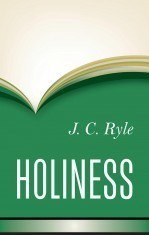
JC Ryle’s book titled Holiness is generally acknowledged to be one of the faith’s top books on the subject. Buy it from this excellent publisher, Banner of Truth.

‘…this book is simply the best of Ryle the Puritan-type pastor. Real Christians will find it a gold mine, a feast, a spur and a heart-warmer, food, drink, medicine, and a course of vitamins, all in one.’ — J.I. PACKER

BOOK DESCRIPTION-
Holiness: Its Nature, Hindrances, Difficulties, and Roots is perhaps J. C. Ryle’s best-known and, arguably, best-loved book. Although many things have changed since 1877, when this book was first published, one thing remains the same: ‘real practical holiness does not receive the attention it deserves.’ It was to remedy this attention deficit, and to counter false teaching on this most important subject, that Ryle took up his pen.

The sword is only good if your hand wields it, and we don’t wield it with accuracy and precision if we are not studying it first.

Posted in Uncategorized

Abimelech learned that sin is sin against God

We underestimate sin. We underestimate its power. We underestimate its effect. We underestimate its presence. And we certainly underestimate how God feels about it. Most of all, we underestimate against whom we are really sinning against.

The story in Acts 9 is familiar. The scene is the road to Damascus, and a man named Saul was breathing out threats and killing the Lord’s disciples. Jesus spoke to Saul, soon to be Paul, and asked in verse 4: “Saul, Saul, why are you persecuting Me?”

What? Saul was killing the disciples, not Jesus. Ah, but this verse shows us how intimately Jesus is involved in our lives, how tightly we are one, how, when you come against one of His children you come against Him. Saul was not just railing against the name of Christ in the disciples, but coming against Christ Himself.

for the union between Christ and his people is so close, that what is done to them is done to him. ~Gill’s Exposition
There is another scene in the Bible that displays a similar sentiment. It’s in Genesis 20. Abraham fears for his life and lies to Abimelech king of Gerar that Sarah is his sister so they won’t kill Abraham in trying to get to Sarah. Based on what Abraham said, Abimelech took Sarah.

Now comes the interesting part. Genesis 20:3 says what happened next was,

God came to Abimelech in a dream by night and said to him, “Behold, you are a dead man because of the woman whom you have taken, for she is a man’s wife.”

I wrote about one aspect of the verse a few days ago, here in an essay titled Beware of desiring a dream/vision, word from the Lord. God said to Abimelech, ‘Behold you are a dead man’?! The dreams and words from God the false teachers say they receive today are far from that powerful – and deadly. Anyway, Abimelech pleads his case. He replies inGenesis 20:4-5,

“Lord, will you kill an innocent people? Did he not himself say to me, ‘She is my sister’? And she herself said, ‘He is my brother.’ In the integrity of my heart and the innocence of my hands I have done this.”

God agrees with him. Abimelech had gone forward based on the information that was given to him, that Sarah was single. Given that he thought she was single, he took Sarah. However it was still sin.

Here is the climactic verse for the point of this essay:

God said to him in the dream, “Yes, I know that you have done this in the integrity of your heart, and it was I who kept you from sinning against me.” (Genesis 20:6). emphasis added.

There it is again. Abimelech learned the hard way that he was sinning. Worse, he learned that was sinning against God Himself. It didn’t matter that Abimelech hadn’t known Sarah was married. It didn’t even matter that Abimelech didn’t know God. Note that God did not say, ‘you would have been sinning against Abraham, the husband.’ Abimelech would have been sinning against Abraham. Ultimately though, all sin is performed against our Holy God. The King would be sinning against God if he had gone through with what he’d intended with Sarah. Here comes to mind the axiom, ‘Ignorance of the law is no excuse”.

Genesis 39:9 recounts a similar scene,

Joseph was being tempted to commit adultery with Potiphar’s wife. In resisting her, he said, “My master has withheld nothing from me except you, because you are his wife. How then could I do such a wicked thing and sin against God?” It is interesting that Joseph did not say that his sin would be against Potiphar. This isn’t to say that Potiphar would be unaffected. But Joseph’s greater loyalty was to God and His laws. It was God he did not want to offend. ~GotQuestions

Psalm 51:4 says “Against you, you only, have I sinned and done what is evil in your sight, so that you may be justified in your words and blameless in your judgment.”

All our sins are against a just and Holy God. Our sins might be toward a co-worker, a sibling, a passerby. But all sins are against God. We should keep this in mind.

No proof of the fullness of sin, after all, is so overwhelming and unanswerable as the cross and passion of our Lord Jesus Christ and the whole doctrine of His substitution and atonement. Terribly black must that guilt be for which nothing but the blood of the Son of God could make satisfaction. Heavy must that weight of human sin be which made Jesus groan and sweat drops of blood in agony at Gethsemane and cry at Golgotha, “My God, My God, why have You forsaken Me?” (Matt. 27:46). Nothing, I am convinced, will astonish us so much, when we awake in the resurrection day, as the view we will have of sin and the retrospect we will take of our own countless shortcomings and defects. Never until the hour when Christ comes the second time will we fully realize the “sinfulness of sin.” JC Ryle

We should keep this in mind also-

but God shows his love for us in that while we were still sinners, Christ died for us. (Romans 5:8)

Greater love has no one than this, that he lay down his life for his friends. (John 15:13)

Our knowledge of the sinfulness of sin and our resulting feeling of guilt is tempered by our love for Jesus who atoned for that sin. It is this love for Him that makes us want to mortify it in ourselves all the more. And so it goes, until the Day when we awaken, and see the true effect of sin, and say “what hath God wrought!” (cf Numbers 23:23)


[By Elizabeth Prata]

Posted in Uncategorized

True love loves, and true love warns: two essays

The visible church has an increasing tolerance for sin. I personally believe that this is because so many churches allow professing people to become members without due diligence. In addition, church discipline is rarely practiced, (Matthew 18:15-20), and when it is, often is practiced unbiblically. (cf John 12:42). Preachers do not preach against sin but give ear ticking messages.

When brethren urge each other to ever higher heights of sanctification by giving gentle reminders to slay sin or stop immoral behavior, they are often met with charges that they’re “unloving.” When discerning brethren employ their spiritual gift by detecting the false in some teachers and warn people to stay away from them, they’re sometimes met with charges of the not being loving enough- to the false teacher. The word “love” is tossed around as if it is the only attribute God displays or cares about.

For those and many other reasons, while sin rises in and out of the church, the tolerance of it is skewing our understanding of biblical love.

The biblical version of love is so often misunderstood today, that Cameron Buettel at John MacArthur’s blog is writing a series God’s love- the character of it, what it entails, even the condemnation within it. Here are excerpts of the first three essays in the series with the link to read more:

1. The Problem with God’s Love

At first glance, God’s love doesn’t appear to be much of a theological problem. First John 4:8 couldn’t be clearer: “God is love.” Of all the ways to describe God, that is certainly the most endearing and widely-accepted. How many times have we heard the phrase, “A loving God would never ____”? What that person is really saying is that I have my own idea of what love is, and I will only accept a god who loves on my terms. That is the subtle form of idolatry that many people—even many churchgoers—buy into today.

The issue isn’t whether or not God loves, but whether the people proclaiming His love have the first clue what they’re actually talking about. True, God is love. But let’s not make the egregious error of assuming that’s all He is, or all He wants us to know about Him. The problem with God’s love, then, is that the discussion of it is being clouded and confused by people who don’t know what love is or who God is, and yet speak with assumed authority on both.

2. The Condemnation in God’s Love

God’s love is a great comfort. But perhaps it’s not supposed to be as comforting as some people make it. As we said last time, God’s love is not a theological blanket that smothers everything else the Bible says about how He relates to us. That myopic, feel-good approach to God’s love often ignores its wider implications. Specifically, it overlooks the fact that God’s love carries an inherent condemnation.

3. The Nature of God’s Love

But God’s love didn’t first appear two thousand years ago—that’s where it climaxed. The truth is that all of history bears the undeniable marks of God’s loving nature. From Genesis to Revelation, His great love is displayed on multiple levels and in countless glorious ways. In fact, His unchanging love is older than time itself.

In practical terms, once we understand God’s love and how we are to express it (in all its flavors and nuances), we understand better how to admonish in love. Admonishing each other is important part of daily living for the Christian, and part of fellowship within an identified body of believers called the local church. I read this essay today, promoted by Tim Challies. The author spends time explaining what admonishment is, and how to practice it- in love. The essay is titled,

True Love Instructs, Corrects, and Warns: A Plea for Churches to Admonish One Another
by David Schrock

Against a culture that says, “If you love me, you will accept me and never question me,” the Bible says “In this is love, not that we have loved God but that he loved us and sent his Son to be the propitiation for our sins” (1 John 4:10). In the Bible, love does not gloss over sin; it teaches sinners they need pardon for their sin and that—miracle of miracles!—God has provided that in Jesus Christ. Because God hates evil and evil-doers (see Psalms 5:5; 11:5), he teaches that genuine love cannot turn a blind eye to sin, it must rejoice with the truth (1 Corinthians 13:5).

Accordingly, those who claim to know him will embrace his truth and willingly speak to one another with loving correction. In short, love corrects, instructs, warns, and admonishes. But what does that look like?

I think that if you go through the Grace To You series on God’s love, it gives depth to our understanding of God’s attribute of His love and better practicality when we read an essay like Schrock’s. Both are needed. I commend these articles to you, in the prayer that you will be educated, edified, and the gory of Jesus will continue to shine brightly in His people, the Church.

[By Elizabeth Prata]
Posted in Uncategorized

Three articles: Rise of the Tyrant, Who is God’s Candidate?, Things Are Bad!

Today’s essay brings you three different media on a similar topic: World Affairs. The first is from Robin Schumacher of The Confident Christian. Schumacher is a highly intelligent Christian writer and apologist who writes at The Christian Post. I always enjoy his articles. Recently he published an article about America’s decline, and the rise of the tyrant. His essay is titled Rise of the Tyrant.

The second is John MacArthur’s sermon, Who Is God’s Candidate?

The third is Pastor Nate Pickowicz and his Fire Away! podcast, this episode titled Things are Bad!

I posted Schumacher’s first because it grounds us in history. MacArthur’s is second because it gives a biblical overview and a celestial perspective. Pickowicz’s is third because of the Christian encouragement from scripture. The order I placed these will hopefully educate, strengthen the Christian’s biblical perspective, and encourage despite knowing the times in which we live are more chaotic each day.

Jesus ordains all things- even the disruptive and dizzying times in which we live. Schumacher wrote of it, MacArthur senses it, Pickowicz sees it, and we know it. Therefore I posted these resources in hopes that through each of their careful and restrained biblical lessons by mature pastors of the faith, we would be helped and calmed.

Continue reading “Three articles: Rise of the Tyrant, Who is God’s Candidate?, Things Are Bad!”

Posted in Uncategorized

Truly, truly, pay attention now! Amen

John is a profound book. John 3 is an exceptionally profound chapter. It is there we find Jesus speaking with Nicodemus about how to be saved. Is there anything more important than that?

In modern times we have word processing software to help us emphasize different words of phrases we want the reader to note. We can highlight, bold, italicize, underline, or print selected words in a different color. The Hebrews used to repeat a word they wanted the hearer or reader to note for emphasis.

In John 3:3, John 3:5, John 3:11 Jesus says three times in the same conversation about being born again, “Truly, truly.” Not only is the word doubled, but the doubled phrase is used several times in quick succession. This means PAY ATTENTION. In John 5 in the section about the authority of the Son, Jesus again repeats “truly, truly” several times for emphasis. (John 5:19, John 5:24, John 5:25).

It is only in John we see the double wording, even in the same stories told in other chapters, where there is a single “truly.”

The born-again teaching’s importance is emphasized by Jesus’ introduction of the doctrine by proclaiming, “Verily, verily”—or “Truly, truly,” “Most assuredly,” or “Amen, amen,” depending on the translation. All of His “Verily, verily” statements appear in the book of John, and they are used by Christ only when He is about to teach on a profound matter. The doubled “verily” denotes that what follows is of especially weighty and solemn significance, so we are to pay special attention. (Forerunner Commentary, John Ritenbaugh)

In other words, when coming across the doubled “truly” the reader should pay careful attention to the words being presented.

And it is interesting to learn about a literary device which will enhance our understanding of and love for the Word. But it goes even deeper than that. We can intensify our understanding by learning that the phrase “truly, truly” is the Hebrew word “amen.”

Charles Spurgeon explains the depth of meaning behind the word amen and why it is a title for Jesus, in a sermon delivered in 1866 called The Amen. (Revelation 3:14). In the sermon, Spurgeon says that there are three ways Amen is used; when an individual or the congregation is asserting, consenting, or petitioning. He explains at one point,

He was also “the Amen” in all His teachings. We have already remarked that He constantly commenced with “Verily, verily I say unto you.” Christ as teacher does not appeal to tradition, or even to reasoning, but gives Himself as His authority.

Spurgeon’s sermon on Amen (“truly, truly”) is wonderful and I recommend reading it.

In the sermon, Spurgeon makes note of another sermon, this one delivered by Abraham Booth, called The Amen of Social Prayer. Spurgeon recommends Booth’s sermon for its thorough explanation of the use of Amen. Spurgeon said,

Should you desire still further to enquire into the use and meaning of this remarkable word, there is a valuable sermon upon it in the works of Abraham Booth, which you may read, as I have done, to great advantage. If anything should lead to the revival of its use more generally in public worship, it will be a matter of great congratulation.

So note we have traveled a ways away from the initial reading of the Bibles passages in John 3, whereupon one may notice a repeated use of a phrase containing a repeated word. That’s the Bible, ever deeper, ever higher, ever more interesting. Jesus says truly, truly, (amen & amen), and He IS The Amen.

[By Elizabeth Prata]
Posted in Uncategorized

Trip report, Lazarus’ trip to heaven

I see so many books and even movies coming out recounting someone’s trip to heaven. How exciting, they got to visit personally with Jesus! They were privileged with seeing the details of heaven, like the different colors we don’t have here on earth, and the winged rainbow horse Jesus pets. So I decided to turn to the Bible and see what the Bible people who have visited heaven say about their time there.

Lazarus was dead for four days. (John 11:17). Here is what Lazarus reported of the details of heaven upon his resurrected return. Looking in the Bible for the record of all that Lazarus said Jesus spoke, and Lazarus did, and what Lazarus saw, down to the colors, and all the necks of people he hugged, here is what Lazarus said:


Oops. Well, not to worry, the Widow’s Son from Nain was dead and resurrected. (Luke 7:11-15). I am sure he had a lot to say about heaven.


Maybe his book was lost over the centuries. I’m sure that Jairus’ daughter had a lot to say! (Luke 8:41-42, 55). Everyone else during the 2000’s seems to have so much to say about their trip to heaven! Let’s check out her trip report of the celestial places!


OK, OK, surely Dorcas would speak. She owes at least that much to the dozens who pleaded for her life! (Acts 9:36-41).


Certainly since Eutychus was young when he died and was resurrected and had a lot of time since his heaven tour would definitely have written a recounting of all the marvels. (Acts 20:9-10).


Drat. Well, there were “many” that were raised from their graves on the day of the Resurrection of Jesus. (Matthew 27:52). They probably wrote a lot of books all about what heaven was like, since their job was the be a witness, right?


I’m so disappointed that none of the Bible people who have been to heaven (or hell) told us in detail what it’s like. I mean, “I know a man in Christ who fourteen years ago was caught up to the third heaven—whether in the body or out of the body I do not know, God knows. And I know that this man was caught up into paradise—whether in the body or out of the body I do not know, God knows— and he heard things that cannot be told, which man may not utter.” (2 Corinthians 12:2-4).

Oh. It’s not lawful to speak of what you see in heaven? Paul and John and Isaiah and Ezekiel visited there and they did have a legal commission to report a few details. Paul was given a messenger of satan to help him remember not to speak of the heavenly glories. And it seems that no one else who was dead and resurrected spoke of what it’s like in heaven or hell?

Paul was such a strict interpreter of God’s word! What a party pooper. So are Lazarus and Dorcas and Eutychus ad the rest, they’re falling down on the job! At least these people aren’t worried about what is lawful or not to utter! They went right ahead and uttered it! Heaven tourism seems pretty lucrative, too. So glad they are profiting from trading on Jesus name. (2 Peter 2:3). Got to make a living.

I guess I’ll have to be satisfied with the lawful trip reports of heaven, from John (Revelation) and Ezekiel 1 and Isaiah 6.

——————————–

Further Reading

The End Time: Heaven Tourism Books are Bad

SO4J: False visits to heaven and hell = False Teaching

Justin Peters video: Heavenly Tourism

Editor’s Note: This essay is /sarcasm/. I do not believe the secular stories of trips to heaven, visions of heaven, and audible conversations with beings from heaven. (I’m talking to YOU, Joanna Gaines).  If you’re curious about it, I believe that the best and only approach is to read what the Bible has to say about heaven. It is sufficient.

[By Elizabeth Prata]