Posted in encouragement, Uncategorized

Fathers and their effect

By Elizabeth Prata

My father died in 2014. He was 81. He had never said “I love you” to his daughter.

Now he never will.

It’s a truth that doesn’t get any easier the older one gets. It’s actually harder to get used to the longer one drifts in time away from his death date, not easier.

He was a hard working man. He was a gifted raconteur. He was a wealthy man. He was a lot of things. But a father? Not so much. His ignoring of his kids as they grew, his intermittent but frequent abandonment of them as adults, his final, legal disownment of them as he aged all were stunning betrayals in the lives of three children, with untold consequences.

Every daughter can tell a different story about her father. Some stories are good, some are bad. Some are neutral. Some are bitter and some are sweet. Fathers, dear reader, have an effect.

There is a short film called The Father Effect. It is good.

The producer of this movie lost his own father to suicide when he was a boy. As he stated in the movie’s Mission page, the resulting film is his attempt

to educate, equip, & encourage men to be the dads God created them to be

Many of the people with whom I am connected through media and in real life have great parents who they honor and feel blessed to have grown up under. Others have disappointing stories they share, either freely or privately. Whatever the case with you, you know fathers have an effect on you for life. I worry for the fatherless who don’t have the solace of Jesus. For those among you who have had a less than blessed childhood, but are now safely home under Jesus’ wings, you know you have a REAL father. Jesus will love you forever, never abandon you, and is in fact, perfect. What a blessing this is. He is not only as Prophet, Priest, and King, but friend, brother, and Father.

The Father Effect movie also has an EncouragingDads project.

The Encouraging Dads Project was an idea that came out of John’s experience in making The Father Effect Movie.  As John talked to dads from all walks of life, he heard heartbreaking stories about how dads feel beat up, discouraged, and frustrated with their lives as dads. John was moved to do something to help encourage and inspire dads and The Encouraging Dads Project was born.

Take some time to encourage your Dad. Encourage a dad. Encourage a man who was a dad to you. Encouragement is free, and only takes a few moments. Send a letter, make a phone call, send a text, make a date to take him out for coffee. Tell him how special he is to you.

Dads, do the same for your daughters. If some time has gone by since you talked to her, take a moment to let her know how much she means to you, how proud of her you are, that you love her. My dad in all probability never confessed and repented and probably died outside of Christ. It was a sudden hit in a car crash. Boom. Gone.

He and I will not meet again, and I’m sorrowful for that. Eternity will go on and I will be loved perfectly by many fathers, and THE Father. I will forget the former troubling things, including Dad. He will remember everything, forever. If there is sorrow over your relationship with your dad, if you are on opposite sides of the salvation fence, let that fact weigh on you, and as the men in The Father Effect say, forgive.


Caption: “Our purpose in making this film is to create an awareness in fathers about the significant impact their words and actions have on their children and to help them become better fathers.”

And everyone who has left houses or brothers or sisters or father or mother or children or lands, for my name’s sake, will receive a hundredfold and will inherit eternal life. (Matthew 19:29).

Posted in encouragement, Uncategorized

Worshiping the Creator of creation

By Elizabeth Prata

Because the times are so hard and the world is so dark, I’ve been posting some short essays on worship. Just worship. It’s a way to remind me, and anyone, that “Man’s chief end is to glorify God, and to enjoy Him for ever” says the Westminster Shorter Catechism. Let’s just find ways every day to enjoy God!

Prayer, an act of worship
“Please show me your glory!”
Worship interlude: Praising a sovereign Savior

I like natural history. It’s God’s creation. I like thinking about how He has created everything from nothing with just a word. I see the intricacy of His creatures and flora and fauna and I’m just amazed.

I walked across my apartment parking lot yesterday when I got home from school. The frigid weather had turned to 68 degrees and it was warm and humid. Halfway across I heard what sounded like a frog. Frogs! I thought it’s way too early for frogs! There is a pond next door butt the sound was coming from high up in the trees on the onterside of the road in the woods.

I went inside and searched for “bird that sounds like a frog” and came up with Hooded Merganser.

But reading natural history books is a two-edged sword. Most are written from a secular point of view, and at some point the constant lies within such books begins to grate, and I abandon them.

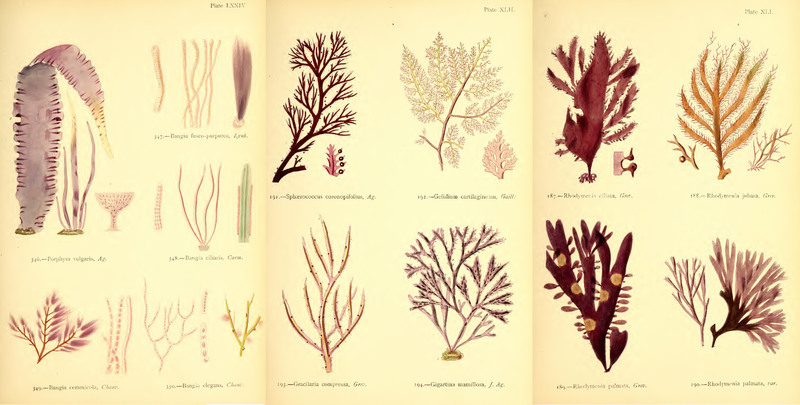
I wrote once about the Victorian craze for seaweed collecting. This was a craze in which mostly women participated who were constrained by cultural pressure not to collect the more seductive looking plants. It was based on an original article at Atlas Obscura, which is a secular magazine. My article was to look at the issue through a biblical lens.

One of the natural history books mentioned in the Atlas Obscura article was a seaweed journal by Margaret Gatty. Atlas Obscura wrote of her,

One of the best known and most dedicated of these so-called seaweeders was Margaret Gatty, a children’s book author who took up the hobby while convalescing in Hastings, on Britain’s southeast coast, in 1848. Gatty’s crowning work of algology, British Sea-Weeds, is an exhaustive compilation of local seaweeds, fully described and illustrated in 86 colored plates.

I did not know there was a whole field of study called ‘algology’. These are selected plates of her seaweed drawings,

Selected plates from Margaret Gatty’s “British Sea-Weeds.” BIODIVERSITY HERITAGE LIBRARY/PUBLIC DOMAIN

I love those colored plates from natural history books from the 1800s. I owned two rare books,

A popular history of the mollusca : comprising a familiar account of their classification, instincts and habits and of the growth and distinguishing characters of their shells, by Mary Roberts, 1851; and

Popular British conchology. A familiar history of the molluscs inhabiting the British Isles, By George Brettingham Sowerby, 1854.

I love the hand colored plates of the plants or animals they carefully drew. I also have several books by Harvard University paleontologist Stephen Jay Gould (secular guy, sigh). There’s French poet-philosopher Paul Valery in his engaging meditation on the aesthetics of the seashell, as Amazon describes his work. Anne Morrow Lindbergh’s musings on shells in her famous Gift from the Sea. And so many other books. I guess now that I’m thinking of listing them, my library contains quite a few natural history books. Rachel Carson, Farley Mowat, John Hay, Abbot & Dance…

In this article I enjoyed from the New York Times Review of Books, I learned from this article “What the Trees Say,

In 1664 John Evelyn, diarist, country gentleman, and commissioner at the court of Charles II, produced his monumental book on trees: Sylva, or a Discourse of Forest Trees. It was a seventeenth-century best seller. Evelyn was a true son of the Renaissance. His book is learned and witty and practical and passionate all by turns. No later book on trees has ever had such an impact on the British public.

Hmmm, maybe that’s why the Monty Python comedy troupe mentioned THE LARCH so often…

I love trees. Maybe I’ll get that book.

As much as I love reading about the creation from scientists of various kinds, there’s nothing like reading the Bible, God’s actual account of His world. As poetic as Lindbergh was, as witty as John Evelyn was, as precise as Sowerby or Roberts was, the thrill of reading about the creation from God Himself never fails to thrill me. As familiar as these verses are, they still ignite a reverent awe at His power:

In the beginning, God created the heavens and the earth. 2The earth was without form and void, and darkness was over the face of the deep. And the Spirit of God was hovering over the face of the waters.

3And God said, “Let there be light,” and there was light. 4And God saw that the light was good. And God separated the light from the darkness. 5God called the light Day, and the darkness he called Night. And there was evening and there was morning, the first day.

6And God said, “Let there be an expanse in the midst of the waters, and let it separate the waters from the waters.” 7And God made the expanse and separated the waters that were under the expanse from the waters that were above the expanse. And it was so. 8And God called the expanse Heaven. And there was evening and there was morning, the second day. (Genesis 1:1-8)

Nature displays God’s glory. The best place to read about that is His word, what He, Himself, has declared.

Let the heavens rejoice, let the earth be glad; let the sea resound, and all that is in it. Let the fields be jubilant, and everything in them; let all the trees of the forest sing for joy. (Psalm 96:11-12)

We are glad because as Job 12:10 says,

In his hand is the life of every creature and the breath of all mankind.

Is there any better place to be, if you’re saved? In His hand? Is there any worse place to be, if you’re not saved?

It is a fearful thing to fall into the hands of the living God. (Hebrews 10:31)

Read of His creation. The essays, poems, philosophies of the secular writers and scientists is fine, also good are Natural History books on the Bible such as The Scripture Alphabet of Animals by Mrs. Harriet N. Cook, 1842; The Plants of the Bible by John Hutton Balfour, 1885. But the originator of it all is the one to be worshiped and the best place to do that is read of Him in His word-

Do you not know? Have you not heard?
The Everlasting God, the Lord, the Creator of the ends of the earth
Does not become weary or tired.
His understanding is inscrutable. (Isaiah 40:28)

Posted in discernment, Uncategorized

Mail Call #5: My friend is following a false teacher

Mail call is a big deal (at least it was on M*A*S*H)

We love Jesus and we’re so encouraged when a new Christian or a friend who is older but growing obviously develop fruit of the Spirit. However we also grieve when friends or new Christians go the other direction and begin to stray. One way they stray is by following false teachers. I can’t describe the heartache when I see friends post quotes from false teachers, or when they gush about a Bible ‘study’ that was written by someone who is not to be consumed. It hurts. We are all one body and we want the best for our brethren. False teachers are not the best. They are the worst.

What can we do when we see a friend beginning to be drawn away? They buy the false teacher’s books, they talk about what they ‘learned’ from the false teacher, they start attending a small group of this false teacher’s studies… what can we do?

First, remember we are to be wise as serpents and harmless as doves. (Matthew 19:16). In this case, it means we are wise to the schemes of satan. One of his schemes is to send false teachers. We are aware of the danger they pose and we do not minimize it nor ignore it.

But in dealing with our friend we are to be harmless, innocent, kind, and gentle. Harmlessness does not mean gullibility, but it does mean tact.

When Jesus told the Twelve to be as wise as serpents and harmless as doves, He laid down a general principle about the technique of kingdom work. As we take the gospel to a hostile world, we must be wise (avoiding the snares set for us), and we must be innocent (serving the Lord blamelessly). Jesus was not suggesting that we stoop to deception but that we should model some of the serpent’s famous shrewdness in a positive way. Wisdom does not equal dishonesty, and innocence does not equal gullibility.

Nineteenth-century pastor Charles Simeon provides a wonderful comment on the serpent and dove imagery: “Now the wisdom of the one and the harmlessness of the other are very desirable to be combined in the Christian character; because it is by such an union only that the Christian will be enabled to cope successfully with his more powerful enemies” (Horae Homileticae: Matthew, Vol. 11, London: Holdsworth and Ball, p. 318).  

In Matthew 10:16, Jesus taught us how to optimize our gospel-spreading opportunities. Successful Christian living requires that we strike the optimal balance between the dove and the serpent. We should strive to be gentle without being pushovers, and we must be sacrificial without being taken advantage of. (Source GotQuestions)

With that basis, I’d like to offer a few ideas. These are by no means exhaustive. Please comment below with your own success stories of how to engage a friend who is following a false teacher.

I like to ask questions. I ask them in a friendly way what they are getting out of it, or why they enjoy the teacher, or what the study is showing them. If the particular teacher has demonstrated unrepentant disobedience, I might ask them about it and ask if that changes their view of what and how the teacher is teaching them. For example, Christine Caine functions as a self-stated ordained pastor and teaches women that it is OK to step into leadership roles reserved for men. You could ask your friend what she thinks of this. Your friend’s answer could illuminate the direction in which your discussion could go.

If she is unaware that there are some roles reserved for men and others for women, you could explain this to her from the Bible. If she disagrees, then you know from whence her attraction to Caine or the certain teacher is coming from. If she was simply unaware and now agrees, then she’ll likely go away from false teachers who teach opposite to what the Bible says regarding roles, and you have won your sister.

Brothers, if anyone is caught in any transgression, you who are spiritual should restore him in a spirit of gentleness. Keep watch on yourself, lest you too be tempted. (Galatians 6:1).

If the friend is open to these initial probes, I ask if I might share how the false teacher strays from the Word. It is one thing to warn, but it’s more helpful to show how to think about the Word of God and how to compare what a teacher is teaching to the Bible than it is just to say “She’s false.”

For example, Beth Moore relies on personal visions and revelations, and you could show your friend about the canon, why it’s closed, and the true meaning of Paul really meant when he admonished not to despise prophesying. (1 Thessalonians 5:20-21).

It is also good to offer alternatives. Nature abhors a vacuum. The person presumably wants to study the word, and if they desire to study it in Spirit and in truth (John 4:24) then they will want the better option. God knows how to give good gifts.

If you, then, though you are evil, know how to give good gifts to your children, how much more will your Father in heaven give good gifts to those who ask him! (Matthew 7:11)

So then I ask if they are open to receiving some solid material written by good Bible teachers. I accumulate books and CDs and booklets and pamphlets and links, and cache them in my bookcase set aside for the purpose of givine them away when the appropriate moment comes. When the time comes, I just give them the book/essay/CD etc. If I just suggest to them to go buy or acquire a certain resource, they will likely not do it. Sometimes they do. But not usually. I put the material in their hand (or electronic message box) and I have it on hand so I can do it quickly.

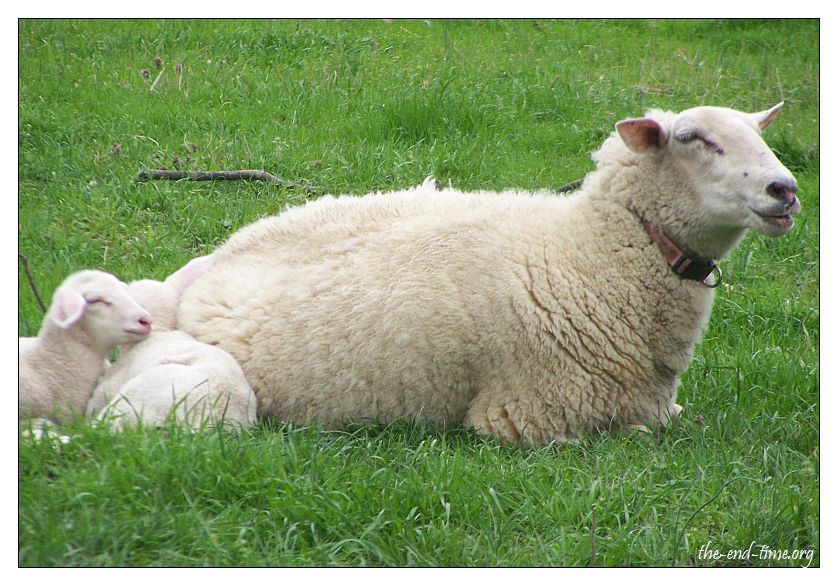
We are a discipling body. Christianity is not solitary. Lambs always have a mama sheep nearby. Be involved with the weaker ones, the new ones, the strong ones. Everyone. You could invite the friend to study with you (and your wife if you are a male leader or elder speaking to a woman) or invite him or her come to a group you’re involved with. Personal discipleship and establishing a trusting relationship works wonders.

Pray. Of course this is the best solution, the Spirit knows.

praying at all times in the Spirit, with all prayer and supplication. To that end, keep alert with all perseverance, making supplication for all the saints, (Ephesians 6:18).

Asking the Lord to deliver a sister from the clutches of a false teacher is a wonderful supplication.

~~~~~~~~~~~~~~~~~~~~~

Some resources that might help–

Here is the Gospel Coalition’s essay 7 marks of a false teacher

Here is John MacArthur’s sermon How to treat a false teacher part 1

Here is 9Marks with How I Select and Schedule Discipling Relationships

Another Christian sister who answered the same question way better than I did! Help! My friend follows false teachers

Posted in encouragement, Uncategorized

2016 By the Numbers, part 2

2016

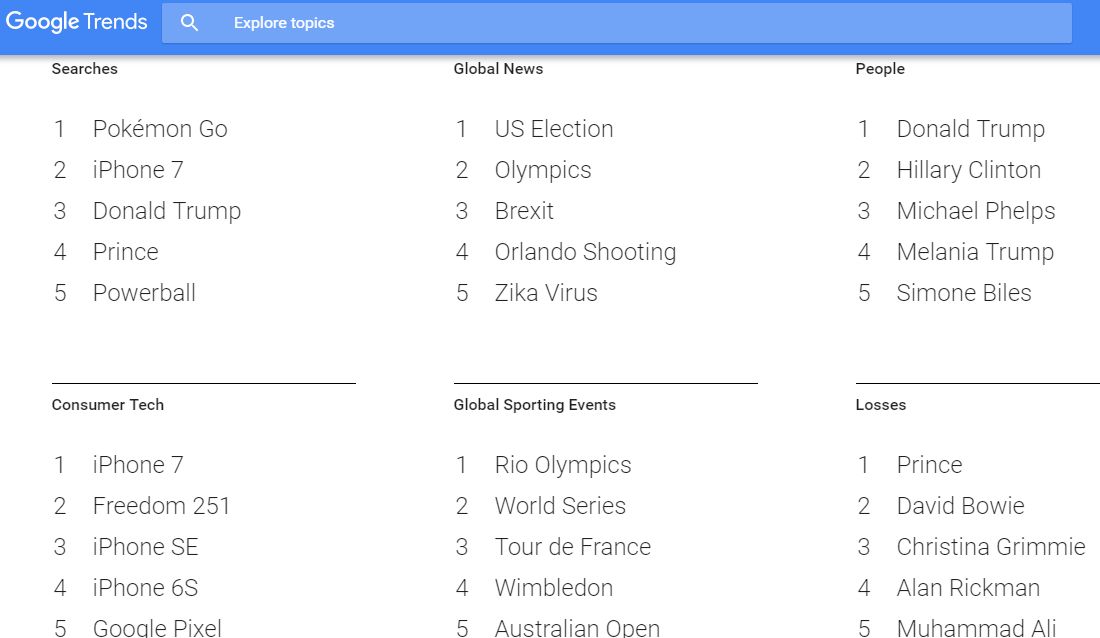
Donald Trump, a businessman and not a politician, was elected President of the United States. Fidel Castro died, the Cubs won after a 108 year baseball championship drought. Brexit, snipers, Back the Blue, Aleppo, Putin, WikiLeaks, Harambe, Hillary, hot air balloon tragedy, school bus crash tragedy. Deaths of Debbie Reynolds, Carrie Fisher, George Michael, Prince, Bowie, Scalia, Alan Rickman, Glen Frey, Nancy Reagan, Gary Shandling, Patty Duke…OK enough. People died. Things happened.

Volcanos erupted-

The Atlantic:
2016: The Year in Volcanic Activity
Alan Taylor DEC 14, 2016 32 Photos

Although this has been a relatively average year for the world’s active volcanoes, the activity that did take place was still spectacular. Out of an estimated 1,500 active volcanoes, 50 or so erupt every year, spewing steam, ash, toxic gases, and lava. In 2016, erupting volcanoes included Tungurahua volcano in Ecuador, Villarrica in Chile, Mount Sinabung in Indonesia, Piton de la Fournaise on Réunion Island, Kilauea on Hawaii, Pavlof Volcano in Alaska, Mount Bromo in Indonesia, Nyiragongo in the Democratic Republic of Congo, Ethiopia’s Erta Ale volcano, and more. Collected below are scenes from the wide variety of volcanic activity on Earth over the past year.

Earthquakes shook,

People searched,

Pastors fell,

Paul Hand, Tullian Tchividjian, Darrin PatrickPerry Noble, RC Sproul Jr, Tom Chantry, David Reynolds… the list is depressingly long.

When any pastor grievously sins against Jesus and falls below reproach and disqualifies himself, it’s a poor witness to his flock. When he does so as a famous pastor with a large, well-known platform, it’s worse because the sin is more widely seen. He has brought reproach onto the spotless name of Jesus for all to see and mock.

Even longer though is the list of pastors well-known and not well known who labor tirelessly in the trenches of spiritual warfare faithfully leading their flocks. They toil amid the narrow lines of correct doctrine, watching fishbowl eyes watching, and full guns of satan blazing against them. Thank you pastors! I have benefited from the ministrations and sermons of locally known pastors James Bell, Phil Andrukaitis, and more well-known pastors such as Don Green, John MacArthur, Phil Johnson, Chris Rosebrough, Alistair Begg, RC Sproul, Tim Challies, Todd Friel…and the ministries of Wretched Radio, Reformation Network, and Expositor FM, MLJ Trust, Ligonier, among many others.

As you drive down the street and see a church here and there, inside there is most likely a true pastor laboring for the Lord, doing his best to bring the truth and witness with his life. Thank you Pastors!

On the personal front, I watched movies, TV, and read books this year, of course. I think Tower is the best documentary I’ve seen in a long time. The IMDB plot summaries read:

Nearly fifty years ago, a gunman rode the elevator to the twenty-seventh floor of the University of Texas Tower and opened fire. TOWER, an animated and action-packed documentary, shares the untold story of that day – when the worst in one man brought out the best in so many others.

Animation, testimony, and archival footage combine to relate the events of August 1, 1966 when a gunman opened fire from the University of Texas clock tower, killing 16 people.

The first mass shooting in the United States, it caused shock and upset. Today when it happens it’s just another normal day. Sadly. The documentary is historical, informative, moving, and thoroughly absorbing because, in my opinion, it focuses almost solely on the victims and not the shooter.

Here is Rolling Stone’s review:

After reading a 2006 oral history of the shooting in Texas Monthly – as told through the voices of surviving victims – Maitland set to work on Tower, a gripping new documentary currently in theaters that augments rigorously researched journalism with a devout humanistic bend. Combining archival footage with animated sequences of first-person accounts, interviews and police reports, the film bypasses Whitman’s backstory – his name is only mentioned three times – and focuses on lesser-known but key characters: the bookstore manager who stormed the tower with police; the 17-year-old who rushed into the crossfire to save a victim’s life; and the off-duty officer who helped bring the gunman down.

Netflix’s The Crown is sumptuous and focuses on a historical person who is still alive, an interesting dichotomy. Queen Elizabeth II has been reigning longer than any other British Monarch, over 70 years now, so her early reign is definitely history but she is active and living so she is also contemporary. I’ve enjoyed the discussions the actress Elizabeth had with actress Queen Mary her grandmother, about God raising up a sovereign, and the holy duty that sovereign has to God and the people. The Crown focuses on her first few years of her reign, from before her ascension (1945) to afterwards, 1955. The Crown is a television standout this year, and reminds us of what television could be. Elizabeth shows us what a Queen should be.

I started taking LigonierConnect classes this year. I decided to share this part of the annual update with you not to boast, but because I believe it’s important that as a teacher, blogger, Christian woman, readers should know my credentials and commitments to Christ. Teachers should live a transparent life. As a Christian teacher, blogging in a vacuum absent personal context is, in my opinion, wrong. Readers need to assess a teacher’s credibility, and teachers need to be accountable to readers. So I decided to let you know that I’m serious about an organized approach to the faith in terms of personal study and growth.

As an overview, I faithfully attend a Reformed Baptist church with a teaching pastor and three other elders. I strive to pursue holiness and apply biblical precepts to my life in work, social spheres, online, and through my personal responsibilities such as finances, charity, discipling and the like. I take classes when I can, and read the Bible and study it. I pray.

As for my current classes, a nominal annual subscription allows access to myriad offerings, or one could choose to pay as you go, (classes are less than $20, many are less than $15). One could even partake of their free classes, of which there are many. I’ve taken and completed:

  • Recovering Beauty of the Arts,
  • Justification by Faith Alone,

I am in-progress with:

  • Principles of Biblical Interpretation,
  • Understanding the Tabernacle,
  • Do More Better.

Do More Better is led by Tim Challies and I highly recommend it. Challies focuses on productivity; the biblical definition of it, how to focus your life so that it aligns with it, creating a mission statement for each sphere in your life, and more. For non-subscribers it costs $15 and .75 CEU’s are available to earn upon completion. Here is the official synopsis:

It really is possible to live a calm and orderly life, sure of your responsibilities and confident in your progress. This course, based on Tim Challies’ book, Do More Better, provides a short, practical guide to productivity. Whether you are a student or a professional, a work-from-home dad or a stay-at-home mom, it will help you learn to structure your life to do the most good unto the glory of God.

As the New Year begins, we are awash in suggested Bible Reading Plans, Reading Challenges, changing lifestyle commitments, diet or exercise resolutions, I know it’s a lot. Americans like to be vigorous-tending-toward aggressive in doing life. As it’s the Resolutions time of year, I’ll mention Jonathan Edwards’ 70 Resolutions.

Christianity Today published this synopsis of Edwards’ resolutions this morning:

Resolutions of Jonathan Edwards
Mark A. Noll

Typical of many other serious young men of his day, the young Jonathan Edwards drew up a list of resolutions, committing himself to a God-centered life lived in harmony with others. The list, excerpted here, was probably first written down in 1722 and added to at several times in his lifetime. There are seventy resolutions in all. The excerpts here give a picture of the seriousness and resolve with which Edwards approached life.

Here are the 70 Resolutions organized by topic.

Here are the 70 Resolutions listed in original language

The combination of the Do More Better productivity class, and reading the 70 Resolutions has helped renew my own commitment once again to do more, better. Paul wrote that we should so all to the glory of God, even if it is eating and drinking. We’re given a number of days on earth, how can I enjoy God and glorify Him while I’m here? Between the blessing of technology and being able to select some Bible Reading Plans suited to me, the Productivity Class, and the inspiration of the fathers of the faith like Spurgeon (always productive) and Edwards, (resolved and productive), I am looking forward to the New Year with renewed vigor.

I’m not going to mock, underplay, or dismiss the importance of this time of year’s opportunity to “take stock”. Edwards reminded himself to take stock weekly, by reading and re-reading his Resolutions. Challies advises the same in his class, to read and re-read one’s responsibilities and mission statement weekly. Weekly, monthly, and annual taking stock is wise.

So teach us to number our days that we may get a heart of wisdom. (Psalm 90:12)

As Alistair Begg asked when preaching this verse, ‘Is the Psalmist asking a mathematical question?” No! We ask God to make us aware of our limited time on earth so that we may serve Him with vigor and love and diligence. Barnes’ Notes says of the Psalm verse,

So teach us to number our days – literally, “To number our days make us know, and we will bring a heart of wisdom.” The prayer is, that God would instruct us to estimate our days aright: their number; the rapidity with which they pass away; the liability to be cut down; the certainty that they must soon come to an end; their bearing on the future state of being.
That we may apply our hearts unto wisdom – Margin, “Cause to come.” We will bring, or cause to come, a heart of wisdom. By taking a just account of life, that we may bring to it a heart truly wise, or act wisely in view of these facts.

Lord, in 2017, make my heart truly wise, aid me in the pursuit of Holiness, give me a life adorned with Your wisdom, and with courage and grace. Help me to be an elder example to the younger, and to submit to elder and wiser examples than me. Our days are numbered. As many as I have left, I want to do more for Him in better ways than I did in 2016.

Happy New Year!
Posted in encouragement, Uncategorized

The discovery of 2000 year old Leviticus fragment

What were the original languages the Bible was written in? How did we get the Bible? Is the Bible corrupted by men when they were translated?

Good questions!

The Bible was written in two main languages, Hebrew in the Old Testament, and Greek for the New Testament. Two other languages appear briefly. One of them is Aramaic. A few chapters in Ezra and Daniel were originally in Aramaic and one verse in Jeremiah, also.

There are a few words in another, fourth language that appears extremely briefly for a few words in Job, and that’s Ugaritic. The Ugaritic does’t impact the original Bible’s reading and interpreting so much as it does in helping to understand the Hebrew overall.

Two thousand tablets written in Ugaritic were discovered in 1929. The Kingdom of Ugarit was located in Syria, and was a thriving kingdom of the late Bronze Age (1570 – 1200 BC.) It co-existed with the Hebrew tribes and,

The Ugaritic texts offer innumerable literary and religious parallels to biblical literature. The parallels are so rich and in some cases so specific that it is evident that the Ugaritic texts do not merely provide parallels, but belong to a shared or overlapping cultural matrix with the Hebrew Bible. (Source)

The Ugaritic language was almost letter for letter identical to Hebrew, and where the Hebrew word was unknown or difficult to interpret in context, the Ugaritic texts helped as a kind of Rosetta Stone in interpreting the Hebrew biblical word properly.

Continue reading “The discovery of 2000 year old Leviticus fragment”