Posted in encouragement, Jerusalem Countdown, prophecy, rapture, scripture

A good rapture clip to watch

Here is a clip from the movie Jerusalem Countdown, released in 2012. The movie was from a book written by Pastor John Hagee. I haven’t seen the movie and I make no statement or claim about Hagee because this essay is not a discussion about the book, the movie, or the pastor. It is not a discussion about whether there IS a rapture, nor is it a discussion about the timing of the rapture.

I’m focusing here on the visuals of the rapture as presented below in a 3-minute movie clip.

At some point, the LORD will declare the Age of Grace closed, for He will have gathered the quota of people He has grafted-in to Himself (Romans 11:25). This will be the signal that the pause put in place for many years in God’s working with the Jews, will resume. That pause was initiated 7 years before the close of the age of Law. (Daniel 9:24-27). God did this because the Jews, who were given charge to make God known in the world, failed to do this, and they rejected Him as their Messiah when He came in His incarnation. (Romans 11:11, all of Romans 9). So He began gathering a Gentile people to Himself and charged them with the task. (Matthew 28:18-20; Acts 1:8). When the grafting-in is done, the Age of Grace is done.

Here are the two most clear verses related to the joy that awaits the persevering Christian, also known as the rapture. The joy comes from knowing that the rapture is an event, it will happen, and there is no judgment connected with this event for any Christian. Christians can look forward to it in hope and blessing.

in a moment, in the twinkling of an eye, at the last trumpet. For the trumpet will sound, and the dead will be raised imperishable, and we shall be changed. For the trumpet will sound, and the dead will be raised imperishable, and we shall be changed. (1 Corinthians 15:21-52)

For the Lord himself will descend from heaven with a cry of command, with the voice of an archangel, and with the sound of the trumpet of God. And the dead in Christ will rise first. Then we who are alive, who are left, will be caught up together with them in the clouds to meet the Lord in the air, and so we will always be with the Lord. (1 Thessalonians 4:16-17)

In 2008, there used to be many more rapture clips on Youtube. Just as there are amateur film-makers publishing clips related to their favorite secular subject, there are amateur Christian film-makers publishing clips of their favorite subjects, too. Capturing the joy, fear, mystery, and wonder of the moment of the rapture is a favorite among many people. We will not be here to see that moment, but we are fascinated with the instant that heaven and earth collide. What will it look like? What will it sound like? Will there be many people found to be Christian who will go? Will few found to be Christian and are called home? What about the graves?

But for some reason the rapture clips are fewer in number than they used to be. Fortunately one thing Youtube is good for is you can always find a cheesy 70s or 80s rapture or Tribulation movie. Thirty and forty years ago, eschatology was a more mainstream Christian doctrine. It was talked about, preached, and there were books and movies made. I know that books like ‘88 Reasons Why the Rapture will be in 1988′ blighted the cause, but still, with all the wrongheaded stuff, there was right-headed stuff too. Now there’s no stuff. Either there’s either a big yawn, or a black hole where eschatology used to be.

I watched part of one of the rapture movies the other day on Youtube, it was excruciatingly cheesy and awful, but I did like the witnessing parts of it. It obviously had come out of the 1970s Jesus Movement. It preached rapture from Matthew 24, which is incorrect. However it was earnest. As I said, the parts where the witnessing happens was enjoyable. A key to the witnessing was the inclusion of eschatology, something you don’t see today. There was no “God has a plan for your life” but “Jesus wants you to be ready for your next life.” I think we are cheesier now in the way we witness, and totally wrong-headed about failing to speak of the future prophecies and the Second Coming of Christ. Paul was with the Thessalonians only three weeks, and he taught them about the rapture right away.

Anyway, the movie I watched part of was called “A Thief In the Night” series, and I think there are several movies in the sequence. However, movies like that were so low budget, they couldn’t afford to show the impact of the rapture, lol. This clip does.

In most rapture movies, the event is invisible. During the instant of the rapture, and the few moments after the rapture, there is no noise, no impact on land or sky, and nothing to indicate people have been taken except a pile of clothes left behind. People look adoringly at a husband, go in the kitchen to get him some coffee, and return to see an empty chair and a wedding ring on the table.

In the clip above, there is a light in the sky, a parting of the clouds, a rumble in the air and on the earth, and blazing light for a moment as souls are taken.

After the sky snaps shut, there are some clothes drifting down from above, lol. Then the cars start crashing and a helicopter falls from the sky. The chaos begins.

I think the above depiction is closer to the way it will be. I’m not sure, of course, no one is, aside from what is declared in the verses of holy scripture. But the verses themselves do offer some clues, and other verses do also. In the 1 Corinthians verse, we read

–the Lord himself will descend from heaven with a cry of command,
–with the voice of an archangel,
–and with the sound of the trumpet of God

Many rapture movies present the rapture as happening silently, or if there is noise, only the Christians will hear it. Yet the rapture will be an unprecedented global event, affecting every person on the planet. Will no one hear the trumpet? Will only Christians hear the cry? What were the circumstances when other cries from heaven occurred in the bible? Were they undetectable to bystanders? No.

There’s the scene on the road to Damascus. Jesus in heaven broke through the veil separating heaven and earth, and spoke to Paul. Paul heard Him clearly and conversed with Jesus. (Acts 9:4). The men who were with Saul/Paul heard the voice, too.

The men who were traveling with him stood speechless, hearing the voice but seeing no one. (Acts 9:7)

Now those who were with me saw the light but did not understand the voice of the one who was speaking to me. (Acts 22:9)

In John 12:29-30, Jesus is explaining that He must die. Jesus praises the Father, and the Father answers from heaven-

Father, glorify your name.” Then a voice came from heaven: “I have glorified it, and I will glorify it again.” The crowd that stood there and heard it said that it had thundered. Others said, “An angel has spoken to him.”

In Daniel, when the angel appeared to him and gave the vision, Daniel wrote later, “I, Daniel, was the only one who saw the vision; those who were with me did not see it, but such terror overwhelmed them that they fled and hid themselves.” (Daniel 10:7 cf. Luke 2:9)

It seems from these examples that when a voice from heaven speaks to someone on the ground, those on the ground hear it, or some reverberation of it. It seems that when a connection is made from heaven to earth, people sense and know that something supernatural is happening (they usually express fear or terror). I think when Jesus cries out and the trumpet sounds, people will hear a rumble or thunder. I think they will see a light. I think it very likely may be as it was shown in the clip. Food for thought, idly. We won’t know until it happens of course. And I believe that moment is near.

Please enjoy an exposition of the rapture from Thessalonians, Corinthians, and John, by John MacArthur.

Here is a good verse to ponder as you watch, and think about the perfections of our glorious Savior

Beyond all question, the mystery from which true godliness springs is great: He appeared in the flesh, was vindicated by the Spirit, was seen by angels, was preached among the nations, was believed on in the world, was taken up in glory. (1 Timothy 3:16)

The rapture is when He takes His bride up to glory with Him. Encourage one another with these words.

———————–

Further Reading:

Gentiles are Included

Spurgeon devotional: Purity of Heart and Life

Posted in online photo editor

Playing with online photo editors

I remember when the internet becasme available to the masses. We were thrilled with 300 baud. Word processors came along just as I was getting my Master’s degree. No more white-ot! No more typewriters! No more carbon paper!

Then digital cameras were invented. Wow! No more running the drug store and waiting around for pictures to be developed!

Adobe products came out, very expensive but necessary if you were running a newspaper. We needed Photoshop, Illustrator, and all the rest. Who needed weekends when you had a three-inch thick manual so you could learn how to use Illustrator! In my case, I hired a tutor, lol. So complicated but so massively cool.

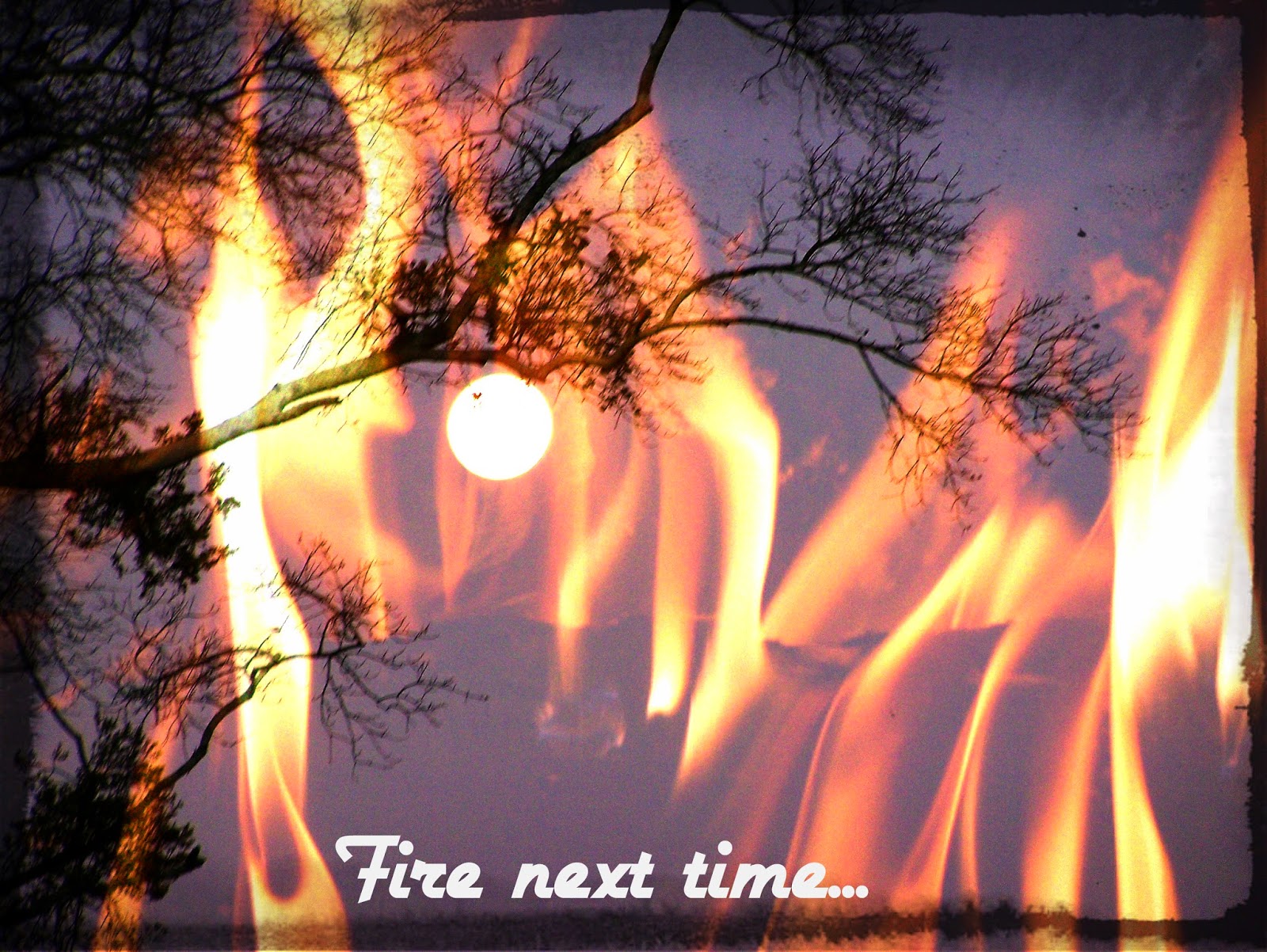
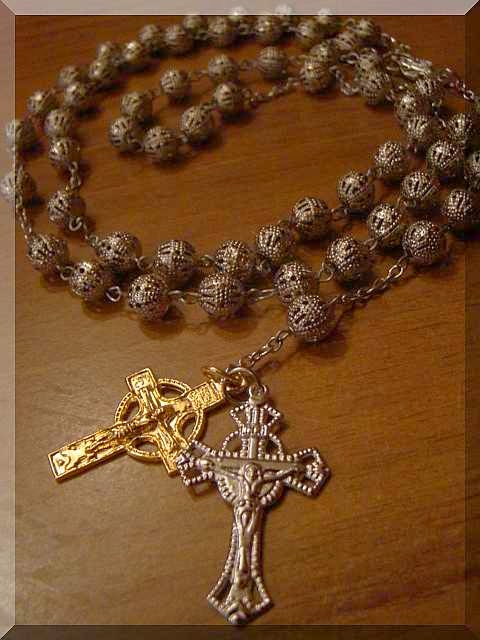
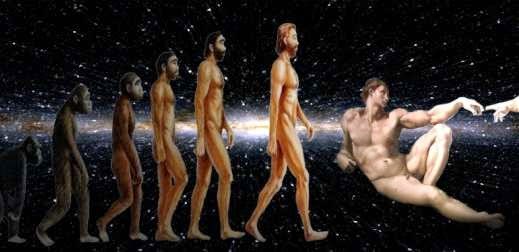
Now there are free online editors to make your photos look cool. At least to my child-like and untrained eyes, they look cool. I just layered with three pictures with this online editor, just to test it out and practice. I never could get the hang of layering in Photoshop but here it only took me a short minute to make these photos massively cool.

I do this because I love to play with my pictures, and also I need photos to illustrate my writing. Searching for just the right photo on Creative Commons is time consuming, especially when I have so many I’ve taken myself and I know where they are…but are too plain to really have much pizazz. But look:

Pretty neat! The fire photo, is of a moonset behind a tree branch, but I’m often at a loss to depict the fervent fire that will end the world (2 Peter 2:12) and I think this overlay does it.

Anyway, technology is very cool. Recently on Twitter I saw a photo of an old ad from Radio Shack, circa 1978, advertising a sale on record players, video recorders, telephones, tape recorders, computer, all that. And the Tweet said ‘all these now fit in your pocket’ in one technological marvel. Anyway, technology is amazing and I like my free photo editor.

Posted in contemplative prayer, discernment, prayer beads

Should Protestants use prayer beads? Part 2 of 2

Should Protestants use prayer beads? Part 1 here

Free wallpaper

In the previous part 1, I’d laid out the history of prayer bead use. It is a practice that comes from other religions such as Islam, Hinduism, Buddhism, Catholicism, and Wicca. It has been imported to Christianity by syncretistic and now by ecumenical means. It is a self-help practice that is actually the opposite of what Jesus told us to do in prayer.

Kristen E. Vincent is a prayer bead maker and a prayer bead book author. I was struck by her article at Patheos, titled Prayer Beads: Yes, It’s OK for Protestants. In her article, she makes the case that using the bead technique is a helpful and biblical prayer tool. How? She uses Numbers 15:39. She never cites it in the article nor does she explain the verse correctly. The verse is taken out of context and applied incorrectly to today’s Christian. More on that specifically in a moment. Let’s look at the general discernment practices first.

Rule #1 for people to twist the bible when teaching, is to cite something from the Old Testament. Many people do not read the OT, they are not taught the OT, and their preacher rarely preaches from the OT. So when a person claiming authority or knowledge comes along and references something in the Old Testament, most people take it at face value. This is why it is SO important for you to read all the bible. Unfamiliarity always works against you.

Rule #2 for twisting scripture: reference that it’s in the bible, but don’t present the verse from the bible. Many people won’t look it up for themselves. They don’t know how, they don’t have the time, or they are lazy. It took me a minute or two to open to Numbers 15 and then find the verse she was talking about. At least she gave the book number. Many bible twisters don’t even to that much, making it even harder to find the verse they are talking about. Which is the point.

Rule #3 is to rip the verse from its context to make a personal application. Many, many bible teachers are doing that with the Old Testament these days. Rachel Held Evans and Beth Moore are two obvious recent offenders. Old Testament passages are either allegorized, or are directly applied to New Testament Christians. It takes study, nuance, understanding, and patience to learn the OT and which parts directly apply to us. Yes, all scripture is profitable, but there is a reason why NT Christians today eat shellfish and don’t build booths for Sukkot.

Here is an excerpt of Mrs. Vincent’s case for using prayer beads:

As the years passed and they got more and more tired of being hot and sticky and thirsty, they began to rebel. They even argued with God, saying they would be better off as slaves back in Egypt. They were beginning to think God had abandoned them.

In response, God told them to take up the fringe on their garments. Bet they didn’t see that coming! How could fringe help them in this situation? But God understood the Israelites were physical beings. Even though God had promised to be faithful and always be with them, God knew the Israelites would get so focused on being hot and miserable and forget God’s promises. God knew they needed something tangible – physical – to hold onto and remind them that God was with them. So God told them to take up fringe – a common, ordinary, everyday object – and hold onto it when they needed comfort, guidance, assurance, love.

So the upshot is that prayer beads are OK to use because:

–they’re kind of in the bible,
–the Israelites used them because they were hot
–God wanted to give them something tangible to show He loved them (as opposed to a Teddy Bear?)

Here is the actual verse:

And it shall be unto you for a fringe, that ye may look upon it, and remember all the commandments of the LORD, and do them; and that ye seek not after your own heart and your own eyes, after which ye use to go a whoring: (Numbers 15:39)

Here is what is going on in context. Context means, when you read a verse, read the entire page. Read before and after the verse. Even better, read the whole chapter. Gain an understanding from the introduction to the book of the reason for the book, its theological themes, purpose, and audience. That’s context.

The first 25 chapters of Numbers records the death of the first Israelite wilderness generation. The remainder of Numbers records the replacement of the second generation. The book, then is a transition from sin and judgement (Num 1-25) to redemption (Num 26-36). Though the Israelites grumbled and complained, God did not forsake them. He punished them, but He provided for them. In this first part of Numbers, He did so mainly by delivering commands and expecting them to keep them. When they didn’t, He punished. (Paraphrased from Introduction to the Old Testament, Dillard)

In the Law of the Tassels, God told the Israelites to look at the fringe to remember Him and His commands. This was so they could obey. If they obeyed, they would not be killed, (Numbers 15:31), like the Sabbath-breaker in the verse immediately prior to the fringe verse was, or Korah’s group of 250, immediately after, 2 verses later.

The Sabbath-Breaker Stoned, c. 1896-1902,
by James Tissot

The Numbers 15 chapter is consumed with details about unintentional sin and of presumptuous sin. As a matter of fact, since the fringe verse comes immediately after the Sabbath-breaker’s stoning, it can be said that the fringe was given so they would remember the punishment, and in so remembering, obey. So absolutely it was not because they needed a loving hug. The context is sin, judgment, and death. The fringe was not given because the Israelites were “hot and sticky.”

The author of the Prayer Beads article then dispenses with the bible and presents three secular reasons for using prayer beads.

When people use prayer beads, isn’t the focus on the beads rather than God? No. The focus is on developing and going deeper into one’s relationship with God. That’s what prayer is about. The beads are just a tool to facilitate that.

If a tangible item can help deepen my relationship with God (as opposed to faith, obedience, and the Holy Spirit) then it stands to reason that more prayer beads will help me go even deeper. Perhaps I will buy a longer prayer bead string than my pew sister has. Then I will be very pious. That is the logic the Pharisees used. See, the author did not show what happened in the end to the Israelites who “needed something tangible to help them remember”. By the end of the Age of Law, the Pharisees had lengthened their tassels to show their very, very, deep, deep relationship with God. Jesus called them out on this. He called them hypocrites.

Here is John MacArthur on the Law of the Tassels, and of taking an internal intangible and making it tangible action:

They understood that that was symbolic of having the law of God in your mind, that’s thought, and having the law of God applied in your action, that’s work, that’s living….But about 400 B.C. some Jews decided that they needed to make that internal principle of the law of God in the mind and in the behavior an external act.

Barnes Notes shows us the end of the story, a story of which Mrs Vincent only showed the beginning of. This is another discernment lesson. False teachers only show part of the story. They omit the parts that don’t fit their pet theory. Not only were the fringes ordered to help them obey so they would not be judged, at the close of the Age of Law, we see how devastatingly man takes that tangible and corrupts faith with it. Barnes:

The arrangement of the threads and knots, to which the Jews attached the greatest importance, was so adjusted as to set forth symbolically the 613 precepts of which the Law was believed to consist. In our Lord’s time the Pharisees enlarged their fringes Matthew 23:5 in order to obtain reputation for their piety.

So did the fringes keep Korah from disobeying? No. Did the fringes keep the Pharisees mindful? Hardly. Fringes with knots didn’t work.

In the second of three secular reasons we are told prayer beads are OK to use, Mrs Vincent said,

How can they help? For starters, how many of us have begun a prayer, only to realize a minute later that we’re making the grocery list instead? Feeling the beads can help you maintain your focus in prayer. How many of us have rushed through the day and forgotten to pray? Seeing the prayer beads lying on a table, we are reminded to take time to sit with God. And how about those times when we, like the Israelites, feel lost and abandoned in the wilderness places of life? We can hold onto the beads and know that God is as close as the beads in our hands.

We do not need a man-made thing to remind us of our faith. We have a new covenant, one which Peter writes about:

This is now the second letter that I am writing to you, beloved. In both of them I am stirring up your sincere mind by way of reminder, 2that you should remember the predictions of the holy prophets and the commandment of the Lord and Savior through your apostles, (2 Peter 3:1-2)

We have the scriptures to stir our memory! Peter told them their minds will be stirred by remembering the Old Testament (Prophets) and by this New Testament, (through his epistle) and the Apostles (and by extension their epistles when they were canonized). He did not say that prayer beads will help them remember. He said the scriptures will.

The third reason we are told that it is OK to use prayer beads is this:

Why are beads even necessary in prayer? After all, we Protestants have been praying just fine without them all these years. Indeed. And certainly, not everyone will want or need to use beads in prayer. But many people struggle with prayer; they don’t know what to say or how to go about it. Prayer beads can offer structure, a path, a safe place even, for prayer.

Source

First, raise your discernment when anyone introduces a new way to do things. Jesus and the Apostles set the standards for holy living, faith, and practice. Anyone who has a new and shiny idea is always going to be wrong.

Secondly, prayer beads will help us pray safely? If I send some stringed beads to the Chinese Christians, or the Iraqi or Syrian Christians, they will then have a safe place to pray? You see how ridiculous it is to apply First World terminology to the global church’s faith and practice.

Third, the ‘path’ is laid out by scripture. Even more specifically, it is laid out in the Lord’s prayer. (Matthew 6:9-13)

Last, as for struggling with prayer, I know many people do. I do sometimes. That is why we have the Holy Spirit.

But the Helper, the Holy Spirit, whom the Father will send in My name, He will teach you all things, and bring to your remembrance all that I said to you. (John 14:26)

When we struggle, the Spirit is here, inside us, to help us deepen our relationship with the Father. Not prayer beads, made by human hands. The precious Advocate will help.

Likewise the Spirit helps us in our weakness. For we do not know what to pray for as we ought, but the Spirit himself intercedes for us with groanings too deep for words. (Romans 8:26).

Are you going to look Jesus in the eye, who sent the Spirit to help us in our groanings, and say, ‘Nah. I’m good. I got my beads.’ Discernment alerts should always raise in your mind when someone tries to get you to do things in your own strength, and it takes your eyes off Jesus in the process.

Free wallpaper

And let us not forget Jesus is our intercessor, we must have faith that our prayers reach the ears of the Father by having our High Priest intercede for us. Why would I want to perform in my own strength, with some man-made clay or glass beads, when I have Jesus and the Spirit to help me in my struggle?

A discerning commenter, praise God, said this on the site where the essay was published

Mestes • 3 days ago

Let’s all try to remain focused on the topic at hand. There are a couple problems with this blog entry: 1) We’re being told that Numbers 15 in the Bible is talking about something that it clearly is not. 2) The author of this blog entry happens to make and sell said “Prayer Beads”. This article is not a deeply theological expression of a particular viewpoint meant to edify the body of Christ or glorify God in any way. It is nothing more than an advertisement for a product. As far as the personal use of beads or notes or whatever, I’d say use whatever you want. But don’t twist scripture to say God gave fringe to Israel as a gift. That didn’t happen. Don’t imply that the use of your “Prayer Beads” will deepen or do anything to develop your relationship with God. It won’t. As far as ecumenism: It absolutely is a way of blurring lines between Christianity and Roman Catholicism. That is clearly the undertone of this article (i.e. the title and the last sentence: “Even for Protestants”) And if you’re forgetting to pray, it’s not because you don’t have “Prayer Beads”. Christians don’t “forget” to pray, as though it’s an obligation. Christians pray because it’s the lifeblood of our relationship with the God of the Bible.

——————————————-

Further Reading

What are prayer beads? Is it okay to use beads while praying?

Praying unceasingly

Should Protestants use prayer beads? Part 1 here

Posted in contemplative prayer, discernment, prayer beads

Should Protestants use prayer beads? Part 1 of 2

EPrata photo

The beauty and simplicity of the Gospel is a stunning foundational aspect of true Christianity. The supremacy of Christ because of His incarnation and sacrifice is a wondrous fact for Christians to behold. God was pleased with His Son’s work on earth and His sacrificial death, and as a sign of that satisfaction, He raised Jesus from the dead on the third day. Our bondage to sin was now broken.

Because of Jesus’ work on earth and on the cross, it means that we have His righteousness imputed to us. We don’t do anything to earn it, it is a gift of grace, planned by the Father, earned by Christ, and delivered by the Spirit.

Though a true Christian’s bondage to sin is now broken, our bondage to the flesh is not. We are living beings inhabiting flesh and that flesh contains sin nature. Because of this, the Father sent the Holy Spirit to help in us to resist the flesh. In our flesh we cannot achieve anything that will satisfy God (Isaiah 64:6) and in our flesh we never will. We can’t. But the Spirit in us gives us the power to persist in overcoming sin. This also is stunning in its simplicity.

No it’s not easy, but it is simple. The bottom line is, it’s all Jesus.

Every other religion on the face of the earth rejects that simplicity. At root, they cannot and will not believe that humans in the flesh can’t do something to earn our way to Nirvana, Heaven, Valhalla, or be reincarnated as a higher being on the next step up the ladder. They reject the free gift of grace (by refusing to acknowledge their sins and repent) and try to climb that ladder toward salvation by themselves.

They will always fail.

Grace Cathedral labyrinth, Interior of Grace Cathedral, San Francisco.
Wiki CC. By Marlinth

CC, by Flavio~

Though ecumenism this is not new, (John and Paul fought against the infiltration and acceptance of Gnostic practices in the first century), the past ten years has seen an increased push of syncretism. You’ve heard of ecumenism, which the Oxford Dictionary defines as The principle or aim of promoting unity among the world’s Christian churches. That sounds good but it’s not. That is because not all churches that call themselves Christian are actually Christian. Any church that says they follow Jesus Christ is considered Christian, even if they deny essential truths about Jesus. This includes Catholic, Jehovah’s Witness, and Mormon. Yet practices from among different ‘Christian’ churches creep in to the true church all the time. This is because of either a lack of discernment or a lack of courage to stand and stop the creep.

There is a similar problem and it’s called syncretism.

Syncretism is also alive and well. Syncretism is an effort among non-professing Christian religions and Christian religions to accept each other’s beliefs and to cross-adopt its practices. GotQuestions defines syncretism this way:

Religious syncretism often takes place when foreign beliefs are introduced to an indigenous belief system and the teachings are blended.

The Catholic church does this when they evangelize an indigenous area. Missionary friends in South America tell me that where there is a Catholic cathedral, church, or chapel, there will usually be an area where the indigenous descendant Mayans can worship or sacrifice in a grotto out front, then they go inside the church to hear a sermon (and leave their money).

There is currently a Protestant craze to adopt some of these pagan beliefs and practice them inside Christianity. Labyrinths are one. Catholics adopted this contemplative technique from Greek mythology, (Daedalus, Theseus, and the Minotaur of Crete) then the practice gravitated to Greek pagan life, then Roman. What a contemplative labyrinth walker does is meander along a unicursive path to a center, then walk the path back out again. A labyrinth walk is supposed to enhance the spiritual journey of the contemplative. Learning a higher spiritual meaning rests on the contemplative person’s own efforts during the walk.

Prayer circles are another syncretistic activity accepted into Christianity, where a person draws a circle and sits or stands inside it and prays. Deeper meanings are supposed to come to the contemplative by performing this technique, and again, these meanings are given to the contemplative by his own efforts. Prayer circles originate from Wicca (witchcraft). I wrote about prayer circles here, and showed it in pictures here.

The latest fad to enter conservative Christianity is prayer beads. Prayer beads are well-known in Hindu, Buddhist, Islam, and Catholic religions, among others. I read an article recently from a woman with two divinity degrees and whose husband is a Methodist pastor. She wrote on Patheos that a Protestant using prayer beads is perfectly all right. By the way, the woman has a side business of making and selling prayer beads. More on that article in part 2.

Methods and items from other religions are always wanting to creep into Christianity. Man always wants to DO something to show we can achieve spirituality on our own. Prayer beads is yet another infiltration.

What are prayer beads?

Prayer beads are used by a worshiper to mark their repetitions of prayers, chants or devotions. Beads or knots is an ancient way of counting or keeping track of goods, of history, debts owed, or the calendar.

The ancient Mayan used knots on a rope called a quipu. Spanish chroniclers concluded that quipus were used primarily as mnemonic devices to communicate and record numerical information. (source). Later, this mnemonic device was used in religion to keep track of prayers. Right, representation of a quipu.

How do the different religions use prayer beads?

Hindus use Mala beads for their ‘do something,’ try harder to get to the truth, spiritual techniques. About.com explains the Japa technique using Mala beads.

There are many ways to connect with the truth; some would say that not all fit into the meditation category, so perhaps it could be said that spiritual technique and meditation are several of the dynamics that get us from HERE to THERE. … The general tools here would be a rosary of Mala (meditation beads, necklace, numbering 108). One would simply start with the first bead of the mala then chant the mantra on each of the 108 beads till we come to the last bead, then this process would be repeated approximately 93 times, which is a number over 10,000.

Mandala Mudra Prayer Beads, India, 1974, by Ernst Haas

Buddhists use prayer beads also. Japanese Buddhists, Chinese Buddhists, Taiwanese Buddhists…all use them. In some sects they are called ‘mindfulness beads.’ Wikipedia explains.

Theravada Buddhists in Burma use prayer beads, called seik badi, shortened to badi. 108 beads are strung on a garland, with the beads typically made of fragrant wood like sandalwood, and series of brightly coloured strings at the end of the garland. It is commonly used in samatha meditation, to keep track of the number of mantras chanted during meditation.

Catholics use prayer beads. Their bead string is called a rosary and it performs the exact function that Hindu and Buddhist and Wiccan does for the contemplative seeking various spiritual things in prayer.

Catholic Rosary beads- from Wikipedia

Rosary-based prayers are mostly Roman Catholic prayers said on a set of rosary beads. These prayers recite specific word sequences on different parts of the rosary beads. They may be directed at Jesus Christ, the Virgin Mary or God the Father. Somewhat similar bead-based prayers also exist in other Christian denominations.

In monastic houses, monks were expected to pray the Divine Office daily in Latin, the liturgical language of the Roman Catholic Church. In some houses, lay brothers who did not understand Latin or who were illiterate were required to say the Lord’s Prayer a certain number of times each day while meditating on the Mysteries of the Incarnation of Christ. Since there were 150 psalms, this could number up to 150 times per day. To count these repetitions, they used beads strung upon a cord and this set of prayer beads became commonly known as a pater noster, which is the Latin for “Our Father”. Lay people adopted this practice as a form of popular worship. The Paternoster could be of various lengths, but was often made up of 5 “decades” of 10 beads, which when performed three times made up 150 prayers.

Catholic rosary w/Celtic cross. source

Should Protestants use prayer beads?

After all this long explanation, I would hope that a person would readily say “no”. Here are some biblical reasons:

1. In Luke 11:1 when one of the disciples asked the Lord to teach them to pray, Jesus did not begin by saying, “Now take your prayer beads…”

2. What Jesus did say was this: “And when you pray, do not heap up empty phrases as the Gentiles do, for they think that they will be heard for their many words. Do not be like them, for your Father knows what you need before you ask him.” (Matthew 6:7-8)

In that short verse, we learn that praying repetitiously is

–empty
–pointless
–and we’re commanded not to do it.

3. When Catholics pray the rosary, some of the prayers are to Mary. Mary is dead. Other religions, notably Buddhist and Wicca, use prayer beads to honor, worship, or otherwise pray to the ancestors. Ancestors are dead. The bible strictly commands us not to do this (Deuteronomy 18:11).

4. This verse tells us who helps us remember the Lord’s commands and His word, and it isn’t prayer beads-

But the Helper, the Holy Spirit, whom the Father will send in my name, he will teach you all things and bring to your remembrance all that I have said to you. (John 14:26).

With so much being biblically and obviously wrong with using prayer beads in a contemplative practice, how can a Protestant possibly promote it as acceptable? Let’s take a look in part 2 at how a person can take an obvious NO and turn it into an obvious YES. This will be the discernment part of the two-part look at prayer beads.

Posted in ebola, ontario, pestilence, virus

Two patients in Benin tested for Ebola, two patients in Canada tested

It’s getting hard to keep track. Have we witnessed the beginning of a global pandemic that will roll over to a prophesied pestilence? Or will this Ebola sputter out and the world breathe a collective sigh of relief? (Until the next outbreak. Someday, one of the m will take).

Two days ago, Liberia declared a national emergency.

I mentioned day before yesterday that Nigeria is the latest nation to report Ebola patient illnesses and two deaths. Today, Nigeria declared a national emergency

The World Health Organization declared Ebola a global health threat today.

There have been 6 (or maybe 7) patients tested for Ebola in the United States. Three, Baltimore, Columbus Ohio, and NYC at Mt Sinai Hospital, were declared negative. The other three…the CDC won’t say where they are.

Ebola Tested Across the Nation; Government Suppresses Info

A man who had traveled from Nigeria to Ontario Canada is being tested for Ebola because he evidenced flu like symptoms consistent with Ebola.

A patient at a hospital near Toronto has been placed in isolation as a precautionary measure after he came down with a fever and other flu-like symptoms following a recent trip to a country dealing with the Ebola outbreak. Dr. Eileen de Villa, an associate medical officer of health with Peel Region, said that the patient has a history of travelling to Nigeria. He is being kept in isolation at the Brampton Civic Hospital.

Benin reports two Ebola cases

Benin has reported two cases of the deadly Ebola virus in the west African country.  Health Ministry official Aboubacar Moufiliatou said that a man suspected to have contracted the virus had died.  “Fortunately, blood samples have been taken from the deceased patient to examine if his death was linked with Ebola,” Moufililatou told the state television Thursday night.  He said another man has been quarantined after showing symptoms of the deadly virus after returning from the Nigerian city of Lagos.  “Blood tests from the suspected case will be conducted in laboratories approved by the World Health Organization (WHO) to confirm or deny the infection,” he said.

Benin is adjacent to Nigeria to the west. It should be noted that status of the patients tested in the US have been declared negative, and the status of the two patients in Ontario and the men in Benin is still unknown. So far Ebola has been confirmed in Guinea, Liberia, Sierra Leone, and a man traveling from Nigeria died in Saudi Arabia.

SARS…H1N1…Legionnaires… all are deadly virus outbreaks that fortunately did not turn out to be epidemics or pandemics. Ebola may die out now or it may spread.

At some point the pestilence will come, though. Revelation 6 and Luke 21 says so. Ebola was discovered in 1976. I remember the news about it and being horrified at the mortality rate, the way the disease kills, and the aura of exotic death surrounding it. Two years later Stephen King’s book The Stand, considered his best, was published and became a runaway hit. The book depicted a global outbreak from a shifting antigen flu that killed 99.4% of the world population. King’s ability to tell a story and the absolute realism in the rapid dismantling of society was very accurate. And scary. It affected me a lot.

As they say, malaria, measles and typhoid kills more people very day than all who have died in the current Ebola outbreak. But let’s keep an eye on Benin, Ontario, and elsewhere. The necessity of witnessing to people who don’t know their eternal destination is utmost.

Posted in actionjones, chris powers, donation, idolatry, ministry, patreon

Chris Powers’ next animation: Idolatry!

I am so excited for Chris Powers as he is being used by the Lord in creating so many beautiful animations, studies, tract development, and essays at his blog. This young man is full of passion for Christ, but it is oriented rightly, upward. He is humble and Christ-exalting, with a good head on his shoulders and doctrinally solid.

He is in seminary and also attempting to expand his ministry. To that end, he signed on with Patreon, (Deja vu? No, I wrote about this topic earlier in the week). Patreon is a way for people to contribute to a project, in his case a ministry of videos and tracts and curricula to give away for free. He needs support, and Patreon is a way to do it. You can give as little as $1 per month, up to $50 per month. I am supporting him and I pass this video along to you so you can see what he is about. This is the second Patreon video he produced. The first at the link above explains his overall vision for the next phase of ministry. This video focuses on the project he is working on now, a video about idolatry.

If you have a few minutes, please take a listen. The first 2 and a half minutes he discusses his art work, the second half after 3 minutes his verve and passion shines thought as He praises Jesus and explains his hopes for what the video will accomplish. It’s his doctrinal love for Christ that got me, and yet he is putting his life on the line to accomplish it. He has courage. Prayerful, considered, biblical courage.

Why am I writing about a young animator twice in one week, and asking for you to prayerfully consider donations no less?

Because…we bemoan the youth and how they are going astray. Here is one who’s not. They need support for their lives and their projects. John MacArthur is 75 years old and on the occasion of his 75th birthday, a brother in the faith posted, Will the Next john MacArthur Please Stand Up? I don’t know if Chris is the next great preacher for our times of course, but as one generation of Christian influential elders passes, we naturally look to the next generation for whence they will arise. With so much fluff and falsity in this foolish youth generation, here is one man who does not teach fluff and he is not foolish. These young men need support, prayer, and encouragement.

Titus 2:1-6. 1 Timothy 5:1.

Thank you!

Posted in gentle speech, lying, slander

Alistair Begg on "The Use and Abuse of Words" Right speech in a wrong world

iStock purchase

And the tongue is a fire, a world of unrighteousness. The tongue is set among our members, staining the whole body, setting on fire the entire course of life, and set on fire by hell. (James 3:6)

Set a guard, O Lord, over my mouth; keep watch over the door of my lips! (Psalm 141:3)

From the same mouth come blessing and cursing. My brothers, these things ought not to be so. (James 3:10)

This morning I listened to Alistair Begg’s sermon about words and their abuse. I have been thinking about words for a long time. You might be familiar with this adage:

“Before you speak, ask yourself: “Is It True? Is It Necessary? Is It Kind?”

The quote is often attributed to Buddha, or Guru Sai Baba, or the 1920 Quaker book The Children’s Story Garden or the 1835 poem “The Three Gates of Gold” by Beth Day”, or…

You get the idea. It’s a cultural parable. More to the point, the bible has much to say about tongue, lips, speech, lying, and truth.

My goal with this blog is three-fold, as stated in the menu on the right: encouragement, discernment,

EPrata photo

and prophecy. The work of discernment often means I expose a false teacher by name, or report on a false teaching. I report on negative trends in Christianity or church life. The flood of falsity is never ending and of one lets it, can taint one’s attitude into one that is overwhemlingly negative.

Satan’s flood of falsity began in the garden of Eden (actually it began in heaven when Lucifer declared himself above God and pride was found in his heart). It reentelssly continued int he Old testament. In the NT after Jesus ascended, satan immediately flooded into the church with all kinds of false teachers bringing false doctrines.

Paul was especially grieved by these men. he called out Alexander, Hymenaeus, Philetus, Jannes and Jambres, Phygelus and Hermogenes who deserted. Diotrephes plagued John…all these men brought with them false teachings to the first century churches, immediately. It’s never stopped.

Satan has never let up. We still fight the battle of truth against evil today. One thing we are called to do is:

“Mark them which cause divisions and offenses contrary to the doctrine which ye have learned; and avoid them.” Romans 16:17

The way we mark them is what is at issue here. And I’m not just talking about right speech solely in discernment issues but a Christian’s talk in general. It is very easy to get unnecessarily critical and to stay critical. After that comes sarcasm, mocking and then anger.

but in your hearts honor Christ the Lord as holy, always being prepared to make a defense to anyone who asks you for a reason for the hope that is in you; yet do it with gentleness and respect, (1 Peter 3:15)

EPrata photo

When speaking of brethren or speaking of the lost, our speech is supposed to be gentle and kind. (1 Peter 2:1, Colossians 4:6). We are supposed to respect our leaders and give them double honor. On the other hand, Paul called false teachers’ talk “gangrene”, (2 Timothy 2:17) the teachers themselves “men of depraved mind” and “fools.” (2 Tim 3:8-9). He said “Their end will be what their actions deserve.” (2 Corinthians 11:15).

I said it a few days ago and I’ll say it again. It is a delicate balancing act, to properly discern, to speak rightly in all the different situations, and to remain holy in life and speech. When does one speak with righteous anger? When can one use biblical sarcasm? When should we be gentle? No one is perfect, but we can strive toward the persistent tendency to do right, and that includes our speech.

I’ve noticed that courteous speech on Facebook declines immediately when doctrine is brought up and opinions on it vary. Disagreements among Christians on Twitter turn nasty in a heartbeat. Personal attacks, sarcasm, mocking, and anger are the go-to replies of the day. Slander abounds! I don’t like that. I try hard to reign in my own sarcasm, though there is a biblical place for it. I’m not wise enough always to know when I’m correctly walking the line of loving, sarcastic admonishment, and sarcasm that intentionally (or unintentionally) hurts, so I try not to be sarcastic at all.

EPrata photo

Foolish talk is strongly discouraged in the bible. We will be called to account for every careless word we speak. (Matthew 12:36). The bible is clear about what the LORD hates. HATES. There are seven things in particular that He hates, and two, maybe three, involve the tongue!!

There are six things that the Lord hates,
seven that are an abomination to him:
haughty eyes, a lying tongue,
and hands that shed innocent blood,
a heart that devises wicked plans,
feet that make haste to run to evil,
a false witness who breathes out lies,
and one who sows discord among brothers.
(Proverbs 6:16-19).

A lying tongue and false witness are two kinds of speech the LORD hates. A person sowing discord could also be related back to the former two because lying and slander bring discord. This is serious. When the God of the Universe, Ancient of Days, Holy Judge of all Mankind, tells us He hates lying, slander, and careless words, we must pay attention.

When I was in journalism we were told that the public will always fill in a gap with a negative. If we weave a story loosely, the public’s mind will fill in the holes with scurrilous thoughts. Therefore we needed to be as tight as possible. Even hinting at something is just about the same as libel, because of the implications one can make by using our words as a springboard.

Opponents must be gently instructed, in the hope that God will grant them repentance leading them to a knowledge of the truth, (2 Timothy 2:25)

Another kind of loose, damaging speech is whisper campaigns. Whisper slander campaigns are the most successful kind of negative campaigns, because they ruin reputations and darken the mind against the person slandered. Satan was successful in his whisper campaign against God in heaven and turned a third of the angels against Him!

Here is a famous and well-used parable to illustrate the damage of words, and how fast they travel. If you listen to Pastor Begg’s sermon on the Abuse of Words, you will hear this at the end.

Let’s mind our speech, and say edifying and kind things. If we have to make a person as a false teacher or a threat to the brethren, let’s speak the truth in love.

Alistair Begg: The Use and Abuse of Words

~~~~~~~~~~~~~~~~~~~~~~~

Parable of the Feathers

Once upon a time a certain man went to the town pastor.

“Pastor, he confessed, “I’ve been slandering my neighbors. I am truly sorry for what I’ve said and how I’ve treated them. I want to take back all the bad words I’ve said and then be done with it. How can I do this?”

The pastor said: “Go pluck 3 chickens. Stuff a bag with the feathers, then go put one feather on every doorstep in town. Return to me when you have finished.”

“Pastor, I have obeyed your instruction. What should I do now?”

“Now,” said the pastor, “go pick up every feather.”

“But, but,” spluttered the villager, “they’ve been there all night! The wind has already blown them all around!”

The pastor nods in agreement. He said, “You may turn from your sin and be forgiven, but the wind has blown your words everywhere, and the spent word, like the fired arrow, isn’t coming back.”

EPrata photo

~~~~~~~~~~~~~~~~~~~~~~~~~~

Further Reading:

Gary Alan Fine has done extensive work on the social impact of rumors and legends. In his interesting book Rumor Mills, he wrote,

“Telling stories enables one to slip into the role of a transmitter who can refer to his or her sources for testimony and claim to transmit facts without being criticized.”

He also wrote, Difficult Reputations: Collective Memories of the Evil, Inept, and Controversial
which examines the lasting effect of rumors upon a reputation.

Todd Pruitt at Reformation21 advises pastors to do their part in ceasing to perpetuate rumors and hoaxes by consulting Snopes once in a while before including that cute story into their sermons. Snopes is a website that de-bunks rumors that have quickly taken on a life of their own in email or social media. Facebook’s Hoax Slayer also does a good job.

Preachers – Spend some time with St. Snopes this week

Posted in adam, communion, Lord's table, sleep

Links for: Grace vs. Law; Lord’s Table; Historical Adam, Theology of Sleep

One thing I love about summer vacation, which is going to end Sunday night at midnight [sigh] is that I have time to read widely. I can explore the web to find new, good Christian men and women bloggers, essayists, and teachers. I can study with commentaries and listen to sermons from preachers long loved or new to me. Or even bask in the doctrinally solid animations of Chris Powers. Here are some links worth considering, from writers worth reading more of, and issues worth pondering.

EPrata photo

Jerry Wragg at Grace & Granite writes today about the oft-heard phrase “Gospel-centered” and how some people take that to mean grace excludes the Law. Or at least, the commandments in the New Testament. As in, “I’m saved by grace and striving to adhere to Jesus’ commands is law, so I don’t have to try.” And if you don’t think there aren’t commands in the NT, read all the way to the end of the Great Commission verse, Matthew 28:19-20. Here are a couple of sentences he phrased succinctly:

“How can anyone claim to be “gospel-centered” and depreciate the very commandments of Jesus at its center?”

But on the other hand, if we truly believe the gospel, our submission to Christ will not be for the purpose of adding anything to His cross, but rather to magnify His glory through the display of His power.

Here is Mr Wragg’s essay about Gospel centered grace and what it actually means. Gospel-Off-Centered? – Part 1

~~~~~~~~~~~~~~~~~~~~~~~~~~

Was Adam a Historical Person? For 100 years or more, since Mr Darwin proposed evolution, we have been dealing with naysayers who claim that earth can’t be old and Adam can’t be new. That we can believe Adam evolved and still retain the essential beliefs inherent in the Gospel, the problem of death, the problem of sin, and the issue of Jesus’ resurrection. Here at Ligonier Ministries, they argue otherwise. Here is a sample:

We may frame the issue in the form of two related questions. First, does the Bible require us to believe that Adam was a historical person? Second, would anything be lost in the gospel if we were to deny Adam’s historicity? In answer to the first question, yes, the Bible requires us to believe that Adam was a historical person. Some of the clearest testimony about Adam comes from the New Testament.

May we uphold universal sin and death while discounting the way in which the Scripture says sin and death entered the world? The answer is no. The Bible does not give us that option. It clearly teaches that sin entered the world through the one action of one historical man, Adam (Rom. 5:12).

In a post-script to this snippet, may I remind us that Mr Billy Graham holds the opposite view, that one may believe God evolved Adam and did not create him in one day, and that this presents no harm to our biblical world view. He said in 1997, [emphasis mine]

The Bible is a book of Redemption, and of course I accept the Creation story. I believe that God did create the universe. I believe that God created man, and whether it came by an evolutionary process and at a certain point He took this person or being and made him a living soul or not, does not change the fact that God did create man. … whichever way God did it makes no difference as to what man is and man’s relationship to God. From, Billy Graham: Personal Thoughts of a Public Man, 1997. p. 72-74

How can the bible be a book of redemption without the historically created, unevolved Adam, as Mr Graham asserts? As Ligonier presents,

“Absent a historical fall, the Bible’s account of redemption through the Second and Last Adam, Jesus Christ, makes no sense at all. How can it at all be meaningful to say with the Bible that God, in His sovereign and infinite mercy, has recovered and restored what was lost in the fall? To deny the historicity of Adam is no trivial matter.”

Read about the Adam issue at Ligonier to compare, and see the damage Mr Graham’s view does to both our biblical worldview, the Gospel, and our position on the sufficiency of the bible.

~~~~~~~~~~~~~~~~~~~~~~~~~~
Wikipedia commons

Pastor Tom Genovese is a pastor in the far reaches of Downeast Maine. He posted about “A Problem at Lord’s Supper“, a sensitive essay with a view of the Lord’s Supper I enjoyed very much. He proposed,

However, we need to ask ourselves, What is it that I’m to look for in my self-examination prior to partaking the Lord’s Supper? The best way to answer this is to see why it was that Paul told the Corinthians to examine themselves. What were these Corinthians doing that made them unworthy to participate in this church ordinance? I believe verse 22 holds our answer. There were some in the church that held such a disdain for their brethren that Paul said that they “despised the church of God” to the point of shame. In verse 29, Paul tells these unworthy Christians that chastisement is a result of “not discerning the Lord’s body.”

And the rest of the essay continues with an explanation of this self-examination. Read it and see what you think.

~~~~~~~~~~~~~~~~~~~~~~~~~~

I love to study the theology of sleep. And this is not solely because I love my naps during summer afternoons! There are many kinds of sleep in the bible. Romans 11:8 shows us one, and I use the KJV here

(According as it is written, God hath given them the spirit of slumber, eyes that they should not see, and ears that they should not hear;) unto this day.

The Alliance of Confessing Evangelicals is another good spot to read more good stuff. This recent essay “A Biblical Theology of Sleep” presents interesting food for thought. Like this:

Whereas Jonah avoided God’s call by sleeping in the ship during a storm, Jesus exhibited faith in God’s call by sleeping in the boat during a storm (Mk 4:36-41).

~~~~~~~~~~~~~~~~~~~~~~~~~~

Alistair Begg preaches a wonderful 25-minute sermon about The Use and Abuse of Words. Do the words we speak harm? Divide? Or do they edify? Are they kind? Are they necessary? Words can enhance the progress of God’s people or they can destroy praise and inhibit the progress of God’s people. Has truth vanished from your lips?  

“Listen young people, there are three things not returned:

1. The spent arrow
2. The spoken word
3. The lost opportunity”


 Listen to this sermon. As a matter of fact I’m going to do an entire blog entry about the power of words in just a moment.

~~~~~~~~~~~~~~~~~~~~~~~~~~

Enjoy your summer day, whether it is the last day of the work week for you or the first day of a weekend, or just great because Jesus gave us another day to ‘to magnify His glory through the display of His power’ it is bound to be a good one. Why am I sure of this? Because Jesus is with us, always and to the end of the age.

Posted in comfort, encouragement, god's word, holy spirit, providence, providential care

Jesus’ amazing provision part 1 & 2

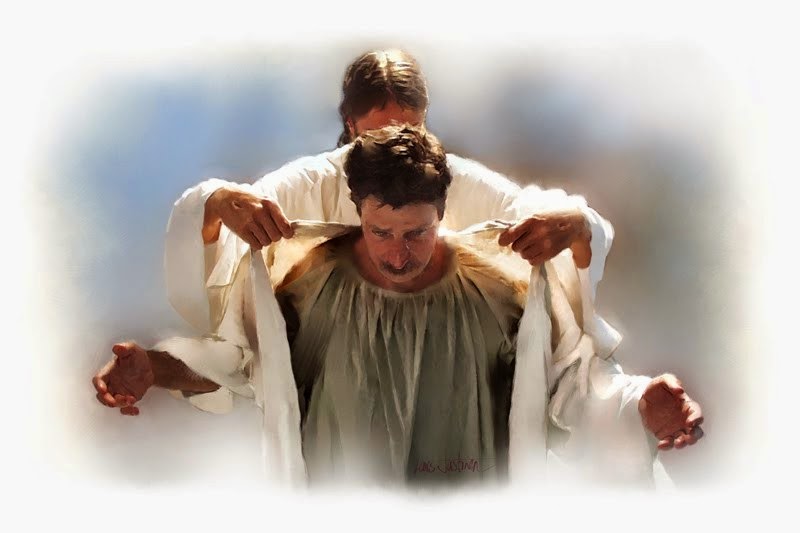
Robe of Righteousness, by Lars Justinen

This is a story of how Jesus and God and the Spirit worked in my life this week. I attend a Wednesday night prayer meeting/bible study. We read through a book of the bible a verse at a time. There is no curriculum except for the bible. We have a good teacher. Our teacher allows discussion and comment after he introduces us to the verses and explains.

Last week we looked at Romans 12:9-

Let love be genuine. Abhor what is evil; hold fast to what is good

This week we looked at Romans 12:14-

Bless those who persecute you; bless and do not curse them.

I find both of those verses very difficult to adhere to the way I should.

About three years ago I started praying for the Spirit to ramp up my sanctification and for Him to grow me in spiritual fruit (Gal 5:22-23), especially love. I had no clue how hard it would be. This is because of my own flesh.

My prayer was more like,

“I think I got this, but just in case I don’t, and I’m only hedging my bets here because really, I’m OK, would you just drip a little note in my heart to help me inch along? Thanks so much.”

And if I was an Old Testament prophet and could hear God reply, it would be like this:

“I will do what you ask. You are not OK. As a matter of fact, you’re a lot worse than you think. Come, I’ll show you. Repeatedly. For three years. You’re welcome.”

And so every morning I’d pray to the Holy Spirit to give me strength to love the way the verse says we should love our enemies. And every day I’d fail. Some days I’d compound my sinful failure with grumbling and hatred in my heart.

And every day I’d come home in tears and sit at my table and repent.

Rinse. Repeat. I felt like my own nation of Israel with all the rebellion, repentance disobedience, and repentance cycles. I learned a lot though.

The bad:

–I really AM worse than I think. Depravity goes so deep I can’t see the bottom of it,
–I disobey God all the time.

The good:

–Every time I repented sincerely, and I did, I felt terrible over my sin, He forgave 70 X 70 times,
–He grew me in all the ways I needed it,
–His grace is one of the most magnificent gifts humankind ever received, therefore my gratitude grew.

So now I have a new opportunity to learn to love the way the bible says to love our enemies. With this new opportunity, maybe I’m a little wiser this time than the last time. Maybe I can love more genuinely and better than I loved before. Since sanctification is ever in-process and won’t be complete until I die, there’s no coasting. This new opportunity began one month after the other situation resolved itself. And so it goes.

Yes I’m a lot worse than I think. But now I know God is a lot better than I think, too.

~~~~~~~~~~~~~~~~~~~~~~~~~

I wrote the above to my teacher after the class. I usually keep thinking about what was taught all night and all the next day and all week. I do try to take the lessons to heart and to participate with the Spirit in sanctification, meditating on His word as Psalm 1:2 says to do. Sometimes I share these follow-up thoughts with my teacher so he can guide me.

As I went on from composing and sending it, I got a bit despondent over my failures. It’s heartbreaking to sin and I abhor it and earnestly strive to please my Savior. Sighing and flipping to the next open tab on my browser, I saw this on Twitter.

~~~~~~~~~~~~~~~~~~~~~~~~~

A Christian’s life may be attended with many and exceedingly great imperfections, and yet be a holy life.” ~Jonathan Edwards

“Hey!” I thought, “that is a exactly what I’ve been worrying about! Let me follow up on that to find what book or sermon it’s taken from.”

The things tweeted online and attributed to a particular person are often wrongly attributed. Validation is the first order. Context is the second.

I found that it was indeed a quote from Edwards and it was taken from a series of 16 sermons preached to his Northhampton congregation titled “Christian Love, As Manifested in the Heart and Life

Wow. Very applicable to our discussion in bible study night and my continuing thoughts today. I downloaded the book. LOL his 16 sermons wound up being 505 pages.

The larger context surrounding the tweeted quote is this from Edwards’ sermon:

~~~~~~~~~~~~~~~~~~~~~~~~~

Christian, the meaning is not, that the life is a perfect and sinless life. On the contrary, a Christian’s life may be attended with many and exceeding great imperfections, and yet be a holy life, or a truly Christian life. It may be such a life as to clearly, and even necessarily show, that the grace which the individual has, is of the kind which has a tendency to holy practice. His fruits may be such as to be good evidence of the good nature of the tree, and his works such as to show his faith.

And if you ask for still further light, then I would say, whatever your imperfections and failings may be, examine yourself whether you find the following evidences of your grace being of that kind which tends to holy practice.

First: Has your supposed grace such influence, as to render those things in which you have failed of holy practice loathsome grievous and humbling to you? Has it such influence in your mind as to render your past sinful practices hateful in your eyes, and has it led you to mourn before God for them? And does it render those things in your conduct that since your supposed conversion have been contrary to Christian practice, odious in your eyes? And is it the great burden of your life, that your practice is no better? Is it really grievous to you, that you have fallen, or do fall into sin; and are you ready, after the example of holy Job, to abhor yourself for it, and repent in dust and ashes, and like Paul to lament your wretchedness, and pray to be delivered from sin, as you would from a body of death?

Second: Do you carry about with you habitually a dread of sin? Do you not only mourn, and humble yourself for sins that are past, but have you a dread of sin for the future? And do you dread it because in itself it is evil, and so hurtful to your own soul, and offensive to God? Do you dread it as a terrible enemy that you have often suffered by, and feel that it has been a grievous thing to you heretofore? And do you dread it as something that has hurt, and wounded, and stung you, so that you would see it no more? Do you stand on your watch against it, as a man would keep watch against something that he dreads, with such a dread as led Joseph to cry “How can I do this great wickedness, and sin against God?” Genesis xxxix. 9.

Third: Are you sensible of the beauty and pleasantness of the ways of holy practice? Do you see the beauty of holiness, and the loveliness of the ways of God and Christ?

~~~~~~~~~~~~~~~~~~~~~~~~~
Genesis 3:15

His comfort and His manifold grace is beyond what words can express. I will never be sinless in practice. Yet by His grace I will have a tendency toward higher holy living, and will have an ever growing hatred of sin. What just happened this morning was a moment of real comfort- a manifestation of this verse

2 Corinthians 1:3-4: “Praise be to the God and Father of our Lord Jesus Christ, the Father of compassion and the God of all comfort, who comforts us in all our troubles, so that we can comfort those in any trouble with the comfort we ourselves receive from God.”

Is there any doubt Jesus is an ever-present friend in our lives? That the Spirit is daily growing us and comforting us because He knows us better than we do ourselves? And that the Word is living and active?

Why do people seek superficial miracles when the miracle of how VERY PRESENT He is in our lives is so lastingly precious? How can I not love this Jesus with all my strength and soul and mind, and not seek to follow His ways?

Brother or sister, take comfort in knowing beyond knowing that Jesus is with you every step of the way. His grace IS sufficient.

Above: Depiction of the Holy Spirit dove (ceiling fresco in St. Charles’s Church, Vienna, 1700’s). Public Domain
Posted in dependence, israel, prophet, repentance, samuel

Always depend on the LORD Jesus

I’m reading through 1 Samuel right now. The Old Testament is such a majestic book.

1 Samuel 8 is the time when all Israel called for a king to lead them. Ole Samuel had been in service to the people since Hannah weaned him at age three and delivered him to Eli at the temple. All his days, Samuel walked before the LORD and served. He was their Prophet. He was their Judge. Yet when Samuel was old and gray, the people grumbled that they wanted a king ‘like the other nations.’ (1 Samuel 8:20)

Of course, the people had the best king there could be, God Himself. He was their King and they were His people. He protected them:

So the Philistines were subdued and did not again enter the territory of Israel. And the hand of the Lord was against the Philistines all the days of Samuel. The cities that the Philistines had taken from Israel were restored to Israel, from Ekron to Gath, and Israel delivered their territory from the hand of the Philistines. There was peace also between Israel and the Amorites. (1 Samuel 7:13-14).

He delivered Civil peace:

Samuel judged Israel all the days of his life. And he went on a circuit year by year to Bethel, Gilgal, and Mizpah. And he judged Israel in all these places. (1 Samuel 7:15-16).

He instilled spiritual peace: (the people were sorrowful of their sins and repented in deep humility)

From the day that the ark was lodged at Kiriath-jearim, a long time passed, some twenty years, and all the house of Israel lamented after the LORD. (1 Samuel 7:2)

Everything was orderly and calm. Yet the people weren’t satisfied and wanted a king they could see. The pleaded with Samuel. Samuel warned them and prophesied to them what would happen if they got a king.

And Samuel prayed to the Lord. And the Lord said to Samuel, “Obey the voice of the people in all that they say to you, for they have not rejected you, but they have rejected me from being king over them. According to all the deeds that they have done, from the day I brought them up out of Egypt even to this day, forsaking me and serving other gods, so they are also doing to you. Now then, obey their voice; only you shall solemnly warn them and show them the ways of the king who shall reign over them.” (1 Samuel 8:6b-9).

The people clamor for a king.

And Samuel told them. A king would do terrible things to them. He would take their maidens, he would take their lands, he would take their men for war. He would take their oxen. He would take their grain. He would make them slaves.

The people still cried out for a king. God granted it. (1 Samuel 8:22)

There are many deep theological lessons in this chapter and in the entire books of 1 and 2 Samuel. The obvious ones are these:

1. Pray to God always for advice and to seek His face. Samuel did. The people didn’t.
2. Be grateful for continued peace in your nation and in your hearts. Israel forgot, and became discontent.
3. Listen to the voice of God, He tells the truth. The people heard Samuel repeat God’s words, that their kings would lead them wrongly. They rejected His word. Today we don’t have a prophet to listen directly to the voice of God to tell us His ways, but we have the bible. Believe it. God tells the truth. He always tells us ahead of time. The axiom still is in force: “If you do this, then this will happen. If you do not do this, then that won’t happen.”

“If… then…” statements are linking words that introduce conditions. For example: “If you obey me, then you shall be my treasured possession” (Exodus 19:5). The condition of being God’s treasured possession, is that his people were to obey him. That of course has massive bearing on the whole OT and God’s dealings with his people. (source)

4. Always depend on God. Always depend on God. Always depend on God. Always depend on God. How many times must we say it and believe it? The Israelites depended on God for many years and for many years and decades peace reigned. To this very day under the New Covenant, depending on God brings the most blessing, the most growth, the most pleasure to God and the most benefit to us.

Our Jesus is our High Priest, deliverer, protector, sustainer, provider, friend. Always depend on Him.

But you are a chosen race, a royal priesthood, a holy nation, a people for his own possession, that you may proclaim the excellencies of him who called you out of darkness into his marvelous light. (1 Peter 2:9)