Posted in bible, sola scriptura, still speaking, united church of christ

United Church of Christ’s edgy ‘sorta scriptura’ campaign

With words like “rebranding” and “edgy” and “campaign” better suited to a New Coke commercial marketing blitz, the United Church of Christ (UCC) is re-launching their ten year old “Still Speaking” campaign in a 2.0 update fresh for 2016.

Oh boy.

Chills, I tell you. I got chills.

Not really.

The UCC’s campaign isn’t a campaign and it isn’t edgy. It’s just blasphemy and biblical ignorance.

Here it is in the UCC’s own language:

God is Still Speaking, the identity campaign that branded the United Church of Christ in a distinctive way and helped define its progressive voice in the faith community, is getting an upgrade/refresh in 2016. In fact, the UCC launched the pilot phase of Still Speaking 2.0 on Dec. 1 in anticipation of a full rollout after the first of the year. 

“We are asking what the new edge is for the United Church of Christ,” said the Rev. John C. Dorhauer, UCC general minister and president. “It is clear that the brand still works, but we are all using the same language that we have used for 10 years. In addition, the edge 10 years ago was clearly built around commitments to ONA and marriage equality.” But since the world has changed and marriage equality is the law of the land, Dorhauer says the UCC is working to identify what now sets it apart. “So, what’s our new edge?”

Jesus Christ. That’s the edge. Jesus. He is everything and He is all you need. Jesus is the premier Person in the entire Universe, He is what sets anything apart. His Gospel is the edgiest message ever proclaimed on the face of the earth. The world hates it. Living for Christ and proclaiming His Gospel is the edgiest you can ever get. Unless it’s blaspheming His word. [see below]. That’s really living on the edge.

Here is an ad from the UCC campaign:

Yes He did. Don’t these people read the Bible?

I warn everyone who hears the words of the prophecy of this scroll: If anyone adds anything to them, God will add to that person the plagues described in this scroll. And if anyone takes words away from this scroll of prophecy, God will take away from that person any share in the tree of life and in the Holy City, which are described in this scroll. (Revelation 19:18-19)

But obviously the UCC does not read their Bible. Here is UCC’s new, 2016, freshly edgy ad:

As my Twitter friend Tara at @AMamasWisdom said of the above ad, “sorta scriptura”.

Tara nailed it. The above ad is blasphemous. What it’s saying is that the Bible is nothing more than a flawed guide to life. By the way if it is occasionally wrong, who decides which parts are wrong and which parts are right in it? Man.

In my growing up days of the wild 1960s, there was a cultural revolution led by that generation’s youth. Peace-love and all that. Their mantra was “Don’t trust anyone over 30.” It was a ridiculous statement but it made a crazy sense at the time.

Well it’s another crazy time. There are so many fake “churches” calling themselves churches, it makes me want to say “Don’t trust anyone calling themselves a church.” Not really but, man, it’s rough out there. If UCC leadership as a whole promotes these as their doctrinal statements regarding their denomination, (and they are) we can safely say that any Christian should stay away from the denomination as a whole. Erase them from your list as a church entirely.

My message to you is this: anything can happen regarding church life, and it will. Don’t stick with a denomination just because it has been your family’s tradition. Don’t stay in a church that obviously points to man (like the one above) and does not point consistently and correctly to Jesus. When visiting churches, be very careful. Sentiments like the one the UCC expressed are more and more common now, not just uttered from a fringe guy marginalized through church discipline, but these heresies are mainstream and widespread doctrines held by entire denominations as their Church Distinctive. Or, “brand”.

Hold your Bible in high regard and let your children see you studying it, quoting, it, and living it. In a crazy world, the word of God is the ONLY anchor that we can trust.

All Scripture is breathed out by God and profitable for teaching, for reproof, for correction, and for training in righteousness, (2 Timothy 3:16)

Posted in doctrine

REPOST: Sayings and mottos that sound pious but aren’t. #1: "Let Go and Let God"

I posted this on March 31, 2014. I re-post it today.

—————————————————–
#2: “I don’t use commentaries”
#3 “I’m too humble to think that I could ever know what the Bible really means”
#4: Pray Big Because We Have a Big God
#5: He’s so heavenly minded he’s no earthly good.

Jesus took issue with the Pharisees and Scribes because they had become whitewashed tombs. (Matthew 23:27). This means that they were sick with sin on the inside and were only doing external things that hid their sin but did not address it. They were dead inside but performing rituals as if that would bring them alive. Their rituals had no meaning, and as Solomon would say, they were only striving after wind. (Ecclesiastes 1:14).

We do the same things today, but in slightly different ways. Just as the Pharisees were making long prayers as a show of piety for the sake of those who would hear them, (Matthew 6:5), people say things today that sound pious but aren’t. These sayings are just as dead as a whitewashed tomb, and are only striving after wind.

However, these sayings sound legitimate on their surface. It is sometimes hard to tell what truly is Christian and what merely sounds Christian. Charles Spurgeon wisely said, “Discernment is not a matter of simply telling the difference between right and wrong; rather it is telling the difference between right and almost right.” So what is right and what is almost right (AKA ‘wrong’) about these sayings?

Some of these mottos are:

  1. “Let go and let God”
  2. “I don’t use commentaries because they’re men’s wisdom. I only use God’s Word when I study.“
  3. We can’t know for certain what the bible means, I’m not that smart”
  4. “Pray big because we have a big God.”
  5. “He’s so heavenly minded he’s no earthly good“

In what will be a multi-part series, let’s look at the first one.

Source, labeled for reuse

#1. “Let go and let God.” In this pious-sounding saying, the person is trying to indicate that they submit to the sovereignty of God by letting everything go and allowing Him to roll circumstances over us as He will. However if we unpack that a bit we’ll see actually that ‘Let go and let God’ actually contradicts the bible. Here are two sources which speak to the subject, GotQuestions, and Ligonier Ministries.

GotQuestions: Are We Supposed to Let go and Let God?:
“Let go and let God” is a phrase that cropped up some years ago and still enjoys some popularity today. Actually, the Bible never tells us to “let go and let God.” In fact, there are so many commandments about what we are to do that it completely contradicts the way most people interpret “let go and let God.” The popular idea of “letting go” is to adopt a sort of spiritual inertia wherein we do nothing, say nothing, feel nothing, and simply live allowing circumstances to roll over us however they may.

The Christian life, however, is a spiritual battle which the Bible exhorts us to prepare for and wage diligently. “Fight the good fight of faith” (1 Timothy 6:12); “Endure hardship…like a good soldier of Christ Jesus” (2 Timothy 2:3); “Put on the full armor of God so that you can take your stand against the devil’s schemes” (Ephesians 6:11). Letting go in the sense of sitting back and watching events unfold however they may is not biblical.

Having said that, though, we have to understand that the things we are to do, we do by the power of God and not on our own steam. The truth is that working at “letting go” is just as much as an effort-filled work as anything else we try to do for God and not nearly as easy to do as some things.

So true! If it was that easy to ‘let go’ our sin, we would have done it! If it was that easy to ‘let go’ our worry, we’d be all set! If it was that simple as to let go our our will, we wouldn’t need God! “Letting go” is just as difficult as hanging on. Submit, yes. But even that is a daily struggle we’re told to perform as we pick up our cross (Matthew 16:24) and to pray daily for the will and help to submit. (Matthew 6:9-13).

Please go to the essay linked above to read the rest of the GotQuestions piece, which looks at the Christian life and see just exactly what we are to do.

Andrew Naselli at Ligonier Ministries explains, “Why “Let Go and Let God” Is a Bad Idea“. He says, in looking at the origin of this two-tiered theology from the 1875 Keswick theology movement, that letting go and letting God promotes in part,

–Perfectionism: It portrays a shallow and incomplete view of sin in the Christian life.
–Quietism: It tends to emphasize passivity, not activity.
–Pelagianism: It tends to portray the Christian’s free will as autonomously starting and stopping sanctification.
–Methodology: It tends to use superficial formulas for instantaneous sanctification.
–Impossibility: It tends to result in disillusionment and frustration for the “have-nots.”
–Spin: It tends to misinterpret personal experiences.

You can tell that Keswick theology has influenced people when you hear a Christian “testimony” like this: “I was saved when I was eight years old, and I surrendered to Christ when I was seventeen.”

By “saved,” they mean that Jesus became their Savior and that they became a Christian. By “surrendered,” they mean that they gave full control of their lives to Jesus as their Master, yielded to do whatever He wanted them to do, and “dedicated” themselves through surrender and faith. That two-tiered view of the Christian life is let-go-and-let-God theology.

I am aware that the motto ‘Let go and let God’ is a heavily used precept in Step 3 of the Alcoholics Anonymous recovery plan. AA has helped millions recover from their addiction to alcohol, and in this sense, AA is helpful. But don’t mistake AA’s Christianese for legitimate biblical principles. The language may sound pious but it collapses under scrutiny. Here is more information:

How does Alcoholics Anonymous compare with the Bible?

John MacArthur spoke to the ‘let go and let God’ phrase in his sermon on Ephesians 6, The Believer’s Armor.”

Do we just say, oh amen, and now I’m just going to surrender to that? I’m going to let go and let God, turn it all over to Jesus, do nothing? No, because you come to verse 5 immediately, and verse 5 says, “And beside this,” beside this, “you give all diligence,” get at it man, get with it, be diligent, be disciplined, “to add to your God given faith virtue; and to virtue, knowledge; And to knowledge, self-control; and to self-control, patience; and to patience, godliness; And to godliness, brotherly kindness; and to brotherly kindness, love.”

In other words, you get on the job. And beloved it is not as simple as walking an aisle and making an act of surrender. That is part of it in your life, there must be a, a commitment to the Lordship of Christ, there must be an acknowledging of His power and resource in your life, but it doesn’t end there- it begins there. In Romans 6 there is a yielding of yourselves, yes, there is a yielding of yourselves in Romans 6. But there is also a mortifying or a killing of the deeds of the flesh, So it isn’t all as simple as that and that’s why we make no hesitation for proclaiming the truths of Ephesians 6.
 
The fact remains, let go and let God does not align well with biblical standards of behavior for a Christian.

As Jim Vander Spek asked, “The problem with making “Let God” the focus is that it pushes the burden back on Him. If things don’t work out, will you blame Him?“

Source. Labeled for reuse

~~~~~~~~~~~~~~~~~~~~~

Further Reading

What is wrong with the popular saying, “Let go and let God”?

Posted in bible, jesus, scripture photo

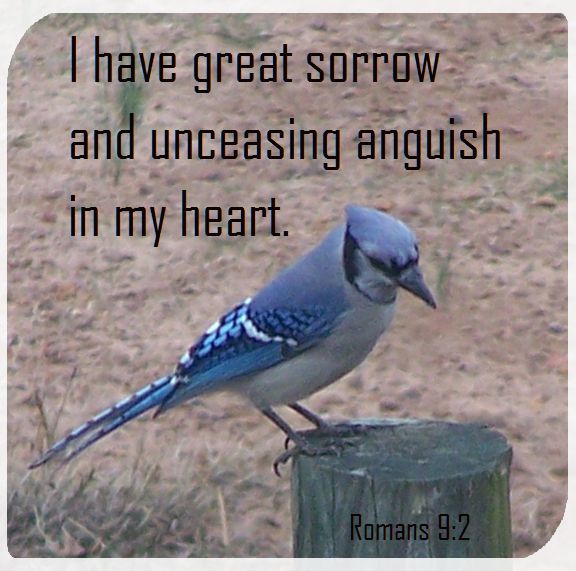
Scripture photo: Anguish ("Church Bulletin" series)

Here’s a change of pace for your next church bulletin cover. Pain and anguish. In the verse, Paul is about to discuss the judicial hardening of the Jews’ hearts to many of their souls’ eternal destruction. As Jamieson Fausset Brown Commentary explains,

the bitter hostility of his nation to the glorious Gospel, and the awful consequences of their unbelief, weighing heavily and incessantly upon his spirit.

Paul’s response to God’s sovereign election and His judicial work among the people is an appropriate one. Our response to sin and rejection of Jesus should be the same. If all scripture is sufficient for teaching, reproof and correction, then it’s my dream that someday the church bulletin people will include some verses that do just that, as the Romans 9:2 verse does, illustrating a response to sin that is as much human as it is proper. Instead, we get a continual drip of insipid love and encouragement verses which is my opinion only serve in some cases to deepen the complacency of the self-satisfied Christian and most times, are ignored by the rest. How about some balance here, people?

OK, this is me pursuing the impossible dream… Soapbox over for today.

Scripture photo “Church Bulletin” series #1, Vulture

Scripture photo: “Church Bulletin” Series #3, Hell

Scripture photo “Church Bulletin” series #4, Lake of Fire

Scripture photo: “Church Bulletin” series #5, Wrath

Posted in back to basics, bible, bible study

Back to Basics: How to Study Your Bible

EPrata photo

The Bible is one book but it is actually a library of 66 books. These books are written in a variety of genres. Your own bookcase at home contains fiction with sub-genres such as novels, science fiction, romance, or poetry. Alongside those might be books on your shelves of non-fiction with sub-genres such as biographies, history, textbooks, cookbooks, or how-to. You see how many genres of literature there are!

Your library of the books of the Bible is just the same. Inside the one book are 66 books containing different genres. You would not read a history book from David McCullough in the same way as you would a romance novel from LaVyrle Spencer. You would not read a cookbook written by Rachael Ray in the same way as you would a book of poetry Elizabeth Barrett Browning.

My life’s work as both profession and hobby has been to involve myself in literacy. Professionally, I help teach children how to read. When five-year-olds begin to learn how to read, we start with books that contain predictable language. They hear “Once upon a time…” and it finishes with “They lived happily ever after. The end.” If I begin reading aloud to them “Once upon a…” and stop, the children will know what comes next. When they see two words on the last page, “The end” they know what those words say. This is because narrative stories have a familiar story arc and a predictable schema that remains the same from book to book.

When children reach around third grade they begin reading in the content areas. Gone are the familiar, predictable stories where they can use the context to help fill in an unknown word. Gone are the story arcs where their comprehension of the text is supported by familiarity and predictability. New to them are passages that contain a lot of facts about Magellan, the planets, or magnets. There is no predictability in these passages, nothing to hang their mental hook on to help support the brain’s search for meaning of that unknown word or concept. We teach children different reading strategies for comprehension of non-fiction passages.

When a child reaches 6th grade or so, we hope that the years of reading have instilled in them a wealth of strategies for comprehension of both fictional works and non-fiction that are so familiar to them that they aren’t even aware of the fact that they are using strategies, nor hopefully are they aware that they are switching strategies based on which type of literature they are reading.

Photo from Unsplash, free to use

We adults are no different. When I approach a historical passage like Ezra I read differently than I do when I read a Psalm or a narrative like Mark. Even within the different genres of books of the Bible, I read differently than if I have set a goal. During the summer when I’m off work I read the New Testament straight through at least once. I want a bird’s eye view, a skim and a scan, I do not stop and I do not study. I just read.

When I read a densely historical book like Ezra, I read slowly and I use maps and pictures. I am a visual person and I need maps to show me where these people are, have been, and are going. When lots of animals are named I stop and I look at pictures of them so I can picture in my head what is going on. If you are not visual you might not need to do that.

Reading Ezra with all the kings in their respective countries for me is like a third grader suddenly having to remember all the Explorer’s names and their different travels. The difficult Hebrew names sometimes trip me up so I either decide to read relieve myself of the task of reading them perfectly, or I go to an audio reading (Max McLean) and let him pronounce it for me. So my goals and strategies differ, depending on the level of difficulty and the type of text that is before me.

Here are the different kinds of literature in the Bible. Not everybody classifies them the same way. Some classify Esther as History, others classify the book as Narrative. Some lists do not contain the genre of Narrative at all, others do. Some place the Gospel under their own category and others put them under Narrative along with Acts. Some split the genre of Prophecy and Apocalyptic literature, others put them together. Just as long as you begin to see each book of the Bible as its own kind of literature, and approach reading it from that perspective, you will be on your way to a solid beginning interpretation.

Here are a couple of visuals to help you see the Bible in the way it needs to be seen, as a bookshelf of various genres. You can view several different arrangements here at this blog.

Source

Please note that the arrangement of the Prophetic books into “Major Prophets” and “Minor Prophets” is not a statement of the worth of the book’s content. We know from 2 Timothy 3:16 that ALL scripture is valuable. It simply means that the minor prophets’ books are shorter.

Another visual arrangement of the books of the Bible is like a periodic table, in a visual theology developed by Tim Challies. You can obtain a free, large-scale, high-resolution image of this chart at Challies’ site.

The Bible is one, unified book testifying all about Jesus Christ. (Luke 24:27). It cannot be broken. (John 10:35). And yet, we can segment the books of the Bible into their proper genres and approach reading and studying them in the ways they need to be studied or read, without harm. The Bible is astonishing in its breadth and depth and insight. Of course it is! It is the word of God. We are blessed to be living in a time where there is NOT a famine of the Word, but have access to it day and night, written and audio, large text or small, Old Testament or New.

However you decide to approach your study and your reading (they are two separate things), the point is, make an orderly approach. Make decisions ahead of time. Understand the text you’re absorbing and its different literature genre requirements.

The most important thing of all is to pray. The Holy Spirit indwells you for the purpose of illuminating the scriptures to you. When you’ve made some orderly decisions ahead of time you have prepared your brain, and then as you pray for illumination, the Spirit will impress what He wants on your mind and heart. Not that you have to do it this way, but being an orderly, praying disciple of Jesus as you read about Him can’t hurt, right?

Blessings!

————————————————-
Further reading:

GotQuestions: Genres of the Bible

Institute for Creation Research: Scripture Cannot Be Broken

Bible Gateway: Tour of the Bible, part 1

Grace To You: How to Study Your Bible

Posted in scripture photo, vultures

Scripture photo: Vulture

Church bulletins are great. They contain information the congregant will need during the week, such as which deacons are ‘on call’, who is going to staff the nursery next week, and what time the church supper starts on Wednesday. Some pastors include sermon notes, or a devotional.

The cover always contains a pretty picture and a lovely verse. The picture is always eye catching. One might see a meadow-covered mountain top or a close-up of a pretty flower. The verse is always likewise. Always. It’s encouraging, or it speaks of God’s love or a promise of God.

I’m irked by this.

Leave it to me to be irked by something pleasant, right? But just once I’d like to see a different kind of verse on the front of a bulletin, a verse that speaks of God’s wrath, or His justice, or something unpleasant. “All Scripture is breathed out by God and profitable for teaching, for reproof, for correction, and for training in righteousness,” says 2 Timothy 3:16, so let’s not always focus on the verses that please us or encourage us. What about the verses that challenge us, or convict us, or make us think, or speak of an aspect of God that’s increasingly denied these days, such as His wrath?

Two weeks ago my scripture photo verses were all on the theme of flowers. All the photos were flowers and the verses they contained were encouraging. Last week the theme was love. All the verses spoke of love and the photos were of pleasant scenes. But this week will be scripture photos of my dreams. They’ll be ones you never see on a church bulletin or online as a scripture picture. But I love these just as much as the flowery ones or the encouraging ones. So get ready for scripture photos, Prata-style. If anyone needs a church bulletin lady, I’m available…

EPrata photo

PS if you’re wondering where to see these scripture pictures, occasionally I put them here on the blog but I post one a day on my Facebook The End Time page, here, https://www.facebook.com/The.End.Time.Blog and I also tweet one a day here, https://twitter.com/elizabethprata

PPS: I know that the vulture photo is extreme. Not even I would want that on a bulletin. I’m just doing my best to make a drastic point, and speak of parts of God’s character that are neglected in the public square and also bring to mind events of the Bible that people don’t discuss much these days. Like judgment.

Scripture photo “Church Bulletin” series #1, Vulture

Scripture photo “Church Bulletin” series #2, Anguish

Scripture photo: “Church Bulletin” Series #3, Hell

Scripture photo “Church Bulletin” series #4, Lake of Fire

Scripture photo: Wrath (“Church Bulletin” series)

Posted in apostles, encouragement, jesus, nathanael, philip

Nathanael was looking for something good

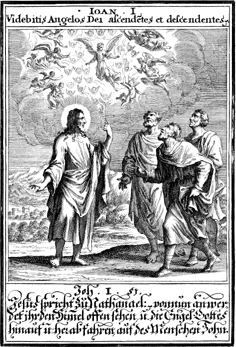
Philip found Nathanael and said to him, “We have found him of whom Moses in the Law and also the prophets wrote, Jesus of Nazareth, the son of Joseph.” Nathanael said to him, “Can anything good come out of Nazareth?” (John 1:45-46a)

This verse is from chapter 1 of the Gospel of John. The context is that Jesus has begun calling His disciples, who would become the Apostles a year and a half later. In the previous verses, He had called Andrew and his brother Simon (who shall be called Peter). Now, Philip who was from Bethsaida, went to Cana where Nathanael was from, to tell him the news.

Source

Nathanael’s skepticism rested on the fact of Jesus’ origins, which were from Nazareth, a backwater. So Nathanael’s skepticism revolved around the location, not the Person. Though we often focus on the part of the verse that says “from Nazareth?!” let’s focus on the part before that. Note Nathanael said, “can anything GOOD…” This shows that Nathanael knew of the Messiah and was looking for Him. He knew His appearance would be GOOD. Nathanael believed.

Nathanael had a seeking heart because he truly studied the scriptures. As verse 45 shows, Philip and Nathanael studied the Law, Moses and the Prophets. As for Nathanael’s character, in verse 47 when Jesus saw Nathanael coming toward Him, Jesus said there was no deceit in Nathanael and that he was a true Israelite.

Nathanael was a simple man, indeed from a not much bigger backwater than Nazareth (Cana), in a backwater district, in a time of apostasy. Not many people around him believed the truth. The Samaritans believed a blended religion, the Pharisees believed a works religion, the Sadducees didn’t believe in supernatural resurrection or angels and were against the Pharisees who did, and most regular people were either unknowing, hypocrites, or apathetic. As a matter of fact, Luke 4:33-34 records Jesus at Capernaum teaching at the synagogue. A demon-possessed man in the synagogue cried out when Jesus taught, because of His authority in His proclamation of the truth of God. Jesus cast him out, His first exorcism. Can you imagine a synagogue so devoid of truth that before Jesus’ arrival, the demon inside the man felt so secure he had never cried out before? Demons should never feel comfortable in church!

It was a time of apostasy, God hadn’t spoken in 400 years. He had sent no prophet (until John the Baptist). God had done no miracles. He had been silent.

Synagogues in the small towns had limped along, (with demons in them) the Temple in Jerusalem grew bloated with wares, graft, and hypocrisy thanks to the religious hierarchy.

And yet, among all this, there was faithful Simeon, and Anna, there was Zacharias and Elizabeth, Joseph and Mary, John the Baptist, and the men who would become the Apostles. And there was Nathanael, who was looking for something GOOD (just had a hard time believing it would come from Nazareth, lol).

In this current time of apostasy (when wasn’t the world apostasizing?!) we look at our leaders and sometimes we are greatly disappointed. Just as those regular people of Nathanael’s time were looking at the hypocritical Pharisees, the corrupt Annas or Caiaphas, the arrogant and zealous Saul (later, Paul), the ordinary people must have felt let down by those who were in charge of leading them in the truth just as we are let down by many of our leaders today. There has always been a shepherd problem.

“Woe to the shepherds who are destroying and scattering the sheep of my pasture!” declares the LORD. (Jeremiah 23:1)

Jesus and Nathanael
WEIGEL, Johann Christoph 1695, Woodcut. Source

Yet there were simple people in small towns, laboring diligently during the week and on Sabbaths, attending synagogue to learn about the promised Messiah. Who was the first person Philip went to tell the good news that Messiah had been found, the priest in their local synagogue? No! Philip went immediately to tell his friend, Nathanael. These first century men and women persevered, they believed with a child-like faith, simple and in which there was no deceit. There were no layers of corruption to the faith that Nathanael evidenced, no arrogance. With seeking heart he and his friend Philip must have gone to hear John the Baptist, and when Jesus arrived, and said ‘Follow Me’ they did.

And we should do the same. We labor during the week, we worship on Sunday, we follow Jesus as He commanded. His word is in the Bible now, not spoken to us on a hillside at Bethsaida, but we believe. No matter what our leaders do, we trust the promises in His word just as Nathanael and Philip did in that long-ago apostate time. We follow, seek, trust. Nathanael was looking for something GOOD, and He came. We should also have seeking hearts.  Are you looking for He who was written of in Moses and the Prophets? Like Nathanael during a time of low worship and little truth, we are also looking forward to something GOOD. He will come again

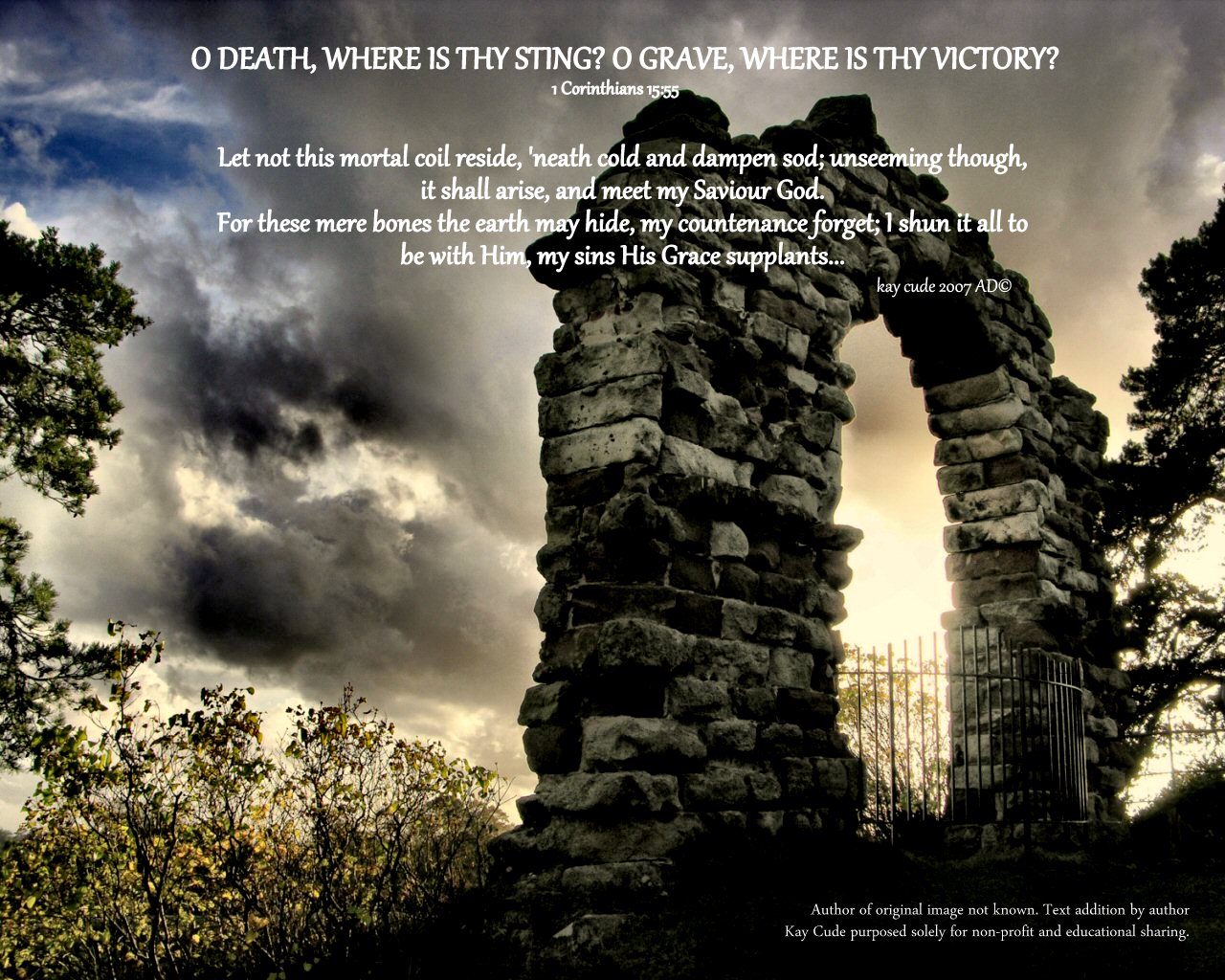
in a moment, in the twinkling of an eye, at the last trumpet; for the trumpet will sound, and the dead will be raised imperishable, and we will be changed. For this perishable must put on the imperishable, and this mortal must put on immortality…(1 Corinthians 15:52-53)

Posted in discernment, heaven, heaven tourism, macarthur, spurgeon

Heaven tourism books are bad; some heaven books are good

“Heaven tourism” is a phrase I believe was coined by blogger Tim Challies, picked up and used frequently by teacher and lecturer Justin Peters. It is a phrase indicating that a person has had some sort of trauma like a car crash or medical issue, or perhaps was in desperate emotional state, and in the unconscious portion of their trauma, they claimed to have visited heaven.

When ‘coming to’ they remember their alleged visit or vision, and write it down, later to become a book or a movie.

None of these visits are real. No person has gone to heaven and returned, (John 3:13; Deuteronomy 30:12) with the exception of the few persons in the Bible such as John, Paul, Ezekiel, or Isaiah and having subsequently written inspired text. John Gill’s Commentary says of the John 3:13 verse:

And no man hath ascended into heaven,…. Though Enoch and Elias had, yet not by their own power, nor in the sense our Lord designs; whose meaning is, that no man had, or could go up to heaven, to bring from thence the knowledge of divine and heavenly things; in which sense the phrase is used in Deuteronomy 30:12

John MacAthur’s sermon says of the John 3:13 verse,

You either take what Jesus says, or you’re a fool because, you can’t ascend into heaven and find the answers for yourself.

And yet these books keep coming. it is part of the demonic delusion and apostasy that satan, god of this world, instills in the vulnerable, ignorant, or hapless.

A new book is out by a man named John Burke. You see in his summary below that he did the typically wrong approach to biblical interpretation. He collected man’s stories and experiences, affirming them as true and credible, and then compared them to the Bible. He is in effect saying that the experience, simply because it occurred and mimicked something from holy text, that it must be true. The blurb says, their ‘experiences point to the heaven promised in the Bible’. Well, it’s the Bible that points to heaven, and as a matter of fact, the Bible’s version of anything is the only credible word on anything, because it comes from God, who cannot lie.

Imagine Heaven: Near-Death Experiences, God’s Promises, and the Exhilarating Future That Awaits You

Burke shows how the common experiences shared by thousands of near-death survivors–including doctors, college professors, bank presidents, people of all ages and cultures, and even blind people–point to the exhilarating picture of Heaven promised in the Bible.
This thrilling journey into the afterlife will make you feel like you’ve been there, forever changing the way you view the life to come–and the way you live your life today. You’ll discover Heaven is even more amazing than you’ve ever imagined.

We should be exhilarated at the glorious future awaiting us not because John Burke said so. We should be exhilarated by our glorious future not based on the flimsy experiences of man but by the word of God as revealed in the Bible. These heaven tourism books, like the one above, are specifically saying to you, “Never mind what God said about heaven, John Burke’s version will exhilarate you! Joe Schmoe’s tale will really get you going!” Blasphemous, isn’t it.

The Bible says we never look to experience first, it can be faulty. We look to God’s word first. Even the Apostles who were privileged to see a vision of Jesus transfigured along with Moses and Elijah, said that they do not preach their experience but test all things against the word of God. If that was the Apostle’s approach, men whom the Lord chose to carry His first message and were personally taught by Him, and who later wrote His words by Spirit-inspiration, would have preached their experience. But none of them did.

How much more important would it be for us today to follow their command and avoid preaching our experience? More to the point, how much more prideful and narcissistic is it to reject their commands and do it anyway? (2 Peter 1:20).

Do not preach your experience. Here is an excerpt from an essay written by Dr Bob Luginbill from the University of Louisville titled Scripture versus Personal Experience. I’m not familiar overall with the teaching of Dr Luginbill, but everything I read on this page discussing scripture vs. experience is explained well and accurately from the Bible.

In reality, of course, God is the One who determines how and when He communicates to us, and as it says in the book of Hebrews, “in these last days he has spoken to us by his Son”, even though before the incarnation He had spoken to us via prophets “at many times and in various ways” (Heb.1:1-2 NIV). So it is Jesus who is the Message; and He is “the Word of God” (Rev.19:13). We now have the whole written word of Him who is the Living Word, and that is the place to which we are now to direct our attention, namely to the truth of the holy scriptures. And we can certainly do so, because not only do we all have Bibles, and not only is the Body equipped with teachers who can illuminate it for us, but we all also actually have the Holy Spirit indwelling us for illumination, and He is “the [very] Mind of Christ” 

It certainly made sense for God to speak directly to, say, Enoch, before the Bible existed in any form. But if He really were communicating directly to believers in a verbal way today, wouldn’t that undermine the authority of the Bible, and all pastor-teachers, and in fact everything anyone else might say or have said to us except this special person – because after all the person with that special channel would be getting it directly from God. But the Lord has established His Church for a reason, and the mutual support we give each other for learning the truth is a very large part of what we are supposed to be about – this service is a large part of the basis for our eternal rewards. If there were a direct channel, we wouldn’t need each other much at all.

I do not recommend the Burke heaven tourism book or any of the books in this panorama below, many of which I have read myself and have found them to be unbiblical.

If you want to read books that are based on the Bible’s presentation of heaven, please consider some of the following. I’ve read all of them.

John MacArthur: The Glory of Heaven

A quick look at a list of bestselling books and you’ll see that heaven is a hot topic. After all, who doesn’t wonder and long to know more about the place you’ll forever live in the presence of God, untouched by sorrow, pain, and fear. What will it be like? What will you do in heaven? How will you recognize and relate to loved ones there?  

The problem is, runaway books about heaven are selling—and misleading people—by the millions. They are filled with fabricated, fictional accounts that claim to tell the truth about heaven. John MacArthur critiques those claims—and offers an in-depth, biblical explanation of God’s eternal city—in a fully revised, new edition of The Glory of Heaven. You’ll discover what the Bible really teaches about your glorious future home.

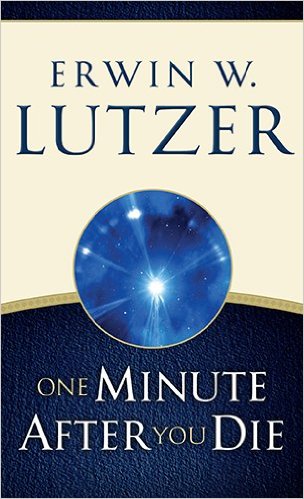
Erwin Lutzer: One Minute After You Die

“One minute after you die you will either be elated or terrified. And it will be too late to reroute your travel plans.” 

Death comes to all, and yet death is not the end. For some, death is the beginning of unending bliss, for others, unending despair. In this latest edition of the bestselling book One Minute After You Die, Pastor Erwin W. Lutzer weighs the Bible’s words on life after death. He considers: Channeling, reincarnation, and near-death experiences; What heaven and hell will be like; The justice of eternal punishment; Trusting in God’s providence.

Randy Alcorn: Heaven

What will heaven be like? Randy Alcorn presents a thoroughly biblical answer, based on years of careful study, presented in an engaging, reader-friendly style. His conclusions will surprise readers and stretch their thinking about this important subject. Heaven will inspire readers to long for heaven while they’re living on earth.

Randy Alcorn/Charles Spurgeon: We Shall See God- Charles Spurgeon’s Classic Devotional Thoughts on Heaven

Some of Spurgeon’s most powerful sermons were those that he preached on the topic of Heaven. … Randy Alcorn has compiled the most profound spiritual insights on the topic of eternity from these sermons and arranged them into an easily-accessible highly inspirational devotional format complete with his own comments and devotional thoughts.

The Bible is the only reliable source regarding heaven. Honor our Jesus, who descended from his abode in glory to live as a man on an earth whose ground had been cursed, absorbed all God’s wrath meant for us, died a horrible, humiliating death, and was buried in a borrowed tomb. His life of preaching and teaching and the Spirit’s subsequent inspired texts should be honored as the first and the last word. If you would rather look at heaven through Joe Schmoe’s eyes and not through the Spirit’s truth, you have a serious problem.

——————————–

Further reading

LifeWay abandons heavenly visitation resources

A Justin Peters video teaching: Heavenly Tourism (one hour)

Tim Challies on the topic of Heaven Tourism
Posted in church, holy spirit, jesus, the body

Ladies, resolve not to over-extend yourself in ministry this year

If you resolved this year to be more submissive to Jesus, more useful to the Body, and/or employ the Spirit’s gifts for His glory, here is a bit of food for thought. Even if you didn’t resolve those things…here you go!

The New Testament teaches us that Christ is THE HEAD of the church and we are members in vital union with vital ministry to each other– 1 Corinthians 12; Ephesians 4:11-16. But reading something in the Bible does not mean “experiencing” it. For the most part, churches today do not function as bodies in which all the members are connected to the Head and to one another in vital union and ministry. Frankly, I’m glad my own PHYSICAL body is not in the shape many churches are in— if it were: My mouth might start talking against my ears. My feet might stop listening to my head, My hands might run off and ‘join’ another body, etc! ~Pastor James Bell

How to maximize your Kingdom impact in 2016 

By Jack Graham
December 30, 2016 

But as it is, God arranged the members in the body, each one of them, as he chose. If all were a single member, where would the body be? As it is, there are many parts, yet one body. 1 Corinthians 12:18-20. 

Several years ago, I got suckered into buying one of those pocket knives that has everything on it you could imagine. It has a can opener, about five different sized blades, tweezers, a toothpick, a nail file, and screwdriver heads. If there was something you could use a pocket knife for, this one claimed it could do the job. 

But here was the problem: none of the tools on the knife worked very well. The blades were dull, the tweezers and toothpick fell out and got lost, and the screwdriver heads were so small that I couldn’t use them to turn a screw. 

The tool was so versatile, but didn’t do anything well. And as I look at a lot of Christians today, they’re a lot like that knife. So many are multi-talented and well-rounded, but they rarely commit to doing one thing really well. They’re spread so thin that their impact is minimized. 

As you step into 2016 this week, put your focus on one thing you want to do well in the coming year. Resolve to make a deep impact in one place. Do what you do well, and you’ll make a tremendous difference for the Kingdom in the coming year! 

CONCENTRATE ON ONE AREA OF KINGDOM IMPACT IN THE COMING YEAR AND WATCH GOD WORK THROUGH YOU IN A POWERFUL WAY!

I have found that in loving Jesus, in loving the saints, and in gathering with the congregation, there exists a tendency to become “busy.” Sometimes we say “yes” to a task, or a ministry, and it is’t really for us, but we feel like we “need” to say yes. Or even if we aren’t asked, sometimes we women feel the need (silent pressure?) to jump in anyway so as to be seen “doing our part.”

Resist that pressure, whether it comes from leadership or your own self. Slow down and examine whether it is something that will glorify the Lord, or will take away from family, or will use your gifts…in other words, examine your motivations for stepping into a use within the body. I’m careful not to get spread too thin. When I do spread myself thin, my mood sours and it’s not pretty. I thrive when I am mindful of doing the things I truly feel the Lord is guiding me towards and doing the m well and 100% to my ability.

On the other hand, as Pastor Bell noted, doing nothing isn’t helping the Body either. The Spirit delivered gifts so as to maximize all the saints’ usefulness here on earth. He has stationed us here and there knowing what gift within which person will best serve the Lord’s church for it’s growth and Jesus’ glory. Since each of us has a gift or gifts, and each of us is called to use them, it stands to reason that doing nothing isn’t serving the Lord in any meaningful way, and is in fact an abuse of the Spirit’s patience and ministry.

A hand is a hand. It doesn’t try to be a foot. And it doesn’t lay dormant, either. Work, but work wisely.

EPrata photo

Posted in creator, earth, encouragement, God

He hung the earth: Our Artistic Creator God

NASA Releases a Spectacular Earthrise Image Captured by the Lunar Reconnaissance Orbiter.

Reminds me of Job 26:7, “He stretches out the north over the void and hangs the earth on nothing.”

We live on a beautiful planet. We’re a generation that has been blessed to see actual photos of other planets from the space Voyager missions and the Hubble telescope. Though other planets such as Mars have a stark beauty, none have the lush, eye-pleasing beauty that Earth does.

Have you ever considered the creation verse in Genesis 2?

And out of the ground the LORD God made to spring up every tree that is pleasant to the sight and good for food. (Genesis 2:9)

Beauty was mentioned before utility. It was beautiful, and by the way, it was also food. God could have made this and all the planets black and white. But He didn’t. God as Creator is an engineer, creating animals and humans with deft precision. He is also an artist, creating things that are not only functional, but beautiful.

After the Flood, when there were only 8 people remaining who remembered what Earth looked like before. He could have remade things as utilitarian only. But once again, the earth sprung up with beautiful sights to behold. And fast, too. Consider this verse from Genesis 8:9-11,

But the dove found no place to set her foot, and she returned to him to the ark, for the waters were still on the face of the whole earth. So he put out his hand and took her and brought her into the ark with him. He waited another seven days, and again he sent forth the dove out of the ark. 11And the dove came back to him in the evening, and behold, in her mouth was a freshly plucked olive leaf. So Noah knew that the waters had subsided from the earth.

Waters had been on the earth for 278 days. For at least 128 days, the earth and all its life had been entirely submerged. According to the verse though, between the time the dove found no place to put her foot and when she returned with a fresh leaf, was only 7 days.

The LORD made a full grown tree with a full grown leaf in that time! He is amazing. I bet the leaf was pretty, too.

God’s artistry is evident in viewing photos of galaxies, flowers, shells, landforms such as the Grand Canyon. Though the earth’s ground has been cursed and it is polluted with sin, which is the root cause of all natural disasters, cataclysms, and destruction, it is still beautiful. So just imagine the beauty of the dazzling New Jerusalem! And His abode, heaven. Paul said it is inexpressible, and John groped for words. I can’t wait to see God’s full artistry on display through glorified eyes. And we shall behold Him, the most beautiful of all, Jesus Christ.

He is the image of the invisible God, the firstborn of all creation. (Colossians 1:15)

——————————

Further Reading

Did the Flood last 40 days and 40 nights?