“But thanks be to God, who always leads us in triumphal procession in Christ and through us spreads everywhere the fragrance of the knowledge of him. For we are to God the aroma of Christ among those who are being saved and those who are perishing. To the one we are the smell of death; to the other, the fragrance of life. And who is equal to such a task?” (2 Corinthians 2:14-17)
This is a beautiful passage, with many layered and deep elements. First, Christ uses His believers to spread the fragrance of knowledge of Him. Christ as the ultimate fragrance. The word “fragrance” can have many nuances, each with their own evocation of meaning. ‘Odor’ evokes something unpleasant, and the word ‘smell’ is simply utilitarian. But fragrance is a perfume…that is a sweet and wonderful aroma, evoking light and sweetness, as Christ is, of course.
Second, the verse moves from Christ as the fragrance to the believers themselves as having fragrance. Any believer is in Christ and due to our spiritual union, has His aroma as well. To God, this is most pleasing.
Last, the one who is perishing smells the odor of death instead of the perfumed fragrance of Christ. Why? They are perishing.
To the perishing, the knowledge of Christ is an odor unto death. They writhe under it, flee from it. If trapped with it, they try to cover it with anything handy, air freshener, orange peels… (as a metaphor) but the smell of Christ can never be covered up. The aroma remains the same, only its effects differ upon the receiver.
In this passage, Paul was evoking a common sight, the triumphal procession. The order of the participants in the procession was standard, from the generals to the soldiers carrying the spoils, to the captives in chains. Behind them, the priests come swinging the incense bowls. The captives in chains knew they would be executed soon. What was the incense smell of victory to the victors lining the streets was the smell of death to those in chains.
How’s your aroma? Is it pleasing to God? Are you in the triumphal procession? His fragrance through us spreading everywhere the knowledge of Him? Do you pass the smell test?
Hannah Hurnard (1905-1990) wrote a book that became famous. As time went on it settled into a classic in Christian publishing. The book is “Hind’s Feet in High Places”. It is a 1955 Christian allegory in the vein of John Bunyan’s Pilgrim’s Progress, Hurnard’s main character even has the same name as one of Bunyan’s characters, ‘Much Afraid’. Hinds’ Feet was inspired by Habakkuk 3:19 and explores a young woman’s spiritual journey and God’s faithfulness, discussing the importance of trusting in God even during difficult times. It is still in print, and new editions are being issued even today. It is a beloved book, along with its sequel, Mountain of Spices. A cottage industry has sprung up around Hurnard’s book Hinds’ Feet, with merchandise such as devotionals and calendars based on it.
And yet Hurnard was apostate. She held to wildly unorthodox heresies. While not immediately evident in her first book Hinds’ Feet, or her second book Mountain of Spices, her upbringing before she wrote the book and her writings afterward confirm that her apostasy seed became fully bloomed in the end.
How can this be? You may have heard of the idioms ‘a broken clock is right twice a day’ or ‘throw spaghetti at the wall and some of it sticks.’ All false teaching has truth mixed into it. Indeed, Hurnard herself may have thought she was truly saved when she wrote Hind’s Feet. But though she rose a bit, she eventually sank back into her Quaker upbringing and again believed what she should not believe.
The Bible warns over and over not to drift away from what you have heard
False Doctrine
Hurnard later in life believed in and taught reincarnation. She even claimed that Jesus taught this and it’s found in Exodus 34:6-7 and also in John 9. This aberrant and mystical view of reincarnation is expounded in her book The School of Earth Experiences.
Hannah repudiated the notion that God would ever condemn his created creatures to an eternal hell. She wrote in Unveiled Glory, a book about her conversion and testimony, that “I am now fully persuaded that as God is Love there can be in Him no wrath such as we conceive of wrath, or any possibility that He will condemn His own creatures to unending destruction, but I must still ask, What am I to do with all the passages of Scripture which seem to assert the very contrary? The Scriptures, of course, do teach that there is a hell…yet there are many other passages which most emphatically state that, in the end, God will completely triumph over evil. I discovered that there is not one single verse in the Scriptures which uses the words “everlasting,” “eternal,” or “for ever and ever” in connection with hell.”
This belief is obviously wrong, but the nature of apostasy is that people are endlessly creative with the scriptures in seeing in them what they want to see, or twisting them into that they want to believe. Acts 20:30 and 2 Peter 3:26 warn that people would come along and distort and twist the scriptures.
In the end, Hurnard believed that hell’s purpose was a sort of purgatory, forcing people through pain to repudiate their sin. She thought that since death and hell are to be thrown into the Lake of Fire, that hell is to be destroyed and thus is only temporary for those souls inside of hell.
Her view of the Fall of Man is oddly stated too. In her book “Eagles’ Wings to the Higher Places” she wrote that “Mankind fell from God-consciousness and awareness of goodness only into self-consciousness and awareness of evil in the most frightful and agonizing forms.“
Yet in Romans 1 we know that all humankind continues to have a ‘consciousness’ about God, but we suppress it in unrighteousness. Our ‘self-consciousness’ is due to the fact that the Fall plunged us wholly (spiritually and bodily) into sin.
She advocated for vegetarianism, because she said, God is immanent, which to her meant He is IN every living thing, The Lord and Savior “is actually immanent, by His Spirit, in all the living creatures we wrong [eat]. What is done to them is done to Him, too, and nails Him with them to their cross of suffering.” Eating a hamburger does not nail Jesus to the cross again. All food was declared clean (Acts 10:9-16). If God is immanent (actually IN everything) would it not also mean He is in plants and shellfish and insects? By Hannah’s account we should not eat anything. We know the unsaved’s thinking is futile (Romans 1:21).
Hannah also returned to her Quaker roots toward the end of her life, believing in universalism. Universalism, or universal reconciliation, teaches that in the end, everyone will be saved and dwell in heaven.
Despite this awesome witness, later in her life Hannah showed the ever-lurking danger of trusting inner voices. She veered away from sound doctrine, embracing universalism (denying God’s wrath), pantheism (God is everything) reincarnation and many new age ideas. Her last book is sold in New Age stores.
I remember purchasing, reading, and enjoying Jen Wilkin’s first book in 2014, Women of the Word. However she soon became a rebel, preaching and usurping and advocating for female preaching.
It was the same with Aimee Byrd. I was surprised and delighted when her first book in 2013, Housewife Theologian, was well-received and she was subsequently invited to become a co-host on the Alliance of Professing Evangelicals’ Mortification of Spin podcast with Todd Pruitt and Carl Trueman. However it was only a few short years later Aimee apostatized, showing her true colors in her book Recovering From Biblical Manhood and Womanhood which was a painfully tortured explanation of why God didn’t really mean that men and women have different roles. Aimee rejected the female role, and was fired from the podcast. She then parted loudly with her denomination the Orthodox Presbyterian Church, and wound up joining a liberal Methodist church with a female pastrix.
Again, we are familiar with the idiom “A broken clock is right twice a day”. It’s a witticism that makes sense…until you give a gift of a broken clock to someone and expect them to use it to tell time. It is the same with an apostate author. Just because Hurnard wrote two books that resonated with what we know to be Christianity, they are only right twice a day. The rest of the time, Hurnard’s beliefs are just plain wrong. We do not read or follow someone whose emergence into apostasy became fully formed, because her heart was not right even as she wrote earlier things that seemed OK. The apostasy was always in her heart, poisoning it, even while on the surface she said and did and even wrote a book containing ‘good’ things.
Apostasy is serious. If a person is actually saved, he or she can never be lost. If they spout error, it will be only for a time, and the Holy Spirit dwelling in them will correct it.
However, a person can wrongly believe she is saved, write a good book or two, and eventually adopt unorthodox views and stray from Jesus, to their eternal woe. It happens. Sadly that was case with Hannah Hurnard and her Hinds’ feet, her theology eventually most likely brought her to low places.
Kay Cude is a Texas Poet. Used with permission. Can right-click to open larger in new tab. Or read text below.
JEHOVA-ELOHIM O Everlasting God, El-Olam, who can compare with Thee? Who, O Lord God, is there named amongst all creation, amongst all mankind-yea, amongst all earthly and spiritual kingdoms, principalities, powers and authorities who can speak and by his breath, creation is?
Only Thee O God, THE I AM…
Who is like unto Thee, O God, EL-Elyon, The Lord God Most High? Who can by his unspoken will instruct each star, each planet – yea, all of the universes and the trillions of galaxies, to suspend themselves in the appropriate locus? Who is able to command them–and their order and their paths and their seasons of ingress and transit, are?
Only Thee O God, THE I AM…
El Shaddai, Almighty God, The Ancient of Days, who is able to sit above the circle of the earth and the beginning from the ending of each celestial orb, or by his hand stretch out the heavens as a curtain to spread its expanse over all creation as a tent? Who can by his word, cause the sun and the moon to stand still in their circuits, and by such, testify that he is The God, The El Shaddai, The Adonai? Only Thee O God, THE I AM…
kay cude, March 2016 AD
IN THE BEGINNING, IN THE BEGINNING, IN THE BEGINNING, GOD CREATED THE HEAVENS AND THE EARTH IT IS… “By the Word of The Lord the heavens were made, and by the Breath of His Mouth all their host.” Psalm 33:6.
“You alone are The Lord. You have made the heavens, the heaven of heavens with all their host, the earth and all that is on it, the seas and all that is in them. You give life to all of them and the heavenly host bows down before You.” Nehemiah 9:6.
“Lift up your eyes on high and see Who has created these stars. The One who leads forth their host by number, He calls them all by name, because of the Greatness of His Might and the Strength of His Power not one of them is missing.” Isaiah 40:26.
I am conferenced out. I had the wonderful privilege of attending the National G3 conference a few times and I enjoyed it. But as I age, I am finding that being in a cavernous building filled with thousands of people overwhelms me more quickly than it used to. My energy drains away faster than two shakes of a lamb’s tail.
As an older women a few years away from retirement, it seems lately that all I want to do is come home from work and sit down. Sunday go to church. Repeat. LOL. However I am also grateful for the opportunity through the wonderful invention of the internet, to be able to consume material from present day solid ministries and past ones that have been uploaded, such as at Monergism, Grace Gems, and the like.
Being careful but savvy about what to consume on social media allows a woman to develop her discernment. As long as we are in the word, studying, reading, singing, and in church worshiping, we can extend our learning by testing it with material we find online. This includes buying books and listening to music, whether through Spotify, Pandora, Youtube, or Apple.
In that vein, below are a few links offering a wealth of information about women for women.
Always wise, always measured, and with a right-heart attitude, Amy broaches the subject that many women unfortunately stumble on, hearing God’s voice: Ladies, No One Is Whispering to You by Amy Spreeman at Berean Research
Grace Sutton muses on the different states of being as an adult- singleness and marriage. Desiring one over the other isn’t necessarily making an idol nor would it be sinful. God set apart some for singleness and many for marriage. Here’s Grace working through the issue: Let Me Be Single essay at For the Church
Aussie Daniel Schricker writes and speaks about cults because he grew up in one. Here, he identifies the markers and makings of a cult, and applies the scholarly information to a well-known woman on seemingly every social media there is, The Transformed Wife, Lori Alexander. The Cult of Lori Alexander, essay by Daniel Schricker, Ph.D
With all the brouhaha of gender studies in the recent past, documentary satirist Matt Walsh published a film asking ‘gender experts’ the simple question… What is a Woman? full documentary by Matt Walsh
In 2013, Sunny Shell of Abandoned to Christ ministry wrote the following essay. It was scriptural and humble. She said that consuming Piper’s material “requires more discernment than I currently possess.” She said she loved him and considered him a brother, but she couldn’t follow him any longer, not while there were so many other good ministries out there. Sunny received a LOT of push back, even though there was not an accusatory bone in the whole essay. She took it down and it stayed down for a number of years. A few years ago she put it back up.
As for me, I do not follow Piper either. His continuationism and his multi-step justification stances gave me pause some years ago as to following him or consuming his material. Never mind his lack of discernment in inviting or sharing platforms with Mark Driscoll, Beth Moore, Rick Warren etc. an issue that Sunny pointed out in 2013. Recently, Piper spoke at Pastors’ Workshop and his recorded remarks are causing consternation among the more solid theologians. Here, Ekkie points out the conundrum in a short tweet. Below, find Sunny’s humble but accurate article. Though at this time I consider Piper a brother, I do warn that he has had many confusing stances in the past and of late. Too many bones… Why I no longer follow John Piper or Desiring God ministry
There is a nice little conference going on this Friday and Saturday at CrossWay Church in Kansas. Susan Heck will be the speaker at a conference titled “Forming Faithful Friendships“. Her sessions are on the topic of Biblical Friendship. A church member told me that it is her understanding that the sessions will be recorded and posted on their church website after. Some titles of Susan’s sessions include “What a friend we have in Jesus”, “What is Biblical Friendship?” and “Purity in Relationships”.
A very big conference is happening next week as well. Answers in Genesis is hosting a double conference, one on the weekdays and one on the weekend. It is called Resolute: Answers for Women.
Resolute: Answers for Women 2025, Weekday Conference, March 31–April 2. Resolute: Answers for Women 2025, Weekend Conference, April 3–5.
Its topics are about refuting false gospels with biblical truth, a wonderful opportunity to learn to discern! Both conferences will look at topics such as “holy yoga”, the Enneagram number, naming & claiming, sowing a seed, tarot, crystals, oils, and more. Do you know why the AiG folks planned two conferences? They didn’t at first! The weekend conference sold out quickly so they scheduled another back to back. This is super encouraging news that so many ladies would travel so far to learn how to be Resolute for Jesus in truth!
Costi Hinn is speaking there on The Truth About Demons & Deliverance which is a topic I’d love to hear about. In my opinion we either pay too little attention to the problem of demons or some pay too much attention to them. Costi is balanced.
Amy Spreeman of Berean Research and A Word Fitly Spoken (AWFS) will be speaking on Guarding the Gospel: How Christians Can Respond to Progressive Theology. Michelle Lesley who is co-host with Amy at AWFS has a topic to Mark and Avoid the New Apostolic Reformation. Angela Mitchell of Raising Apologists (who I go to church with, I know her in real life!) is speaking on The Battle for Your Mind: Discernment in a Digital Age…there’s also talks on transhumanism, parenting, science and the Bible, and more.
According to AI, “main speaker sessions will be recorded and are expected to be available on Answers TV approximately 60 days after the conference ends.” I hope so!
Annnd just a week after that up in Kentucky, is the Ligonier National Conference down in Orlando, Florida on April 10-12. The theme is “I Will Build My Church.” Blurb: “Join us as we explore the promise of Jesus Christ to build His church (Matt. 16:18). With this assurance, we’ll consider how Christians are called to evangelism, missions, discipleship, and worship—all to the glory of God.” Slated speakers are Darrell Harrison, Stephen Nichols, Nathan Bingham, Chris Larson, Robert Godfrey, Derek Thomas, and more. The schedule for the conference with speaking topics can be seen at https://www.ligonier.org/2025. If past history is any indication, main sessions will be live streamed for free on all the usual platforms, and again if history holds, the sessions are also recorded and then posted for free later.
We (I) may complain about social media being a dumpster sometimes, but there are many positives for the wise woman who is careful of who she follows and where she goes in this Wild West of an electronic frontier. We have so many options to learn biblical material, in addition to learning from our own pastors. Though there are crazy folks, fringe ministries, and false teachers out there, remember that there are also solid ministries doing the work of God to edify the brethren and strengthen the church. If you have time, I recommend all three of these learning opportunities to you. You can also pray for the conferences, the speakers, and the hosts that those in attendance will be safe, (remember the bomb threat called in to the G3 National Conference last year), that the events will go smoothly, and for traveling mercies.
I was speaking with a lady recently who seemed to think that the only person we will know in heaven will be Jesus. I thought about that for a while, then I did the usual thing: I consulted the scriptures. I came to the conclusion that no, we WILL know everyone in heaven. There will be no introductions, no name tags, no mnemonic devices to remember who is who. WE WILL KNOW.
Why do I think this? Well, let’s look at scripture and the biblical scenes which led me to this conclusion.
For now we see in a mirror dimly, but then face to face; now I know in part, but then I will know fully, just as I also have been fully known. (1 Corinthians 13:12).
The verse less speaks to recognizing people than it does to our being freed from darkness and obscurity of knowledge; of God, of His ways, and wants. Matthew Henry says,
Now we can only discern things at a great distance, as through a telescope, and that involved in clouds and obscurity; but hereafter the things to be known will be near and obvious, open to our eyes; and our knowledge will be free from all obscurity and error. God is to be seen face to face; and we are to know him as we are known by him…We shall know how we are known, enter into all the mysteries of divine love and grace. Matthew Henry’s commentary on the whole Bible.
But … if we are freed from darkness and obscurity of the fuller knowledge of God and enter into the mysteries of the universe, and if we will see God ‘face to face’, then it stands to reason we will also know each other.
But more specifically, at the Mount of Transfiguration, Peter immediately recognized Moses and Elijah, even though both men had passed away long before Peter ever lived.
And behold, Moses and Elijah appeared to them, talking with Him. Peter responded and said to Jesus, “Lord, it is good that we are here. If You want, I will make three tabernacles here: one for You, one for Moses, and one for Elijah.” (Matthew 17:3-4).
Though some interpret the scene of the Rich Man and Lazarus as a parable, others take it as actual. Either way, the scene involved the unnamed Rich Man and the beggar at his gate named Lazarus. They died. The Rich Man went to Hades, Lazarus went to Abraham’s bosom AKA Paradise. The Rich Man looked across the great gulf that is fixed, where none may cross from one side to the other, and he recognized Abraham.
In the Old Testament, when a person died, the biblical writers said he was “gathered to his people” (cf. Gen. 25:8; 35:29; 49:29; Num. 20:24; Judg. 2:10). In 2 Samuel 12, when David’s infant child died, David confidently said, “I shall go to him, but he shall not return to me” (v. 23). David evidently expected to see the child again–not just a nameless, faceless soul without an identity, but that very child.
It will be a glorious day when we finally see our Savior in person. It will be wonderful to be reunited with loved ones we knew on earth. It will also be fabulous to sit with Moses, Paul, Rahab, Abigail, Dorcas…and all the other believers who are in heaven waiting for the Day of full completion.
There are two Salomes in the Bible. Both are New Testament women, but have vastly different characters.
Salome #1 is not named in Matthew 14:6-11; Mark 6:22-28, but only says she was the “daughter of Herodius.” Josephus tells us her lineage and her name: Salome. Salome #1 danced for Herod and Herod was pleased. He promised her anything she asked for. She wanted the head of John the Baptist on a platter, and she got it.
The Salome #2 that I focus today on appears later in the New Testament. She IS named, and appears several times. —Matthew 20:20-24; 27:56; Mark 10:35-40; 15:40, 41; 16:1, 2. Mark tells us her name, and Matthew goes further and names her as the mother of Zebedee’s children. Zebedee was the prosperous fisherman who was mending his nets when Jesus came along and called his sons to discipleship. Who were these two sons? Mark 3:17 reveals their identity: James the son of Zebedee and John the brother of James (to them He gave the name Boanerges, which means, ‘Sons of Thunder’).
So, the family is Zebedee, Salome, James, and John
Given that when Jesus called the sons away from their father and the father’s work, and Zebedee did not argue or restrain them, it seems likely that he had more than likely trained his boys (now men) in the admonition of the Lord. Salome, the mother, also seems to have been spiritually prepared to accept Jesus as Messiah. She began following Jesus as well. And in the end, she along with the other women, were present through His earthly ministry, the crucifixion, and after His death when even her two sons had fled.
Salome as any mother wanted the best for her sons. Having followed Jesus through His ministry, having identified Jesus as the Messiah, she boldly but reverently asked Jesus for something…
Christ Meeting Sons and Mother of Zebedee by Paolo Veronese, 1565
Then the mother of the sons of Zebedee came to Jesus with her sons, bowing down and making a request of Him. And He said to her, “What do you desire?” She said to Him, “Say that in Your kingdom these two sons of mine shall sit, one at Your right, and one at Your left.” But Jesus replied, “You do not know what you are asking. Are you able to drink the cup that I am about to drink?” They said to Him, “We are able.” (Matthew 20:20-23).
Mark 10:35-40 has the same scene but Salome is omitted and it’s James and John asking. Warren Wiersbe says,
Before we criticize what they did, let’s notice some commendable features in this event. For one thing, they did believe in prayer, and they dared to believe the promise Jesus had given about sitting on thrones (Matt. 19:28). The word “regeneration” in that verse means “new birth,” and refers to the new world over which Jesus and His followers will reign when He returns to earth. It must have taken faith on their part to believe He would establish these thrones, because He had just told them that He was going to die.
But there were several things wrong with the request, as well. Wiersbe again,
Little did Salome realize that the path to the throne is a difficult one. James was the first of the disciples to be martyred, and John had to endure hard days on the Isle of Patmos. These three believers wanted their will, not God’s will, and they wanted it their way. Wiersbe, W. W. (1996). The Bible exposition commentary (Vol. 1, p. 75). Victor Books.
Remember, these Bible people are human, just like us.
Most assume Salome was part of the crowd of women present, “who were mourning and grieving for Him” when Jesus turned to them and said “Daughters of Jerusalem, do not cry for me…” in Luke 23:28.
Salome was present at the crucifixion but a little far off as Mark records. But they were there.
Now there were also some women watching from a distance, among whom were Mary Magdalene, Mary the mother of James the Less and Joses, and Salome. (Mark 15:40).
Lockyer says, “Salome, along with the other women “stood afar off,” probably because of the malicious crowd, the rough soldiers, and the horrors of the cross, all of which was sufficient to make them timid. They were full of love and sympathy, even though they stood afar off. With tear-filled eyes with which they had shown their devotion on the way to the cross (Luke 23:28), they still beheld Him as He hung there in death.”
Salome was faithful not only to the end, but afterwards:
The Resurrection – When the Sabbath was over, Mary Magdalene, Mary the mother of James, and Salome bought spices so that they might come and anoint Him. (Mark 16:1).
Salome was faithful with her husband in raising their children and providing a model for worship and patience waiting for Messiah to come. Probably never did she believe it would happen to her in her lifetime. When it did, she was all-in. She must have been spiritually satisfied that her sons were following. She followed, she learned, and she loved Jesus. Her sorrow at His crucifixion was real and deep. Her dedication was evident when she bought the spices to anoint His body in the little time between His death and sunset when Sabbath began. It was evident again when she arrived at pre-dawn 3 days later to anoint His body.
Salome’s godly motherhood and worshipful model in following Christ is an example to us. James was the first apostolic martyr and John the last to pass into heaven. Even if Salome was not alive to endure that grief, as Lockyer said, “The mother sought earthly crowns for her sons, but through losing their lives for Christ’s sake, they gained greater honor in heaven. … Happy and grateful are those Christian parents who live to see their offspring wholly dedicated to the service of the Lord.“
I made that collage above shortly after I was saved. I was reading Philippians, which famously says,
And the peace of God, which surpasses all comprehension, will guard your hearts and minds in Christ Jesus. (Philippians 4:7).
I liked to think that I could be calmly drinking tea, when the world around me becomes chaotic.
I think we all like to think that.
I’ll get real here. There were predicted some severe storms to come last weekend. Not just one or two weather guys, but most weather guys were saying it was a once in a lifetime event, deaths will occur, and all that. They were serious this time. We do get tornadoes and severe thunderstorms. But usually the energy in the storms dissipates to below severe levels once they pass through Mississippi, Alabama and western Georgia and get to us here in East Georgia.
I thought, well, maybe not this time. The weather guys all were strongly recommending citizens take all due precautions. I began to get nervous. Tornadoes freak me out. I prepared in all the ways the emergency organizations and the weather people said to. I got more and more nervous as Saturday dragged on. I kept saying ‘God’s got this and then I’d take it back and get nervous again. In my opinion anxiety shows distrust in God’s goodness, omniscience, and wisdom in all circumstances- even uncomfortable, dire, or life-threatening ones. I was troubled by my lack of equanimity. I was all, ‘Lord, I trust you! Help my untrust!’
So I finally put my hands together and had a long talk with Jesus in a focused, worshipful prayer. And then I became peaceful.
As to the verse, what does it really mean? You know that it makes sense on the surface but it also makes sense when you read it and meditate more deeply, and then it has an even deeper meaning if you go even deeper with it. That is how the scriptures are alive, helpful with meaning no matter how many times you read it. According to Strong’s, in the Greek all the words mean exactly what you think they’d mean. I thought Barnes’ Notes had the best commentary on the verse.
And the peace of God – The peace which God gives. The peace here particularly referred to is that which is felt when we have no anxious care about the supply of our needs, and when we go confidently and commit everything into the hands of God. “Thou wilt keep him in perfect peace whose mind is stayed on thee;” Isaiah 26:3; see the notes at John 14:27.
Which passeth all understanding – That is, which surpasses all that people had conceived or imagined. The expression is one that denotes that the peace imparted is of the highest possible kind. The apostle Paul frequently used terms which had somewhat of a hyperbolical cast (see the notes on Ephesians 3:19; compare John 21:25), and the language here is that which one would use who designed to speak of that which was of the highest order. The Christian, committing his way to God, and feeling that he will order all things aright, has a peace which is nowhere else known. Nothing else will furnish it but religion. No confidence that a man can have in his own powers; no reliance which he can repose on his own plans or on the promises or fidelity of his fellow-men, and no calculations which he can make on the course of events, can impart such peace to the soul as simple confidence in God.
Shall keep your hearts and minds – That is, shall keep them from anxiety and agitation. The idea is, that by thus making our requests known to God, and going to him in view of all our trials and wants, the mind would be preserved from distressing anxiety. The way to find peace, and to have the heart kept from trouble, is thus to go and spread out all before the Lord. –end Barnes’ Notes
It is OK that we may get nervous, anxious, scared. We’re human. God knows this. But when we feel those things we have a holy Priest who hears our prayers and stands ready to impart this peace to us.
1. The peace we are promised is given, 2. The peace we are given is not simply offered, it is imparted to our body/mind/heart, 3. The peace we are given which is imparted soothes us to our very soul, 4. We do not understand how this occurs (passed all understanding) but it does. It simply does.
Just saying ‘God’s got this’ is head knowledge that is uttered in my own strength. It wasn’t enough to calm me before the storms came. But focused prayer and appealing to the Great Intercessor delivered a peace that shouldn’t be, but it is. It prompted Paul to sing in jail, Stephen to appeal on behalf of the stone throwers even as the stones rained down, for isolated Apostle John to worship on the rock of Patmos.
Picture this peace as a holy, heavenly blanket swaddling us, Christ’s babes, enveloping us to soothe the wrinkled heart, the troubled mind the restless soul.
And the peace of God, which surpasses all comprehension, will guard your hearts and minds in Christ Jesus. (Philippians 4:7).
Sundays are a day of rest. God rested on the 7th day. Our labors, woes, trials, strivings may produce weariness at times, but then comes a day of refreshment at the fountain of worship. And then we go forth, enduring. Have a blessed day, my friends.
The dome was built between 1420 and 1436 to a plan by Filippo Brunelleschi, and is still the largest masonry vault in the world.
There are curious mysteries in the world that have had me intrigued for years. In my travels I’ve seen fabuous architecture like the Roman Colosseum and Aqueducts. Paving stones still in use on the old Appian Way. Cathedrals like Notre Dame in France and Milan’s Duomo. Brunelleschi’s Dome in Florence which features an ingenious double dome that allows it to be so cavernous and not collapse. Those are all genius wonders, but minor compared to the hugely magnificent yet mysterious items we, to this day, cannot figure out how they were built.
Milan’s cathedral
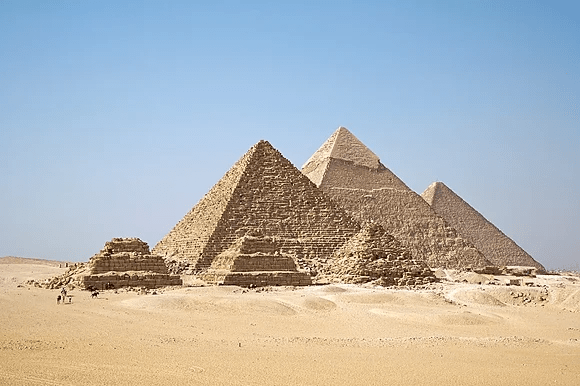
Thus, even MORE intriguing are the The Easter Island statues, Stonehenge, Nazco Lines, the Sphinx, Gobekli Tepe, and the PYRAMIDS of course!
AI said of Gobekli Tepe, “Göbekli Tepe is special because it’s the oldest known monumental, megalithic structure, dating back to the 10th-9th millennium BCE, predating both agriculture and settled civilization, and is believed to have been a religious center for hunter-gatherers.”
Some people have proposed that it was at or near the Garden of Eden, or somehow associated with it.
Something one of the cited articles said about this amazing series of structures, was that “Bewilderingly, the people at Göbekli Tepe got steadily worse at temple building. The earliest rings are the biggest and most sophisticated, technically and artistically.“
Atheists and skeptics dismiss the Bible as having been written ‘by a bunch of illiterate, ignorant shepherds.’ It is a common rejoinder. They look at the past and all they see are unskilled populations and ignorant societies, and believe we are at the pinnacle of sophistication. We aren’t. We are actually dumber now. As one example, our concrete piers fail in salt water very quickly. Roman piers only get stronger and are still in use 2000 years later.
This thought about the intelligence and sophistication of past civilizations is picked up by Answers in Genesis author Dr. Jack Hughes. @DrJackHughes wrote on Twitter/X the other day the following interesting essay.
Dr. Hughes: “Having a thought about the pyramids. Because of the advanced technology apparent in the pyramids, I have wondered if they are pre-flood structures as some claim. The Bible, contrary to common evolutionary myth, teaches that mankind used to be smarter, not dumber. We haven’t evolved, we have devolved because of the curse. This is why some of the oldest structures evidence the most advanced construction techniques e.g., Malta temples, Göbekli Tepe, Stonehenge, Newgrange, Baalbek, etc. Man’s lifespan before the flood was nearly 1,000 years (see Gen. 5). The human genome was not as decayed by sin and the curse then as it is today. People weren’t poisoned by bad food and the contaminates like we are today. People surely used most of their brain capacity.”
“Imagine having a photographic memory and living for 900 years! When you look at the early, pre-flood account in the Word of God you discover that mankind, before the flood, though exceedingly wicked (see Gen. 6:5), were innovators, figured out music, metallurgy, farming, building, etc. So, what if the pyramids were built pre-flood as huge obelisks (for whatever purpose), the flood came, encased them in mud, which over time has turned to sedimentary rock?”
“There are reasons to think the pyramids were at one time submerged in water at the flood. Yet, one of the arguments against the pyramids being pre-flood is that “they are built on sedimentary rock.” Well, it appears they may be built on bedrock, 680 meters (2,231 ft) below the surface. Either shafts were dug deep into the post-flood sedimentary rock, or very tall structures were built, that were later encased in mud at the flood and turned into stone.”
“When I consider the latter, and the weight of the pyramids, it seems unlikely that a structure 2,231 tall could be built to support its weight, even if it was made out of granite blocks. Yet another idea is that the pyramids were built into the pre-flood bedrock, and were obelisk type structures, partly built into the ground and built above the ground, and the flood covered most of the part of what sticks above ground in mud, that turned to sedimentary rock after the flood. Crazy discoveries are happening around the world and some, like Göbekli Tepe, are purposefully being covered up (e.g., tomb of Gilgamesh). What are governments afraid we might discover? Could it be evidence that confirms the Bible is true and that evolution is a lie? I think so. Fascinating stuff.”
Justin Peters concurred that this was his thought as well:
Justin Peters: “I agree completely. Humans thousands of years ago were far more intelligent than are we. I once saw a documentary on the Sphinx and it made a compelling case that it shows distinct signs of water erosion.“
When Dr. Hughes says Gobekli Tepe is being covered up, he is not kidding. It literally is being covered up. The Istanbul Chronicle reports, “Since 2016, all excavation work at Göbeklitepe, a site of extreme historical significance, has reportedly been stopped. Instead, a roof has been constructed over the site, and areas that needed to be excavated have been covered with trees.” They are also building roads over it.
Whether or not we discover the truth about these things in heaven, it is still an interesting notion that the secular world sees, and deep-down knows, that, as the Westminster Shorter Catechism says, the chief end of man is to glorify God and enjoy Him forever. We are made to worship.





 the-end-time.org
