Posted in missionaries, theology

History’s Single Female Missionaries: ‘Woman’s Work for Women’, or Proto-Feminists?

By Elizabeth Prata

God does a powerful and magnificent thing by raising up missionaries. He not only regenerates hearts but He establishes some to go to the hard places, live a hard life, and some even to die for His name. The selfish will of the natural man would never do that. The self-sacrificing heart of a regenerated Christian, would.

I think of many woman missionaries who lived and died for His Gospel. One of my favorites is Gladys Aylward, missionary to China. We remember the female missionaries of the 1800s and 1900s who first went places, like Lottie Moon, Amy Carmichael, Annie Jenkins Sallee, Mary Slessor, and Isabel Crawford… among many others.

We might be inclined to even think of them like super-Christians, given extra strength or morality or character, or who were extra spiritual. LOL, they were simply women, with the same sins, tendencies, and foibles as the rest of us.

In fact, you might be surprised to find that some female missionaries may have possessed extra doses of foibles and struggles as they considered the mission field. Some of them may have mixed their motives for going, struggling with the exact same issues we do today- feminism and being conflicted against prescribed gender roles.

After William Carey, missionary to India and considered the Father of Modern Missions, died in 1834, a fervor arose among the faithful. He had founded the Baptist Missionary Society, spent 41 years in India (without a furlough) and raised consciousness among Christians of the need for bringing the Gospel to the nations. Missions exploded.

In addition to the missions movement powerfully springing up in the mid 1800s, in which many Christians desired to go, another powerful movement sprang up too- First Wave Feminism. (1848-1920). Whereas previously, the only credible careers available to women were teaching or nursing, now, many women found that a missionary life afforded them a chance at a fulfilling career and even leadership opportunities on the foreign field that would not have happened back home. The Civil War had helped with that, either with women handling the homestead or the business while the men were gone, or serving in the army itself as doctors. Once bitten by the independence bug, many women found that missions offered similar opportunity to lead an independent life.

In 1834, New York businessman’s wife, Sarah Doremus, heard a sermon about the need for women on the field in China, in order to reach Chinese women. She tried to get an organization going, but it went nowhere. By the time of the Civil War in 1861, there was less opposition to females singly joining men on the foreign mission field. Doremus’s organization was finally founded with success: the Women’s Union Missionary Society.

Let’s look at a few of these missions ladies.

800px-lottie_moon-1

Charlotte ‘Lottie’ Moon (1840-1912) Missionary to China.

One of the earliest and easily the most famous single female missionary, Lottie Moon, seems to have been a relentless advocate for expanded women’s roles, a proto-feminist.

Lottie was indifferent to the Baptist religion of her parents until age 18, when she experienced an awakening during a series of revivals. She then attended Virginia Female Seminary and Albemarle Female Institute in Charlottesville, Virginia graduating in 1861 with the first master of arts degrees awarded to a woman by a southern institution.

Lottie taught at home for a while, but then responded to a call from her sister Edmonia in 1871 who had already been approved for the China mission field and had been there a year. Lottie’s other sister Orianna had previously served in the Confederate Army as a Doctor in the US Civil War.

Foreign missions often encountered an issue of gender. In many nations, only women could reach women. Men counseling or giving the Gospel or interacting in general with women presented a scandalous problem. The teaching career having palled for Lottie, she responded to her sister’s call and went to China to “go out among the millions” as an evangelist. Instead she wound up in the same work-situation as she had been back home, teaching what she termed as “unstudious children” in China and feeling like an oppressed class of single women missionaries.

In an article titled “The Woman’s Question Again,” published in 1883, Lottie wrote:

Can we wonder at the mortal weariness and disgust, the sense of wasted powers and the conviction that her life is a failure, that comes over a woman when, instead of the ever broadening activities that she had planned, she finds herself tied down to the petty work of teaching a few girls?

That was how Lottie viewed women missionaries teaching children on the mission field. It was “petty work.”

Lottie Moon was in fact ardent activist for women’s rights and a tireless supporter for an expanded sphere for women’s evangelistic work, despite what the Bible said women’s roles are to be. Her specific directive from the SBC Missions Board was to teach women, not to plant churches, evangelize, or teach men. Rebelling, Lottie did all three, loudly. She decided that to make a lasting impact she had to reach the men of the community. So she incited curiosity enough so that the men attended her teaching meeting, and Lottie ‘innocently’ said that she was just mainly preaching to women but would not send the men away if they chose to come. That attitude was similar to Beth Moore’s stance a hundred years later,

Being a woman called to leadership within and simultaneously beyond those walls [of an SBC church] was complicated to say the least but I worked within the system. After all, I had no personal aspirations to preach nor was it my aim to teach men. If men showed up in my class, I did not throw them out. I taught. ~Beth Moore

Lottie wrote,

“Simple justice demands that women should have equal rights with men in mission meetings and in the conduct of their work.”

Lottie did receive criticism from both men and women for her opinions, one of which included women entering the missions field in order to do the “largest possible work,” but other women abhorred Lottie’s “disorderly walk” and called for her to stop her “lawless prancing all over the mission lot.” Lottie didn’t.

She found it easier to advance her expanded view of female missionary work on the foreign field. When no men were available to preach, she did. Around 1885 Lottie decided on her own without permission from the home Board, to move to China’s interior, P’ingtu. Her heart was burdened for the many who were ‘groping ignorantly for God,’ and where incidentally there was also less Board oversight.

By 1886, Lottie had completely abandoned the “woman’s work for women” policy that had she had agreed to in order to receive her appointment as a Southern Baptist missionary to China. Her move to P’ingtu accomplished, she had no male protection, no male supervision, and evangelized as she saw fit, experimenting with various methods.

And of her Field Director’s attempts to redirect her efforts toward the call to which she agreed, teaching, she wrote-

“[His plans] would make him, through the Board, dictator not only for life but after he had passed from earthly existence. If that be freedom, give me slavery.”

Forgoing biblical submission, she threatened resignation. Lottie Moon was an egalitarian who did much to erode the SBC’s stance on complementarian roles for men and women. Her rebelliousness resonates to this day.

Lottie remained unmarried to her death. As regards her death, the common story is that Lottie gave away all her money and gave her food to starving Chinese during a famine, dying a board a ship at Kobe Harbor weighing 50 pounds. Other documents indicate Moon suffered from an infection located behind her ear, which the missions doctor theorized had invaded her spinal column and caused dementia. Part of Moon’s end-of-days dementia included fixations on lack of money and refusal to eat.

Lottie Moon was no doubt a lover of the Gospel and a lover of souls, but was also a fearless and relentless advocate for ‘women’s rights’ within the SBC, spending many years fighting the SBC (once on the field), rights that went far outside the bounds of biblical roles.

Mary Slessor 1848-1915. Scottish Missionary to Nigeria. Mary accepted a marriage

mary
Mary Slessor

proposal from a man 30 years her junior, but decided not to marry him when the Board refused to allow him to leave Duke Town, and Mary refused to leave the interior. Mary chose missionary work over marriage, eventually appointed by Britain as Judge in native court, something that would not have happened back in Scotland. However, her impact on local culture was tremendous in a positive way, almost singlehandedly stopping infanticide, killing widows when their husband passes, and the practice of testing who is right by making both drink poison. She was also a noted “eccentric”, pushed into the interior against the Board’s wishes, and chose lone stations as a preference. She is regarded as a hero to this day both in her native Scotland and in Nigeria.

Annie Jenkins Sallee American Missionary to China. First woman to receive a Master’s Degree from Baylor U. in 1899. Married W. Eugene Sallee. Not a single female missionary, but Annie’s marriage was a close call. She resisted mightily. In “‘Women’s Work for Women’: Annie Jenkins Sallee in China” by Amanda Sawyer, we read of Annie’s uncertainty about marriage because it conflicted with her goals to the mission field-

Yet Annie remained uncertain. Though she said she loved Sallee a great deal, she also viewed marriage as a personal defeat. And despite this love, she remained uncertain about fulfilling the station of wife.

From Annie’s diary

I didn’t want to marry for many reasons, I had decided on so much work I was going to do. I feel a single woman can do so much more work than a married one with household cares. I feel I could have more influence with the young unmarried. I never did feel called upon to keep house for a man. I want to be in the work myself. As yet I have not been able to find the great importance and “privilege” as some term it of being a “wife”! It seems to me I’d be cut off from everything and shut up to house-hold cares.

Amanda Sawyer continues,

Marriage represented a giving up of the “feminist spirit” which Annie had so eagerly taken upon herself when she received her master’s degree, traveled to Chicago to be trained as a missionary, and set sail to China.

More from Annie’s diary. Annie related how Eugene pleaded with her:

I’ve told him [Eugene] how it seemed to me my education and all the years of training I had put on myself would be useless. He wouldn’t need it, and I couldn’t use it. It hurts him when I talk this way. He says he knows it is asking me to give up everything for nothing; but he loves me…I have learned such things and had such high ambitions for myself as a single woman that I can’t give all these up just now. I know that Papa says that a woman’s highest possible attainment in this world is to be a wife and mother but oh! I have seen the other side…the taste I had of public work, of the meetings with women, of moving whole audiences, and of helping people make decisions for God, of counciling [sic] with people about their work, and helping the discouraged–has taken a bigger hold on me than I thought and I flinch when I think of merging my own self, identity and all, literally losing right of self and all for him.

My how it hurts my pride. I don’t want to be ‘Mrs.’ Anybody. I don’t like married women as a general rule. … I don’t feel I can get used to being Mrs. S, and really don’t want to. I hate to think I gave up my name.

When Annie did eventually marry, she had the officiant take the word obey out of the vows and replace it with the word help.

(Source God Speaks to Us, Too: Southern Baptist Women on Church, Home, and Society By Susan M. Shaw)

It is a fact that God calls some to singleness, and that is OK. However, to choose singleness because there is a greater chance of renown, or of expanding one’s role, or of being independent, is another matter. In that case it would be a mixed motive that we women should be careful to examine before making drastic life decisions, most importantly, of the mission field.

Genesis 3:16 makes that clear that it is within all of us until the glorification to want to rule over a husband. And on top of that there is the general tendency of our sin nature to usurp God’s plan from all quarters, something satan is only too happy to help with. But is developing self or working to push gender boundaries God’s plan for women, or for any of us? We die to self, conforming our identity to Christ’s in a lifetime of submission and sanctification. Is the marriage institution that God created “for nothing” as Annie wrote? Or as Lottie wrote, is teaching girls ‘petty work’? If it is for the Lord, no work is petty. Did Paul deem it petty to make tents?

Any historical person will have had a blending of truth and myth attached to their name. We are all used to the mythologizing that surrounds Lottie Moon or Amy Carmichael (she will be looked at in a separate essay). There’s no doubt that these women mentioned and many others did have the Gospel and souls in mind when they embarked for the mission field. In the 1800s and early 1900s life was rough for these women (as it still is in many places). They endured hardships for the Lord’s name, but some of them also intentionally or perhaps unintentionally used the situation to advance an agenda that was not totally consistent with biblical roles for women.

It’s clear that single female missionaries were not all feminists nor did they all use the field to advance extra-biblical boundaries. The hard life, relentless cultural opposition, and some martyrdoms make it clear that God was first priority. Yet their mixed motives are not out of bounds to examine, nor is it unwarranted to say that the sometimes lack of rigorous oversight may have later incited some of these women to overstep, bowing to a natural tendency to usurp.

As in today’s times, with woman founding organizations, gallivanting the globe for social justice, or heading out on book tours (leaving husband and children behind), and calling it ministry, these subterfuges simply indulge the Genesis 3:16 tendency in women who knowingly or unknowingly want to live a role that seems more attractive to them than “wife”, a moniker that missionary Annie Jenkins Sallee actively chafed at.

This essay is not meant to impugn the good work of these women, but to warn and advise ladies who want to strike out for the mission field, to examine one’s own motives for doing so. It is also a call to examine everything with clear eyes, not to be clouded by mythologizing or romanticizing missions. It’s especially important to be clear-eyed about these more famous missionary women when using them for role models.

Here are some helpful articles-

Learn How to ‘Adult’ Before You ‘Missionary’

Many conferences rally young people to do extraordinary, counter-cultural, radical things for kingdom. High school, college, and seminary students are exhorted to do anything but settle for a predictable, cozy existence. The drumbeat, intentional or not, is risk, run, burn out, and die for Jesus.

What Does It Mean That Women Should “Remain Quiet” in Church? (1 Timothy 2) By Denny Burk

“Quietly” does not mean that women are never to utter a word when the church gathers for worship. This would completely contradict what Paul says about women in 1 Corinthians 11, where he tells the women how to pray and prophesy in church. His assumption is that they will pray and prophesy, which means his assumption is that they will speak during church services. We may note that the term for “quietly” in verse 11 is similar to the term for “quiet” in verse 2. When Christians are commanded to pray for a “peaceful and quiet life,” that phrase does not describe a life in which no one talks. It aims rather at a life “without turmoil.”

A letter to young women interested in going overseas

 As a wife, I am designed to help my husband be the best man he can be as he lives out his calling to make disciples. So this means that if I am married, I can be confident that I am following God’s calling when I support my husband in his calling. If you are called to singleness, you are still created to be a helper in a general sense to the body of Christ, but you are also able to maximize your giftedness in a unique, devoted way (1 Cor. 7:32-35). So if you are single, I would encourage you to find a ministry that you love with leaders that you can work under and help.


Posted in discernment, theology

Discernment sometimes is like the Great Wave off Kanagawa

By Elizabeth Prata

A dear reader emailed me, dispirited. She said that she had tried to reason with a major Christian publishing company as to the fact that they sell so many books of false teachers, and thus they promote false doctrine. She became discouraged when the Publishing Rep countered her concerns with scripture and dismissed them, politely of course.

She said she felt like “a drop of water against a tsunami.”

I empathized heavily. I think we all feel like that from time to time.

When I was first saved, I remember the headiness of my new worldview. Now everything made sense! I knew why people were evil, why things always went wrong in government, why hope died, why nothing fulfilled my heart! I looked at the church as a glowing city on a hill, the resolution to everything, and a happily ever after.

Then I remember learning that more danger is within the church than out. That every NT book except Philemon warns severely of false teachers, of wolves after lambs, of lions devouring. I learned that I needed to be even more vigilant than I’d thought would have been necessary inside of a church. Actually church didn’t mean safety, it meant danger! I was flabbergasted when I learned just how many false teachers there are, and not just TV preachers, but ones in the church down the street, or even inside my own church! What I thought would be a time of ease after the restlessness of 4 decades of searching for peace, turned into a never-ending battle against my own flesh and against waves of false teaching trying to sweep me away.

Sigh.

Sometimes standing for Jesus means we sometimes do feel like a drop of water against a tsunami, especially when a monolith like a panel of pastors, or a major publishing company, or a mega-church are against your concerns.

The Great Wave off Kanagawa

I agree, sometimes our work for Jesus to withstand the evil waves of false teaching seem hopeless and pointless. I’ve had my share of difficult conversations too. The same day my reader contacted me, someone came onto a thread I’d done on Beth Moore and asking seemingly harmless questions. I offered scripture, she ignored it. I offered topics of heresies, with scripture, she ignored it. Finally she flatly said “You don’t know what you’re talking about”. All righty then.

Why, oh why, don’t they see the truth through scripture? Because they don’t submit to scripture as authority. At root, false teaching appeals to people because they are making their own gods. The flavor of false teaching they choose matches the sin they refuse to slay inside them. (2 Peter 2:18). If they are greedy, they will like prosperity preaching. If they are prideful, they will like the renown they will receive from Charismatics by giving false prophecies and speaking babbling tongues. And so on.

When we stand for truth, the hearer may or may not listen at that time. She may or may not repent later. In any case, our stand is a tribute to Jesus, demonstrating our own obedience and faith for which He will richly reward. Oh, but how powerful a drop of water can be, when it’s energized by the Spirit.

The listener’s failure to engage along biblical lines or respond to scripture will be on her own head. And that’s out of our hands. Did we try when our conscience was pressed by the Holy Spirit? Good, then we have not committed a sin of omission. (James 4:17).

Either way, they will be judged according to the amount of faith they have been given (Rev 2:23; Romans 12:3); and according to the position they hold. (James 3:1).

It reminds me of Paul, in Acts 18:6,

And when they opposed and reviled him, he shook out his garments and said to them, ‘Your blood be on your own heads! I am innocent. From now on I will go to the Gentiles.’

In Ezekiel 2:4-5 God told Ezekiel to speak His words to the rebellious House of Israel.

The descendants also are impudent and stubborn: I send you to them, and you shall say to them, ‘Thus says the Lord God.’ 5 And whether they hear or refuse to hear (for they are a rebellious house) they will know that a prophet has been among them.

Not that we are prophets, but the point is, when we speak God’s truth we do so whether they will hear or won’t hear. On the Day when they try to argue, they will have no excuse. (Matthew 7:21-23; Romans 1:20).

Barnes’ Notes says of Paul’s declaration in Acts 18:6-

I am clean – I am not to blame for your destruction. I have done my duty. The gospel had been fairly offered and deliberately rejected; and Paul was not to blame for their ruin, which he saw was coming upon them.

Jamieson-Fausset-Brown Bible Commentary says of v 18:5,

What that pressure was we happen to know, with singular minuteness and vividness of description, from the apostle himself, in his first Epistles to the Corinthians and Thessalonians (1Co 2:1-5; 1Th 3:1-10). He had come away from Athens, as he remained there, in a depressed and anxious state of mind, having there met, for the first time, with unwilling Gentile ears.

But he kept going. He knew when to cut off a conversation, sometimes we turn to more fertile soils when the Gospel has been rejected, and I mean to include discernment work among the Gospel umbrella. You’re making known ‘this same Jesus’ as in Acts 1:11 who ascended and will return, and letting hearers know they are clinging to a different Jesus.

I know how hard it is to go into a place where more than likely your heartfelt message will be rejected and perhaps you will even be slandered, marginalized, or cut off completely from fellowship, as has happened to some. It’s like knowing you’ll put your face into a buzz saw.

I know the dispiriting feeling when you come up against a seemingly insurmountable obstacle. While the wall may seem tall (or the tsunami wave high) it will fall like the walls at Jericho, either sooner or later.

Persevering honors the Lord in your obedience, it hones your own discernment, it establishes a prayer focus, but it also reveals how deep someone may be in sin.

Take heart. Even Elijah, John the Baptist, Thomas, Moses, and Jeremiah as a few examples, struggled in their ministry, at times saying, ‘what’s the point? They won’t hear me anyway…’

Either way the Lord can say to you, “Well done good and faithful servant.”

Sure, it feels like a drop of water against a tsunami.

Ovid said, “Dripping water hollows out stone, not through force but through persistence.”

water droplet

Posted in theology

Throwback: Genesis IS the Beginning

By Elizabeth Prata

This essay first appeared on The End Time on May, 2011

In a recent John MacArthur sermon, he said, “A well-known scientist named Herbert Spencer died in 1903. He discovered that all reality, all reality, all that exists in the universe can be contained in five categories…time, force, action, space and matter. Herbert Spencer said everything that exists, exists in one of those categories…time, force, action, space and matter.

Now think about that. Time, force, action, space and matter. That is a logical sequence. And then with that in your mind, listen to Genesis 1:1. “In the beginning,” that’s time…”God,” that’s force, “created,” that’s action, “the heavens,” that’s space, “and the earth,” that’s matter. Everything that could be said about everything that exists is said in that first verse.”

Yes, indeed. The Bible is amazing isn’t it? And I share with some glee that the scientist who believes all reality can be found in those five categories was an evolutionist who actually coined the term ‘survival of the fittest’ which Darwin subsequently used. But re-read Genesis 1:1, and you find truth in the five category theory. The Bible is a wonderful book of science.

I am not ashamed of the Bible. I am not ashamed of the Gospel. It is all I need to live on, for it is my bread of life and the fountain of water is rich to slake my thirst. I believe Jesus is God incarnate, lived on earth as a man, died as the only spotless sacrifice there is, was, or will be to pay the penalty God requires for sin. I believe He died and rose again on the third day. I believe He intercedes for us at the right hand of the Father, and will return to judge the earth. I believe He is preparing a place for us called New Jerusalem which is glorious and will be our home forever when He calls us to Him. I believe I am a sinner, not arrogantly believing I am good, or that I merit entry to heaven on my own, or that I never have done, said, or thought a wrong thing, but instead I am sinful to the core. I asked Him to forgive my sins, and He did. I believe Jesus did forgive my sins and I will rule and reign with Him after He calls us to Him. I believe the church age is winding down and I thank Jesus every day for my salvation that I am cleaned from unrighteousness and will be able to dwell with Him in blissful eternity- thanks to His work on the cross. I believe the time is short. I am ready.

ARE YOU?

and god said genesis verse

Posted in eschatology, theology

Eschatology is more than “Jesus Wins”

By Elizabeth Prata

I taught kids at church on Wednesday nights. I loved their conversations and their thoughts and their joy. I remember one night, they were asking about Jesus and heaven. They got so excited when they figured out that their friends will be in heaven too. They practically jumped out of their seats when they made the connection that they will actually see Jesus and hang out with Him. They started making plans, clapping their hands … It reminded me of Mark 10:13-16, “suffer the little children to come unto Me, do not hinder them, for the Kingdom of God belongs to such as these.” Boy, does it ever. Let US be excited, innocent, planning, expectant, too. Are we? We should be!

I become so sad thinking about a similar joy that adults should display when thinking of the “Last Things.” Many adults don’t want to talk about eschatology because it’s “controversial” and “divisive.” It shouldn’t be. Jesus talked about it a lot. The disciples were eager to hear and asked Jesus to explain it. They had a long sit-down. (Matthew 24-25). The last things are not complicated, and in my opinion, are laid out pretty clearly in scripture. In any case, for people who hold opposite interpretations, (and only one can be right) we can and should share in the joy of our eager anticipation of Jesus’s return and our glorified state.

I read this article from Challies, his book review of a Dayton Hartman’s book Jesus Wins:

It’s ironic and more than a little pathetic that a doctrine as glorious and comforting as Christ’s impending return has been a source of such vehement disagreement among Christians.

I do not agree with the author’s premise that we should all return to the common eschatology expressed in the Apostle’s Creed, (which is watered down and amenable to everyone from Catholics to Unitarians to Ecumenical partnerships). Nor do I agree with Hartman that the exact details are unimportant (they are crucial because the details are the difference between hope and fear, AND because the Spirit wrote them down). “Jesus Wins” isn’t enough, not when those details are given to us for a hope and-

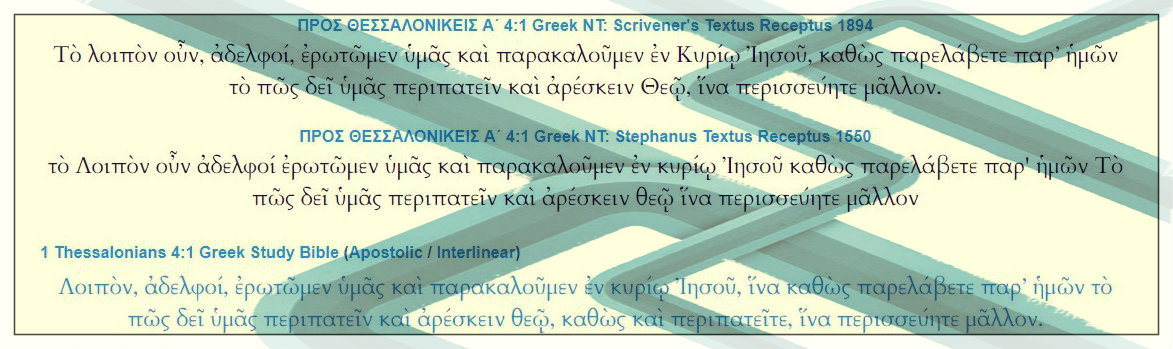
so that you do not grieve like the rest of mankind, who have no hope. (1 Thessalonians 4:13)

Paul urged the brethren to “stand firm and hold fast to the teachings we passed on to you, whether by word of mouth or by letter.” (2 Thessalonians 2:15). The teachings to which he refers are the Gospel, of course, and also the eschatological teachings Paul is reminding them of in 1 Thessalonians and 2 Thessalonians.

‘Jesus Wins’, yes, but how? Why? In what manner? Reducing your eschatology to ‘Jesus wins’ is like saying all one needs to know about the Son is that “He died and rose again.” There’s so much more!

Speak of the glories of His victory, diligently study the last things so you will know, and proclaim His last days plans to one and all. Don’t settle for a simplistic ‘Jesus Wins.’ There is so much more to it than that, and all of it glorious. Fight for it!

Here are 7 Reasons Your Church Should Take Eschatology Seriously

It is concerning that some churches today don’t take eschatology seriously. The very fact that God has revealed so many details about events to come in both testaments tells us that it is important. At the center of biblical eschatology is the blessed hope of the appearing of our great God and Savior, Jesus Christ (Titus 2:13). Not only should we be interested in prophetic events to come, we are also looking for our Savior, with whom we will spend eternity.

The 7 reasons are short and easy to read. Enjoy!
4 aseity thursday

Posted in theology

What are oracles?

By Elizabeth Prata

An oracle is on the lips of a king; his mouth does not sin in judgment. Proverbs 16:10

And Balaam lifted up his eyes and saw Israel camping tribe by tribe. And the Spirit of God came upon him, and he took up his discourse and said, “The oracle of Balaam the son of Beor, the oracle of the man whose eye is opened (Numbers 24:2).

The Lexham Bible Dictionary defines oracle as

A divine message communicated through a human mediator to one or more human recipients.

Wells, S. (2016). Oracle. In The Lexham Bible Dictionary.

So how an oracle different from a prophecy? Technically they both are divine messages delivered from the mind of God to the tongues of man, with intent to proclaim His revelation to a wider audience. God is using a human instrument for His tongue.

However, oracles were usually something that humans sought from God, instead of Him delivering a message unprompted by human inquiry, as usually happened with prophecy. These oracles were specific, someone was seeking an answer to a specific question, rather than the sweeping prophecies given that covered a general time frame. Of course, exceptions to this abound.

Many oracles were sought by kings and leaders for political purposes (“Will I win this battle?”) but the lay-people also sought oracles too. (e.g. 1 Kings 22:1-7)

Since some prophets or seers received compensation for oracles, the tendency was to then deliver favorable oracles to the consumer so the money would keep flowing.

Scholars like Westermann and Sweeney have identified a variety of subgenres for prophetic speech Two subgenres of judgment speech are:

  1. oracles against foreign nations, best known from their collections in the major prophets (Isa 13–23; Jer 46–51; Ezek 25–32)

  2. the woe oracle, which identifies wrongdoing and announces punishment much like typical judgment speech and is marked by the exclamation “woe” (e.g., Amos 5:18–20; Ezek 16:23). The New Testament also includes woe oracles spoken against individuals or groups (e.g., Luke 10:13; Matt 23:13–36). Wells, S. (2016). Oracle. The Lexham Bible Dictionary.

You might remember the Magic 8 Ball. It was a black ball made of hard plastic that a child could hold in two hands. It had a clear window at the top and you asked it a question, shook the ball, and waited until an icosahedron  floated tot he window with a message in it. The answers always disappointed me as a kid. “Try again later,” or “Maybe.” The ancient world was rife with oracle locations. The two most famous were the oracles of Apollo at Delphi and Zeus at Dodona. When seekers arrived and asked the oracle a question, answers that came were often vague. So if you were frustrated as a kid receiving vague answers from the Magic 8 Ball, imagine the seekers at Delphi or Dodona!  Yet still, many thousands still came to seek answers from the ‘gods.’

Of course, the only God there is, is Yahweh, and His answers (oracles) are true and specific. Romans 3:2 says

To begin with, the Jews were entrusted with the oracles of God, meaning, the Jews were entrusted to receive messages from God via a human medium, usually a prophet or a priest. How wonderful that He has grafted the Gentiles in, so now we can understand the oracles of God, His word via the Holy Spirit.

When we come back to the New Testament, we see that Christian teachers, functioning as prophets, also spoke the “oracles” of God. Peter said, “Whoever speaks, let him speak, as it were, the oracles of God” (1 Pet. 4:11, NASB). The author of Hebrews also used the word oracles to describe the words of God that had originally been communicated to the believers (Hebrews 5:12). Source: In Holman treasury of key Bible words


Posted in theology

Dudette, where’s your gravitas?

By Elizabeth Prata

A while ago I asked Do You Like or Dislike Podcasts? I’d admitted that my toleration level for any and all auditory stimuli is low, due to my autism. Therefore if I’m going to listen to something I’d rather it be a sermon or soft classical music (very calming).

The title question is a paraphrase from a Council for Biblical Manhood and Womanhood article which asked the men “Dude, Where’s Your Gravitas?

Gravitas is a Latin word meaning dignity, seriousness, or solemnity of manner. Bible teachers, speakers, and podcasters are handling the word of God. They are conveying or teaching doctrines or concepts related to theology and its application to Christian living.

Sadly, many podcasts by both men and woman sink into silly behavior from the podcaster, especially when there are two or more hosts, or a host and a guest. There’s so much giggling, laughing, and off-topic, random chats that I usually reach my limit within just a few minutes, and turn it off or move the dial to something more productive. I also think it’s asking a lot of the podcaster to expect busy moms and outside the home working women to devote their limited time listening to their tee-heeing and non-productive repartee.

Quite often when I publish an essay regarding false doctrine brought by a false teacher, I receive angry comments and emails telling me to ‘judge not’ and the like. But strangely, the angrier emails and comments I receive come when I publish an essay urging women to behave biblically. My, how so many women resent being urged to behave like biblical women!

But the Bible demands certain behavior from all of the faithful in every age group. We women, we are told to be a graceful pillar

May our sons in their youth be like plants full grown, our daughters like corner pillars cut for the structure of a palace; (Psalm 144:12).

Pillars, ladies, Not a braying donkey.

clipboard3

A friend sent me a link to an Elisabeth Elliot talk on Youtube. Elliot (1926-2015) was a missionary along with her husband to the unreached group the Auca of eastern Ecuador. After what seemed a successful first few contacts, the Auca massacred her husband and four other missionaries with him. Elliot remained in Ecuador after her husband’s death for two years as missionary to the tribe members who killed her husband. She remained in Ecuador overall until 1963.

Elliot was a popular speaker and author. Many of her talks to women about wifelihood or missionary life were recorded, as the one my friend sent.

Something one notices immediately upon listening to Elliot is her demeanor. She speaks slowly, carefully, soberly. (Titus 2:3,5). I think of someone like Beth Moore, where her speech patterns are so frenetic that when Chris Rosebrough introduces a segment about her he plays “Flight of the Bumblebee”. Or Christine Caine, who, at Passion 2019, yelled a lot and never stopped striding around the stage (in a track suit). A Bible teacher’s demeanor like Elisabeth’s will cause one to stop, listen, and take what is said more seriously because of the gravitas inherent in the woman. She spoke of heavenly things with respect for heaven.

The following is from Council of Biblical Manhood & Womanhood, it says of gravitas in men (change the pronoun to woman)-

“That is a man of gravitas. There is a solemn weight to the way he carries himself. He believes in truth. He walks in love, joy, passion, and conviction. There’s an undeniable winsome seriousness evident in his character, his words, his thoughts, and his motivations.”

The Bible says of women,
Older women likewise are to be reverent in behavior, not slanderers or slaves to much wine. They are to teach what is good, and so train the young women to love their husbands and children, to be self-controlled, pure, working at home, kind, and submissive to their own husbands, that the word of God may not be reviled. (Titus 2:3-5).

From Strong’s,

  • reverent in Titus 2:3- means, befitting men, places, actions, or things sacred to God, reverent
  • self-controlled in Titus 3:5- sṓphrōn makes someone genuinely temperate, i.e. well-balanced from God’s perspective. This root then reflects living in God-defined balance.
  • The root is the root of “diaphram,” the inner organ (muscle) that regulates physical life, controlling breathing and heart beat.
  • Example: An opera singer controls the length (quality) of their tones by their diaphragm which even controls the ability to breathe and moderates heartbeat. Hence it regulates (“brings safety”) to the body, keeping it properly controlled.

A gracious woman gets honor, and violent men get riches. (Proverbs 11:16)

The word honor as used in the Proverb here means ‘of a woman’. It’s used elsewhere to indicate- a doe (Nahum 3:4); a precious stone (Proverbs 5:19); of ornaments (Proverbs 17:8; Proverbs 1:9; Proverbs 4:9; Proverbs 3:22.) Source, Strong’s.

One thing that Phil Johnson and Todd Friel remarked upon when discussing a “teaching” clip from Beth Moore was that her demeanor strayed from teaching the Bible with reverence and gravitas, to performance as a stand-up comedian. Dear sister, speaker, podcaster, ladies, if we are blessed with the gift of teaching and undertake that endeavor, do we want to point to ourselves in performance, or do we revere the subject matter enough to speak about our subject with not only skill and clear doctrine, but reverence and self-control?

If women are going to teach on Bible subjects, shouldn’t we act like the Bible says to act?

Just some thoughts. Let me know what you think.

———————————————–

Further reading/listening

Podcast by The Thankful Homemaker: Cultivating Self-Control. Contains good thoughts on approaching Christian life and holy things with reverence, which includes self-control.

Michelle Lesley and Amy Spreeman are Christian bloggers, speakers, and teachers. They project a demeanor of joy without silliness. Both the theological content and their speaking style are, in my opinion reverent, and self-controlled. Check out their A Word Fitly Spoken podcast here.

Dr. Shelbi Cullen and Kimberly Cummings at The Women’s Hope podcast also speak with a quiet, self-controlled demeanor, respecting the biblical content with proper gravitas.

Not to say that they all speak with grave intonation as one would at a funeral, they speak normally but handle the material from heaven with respect and devoid of fluff, silliness, without random asides and without distractions.

Posted in theology, word of the week

Word of the Week: Exegesis

By Elizabeth Prata

The thread of Christianity from generation to generation depends on a mutual understanding of our important words. Hence the Word of the Week.

Past Words of the Week have included Justification, Transcendence, Immanence, Propitiation, Sanctification, Glorification, Orthodoxy, Heresy, Omniscience, Aseity, and Immutability. I then went to a series examining each of the 9 characteristics of the Fruit of the Spirit: Love, Joy, Peace, Patience, Kindness, Goodness, Faithfulness, Gentleness, and on December 29, 2018, wrapped up the Fruit series with Self-Control. Now it’s back to individual words of the week. Last week I chose Angel.

This week the word is EXEGESIS

Exegesis – the study of a particular text of Scripture in order to properly interpret it; the process of understanding a text and making plain its meaning (see 2 Timothy 2:15)

Exegesis is when a person interprets a text based solely on what it says. That is, he extracts out of the text what is there as opposed to reading into it what is not there (Compare with Eisegesis). There are rules to proper exegesis: read the immediate context, related themes, word definitions, etc., that all play a part in properly understanding what something says and does not say.

Ex- means out of. As in excuse, Latin for ‘out of’ and cause, literally, free from a charge.

Expel, ex- meaning out and pellere, to drive.

Excentric (eccentric) out of, and center.

Exegesisexēgéomai, (Greek) I explain, interpret and ex, out

The author of the exegesis definition immediately above puts to practice the rules for interpretation he’d outlined in the Exegesis essay. He shows how to interpret Matthew 24:40, the famous statement by Jesus about two people in the field and one taken and one left. Most people who do not apply the rules for exegesis interpret that by looking at the surface and thinking it means the rapture. But does it? See for yourself.

At Ligonier, Anthony Carter’s essay outlines the Consequences of Poor Exegesis.

John MacArthur asks and answers in this sermon, How Should We Interpret the Bible?

Tim Challies’ essay on two examples of exegetical fallacies (misinterpretations)

greek

Posted in theology

Peace and War, War and Peace

By Elizabeth Prata

When people say, “There is peace and security,” destruction will strike them as suddenly as labor pains come to a pregnant woman, and they will not be able to escape.” (1 Thessalonians 5:3)

The world will always be seeking the increasingly elusive quality of peace and security. The word security is from the Greek compound word, meaning not and totter. The notion behind the word is they will be looking for a ‘firmness that equates to security.’ There is nothing on the earth that offers a foundational firmness that equates to security. There is no treaty, no house, no nation, no leader, no idea, no government that will offer the security that God does. The only security there is, is God. That is why the drive to find peace and security ratchets up at a frenzied pace as time marches on, because as the world crumbles into not-peace (war) and not-safety (chaos), they look toward something, anything, that will provide security.

We know war does come. There is no peace. The Tribulation opens with a horseman riding on the waves of war, unleashing it upon the world. (Revelation 6:3-4). Damascus is destroyed, (Isaiah 17), The Middle East goes to war (Psalm 83), Iran attacks Israel (Ezekiel 38-39), and the rest of the world is drawn into war after war (Matthew 24:6).

Jeremiah 8:10b-12 speaks of conditions that mirror ours today,

“From the least to the greatest, all are greedy for gain; prophets and priests alike, all practice deceit. They dress the wound of my people as though it were not serious. “Peace, peace,” they say, when there is no peace. Are they ashamed of their loathsome conduct? No, they have no shame at all; they do not even know how to blush. So they will fall among the fallen; they will be brought down when they are punished, says the Lord.”

The Old Testament priests and prophets spoke of superficial things, not getting to the heart of the matter, which was their sin and their failure to repent. We have that today, preachers refusing to speak of sin but instead treating the people with a bandage when what they need is a tourniquet. They dress the wound as if the people are not dying. They focus on stamping our social ills, proclaiming a ‘woke theology’ which is no theology,  refraining from speaking true Gospel words such as sin and repent.

The false prophets speak of peace (“God loves you”) but there is no peace, none inside themselves with God and none outside themselves with each other. They are so seared with sin that they don’t even blush anymore. They have no shame at their deeds, and they will be brought down and punished. As it was then, it will be again.

Jesus is the author of time, the conductor of events, the creator of all the universe. He knows what will happen because He created the plan for it happening, and He told us about it. We can trust it because He cannot lie. The stunning thing is that He shares His intentions with us at all! He did so in the Bible, and if you own one, read it. It will make you love our Savior all the more.

If you are not saved, then the Bible will never make sense to you but you can turn on the linguistic translator almost instantly, by repenting and submitting to Jesus as Forgiver of your sins. He will send the Holy Spirit to you to indwell you and reveal the truths of His word. Then you will understand it.

And what of us, still here, still walking in His light on this side of the veil? Well, we continue to do what we do. We raise our children, we love our families, we share His name and His truths where He has planted us. Until He uproots us through death or catches us up through rapture, we persevere, fighting the good fight. These are exciting times, because His word is vibrantly flowing from His book to life and beyond. The true prophets (in this ea, pastors and teachers) are going aobut their business and fulfilling their ministry.

Praise Him that we have His word, can read it, cling to it, and through it, look toward the most important person of the Universe: Jesus Christ, crucified and resurrected. And soon to return.

What a day that will be!

peace 4 verse

Posted in theology

Do you like or dislike podcasts?

By Elizabeth Prata

This essay isn’t scripture or a review of something, it’s a plain old editorial. An opinion piece. I don’t often write editorials here, because my opinion really doesn’t matter much. I don’t need to weigh in, or vent, or get anything off my chest.

Except now.

I’d like to bring to your attention the object of my opining today: podcasts.

Definition: “Podcast: a digital audio file made available on the Internet for downloading to a computer or mobile device, typically available as a series, new installments of which can be received by subscribers automatically.”

Podcast timeline: It all began in 2004 when the first podcasting platform was launched. Other platforms, from iTunes and Yahoo, soon followed. In 2005, President Bush became the first President to deliver his address via podcast. The social media app was soon to become widespread.By now in 2018 we’re used to podcasts. Many of my online friends do a podcast, and I’m grateful for their addition to the Christan social media landscape. They do a good job.

I have to say, however, personally, I don’t enjoy podcasts. I’m not a fan of banter, filler, giggling, or circuitous points which most of them fill up most of their time with. I know podcasts are more casual than a sermon, but my point is, they shouldn’t be. Not that much.

If I may offer some things to think about if you are thinking of starting a Christian-oriented podcast or vlog (video log).

1. Are you “Able to teach”?

1 Timothy 3:2 says “An overseer, then, must be above reproach, the husband of but one wife, temperate, self-controlled, respectable, hospitable, able to teach,”

and 2 Timothy 2:24 says “And the Lord’s servant must not be quarrelsome but kind to everyone, able to teach, patiently enduring evil,

Gill’s Exposition explains this term able to teach which I underlined above, which in Greek is didaktos

Apt to teach; who has a considerable store of knowledge; is capable of interpreting the Scripture to the edification of others; is able to explain, lay open, and illustrate the truths of the Gospel, and defend them, and refute error; and who is not only able, but ready and willing, to communicate to others what he knows; and who likewise has utterance of speech, the gift of elocution and can convey his ideas of things in plain and easy language, in apt and acceptable words; for otherwise it signifies not what a man knows, unless he ha.s a faculty of communicating it to others, to their understanding and advantage

Before you start a podcast, do you feel you possess those qualifications? Have others noted your ability in this area?

2. Homiletics

Homiletics is the art of preaching or writing sermons. Now, a podcast isn’t a sermon, but the podcaster is delivering truths from the word of God. The situation is similar in terms of gravitas. You might have an aptitude to teach but though teaching could be either or both speaking or writing, these are two different skills. Many people have an incredible ability to write but when speaking to audience, they lack skill to convey truth or to edify, and vice versa. Homiletics is a honed talent for conveying truth in a useful way. Do you have this talent when you speak?

Do your best to present yourself to God as one approved, a worker who has no need to be ashamed, rightly handling the word of truth. (2 Timothy 2:15).

In the phenomenal speech that Phil Johnson, Executive Director of Grace to You delivered titled, The Preaching of John MacArthur: Expository & Polemical, he was asked to assess the preaching career of John MacArthur. One of the things Phil notes was John’s speaking voice. It lacked any idiosyncrasies, verbal tics, or anything else that would distract from the message. It was well-modulated, and amazingly, JMac pronounces every syllable. This makes a difference, Phil said. The clarity of voice with which JMac speaks means that his voice fades into the background and the message comes to the fore.

In addition, some people simply do not have a voice for podcasts. Many women, especially when they laugh and giggle (as podcast after podcast seem to be filled with) become very high pitched. It’s grating to listen to an hour of this. Or even half an hour. (For me, one minute is too long)

3. Goals

What’s your goal for doing a podcast? Just because the technology is there and it’s easy to start one, does not mean that you should. Are you going to be adding to the general profusion? Or have you detected a need that the podcast will fill within the body of Christ? It’s very easy for podcasts to become either an echo chamber or a vanity project.

Secondly, are you able to keep it up? I know so many women decide to start a blog, then find that daily life interferes too much and their fervent writing has tapered off to a once-per-month essay, then sputters to once or twice a year, then stops completely. Veteran blogger Tim Challies has often said he is surprised at how many blogs, particularly by women, have gone cold. Nascent Bloggers, Vloggers, and Podcasters, what we are doing is for the Lord. Can you sustain the podcast you start, for the glory of His name?

As for you, always be sober-minded, endure suffering, do the work of an evangelist, fulfill your ministry. (2 Timothy 4:5)

4. Is Your Podcast Beautiful?

I am of the opinion that if one wants to have a speaking career, one should speak clearly and concisely. This skill is directly taught to pastors in Homiletics classes. But it seems that anyone with an internet connection who decides to launch a podcast or embarks on a speaking career does so without a minimum benchmark most people learn in high school speech classes. There IS such a thing as adhering to a minimum standard of craftsmanship.

So, is your podcast beautiful?

RC Sproul in his course Recovering the Beauty of the Arts said that whatever we do for Christ must have a simple beauty. He said that there are “three dimensions of the Christian life that the Scriptures are concerned about: the good, the true, and the beautiful. We tend to have cut off the third from the other two.”

For example, the tailor-made robes for the temple priests were anything but rags—they were made beautiful for a purpose: to draw the spirit of a person heavenward.

In like manner, Sproul said, the architecture of old was deliberately intended to bring people into a  reverent posture toward a transcendent holy God. Compare that with today’s church-buildings, where the main goal in the architecture seems to be creature-comfort, which unfortunately communicates the idea that the church is no different than the world.

He continued, that granted, it does not matter where we worship, so long as we worship in Spirit and in truth. But we must also remember that our external forms communicate something about our convictions, and will influence those visiting us.

So for the budding podcaster, the question becomes “What kind of art will we have? Good art or bad art?”

5. Gravitas

Gravitas is a Latin word meaning dignity, seriousness, or solemnity of manner. Podcasters are handling the word of God. They are conveying or teaching doctrines or concepts related to theology and its application to Christian living. I am personally offended at all the silliness, giggling, and boisterousness I hear on so many podcasts. I’m not saying Christianity is dour or should lack fun. It IS fun, and we often smile and laugh. We rejoice! But if a pastor came to the stage and engaged in as much silliness with his associate pastor or partner as we hear on these podcasts, we’d run him out of town on a rail. The podcaster usually begins her session if it’s with another person by jollying around and telling anecdotes about the dirty laundry or the spi-up from the baby and they laugh and maybe sip a beverage and laugh some more. Then they want to talk about the glories of God. It’s jarring, and it’s unnecessary.

I don’t have a lot of time to listen to lots of different things. If I’m going to listen, it will usually be a sermon. Give me a reason, podcaster, to carve out some time to hear your thoughts, and why I should spend half an hour or an hour of my time listening to your program and not a MacArthur or Sproul or Ferguson sermon.

Since podcasters are handling the word of God, there should be some semblance of import to it! Please think about the silliness factor when you produce your podcast.

Conclusion

Doing a podcast means that the podcaster is able to teach, has skill, delivers quality content that edifies and does not confuse, h/she denotes some sense of gravitas into the proceedings, and can and will sustain it. I don’t think it does the Christian body and the watching world much good to litter the landscape with quickly written blog essays, podcasts, and half-hearted vlogs. Podcasts are not performances, they are not giggle-fests, that should not be vanity fairs (one hopes). They are supposed to be a medium or another tool that delivers God’s truths in a theological or a practical way (depending on one’s goal) to eager listeners.

Bless you in your podcast, and may your listeners come to know Christ better through it. I’ll just be over here, quietly reading a book…

perfection of beauty shines verse

————————————————

Further reading

The Man Who Accidentally invented the word Podcast

Posted in creation, theology

“There is no such thing as transgender”

By Elizabeth Prata

Male and female he created them, and he blessed them and named them Man when they were created. (Genesis 5:2)

Though some people these days (and fewer than we are presented with by the news) claim that there has been some sort of mistake, or that they don’t feel right in their gender, and abuse the medical profession to change that, there’s no such thing as mistakes with God. He made them male and female, period. If a person doesn’t feel right int heir own physiology, there is a mistake with them, not with God.

“You’re either XX or XY. That’s it. … This notion that you are something other than your biology is a cultural construct intended as an assault on God.” John MacArthur

Transgender is a rebellion against God because He made each person as He intended, male or female. Claiming that one wants to switch genders, or that there has been a mistake, is saying God isn’t God, That He is not sovereign, he doesn’t know what He is doing, and it’s OK to make one’s self their own god.

Here is a five-minute clip I thought answered the question of transgenderism sensitively, but heartbreakingly. When a person switches genders, they obliterate themself. Transgender folks are 19X more likely to commit suicide. If you or someone you know is going through a desired gender switch, or wants to, get them help immediately, and pray fervently for them.