How often we see in the Bible warnings about greed or attachment to money, and how it corrupts. After all, we read in 1 Timothy 6:10, “For the love of money is a root of all sorts of evil, and some by longing for it have wandered away from the faith and pierced themselves with many griefs.”
The prime example mentioned in the verse of ‘those who have wandered away from the faith’ is Judas.
Judas was “the epitome of failure,” said John MacArthur. “With the same opportunity that the others had, he failed.“
When I make dogmatic comments on various social media about this or that person being a false teacher, invariably I receive push-back. It usually consists of one of two opinions- either they use ad hominem to accuse me of being critical, judgmental, or otherwise something negative. Or, they say they had a positive experience following the teacher and due to the experience they had, it proves the teacher is true. A sort of ‘I know s/he isn’t false, because s/he helped me!’
Either type of comment displaying zeal without wisdom also usually include some old chestnuts recycled from undiscerning person to undiscerning person. They include, Judge not, don’t touch God’s anointed, did you go to her … and so on.
I say zeal without wisdom and undiscerning, because these commenters know just enough of what is in the Bible but not at all what it means.
Is today that day that You will call for your global church to go to heaven? Is today that day You will present a bride to Your Son? Is today the day You will deal with sin in the world? Is today that day You will send another warning to the unrepentant? Is today the day You will quicken the Spirit inside me to grow in Christlikeness? Is today the day You will send the Spirit to draw my family to the cross? Is today the day You will grow me in the spiritual fruit? Is today the day You will chasten me, your child? Is today the day You will send additional ministering angels to help me, protect? Is today the day You will give this land to Abraham and his offspring forever? Is today the day You will bring Your people out from under the yoke of oppression by the god of this world? Is today the day You will show Yourself in glory and power?
Today could be the day. For many of these, today IS the day. For others, soon will be the day. The Lord’s promises are true. They will be fulfilled. May His name be forever blessed.
The passage today is from Genesis 26:17-22. I found that as far as my interpretation of it goes, there seems to be a historical/practical meaning, a spiritual meaning, and a metaphorical meaning. God’s word is great. Here is the passage.
So Isaac departed from there and encamped in the Valley of Gerar and settled there. And Isaac dug again the wells of water that had been dug in the days of Abraham his father, which the Philistines had stopped after the death of Abraham. And he gave them the names that his father had given them. But when Isaac’s servants dug in the valley and found there a well of spring water, the herdsmen of Gerar quarreled with Isaac’s herdsmen, saying, “The water is ours.” So he called the name of the well Esek, [contention] because they contended with him. Then they dug another well, and they quarreled over that also, so he called its name Sitnah. [enmity]. And he moved from there and dug another well, and they did not quarrel over it. So he called its name Rehoboth, [room] saying, “For now the LORD has made room for us, and we shall be fruitful in the land.”
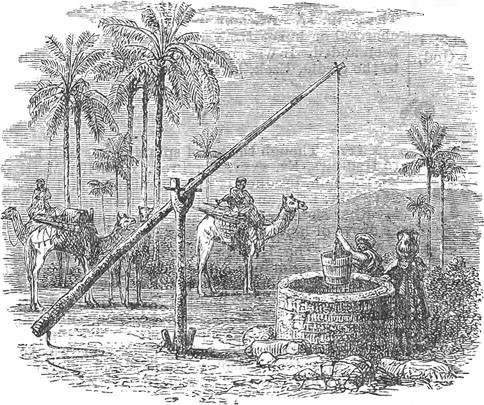
Ancient well diggers dug a shaft to obtain water from a water-bearing layer beneath the ground. They lined the shaft with wood, stone, or baked brick to prevent it from caving in. To keep contaminants from the well and to protect people from falling in, well diggers often built a low stone wall like the one shown here and covered the well opening with a large flat stone. Gen 16:14, Gen 21:19, 25, 30, Exod 2:15, Isa 12:3, Luke 14:5, John 4:1–45. (Source, Myers, R (2012) Logos Bible Images, Lexham Press, images are public domain.)
Practically, as a herdsman Isaac would have depended greatly on water to keep his flock alive. Water was a precious commodity in a dry and thirsty land. Earlier in Genesis 26 it had been reported that Isaac had become a very wealthy man.
And Isaac sowed in that land and reaped in the same year a hundredfold. The LORD blessed him, and the man became rich, and gained more and more until he became very wealthy. He had possessions of flocks and herds and many servants, so that the Philistines envied him. (Now the Philistines had stopped and filled with earth all the wells that his father’s servants had dug in the days of Abraham his father.) Isaac’s father Abraham had obtained the land legally and rightly, and he had dug the wells. Yet the Philistines stopped them up. And the Philistines’ envy and hatred carried through to Isaac’s day, when they contended with Isaac over the water and there was strife. It must have been a great hardship for Isaac with all his herds, servants, and flocks to go without enough water during the periods the Philistines contended against him. Calvin said of the stopped-up wells,
Moreover, the fact that the wells had been obstructed ever since the departure of Abraham, shows how little respect the inhabitants had for their guest; for although their own country would have been benefited by these wells, they chose rather to deprive themselves of this advantage than to have Abraham for a neighbor; for, in order that such a convenience might not attract him to the place, they, by stopping up the wells, did, in a certain sense, intercept his way. It was a custom among the ancients, if they wished to involve any one in ruin, and to cut him off from the society of men, to interdict him from water, and from fire: thus the Philistine, for the purpose of removing Abraham from their vicinity, deprive him of the element of water.
Aside from the physical need of the practical matter of water, the second item to note is Isaac’s placid response. Stopping up a well is akin to a declaration of war because no water equals financial ruin and perhaps death. The Philistines had already noted Isaac’s large retinue and knew he could have defeated the them yet Isaac did not fight. He simply relied on the Lord’s providential care by abandoning his freshly dug well – several times – and moved on. Talk about turning the other cheek! (Luke 6:29).
Calvin again, this time of the spiritual relationship Isaac had with YHWH-
First, Moses, according to his manner, briefly runs through the summary of the affair: namely, that Isaac intended to apply again to his own purpose the wells which his father had previously found, and to acquire, in the way of recovery, the lost possession of them. He then prosecutes the subject more diffusely, stating that, when he attempted the work, he was unjustly defrauded of his labor; and whereas, in digging the third well, he gives thanks to God, and calls it Room, because, by the favor of God, a more copious supply is now afforded him, he furnishes an example of invincible patience. Therefore, however severely he may have been harassed, yet when, after he had been freed from these troubles, he so placidly returns thanks to God, and celebrates his goodness, he shows that in the midst of trials he has retained a composed and tranquil mind.
Thirdly, the metaphorical aspect. Whenever there is water in the Bible, I pay attention. It is a blessing to me to think of the Lord Jesus as the Living water. With the stopping up of the wells and the final well finally flowing freely in an area of enough “room”, I searched to see if my hunch had been right. Matthew Henry alluded to the flowing water, metaphorical aspect of Isaac’s wells issue.
In digging his wells he met with much opposition, v. 20, 21. Those that open the fountains of truth must expect contradiction. The first two wells which they dug were called Esek and Sitnah, contention and hatred. What is the nature of worldly things; they are make-bates and occasions of strife. What is often the lot even of the most quiet and peaceable men in this world; those that avoid striving yet cannot avoid being striven with, Ps. 120:7. In this sense, Jeremiah was a man of contention (Jer. 15:10), and Christ himself, though he is the prince of peace. What a mercy it is to have plenty of water, to have it without striving for it. The more common this mercy is the more reason we have to be thankful for it.
Source: Henry, M. (1994). Matthew Henry’s commentary on the whole Bible: complete and unabridged in one volume (p. 60).
The two verses which come to my mind are:
With joy you will draw water from the wells of salvation. (Isaiah 12:3).
Whoever believes in me, as the Scripture has said, ‘Out of his heart will flow rivers of living water.’ (John 7:38)
Matthew Henry one more time:
Upon God’s providence, even in the greatest straits and difficulties. God can open fountains for our supply where we least expect them, waters in the wilderness (Isa. 43:20), because he makes a way in the wilderness, v. 19. Those who, in this wilderness, keep to God’s way, may trust him to provide for them. While we follow the pillar of cloud and fire, surely goodness and mercy shall follow us, like the water out of the rock. 2. Upon Christ’s grace: That rock was Christ, 1 Co. 10:4. The graces and comforts of the Spirit are compared to rivers of living water, Jn. 7:38, 39; 4:14. These flow from Christ, who is the rock smitten by the law of Moses, for he was made under the law. Nothing will supply the needs, and satisfy the desires, of a soul, but water out of this rock, this fountain opened. The pleasures of sense are puddle-water; spiritual delights are rock-water, so pure, so clear, so refreshing—rivers of pleasure.
May the Lord bless you abundantly as you drink freely from the well of salvation and refresh your justified soul in the river of living water.
Jesus only calls those sheep whose names have been written down since before the foundation of the world. (Ephesians 1:4). Those sheep know His voice and listen to them. Those sheep follow Him out of the sheepfold and into green pastures. He doesn’t put a general call into the sheepfold and wait to see who will come out. He knows them by name, and He calls them.
EPrata photo
Truly, truly, I say to you, he who does not enter the sheepfold by the door but climbs in by another way, that man is a thief and a robber. But he who enters by the door is the shepherd of the sheep. To him the gatekeeper opens. The sheep hear his voice, and he calls his own sheep by name and leads them out. When he has brought out all his own, he goes before them, and the sheep follow him, for they know his voice. (John 10:1-4)
John 10:1–2. Verses 1–5 describe a morning shepherding scene. A shepherd enters through a gate into a walled enclosure which has several flocks in one sheep pen. The enclosure, with stone walls, is guarded at night by a doorkeeper to prevent thieves and beasts of prey from entering. Anyone who would climb the wall would do it for no good purpose.
John 10:3–4. By contrast, the shepherd has a right to enter the sheep pen. The watchman opens the gate, and the shepherd comes in to call his own sheep by name (out from the other flocks). Shepherds knew their sheep well and gave them names. As sheep hear the sound of their owner’s familiar voice, they go to him. He leads them out of the pen till his flock is formed. Then he goes out toward the fields with the sheep following him.
John 10:5–6. If a stranger enters the pen, the sheep run away from him because his voice is not familiar. The point of this figure of speech consists in how a shepherd forms his flock. People come to God because He calls them (cf. vv. 16, 27; Rom. 8:28, 30). Their proper response to His call is to follow Him (cf. John 1:43; 8:12; 12:26; 21:19, 22). But this spiritual lesson was missed by those who heard Jesus, even though they certainly understood the local shepherd/sheep relationship. In their blindness, they could not see Jesus as the Lord who is the Shepherd (cf. Ps. 23).
John 10:7–9. Jesus then developed the shepherd/sheep figure of speech in another way. After a shepherd’s flock has been separated from the other sheep, he takes them to pasture. Near the pasture is an enclosure for the sheep. The shepherd takes his place in the doorway or entrance and functions as a door or gate. The sheep can go out to the pasture in front of the enclosure, or if afraid, they can retreat into the security of the enclosure. The spiritual meaning is that Jesus is the only Gate by which people can enter into God’s provision for them.
When Jesus said, All who ever came before Me were thieves and robbers, He referred to those leaders of the nation who cared not for the spiritual good of the people but only for themselves. Jesus the Shepherd provides security for His flock from enemies (whoever enters through Me will be saved, or “kept safe”). He also provides for their daily needs (the sheep come in and go out, and find pasture).
Source: Blum, E. A. (1985). John. In J. F. Walvoord & R. B. Zuck (Eds.), The Bible Knowledge Commentary: An Exposition of the Scriptures (Vol. 2, pp. 309–310). Wheaton, IL: Victor Books.
Who is this God who personally ministers to a sobbing Hagar in the desert? Who is this God who sends angels to an exhausted Elijah? And later Himself comes to Elijah in the cave?
Who is this God who judges the world in watery wrath, but chooses to save 8? Who is this God who creates worlds and the wind and waves obey Him, but goes after the lost sheep in the ditch?
Who is this God who restores a crushed Peter? Who saves murderous persecutor Saul?
Who is the One who is coming back again in wrath and judgment, but gently protects His own in the place he has prepared?
It is JESUS, the One and Only. Name above all names.
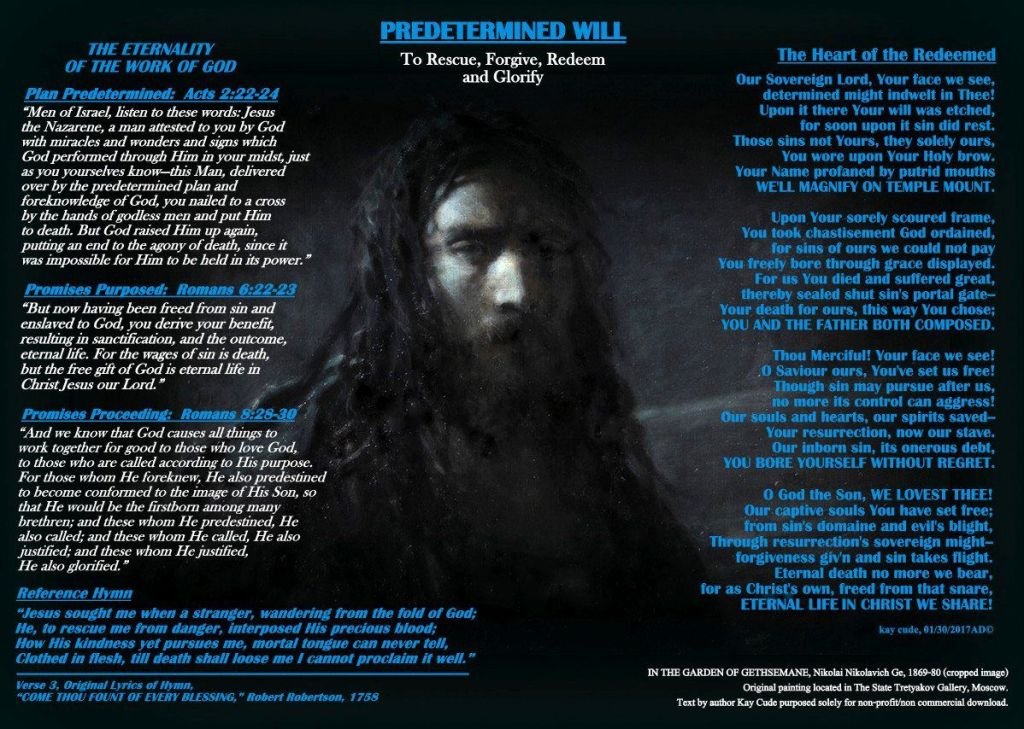
And being found in appearance as a man, He humbled Himself by becoming obedient to the point of death: death on a cross. For this reason also God highly exalted Him, and bestowed on Him the name which is above every name, so that at the name of Jesus EVERY KNEE WILL BOW, of those who are in heaven and on earth and under the earth, 11and that every tongue will confess that Jesus Christ is Lord, to the glory of God the Father. (Philippians 2:9-11).
We know Jesus is the Man-God. His divinity was on display when He healed, did miracles, or taught with such authority that the hearers were astounded.
His human nature was on display when He was weary (John 4:6), hungry (Mark 11:12), or thirsty (John 19:28).
When Jesus appeared before the magistrate, Pilate said to the crowd, Behold the man. Here is the verse:
So Jesus came out, wearing the crown of thorns and the purple robe. Pilate said to them, “Behold the man!” (John 19:5)
Most of us are familiar with that phrase, and that momentous event in the life of Jesus. But did you know that Zechariah said it first? In one of the many visions God gave the prophet Zechariah, the phrase appears. Thus Pilate’s utterance was a fulfillment of an Old Testament picture pointing to a New Testament truth.
And say to him, ‘Thus says the LORD of hosts, “Behold, the man whose name is the Branch: for he shall branch out from his place, and he shall build the temple of the LORD. (Zechariah 6:12)
Though the vision actually shows Joshua being crowned, it is in reality a picture of the crowning of Jesus. The Jamieson Fausset Commentary explains further:
Behold, the man—namely, shall arise. Pilate unconsciously spake God’s will concerning Him, “Behold the man” (Jn 19:5). The sense here is, “Behold in Joshua a remarkable shadowing forth of Messiah.” It is not for his own sake that the crown is placed on him, but as type of Messiah about to be at once king and priest. Joshua could not personally be crowned king, not being of the royal line of David, but only in his representative character.
[Source: Jamieson, R., Fausset, A. R., & Brown, D. (1997). Commentary Critical and Explanatory on the Whole Bible (Vol. 1, p. 723). Oak Harbor, WA: Logos Research Systems, Inc.]
Roy Gingrich’s outlines on the prophetic books are helpful here explaining Zechariah’s vision of Joshua’s crowning, and the Heavenly utterance “Behold the Man whose name is the branch!”
THE SYMBOLISM OF THE CROWNING OF JOSHUA
The crowning of Joshua, a priest, with a regal crown symbolizes the future crowning of Christ, a priest (after the order of Melchisedec), with a regal crown (as Israel’s and the world’s, King) at His Second Advent.
During Christ’s earthly ministry, He was crowned with a crown of thorns, Matt. 27:29; during His present sitting at His Father’s right hand, He is crowned with a crown of glory and honor, Heb. 2:9; at His Second Advent, He will be crowned with many crowns, Rev. 19:12 (as the King of Israel, Matt. 27:37, and as the King of all the earth’s Kings, Rev. 19:16).
THE PROPHECIES CONCERNING THE MESSIAH (Zechariah 6:12, 13, 15)
(Here we have one of the Old Testament’s most complete, yet concise, prophecies concerning the person, the office, and the work of the coming Messiah.)
1. The Messiah will be the antitype of Joshua (6:12).
To “behold the man,” Joshua, was to “behold the man,” the Messiah, for the one is typical of the other. The Jews, at Christ’s first advent, “beheld the man,” the Messiah, crowned with thorns, John 19:5. The Jews, at Christ’s second advent, will “behold the man,” the Messiah, crowned with many crowns, crowns of glory, Rev. 19:12. See the four “beholds,” Zech. 6:12; Isa. 42:1; Zech. 9:9; Isa. 40:9.
[Source: Gingrich, R. E. (1999). The Books of Haggai and Zechariah (p. 34). Memphis, TN: Riverside Printing.]
Here are the four Beholds Mr Gingrich mentioned.
Behold the Man!
And say to him, ‘Thus says the Lord of hosts, “Behold, the man whose name is the Branch: for he shall branch out from his place, and he shall build the temple of the Lord. (Zechariah 6:12)
Behold the Servant!
Behold my servant, whom I uphold, my chosen, in whom my soul delights; I have put my Spirit upon him; he will bring forth justice to the nations. (Isaiah 42:1)
Behold the King!
Rejoice greatly, O daughter of Zion! Shout aloud, O daughter of Jerusalem! Behold, your king is coming to you; righteous and having salvation is he, humble and mounted on a donkey, on a colt, the foal of a donkey. (Zechariah 9:9)
Behold your God!
Go on up to a high mountain, O Zion, herald of good news; lift up your voice with strength, O Jerusalem, herald of good news; lift it up, fear not; say to the cities of Judah, “Behold your God!”(Isaiah 40:9)
We’re entering the Thanksgiving season, and gratitude and thankfulness are much on our minds. I am thankful for the fact that I shall behold Him! All knees will bow and all tongues will confess, meaning all peoples will behold Him, their God. But I’m grateful I shall behold Him as one who is forgiven by His grace, not ashamed or crushed by fear – but worshiping Him rightly- in Spirit and in truth. My gratitude for Him having delivered the means by which to dwell in righteousness now and forever and to behold His face in love knows no bounds. Brethren, WE SHALL BEHOLD HIM, OUR MAN-GOD, Savior, Lord and King!