In Genesis 3, Eve chose a path that defied her God and ignored her husband’s teaching. Adam’s passivity as a leader was part of that event. As a result, God cursed the ground the man worked, (Genesis 3:17-18). Remember, man’s original charge was to work the Garden, Genesis 2:17). He told the woman her pains in childbirth will be greatly multiplied. Additionally, God said that the woman’s desire will be for her husband and he will rule over her.
Thus, the harmonious, companionable relationship established in Genesis 2, was corrupted by the woman’s quest for self-fulfillment instead of obedience, by man’s failure to lead, (“Because you have listened to the voice of your wife”), mankind fell into sin and separation from God.
In the latter part of chapter 3 of Genesis, God pronounces the results of the wife’s rebellion and the husband’s passivity. Of the woman, God said that she will desire her husband. Desire is the same word as in Genesis 4 where God told Cain sin is crouching at the door ‘desiring’ to have you. It means an inward inclination. A wife’s inward inclination will be to usurp her husband. She will always strive to take control. If a secular wife, this causes either heartache and strife, made worse for both if the husband remains passive. In Christian marriages, God was merciful to tell us ahead of time, so we can work at slaying this tendency to want to usurp the husband.
“For Eve listened to a creature instead of the Creator, followed her impressions against her instructions, and made self-fulfillment her goal. This prospect of material, aesthetic, and mental enrichment (6a) seemed to add up to life itself; the world still offers it. But man’s lifeline is spiritual, namely God’s word and the response of faith (Dt 8:3, Hab 2:4); to break it is death.” Source: Derek Kidner, “Genesis- An introduction and commentary”).
It should be noted that the woman when confronted by God, did not humble herself. Nor did she repent. She instead cast blame and attempted to justify her disobedient actions. We see this all too frequently in rebellious “Christian-professing” wives today! Pink says,
“She did not humble herself before the Lord, gave no sign of repentance, made no broken-hearted confession. Instead, she vainly attempted to vindicate herself by casting the blame on the serpent. It was a weak excuse, for God had capacitated her with understanding to perceive his lies, and with rectitude of nature, to reject them with horror.” (AW Pink, Gleanings from the Scriptures).
“If men don’t stand up and lead the women will fill that vacuum.” Josh Buice
As for the husbands, “We also need to be mindful of the fact that not every man is this this just roaring bold personality. Sometimes a more passive man marries a more bold woman. In that case he’s going to have to work extra. He has to be taking his leadership responsibilities in his home seriously“. (Buice, ibid).
When I was married I was not a Christian. I did want my husband to lead, but he was very passive (and lazy). In practical matters like managing the home, like cleaning, organizing, and repairmen appointments, I just took up the slack, figuring it was my job anyway. But in marriage matters and in big decision matters, his vacuum left me in a quandary. There was strife, resentment, and eventually bitterness. I’m glad I have Christ now. Though I’m not married any more, I know to submit to my elders and the Bible provides the template on how and why. I was a lot like post-Fall Eve, instantly blaming and being defensive, justifying myself. It’s what sinners do!
If you, dear sisters, have a personality that is more bold, the reverse is true of the passive man, we need to work extra to adhere to biblical precepts so that the home will run smoothly. Marriage is hard, really hard. Two sinners living together in mutual harmony seems almost impossible but it is possible. Why? because there are two sinners and One Sinless, as this article from the Council on Biblical Manhood and Womanhood describes:
We believe in the power of the Holy Spirit—the power that brought about resurrection life, softened hearts of stone, and gave eyes of faith when we were blinded by sin. Yet sometimes in marriage, in the dismal moments of anger, hostility, or painful hurt, we forget that we’re not doing this alone. Sometimes in our sin and failures, we forget that the power and help of the Holy Spirit is ever present, ever helping, ever convicting, guiding, prompting and empowering us to do what is right.
Praise the Lord for His wonderful mind, that sympathizes with us, gave us all the helps, and will bring us to blissful heaven in His time! Meanwhile, ladies, don’t be tempted to fill that vacuum…or to go beyond our role in marriage. It’s easy to do, but Jesus will forgive if we repent. The wedding over, marriage begins the long work of sanctification.
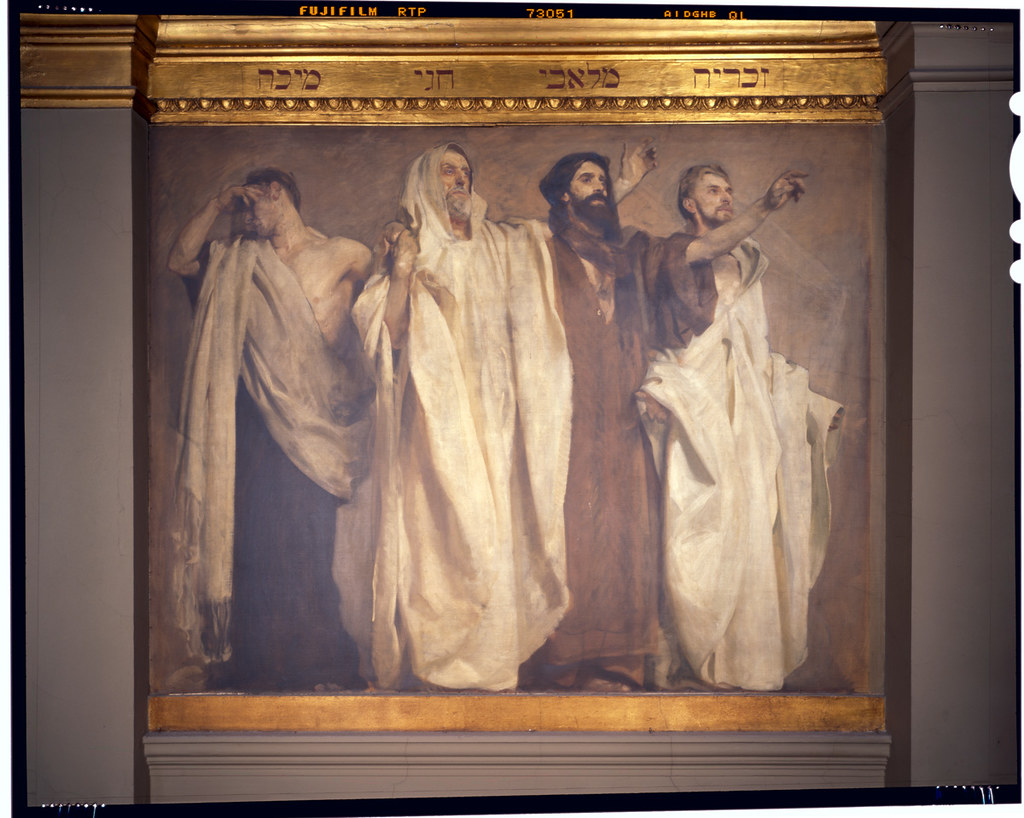
Did you ever wonder how the Old Testament Prophets prophesied? Did you ever wonder about the false prophets and their unholy business? Well stay tuned, it’s a prophet-a-palooza today!
The Old Testament contains 39 books. Of these, they are generally divided as Pentateuch (the 1st five), Historical Books, Poetic & Wisdom Literature, and the Prophets. Of the 39 books, 41% are written by Prophets or contain major prophecies. 1 and 2 Samuel are part of the Historical section of the OT but Samuel was Israel’s first prophet and the books describe his emergence and activities as a prophet. (I did not include Lamentations as one of the prophetical books, but some do). Thus, the Old Testament is heavy with Prophets.
The Major Prophets are Isaiah, Jeremiah, Ezekiel, and Daniel. They are called ‘major’ due to their length and broadness of scope, not because of the content. The Minor Prophetical books are considered to be Hosea, Joel, Amos, Obadiah, Jonah, Micah, Nahum, Habakkuk, Zephaniah, Haggai, Zechariah, and Malachi. They are dubbed ‘minor’ not due to their content but because these books are shorter and have a narrower focus.
Prophets foretold the future as given by God, but that is not ALL they did. Prophets were designated as a representative of God before the people. Sometimes, when they received God’s message they proclaimed it to the king of Israel. Another task they performed was to remind the people of their covenant with God as delivered by Moses. I know we’re all familiar with this one- Prophets told the people that there would be a coming judgment if they rebelled, but they also told of a coming blessing if they were obedient. They called the people to repent and return to God. They taught the people the Law. They were watchmen. So, not everything the Prophets did involved fore-telling. Sometimes they engaged in ‘forth-telling’ too.
A few common refrains in the prophetic books are “Thus sayeth the LORD,” which was the Prophets’ way of affirming that the prophecy was from God and not their own made-up speech; and “The word of the LORD came to me”. A seminary friend believes that when we read ‘the word of the LORD came to me’, as we see in Jeremiah 1:4, that it was Jesus coming to speak to the prophet in a pre-incarnate appearance. This made sense to me. After all, Jesus IS the Word (John 1:1). Whichever way it happened, the Prophetical words when they were delivered, were accepted as having come from God. Whether they liked the message or not!
Anyway, the true prophets operated in myriad ways. Sometimes they spoke a word that was given to them as I just mentioned. Sometimes they became a symbol, or acted out a symbol. Hosea’s marriage to Gomer was a symbol of Israel’s adulterous relationship with false gods. Ezekiel in particular was called to perform ‘sign-acts’ or symbolical actions. He was tasked with laying on his side for a year in front of a model of a siege mound. Jeremiah was tasked with smashing clay pots in front of the audience who came to seek the word. (Jeremiah 19:10-13). Isaiah was told to preach barefoot and (nearly) naked. (Isaiah 20:1-2).
Satan is relentlessly active. So there were many false prophets, too. They had other methods of gaining information from the gods. Of course, there are no other gods. And the One True God wasn’t speaking to them, so they needed to devise other ways of appearing to have inside wisdom. The Bible speaks against many of these. I went and found all the verses condemning their practices and I was surprised to see there were so many! Many verses and many practices!
The Bible speaks against: soothsayers, magicians, necromancers, witches, mediums, fortune-tellers, sorcerers, sorceresses, omen-interpreters, charmers, one who inquires of the dead, diviners, dreamers… phew! That’s a lot of demonic activity! (Verses here)
In Exodus 7:10-12 we see that some of these magicians did actually possess dark powers. Satan is a powerful angel, capable of masquerading as an angel of light. He caused winds to destroy Job’s house. He caused lighting to fall. (Job 1:16, 18-19). Therefore, to a point, the magicians had powers to replicate Moses and Aaron’s miracles from God. But in the end, Aaron’s rod swallowed up the magicians’ rods and the limited extent of their power was reached.
In Deuteronomy 13:2 we see that occasionally a prophet or dreamer will predict some sign or wonder that does come to pass, in those cases, one must detect, the verse says, if they are leading you away from God.
The warning for us is that when we dabble, (more on that below), there actually does exist a darkness with powers that you will be inviting into your home, heart, or mind.
Soothsayers: A phrase used in some English translations to describe one who practices divination, fortune-telling, or astrology. An example is Balaam.
Magician: One who attempts to manipulate one’s environment through incantations, spiritual assistance (or manipulation), curses, or blessings. Magicians of Nebuchadnezzar- were a group of men who served Nebuchadnezzar as magicians. Nebuchadnezzar favored Daniel and his friends over them.
Necromancer: “one who interrogates the dead,” as the word literally means, with the view of discovering the secrets of futurity (comp. 1 Sam. 28:7).
Diviner: Ritual action employed by someone to determine the will, knowledge, or plans of deities.
Fortune-teller: See Diviner, it is a synonym. “foretelling future events, or discovering things secret by the aid of superior beings, or other than human means.” Source- Easton’s Bible Dictionary.
Witch: Or sorceress, a female whose work was in divination and magic. Also, someone who dealt with drugs or herbs for occult purposes. Also, conjurer, someone who interprets omens. See 1 Samuel 28 about the witch of Endor. Trivia: If you’re familiar with the television show from the 1960s called Bewitched, Samantha the witch’s witch mother was named…Endor-a.
Sorcerer, sorceresses: from the Latin sortiarius, one who casts lots, or one who tells the lot of others. In Dan. 2:2 it is the rendering of the Hebrew mekhashphim, i.e., mutterers, men who professed to have power with evil spirits. The practice of sorcery exposed to severest punishment (Mal. 3:5; Rev. 21:8; 22:15). Easton’s Illustrated Bible Dictionary.
Mediums: One possessed by (Lev. 20:6) or consulting (Deut. 18:11) a ghost or spirit of the dead, especially for information about the future. Acting as a medium was punishable by stoning (Lev. 20:27); consulting a medium, by exclusion from the congregation of Israel (Lev. 20:6). The transformation of Saul from one who expelled mediums (1 Sam. 28:3) to one who consulted a medium at En-dor (28:8–19) graphically illustrates his fall. Source: Holman Illustrated Bible Dictionary.
Omen-interpreter: An omen is a phenomenon that is perceived to indicate something else, but especially something about future events. It’s also known as a sign. Omens are considered divine signs solicited and/or interpreted for the purpose of guiding human action. Observance of omens is well-attested as a practice in the ancient Near East—along with the corresponding practice of divination, which was used to discern the meaning of omens. Source-The Lexham Bible Dictionary. The Bible forbids the Israelites from interpreting omens.
See a cardinal and say it’s an omen from a departed relative? DON’T- it’s augury and it’s a forbidden dark practice. A bird is just a bird. EPrata photo
Charmer: one who practises serpent-charming (Ps. 58:5; Jer. 8:17; Eccl. 10:11). It was an early and universal opinion that the most venomous reptiles could be made harmless by certain charms or by sweet sounds. Easton’s Bible Dictionary
Dreamers: The visual and aural sensations that a sleeping person experiences. Dreams in the Bible are often a vehicle for divine oracles. A dreamer is a person who experiences unreal events that occur in the mind of a person during sleep. In ancient times dreams were often associated with messages from deities. Deuteronomy 13:3 says not to listen to dreamers.
The demonic activity in its various permutations is astonishing. Did you realize there had been so much?
W. L. Liefeld named and listed many of the demonic acts:
(1) chresmology, the “prognostication by seers and through oracles;” (2) oneiromancy, the “practice of predicting future through the interpretation of dreams;” (3) astrology, by the observation and interpretation of the planets and stars described in the horoscope; (4) necromancy, the “consultation with the dead;” (5) haruspicy, the “study of the entrails of animals;” (6) augury, the “analysis of the movement of animals, and especially the birds;” (7) omens and portents, the interpretation of different events in the natural world; and (8) mechanical means, which include the interpretation of hydromancy (divination b)y means of water, including the color, ebb and flow, or ripples produced by pebbles dropped in a pool, pyromancy (divination by means of fire or flames), and cleromancy (casting of lots).
Annnd… still more-
There were multiple techniques used to solicit omens, including lecanomancy (observing the pattern of oil poured onto water) and libanomancy (observing smoke generated by a censer), but haruspicy (looking at the entrails of an animal) was the most prevalent (Farber, “Witchcraft, Magic and Divination,” 1904; Starr, The Lexham Bible Dictionary.
INTERESTING history of the Ouija Board here! Ouija also sparked the craze for ‘automatic writing’ that so many professing Christians engage in today.
From excavated texts we learn that the ancient world was filled with individuals who predicted future events or future courses of action by dreams, use of a divining rod, shaking marked arrows (in a quiver), consulting teraphim (figurine idols- remember, Rachel stole her father’s teraphim, Genesis 31:19), or examining animal livers (hepatoscopy).
The British Museum is filled with ancient Near Eastern texts about astrologers who observed signs in the heavens (eclipses, configurations of planets, sun and moon, stars with coronas and tails, stars forming the sign of the zodiac), or saw omens—both good and bad—in the heavens and on the earth (storms, earthquakes, the flight of birds, screaming hens, odd births, when a house begins to look old, etc.). Such persons are not prophets.
I post these at length to illustrate the past and current exceedingly active doings of satan and the demons he inspires to do evil in the world.
Are these practiced today? Absolutely! Do you read your horoscope in the newspaper? That’s astrology. Try to find water by dowsing? That’s divination. Do we say ‘knock wood’ or shudder if a black cat crosses our path? Do we say that the cardinal is a happy departed family member? Or the hoot of an owl means someone is going to die soon? You’re practicing augury. Magic 8 Ball, Ouija Board…none of these are acceptable because they are all forbidden by the Bible.
Have these become “Acceptable Divinations” in your life (with apologies to Jerry Bridges for paraphrasing his “Acceptable Sins” motif)?
The Magic 8 Ball, you asked ‘it’ a question, shook the ball and waited to see what answer would float up.
Many people publicly practice these today, even people who profess to be Christian. There are witches abounding who use Tarot cards to tell your fortune. ‘The Bible‘ and ‘Touched by an Angel‘ Actress Roma Downey engaged in necromancy on live TV by calling up her dead mother using a medium. Bethel Redding church & college, which professes to be Christian, teaches dream interpretation in their School of Prophets. So, they are dreamers according to the Bible, thus are in God’s bad books. Praying to the saints or to Mary is inquiring of the dead, AKA necromancy. Professing Christian Beth Moore tells of her dreams and visions, indulges in chresmology- she prognosticates future events, does automatic writing, and acts as a prophet and seer. Her condemnation is looming. Many other women of her ilk claim to hear words directly from God, thus claiming to be prophets.
Speaking of the Bethel School of Prophets, everything new was old once before. There seemed to be a cult of (false) prophets at Mari, at the Syrian – Iraq border. Balaam is associated with the activity here, according to texts unearthed in 1933 and 1967. These prophecies were normally delivered only to the King, not to the people, and were generally mild-to-favorable. There is no evidence that this cult of prophets and their alleged prophetic activity gave messages related to the moral life of the nation or even the king.
If the Mari-area prophets chastised, they were gentle and minor. This is a big contrast with the difficult messages the Biblical prophets were instructed to give, sometimes at peril of their life!
“Although Numbers 22:7 uses the noun “omen” and the word that has been translated “fees for divination”, Balaam is far from the standard role of a prophet in biblical literature. Joshua 13:22 views Balaam as one “who practiced divination.” The Lexham Bible Dictionary. Lexham Press.
The only reliable prophetical information we have at present is in the BIBLE. Avoid all forms of sorcery, even those that have become so mundane in modern life it feels like they are acceptable. They’re not.
When we think of Balaam, we think of his donkey… EPrata photo
Balaam was a real person, a prophet, mentioned in the Old Testament several times. (Numbers 22; 23; 24; Deuteronomy 23:4.) He was the rider of the famous donkey that the LORD caused to rebuke him. Did you know that Balaam has more scriptural real estate than even Mary? In both the Old Testament and the New Testament, there is a lot about Balaam. He is mentioned three times in the New Testament, and all three times are negative. (2 Peter 2:15; Jude 11; Revelation 2:14). We read of the way of Balaam, the error of Balaam, and the doctrine of Balaam. None of it’s positive.
Let’s take a look at this Balaam.
A hearty debate about Balaam centers around whether Balaam was a sinner or saint. Whether he was a true prophet misguided temporarily, or a false prophet who was good at faking it. His character seems murky. We know that David’s heart was right, John was a loving apostle, Paul was a vigorous worker for God. But Balaam… Who was he? As J. Vernon McGee posed, “Is Balaam a genuine prophet of God? Or is he a religious racketeer?“
I cannot settle that debate, but I believe that the New Testament’s final verdict in the three above verses is enough to indicate which way the gavel bangs: and it is to the false.
Balak was King of Moab. He had become concerned that there were so many Israelites. Feeling insecure and outnumbered, Balak hired Balaam for a fee to curse the Israelites. Balaam said to Balak what all the true prophets affirmed, that they spoke what the LORD told them to say. They were divine messengers who spoke the LORD’S words only. But unlike true prophets of Israel, Balaam was more interested in the reward than the words.
So he played pious and covered his tracks to Balak, saying ‘O king, I can only speak what Yahweh says to say…’ and sought out the Lord’s permission to go and do the thing the king wanted Balaam to do, which was curse God’s blessed people. Balaam knew the People were blessed, not cursed. Of course, God said no.
Barnes’ Notes says,
“Balaam was disposed to go with them, and was restrained from going at once only by a direct and solemn prohibition from the Lord, Numbers 22:11. Notwithstanding this solemn prohibition, and notwithstanding he said to the ambassadors from Balak that he would do only as God directed, though Balak should give him his house full of silver and gold, Numbers 22:18, yet he did not regard the matter as settled, but proposed to them that they should wait another night, with the hope that the Lord would give a more favourable direction in reference to their request, thus showing that his heart was in the service which they required, and that his inclination was to avail himself of their offer, Numbers 22:19.” End Barnes’ Notes.
Do you do that…ask again hoping to get a different answer?
As in the Garden, when the serpent approached Eve and tempted her, she should have immediately considered the matter closed and said ‘begone, serpent’. Adam too. Apparently to Balaam, despite his outward promise to do only as the LORD said, no didn’t mean no. By this we see that Balaam was only paying lip service to his public mantra ‘I will do as the LORD says’. Balaam didn’t close the matter, but hoping to get a better answer from the LORD, sought Him out again.
He bustled with busy-ness, advising the King to sacrifice 14 animals over 7 altars. (Numbers 23:1). Very busy religious activity. But was Balaam’s heart far from God? Likely so. But Balaam was forced to pronounce a blessing, which enraged the King.
So they repeated the entire process, again. Altars, sacrifices, a pious Balaam saying ‘let me seek the Lord and see what He might say’. Again.
Balaam’s seeking wasn’t genuine. Were Balaam’s eyes fixed on the fee? Seems so.
Think of Elisha, firmly refusing Naaman’s gift. Barnes’ Notes on Elisha the Prophet’s refusal,
“I will receive none – The prophets were in the habit of receiving presents from those who consulted them 1 Samuel 9:7-8; 1 Kings 14:3, but Elisha refused. It was important that Naaman should not suppose that the prophets of the true God acted from motives of self-interest, much less imagine that “the gift of God might be purchased with money” Acts 8:20.”
I won’t recount the entire story, you can read the verses or read about Balaam elsewhere. The main point is Balaam’s character.
Balaam said to the King again, Nah, even if you give me a house full of silver and gold, I will only do what the LORD says’. Hmmm, it sounds pious (as did the serpent in the garden), but it was not. It was a negotiating tactic. Balaam had upped the ante.
In 1933 and again in the 1960s, archaeological finds discovered ancient texts mentioning Balaam. “Balaam was a well-known local seer, whose fame spread beyond his own community. Balaam’s words were considered worthy of being preserved by his followers, just as those of the biblical prophets were considered worthy of preservations by their disciples. The Deir ‘Alla inscription allows us to flesh out the picture of Balaam obtained from the Balaam story in Numbers and scattered other biblical texts. He is no longer simply a seer used as a tool in YHWH’s sole power, but an independent actor functioning in a polytheistic world“. Source: Journal Article “Balaam the Seer: From the Bible to the Deir Alla Inscription”, Prof. Carl S. Ehrlich.
So the extra-biblical texts give a good indication of how famous Balaam was…as an independent agent functioning (for profit?) and not serving for the LORD.
In Balaam’s case, he knew that matrimonial alliances with the Midianites were forbidden, no kinship bonds were allowed with them. Yet still being tempted by the King’s promise of great honor and fees, Balaam persisted in playing both sides against his desire to come out on top. He didn’t know he could see nothing.
“[T]his famed seer’s sight is surpassed even by his donkey until Yahweh opens his eyes. This story reinforces Yahweh’s power over any other aspect of the divine realm, whether other gods or non-Israelite seers and diviners.” Ballard, L. (2016). Balaam, Son of Beor. In The Lexham Bible Dictionary. Lexham Press.
The only thing Balaam could ‘see’ was the house full of silver and gold. We need to be mindful of the lessons of Balaam.
1. We should not attempt to manipulate God into affirming our fleshly desires.
2. We should not engage in public religious activity as a cover for attempting to gain our fleshly desires.
3. When God gives us an answer (not audibly these days but through scripture or circumstances), we must accept it without constant call-backs. Don’t ‘pray about it’ again.
4. And then leave the answer where it is. Don’t look back. Remember Lot’s wife.
28After this, Jesus, knowing that all things had already been finished, in order to finish the Scripture, said, “I am thirsty.” 29A jar full of sour wine was standing there; so they put a sponge full of the sour wine upon a branch of hyssop and brought it up to His mouth. 30Therefore when Jesus had received the sour wine, He said, “It is finished!” And bowing His head, He gave up His spirit.
31Then the Jews, because it was the day of Preparation, so that the bodies would not remain on the cross on the Sabbath (for that Sabbath was a high day), asked Pilate that their legs might be broken, and that they might be taken away. 32So the soldiers came, and broke the legs of the first man and of the other who was crucified with Him; 33but coming to Jesus, when they saw that He was already dead, they did not break His legs. 34But one of the soldiers pierced His side with a spear, and immediately blood and water came out. 35And he who has seen has borne witness, and his witness is true; and he knows that he is telling the truth, so that you also may believe. 36For these things came to pass in order that the Scripture would be fulfilled, “NOT A BONE OF HIM SHALL BE BROKEN.” 37And again another Scripture says, “THEY SHALL LOOK ON HIM WHOM THEY PIERCED.”
Jesus Is Buried
38Now after these things Joseph of Arimathea, being a disciple of Jesus, but secretly because of his fear of the Jews, asked Pilate that he might take away the body of Jesus; and Pilate granted permission. So he came and took away His body. 39And Nicodemus, who had first come to Him by night, also came, bringing a mixture of myrrh and aloes, weighing about one hundred litras. 40So they took the body of Jesus and bound it in linen wrappings with the spices, as is the burial custom of the Jews. 41Now in the place where He was crucified there was a garden, and in the garden a new tomb in which no one had yet been laid. 42Therefore because of the Jewish day of Preparation, since the tomb was nearby, they laid Jesus there.
Can you imagine the pit of despair the Disciples felt on Good Friday? To them it was a hellish and confusing Friday. They were confused, they scattered, Peter even denied Jesus.
Jesus’ separation from the Father while on the cross (Matthew 27:46) is the loneliest and most poignant moment any person ever felt in the history of the universe, bar none.
But the disciples’ sudden and unexpected separation on Friday from their spiritual Father they’d been following so hopefully for three years came upon them cruelly and brutally, throwing them all into states of panic, despair, and spiritual depression. Even though Jesus had told them ahead of time, and even though they had studied the scriptures, they didn’t understand. To them, it wasn’t Good Friday. It was just bad Friday and the seeming end of the long trail of hopes and highs they’d been experiencing for three years with Jesus in discipleship to Him. They did not know as we do, Friday’s here, but Sunday’s coming!
We worship Jesus every day. We worship and praise Jesus collectively in services on Sunday. We exalt Him once a year on Resurrection Sunday. We know Him as Resurrected King triumphant over sin and death!
His ultimate moment will be His return, when every knee shall bow and every tongue will confess (Romans 14:11, Philippians 2:10, Isaiah 45:23).
“The LORD will be king over the whole earth. On that day there will be one LORD, and his name the only name.” (Zechariah 14:9)
Everyone will know that Jesus is MESSIAH! Not their spouse, not their work, not their own self. They will finally know the Resurrected Jesus is the only name. He is all names. He is the beginning and the end!
Spring in the south is a glorious time of year. The fresh light green of the grass, the plethora of blossoms everywhere, flowers. The bugs haven’t come out yet. The skies are studded with fluffy white clouds. Birds return. This all happens in February-March.
As we enter April, the storms come. The Lord said to Adam and Eve in the Garden that there would be harvest, but at a cost of sweat and toil and pain. Roses sprouted thorns. Childbirth pains increased. Every blessing thenceforth had a pain attached to it. And so it is with the beauty of a southern spring, with all the tornadoes and severe storms coming across the state like a train, one after another.
But if we know God, we can accept the trouble that comes with the beauty and peace. We know it all will end one day! And then only joy shall reign. What a day that will be!
Here are a few links I pray are of interest to you, edifying, or conscience provoking.
Anyone who has followed me for any period of time knows I love discernment. I love teaching it, speaking of it, urging it, and warning about its lack. Of course I am not the only woman with this concern. Many others teach it as well. Here are two of them: Amy Spreeman and Michelle Lesley with their podcast A Word Fitly Spoken and a lesson on 4 Ways to Avoid Being Deceived on March 29, 2023.
They wrote: “It’s so important that we, as Christian women, exercise discernment so that we aren’t deceived by false teachers or false doctrine. In this episode, we’ll take a look at four deceptive pop false doctrines that evangelical women are being wooed by right now, and how you can avoid being deceived by them.” Check it out.
Like most people, I’ve received cutting or insulting remarks over my lifetime. Some were intentional, and some were offhand remarks that I took as insulting. One of those was a man who said to someone else (who reported it to me, gah, gossip is bad!), that I was boring. I was about 26 at the time, newly single, and trying to discover who I was. Ouch, boring is not good.
Here is a book review from Tim Challies about a book on preaching. Why Are We Often So Boring? The author doesn’t go on to insist we entertain congregations, but muses on the fact that though some preachers pursue expositional preaching (pursuing a verse by verse explanations) in staid and grave fashion can be boring, because the preacher includes too many details he had needed to absorb but should have been left out because it bogs down the sermon. The book goes on to give a short overview of tips for effective preaching.
To be a raconteur (a person who shares stories in a skillful way) takes skill. Knowing which details to include and which to leave out is important for proper pacing. I try to remember that so I am not boring at parties. Maybe I need to pick up this book! Hopefully your preacher has this skill.
Here, The Heritage Foundation explains the history behind beloved Psalm 23. Our Great Shepherd of Comfort and Restoration. If you are feeling low, I highly recommend reading this essay and the Psalm itself!
I am not a board game player. I am not a game player of any sort. So I am unfamiliar with Dungeons and Dragons, other than it exists. However, World reviewed the new movie Honor Among Thieves based on the game, and reviewed it positively. They said, “Honor Among Thievesis a heist movie—sort of like Oceans 11 meets Lord of the Rings. The movie is rated PG-13 for fantasy action and a few bad words intended for comic effect.”
Hopefully being rated PG-13 means there will be few things in the movie that curl my hair and distress my spirit. I love a good caper movie. I loved The Sting when it came out, and Oceans 11 and Dirty Rotten Scoundrels, and others like them. I have not seen the movie Honor Among Thieves, but here is World’s review. In theaters now.
PS: Warning, the link reviews two movies, the other is His Only Son, the scene between God and Abraham when God said to sacrifice Isaac. It is produced by Angel Studios, the same people that made The Chosen, which means Mormon and therefore not edifying.
Davis Huffstutler at G3Ministries wrote about our common salvation in Jude. I enjoyed this unearthing of truths from Jude. Jude is a book I love, and its main thrust is usually discernment. But Jude wrote that he wanted to talk about our common salvation (but due to circumstances Jude chose discernment instead.) But what IS our common salvation? How does it inform our everyday experience as a Christian? Read on to find out!
Because biology is much in the news today, here is an article from the Biblical Science Institute on Irreducible Complexity (AKA evolution is false). They explain it simply and understandably.
There are people out and about in life and on social media who want to cancel John MacArthur. They do everything they can to do so, including bearing tales and slandering. In one recent case, a gaggle of women with an axe to grind, who hate John MacArthur, circulated a photo of him, Joni Eareckson Tada, and disgraced pastor/leader Bill Gothard, and attempted to make a tie between Gothard and MacArthur with innuendo, slander, and lies.
This investigation provides a story of how an elder and who is someone in the know, investigated because he sensed the connection the women were trying to make was not true. His results provide context and debunking in grand fashion. It’s a good story and worth reading to see how battle-axes slander and how they try to make a photo tell a different story than the one the photo actually tells.
I love vintage, maybe that is because I’m getting old and I remember the stuff from the first time around! Here is a neat essay on vintage postcards. The photographer visited the places today and compared them in “Then & Now” fashion. When I was publishing a newspaper, the Then & Now was the most popular feature. I think everyone loves a good Then & Now!
Be subject therefore to God. James 4:7a LSB Submit therefore to God. James 4:7a NAS
Adrian Rogers said that there is a difference between saying “I commit to Jesus” and “I surrender to Jesus”. The commitment is a personal choice, and we are still in control. Surrender is an acknowledgement that we are Jesus’s and it is HIS will be done. HE is in control.
Should not the creature be submissive to the Creator, to whom it owes its existence, without whom it had never been, and without whose continuous good pleasure it would at once cease to be?
John MacArthur had a good sermon on the theme a while ago: “Slaves of Christ“, reminding us that when we read the word bondservant or servant in the bible, that the Greek word is actually doulos, meaning slave. We are slaves. Our will is not what’s best for us, it is HIS will that is best for us.
The understanding that He knows best means we have to trust Him. In cases where sight may be faulty or circumstances may be hidden, God is in it, behind it, and supports it, and He knows what is best. We can’t tell, and we don’t know. We see through a glass darkly. Trust Him. Surrender.
Being a Christian isn’t just about a single moment when we surrender to God. It’s an ongoing process of daily surrender and obedience!
Spurgeon said, “When we come to the end of self we come to the beginning of Christ.”
Surrender is not a popular concept for American Christians, particularly. We were raised to believe we are exceptional. We are imbued with a sense of purpose and self-sufficiency and git ‘er done mentality. That is counter to the kind of relationship God demands, where He and He alone is the boss. But to have a proper understanding of His position as the Most High, and us as (forgiven) sinners of the most low, we become His slaves. And He will raise us up on the last day, (John 6:40) to offer us our inheritance and to begin the relationship of co-heirs with Him (Romans 8:17). Until then, brethren, we are His slaves. The question especially for this week (Holy Week) is, do we act like it?
People like to be in control. We like to make commitments, but the true word is surrender. Jesus is Lord. You don’t say, “Lord, I’m committing myself to build a great church, to more Bible study, more this or that. Instead, “I surrender. I am yours, Lord.” Adrian Rogers
Have you ever read a Bible passage and a name is mentioned and you wonder, ‘Who was that guy? I’d like to know more about him!’ I do. I find it helps to delve into the background of things mentioned in the Bible. How do they make linen from rushes? What is winnowing? What did their wine taste like and why did Paul suggest it for Timothy’s stomach? How many mollusks did they need to make purple dye? Like that.
When you read the Bible, ask question of it. And then search for the answer.
I was reading Acts and the name ‘Gallio’ is mentioned three times. We read of him in Acts 18:12, Acts 18:14, and Acts 18:17. Before we get to a bio of the man, let’s look at what happened, what happened according to the Bible.
Paul had been in Achaia about 18 months, and the Jews had had enough because many were converting to Christianity. So the leader of the local synagogue in Corinth, Sosthenes, hauled Paul before proconsul Gallio.
But while Gallio was proconsul of Achaia, the Jews rose up together against Paul and brought him before the judgment seat, (Acts 18:12).
Paul appeared before Gallio, the local authority. Their claim was, “This man is inciting the people to worship God contrary to the law.” (v. 13.)
But when Paul was about to open his mouth, Gallio said to the Jews, “If it were a matter of some crime or vicious, unscrupulous act, O Jews, it would be reasonable for me to put up with you; (Acts 18:14).
But they all took hold of Sosthenes, the leader of the synagogue, and began beating him in front of the judgment seat. And yet Gallio was not concerned about any of these things. (Acts 18:17).
Gallio was not indifferent, he determined that it was not a major dispute under his authority, but simply an internal Jewish matter. More on that in a moment.
The first question we ask is, what is a proconsul?
Under the empire (after 27 BC), governors of senatorial provinces were called proconsuls.
A Consul’s term was only 1 year. With the Empire expanding and so many wars, it became necessary to extend the term, so a proconsul was a former consul whose term had been extended.
The difference between a consul and a proconsul is that a consul was one of the two top-most leaders of the Roman Republic, and a proconsul was the governor of a specific province of the Republic (and thus answered to the consuls). However, in order to become a proconsul, one must have already served a term as consul of the Republic. (Source)
A proconsul had all the authority of a governor who was given the specific region to govern.
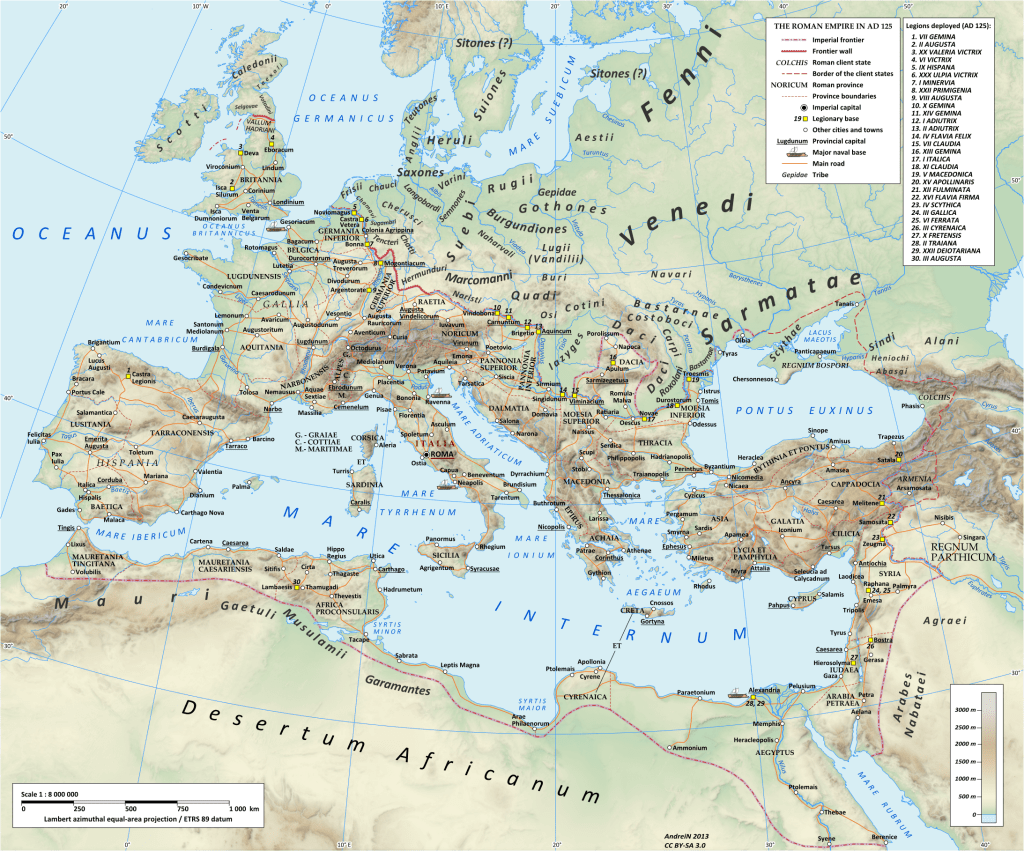
In Gallio’s case he had been given Achaia to govern. Right click to see map larger. Achaia is to the right of Italy’s heel and down a bit. When Rome conquered Greece, they split the area into two regions, Macedonia to the north and Achaia to the south. The city of Corinth was in Achaia.
Roman Empire 125 AD. CC BY-SA 3.0 Andrei N. (Wikipedia Commons user Andrein)
Did you know that Gallio was the famous philosopher Seneca’s brother? Seneca was in the Stoic camp of philosophy. Stoicism -“It is a philosophy of personal virtue ethics informed by its system of logic and its views on the natural world, asserting that the practice of virtue is both necessary and sufficient to achieve eudaimonia (happiness, lit. ’good spiritedness’): one flourishes by living an ethical life. The Stoics identified the path to eudaimonia with a life spent practicing virtue and living in accordance with nature” says Wikipedia. I mention this because when Paul was in Athens, a group of Stoics began debating him (Acts 17:18). Anyway…rabbit trail over-
And Gallio – After the Romans had conquered Greece they reduced it to two provinces, Macedonia and Achaia, which were each governed by a proconsul. Gallio was the brother of the celebrated philosopher Seneca, and was made proconsul of Achaia in 53 AD. His proper name was Marcus Annaeus Novatus, but, having been adopted into the family of Gallio assumed the name Gallio after his adoption by the senator Junius Gallio, a rhetorician.
One of the reasons we can pinpoint Paul’s journey to Achaia and his stay there was due to the fact that Roman records pinpoint Gallio’s term so definitely.
Barnes’ Notes again – He is mentioned by ancient writers as having been of a remarkably mild and amiable disposition. His brother Seneca (“Praef. Quest.” Nat. 4) describes him as being of the most lovely temper: “No mortal,” says he, “was ever so mild to anyone as he was to all: and in him there was such a natural power of goodness, that there was no semblance of art or dissimulation.”
Gallio’s temperament is important here. His mildness and ‘sweetness’ is mentioned consistently in many different writings of the time. Though modern writers since then have charged Gallio with indifference to religion, or indifference to justice, this was not so. It was not a reproach to say “he cared not for these things” but a statement of commendation or at least, neutrality. Some have interpreted it as Gallio was calm enough to see through the Jews’ machinations. Others such as Barnes, have said-
“That he did not deem it to be his duty, or a part of his office, to settle questions of a theological nature that were started among the Jews. 2) that he was unwilling to make this subject a matter of legal discussion and investigation. (3) that he would not interfere, either on one side or the other, in the question about proselytes either to or from Judaism. So far, certainly, his conduct was exemplary and proper.” end Barnes
Interestingly the legal implications would have been far-reaching. We read in MacArthur’s Commentary in Acts,
“This man persuades men to worship God contrary to the law.” Judaism was officially tolerated by the Romans, who at this early date viewed Christianity as nothing more than a sect of Judaism. Their charge challenged that conventional wisdom by saying that since Paul’s Christian teaching was outside the bounds of Judaism, Christianity should not receive the tolerance from the Romans that Judaism did. Had Gallio ruled in the Jews’ favor Christianity could have been banned not only in Corinth but also throughout the Empire. Gallio however was not to be easily duped.” –End MacArthur
Gallio would not allow Paul even to speak, he issued what we say today is a ‘summary judgment,’ and dismissed the case. In other words, he saw through the Jews right away.
As for doing nothing about Sosthenes’ beating, perhaps Gallio thought justice was being done. They had wrongly brought Paul before him, beaten and unjustly accused, and now Sosthenes was receiving the same treatment.
Gallio was an intelligent man from a strong Roman family. He was of even temperament, amiable, gentle and kind.
Gallio’s brother, Seneca, described him as a person exempt from vices, and who particularly disliked flattery, which could not sway him. He wrote of his character in his famous book Naturales Quaestiones, and dedicated it to his brother Gallio. (source)
How Providential God is to install just such a leader at just such a time as Paul would need him, at a critical moment in Christian history. You never knew there was so much about Gallio for context in just those 3 short verses, did you? Me either. This is why it pays to study God’s word deeply. It’s an amazing book, and thoroughly interesting!!
I was expecting a delivery. UPS. They have that tracker thing so you can see around what time the item will arrive. When it gets real close, they provide a map with a little icon of a truck, and you can actually follow his stops. The map shifts as he makes progress to your house. I get a huge charge out of that. The things they come up with these days!
But then I got to thinking. Where’s the mystery? It used to be … in my day, lol…you paid for an item and hoped it show up sometime and then you’d be surprised. Surprise! Your package came. Oh, boy!
I thought about other surprises that we’ve lost because of tracking type technology. Caller ID shows you exactly who is calling. You can even knowingly decline the call. It used to be, the phone rang, you picked it up, and you dealt with whoever or whatever was on the other end.
This is how we blocked calls in the old days:
In the 1974-1980 show The Rockford Files, about a down & out PI named Jim Rockford, the telephone message machine was a prominent part of the opening. In a few funny lines you’d know all you needed to know about Jim. They always featured some message alerting him to something urgent, but funny. Overdue library book, bookie wants his money, stray girlfriend, check bounced, pick up your halibut,… The machine was new then, a new technology. The idea of capturing a message and playing it later, so you didn’t miss anything! Wow!
You can see news in real time instead of waiting for the newspaper to come out the next day. I remember years ago there was an earthquake in Christchurch New Zealand. I turned to Youtube and saw the quake as it finished quaking, the dust hadn’t even settled. Imagine, seeing news unfold in real time from across the world!! I was flabbergasted.
There’s pros and cons with instant news. Hot takes aren’t always good, and thoughtful reflection usually is.
One of the only true surprises one can blessedly have is the sex of your baby. Ultrasounds give pregnant moms the option of discovering if it’s a boy or girl. In my day, the 1960s, none of the three of my mother’s children’s sex was known before birth. It was a mystery that lasted 9 months.
Employers can see everything a prospective employee has posted. Instant replays take the mystery out of a sports call. CCTV tracks everyone. Of course it is a good thing that we can know and predict tornadoes and storms, so as to save lives.
Instant access to what you want to find out about is a good thing. But I wonder…in some ways we have experienced a loss. With everything being plainly seen and known, do we lose some mystery? I believe we do lose a sense of mystery. And with that, lost a sense of majesty…wonder…awe.
I know that the ancients, when they saw the Northern Lights, likely attributed them to gods waving a blanket. We know now that they are caused by a geomagnetic storm sending ions hurled from the sun in a solar wind to interact with the earth’s magnetic field.
But though we know the cause, we should still ponder the mystery of their beauty. God didn’t have to make them beautiful colors. He didn’t have to make them wave so charmingly over the northern (and southern) poles. Knowing the cause takes some mystery out of them, but we can admire their majesty.
How much have we lost a sense of majesty…transcendence…mystery? Do we really have to know about every single little detail, so much so that it takes the mystery out of things? I’m not saying we should be ignorant of important items. But if we see something as magical as the Northern Lights, do we explain to onlookers the ions and solar wind, or do we bow down and utter a reverent prayer to the one true God?
Let mystery and majesty and transcendence play a part in your life. Look up from the phone once in a while, at the mystery of blossoms appearing every spring, at how the birds are fed and cheerful, at clouds so puffy they look like cotton candy, at how a non-aerodynamic bee, can fly.
A great mystery is how a Christian will die, but then be raised to new life. One of the greatest mysteries is how God, being Spirit but also existing as a separate person as Jesus in the Godhead, was also incarnated as Man and lived on earth fully man and fully God. The Trinity is a mystery. The conception of Mary.
EPrata photo
We should use the word transcendent, bask in the mystery of the Trinity, praise majesty (quality or state which inspires awe or reverence; grandeur; exalted dignity, whether proceeding from rank, character, or bearing; imposing loftiness; stateliness; — usually applied to the rank and dignity of sovereigns.)
Not everything has to be known. Not all has to be explained. We can experience events without having to explain them. We can settle into a mystery without having predicted its imminent occurrence.
Philosophers have been grappling with this question for millennia. People who know God understand mystery, majesty, transcendent splendor of the Holy One of Israel. But secular philosophers write things like this in essays called “The Mystery of Life Cannot Be Explained“:
I can theorize about perception and cognition. I can do experiments to test those theories. But even if I gave you an account of what every nerve cell in your brain at every nanosecond was doing, it would still not be experience. It would be nothing more than a list of words and numbers. Your actual and direct experience of the world — of the tart taste of an apple or of looking into the eyes of someone you love — would always overflow the list. There would always be more.
Today’s technology makes us think we can resolve all the answers we seek, know all the things we want to know. To a great extent with today’s technology, that’s true, but not completely.
That ‘more’ is God. Bask in Him today, explore the things that cannot be explained. This grows trust in our hearts, even as our mind is charmed by the things even Christians cannot know.
My favorite doctrines are Grace, followed by Providence.
Grace that is extended by our loving God is shocking and amazing and wonderful. I was saved later in life and I remember what it felt like to live a sinful life in rebellion against God. It was confusing and upsetting, most of the time.
I read a lot, and enjoyed historical books and the world’s myths. As I read books, all the world’s made-up gods were capricious or unloving or dismissive of humans. That seemed right to me. Even when I read of the Founding Fathers and learned about their deism, that god also seemed right to me. The deist god created everything – including humans – but then retreated from humankind’s affairs and let us wind down of our own accord. I could accept that. (As long as any god left ME alone!)
Grace given by a loving God was foreign to me and unthinkable. Because that would mean He was involved with humans, lovingly.
But that and only that God is the one true God.
He pre-existed since forever, but at the appointed time set by the Father, He came in the form of a baby who grew to be a man-God, teaching and loving and performing miracles. He died for our sins and absorbed the wrath of God on our behalf.
Amazing Grace! how sweet the sound It was not a sweet sound to me then, but it is now.
That saved a wretch like me I used to close my mouth if I happened to be at a Church service, like at Christmas, and this hymn came on. I wasn’t a wretch!, I’d utter. And close my mouth, refusing to say the lyrics.
I once was lost, but now am found I didn’t know I was lost and I didn’t know I needed to be found.
Was blind but now I see I didn’t know I was blind. Revelation 3:17 may apply here: For you say, I am rich, I have prospered, and I need nothing, not realizing that you are wretched, pitiable, poor, blind, and naked.
That the Lord of All would stoop to save a wretch like me, covered in mud and dwelling with the pigs, like the Prodigal, is amazing. That He would walk into Jerusalem, knowing the cries of Hosannah! would turn bloody and hateful a week later. That He went toward his kangaroo trials, his scourging, and his death, even death upon a cross, to save filthy sinners, is amazing. What grace!
Thank you Lord, for your grace!! How wonderful that even when we’ve been there 10,000 years, we’ve no less days to sing God’s praise than when we first begun. An eternity praising You is not enough, but what grace that I am able to do so in the first place.
Was blind but now I see…
Not by works of righteousness which we have done, but according to his mercy he saved us, by the washing of regeneration, and renewing of the Holy Ghost; Which he shed on us abundantly through Jesus Christ our Saviour; That being justified by his grace, we should be made heirs according to the hope of eternal life. (Titus 3:5-7)




















 the-end-time.org