My other blog is called The Quiet Life. It refers literally to the fact that I do not like noise. I like to live where there will not be loud noises, sustained interrupting noises, or any otherwise unpleasant noises. I do not like them.
More philosophically the blog title refers to this verse from 1 Thessalonians 4:11 which is an important verse to me,
and to aspire to live quietly, and to mind your own affairs, and to work with your hands, as we instructed you,
I like the word ‘aspire’ and then the surprise of what comes next- ‘live quietly’. Usually aspirations include lofty things like winning the Pulitzer or becoming President of the US. Or at least, getting that raise or becoming a homeowner. One does not aspire to be quiet. Not unless you’re a Christian and you’re used to the Bible illustrating an upside down lifestyle. The first shall be last and the last shall be first. Meek shall inherit the earth. Do not expect to be served but to serve. Now we see that a holy aspiration is to live quietly. Why?
Excerpt:
First, his readers should lead a restful life. The word translated quiet (hēsychazein) means quiet in the sense of restfulness (cf. Acts 22:2; 2 Thes. 3:12; 1 Tim. 2:2, 11), rather than quiet as opposed to talkativeness (sigaō; cf. Acts 21:40; 1 Cor. 14:34). The former means “undisturbed, settled, not noisy,” while the latter means “silent.” Paul was telling the Thessalonians to be less frantic, not less exuberant. A person who is constantly on the move is frequently a bother to other people as well as somewhat distracted from his own walk with God. The latter can lead to the former. But a Christian who strives to be at peace with himself and God will be a source of peace to his brethren. Such quietude constitutes a practical demonstration of love for others.
Second, Paul recommended minding one’s own business. The connection with love for the brethren is obvious (cf. Prov. 25:17).
Third, working with one’s own hands demonstrates love for the brethren because a self-supporting person is not a burden to others. Paul himself set the example by working with his hands when he was in Thessalonica (1 Thes. 2:9). Too restful a life can be a problem also, and Paul guarded against that with this instruction. This verse dignifies manual labor. The reference also suggests that many, perhaps most, in the church came out of the working class. The Greeks deplored manual labor and relegated it to slaves as much as possible. But the Jews held it in esteem; every Jewish boy was taught a trade regardless of his family’s wealth. Work itself is a blessing, and working with one’s hands should never be despised by Christians. A man who is willing to work with his hands demonstrates his love for his brethren by being willing to humble himself to provide for his own needs so that he does not depend on others but provides for himself.
Source: Constable, T. L. (1985). 1 Thessalonians. In J. F. Walvoord & R. B. Zuck (Eds.), The Bible Knowledge Commentary: An Exposition of the Scriptures
Live quietly, be diligent in our spiritual duties, raise a family, work well at our jobs…a quiet life serving the Lord pleases Him.
The “Woman at the well” passage always blesses me when I read it. The verses in John 4:1-42 are rich with lessons of all kinds. Dwelling on each one could be enough sermons for a year. However, today the phrase the woman uttered “He told me everything I ever did” stays with me and it is the focus of this essay.
The woman went to the well at midday, instead of early morning and late afternoon with all the other women, likely because she was a known sinner and shunned from respectable company. Furthermore, she was surprised that Jesus asked her for a drink. When Christ asked her for water, she said as much, “the woman of Samaria said to Him, “How is it that You, being a Jew, ask a drink from me, a Samaritan woman?” For Jews have no dealings with Samaritans.” (verse 9).
She had had five husbands and the man she was living with then was not her husband. Six husbands/lovers in even a mid-sized city is a lot of men.
Thus began their conversation that rings through the ages. During the conversation, the woman’s spiritual awareness grew and grew, until she realized just Who it is that she was talking to, which Jesus confirmed. The woman marveled, “Come, see a Man who told me all things that I ever did. Could this be the Christ?”(verse 28)
“He told me all that I ever did.”
If that thought doesn’t strike fear in the believer’s heart, I don’t know what will. Though Christ’s death on the cross enabled God to obtain for us the legal discharge from the handwriting of ordinances, which was against us, (Col 2:14) believers must still present themselves to Jesus and account for what they have done for Him subsequent to accepting His gift of grace. This ceremony is known as the Bema Seat.
Romans 14:10-12: “For we shall all stand before the judgment seat of Christ. For it is written: “As I live, says the LORD, Every knee shall bow to Me, And every tongue shall confess to God.” So then each of us shall give account of himself to God.”
“He told me all that I ever did.”
Second Corinthians 5:10 tells us, “For we must all appear before the judgment seat of Christ, that each one may receive what is due him for the things done while in the body, whether good or bad.”
“He told me all that I ever did.”
We are not to stand before Jesus at the Bema seat for judgment nor condemnation. “There is therefore now no condemnation to those who are in Christ Jesus, who do not walk according to the flesh, but according to the Spirit. ” (Romans 8:1). But we will stand and answer for everything we ever did, so that Jesus may know how many rewards to bestow. It will be visible and it will be one-one-one. Just as He spoke with the woman at the well, and confronted her sin directly, so He will do with us.
“He told me all that I ever did.”
“According to the grace of God which is given unto me, as a wise masterbuilder, I have laid the foundation, and another buildeth thereon. But let every man take heed how he buildeth thereupon. For other foundation can no man lay than that is laid, which is Jesus Christ. Now if any man build upon this foundation gold, silver, precious stones, wood, hay, stubble; Every man’s work shall be made manifest: for the day shall declare it, because it shall be revealed by fire; and the fire shall try every man’s work of what sort it is. If any man’s work abide which he hath built thereupon, he shall receive a reward. If any man’s work shall be burned, he shall suffer loss: but he himself shall be saved; yet so as by fire.” ( 1 Corinthians 3:10-15)
The more works that are burned as hay or stubble, the fewer rewards we will receive. Not condemnation, but greater or lesser rewards. Still, I have no doubt that the feeling will be excruciating. At the moment Jesus stands before each of us individually and confronts everything we ever did (after the pardon of forgiveness was given), I know that no matter how much I think I have done for Him, I will want to have done more. I will want to have done better. I will be ashamed that so much would be burned as hay or stubble.
“He told me all that I ever did.”
Are you ready to have a one-on-one conversation with Jesus where He will not only tell you everything you ever did but burn some of it before your eyes as worthless? Are you ready for Him to lift up the scales containing your good work for Him of gold and silver? If you have unconfessed sins in your life, confess them now. If you think your work is only hay or stubble, ask the Spirit to help you change that work to gold and silver.
Our work does not save us, but the work we do for His glory after being saved will be evaluated, scrutinized, weighed and either burned or rewarded. Are you ready to have Him tell you everything you ever did?
Above, Matthias Grünewald, detail of the Isenheim Altarpiece, “He must become greater and I must become less“.
Do you realize that? John the Baptist performed not one miracle. As a matter of fact, until Jesus came and changed the water into wine at Cana, no miracle had been performed in Israel for 800 years! Not since the time of Elijah and Elisha. No prophet had spoken to Israel as the messenger of God for 400 years, not since Malachi! No angel had appeared to the people (as far as we know) for 500 years!
So why was the greatest man who was born of woman until his time, (Mathew 11:11) and who was one of the greatest (and most successful) Old Testament prophets never been given the power to perform one miracle?
John the Baptist was a forerunner to the Messiah, one who was prophesied to come and who did come. (Isaiah 40:3-5; John 1:23). He had one message and one message only: repent and be saved. (Matthew 3:2; Mark 1:4). One would not think that a man with a singular message of sin, sinners, repentance and baptism would be popular. Men who preach that are not popular today. But John the Baptist had throngs of followers who listened to him. He had throngs who followed his preaching with a life choice to become baptized in water, in preparation for the Messiah’s coming when they would be baptized by fire. Even King Herod liked to listen to John, even though John was no shirker of his responsibility to point out to the King his sinful actions! (John 6:18).
Giovanni Tiepolo: John the Baptist preaching
“Then Jerusalem and all Judea and all the region about the Jordan were going out to him, and they were baptized by him in the river Jordan, confessing their sins.” (Matthew 3:5-6).
Of course, some undoubtedly followed John because they loved hearing him charge the religious leaders of the day with hypocrisy. Some undoubtedly followed John because he was the most interesting thing going on. Some undoubtedly were excited to think of their Messiah coming in all glory to rip the Romans from the death-grip they had on the land. But those were likely in the minority.
The fact is, John was filled with the Holy Spirit at birth, and a man speaking truth about the Messiah from a pure, Holy Spirit-filled heart is the most powerful miracle there is.
You can read about how demon-drenched the place was. (Luke 6:17-19). No prophet had spoken. No angel had come. No miracle had occurred. The religious services were saturated with hypocrisy, filthy lucre, and idolatry thanks to the failure of the leaders of the day and the years before and the generations preceding. The people were tired of sin- their own and others’. The whole land was crawling with demons.
In my opinion, John’s ministry was miraculous in the way that it shows us what preaching the word does to weary hearts. Weary hearts want the word. They want to hear about the Messiah. They want hope of His coming to enter their hearts and fill them with knowledge of His glory.
Their hearts were hungry for message of hope, and even for a message of hard truths; a message of their sins and the hope of the coming of the Perfect who would deliver them.
You can imagine how hungry hearts are today. And as it was true then, it is true now: the preaching of repentance and the coming of the Messiah prepares us for Him
Though our generations will not be blessed with national revival, but instead be cursed with global apostasy, (Revelation 2:5; 2 Thessalonians 2:3; 2 Timothy 4:3-4), we know that individual hearts are still hungry. Individual hearts still thirst for the Living Water and we still need to proclaim it.
My wish for us all is that we resolve to cling to the Holy Word by diligent study, knowledge of, and living it out. I pray for us that we resolve to speak it, proclaim it, contend for it. His word, the holy Bible, is now the miracle that sustains us and is His sign that He is living and active. (Hebrews 4:21).
Can we resolve to focus on the coming Messiah? Can we dedicate our lives to serving Him? Can we devote ourselves to proclaiming the only message worth sharing? The power of the holy Word has been demonstrated throughout the record of the bible. It has demonstrated itself through its staying power throughout the centuries. It has shown itself powerful by its ability to penetrate hard hearts and claim souls.
Do you know it? Do you read it? Do you hide it in your heart for the moment the Spirit might prompt you to share a message of sin and repentance?
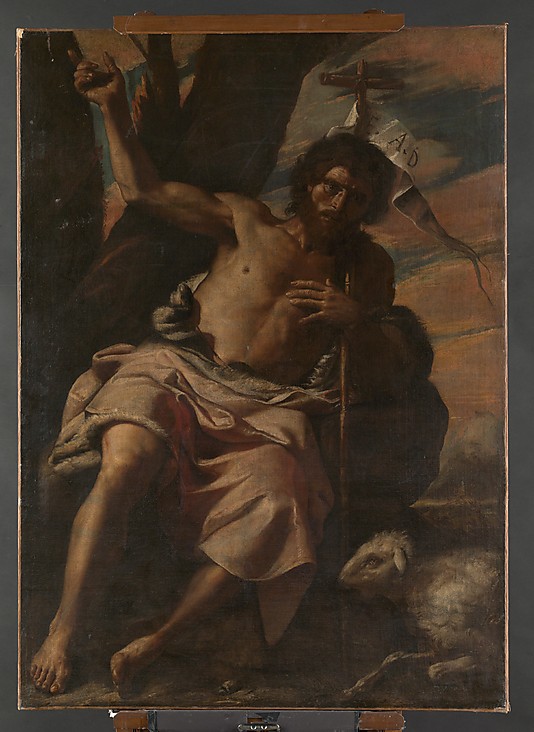
In most artistic renderings of John, he is shown with a hand or a finger pointing up toward heaven. My task for myself and my hope for all Christians everywhere is that we follow the example of John in pointing our lives toward Jesus. Do not seek after signs and manifestations, but rely on the sure word.
Above, John the Baptist, by Preti, MetMusum. “Saint John the Baptist is shown seated in the wilderness exhorting the viewer to repentance, his right hand pointing heavenwards, his skin tanned through years in the desert. The lamb stands for Christ, the “lamb of God.“
Isaiah said that one like John would come–
“A voice of one calling: “In the desert prepare the way for the LORD; make straight in the wilderness a highway for our God.” (Isaiah 40:3)
John did come.
“He said, “I am the voice of one crying out in the wilderness, ‘Make straight the way of the Lord,’ as the prophet Isaiah said.” (John 1:23).
“In all your ways acknowledge him, and he will make straight your paths.” (Proverbs 3:6) “The righteousness of the blameless keeps his way straight,” (Proverbs 11:5a)
Keep on the straight and narrow, and always point to Christ. “For the law was given through Moses; grace and truth came through Jesus Christ.” (John 1:16-17)
When the herdsmen saw what had happened, they fled and told it in the city and in the country. 35 Then people went out to see what had happened, and they came to Jesus and found the man from whom the demons had gone, sitting at the feet of Jesus, clothed and in his right mind, and they were afraid. 36 And those who had seen it told them how the demon-possessed man had been healed. 37 Then all the people of the surrounding country of the Gerasenes asked him to depart from them, for they were seized with great fear. (Luke 8:34-37).
Many Samaritans from that town believed in him because of the woman’s testimony, “He told me all that I ever did.” 40 So when the Samaritans came to him, they asked him to stay with them, and he stayed there two days. 41 And many more believed because of his word. 42 They said to the woman, “It is no longer because of what you said that we believe, for we have heard for ourselves, and we know that this is indeed the Savior of the world.” (John 4:39-42).
In one town, they saw Jesus perform a miracle, delivering the man from his legion of demons. Jesus demonstrated his sovereignty over creation, including the demons in the spiritual realm. The people saw, and rejected.
In another town, one woman’s testimony, a well-known immoral woman, seemed to have been changed. Her shame was gone, or at least diminished in the face of the incredible news that this man who told her all she ever (shamefully) did (but seemed to love her anyway), could be the Christ.
Source: Sychar. Earthly Footsteps of the Man of Galilee, 1894
Things to ponder:
1. Just because they witnessed a miracle does not mean that belief always follows. Some believed because of the signs (John 2:11, John 2:23, John 11:45). Others saw signs and miracles and did not believe (John 11:46).
2. Far from being dry, dusty, and unnecessary, doctrine leads one to faith and repentance. Doctrine is the act of teaching or that which is taught. “Doctrine is teaching imparted by an authoritative source.” (GotQuestions). Like the Bereans who consulted the word after hearing Paul, the townsmen of Sychar were open to hearing Jesus teach. They listened and heard. “And many more believed because of his word”.
3. Some in the same crowd or the same room or in the same family believe, and others don’t. That’s the way it always has been and always will be. Some wonder why that is when we all have free will. Our will isn’t as free as one thinks it is. Our will is a slave to sin, it’s bound. Belief comes when Jesus opens ears and eyes to see and repent, gives a spirit of repentance. He intervenes from outside of earth, outside of ourselves, from heaven and breaks the binding of our soul to sin by giving us the Holy Spirit. There is nothing in us that can awaken our dead soul. Picture Lazarus dead in grave cloths, awakened by the sovereign call of Jesus. That was a picture of God’s sovereign election of individuals to save whom He decided in eternity past to save, before history began. Did Lazarus have free will? Only to remain dead.
The Reformed view of election, known as unconditional election, means that God does not foresee an action or condition on our part that induces Him to save us. Rather, election rests on God’s sovereign decision to save whomever He is pleased to save. (Source: Ligonier, Tulip & Reformed Theology: Unconditional Election)
Two towns, Gadara and Sychar. Two individuals in the same family, the unconverted and the saved. One rejects and departs, one repents and believes. Continue to pray for those in unbelief.
Sensitive subject, right? Not just the sex topic, but marriage too. In the 14 years I’ve kept this blog and 6000 or so essays, I have not talked about marriage or sex.
Firstly as a woman with no children, I don’t have anything to say to moms except what the Bible says. I cannot share any experience nor give advice on that topic because I lack practical experience. I share what the Bible says, verses, but not able to commune via experience.
As for the topic of the marital bed, it’s a legitimate topic and so is celibacy, but I am careful about what I discuss online.
But it’s mother’s day coming up, and it’s wedding season, so I thought that I might be share some (hopefully) wisdom on those 2 topics. And resources. My aim is always to consult the Bible first, and then to point to solidly credible resources for women to peruse.
My parents’ marriage was not a good one. My father is passed away now but my mother is coming up on 86 years old. Let’s just say that I was perpetually scared and never felt secure. Love was in short supply. Divorce happened when I was 14.
I grew up in a time of the 1960s and 1970s when things were turning upside down. The sexual revolution was rampant and open marriage was the thing and feminism took hold. I cannot relate to you the extreme turbulence of that time. In the end, I rejected it all, and I decided I wanted to be married and have a traditional life with a man, a college degree, have a house, career, security and love. Who doesn’t want that? Love.
So when I went to college, I fell for the first guy that came along. Fathers, that is what happens when you are unavailable to them in their formative years. A warning. We moved in together when I was a sophomore, and married after we graduated. Sadly, we weren’t really suited to one another, but I wanted to give it a go. He didn’t. Four years after we married, he found another woman, had an affair, and left me pretty quickly. By quickly, I mean there was no long-drawn-out petering away with tears and fights and ‘trying’ . He was there one day. The next he was gone.
Divorce is a violent act. It is two made into one flesh, being ripped apart. People speak of the horror of abortion, tearing the baby limb from limb. Divorce is similar. A violent ripping away of flesh you had cleaved to. Make no mistake.
I had an idol of marriage but no clue about marriage. I was not saved, which made it worse. The fools who think they have wisdom… Ladies, advice: Marriage is HARD. It’s two sinners coming together and mutually submitting. Our flesh does not want to do that, so it’s a battle. Genesis 3’s curse on men and women in marriage makes it even harder. Men will want to dominate their dominating wives. That, or become passive like Adam. Stick to the Bible’s guidelines for marriage, it is the only way to succeed in the longest-term, most pointed sanctification project on earth.
Having been saved now, I understand why the Bible’s many warnings and commands about adultery. Violating the marital bed is one of the worst things any human can do to another. It’s terrible. Porn is a violation of it. Lusting after another is a violation of it. And of course, adultery is a violation of it.
Many churches idolize marriage to the point of insinuation that there is something wrong with a woman who isn’t married. And childless? Oh my, a grieving topic for those who want but can’t.
Marriage is a norm for most of Christ’s people. He did give the command to be fruitful and multiply. (Genesis 1:28). But marriage is not given to all people. (1 Corinthians 7:7–9). And after all, we are single for major portions of our lives. Being single is not a punishment, even if it a lifetime arrangement.
Elisabeth Elliot married Jim at age 27, which was late for a woman in 1953. She was married only 3 years then Jim was martyred in Ecuador. She remained single for ten years. Then married again. Her 2nd husband died and she was single again for some years before marrying a 3rd time.
God sometimes reserves singles for a particular purpose (John the Baptist, Jeremiah, the 144,000 virgins of the Tribulation…) And in our times He might reserve singleness as a gift, protecting them from something of which they do not know. Or so they can focus totally on a task He has in mind. Whether married or single, we serve the Lord. That is the chief end of man, to glorify the Lord (in obedient service) and enjoy Him forever.
I had made an idol of marriage but deep down I knew, just knew, it was wrong man, wrong time, just wrong. But I wasn’t saved and I wanted what I wanted. Rebels gonna rebel. I wanted a man, marriage, and the marital bed inside a marriage. (I didn’t think it seemly to have promiscuous sex all over the place, that seemed wrong, just one husband, thank you).
But if they do not have self-control, let them marry, for it is better to marry than to burn with passion. (1 Corinthians 7:9).
I was saved a couple of decades later and then I knew God’s will for my life. I understood things. I am to remain single. I sort of knew that all along. Finally I was content with that, though. I am not really suited for long-term relationships. I have a hard time in relationships anyway. But I did ask the Lord to remove the burning, and He did. I am celibate, single, content. If He wants you to be, He makes it OK in your heart.
Theologian John Stott remained single and celibate his entire life. He said,
“The gift of singleness is more a vocation than an empowerment, although to be sure God is faithful in supporting those he calls.“
As for marrieds, and the marital bed, I found a wonderful resource from Aileen Challies, Tim Challies’ wife. It is called “False Messages: A Guide for the Godly Bride”. It’s a 21-page booklet online and it’s FREE.
Aileen Challies writes about “Sex”, “Desire”, “Unequal Desire,” “The Heart of Rejection”, and more. She writes graciously, biblically, and plainly.
For example:
The purpose of sex, then, is to provide a unique means through which a husband and wife can know one another, serve one another, express vulnerability before one another, give and receive. No other area in marriage offers so much to gain and so much to lose. No other area in marriage so closely grafts the couple together.
I agree. It’s true. And it’s one reason why adultery (and lusting for others and porn etc) are so devastating. Sex is remarkably powerful. It is incredibly intimate. It is why God gave us strict instructions and boundaries about it. Sex is good between a married man and woman, but also good are God’s instructions and limits about it.
As the husband leads, the wife is called by God to submit to her husband’s leadership even in the marriage bed. As in other areas of life, she is called to defy leadership only if her husband demands of her something that would violate her conscience or God’s law. We can see this as a responsibility of the wife but we must also see it as a particular responsibility of the husband. He is to lead in such a way that his wife will have no reason to refuse him. ~Aileen Challies
This is something that newly married couple must find their own way on, mutually. Communication is key. You might be shy at first talking about these things, whether the activity is satisfying to you or if it isn’t. It’s easier sometimes to avoid discussion. But communication in marriage is important and so, it is important on this subject too. Not everything will be perfect right at first, but that is the fun of coalescing as you forge a unified pairing as husband and wife.
He must seek to be sensitive to her needs, to her desires. He must acknowledge the times where, for one reason or another, she might find it exceedingly difficult to give herself to him and must keep from cajoling her into acts that would make her uncomfortable or leave her feeling violated. He needs to exemplify leadership as a servant even here in the bedroom. His first thoughts must be for her. ~Aileen Challies.
Yes, she speaks of the ideal. I pray it is that way for you whether it happens early in your marriage or later.
Marriage, conjugal activity, and singleness and celibacy are sensitive subjects, very sensitive. In my opinion, there is nothing more sacred than the marital bed. But sadly, there is a lot of bad advice out there. Because sex is so powerful, bad advice in this particular area of Christian life can have more harm, much more harm, than one might think. Be careful who you turn to for advice and which resources you absorb.
Please email or message me if you have further questions. I’d be glad to try and help or find a good resource for your question. Meanwhile here are some GOOD resources:
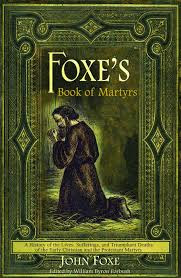
Writing in the mid-1500s, John Foxe was living in the midst of intense religious persecution at the hands of the dominant Roman Catholic Church. In graphic detail, he offers accounts of Christians being martyred for their belief in Jesus Christ, describing how God gave them extraordinary courage and stamina to endure unthinkable torture.
From the same link, the book’s purpose was fourfold:
Showcase the courage of true believers who have willingly taken a stand for Jesus Christ throughout the ages, even if it meant death,
Demonstrate the grace of God in the lives of those martyred for their faith,
Expose the ruthlessness of religious and political leaders as they sought to suppress those with differing beliefs,
Celebrate the courage of those who risked their lives to translate the Bible into the common language of the people.
Last Sunday I’d ended the first phase of the Apostolic persecutions with the death of Apostle John. He was the last of the first generation martyrs. In Foxe’s Book it is described thus: “Chapter One: History of Christian Martyrs to the First General Persecutions Under Nero”.
In the course of that first wave, Paul and Peter were martyred. In summary, Foxe wrote,
“To their names may be added, Erastus, chamberlain of Corinth; Aristarchus, the Macedonian, and Trophimus, an Ephesian, converted by St. Paul, and fellow-laborer with him, Joseph, commonly called Barsabas, and Ananias, bishop of Damascus; each of the Seventy.”
Under Nero’s persecution after the Great Fire at Rome of 67AD, the church at Rome was scattered, and this blew the seeds of the Gospel outward toward Asia. (1 Peter 1:1). The 7 Churches of Asia Minor were founded at that time. However, it wasn’t long before persecution followed the Christians at the cities far from Rome, and this is what Peter meant when he wrote, ‘you are being tested in various trials’ in 1 Peter 1:6.
This first wave of the persecution of the original generation continued under Domitian. Foxe’s summary again,
“Nicodemus, a benevolent Christian of some distinction, suffered at Rome during the rage of Domitian’s persecution. Protasius and Gervasius were martyred at Milan. Timothy was the celebrated disciple of Paul, and bishop of Ephesus, where he zealously governed the Church until A.D. 97. At this period, as the pagans were about to celebrate a feast called Catagogion, Timothy, meeting the procession, severely reproved them for their ridiculous idolatry, which so exasperated the people that they fell upon him with their clubs, and beat him in so dreadful a manner that he expired of the bruises two days later.”
After Apostle John died in around 98AD, The Third Persecution, Under Trajan, A.D. 108, began.
“Pliny was a governor of a Roman province at the beginning of the Second Century. He was monitoring those who identified themselves as Christians in order to make report to the Emperor Trajan. He wrote to Trajan around 100 AD.” Foxe wrote of Pliny’s letter to Trajan,
“In the third persecution Pliny the Second, a man learned and famous, seeing the lamentable slaughter of Christians, and moved therewith to pity, wrote to Trajan, certifying him that there were many thousands of them daily put to death, of which none did any thing contrary to the Roman laws worthy of persecution. “The whole account they gave of their crime or error (whichever it is to be called) amounted only to this-viz. that they were accustomed on a stated day to meet before daylight, and to repeat together a set form of prayer to Christ as a God, and to bind themselves by an obligation-not indeed to commit wickedness; but, on the contrary-never to commit theft, robbery, or adultery, never to falsify their word, never to defraud any man: after which it was their custom to separate, and reassemble to partake in common of a harmless meal.”
~~~~~~~~~~~~~~~~~~~~~~~~~~~~
Hatred of Christians is coming to America. Persecution is coming. Christians have always suffered horribly in all the world throughout all ages. Christians in America have not. We are the cushiest, most comfortable generation, and as a result have grown casual to the Gospel and irreverent toward Christ. The charge of Jesus to the church at Laodicea could well be taken as a charge against us today:
“I know your works: you are neither cold nor hot. Would that you were either cold or hot! So, because you are lukewarm, and neither hot nor cold, I will spit you out of my mouth. For you say, I am rich, I have prospered, and I need nothing, not realizing that you are wretched, pitiable, poor, blind, and naked.” (Revelation 3:15-17).
It is the church at Laodicea which Jesus asks to open the door and let Him in when He knocks. It is the church at Laodicea that has left Jesus off the list of ingredients when they play at church.
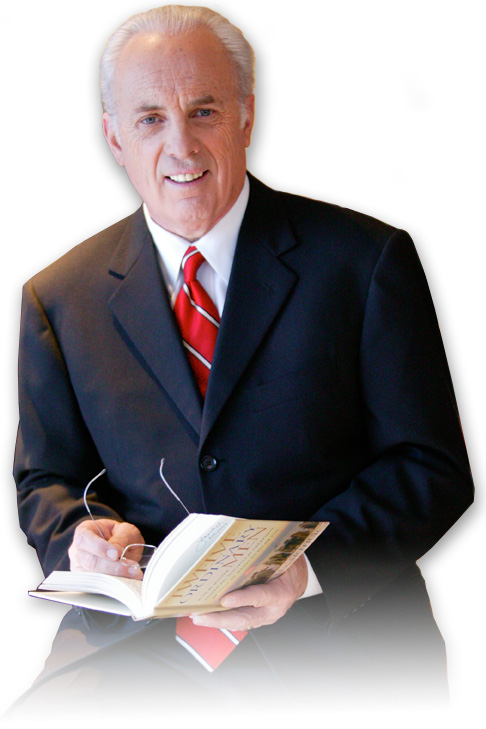
Of the true church, Dr. John MacArthur wrote this to his subscribers in 2013, “It’s no surprise that true Christians are feeling pressures we’ve never before experienced. Believers today face open hostility simply for what we believe.”
[Ed Note: Brings to mind Pliny’s perplexity of the hatred leveled against Christians who were simply praying, vowing to do good and having harmless meals together…]. Continuing MacArthur-
“Our gospel, our values, our priorities, our doctrine, what we love and what we hate what we live for and what we die for- our lives are more permanently and comprehensively at odds with the world. What’s more, the situation can and will still get worse. I’ve commented several times recently that I believe that hostility toward Christians in the West will eventually give way to full-blown persecution, just as it already has in other parts of the world.”
“As the pressure on Christianity has increased, it has been interesting to see so many supposed Christian institutions caving in and surrendering. We’re now finding out what people really believe and who is willing to stand for truth. Christian organizations are having to ask themselves, What are we going to say about immorality, premarital sex, drunkenness, and homosexuality? Sadly, many are waffling.”
Dr. MacArthur continued in his letter,
“Our view is that the more heated the battle becomes the clearer we need to become on our biblical convictions. The true church will always embrace persecution when it comes, rather than run from it. Suffering for Christ is a blessing from God with purifying effects for true believers. When suffering comes, the church actually thrives. Of course that doesn’t mean that facing hostility and persecution is easy, or that it doesn’t raise practical questions about the present and the future- no Christians cherish the thought of their children or grandchildren suffering…”
The call for today is to remember the martyrs even as hostility and persecution comes to us in the West. Align yourself with the stance that Dr MacArthur outlined:
“As other organizations seek to evolve with the times, insulate themselves from hostility, and accommodate the culture, our plan is to actively stake out the biblical positions everywhere we can. We are going to articulate biblical truth more clearly and assertively than ever. In fact, as the culture continues to degenerate and biblical standards are challenged, every new attempt to undermine Scripture is going to elicit from us a loving- but clear-confrontation.”
“Dear friends, do not be surprised at the fiery ordeal that has come on you to test you, as though something strange were happening to you.” (1 Peter 4:12)
One of the reason above that Foxe said he wrote his book of martyrs is to “Demonstrate the grace of God in the lives of those martyred for their faith.” I plea for you to become solid in your stance and firm in your conviction to demonstrate that very grace. Get clear on your convictions and the biblical worldview we need to have. Stand on the rock.
When I originally started this series 7 years ago, I could see the need coming to re-connect with what real persecution is and to take inspiration from those who died for the faith without reneging on their convictions. It is doubtless coming to us in America.
The simmering hatred is more visible now in 2023. The COVID-19 virus and subsequent lockdown has taught us just how easy it is for Government leaders to shutter churches. The difficulty in opening churches back up as the COVID-19 virus slowed its progress through the population shows just how much of a target churches are of that hatred.
Let us continue in the faith, a long, unbroken line of glory from the first martyr to the last, praising Jesus under all circumstances. Let us gird our loins and stand firm on the Gospel, no matter what may or may not be coming to America in future days.
Ignatius was a beloved father in the faith in the time of Trajan’s persecution. He said, “Now I begin to be a disciple. I care for nothing, of visible or invisible things, so that I may but win Christ. Let fire and the cross, let the companies of wild beasts, let breaking of bones and tearing of limbs, let the grinding of the whole body, and all the malice of the devil, come upon me; be it so, only may I win Christ Jesus!”
He was eventually convicted and thrown to the lions. Ignatius “heard the lions roaring, saying: “I am the wheat of Christ: I am going to be ground with the teeth of wild beasts, that I may be found pure bread.”
May you be found to be pure bread, with no leaven, for the name of Jesus and His eternal glory.
I wrote a few days ago in my essay The Forgotten God: His Wrath, that preaching and teaching on God’s wrath is an essential part of the Gospel. Yet in our day there has been such a dampening of this important attribute of God that we have marginalized it in Gospel proclamations.
I’d said I love God’s wrath because it is one of His attributes and I love everything about God. It is also part of His justice and how He will right all the wrongs in the world. I do mourn those who live under God’s wrath (Romans 1:18) and those who have already passed and will eternally be enduring God’s wrath (John 3:36). But God IS angry with sin. He WILL punish sinners.
Then after I posted my The Forgotten God essay I came across this tweet thread by D. Michael Clary. It touched me greatly. His humility, clarity, and emphasis on the wrath prompted me to ask if I may repost his thread. He said yes.
Please take a quick read of his confession. Wherever and whenever I can promote the balanced Gospel, one that includes all the elements such as law, grace, justice, wrath etc, I will. What follows is from Mr. Clary.
I learned an important ministry lesson years ago from an unbeliever I was trying to evangelize.
I was on staff with CRU & he was a brilliant & thoughtful student. Over the next few years, I shared the gospel with him many times, answering objections & using all the tools. 1/10
To answer his more complicated moral, philosophical, and theological objections, I took him to meet one of my theology profs at SBTS. Despite all this, he could never commit to Christ. He was a classic “always learning but never arriving at the church” kind of guy. 2/10
Eventually, I moved away to plant a church, and I continued to pray that someday he would come to faith.
Fast forward a few years, he calls me out of nowhere to tell me he’d become a Christian. I also spoke to his new wife, who was also a solid believer. 3/10
Not only that, but he had begun taking seminary courses to explore church planting.
I was floored. What finally broke through? What book, apologist, or intellectual finally convinced him? So I asked him. 4/10
Someone invited him to a church service and the preacher preached about hell and eternal judgment. It scared the crap out of him and he surrendered to Christ at that moment.
Like, he legit got saved. Radical, immediate conversion. 5/10
Looking back, I’d spent the better part of four years appealing to his intellect, talking philosophy & theology. I wanted to prove to him how intellectually satisfying & philosophically robust Xnty is. All that is well & good, but I missed the one thing he needed most. 6/10
He needed to know what many Christians want to avoid talking about with unbelievers. He needed what I was too afraid to mention bc I was embarrassed. He needed to know about judgment & hell, the unpleasant doctrines that demonstrate, by contrast, the beauty of the cross. 7/10
God gave me a huge part to play in his conversion, for which I’m grateful, but the honor of seeing him cross the finish line went to another man who was faithful in an area where I’d failed. 8/10
I’d spent years showing him a “respectable” Christianity, which kept him comfortable in his unbelief. In scripture, however, we learn that “the word of the cross is folly to those who are perishing, but to us who are being saved it is the power of God” (1 Co 1:18). 9/10
One plain spoken sermon, that clearly laid out God’s wrath against sin and the grace of the cross, had more power than my years of trying to reach him by the human means of appealing to his intellect.
In other words, the foolishness of God is wiser than men.
–end D. Michael Clary’s words.
That was the content I come for! May God bless pastors such as Pastor Clary and all who unashamedly proclaim the balanced Gospel in love and truth.
The Wayside Cross is a huge tradition in Canada and Europe, where it has abounded for over a thousand years. Granted, in those cases it is usually a crucifix, a pagan symbol from Catholicism, “In Quebec, and Europe, a wayside cross marks a place where the members of a community gather to meet and pray, and often commemorates an important moment in their communal history.”
Charles Bourget reports that there are 3000 wayside shrines dotting the countryside in Quebec, however, many of them are falling into disrepair because the tradition is waning. I wrote about the fate of one American Wayside Cross in East Greenwich RI.
In America, the tradition never really caught on. They are still seen occasionally. In Bedford NY, one was erected in 1936 and it was hoped that the sight of it would invite the prayers of the passersby.
In 1922 East Greenwich, it was hoped by “those who placed this beautiful memorial to an exemplary life feel that it will indeed be a light by the way and a guide post to Heaven.” By and large wayside crosses, especially Protestant crosses, are not seen much on the public byways and those that do exist are under increasing challenge.
The point of the cross in public life is that it would point the way to Jesus. These were visual reminders of the higher being. That upon seeing it, thoughts of Him and the Good News would ruminate in the mind, and through the strength of the Holy Spirit, those thoughts would germinate. For people seeing such displays, who have already heard the Good News, perhaps its sight would loosen the bonds around the heartstrings and their conviction would grow, as in the allegorical depiction of Christian at the Wayside Cross in Pilgrim’s Progress.
A wayside cross was a pivotal point in the very famous book Pilgrim’s Progress by John Bunyan, published in 1678 and has remained on the ‘bestseller list’ ever since, never having been out of print. The passage is below:
“He ran thus till he came at a place somewhat ascending, and upon that place stood a cross, and a little below, in the bottom, a sepulchre. So I saw in my dream, that just as Christian came up with the cross, his burden loosed from off his shoulders, and fell from off his back, and began to tumble, and so continued to do, till it came to the mouth of the sepulchre, where it fell in, and I saw it no more. Then was Christian glad and lightsome, and said, with a merry heart, ‘He hath given me rest by his sorrow, and life by his death.’ Then he stood still awhile to look and wonder; for it was very surprising to him, that the sight of the cross should thus ease him of his burden. He looked therefore, and looked again, even till the springs that were in his head sent the waters down his cheeks. Now, as he stood looking and weeping, behold three Shining Ones came to him and saluted him with Peace be unto thee. So the first said to him, Thy sins be forgiven thee;”
It is amazing that the sight of the cross should ease a person’s burdens, but it does, for the person who is ready to receive grace. For every individual on the planet, there comes that critical moment, upon which the eye falls to the cross – either the literal one along the roadways, or the mental one having shared through the Gospel – and a decision is made either aye or nay.
The cross to the unsaved does make one’s soul burn, satan would have it so. But in the process of that the soul-singe the cross is emblazoned on the mind and heart and soul, thereafter to linger as a brand. It stays there, to rankle. Opponents of Christ do not want that rankle, and therefore strive to remove the cross from all areas of life even private property and churches. The right to display the cross in public life is waning.
The public crosses I saw during the course of my life affected me and were sure steppingstones on my path to the Lord. I mentioned the initial event that started me thinking about the public life of the cross in yesterday’s post, the RI Wayside Cross that stood at the intersection of my street. I saw that cross a lot growing up. Each time I did, I exhibited varying amounts of offense at varying times until I moved far away to a godless state and never no more was troubled by public displays of the cross.
The public crosses that stand alongside roads, hang round our necks as jewelry, appear on cars and trucks and shipgoing vessels, all can and do minutely penetrate the web of dark sin in which the the unsaved labor. If we see through a glass darkly, they see not at all, and the cross is the only light that can and will penetrate that darkness.
If you own a cross as a tie clip or jewelry, wear it. If you should be of a mind, erect one at the edge of your lawn. Do not let the Christian cross become a fading symbol here in the United States.
The visibility of the cross is decreasing in America too. Don’t let it.
The cross was a public declaration that God’s righteousness was satisfied. It is an offense to the pagan. (Romans 3:24-25; Galatians 6:14, Galatians 5:11). We should be no less open about the cross, mentioning it, affirming it, even wearing it if we have one. In doing so, He is lifted up.
My blog is called The End Time not due to eschatology but because we’re IN the end time -the time between Jesus’ ascension and His return – and time is short. I exhort us all to walk worthy and be bold to proclaim the hope that is within us, because the Time is Near.
I love eschatology and I could write about it every day. In fact, when I started this blog, I did write about it most every day. But yes, I enjoy eschatology because His return is the next big event to happen!
Anyway, the Lord grew me from my earliest days of hyper-focus on last things, and I learned about other doctrines. I fell in love with the doctrine of Providence, and I enjoy biblical natural history (flora & fauna of the Bible, agricultural practices, and so on). I love discernment, since the Holy Spirit gave me that spiritual gift, and I like to exercise it, but not to the point that one of my biceps gets bigger than the other. I have to frequently scan my blogs to make sure I’m not narrowing in on one topic too often. This essay is a warning for myself as well.
I first read through all the Old Testament Prophets, then the OT histories and poetic books. I turned to the New Testament and of course, Revelation, an apocalyptic book. When that the first pass of reading the Bible initially was concluded, I now choose Bible reading plans that bounce daily between the OT and the NT.
Our preaching elders preach a book of the New Testament then a book of the old.
We should absorb the whole counsel of God. We should share the whole counsel of God.
In other words, as Christians, we seek balance in our learning. As with anything in life, we strive to be well-rounded.
That’s not to say that we don’t have favorite doctrines, or are well known for having a teaching niche. RC Sproul was known for holiness and philosophy. Phil Johnson is known for his expertise on the Psalms. Alistair Begg is known for being an expert on, well, The Beatles. You knew that was coming! lol.
I’ve noticed that some who have a social media presence and large followings who excessively focus on one doctrine above all others, who make their blog be about only that, or tweet about only that, or who speak about only that. These people tend to drift away from balance and become unbalanced.
Would you enjoy sitting under a preacher who only ever preaches on tithing and money? Or follow a person who only ever urged female submission? ‘Trump bad’ or ‘John MacArthur bad’ is a message from some who never seem to tire of harping on their pet one-and-only topic, but it sadly displays a narrowing of their theological arteries.
Omissions are just as imbalanced as hyper-focus. If your preacher never speaks of the wrath, or of sin, or of the Old Testament, that is not a well-rounded pastor. Of course, a person might know of these topics, but a failure to continue learning about them is part of the problem of drifting toward imbalance.
It’s not just the individual who falls into myopia. The pendulum swing in the global church results in imbalance too. It swings from one extreme to another. The Charismatic movement arose as a reaction against dead orthodoxy theology. The Sonship movement arose as a pushback against an impersonal theology.
Overemphasis in the reaction causes overshadowing of other teachings, to the point almost of neglect in seminaries or in lots of churches in one era.
[T]he need for balance is absolutely crucial if the church is to witness God’s truth to the world, and a failure to speak the whole counsel of God is a critical weakness in our testimony as Christians.
He was talking about the need for an equal mental attention to systematic theology and biblical theology, but we take his point.
In the 1970-80s, eschatology was IN. A whole generation of people grew up with Left Behind, Hell Houses at Halloween, and even music on the topic (I Wish We’d All Been Ready).
By the 1990-2000s, eschatology was OUT. Seminaries didn’t focus on it too much, which resulted in a host of graduates for a generation with little attention paid to the subject. In the 2020’s eschatology is back, but not the dispensational flavor, but amillennial.
Theological myopia sets in. Neglect of the whole counsel of God stirs a narrowing of your worldview, which soon enough, views ONLY your pet doctrine or theory. Don’t let that happen to you.
How to stop hyper-focus from happening?
BIBLE READING
What can help us keep our theology balanced? Of course, the Bible, first and foremost. Read it widely. Read it frequently. The more grounded in the Word you are the more you will stand upon solid ground. If not, you’ll end up cherry picking verses out of context that you want to support your pet theory in conversation (or papers, or tweets). Choose a balanced Bible Reading Plan.
ABSORB A VARIETY OF MATERIAL FROM DIFFERENT PEOPLE
Apart from your own pastor each week, I’m sure you listen to sermons and podcasts online. Listen to a few different ones. I listen to both women and men, cultural issues oriented and theology oriented. I listen to a variety of preachers; some of them are from today and some are from long ago. I read books on different topics, not just the one or two topics I especially enjoy. I am sensitive to the guidance of the Spirit when I’m reading the Bible for new topics to follow up on. Lately I’ve followed up on a couple chapters in Romans (sin AKA Hamartiology) and the Blood of Christ. Absorb material from different eras. I enjoy current magazines but also pamphlets from the past, from the 1800s all the way down to Augustine.
PRAYER
In my discipling of younger women, I always tell them to seek the Holy Spirit in prayer. It’s a common refrain from me, but it’s a truism. His ministry is to point us to truth. He is the Illuminator. He convicts of sin. He keeps our heart aligned with God’s affections and our mind transforming every day. He is our greatest resource! Ask Him to keep you balanced. Ask Him to help you find appropriate middle ground.
SOCIAL MEDIA
If you engage on social media through blogs, tweets, Instagram, or other, look over what you have produced lately to see if you’re drifting into a narrowing. Scan backward and get an idea of the flavors of your output. There is a difference between following up on a topic deeply for a while, and succumbing to a rut where that is all you ever think about, pray about, write about. Social media is a conversation but it is also a chronicle. It can be your own keeper of your recent interests. Check it to see how you’re doing!
We can all pray for what martyr Jim Elliot sought:
Lord, give me firmness without hardness, steadfastness without dogmatism, and love without weakness.”
Jim Elliot, quoted in The Berean Call, Bend, Oregon, March 1997
I’m big on God’s wrath. It is rarely taught from the pulpit, even rarer is the new book on it, children aren’t taught it, today’s theologians ignore it. I love God’s wrath because it is an expression of one of His holy attributes: justice, and because I love Jesus, I love ALL of Him.
I am in awe of His wrath, and if I think on it longer than a moment or two, I will cry over it. God’s wrath is already being revealed (Romans 1:18) and it is a mind-bending, majestic thing. This attribute is still a necessary portion of who God is and we must understand it to proclaim it.
God’s wrath is very present, very real, and very imminent.
John 3:36, Whoever believes in the Son has eternal life; whoever does not obey the Son shall not see life, but the wrath of God remains on him.
Matthew 10:28 And do not fear those who kill the body but cannot kill the soul. Rather fear him who can destroy both soul and body in hell.
Too many Gospel proclamations have shifted from ‘God is angry with sin and will punish unless…’ to, ‘God loves you and has a plan for your life…’
Revive the wrath! In a long ago issue of Credo Magazine, the topic was “The Forgotten God: Divine Attributes We Are Ashamed of and Why We Shouldn’t Be“. I especially enjoyed the article “Should We Teach Our Children about the Wrath of God?” Check it out. It is free online. (cached)






















 the-end-time.org