
By Elizabeth Prata
The thread of Christianity depends on a unity from one generation to the next of mutual understanding of our important words. Hence the Word of the Week. Continue reading “Word of the Week: Orthodoxy”
By Elizabeth Prata
The thread of Christianity depends on a unity from one generation to the next of mutual understanding of our important words. Hence the Word of the Week. Continue reading “Word of the Week: Orthodoxy”
By Elizabeth Prata
The thread of Christianity depends on a unity from one generation to the next of mutual understanding of our important words. Hence the Word of the Week.
People sometimes get these mixed up: Justification-Sanctification-Glorification. The previous weeks’ links for Justification and Sanctification are below. Justification is the moment when God declares a sinner righteous through the atoning work of Jesus. It is the judicial act of God, by which he pardons all the sins of those who believe in Jesus. Picture a courtroom, the judge bangs the gavel in the verdict then says, ‘You’re free to go.’…
Sanctification is what happens over the rest of our lives on earth. We are being made holy by the work of the Spirit and our own efforts to partner with Him in the ongoing growth of resisting sin and pursuing Christ-likeness. In our fleshly lives, sanctification never ends. We’ll never be perfectly holy while we are in this flesh.
Glorification is what happens after death when we receive our new bodies at the resurrection. At CARM.org, glorification is defined–
Glorification is the future and final work of God upon Christians where He transforms our mortal physical bodies to the eternal physical bodies in which we will dwell forever.
Behold, I tell you a mystery; we shall not all sleep, but we shall all be changed, in a moment, in the twinkling of an eye, at the last trumpet; for the trumpet will sound, and the dead will be raised imperishable, and we shall be changed. For this perishable must put on the imperishable, and this mortal must put on immortality. (1 Corinthians 15:51-53).
We don’t know exactly what our glorified bodies will be like, or exactly when we will receive them, but in the end we will be like Jesus. (1 John 3:2).
Glorification means we will finally be FREE from the power and presence of sin! Can you imagine a brain freed from the darkness of sin and able to behold His glory? Able to sing and praise and worship freed from sinful lips and tongue? Able to commune with Jesus perfectly and to love our fellow brothers and sisters without fault?
All crippling diseases will be gone. All pain and deterioration will be gone. No more tooth fillings, eyeglasses, dialysis, titanium hips, prosthetics… nothing.
Glorification is something we should all be looking forward to as the hope of our reward: sinless bodies that can dwell personally with Christ in perfect worship.
—————————————-
Further reading:
Blog post: Our Future Glorification
Essay: How does the Bible describe the glorified bodies we will possess in Heaven?
5. Sanctification
4. Propitiation
3. Immanence
2. Transcendence
1. Justification
By Elizabeth Prata
In addition to the familiar Bible verses speaking to God’s sovereignty, one of which is at the conclusion of this essay, there is a famous quote from RC Sproul that exalts God’s sovereignty:
If there is one single molecule in this universe running around loose, totally free of God’s sovereignty, then we have no guarantee that a single promise of God will ever be fulfilled.
It is a great quote because it speaks to how God created and upholds every single atom in the universe. He is the author, architect, and absolute king over all. Continue reading “Word of the Week: Sovereign”
By Elizabeth Prata
The thread of Christianity depends on a unity from one generation to the next of mutual understanding of our important words. Hence the Word of the Week. Continue reading “Word of the week: Sanctification”
By Elizabeth Prata
The thread of Christianity depends on a unity from one generation to the next of mutual understanding of our important words. Hence the Word of the Week.
By Elizabeth Prata
We’re losing the meaning of our uniquely Christian words. Biblical illiteracy is high. People don’t understand the meaning of foundational words like justification, sanctification, glorification, etc., partly because the Bible isn’t read, and partly because pastors don’t use them in sermons or explain them. The thread of Christianity depends on a unity from one generation to the next of mutual understanding of our important words. Hence the Word of the Week. Continue reading “Word of the Week: Propitiation”

Last week the word was Transcendence. God is apart from His creation, different from it. This week the word is Immanent or Immanence,
God’s immanence refers to His presence within His creation. (It is not to be confused with imminence, which refers to the timing of Jesus’ return to earth.) A belief in God’s immanence holds that God is present in all of creation, while remaining distinct from it. In other words, there is no place where God is not. His sovereign control extends everywhere simultaneously. Source GotQuestions
Immanence: God’s presence and activity within the creation and human history. Source: Biblical Doctrine, MacArthur/Mayhue, p 931
God is so majestic! Mysterious! How can He be both apart from His creation, and present within it?! At the same time? It shows who our God is. It’s why I chose these two words one after the other to demonstrate His essential otherness.
One other notion that is important to emphasize.
Pantheism and deism twist many people’s view of how God relates to His creation. Pantheists believe that everything is God or is a part of God, making Him equal with His creation and unable to act upon it. Deists hold that God is distinct from His creation but deny that He plays an active role in it. Contrary to these and other false views of God, the Bible says that God is both different from His creation and actively upholding it.
That they should seek God, in the hope that they might feel their way toward him and find him. Yet he is actually not far from each one of us, (Acts 17:27).
Note: Modern pantheism is seen in William P. Young’s The Shack, Oprah Winfrey’s promotion of Eckart Tolle, and in Ann Voskamps’s book One Thousand Gifts as an offshoot of pantheism, panentheism. It is easy to twist both immanence and transcendence, either by direct twisting or omitting one in favor of the other. It is why it is important to learn these terms so we retain a balanced view of God.
A theological term referring to the relation of God to creation. God is “other,” “different” from His creation. He is independent and different from His creatures (Isaiah 55:8-9). He transcends His creation. He is beyond it and not limited by it or to it.
Source unknown, found at Bible.org
Transcendence: God’s separateness or otherness from the creation and the human race.
Source Biblical Doctrine, MacArthur & Mayhue Eds
Oh, the depth of the riches and wisdom and knowledge of God! How unsearchable are his judgments and how inscrutable his ways! “For who has known the mind of the Lord, or who has been his counselor?” “Or who has given a gift to him that he might be repaid?” For from him and through him and to him are all things. To him be glory forever. Amen. (Romans 11:33-36).
For my thoughts are not your thoughts, neither are your ways my ways, declares the Lord. For as the heavens are higher than the earth, so are my ways higher than your ways and my thoughts than your thoughts. (Isaiah 55:8-9)
Can you find out the deep things of God? Can you find out the limit of the Almighty? (Job 11:7).

By Elizabeth Prata
The thread of Christianity from generation to generation depends on a mutual understanding of our important words. Hence the Word of the Week.
Past Words of the Week have included Justification, Transcendence, Immanence, Propitiation, Sanctification, Glorification, Orthodoxy, Heresy, Omniscience, Aseity, and Immutability.
I then went to a series examining each of the 9 characteristics of the Fruit of the Spirit: Love, Joy, Peace, Patience, Kindness, Goodness, Faithfulness, Gentleness, and on December 29, 2018, wrapped up the Fruit series with Self-Control.
Now it’s back to individual words of the week. I’ve chosen Angel, and last time, Exegesis.
Today … Regeneration
Regeneration is the spiritual change wrought in the heart of man by the Holy Spirit in which his/her inherently sinful nature is changed so that he/she can respond to God in Faith, and live in accordance with His Will (Matt. 19:28; John 3:3,5,7; Titus 3:5). It extends to the whole nature of man, altering his governing disposition, illuminating his mind, freeing his will, and renewing his nature
Regeneration is a change in our moral and spiritual nature where justification is a change in our relationship with God. Also, sanctification is the work of God in us to make us more like Jesus. Regeneration is the beginning of that change. It means to be born again.
To understand why we need regeneration I recommend two sources. Martin Luther’s Bondage of the Will, and Jonathan Edwards’ Freedom of the Will. The two men aren’t actually contradicting each other, they say the same thing: man is born with a sin nature that he cannot escape, change, or modify.
In 1524 Luther argued that humans’ sinful nature rendered them slaves to wickedness, free only to sin unless by the intervention of God’s sovereign grace. Read Bondage of the Will for free here, or buy at any book sellers’ outlet.
In this text published in 1754, Edwards investigates the contrasting Calvinist and Arminian views about free will, God’s foreknowledge, determinism, and moral agency. Read Freedom of the Will for free here, or buy at any book sellers’ outlet.
Further resources:
Short devotional from Ligonier:
The Grace Of Regeneration
What is regeneration according to the Bible?
Verses, just a few on the topic:
He saved us, not because of works done by us in righteousness, but according to his own mercy, by the washing of regeneration and renewal of the Holy Spirit, (Titus 3:5).
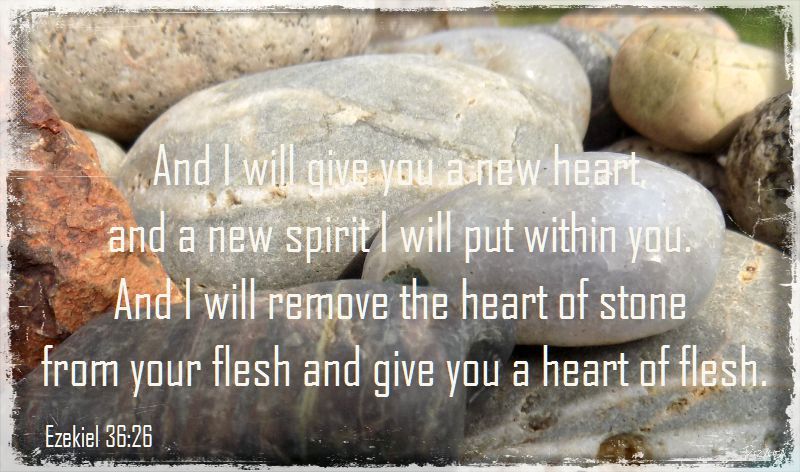
And I will give you a new heart, and a new spirit I will put within you. And I will remove the heart of stone from your flesh and give you a heart of flesh. (Ezekiel 36:26).
Jesus answered, “Truly, truly, I say to you, unless one is born of water and the Spirit, he cannot enter the kingdom of God.” (John 3:5).
Therefore, if anyone is in Christ, he is a new creation. The old has passed away; behold, the new has come. (2 Corinthians 5:17)
By Elizabeth Prata
Knowing and understanding our historical theological words helps the next generation continue the thread of common understanding of our great faith. Hence the Word of the Week.
I’ve been asked for the list of all the essays I’ve written of the Word of the Week. The list is below the picture at bottom. You can also search category “Word of the Week”.
This week’s Word is Perspicuity of Scripture. Do we need “Bible codes”? Is scripture unclear enough so that only a few, more intelligent or higher-up, can understand it? It is too much to expect that the layman study it?
No. No. And no.
The perspicuity of scripture means that the Bible can be understood by anyone. The Holy Spirit illuminates it to us. For the most part, scripture is clear, if one studies it properly (and is saved, “And even if our gospel is veiled, it is veiled to those who are perishing” 2 Corinthians 4:3, also 2 Corinthians 3:14).
Yes, Peter said that Paul wrote some things that are hard to understand, (2 Peter 3:16), but scripture itself can be understood clearly, without codes, mystics, or pretzel logic.
The Lord gave the word to Nicodemus, The Teacher of Israel and to the brilliant Paul, and He also gave it to fishermen and shepherds.
THE PERSPICUITY OF SCRIPTURE
Larry D. Pettegrew
Professor of Theology
The basic doctrine means that the Bible can be understood by people through the enlightenment of the Holy Spirit and that people need to search the Scripture and judge for themselves what it means. Scripture itself attests its own perspicuity, but not to the point that it cannot be misunderstood or is in every point equally simple and clear. The doctrine does not rule out the need for interpretation, explanation, and exposition of the Bible by qualified leaders.
The doctrine does mean that Scripture is clear enough for the simplest person, deep enough for highly qualified readers, clear in its essential matters, obscure in some places to people because of their sinfulness, understandable through ordinary means, understandable by an unsaved person on an external level, understandable in its significance by a saved person through the illumination of the Holy Spirit, and available to every believer whose faith must rest on the Scriptures.
Further reading
Grace to You: The Clarity of Scripture part 1
Ligonier: The Clarity of Scripture
Previous and future entries in the Word of the Week Series:
Fruit of the Spirit, Gentleness
Fruit of the Spirit, Faithfulness

