Posted in theology, word of the week

Sunday Word of the Week: Light

By Elizabeth Prata

The thread of Christianity depends on a unity from one generation to the next of mutual understanding of our important words. Hence the Word of the Week.

This is a repost from September 2018

8341e-word2bcloud

Normally I write about a little-used word but one that we as believers need to know (and use in our vocabulary). I’ve written about aseity, omnipotence, and justification, for example. But this week’s word will be Light.

It seems like it is an easy word, and it is, but as with all things in the Bible, there are layers of meaning.

The word Light is used in the Bible in several different ways. There is created light, as when God said “Let there be light”…and He separated the light from the dark. This is literal. There is miraculous light, as in the glory light of Jesus when He transfigured. And there is figurative/symbolic Light, as in the Word is a light or when we are ‘in the light’ as opposed to those sinners who are ‘in darkness’, or ‘don’t hide your light under a bushel’.

Once you see the different ways the word light is used you can’t unsee it, nor would you want to, lol.

In the ATS Bible Dictionary, we read,

One of the most wonderful, cheering, and useful of all the works of God; called into being on the first of the six days of creation, by his voice: “Let there be light;” and there was light. No object better illustrates whatever is pure, glorious, spiritual, joyful, and beneficent. Hence the beauty and force of the expressions, “God is light,” 1 John 1:5, and “the Father of lights,” James 1:17; Christ is the “Sun of righteousness,” and “the light of the world,” John 1:9 8:12. So also the word of God is “a light,” Psalm 119:105; truth and Christians are lights, John 3:19 12:36; prosperity is “light,” Esther 8:16; and heaven is full of light, Revelation 21:23-25. The opposite of all these is “darkness.”

The International Standard Bible Encyclopedia explains

The word “light” is Divinely rich in its comprehensiveness and meaning. Its material splendor is used throughout the Scriptures as the symbol and synonym of all that is luminous and radiant in the mental, moral and spiritual life of men and angels; while the eternal God, because of His holiness and moral perfection, is pictured as “dwelling in light unapproachable” (1 Timothy 6:16). Every phase of the word, from the original light in the natural world to the spiritual glory of the celestial, is found in Holy Writ.

The ISBE even goes on to further separate the different concepts of Light into Natural Light, Artificial Light, Miraculous Light, Mental, Moral, Spiritual Light; and explores its symbolism, expressive terms, and more. Check it out!

We first read the word light in Genesis 1:3 and the Bible closes with it in Revelation 22:5. Light. It’s such a simple word, but such a complex theme.

light 1 sunday

Further Resources:

Q&A: What Does it Mean that God is Light?

Devotional: Walk in the Light

Study: Light and Darkness

Blog post: Light of the World

Posted in theology, word of the week

Word of the Week: Love

By Elizabeth Prata

On Sundays I had posted a theological word with its definition, then an explanation, and used it in a verse. I also use a picture to represent the concept. This is my effort to maintain a theological literacy among the brethren and between generations, something I believe is critical. We have to know what we believe, why, and know the words to express it. Words like Justification, Immanence, and Perspicuity have all been a Sunday Word of the Week. I am reposting this series on Sundays. This post first appeared on The End Time in October 2018.

wordcloud

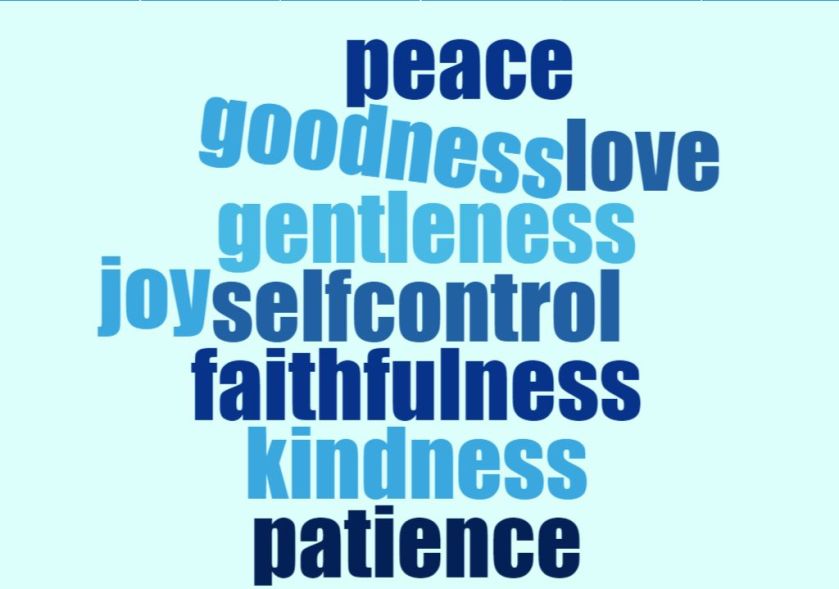
Similarly, when we discuss other words such as love, peace, and joy, we think we know what they mean, but often times these culturally embedded words have a totally different flavor when used from a biblical context. It is true of the words pertaining to the Fruit of the Spirit. Even these ‘simpler’ biblical words are misunderstood.

Therefore, over the next 9 weeks the Word of the Week will be one of the 9 Fruit of the Spirit.

You notice the fruit is singular. The Holy Spirit develops fruit, not fruits. Believers can and do manifest all its elements simultaneously. The nine representative qualities refer to the whole work of the Spirit’s sanctifying labor in the believer. One doesn’t work on patience today and then love tomorrow and then joy, etc. The fruit is one fruit with various characteristics.

Paul began with identifying love as the first fruit of the Spirit. Jesus said that love is the greatest commandment.

Love in the biblical context doesn’t mean what it means in the songs. The culture says we are always falling in and out of love (Pure Prairie League, Amie), as if love was a tide we had no control over and washes in and out. Whitesnake wanted to know Is This Love? They weren’t sure. Foreigner famously pleaded with the universe, that I Want to Know What Love Is.

Love addles people. Romance is mistaken for love. So is lust. The world thinks it knows love as an external thing that comes upon people who must grab it and plead for it not to go away. As if it can dissipate like steam. But that is not what love is according to the Bible.

I found the section from the MacArthur/Mayhue systematic theology book Biblical Doctrine helpful and illuminating here. The section on the Fruit of the Spirit of love reads as follows:

Christ’s substitutionary death provided the ultimate example of love. (Greek: agape). He said, “Greater love has no one than this, that someone lay down his life for his friends.” (John 15:13). Paul called for this supreme love to be characteristic of a husband’s love for his wife: “Husbands, love your wives as Christ loved the church and gave himself up for her.” (Ephesians 5:25). First Corinthians 13:8 promises that “love never fails.” (NASB).

Thus, love is a communicable, divine attribute that is central to the Father’s character, (1 John 4:8), put on display by Christ at the cross, enabled in believers by the Holy Spirit. Love can be defined broadly as the conscious, sacrificial, and volitional commitment to the welfare of another person, in obedience to God’s Word (2 John 6), regardless of the person’s response or what one does or does not receive from him or her, or what love costs one to give. The love of Christians toward other Christians (Colossians 1:8), as might be expected, is the most commended “one another” response in the New Testament.

That’s what love is.

Posted in theology, word of the week

Word of the Week: Immutability

By Elizabeth Prata

The thread of Christianity depends on a unity from one generation to the next of mutual understanding of our important words. Hence the Word of the Week.

8341e-word2bcloud

Immutability: Is the unchanging nature of someone. To be immutable is to be unchanging. God is unchanging in his character, will, and covenant promises. He does not change His mind, His will, or His nature.

Consider what thou owest to his immutability. Though thou hast changed a thousand times, he has not changed once; though thou hast shifted thy intentions, and thy will, yet he has not once swerved from his eternal purpose, but still has held thee fast. – Charles Spurgeon, The Christian—A Debtor, Sermon #96.

For someone to change, there must have been a point in time where the person was something else, or thought something different, or had alternate plans. Then as time passed, the person changed. Since God is outside of time, He is always the same, from point A to point B.

Also, His attributes are unchanging. He doesn’t add to His character nor subtract from it. He isn’t more loving today than when He was in Genesis 1:1 when our time began. He isn’t more wrathful against sin than when He was 15 years ago or 100 years ago. He isn’t more merciful or less compassionate than when Jesus walked in His incarnation.

What does immutability mean for us, His people?

As we read in Hebrews 6:17-18,

So when God desired to show more convincingly to the heirs of the promise the unchangeable character of his purpose, he guaranteed it with an oath, so that by two unchangeable things, in which it is impossible for God to lie, we who have fled for refuge might have strong encouragement to hold fast to the hope set before us.

It means we should be encouraged that His promises are sure. The joy that is waiting for us in heaven, the reunion with the glorified family as adopted sons and daughters, the glory, the sinlessness, all that, is unchanging because God does not change. He promised this. It will happen.

It means doom for those who will not repent. God will not forsake His holiness and allow rebels into heaven. It means the judgment and subsequent hellish torment awaiting many millions is sure. It will happen.

The gulf between the two eternities is never more stark than when considering His immutability. He has forged those two paths and they will not change. Keep both in mind when pondering His immutability.

1 immutabilty sunday

Posted in theology, word of the week

Word of the week: Regeneration

By Elizabeth Prata

The thread of Christianity from generation to generation depends on a mutual understanding of our important words. Hence the Word of the Week.

Past Words of the Week have included Justification, Transcendence, Immanence, Propitiation, Sanctification, Glorification, Orthodoxy, Heresy, Omniscience, Aseity, and Immutability.

I then went to a series examining each of the 9 characteristics of the Fruit of the Spirit: Love, Joy, Peace, Patience, Kindness, Goodness, Faithfulness, Gentleness, and on December 29, 2018, wrapped up the Fruit series with Self-Control.

Now it’s back to individual words of the week. I’ve chosen Angel, and last time, Exegesis.

Today … Regeneration

heart of stone verse

Regeneration, JI Packer

Regeneration is the spiritual change wrought in the heart of man by the Holy Spirit in which his/her inherently sinful nature is changed so that he/she can respond to God in Faith, and live in accordance with His Will (Matt. 19:28; John 3:3,5,7; Titus 3:5). It extends to the whole nature of man, altering his governing disposition, illuminating his mind, freeing his will, and renewing his nature

Regeneration, Matt Slick

Regeneration is a change in our moral and spiritual nature where justification is a change in our relationship with God. Also, sanctification is the work of God in us to make us more like Jesus. Regeneration is the beginning of that change. It means to be born again.

To understand why we need regeneration I recommend two sources. Martin Luther’s Bondage of the Will, and Jonathan Edwards’ Freedom of the Will. The two men aren’t actually contradicting each other, they say the same thing: man is born with a sin nature that he cannot escape, change, or modify.

In 1524 Luther argued that humans’ sinful nature rendered them slaves to wickedness, free only to sin unless by the intervention of God’s sovereign grace. Read Bondage of the Will for free here, or buy at any book sellers’ outlet.

In this text published in 1754, Edwards investigates the contrasting Calvinist and Arminian views about free will, God’s foreknowledge, determinism, and moral agency. Read Freedom of the Will for free here, or buy at any book sellers’ outlet.

Further resources:

Short devotional from Ligonier:
The Grace Of Regeneration

GotQuestions

What is regeneration according to the Bible?

Verses, just a few on the topic:

He saved us, not because of works done by us in righteousness, but according to his own mercy, by the washing of regeneration and renewal of the Holy Spirit, (Titus 3:5).

And I will give you a new heart, and a new spirit I will put within you. And I will remove the heart of stone from your flesh and give you a heart of flesh. (Ezekiel 36:26).

Jesus answered, “Truly, truly, I say to you, unless one is born of water and the Spirit, he cannot enter the kingdom of God.” (John 3:5).

Therefore, if anyone is in Christ, he is a new creation. The old has passed away; behold, the new has come. (2 Corinthians 5:17)

Posted in theology, word of the week

Word of the Week: Exegesis

By Elizabeth Prata

The thread of Christianity from generation to generation depends on a mutual understanding of our important words. Hence the Word of the Week.

Past Words of the Week have included Justification, Transcendence, Immanence, Propitiation, Sanctification, Glorification, Orthodoxy, Heresy, Omniscience, Aseity, and Immutability. I then went to a series examining each of the 9 characteristics of the Fruit of the Spirit: Love, Joy, Peace, Patience, Kindness, Goodness, Faithfulness, Gentleness, and on December 29, 2018, wrapped up the Fruit series with Self-Control. Now it’s back to individual words of the week. Last week I chose Angel.

This week the word is EXEGESIS

Exegesis – the study of a particular text of Scripture in order to properly interpret it; the process of understanding a text and making plain its meaning (see 2 Timothy 2:15)

Exegesis is when a person interprets a text based solely on what it says. That is, he extracts out of the text what is there as opposed to reading into it what is not there (Compare with Eisegesis). There are rules to proper exegesis: read the immediate context, related themes, word definitions, etc., that all play a part in properly understanding what something says and does not say.

Ex- means out of. As in excuse, Latin for ‘out of’ and cause, literally, free from a charge.

Expel, ex- meaning out and pellere, to drive.

Excentric (eccentric) out of, and center.

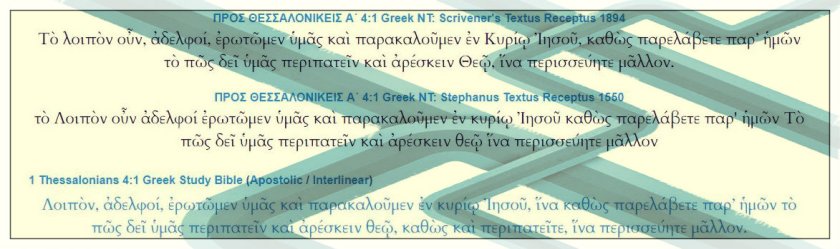
Exegesisexēgéomai, (Greek) I explain, interpret and ex, out

The author of the exegesis definition immediately above puts to practice the rules for interpretation he’d outlined in the Exegesis essay. He shows how to interpret Matthew 24:40, the famous statement by Jesus about two people in the field and one taken and one left. Most people who do not apply the rules for exegesis interpret that by looking at the surface and thinking it means the rapture. But does it? See for yourself.

At Ligonier, Anthony Carter’s essay outlines the Consequences of Poor Exegesis.

John MacArthur asks and answers in this sermon, How Should We Interpret the Bible?

Tim Challies’ essay on two examples of exegetical fallacies (misinterpretations)
greek

Posted in theology, word of the week

Word of the Week- Fruit of the Spirit, Self-Control

By Elizabeth Prata

But the fruit of the Spirit is love, joy, peace, patience, kindness, goodness, faithfulness, gentleness, self-control; against such things there is no law. (Galatians 5:22-23).

In past essays, I explored the previous characteristics in the verse, from the first, joy, to gentleness, the second to last. Now we look at self-control.

In a previous essay it was noted that the 9 characteristics Paul outlines in the verse can be grouped by three threes.

Warren Wiersbe notes the triple triad within the verse. The first three characteristics of the fruit are love, joy, and peace. Those reflect the Godward aspect of Christian life.

The next three are patience, kindness, goodness; characteristics reflecting the manward aspect of Christian life.

Faithfulness, gentleness, self-control are aspects reflecting the selfward part of the Christian life.

Self-control…what does that mean, exactly? As with everything in the Bible, it’s both simple and clear on the surface, but if you dig deeper, valuable truths come out that prick the conscience and grow the believer.

In Barnes’ Notes we learn

The word used here, (ἐγκράτεια egkrateia), means properly “self-control, continence.” It is derived from ἐν en and κράτος kratos, “strength,” and has reference to the power or ascendancy which we have over exciting and evil passions of all kinds. It denotes the self-rule which a man has over the evil propensities of his nature. … It includes the dominion over all evil propensities, and may denote continence, chastity, self-government, moderation in regard to all indulgences as well as abstinence from intoxicating drinks. See the word explained in the notes at Acts 24:25.

The sense here is, that the influences of the Holy Spirit on the heart make a man moderate in all indulgences; teach him to restrain his passions, and to govern himself; to control his evil propensities, and to subdue all inordinate affection.

A Christian must be a temperate man; and if the effect of his religion is not to produce this, it is false and vain.

We see this is so in the 1Timothy 3:2-3 regarding elder qualifications

Therefore an overseer must be above reproach, the husband of one wife, sober-minded, self-controlled, respectable, hospitable, able to teach, not a drunkard, not violent but gentle, not quarrelsome, not a lover of money.

The man has self-control in demonstrating he won’t drink to excess, thus losing control. He isn’t violent because he controls his anger, and this is an important one because angry situations are full of pressure. Can he control himself when the circumstances become chaotic emotionally or physically? If he is growing in the fruit of the Spirit he will be.

We see self-control again in 2 Timothy 2:24 where again he controls his anger,

And a servant of the Lord must not be quarrelsome, but he must be kind to everyone, able to teach, and forbearing.

In 2 Timothy 1:7 Paul again remarks about self-control

for God gave us a spirit not of fear but of power and love and self-control.

And more, the following verses remark about having self-control, and it’s not exhaustive,

2 Peter 1:6, Acts 24:25, Proverbs 25:28, Proverbs 16:32, 1 Corinthians 9:25, 1 Timothy 2:15, 1 Timothy 2:9, Titus 1:8…

Possessing self-control means you are growing in the fruit of the Spirit as the Galatians verses shows. It means one’s sanctification is progressing. It’s proof that we are relying on the Spirit to resist our depraved and evil impulses. Christ died for us so that we may die, to our sins. Having self-control demonstrates Spirit-led mastery over them.

self-control

———————————————-

Further Resources

Focus on the Family: Got Self-Control?

GotQuestions: What does the Bible say about self-discipline?

Ligonier Devotional: Self-Control

Head Heart Hands blog: Pumping up the Self-Control in the Age of Temptations

Posted in theology, word of the week

Word of the Week: Fruit of the Spirit, Gentleness

By Elizabeth Prata

But the fruit of the Spirit is love, joy, peace, patience, kindness, goodness, faithfulness, gentleness, self-control; against such things there is no law. (Galatians 5:22-23)

Warren Wiersbe notes the triple triad within the verse. The first three characteristics of the fruit are love, joy, and peace. Those reflect the Godward aspect of Christian life.

The next three are patience, kindness, goodness; characteristics reflecting the manward aspect of Christian life.

Faithfulness, gentleness, self-control are aspects reflecting the selfward part of the Christian life. Below, Wiersbe’s longer explanation:

When a person lives in the sphere of love, then he experiences joy—that inward peace and sufficiency that is not affected by outward circumstances. (A case in point is Paul’s experience recorded in Phil. 4:10–20.) This “holy optimism” keeps him going in spite of difficulties. Love and joy together produce peace, “the peace of God, which passeth all understanding” (Phil. 4:7). These first three qualities express the Godward aspect of the Christian life.

The next three express the manward aspect of the Christian life: long-suffering (courageous endurance without quitting), gentleness (kindness), and goodness (love in action). The Christian who is long-suffering will not avenge himself or wish difficulties on those who oppose him. He will be kind and gentle, even with the most offensive, and will sow goodness where others sow evil. Human nature can never do this on its own; only the Holy Spirit can.

The final three qualities are selfward: faith (faithfulness, dependability); meekness (the right use of power and authority, power under control); and temperance (self-control). Meekness is not weakness. Jesus said, “I am meek and lowly in heart” (Matt. 11:29), and Moses was “very meek” (Num. 12:3); yet no one could accuse either of them of being weak. The meek Christian does not throw his weight around or assert himself. Just as wisdom is the right use of knowledge, so meekness is the right use of authority and power. The Bible Exposition Commentary, Warren Wiersbe

The word gentleness as it is used in the verse means ‘derived from the root pra-, emphasizing the divine origin of meekness (“gentle strength”) which expresses power with reserve and gentleness.’

Gentleness, ladies, does not mean doormat, but restrained power combined with kindness, peace, and the other characteristics of the fruit. That’s why the fruit of the Spirit is one fruit displaying many aspects, not many fruits.

Wiersbe again with the reason the Spirit grows the fruit in us:

We must remember that this fruit is produced to be eaten, not to be admired and put on display. People around us are starving for love, joy, peace, and all the other graces of the Spirit. When they find them in our lives, they know that we have something they lack. We do not bear fruit for our own consumption; we bear fruit that others might be fed and helped, and that Christ might be glorified. The flesh may manufacture “results” that bring praise to us, but the flesh cannot bear fruit that brings glory to God. It takes patience, an atmosphere of the Spirit, walking in the light, the seed of the Word of God, and a sincere desire to honor Christ.

gentleness

Posted in theology, word of the week

Word of the Week: Fruit of the Spirit, Goodness

By Elizabeth Prata

But the fruit of the Spirit is love, joy, peace, patience, kindness, goodness, faithfulness, gentleness, self-control; against such things there is no law. (Galatians 5:22-23).

What is goodness? If you ask most people, they would declare that they “are a good person.” But is man’s view of goodness the same as God’s? No.

The word for goodness as it’s used in Galatians 5:22 is agathōsýnē occurs four times in the NT. Paul and only Paul uses it. It is apparently strictly a biblical term, i.e. it does not seem to appear at all in secular Greek. The occurrences of this particular Greek word for goodness appear in Galatians 5:22, Romans 15:14, Ephesians 5:9, 2 Thessalonians 1:11.

Goodness (agathōsynē) may be thought of both as an uprightness of soul and as an action reaching out to others to do good even when it is not deserved. (The Bible Knowledge Commentary: An Exposition of the Scriptures, J. F. Walvoord)

In the note on Romans 3:12 (All have turned aside; together they have become worthless; no one does good, not even one) MR Vincent explains goodness,

It is rendered kindness in Eph. 2:7; Col. 3:12; Gal. 5:22. Paul, and he only, also uses ἀγαθωσύνη – agathōsynē for goodness. The distinction as drawn out by Jerome is that agathōsynē represents a sterner virtue, showing itself in a zeal for truth which rebukes, corrects, and chastises, as Christ when He purged the temple. [The normally occurring Greek word for goodness], chréstotés is more gentle, gracious, and kindly. (Vincent, M. R., 1887, Word studies in the New Testament (Vol. 3, p. 35).

John MacArthur explains

There’s a third virtue in this little trio – and we’ll close with that one. “Goodness” is it, goodness, verse 22: agathōsunē. Goodness was a deep-down virtue of moral sweetness, moral excellence; and we can’t even find the word in secular Greek sources. It sort of was coined by believers as a way to express a kind of goodness that was deeper than anything the world experienced. It usually is compared with righteousness; and that’s really helpful to kind of get the meaning of it.

In Ephesians chapter 5 we read in verse 9, “The fruit of the Light” – the Light, capital “L,” the divine Light, the heavenly presence our Lord. “The fruit of the Light consists in all goodness and righteousness and truth.” So there “goodness” is connected to “righteousness.” And I think that’s very helpful, because righteousness can tend to be the hard edge. Righteousness can tend to be the stern aspect of Christian character, right?

You are righteous: you have righteous standards, you have righteous convictions, you know what is right, you expect people to do what is right, you uphold the standard of what is right, you defend what is right. That is the sterner aspect of Christian character. But the backside of that – and that’s what Light produces, according to Ephesians 5:9 – the backside of that righteousness is goodness. That’s the soft side of your convictions.

That’s the kindlier expression of your convictions. It’s right to have those convictions, it’s right to hold those convictions, it’s right not to compromise those convictions, but it’s also right to be full of goodness so those convictions don’t wind up bashing people.

When you have the full knowledge, the full understanding of the Word of God, when you have the full picture, it doesn’t just make hard-nosed convictions, it produces strong, immovable convictions that have a soft side of goodness. Look, you don’t have convictions stronger than God, right? And yet the goodness of the Lord extends to the highest heavens.

So if interpreters say goodness as it’s used here means a strong moral rectitude, an excellence and uprightness, tinged through and through with gentleness and kindness, how does that relate to your and my actions? Our growth in sanctification? Are we growing a righteous goodness in our lives?

I’ve seen the sad slide of people drawn into harsh discernment ministries who believe they are standing up for Jesus, but are simply bashing people with a hardness that is far from ‘good.’ I’ve also seen people soften into jellyfish in refusing to correct or rebuke, claiming that kind of hardness isn’t “good.” The Christian life is one where we seek God’s guidance through His word at all times, so we stay on the center line.

Prayer: Valley of Vision

Thou hast revealed to me myself
as a mass of sin,
and thyself as the fullness of goodness,

The rest is here, it is worth the read

fruit goodness verse 1

Posted in theology, word of the week

Sunday Word of the Week: Fruit of the Spirit, Kindness

By Elizabeth Prata

But the fruit of the Spirit is love, joy, peace, patience, kindness, goodness, faithfulness, gentleness, self-control; against such things there is no law. Galatians 5:22-23

kindness here in Greek (xrēstótēs) means a useful kindness, referring to meeting real needs, in God’s way, in His timing (fashion). Hence 5544 (xrēstótēs) is listed as a fruit of the Holy Spirit (Gal 5:22). With the believer, 5544 /xrēstótēs (“divine kindness”) is the Spirit-produced goodness which meets the need and avoids human harshness (cruelty). Strong’s

People have shown me kindness before in the big things in meeting physical needs, which is always amazing and welcome. Kindness shown in the little things too, are also a welcome act and often more precious than the big acts. A hug well-timed, a kind word, a surprise donation, a small gift for no reason, deference shown, restraint in a tough situation, all these are kindnesses. Below in Further Resources, Alistair Begg preaches that kindness softens peoples’ hearts to hear the Gospel.

At Ligonier, we read that patience and kindness are tied together. Excerpt:

Whoever pursues righteousness and kindness will find life, righteousness, and honor” (Prov. 21:21).

As we continue our study of Christian character, let us remember that the fruit of the Spirit as listed in Galatians 5:22–23 provides a helpful way to see if we are imitating Christ. Jesus alone perfectly displayed these fruits in His life, and we must strive to do the same if we have trusted in Him. As we seek to follow the example of Christ, we must recognize that we are able to follow Him on account of the Holy Spirit. …

The Lord has not only been patient to us, He has been kind. Therefore, we must mimic this kindness in our dealings with other people. We must avoid the temptation to be petty in our dealings with other people. We must overlook minor faults in love, and we will only be able to do this when we are patient, recognizing that not every situation is equally deserving of our correction.

In Acts 28:2 we read that

The native people showed us unusual kindness, for they kindled a fire and welcomed us all, because it had begun to rain and was cold.

They showed us not little kindness. So far were they from making a prey of this shipwreck, as many, I fear, who are called Christian people, would have done, that they laid hold of it as an opportunity of showing mercy. …

When in the extremities of bad weather we find ourselves fenced against the rigours of the season, by the accommodations of a warm house, bed, clothes, and a good fire, we should think how many lie exposed to the present rain, and to the cold, and pity them, and pray for them, and help them if we can. ~Matthew Henry’s commentary on the whole Bible

The Maltese people came out in the torrential rain to serve and save those drenched sailors washed up on shore. It was winter, cold, storming, and these people put themselves out in order to show kindness. There were several hundred sailors, on commenter says. It must have been no small thing to mount a bonfire large enough to warm all of them, and in the drenching winter rain, too.

In the end, kindness defined is simple but doing it Christ’s way is hard. We must meet needs (extravagantly) and avoid harshness (at all times). Be kind.

Further Resources

Alistair Begg sermon – Cultivating Kindness

Ligonier Devotional – A Call to Kindness

word cloud

Posted in theology, word of the week

Sunday Word of the Week- Fruit of the Spirit: Patience

By Elizabeth Prata

But the fruit of the Spirit is love, joy, peace, patience, kindness, goodness, faithfulness, 23 gentleness, self-control; against such things there is no law. (Galatians 5:22).

The fruit of the Spirit is singular. It’s all one fruit. It’s not like the believer works on love one month and then patience the next and then moves on to self-control. It’s all one, and the one is love. If one loves the Savior, they will be joyful, and that joy will permeate all that he or she does, including relationships with believers and non-believers. Same with peace. Peace will characterize their relationships, and patience will be a hallmark of relationships, and so on.

What IS patience? GotQuestions explains:

Answer: There are two Greek words translated as “patience” in the New Testament. Hupomonē means “a remaining under,” as when one bears up under a burden. It refers to steadfastness in difficult circumstances. Makrothumia, which is used in Galatians 5:22, is a compound formed by makros (“long”) and thumos (“passion” or “temper”). “Patience” in Galatians 5:22 literally means “long temper,” in the sense of “the ability to hold one’s temper for a long time.” The KJV translates it “longsuffering.” A patient person is able to endure much pain and suffering without complaining. A patient person is slow to anger as he waits for God to provide comfort and punish wrongdoing. Since it is a fruit of the Spirit, we can only possess makrothumia through the power and work of the Holy Spirit in our lives.

More here

Be patient in prayer. Be patient in sanctification. Be patient in persecution. Be patient with the children. Be patient with mockers, slanderers, and gossips.

I’ve found that praying for people brings patience, because it casts my cares and worries onto the Lord, who has His own timeline. Once an issue is on His timing, it makes being patient easier.

Patience is a fruit of the Spirit. When He works through us, we can exhibit the fruit. He grows it. As the sap that runs through the tree, His growing of us will yield beautiful fruit, an honor of the King.

Spurgeon Sermon: The Pearl of Patience

Ligonier Article: The Fruit of Patience

Ligonier Devotional: Patience and Kindness

patience is a fruit of the spirit