Posted in Uncategorized

The Saddest Christmas Carol Ever

I’ve been focusing on Jesus these past weeks. I’ve written a series on the names He has been given from the Isaiah 9:6 verse, and also a two part series on Christmas traditions. We looked at the Nativity in art. I wrote about the Peanuts Christmas moment when Linus speaks the Luke verse during the Christmas play rehearsal, after Charlie Brown had asked in frustration what is the true meaning of Christmas. I’ve been making scripture photos with snow and mangers and peaceful flocks by night.

We all have been. Most bloggers enjoy this time of year to promote the truth and beauty of the Christmas story. However, there is a part of the Christmas story that is dark, evil, and often overlooked. But it is part of the truth just as much as the pondering Mary and the babe in the feeding trough. It is the Massacre of the Innocents.

Peter Paul Rubens

Then Herod, when he saw that he had been tricked by the wise men, became furious, and he sent and killed all the male children in Bethlehem and in all that region who were two years old or under, according to the time that he had ascertained from the wise men. Then was fulfilled what was spoken by the prophet Jeremiah:

“A voice was heard in Ramah,
weeping and loud lamentation,
Rachel weeping for her children;
she refused to be comforted, because they are no more.”
(Matthew 2:16-18).

The Magi from the East had come to Jerusalem, inquiring of Herod as to the location of the child born, King of the Jews. King Herod was extremely troubled at this news and assembled all his own wise men to search the scriptures and confirm to him the facts of the matter. (Matthew 2:3-4).

Herod set up a wily plot to trap the babe and the Wise Men, but the Magi were warned in a dream not to return near Herod so they left the area by another way. When Herod realized this, he became enraged. Some translations say furious. Even those two strong words do not cover the depth of his violent frenzy. Herod was enraged to the point he was not even thinking straight. He was totally consumed with violent, uncontrollable anger.

Herod set a command to kill all the boys under the age of two in and around Bethlehem. Jesus was probably a few months old by this time, perhaps one year old. Can you imagine the evil depravity in a man so thoroughly deep that he would kill innocent babies just to protect his position? Can you imagine being a Roman soldier, waking up one day and being told by your legion commander to go kill babies? And you do?! Can you imagine a mother in her home, cooking the flatbread for the day and a soldier bursts in and spears your baby in front of you? For no reason?

The cries of the mothers must have been piercing and loud, rising to heaven as an unendurable shroud of grief.

When Jesus entered the world, there was joy! There was also sorrow. His incarnation was the beginning of sorrows.

Jesus is THE dividing line between good and bad, holiness and evil, humility and pride, grace and disfavor. He has always sparked joy, worship, gratitude in those who love Him. He has always sparked hatred, evil, and disgust in those who hate Him. He came to bring life (John 14:6, John 14:19). Jesus divides. Because He is life, the opposite is death. This is the first point.

Herod’s evil was no surprise to Jesus. He knew what was in man. (John 2:25). We are all sinners. Though we may not all be murderous tyrants like Herod, the capability is in us due to our sin nature. Here is the second point. Jesus lived the perfectly holy life to become the sacrifice for sin, absorbing for His elect the wrath which would punish those sins. Though Herod was not forgiven, many other murderers have been. Tyrants, evil kings, killers, prideful holders of lofty positions…forgiven. Jesus came to forgive sins like Herod’s. This is the second point.

The scene above by Peter Paul Rubens is hard to look at. He captured the fear and horror and frenzy of the most evil of situations, killing babies. Jesus knew what was in a man. Yet He came, incarnated as a Man(God) and lived among our evil for over 30 years. He prayed for sinners, He loved sinners, even Judas. He saves sinners. This kind of sin does not surprise Jesus. His mercy abounds.

We sing Christmas Carols such as O Come All Ye Faithful, or We Three Kings. We sing Joy to the World, Away in a Manger. Those are joyous and uplifting. But did you know there was a Carol commemorating the Massacre of the Innocents? It is the Coventry Carol.

Below is the US Army Band Chorus singing it in the traditional form, which dates back at least to 1534, the earliest date it was written down. Here is the song, and the lyrics in modern spelling. I like their version because it is sung properly, like the dirge it is.

Lully, lullay, thou little tiny child,
Bye bye, lully, lullay.
Lully, lullay, thou little tiny child,
Bye bye, lully, lullay.

O sisters too, how may we do
For to preserve this day
This poor youngling for whom we sing,
“Bye bye, lully, lullay”?

Herod the king, in his raging,
Chargèd he hath this day
His men of might in his own sight
All young children to slay.

That woe is me, poor child, for thee
And ever mourn and may
For thy parting neither say nor sing,
“Bye bye, lully, lullay.”

The mystery and wonder of Christmas… in all its aspects, both joy and grief. Thank You Jesus for Your life, death, and resurrection.

Posted in prophecy, Uncategorized

“When are they coming in?”

I work in an elementary school. We are on vacation for two weeks during Christmas until after New Year’s. As the excitement among the children builds through the month of December, so does the anticipation of the staff. This is because many folks are hosting their family for the holidays.

The teacher’s lounge talk, the chat in the hallways, the conversation in classrooms among staff usually revolve around the question “When are they coming?” Older staff look forward to the arrival of their adult children for an extended visit during the holidays. Of those staff whose children who have grandchildren, the visit is all the more anticipated. “When are they coming in?” is the question of the hour, and travel plans, family plans, and Christmas plans are eagerly and happily shared. The person’s eyes light up, the tiredness suddenly seems to leave their slumped shoulders, and their walk becomes downright sprightly.

I remember as a kid the extreme excitement at the thought of extended family arriving later on during Christmas day. For the most part, they lived close by and we got to see them a lot throughout the year. But it was something special on Christmas when we traveled to the grandparents’ house, or they came to our house, and we got to visit on the most special day of all. We’d be dressed in our finest, usually toting one favorite gift to show off to the cousins and share and of course play with. There was something precious about being with family on Christmas Day. We looked forward to it with anticipatory shivers of delight.

Now concerning the coming of our Lord Jesus Christ and our being gathered together to him, we ask you, brothers, (2 Thessalonians 2:1)

Believers have a family that is closer than blood. Our spiritual family is united by virtue of the fact that God Himself in the form of the Holy Spirit resides in us. We are scattered across the globe, rarely if ever seeing or hearing from each other at times. But we are united and on one special day, Christmas, we celebrate the Father of this family, God, Jesus Christ, by His Spirit in truth unique to only us. Paul wrote often of wanting to see his earthly spiritual family, as in this example from 1 Thessalonians 2:17,

But since we were torn away from you, brothers, for a short time, in person not in heart, we endeavored the more eagerly and with great desire to see you face to face,

Do our eyes light up, our step become more springy, our hearts expand with love at the thought of seeing our spiritual family? Whether we will be seeing them weekly at church or will meet them during the great reunion of the church triumphant in heaven? Are we as highly anticipatory at the thought of being gathered with the brothers and sisters?

Remember even as Christmas comes if you are estranged from your blood family, you have a hundred-fold in heaven. What a reunion that will be!

And everyone who has left houses or brothers or sisters or father or mother or children or lands, for my name’s sake, will receive a hundredfold and will inherit eternal life. (Matthew 19:29).

Our most eagerly anticipated reunion should be the thought of seeing Jesus as He returns for His saints in the rapture. Paul described what is prophesied to occur and then said these words should be used AS an encouragement.

For the Lord himself will descend from heaven with a cry of command, with the voice of an archangel, and with the sound of the trumpet of God. And the dead in Christ will rise first. Then we who are alive, who are left, will be caught up together with them in the clouds to meet the Lord in the air, and so we will always be with the Lord. Therefore encourage one another with these words. (1 Thessalonians 4:16-18).

Do we speak in the hallways or water coolers of His return? Are we excited to see Him? Do we relate details of the upcoming eternal reunion with the same anticipatory enthusiasm as we describe the travel plans of our adult children’s arrival home for a Christmas weekend?

As we gather in pleasure and contentment with families this Christmas, let’s remember there is an even greater reunion coming. Just as the parents have been laboring to prepare the house for the reunion of their family for the holidays, Jesus has been preparing a place for us and our arrival. It will be clean (of sin), adorned (not with Christmas gifts but as a bride for her husband), shining and bright (not with Christmas lights but with the glory of God).

As a spiritual family we will celebrate the glory of the birth, life, death, and resurrection of Christ, forever. The love and adoration we experience at Christmas around the tree on the morning, will be translated, magnified, and permanently eternal. We will gather not around a Christmas tree but around the Tree of Life, Jesus Himself, who IS Life. (John 14:6).

As we await the arrival of our family this weekend, let’s actively anticipate and encourage one another with the happy prospect of the great and final family reunion.

But our citizenship is in heaven, and from it we await a Savior, the Lord Jesus Christ, who will transform our lowly body to be like his glorious body, by the power that enables him even to subject all things to himself. (Philippians 3:20-21).

Christina Cerda, Unsplash. Text added by author

Posted in Uncategorized

Repost: Sacrifice of Isaac prefigures Christ: the grace of Old Testament symbols and acts

First published on December 17, 2015.

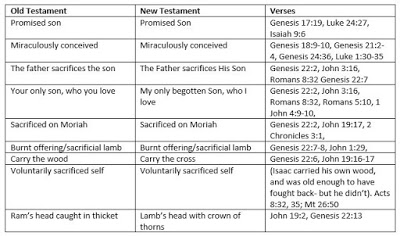
Genesis 22 has the story of the great test of faith of Abraham. God called to Abraham one day, and Abraham answered “Here I am!” God told Abraham to sacrifice his son Isaac, his only son, who Abraham loves. Abraham was to do this on Mt Moriah, a place God initially told Abraham would be a place I will tell you. Not even initially knowing where, Abraham hastened to obey, and the two hiked to the fateful spot.

Theologians have examined this scene and compared it to Christ’s sacrifice so I am certainly not plowing new ground. I have no deeper insights. But in this day and age, with fears and tribulations, and griefs and apostasy, it is always refreshing to keep our eyes on Christ. It is always edifying to see how in the word, the LORD God has it all under control and His plan is unfolding from that day to this in magnificent fashion, and will continue to do so.

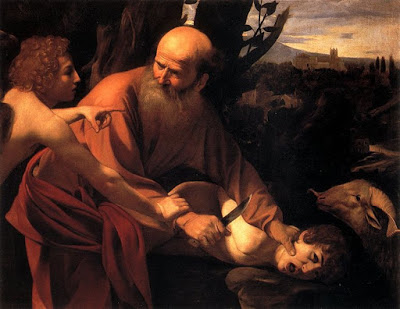
Italian Renaissance painter Caravaggio’s depiction of the sacrifice of Isaac.

Comparison of Old Testament texts with New Testament texts. Isaac pre-figures Christ.

click to enlarge

Preparing for Christ’s death

The cross is the epitome of redemptive truth, foreshadowed in the acceptable sacrifice of Abel, foreshadowed in the ark of safety that saved Noah, foreshadowed in the sacrifice provided on Mount Moriah–a ram in the place of Isaac, prefigured in the deliverance of Israel from Egypt, where Moses said, “The Lord is my strength, and my song, and He has become my salvation.” We see the cross foreshadowed in the smitten rock in the wilderness that brought forth water to quench the thirsty people. We see the cross foreshadowed in the Levitical ceremonies, sacrifices and offerings. We see it foreshadowed in the serpent lifted up in the desert for healing. We see it even in Boaz, the kinsman redeemer. We see the cross detailed in Psalm 22 and Isaiah 53. We see the pierced and wounded Savior in Zechariah, chapter 12–all the way through Scripture. J. MacArthur

Scripture is amazing and wonderful. Read your Bible today.

Posted in prophecy, Uncategorized

The Nativity

Isaiah 7:10-16
“The Life of Christ: The Virgin Birth”
S. Lewis Johnson

I liked how Pastor S. Lewis Johnson emphasized the virgin conception rather than the virgin birth. He preached, as you will read below in part, that the birth was typical, human, bloody, and messy. It was the conception that was immaculate. The art by American painter Gari Melchers depicts a scene more reflective of a birth than most nativity scenes usually do. Here, we see a deeply concentrating Joseph gazing at his newborn son, perhaps pondering the spiritual implications of this new life that promised to bring new life. Mary, exhausted, drooping, leans against her husband sleepily, recently used washbowl and cloth by her side. Is the glow from the Babe’s head, or the lantern that has been set by Him?  The scene depicts exhaustion, wonder, light, and hope.

Gari Melchers “The Nativity” 1891. Click to enlarge

Here is Pastor Johnson on The Virgin Birth. from is series on the Life of Christ-

Now out of this marriage there was to come the man who was really God, the God-man, our Lord Jesus. But I think you can see the kind of arrangements that would be made between Jacob and Eli concerning the young carpenter and the pious maiden whose name was Mary. Now, of course, the moment that this marriage was arranged by the parents, it was legal. That is, they were married. So Matthew says,  

“Now the birth of Jesus Christ was on this wise: When as his mother Mary was espoused to Joseph, (That is, when the arrangements had been made) before they came together, she was found with child of the Holy Ghost. Then Joseph her husband…”

Now apparently from the account, this is not stated directly, but apparently from the account, Joseph had learned of the pregnancy of Mary, whether he had been told this by Mary herself, whether he had discovered it and she had kept quiet about it the text does not say. I am inclined to think because of the statement that is made in just a moment, that Joseph was very much in love with Mary and that as a result of his love for her, the fact that she was pregnant caused a great deal of consternation to him. And I think, if I judge these characters correctly, that Mary had told him of the experience. 

But Joseph, like so many of us, when confronted with such a miracle and after all, there never had been anything like this before; the closest thing to it was the supernatural birth of Isaac in the Old Testament, but that was by natural means, and yet supernatural, I’m quite sure I can understand something of the wrestling that took place in the heart of Joseph. I can imagine that after he was told this that he spent many a sleepless night. He wondered perhaps, “Should I really marry this young girl?” That is, “Should our marriage be consummated and should be begin to live together?” If it’s not true, perhaps I should put her away according to the Old Testament law. If it is true, I hesitate to take her to be my wife for the simple reason that if this is of God and the Messiah is to be born of her, it seems almost unholy to begin to live with her. 

Now Joseph apparently was about to reach a decision, which meant that he was going to put her away. I gather that is the force of the text when he says, “And not willing to make her a public example was minded to put her away privily.” That is, he wasn’t going to do it publicly, but he was just going to take the minimum of two witnesses and carry out the divorce according to the Old Testament. So Joseph apparently had made up his mind. 

Now I would say that this is true because in the 20th verse, the tense of the word “while he thought on these things” is a tense that suggests that the action had been reached. That is, that the conclusion had been reached. And so having made up his mind and about ready to carry out something that was contrary to the will of God, the angel spoke to Joseph and said to him in a dream, “Joseph, thou son of David, fear not to take unto thee Mary thy wife: for that which is conceived in her is of the Holy Ghost.” 

Now this, of course, is something that we can never really fathom. We can only adore. Who could ever understand what it means to be born of the Holy Ghost? G. Campbell Morgan used to say, “This is the holy mystery, the touch of God upon the simple life that made it forever sublime.” She was found with child of the Holy Ghost. That which is conceived in her is of the Holy Ghost. So in a restless night amid fitful sleep, Joseph had a visitor and the visitor told him in supernatural terms and direct language that this in Mary was of the Holy Ghost. Now what he meant by this was that the Spirit was the source of the vitalizing energy which gave to the embryo in her womb. 

Now I want to say something about the doctrine of the virgin birth at this point that I hope will help to clarify your mind some of the theology of it. Who would ever expect a simple New Testament professor and preacher of the word to transform the doctrine of the virgin birth so that everybody now understands it in a new light? So I’m not having any kind of sense of transforming all of theological thought concerning the virgin birth.

But I do want to say this that the New Testament does not teach the doctrine of a virgin birth, the New Testament teaches the doctrine of a virgin conception, a virgin conception. In other words, our Lord Jesus was conceived by the Holy Ghost, but he was born naturally, born naturally. 

Now I want you to notice that I’m not denying the so called doctrine of the virgin birth. That would make nonsense of everything that I’ve said up to this point. I just want you to think clearly that it was the operation of the Holy Spirit in the conception that is referred to here, not in the birth. Jesus was born as an ordinary person was born.

Praise the Lord Jesus was conceived directly of the Holy Spirit, absent the sin-nature that taints all of us. What mysteries the LORD had prepared in His mind since eternity began! What tremendous love He has for His people! O, Mary, what favor you had and what strength you showed in submitting to the will of God so graciously-

My soul magnifies the Lord,
and my spirit rejoices in God my Savior,
for he has looked on the humble estate of his servant.”
(Luke 1:46-48).

Praise the LORD for all His ways.

—————————————————–

Further Reading

Challies: How well Do You Know the Nativity Story? A quiz

A Creator in the Manger

Gari Melchers The Nativity

Posted in poetry, Uncategorized

Kay Cude poetry: Sweet longing

Kay Cude, poet. Used with permission. Artist’s statement on Beulah Land

I think what affects me the greatest about this song is the identifying that His redeemed have a pronounced longing to be with their beloved Saviour and God The Father. Secondly, we will have resurrected and glorified bodies and no more fleshly infringement with which to wage war. And thirdly, the entire body of Christ (centuries worth, from Adam onward!) will no longer be apart! What a great day for us to wait upon! –To look into the face of Him whose death and resurrection became our atonement; He, Who became our individual and personal Saviour. Yet, when for the very first time that we hear His voice as He calls us each by name–perhaps that will be the second greatest joy we will ever know! For the first will be our being in His presence, prone on our faces in unspeakable love and worship, before our King, our Saviour, our Master and Lord, The Christ!

SWEET BEULAH LAND

Posted in prophecy, Uncategorized

Examining Christmas Traditions #2: Wise Men at the manger?

There are traditions regarding the Christmas story within the faith. We have Christmas carols with lyrics that say that angels sing, we set up nativity scenes with Wise Men, we erect Christmas trees, and more.

Do these traditions have any bearing from scripture? If not should we care? If not, should we abandon them? Accept them? Are we disrespecting Christ by perpetuating them? Or not?

Friday I wrote about the hymns we sing at Christmas time where lyrics portray angels singing. I looked at whether scripture shows angels singing or not. Scripture shows angels saying, proclaiming, and shouting, but not singing. Today let’s look at nativity scenes with Wise Men crowded around the babe in a manger. Is that scriptural?

Yes, and no.

Wise men did come from the east upon learning of the birth of the Messiah. They did not arrive at the night of his birth though. They arrived up to two years later. The verse says,

Now after Jesus was born in Bethlehem of Judea in the days of Herod the king, behold, wise men from the east came to Jerusalem, 2 saying, “Where is he who has been born king of the Jews? For we saw his star when it rose and have come to worship him.” (Matthew 2:2).

The ‘after this’ is after His birth, where Matthew 1 ends. How do we know it wasn’t the day after, and that it was up to two years after? Because of this-

After listening to the king, they went on their way. And behold, the star that they had seen when it rose went before them until it came to rest over the place where the child was. (Matthew 2:9).

The verse says where the child was, not ‘where the baby was’. In the Greek the word used for child means,

(“a little child in training”) implies a younger child (perhaps seven years old or younger). Strong’s.

The Magi went to Bethlehem and fell down and worshiped Jesus at his house. He was not in a barn, or stable, or any sort of animal enclosure, and He was not laying in a manger.

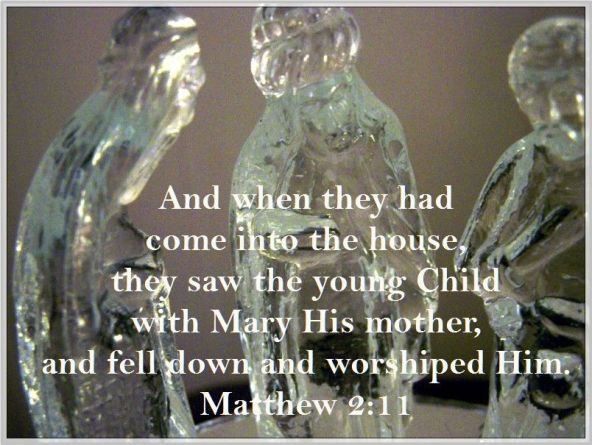
And going into the house, they saw the child with Mary his mother, and they fell down and worshiped him. (Matthew 2:11)

Herod died in 4BC so the men must have visited between the birth and up to when Jesus was around two years old. Later, Herod made a declaration to kill all the children under two years of age.

Then Herod, when he saw that he had been tricked by the wise men, became furious, and he sent and killed all the male children in Bethlehem and in all that region who were two years old or under, according to the time that he had ascertained from the wise men. (Matthew 2:16).

It is clear that in actual time, the Magi from the East did not arrive in time to worship Jesus in his birth location, which was temporary. So is it unscriptural to set up a nativity scene with the Wise Men? I don’t believe so.

The Wise Men did in fact arrive to worship. It happened. It would be unscriptural for example, if a nativity scene had figures such as Moose or beavers, not indigenous to the location. Or if the scene had added figures such as Herod or Jezebel, who were evil and certainly not depicted anywhere in proximity (and of course Jezebel was long dead).

I believe that collapsing time is an acceptable literary license. The Apostles did so when they wrote inspired scripture. They said things like, ‘Then Jesus went…” where the actual time might have been months later from the evetnt written of in the previous sentence. “Jesus was born, then the Wise Men came…”

What I like about the birth chronology is that everyone involved with it, from announcement to just before the Family had to flee to Egypt, is that everyone worshiped. Elizabeth and Mary, Joseph, the Shepherds, Anna and Simeon, the angels, and the Wise Men. Worship is the proper response to meeting Jesus, both intellectually and emotionally. Our Savior is born, and hallelujah that He came into the world. Though not exactly perfectly historic, the crowd around the manger of animals, shepherds, parents, and wise men do depict an accurate response to the birth of the Savior. However, I understand if some people decide to remove or not install figures of the Wise Men in their nativity, or decline to have Wise Men circulating at a live nativity scene, due to historical inaccuracy.

Jesus lived the perfect life under God’s standards for holiness that we could not. Enduring agonizing separation from His Holy Father, He cried out and absorbed all God’s wrath for our sin.  Accused unjustly, He was nailed to the cross and executed, thus becoming the sacrificial lamb. Pleased with His Son, God resurrected Jesus on the third day and Jesus ascended into heaven. Now, His blood atones for our sin and forgiveness awaits those elected to ask for it. Praise God He made a way for us to be reconciled to Him! Mercy abounds.

Further Reading: Answers In Genesis Three Wise Men?

Grace To You 2 min podcast- Where Are the Wise Men?

christmas-wise-men-verse

Posted in prophecy, Uncategorized

Our precious Jesus, His cross, and the ‘accusation’

Jesus died on the cross. When He was nailed to the tree, the soldiers an ‘accusation’ placed above His head.

And over his head they put the charge against him, which read, “This is Jesus, the King of the Jews.” (Matthew 27:37.)

The other three Gospels also note that an ‘accusation’ was placed over His head, each Gospel stating that Jesus is King of the Jews. Mark 15:26, Luke 23:38, John 19:19.

Jesus was ‘tried’ in two different courts. He had a religious Jewish trial and a secular Roman trial. Since each kind of trial had three phases, Jesus was involved in 6 different legal proceedings. In none of them was a sinful accusation leveled at Him. The sign above His head did not say thief. Nor did it charge Him with being a blasphemer. Nor a rebel. Nor a usurper.

The only ‘accusation’ above the head of Jesus as He expired on the cross was THE TRUTH. No blot was above His precious head. Only the truth that Jesus was, and is, and is to come as King of the Jews.

Now note the Christmas story. Wise Men from the East arrived at Jerusalem. They sought the babe whose star had led them to the city. The men went to Herod and asked about this Messiah. They asked,

Now after Jesus was born in Bethlehem of Judea in the days of Herod the king, behold, wise men from the east came to Jerusalem, saying, “Where is he who has been born king of the Jews? For we saw his star when it rose and have come to worship him.” (Matthew 2:1-2).

Tremendous truth-

WHEN JESUS WAS BORN, HE WAS ANNOUNCED AS KING OF THE JEWS.

WHEN JESUS DIED HE WAS PROCLAIMED AS KING OF THE JEWS.

Eventually, His kingship will be over the entire earth and all its people. Hallelujah!

On his robe and on his thigh he has a name written, King of kings and Lord of lords. (Revelation 19:16)

Posted in discernment, Uncategorized

Examining Christmas traditions #1: Do angels sing?

It’s the Christmas season and the lights are up inside homes and all over the neighborhood. Children are having photos with Santa and moms and dads are hurriedly finishing their shopping lists. Kids at school are doing Christmas crafts with paint and Popsicle sticks and teachers are counting the days until Christmas vacation. Churches have cookie swaps and families enjoy the annual classics, “It’s A Charlie Brown Christmas”, “Frosty The Snowman”, and “It’s A Wonderful Life”. In the south where it is warmer and more rural, many places host a live Nativity, where animals roam in an enclosure and a manger is set up with shepherds, Joseph, Mary, and a baby (or a doll) for the enjoyment and interest of the locals. These are some of our annual traditions here in America.

There are traditions regarding the Christmas story within the faith, also. We have Christmas carols with lyrics that say that angels sing, set up nativity scenes with Wise Men, erect Christmas trees, and more.

Do these traditions have any bearing from scripture? If not should we care? If not, should we abandon them? Accept them? Are we disrespecting Christ by perpetuating them? Or not?

In this essay from Answers In Genesis, “Hark! The Herald Angels Said?“, the author wrote,

The idea of angels singing on the night of Christ’s birth has become so common that many are surprised to learn that the Bible does not unequivocally state this. This example provides a good opportunity to discuss traditions. In and of themselves, traditions are not wrong, but they must be based on and consistent with Scripture. If they contradict Scripture, then they must be rejected. …

One of the points of this series on misconceptions is to lead us all to look closely at what the Bible teaches. Far too often traditions have been the basis of our thinking, and we end up believing things that are not found in Scripture. We have heard and sung about angels singing on that night so often that many do not bother to look closely at the text.

Looking at the specific issue of whether angels sing, we do know there are a great many Christmas carols saying they do. However, scripture never indicates once that the angels sing. They shout, proclaim, and praise, but not sing. However, given the various contexts in which they are rejoicing, such as on the night Jesus was born, it is possible they they sang, also.

Answers In Genesis explains things from their view:

As we wrap up this Christmas article (pun intended), you are probably wondering if the angels did sing to the shepherds. In light of the fact that there is a strong connection between praising and singing in the Bible, and since angels, in all likelihood, are capable of singing, there exists biblical support for the tradition of singing angels found in the Christmas hymns.

GotQuestions thinks they do. Robin Schumacher thinks they do. John MacArthur thinks they do. J. Vernon McGee doesn’t think so. Phillip Holmes at Desiring God doesn’t think so either.

Since scripture doesn’t say one way or the other if angels sing, we are not being unscriptural by singing carols that say they do. It’s a tradition that isn’t harmful to a person’s faith if they want to believe angels sing. The point of the season is to focus on Jesus, His incarnation, and respond with song, praise, and worship.

AiG finishes this way:

In any case, when we think about God’s amazing gift of a Savior to mankind on that night, we should glorify and praise God, whether in spoken word or in song, just as the shepherds did on that incredible night after they had seen the newborn King.

Posted in prophecy, Uncategorized

Jesus is the Prince of Peace

Part 7 – Jesus is the Prince of PeaceFor to us a child is born, to us a son is given; and the government shall be upon his shoulder, and his name shall be called Wonderful Counselor, Mighty God, Everlasting Father, Prince of Peace. (Isaiah 9:6).

Part 1 – For unto us a child is born
Part 2 – A Son is given
Part 3 – And the government shall be upon his shoulder
Part 4 – ‘and his name shall be called Wonderful Counselor’
Part 5 – Mighty God
Part 6 – The Everlasting Father: the Father of eternity
Part 7 – Prince of Peace

This is a multi-part series looking at this wonderful verse of scripture from Isaiah and commentary from Barnes’ Notes. I’d said that for me, the text is rich and full of truth; complex with spiritual meaning, yet can be read and understood by children; is a great a promise, one even spoken as had already happened, yet would not occur for hundreds of years hence; a faithful promise, and a comforting thought. Barnes Notes on the last part of the verse, ‘Prince of Peace’

The Prince of Peace – This is a Hebrew mode of expression denoting that he would be a peaceful prince. The tendency of his administration would be to restore and perpetuate peace. This expression is used to distinguish him from the mass of kings and princes who have delighted in conquest and blood. In contradistinction from all these, the Messiah would seek to promote universal concord, and the tendency of his reign would be to put an end to wars, and to restore harmony and order to the nations; see the tendency of his reign still further described in Isaiah 11:6-9; the note at Isaiah 2:4; see also Micah 5:4; Hosea 2:18. It is not necessary to insist on the coincidence of this description with the uniform character and instructions of the Lord Jesus. In this respect, he disappointed all the hopes of the Jewish nation, who, in spite of the plain prophecies respecting his peaceful character, expected a magnificent prince, and a conqueror.

Gill’s Exposition:

The Prince of peace; Christ is a Prince, often so called, Ezekiel 34:24 he is so by birth, being the King’s Son, the Son of God, and by office, power, and authority; he is so a Prince as that he is a King; he is exalted to be a Prince and a Saviour; and he is a Prince superior to kings, being the Prince of the kings of the earth, Acts 5:31 and he is called the “Prince of peace”, because he is the author of peace; just as he is said to be the “Prince of life”, Acts 3:15 for the same reason:

he is the author of peace between Jew and Gentile, by abrogating the ceremonial law, the enmity between them, and by sending the Gospel to both, and making it the power of God to salvation to some of each of them, and by bringing them into the same Gospel church state, and making them partakers of the same privileges and blessings, internal and external, Ephesians 2:14 and he is the author of peace between God and sinners; he has made it by the blood of the cross, having the chastisement of their peace laid upon him, in consequence of a covenant of peace he made with his Father, who was in him reconciling the world to himself, and he is so called likewise, because he is the giver of peace; of all outward peace and prosperity to his churches, as rest from their enemies, concord among themselves, and additions to them of such as shall be saved; of internal peace through the discoveries of his love, and the application of his righteousness, blood, and sacrifice in a way of believing in him, and in a course of obedience to him; and likewise of eternal peace and rest in the world to come.

Moreover, all that concern him as a King or Prince show him to be the Prince of peace: his kingdom lies, among other things, in peace and joy in the Holy Ghost; the sceptre of his kingdom is the golden sceptre of grace and mercy; his royal proclamation is the Gospel of peace; the fruit of his Spirit is peace; and his subjects are peaceable ones, both in church and state.

Posted in prophecy, Uncategorized

Mighty God

For to us a child is born, to us a son is given; and the government shall be upon his shoulder, and his name shall be called Wonderful Counselor, Mighty God, Everlasting Father, Prince of Peace. (Isaiah 9:6).

Part 1 – For unto us a child is born
Part 2 – A Son is given
Part 3 – And the government shall be upon his shoulder
Part 4 – ‘and his name shall be called Wonderful Counselor’
Part 5 – Mighty God
Part 6 – The Everlasting Father: the Father of eternity
Part 7 – Prince of Peace

This is a multi-part series looking at this wonderful verse of scripture from Isaiah and commentary from Barnes’ Notes. I’d said that for me, the text is rich and full of truth; complex with spiritual meaning, yet can be read and understood by children; is a great a promise, one even spoken as had already happened, yet would not occur for hundreds of years hence; a faithful promise, and a comforting thought.

Mighty God

The King is the Mighty God and His kingdom is free from all chaos. “God is not a God of confusion but of peace” (1 Corinthians 14:33), which means chaos is antithetical to who He is. Christ the King loves to step into a life of chaos and not only provide wonderful counsel, but also display His divine power by bringing order. He not only tells His subjects what to do as a wonderful Counselor, but He can energize them to do it—because He is the Mighty God. In Jesus we have a sovereign Master who can forgive sin, defeat Satan, liberate us from the power of evil, redeem us, answer our prayers, restore our broken souls, and reign over rebuilt lives, bringing order to chaos.

~John MacArthur

66e13-nativity