Posted in Uncategorized

Praise Jesus, the Person

My favorite, favorite passage.

The Word Became Flesh

In the beginning was the Word, and the Word was with God, and the Word was God. He was in the beginning with God. All things were made through him, and without him was not any thing made that was made. In him was life, and the life was the light of men. The light shines in the darkness, and the darkness has not overcome it. (John 1:1-5, ESV)

I find this passage even more moving in the King James Version

In the beginning was the Word, and the Word was with God, and the Word was God. The same was in the beginning with God. All things were made by him; and without him was not any thing made that was made. In him was life; and the life was the light of men. And the light shineth in darkness; and the darkness comprehended it not.

Martyn Lloyd-Jones said in his great sermon, “Christianity: The Only Hope” that, and I paraphrase,

Christianity is not a belief as in men who believe this philosophy or that philosophy. Christianity is a fact. It is about the Person of Jesus Christ, what He did and what He said, and the meaning of His Person. Those who say in these modern times to focus only on the teaching and that it doesn’t matter if Jesus was a man or a man-God or a teacher or whatever that we’ve got the teaching and that’s what matters. “They’ve got it all wrong,” MLJ said.

Christianity is a Person. This was the theme of the first century Church. It is the theme of the Gospel according to Luke, and it is the theme of Luke’s book Acts of the Apostles. It is about the PERSON of Jesus Christ and all that He began to do and teach.

In the first book, O Theophilus, I have dealt with all that Jesus began to do and teach,  (Acts 1:1)

We are witnesses to the person of Jesus Christ. We are not witnesses to a teaching, but to a person. The Apostles consistently talked about Jesus, they never started with the social situation or the political situation but spoke of Jesus and the Resurrection. They went to people and spoke of the Person.

For the full effect of the sermon go to the link above. On this Sunday and then every day, re-orient your thinking toward Jesus as Person, who He is and why He came. This Psalm of David speaks of WHO.

Bless the Lord, O my soul,
and all that is within me,
bless his holy name!
2 Bless the Lord, O my soul,
and forget not all his benefits,
3 who forgives all your iniquity,
who heals all your diseases,
4 who redeems your life from the pit,
who crowns you with steadfast love and mercy,
5 who satisfies you with good
so that your youth is renewed like the eagle’s.
(Psalm 103:1-5)

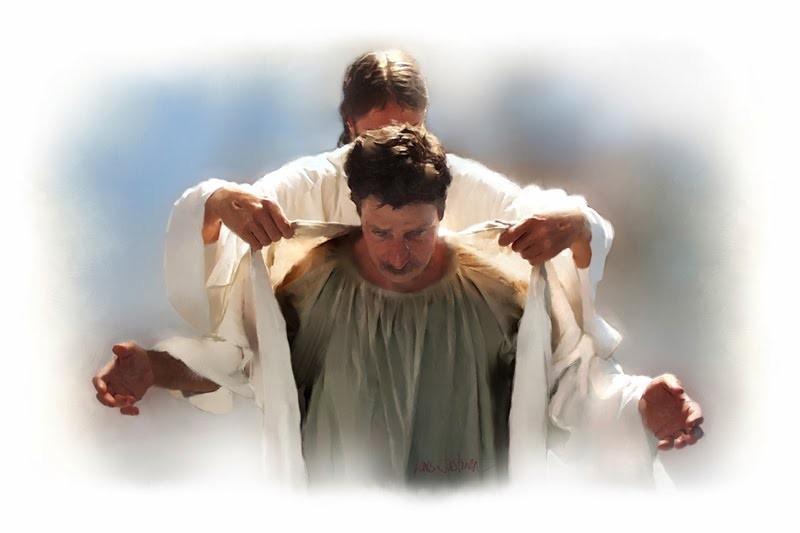
Lars Justinen, “Robe of Righteousness”
Posted in Uncategorized

My husband has cheated. Now what?

“Mawwiage, the blessed arrangement, the dweam wifin a dweam”, or so said “The Impressive Clergyman”, if you remember the funny scene from the classic film The Princess Bride.

Though the scene is funny, it is true that marriage is a blessed arrangement. God created the institution of marriage to be a picture of His loving, intimate relationship with His people. In the Old Testament, His people were Israel, and then after Pentecost, also the Church.

However, God knew that man is faithless, fickle, and adulterous. Many times, Israel strayed from her one true love- The One True God. Israel’s departure from their covenant with God pained Him many times.

Wives, as with everything in life, if we are in a situation where our husband has strayed, the Bible comforts us and informs us of how to go on. Let’s look at the Old Testament first.

Jeremiah 3:14Return, O backsliding children,” says the Lord; “for I am married to you. I will take you, one from a city and two from a family, and I will bring you to Zion.”

Jeremiah 31:31-33 Behold, the days are coming, says the Lord, when I will make a new covenant with the house of Israel and with the house of Judah-not according to the covenant that I made with their fathers in the day that I took them by the hand to lead them out of the land of Egypt, My covenant which they broke, though I was a husband to them, says the Lord. But this is the covenant that I will make with the house of Israel after those days, says the Lord: I will put My law in their minds, and write it on their hearts; and I will be their God, and they shall be My people.

He even told the Prophet Hosea marry an adulterous woman, as a picture of His relationship with Israel.

Hosea 1:2 When the Lord began to speak through Hosea, the Lord said to him, “Go, marry a promiscuous woman and have children with her, for like an adulterous wife this land is guilty of unfaithfulness to the Lord.

Thank God His love and promises are true and sure.

Hosea 2:19-20I will betroth you to Me forever; yes, I will betroth you to Me in righteousness and justice, in lovingkindness and mercy; I will betroth you to Me in faithfulness, and you shall know the Lord.

New Testament: In His incarnation, Jesus was the God-Man come to preach righteousness and repentance and to teach disciples who would declare His name and His glory among the Gentiles. He is gathering members for His church, and those who are given entry will participate in the Wedding Feast of the Lamb. In Revelation 19:7–9, John had a vision of the heavenly multitudes praising God because the wedding feast of the Lamb. Again we see the picture of Marriage in His relationship with us, this time, virginal betrothal of His Bride (Church) to Himself.

As a Man, Jesus was also betrayed by those closest to Him. Not by a wife, as Hosea was, but by one of His closest friends, who sold him to death for 30 pieces of silver. Peter betrayed Jesus three times, and even fled from Him. Judas was the world’s biggest betrayer, having been with Jesus from the beginning, seeing His miracles, and learning from Him, yet sold Jesus for thirty pieces of silver.

Though man has acted adulterously with God, Jesus still loves His elect. Moreover, Jesus is our High Priest and can sympathize in every way with those who have been betrayed, because he has been betrayed.

If you are a wife who is struggling to overcome a similar situation in your marriage, do not feel like your prayers go no higher than the ceiling. They rise to the ears of our Priest who intercedes for us, and to His heart. How own heart was wounded and betrayed but He forgave and and is King and Groom to those who betrayed Him. He loves you, a sinner, and He loves your husband, a sinner. He shows no partiality.

Hebrews 4:15-16 For we do not have a high priest who cannot sympathize with our weaknesses, but One who has been tempted in all things as we are, yet without sin. Therefore let us draw near with confidence to the throne of grace, so that we may receive mercy and find grace to help in time of need.

1 Corinthians 13:4-8 Love is patient and kind; love does not envy or boast; it is not arrogant or rude. It does not insist on its own way; it is not irritable or resentful; it does not rejoice at wrongdoing, but rejoices with the truth. Love bears all things, believes all things, hopes all things, endures all things. Love never ends.

Psalm 103:10-12 He does not deal with us according to our sins, nor repay us according to our iniquities. For as high as the heavens are above the earth, so great is his steadfast love toward those who fear him; as far as the east is from the west, so far does he remove our transgressions from us.

Galatians 6:1 Brothers, if anyone is caught in any transgression, you who are spiritual should restore him in a spirit of gentleness. Keep watch on yourself, lest you too be tempted.

Luke 17:3-4 Pay attention to yourselves! If your brother sins, rebuke him, and if he repents, forgive him, and if he sins against you seven times in the day, and turns to you seven times, saying, ‘I repent,’ you must forgive him.”

So…HOW does one go on after a betrayal? Only through the righteous strength of the Holy Spirit. Only through His Word, and prayer, and choosing to behave in ways that are consistent with holy living [no matter what the spouse is doing or what we think he is doing] can we overcome our sinful tendencies toward bitterness, jealousy, suspicion, and anger if a betrayal unfortunately occurs in the marriage.

I know it’s painful. I know. The academic and theological tone of this essay is grounded in a close-up knowledge and experience of the devastation of adultery. It’s the worst feeling to know your husband has sought after another. It is a direct violation of his body and your body. I’ve also seen that specific despair on the face on friends who have undergone the grievous process of adultery revealed. And yet, with God, restoration and forgiveness is possible.

Here are some articles that may help.

Who is an Adulterer?

Healing From the Pain of Adultery

Forgiving Your Spouse after Adultery

Picking up the Pieces

Posted in Uncategorized

Trump or Hillary? How believers should look at the 2016 Election

I love America but to be honest, in my lifetime the political process has often failed to produce a candidate for President in whom my vote would not feel like a failure of conscience.

So I’ve always voted my conscience. I often vote third party or simply write-in. Others have told me that doing so “is a waste of my vote”, because “they’ll never get elected.” But that’s lemming thinking. I am not voting numerically, I’m voting the heart, conscience, and issues. I have one vote and I treasure it. I feel that throwing my vote into a numerical pot simply to “go along” is a waste of my vote.

The Master’s Seminary published this short video offering a biblical perspective to those Christians struggling with the obvious quandary this year’s Presidential Election presents. Here is their lead-in:

It’s election season! So how should believers look at the 2016 race? Jesse Johnson, Associate Dean of the Master’s Seminary’s Washington D.C. location talks about it in this video. Jamie Jackson talks to Jesse Johnson about a Christian perspective on the 2016 US presidential election. How do Donald Trump and Hillary Clinton factor into the conversation? How should believers think about the current political landscape?

The video is at this link.

The video is just four and a half minutes long. I hope its concise but potent advice blesses you and gives you either food for thought or confidence in your own voting decisions.

Posted in Uncategorized

Beth Moore bible twisting now includes “binding prayers”

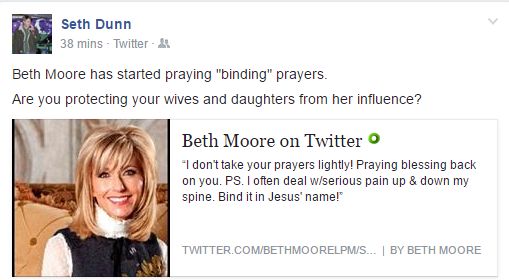
I appreciated my friend Seth Dunn’s warning about Beth Moore. He wrote on Facebook,


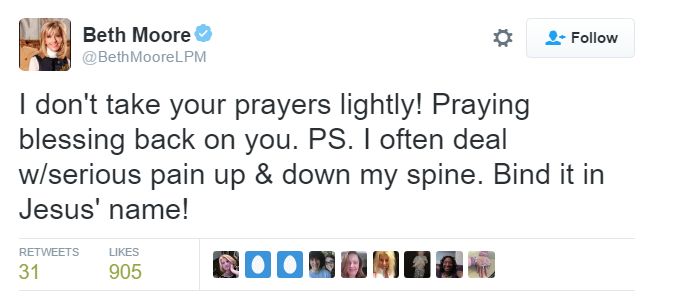
Here is what Moore wrote on Twitter, a bit larger,

Moore is referring to the following verses,

Truly I say to you, whatever you bind on earth shall have been bound in heaven; and whatever you loose on earth shall have been loosed in heaven. Again I say to you, that if two of you agree on earth about anything that they may ask, it shall be done for them by My Father who is in heaven. For where two or three have gathered together in My name, I am there in their midst. (Matthew 18:18–20)

These are verses which are frequently abused by the charismatic crowd, of which Moore is part. Benny Hinn and Joyce Meyer also frequently refer to binding and loosing in the same vein as Moore did on Twitter, this is noted in the below linked essay. Moore’s theology is often wrong on many counts, and incorrectly referring to binding/loosing is another example. The sad part is the number of “likes” her references have already garnered. Hence, the warning from Mr Dunn. Women, be wary of Beth Moore. She is a false teacher.

These verses from Matthew 18 about binding and loosing are so frequently abused that Dr John MacArthur included them in a blog series titled appropriately “Frequently Abused Verses Can Believers Manipulate the Power and Presence of Christ?” Of binding and loosing, we see from this excerpt from the blog’s author Cameron Buettel,

As with previous posts in this series, the first thing we should check is the context of our passage. What do the surrounding verses tell us about the meaning of our text? In this case, the preceding verses are likely just as familiar as the passage in question:

If your brother sins, go and show him his fault in private; if he listens to you, you have won your brother. But if he does not listen to you, take one or two more with you, so that by the mouth of two or three witnesses every fact may be confirmed. If he refuses to listen to them, tell it to the church; and if he refuses to listen even to the church, let him be to you as a Gentile and a tax collector. (Matthew 18:15–17).

Just a simple reading of the text makes it clear that the focus is not spiritual warfare, unity in marriage, or empowering your prayer meetings. Instead, verses 15–17 speak exclusively about church discipline.

Therefore, all of Christ’s instructions about binding and loosing, unity, and the promise of His presence come in the context of church discipline. In other words, Matthew 18:18–20 means that when church leaders gather together to deal with unrepentant sinners, they have heavenly backing.

Please read the rest of the essay for an excellent explanation of exactly what binding and loosing are about.

And, it doesn’t take much thought to see that the manner in which Moore used the binding prayer is faulty. As she said in her tweet, If she “often” has to deal with spine pain, one must ask why didn’t her binding prayer against her pain “work”? The Word/Faith crowd will tell you that it’s because you do not possess enough faith. From there, the downward spiral of incorrect interpretations continue.

Think about it, Paul didn’t pray “binding prayers” against his own continuing pain from the thorn in his side (AKA messenger from satan). He instead prayed to Jesus to remove it. (2 Corinthians 12:5-10). Timothy didn’t pray “binding prayers” to remove his nausea and frequent illnesses. (1 Timothy 5:23). As a matter of fact he was told by Paul to stop drinking only water (bacteria laden) and to take wine (antiseptic). Binding prayers are not mentioned in either remedy. Just those two quick examples reveal an absence of binding prayers from the actual Apostles, and another Jenga slab comes out of the wobbly charismatic doctrinal tower.

At root, what people who speak prayers to bind their pain are really believing is that they have power over demons, and that they have power to manipulate God, (i.e ‘if I have enough faith then God HAS to perform this for me’).

Pretty “audacious” if you ask me.

Posted in Uncategorized

Name above all names

Did you ever know how often the book of Acts refers to “the name”? A search on BibleGateway results in 62 times where the word ‘name’ is in a verse. Only a few of them are verses where the word is used to record the actual name of someone. The bulk of the verses in Acts refer to the name of Jesus. We are told Saul will suffer for His name, power is given in the name, they tried to stop preaching in His name, being baptized in His name, preaching the Good News in His name…THE NAME. Below is one of my favorite verses from Acts:

And there is salvation in no one else, for there is no other name under heaven given among men by which we must be saved. (Acts 4:12)

We read this from Philippians 2:9

Therefore God has highly exalted him and bestowed on him the name that is above every name
,

Pondering the name and the fact that Jesus’ name is the most highly exalted name in all the universe, led me to visualize this.

Praise Him today that you know His name in love and gratitude as a person not only professing Jesus but possessing Jesus in faith, as RC Sproul would say. We love the Name because we know the Person who revealed Himself to us in that name. He is high and lifted up. May the name of Jesus resound in your heart in faith, love, gratitude, and awe.

—————————–

Fact:

We will receive a new name:

He who has an ear, let him hear what the Spirit says to the churches. To the one who conquers I will give some of the hidden manna, and I will give him a white stone, with a new name written on the stone that no one knows except the one who receives it.’ (Revelation 2:17)

Fact:

Hagar was the only Bible person to name God. She named Him El Roi, The God Who Sees.

She gave this name to the LORD who spoke to her: “You are the God who sees me,” for she said, “I have now seen the One who sees me.” (Genesis 16:13)

Further Reading:

You are not alone- Jesus sees you!

We have a God who sees! You do not have to feel alone. You do not have to feel like He is distant from you. You do not have to feel like an insignificant speck, alone in your troubles.

Posted in Uncategorized

Calvinism: The Continental Divide of Theology

By Steven Lawson, Ligonier

Through the western regions of North America, there runs an imaginary geographic line that determines the flow of streams into oceans. It is known as the Continental Divide. Ultimately, precipitation falling on the east side of this great divide will flow into the Atlantic Ocean. Likewise, water falling on the western slopes of this line will surge in the opposite direction until it finally empties into the Pacific Ocean. Needless to say, a vast continent separates these immense bodies of water. It is seemingly far-fetched to ponder that a raindrop falling atop a mountain in Colorado will flow to the Pacific, while another drop, falling but a short distance away, will flow into the Atlantic. Nevertheless, once the water pours down on a particular side of this great divide, its path is determined and its direction is unchangeable.

Geography is not the only place we find a great divide. There is a high ground that runs through church history as well—a Continental Divide of theology. This great divide of doctrine separates two distinctly different streams of thought that flow in opposite directions. To be specific, this determinative high ground is one’s theology of God, man, and salvation. This is the highest of all thought, and it divides all doctrine into two schools. Historically, these two ways of thinking about God and His saving grace have been called by various names. Some have identified them as Augustinianism and Pelagianism. Others have named them Calvinism and Arminianism. Still others have defined them as Reformed and Catholic, while others have used the terms predestination and free will. But by whatever name, these streams are determined by the Continental Divide of theology.

This metaphorical divide differs from the geographical Continental Divide in one key respect. Whereas streams flowing west and east of the Rocky Mountains descend gradually to the plains and lowlands where they meet the oceans, the terrain on the two sides of the doctrinal divide is quite different. On one side we find solid highlands of truth. On the other side there are precipitous slopes of half-truths and full error.

Over the centuries, seasons of reformation and revival in the church have come when the sovereign grace of God has been openly proclaimed and clearly taught. When a high view of God has been infused into the hearts and minds of God’s people, the church has sat on the elevated plateaus of transcendent truth. This lofty ground is Calvinism—the high ground for the church. The lofty truths of divine sovereignty provide the greatest and grandest view of God. The doctrines of grace serve to elevate the entire life of the church. The great Princeton theologian Benjamin Breckenridge Warfield, writing more than a century ago, perceptively noted, “The world should realize with increased clearness that Evangelicalism stands or falls with Calvinism.” At first glance, this stunning statement may appear to be an exaggeration, even hyperbole. But the more it is weighed, the more one discerns that evangelicalism—that part of the body of Christ that rightly adheres to the inerrancy of Scripture, the total depravity of man, and the sovereignty of God in all aspects of life—always needs the doctrines of sovereign grace to anchor it to the high ground. For without the theological teachings of Reformed truth concerning God’s sovereignty in man’s salvation, the church is weakened and made vulnerable, soon to begin an inevitable decline into baser beliefs, whether she realizes it or not.

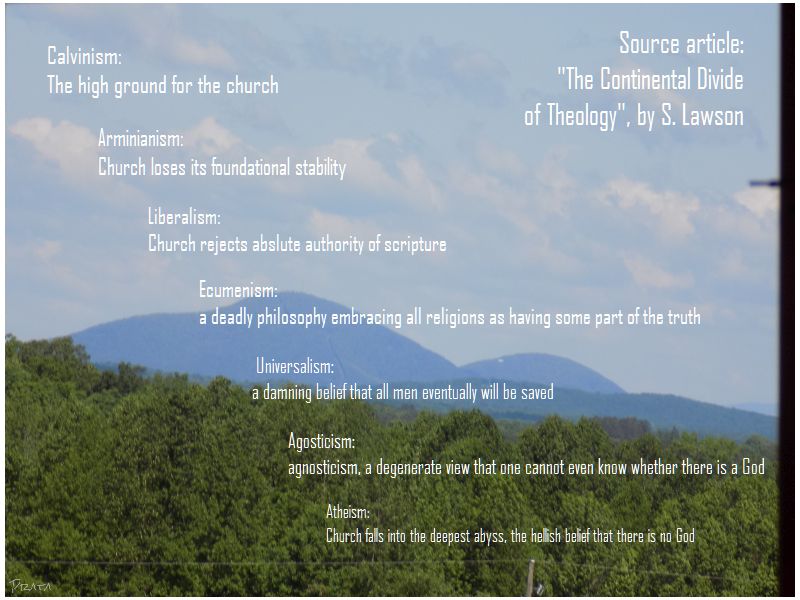
Whenever the church becomes increasingly man-centered, she begins the downhill slide, often without recovery, and always to her detriment. Once yielding the high ground of Calvinism, a self-absorbed church puts its full weight onto the slippery slope of Arminianism, resulting in a loss of its foundational stability. Tragically, however, the descent rarely stops there. Historically, man-centered doctrine has served only as a catalyst for an even greater fall.


Rappelling down the slippery slopes of Arminianism, one is soon to find the church sinking deeper and deeper into a murky quagmire of heretical ideas. Such a descent inevitably gives way to liberalism, the utter rejection of the absolute authority of Scripture. From liberalism—given enough time— the church always plunges yet lower into ecumenism, that deadly philosophy that embraces all religions as having some part of the truth. Continuing this downward spiral, the church plummets into universalism, the damning belief that all men eventually will be saved. Yet worse, universalism gives way to agnosticism, a degenerate view that one cannot even know whether there is a God. Finally, the church falls into the deepest abyss—the hellish flames of atheism, the belief that there is no God.

Never has the need been greater for the truths of sovereign grace to be firmly established in the church. Her thinking about God desperately needs to be flowing in the right direction. As the church thinks, so she worships; and, as the church worships, so she lives, serves, and evangelizes. The church’s right view of God and the outworking of His grace gives shape to everything that is vital and important. The church must recapture her lofty vision of God and, thereby, be anchored to the solid rock of His absolute supremacy in all things. Only then will the church have a God-centered orientation in all matters of ministry. This, I believe, is the desperate need of the hour.

This excerpt is adapted from Foundations of Grace by Steven J. Lawson.

Resource The Continental Divide of Theology (http://www.ligonier.org/blog/continental-divide-theology/), Copyright 2016 by Steven J. Lawson, Ligonier Ministries (http://www.ligonier.org)

Posted in Uncategorized

Because the husband listened to the voice of the wife…

Our pastor preached from Genesis 17 (Sarah and Hagar), 1 Samuel 1 (Hannah and her son), Galatians 4:21-31 (The Law v. Freedom as represented by Sarah and Hagar) at church this afternoon. Notice the language in Genesis 3:17 and Genesis 16:2. (More here)

And to Adam he said,

Because you have listened to the voice of your wife
and have eaten of the tree
of which I commanded you,
‘You shall not eat of it,’
cursed is the ground because of you;
in pain you shall eat of it all the days of your life;
(Genesis 3:17)

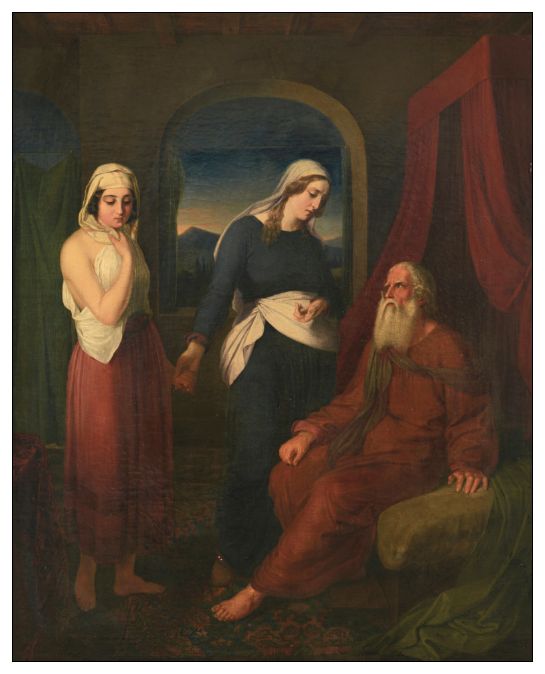
Sarah leads Hagar to Abraham, by
Moritz Daniel Oppenheim, 1800-1882, German

And Sarai said to Abram, “Behold now, the LORD has prevented me from bearing children. Go in to my servant; it may be that I shall obtain children by her.” And Abram listened to the voice of Sarai. (Genesis 16:2)

In the former situation, because the husband listened to the voice of the wife, the entire race of man fell into sin. In the latter situation, because the husband listened to the voice of the wife, for 4000 years the Middle East has been at war due to the descendants of the two children from Abraham fighting each other (one from the Godly promise and the other from the fleshly demand).

Not that it isn’t good for the husband to listen to the wife. A wife’s counsel is good, (Proverbs 31:11-12, 26). The problem with Eve and Sarah, they were advising the husband to step outside God’s ways. In Eve’s case, to ignore God’s commandment, and in Sarah’s case, to go outside God’s promise. Neither situation ended well.

Wives, give good counsel. You can’t go wrong if the advice you give or the help you offer is inside the constraints of God’s statutes. And in order to know where those limits begin and end, you have to read your Bible.

Posted in Uncategorized

15 Diagnostic Discernment Questions, What is Discernment, and How do I Increase it?

Discernment_620
“Discernment”. Source- Ligonier article linked at bottom

Five years ago Beth Moore was more cloaked in her language about receiving personal revelation. During her lessons she would say, “God laid it on my heart” or “God impressed upon me” which is still wrong because she was teaching from these impressions, and not the scripture.

Anyway, as time went on, she became more direct with her quotes from God. In one bible “lesson”, Moore told the audience that God said this to her, and she quoted him-

“I’m gonna tell you something right now, Beth, and boy you write this one down, and you say it as often as I give you utterance to say it . . .”

So…that is prophetic language and it is clear that it is not from God. (Because what she said next was contrary to the bible). 1 John 4:1 applies here.

Five years ago I went on the Beth Moore retreat with some ladies. It was a weekend where we had devotionals together in small groups in the morning, fellowship all day, then we would gather to watch a DVD of a Beth Moore lesson and the leader would lead us in what Moore had ‘taught’. In my case, we had finished listening to one of Moore’s sessions on DVD. Moore spoke a long story about how God was speaking directly to her in specific sentences, and directing her on what to do at a given moment. As the lesson ended, a moment of silence passed and the screen went blank, the ladies sighed. One of them said, sadly, “I wish I had what she has.”

I was so struck and saddened by this. Bible study is supposed to energize us, lift us, empower us! Yet these ladies were drained, believing that Moore has a ‘more special’ relationship with God than they had. In fact, they believed Moore had so much more of that special something than us that would be impossible for us to attain it.

It was a perfect example of how false teachers drain us.

I spoke up and said, “We DO have what she has, the Holy Spirit! We all have Him inside us!” But they looked at me like I was crazy.

What ended up happening on the retreat is that after each lesson, the women talked about Beth Moore, her ‘power’ in God, her teaching style, her life. Their desire to “have what she has” made them want to be like Beth Moore, not be like JESUS.

You see the problem.

The root of the false teacher problem is that too many in the church lack discernment. You might be surprised to learn that the false teacher problem plaguing us in today’s church is not simply that ferocious wolves have come in, not sparing the flock. (Acts 20:29). It’s also that those without discernment have let them. The Bible gives us our part in this problem too, saying,

For the time is coming when people will not endure sound teaching, but having itching ears they will accumulate for themselves teachers to suit their own passions, (2 Timothy 4:3)

False teachers DO something for the one who lacks discernment. And so they gather the teacher and follow them, happily, because that false teacher is filling some unholy passion, one that is contrary to Jesus (or they would be having Jesus fill it.)

In this essay by Pastor Kevin DeYoung, he lists 15 Discernment Diagnostics. Number 10 is pertinent here. With Moore, and all the women (and men) teachers who go around saying that have had a word from the Lord, read this:

10. Does it promote an unmediated approach to spirituality? Mysticism, in its technical sense, can be defined as an approach to God apart from mediation. False spirituality tries to foster intimacy with God that does not go through the mediated revelation of Scripture and does not lead one to the mediation of Christ on the cross.

Please read Pastor DeYoung’s list. It is so well-written and incisive. Just a few sentences under each bulleted main idea, and it’s like cold water thrown on a feverish brain. See if any of these stand out to you, and if so, take them to heart. Satan’s subtlety knows no bounds, and it is easy to allow him to incrementally cloud our thinking. I loved how DeYoung phrased number 10; ‘an unmediated approach’. Meaning, does the teacher teach from the Bible, where Jesus had taught us first, or is her approach unmediated and direct, skipping the mediator of the Inspired Holy Spirit’s Word?

I bookmarked DeYoung’s list. I hope it blesses you and that you find it helpful.

~~~~~~~~~~~~~~~~~~~~~~~~~~~

Further Reading

John MacArthur Short essay, Q&A: What is Discernment and Why is it Important?

Tim Challies Book, The Discipline of Spiritual Discernment

Sinclair Ferguson essay, What is Discernment?

GotQuestions: How Can I Increase My Spiritual Discernment?

Posted in Uncategorized

There is a repentance that does not count

Here is a lesson from James Montgomery Boice, the preacher and theologian from the mid-century last century. He is teaching from Hosea 6. The sermon is titled The Repentance That Does Not Count. In this lesson, Boice is teaching about the elements of untrue repentance, and true repentance, as national Israel seems to be repenting but is not. Their lips speak words but their heart is far from the LORD.

By the way, if you want great preaching on the actual texts of the Old Testament prophets, Boice is a wonderful resource. I just finished listening to his series from Daniel. Now he is on to Hosea. You can find him on Expositor.FM, or OnePlace.com.

Here is Hosea 6:1-3

Israel and Judah Are Unrepentant

1“Come, let us return to the LORD;
for he has torn us, that he may heal us;
he has struck us down, and he will bind us up.
2After two days he will revive us;
on the third day he will raise us up,
that we may live before him.
3Let us know; let us press on to know the LORD;
his going out is sure as the dawn;
he will come to us as the showers,
as the spring rains that water the earth.”

These verses are not really a genuine repentance, Dr Boice said. Can you detect what’s wrong? They seem to have the right vocabulary, like the words “return”, a great Hebrew word, the very thing that God had been calling Israel to do. Or in verse 3 the word acknowledge or “know”. It’s the very thing God had accused them of not having, knowledge. So, doesn’t it sound good and proper? Doesn’t it sound orthodox? asked Dr Boice.

It does sound orthodox, but it doesn’t sound genuine. Two things are missing. First of all, there is no mention of sin. That’s the obvious one. There is not one phrase within this confession that lets us know the people are aware they’re sinners. They want to return, they want to be healed, they want to acknowledge, they want to be revived- all those things. But they make not the slightest indication at any point that they have done wrong. This is not the prayer from the publican that Jesus extolled, Lord, be merciful to me, a sinner. (Luke 18:13).

At this point Dr Boice comments that there is a practical application that can be made in the present day. He preached this sermon sometime around 1976, a time when Newsweek (then, an influential weekly magazine) declared 1976 The Year of the Evangelical. President Jimmy Carter’s convictions were highlighted, and there seemed to be a resulting great deal of religious interest, yet without an awareness of sin. There has never been a movement of the Spirit of God in history without an awareness of sin on a profound personal and cultural level as well. Consequently, when there’s been a revival when this element has been present there has been a turning from sin to God and there has been something like national renewal. We don’t see any of that in our time.

The second thing that’s missing is harder to detect than the lack of mention of sin. What’s missing is any truly personal relationship with God. The only time we become aware of our sin is when we become aware of God. When we become aware of God we become aware of our need for rescue from sin. When we become aware of our sin, we become aware of God in His greatness, Boice explained. Without those elements, it reduces religion to simply an equation. The Israelites figured, if they just get the equation right with all its proper elements in the right place, God would be gracious to them, just the same as if you threw the right number of chemicals into a vat with a spark then there’s an explosion. God doesn’t work that way. He is not impersonal. He won’t be used, which is precisely what this implies. God is faithful to His nature and what He wants is a genuine repentance which these verses do not contain.

So what should be done? The answer is simply not to repent in inadequate terms but offer a genuine repentance, which is not in Hosea chapter 6 or 7 or 8 or any chapter until you get to the end, chapter 14. There is a repentance that counts.

Source

Here from the MacArthur Study Bible, we read the invitation from the LORD to Israel, to return to Him in genuine repentance-

Return, O Israel, to the LORD your God, for you have stumbled because of your iniquity. 2Take with you words and return to the LORD; say to him, “Take away all iniquity; accept what is good, and we will pay with bulls the vows of our lips. 3Assyria shall not save us; we will not ride on horses; and we will say no more, ‘Our God,’ to the work of our hands. In you the orphan finds mercy.” (Hosea 14:1-2).

Israel was invited to return, bringing words of repentance accompanied by obedience, repaying God’s gracious acceptance of them with “vows of our lips,” explains MacArthur.

Israel will express genuine repentance, at the end of the Great Tribulation (Zechariah 12:10-14). Their repentance will be accompanied by mourning, fitly so. It will be accompanied by an acknowledgement at long last of who Jesus is. Israel’s sorrow will be national and personal, every family throughout national Israel will mourn and cry out to the Lord. As Boice mentioned above, there has never been a movement of the Spirit of God in history without an awareness of sin on a profound personal and cultural level as well. Israel will demonstrate that in the end. And because the Lord is true to His nature, Hosea records the result of their repentance:

I will heal their apostasy; I will love them freely, for my anger has turned from them. 5I will be like the dew to Israel; he shall blossom like the lily; he shall take root like the trees of Lebanon; 6his shoots shall spread out; his beauty shall be like the olive, and his fragrance like Lebanon. 7They shall return and dwell beneath my shadow; they shall flourish like the grain; they shall blossom like the vine; their fame shall be like the wine of Lebanon. (Hosea 14:4-7)

Repentance that DOES count includes those elements, which are a profound sorrow for sin, and acknowledging who God is. As David said when he mourned his sin with Bathsheba-

Against you, you only, have I sinned and done what is evil in your sight, so that you may be justified in your words and blameless in your judgment. (Psalm 51:4)

As Hosea recorded, genuine repentance includes vows too, these would be vows of obedience to God.

We all sin, sadly. Paul said “O wretched man that I am! Who will deliver me from this body of death?” (Romans 7:24) and I have cried that myself more than once this week alone. Yet Jesus is forgiving- when we express genuine repentance, mourning our sin, (2 Corinthians 7:10) acknowledgment of who He is, and vowing obedience and actually then obeying. (Matthew 3:8) we are genuinely pleasing the Lord with our attitude.

Insincere repentance is what we often see today, among those who claim Christianity but are only displaying a religious interest yet without an awareness of sin. And when sin is mentioned, we are told we are judgmental, intolerant, and just plain mean. The same elements must be present in a genuine repentance that were commanded in Hosea’s day, 2,700 years ago, are required now.

But the tax collector, standing far off, would not even lift up his eyes to heaven, but beat his breast, saying, ‘God, be merciful to me, a sinner!’ (Luke 18:13)

The tax collector’s humility is notable in everything about his posture and behavior. Here was a man who had been made to face the reality of his own sin, and his only response was abject humility and repentance. God be merciful…he had no hope but the mercy of God. The is the point to which the Law aims to bring every sinner. ~MacArthur Study Bible

For in Christ Jesus the law of the Spirit of life has set you free from the law of sin and death.(Romans 8:2)

Therefore bless the Lord Jesus; mighty Victor, gentle Shepherd, merciful Father.

Posted in Uncategorized

Building your theological library

Tim Challies posted a great essay on how to start your personal theological library. He’d linked to lots of fantastic free resources to show that a quick kick-start can be done. All of the links were to online, downloadable materials, and for the person who reads stuff online or on the laptop/phone, it’s a resource you definitely want to bookmark.

A Secret Way to Kick-Start your Theological Library by Tim Challies

Please read Mr Challies’ essay. I’m sure I’m in a minority when I say I don’t like to read on the computer but would rather have a solid book on my lap. In my essay I want to discuss starting your personal, theological library in hard copies.

We’re on this earth for such a short time and the Lord has given each of us resources of one kind or another to make His name known and to help grow the church and its members. He has urged us to use these resources to glorify Him.

One legitimate use of money is to support the Lord’s work through the religious institutions the Lord established (Matthew 23:23; Mark 12:41-44; Luke 8:1-3). We tithe or make offerings. We pay our taxes. We help the poor and needy, and we support missions. These are all biblical uses of our money. (Source)

Then we move into the realm of our giftings. If you’re gifted with a love of hospitality you might use your money to take in needy children or adults so you can house them and feed them. If your gift is toward administration you might be using your money for purchasing things your church needs in order to run effectively. If you have the gift of mercy you might be using your money on gas to drive to a mission to serve, or using your money to support a hospice or hospital.

As for the rich in this present age, charge them not to be haughty, nor to set their hopes on the uncertainty of riches, but on God, who richly provides us with everything to enjoy. (1 Timothy 6:17)

We all have a ministry. It might not be formal, incorporated, or within the walls of the church, but we all do. In one way or another, you minister to people. In this essay I ask you to think about after using your money for the above things, to consider using your resources toward your ministry in a focused, intentional way.


If you possess the gift of teaching, you might want to use your money on books and materials that edify and teach the brethren. Over time I’ve built my own theological library, but always with an eye to having it be more like a lending library. Except for my John MacArthur Commentaries, I consider all other books that have come into my possession as temporary guests. Once I read them, I lend them. I know some of them won’t get back to me and that’s OK. Before I was saved I had a lot of pride in the number of my 6-foot-tall bookcases stuffed with quality books, some of them rare. It’s taken a long time of self-discipline and submission to the Spirit to turn my mind from acquiring and coveting to freely giving away “my” books, which aren’t mine to begin with.

And he said to them, “Take care, and be on your guard against all covetousness, for one’s life does not consist in the abundance of his possessions.” (Luke 12:15)

I read them, so as to grow in sanctification myself and be able to discern when a person might benefit from the resource I’m sharing. I read them also so I know for sure it’s a valid resource. I don’t want to defeat my purpose in giving someone a resource who needs building up only to discover it’s not a good resource after all!

You might not have a formal ministry, but we all minister to each other in lots of ways. If you’re the bookish sort, consider these various ways to build your theological library on a budget.

For the kingdom of God is not a matter of eating and drinking but of righteousness and peace and joy in the Holy Spirit. Whoever thus serves Christ is acceptable to God and approved by men. So then let us pursue what makes for peace and for mutual upbuilding. (Romans 19:17-19)

–Sometimes people send me theology books! Bonus!

–Sometimes you might receive a gift certificate to a bookstore or to Amazon or other online book store. Please consider using all or most of it to build your library. The local public library has secular novels and other books you can read for free. All other books beside the Bible and theological books serve a leisure purpose, and you know that evaporates pretty fast. Theological books written to edify the brethren might save someone’s soul- and that lasts forever.

–When Amazon, Westminster Books, or Banner of Truth have a sale, look hard for theological books or other materials to purchase. I gave away my Gladys Aylward book and then another friend was interested in it so I looked today and Amazon is having a sale on that book for $5, so of course I bought two! Westminster has books in the Bargain section costing anywhere from 50 cents to just two or three dollars. There’s Tim Challies’ Free Stuff Friday Giveaways, supersales, two for one sales, Public Library sales (hey, it’s possible!) … take advantage of all of these.

–Our pastor at the old church I attended resigned and he left his theological library behind. The Associate Pastor called me to come over and pick through. I was so blessed! If you’re attending seminary, look for the Seminary Library used sales or castoffs or discards. If a seminary near you has a sale, make a point to save the date and go. Hopefully your pastor won’t resign, but maybe there might come a day when someone is cleaning out their theological library and you could take advantage if invited.

–If ever you receive a donation consider turning it to buying materials for your ministry.

–Sacrifice. The Lord wants us to subvert our fleshly tendencies to indulge and to give sacrificially. Sadly, it has taken a long time to squelch my life-long habit of accumulating books to keep for myself and to turn my mind to the idea of immediately and happily giving them away as a ministry to edify a sister. I have been selfish for a long time but I’m learning how to build my theological library. It takes time and it’s happening slowly, but it IS happening. It will for you too.

You’ll see. If your ministry is helps, perhaps you’ve noticed the Spirit draw you to yard sales or thrift stores that are selling the exact baking pan you need for when you next make a certain kind of cake for a grieving person. If your ministry is administration, perhaps you’ve noticed the pattern of just happening to be at the right place when an office store is going out of business and you have opportunity to buy administrative items for your church or ministry or mission.

If you have a ministry, think about building it in a focused and intentional fashion. Mine’s teaching and discipling, so I’m building my theological library in all these and other focused ways. Then read the books yourself so you will grow, and then you will have a first-hand knowledge of what books to share with whom.

What Paul said:

I myself am satisfied about you, my brothers, that you yourselves are full of goodness, filled with all knowledge and able to instruct one another. (Romans 15:14)

Related:

The Joy of self-discipline