Posted in theology

How many names of Satan can Milton come up with? John Milton’s Mastery of Words

By Elizabeth Prata

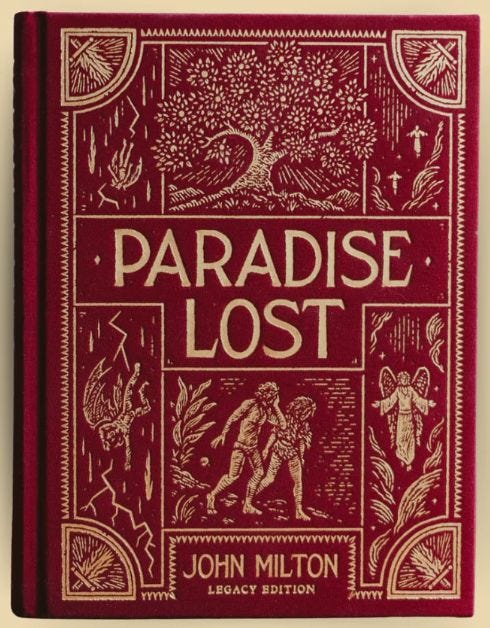
This summer for my chosen classic to read, I picked Paradise Lost, first published in 1667. I had seen that a new edition was out in a gorgeous binding, with notes, AND Gustave Dore’s illustrations (even better, lightly edited to cover nudity.) I was immediately thrilled, and I bought the book. It’s the Paradise Lost Legacy Edition by Lithos Kids, in a fabulous binding and cover. It’s so beautiful. Here is what it looks like: photos from Lithos Kids-
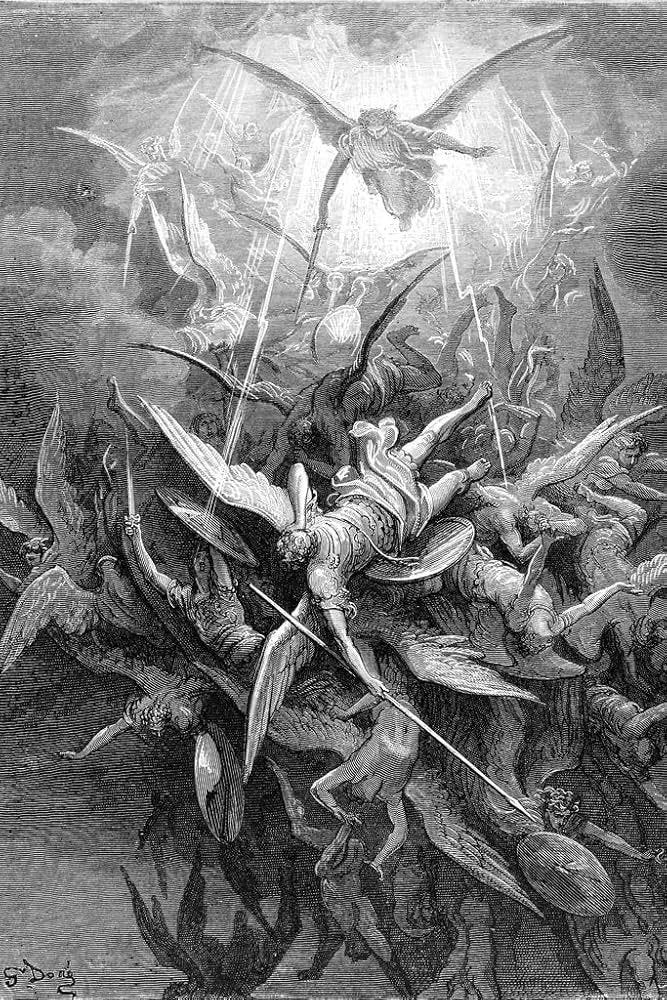
Author John Milton’s use of language is genius. He can describe the celestial realms movingly and with just enough detail so the imagination catches its edges but vague enough because no one knows what the heavenly throne room looks like apart from the few glimpses in scripture. Milton’s descriptions of Eden contain enough detail to ground us but vague enough to evoke a pleasant and relaxing lushness… It’s a wonder how he maintains this balance.

It’s the same with his descriptions of the parallel in hell with satan mounting his throne there and evilly plotting with his fallen cohorts how to regain heaven. Milton’s speeches between the angels holy and unholy, God’s pronouncement of His Son as heir, Adam’s comfort to Eve all use words and evoke images that are either thrilling to the spirit, or incite dread (the hellish realms…). I’m just amazed.

As I go through the book, and I’m halfway now, on Book 6, Milton uses extremely inventive names for satan. Here are two I saw just from yesterday’s reading,

Seditious Angel, Proud Aspirer.

I have noticed the names as I’ve read along in Books 1-5, but I didn’t note them. However, this blogger did–

Author of All Ill
the Grisly King
Infernal Serpent
Arch Enemy
Apostate Angel
Arch Fiend
Satan
Lost Archangel
Superior Fiend
Author of All Ill
Matchless Chief
Antagonist of Heav’n
Hell’s Dread Emperor
Adversary of God and Man
Flying Fiend
Undaunted Fiend
Traitor Angel
False Fugitive
Hellish Pest
Subtle Fiend
Wary Fiend
Mighty Leading Angel
Adversary
Fiend
Devil
False Dissembler
Fraudulent Imposter Foul
Arch Felon
First Grand Thief
Grisly King
Prince of Hell
Sly Hypocrite
Lucifer
Grand Foe
Tempter
Prince of Darkness
Antagonist of Heav’n’s Almighty King
Adversary Serpent
Prince of Air.

Milton’s favorite name to call satan is Fiend. I love that word. I don’t think we use it enough. The Merriam-Webster Dictionary defines it as “devil, demon, “a person of great wickedness or maliciousness”.

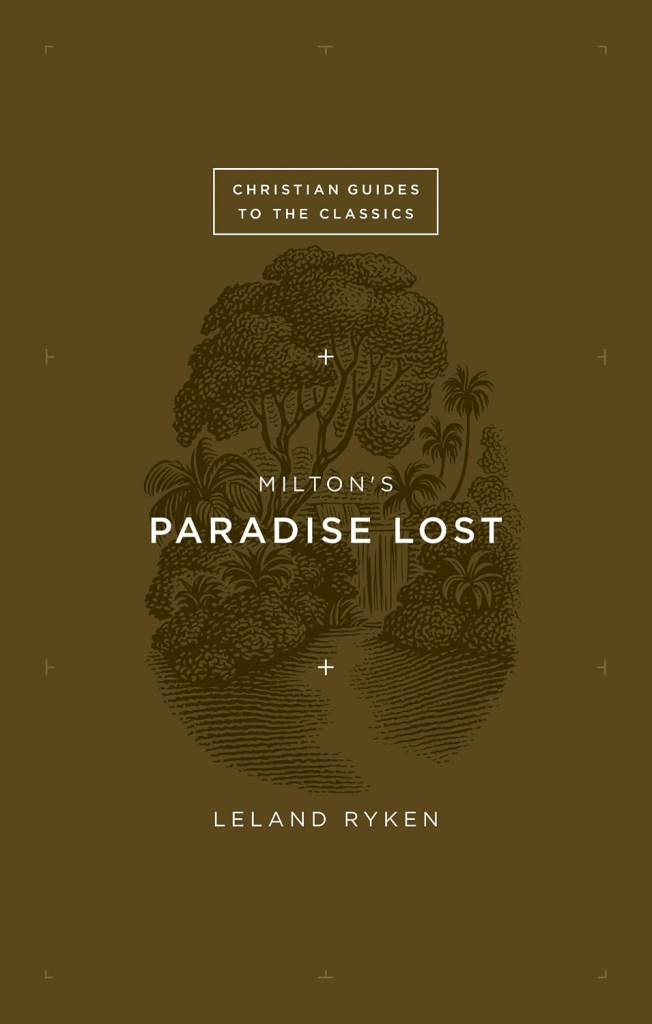
Prior to buying the Lithos Kids edition of Paradise Lost I also happened to own Leland Ryken’s study guide. Ryken has studied Milton for decades and is quite familiar with the genre of Epic that Paradise Lost is. The study guide is helpful. It is part of the Christian Guides to the Classics. It’s just 96 pages.
So, that is my reading update for the moment. I hope summertime affords you some time to read anything or everything from magazines to beach reads to strenuous classics, and everything in between. The point is, to read! Your Bible of course but other texts too. Enjoy!

Posted in theology

Reading about Love Is Blind TV show, and then I remembered…

By Elizabeth Prata

SYNOPSIS: Struck by the similarities of living conditions described in a 1909 dystopian novella and the modern TV show Love Is Blind, I discuss the notion of the importance of physicality in relationships, as shown on the face, and if it’s true that ‘love is blind.’

Continue reading “Reading about Love Is Blind TV show, and then I remembered…” →
Posted in theology

Oh, those Old Testament names and measurements!

By Elizabeth Prata

It’s high summer here in the US, and where I live (in the South). It gets very hot in July. We are predicted to have a “heat dome” next week for the 4th of July, which won’t be fun for the poor marching bands participating in the parades. I am looking forward to the festivities that are planned for our country’s 250th birthday! It’s hard to think of how fast June flew by!

Continue reading “Oh, those Old Testament names and measurements!” →
Posted in theology

Places in the Bible: ‘The Millo’?

By Elizabeth Prata

“I’ll meet you at the place near the thing where we went that time.”

That is one of my all-time favorite movie lines. It comes from the 1987 Rom-Com movie “Broadcast News”, starring Holly Hunter and Albert Brooks. The line was spoken by Albert Brooks as character Aaron Altman, to Holly Hunter’s character Jane Craig. The two were colleagues at a broadcast news station, she was the producer and he was the reporter. They were close friends, who not only worked together but went out platonically (though Aaron wanted more. That was the ‘Rom’).

Continue reading “Places in the Bible: ‘The Millo’?” →
Posted in theology

Fearing the Flock?

By Elizabeth Prata

People in my area have noticed that some new “Flock Cameras” have been installed. These are fixed, motion-activated automated license plate reader (ALPR) manufactured by Flock Safety, hence the name. Flock says that these are an aid to Law Enforcement, capturing information about a vehicle while it’s in public view. The company says the information gained, such as licence plate number, make, model, color, and details on the vehicle like toolboxes or fixed racks, aid in investigations.

Many citizens claim it’s intrusive, that they advance mass surveillance, that data can be shared inappropriately, and they oppose the Constitution’s promise that government must prove guilt rather than citizens must prove innocence.

“Eye of God” Nebula, AKA Helix Nebula source NASA

Continue reading “Fearing the Flock?” →
Posted in theology

What are the ‘Treasures in Heaven’?

By Elizabeth Prata

SYNOPSIS: Are we consumed with storing up treasure here on earth, or are we prioritizing investing in the kingdom? In this essay, I look at earthly ‘treasures’ and ponder what the treasures in heaven could possibly be.

Read more: What are the ‘Treasures in Heaven’?

“Do not store up for yourselves treasures on earth, where moths and vermin destroy, and where thieves break in and steal. But store up for yourselves treasures in heaven, where neither moth nor rust destroys, and where thieves do not break in or steal …” (Matthew 6:19-20).

That is a familiar passage to us. We know what it says. We understand that we cannot serve two gods, mammon and Jesus. We comprehend that the love of money is the root of all evil. We all feel sad when the Rich Young Ruler turned away from Jesus, rejecting eternal salvation because he clung to his earthly wealth.

But what does treasure in heaven truly mean? What are the treasures in heaven, specifically? (Answer, no one is exactly sure, but here are a few ideas…)

Matthew Henry says in his Whole Commentary on the Bible, “A treasure is an abundance of something that is in itself, at least in our opinion, precious and valuable, and likely to stand us in stead hereafter.”

Continue reading “What are the ‘Treasures in Heaven’?” →
Posted in theology

Is it possible to be “too heavenly minded”?

By Elizabeth Prata

SYNOPSIS: Whoever thought of the phrase “You’re so heavenly minded you’re no earthly good” should be flogged with a wet noodle. While it’s true that we are busy here on earth, we should never be so busy that we fail to persistently contemplate the love and blessedness awaiting us in our heavenly home. Jonathan Edwards knew this.

EPrata photo
Continue reading “Is it possible to be “too heavenly minded”?” →
Posted in theology

We have the mind of Christ, but use the voice of a machine?

By Elizabeth Prata

I heard a really interesting thought on a Facebook short, of all places. It was a clip from an NPR interview with Dave Eggers, author, publisher, and Pulitzer finalist. The show was Wild Cards hosted by Rachel Martin. In it, Eggers said,

“This is the first time in history when a whole generation is being told or tempted to have a machine write for them to express themselves. But I say, you are one of one, unprecedented in in the history human evolution. There’s only one of you. So to give your voice to a machine to say, ‘Speak for me. I’m going to be silent.’ I’m going to tell a machine to express myself or to tell my narrative is such a crime against yourself.”

“It’s so dystopian, so beyond anything I could do in a dystopian novel, and I did a lot, and I never saw this coming. That an entire generation, too many of them, acquiescing to the silencing of their own voice in favor of a bland, unthinking machine to voice their souls.” –end Eggers quote

I think many of us who write or create never saw this coming. And since it’s still so new, we are grappling with the impact, fallout, and future of AI. His words made a lot of sense to me. For us Christians, though, it goes very much deeper than that.

Artificial intelligence technology has evolved faster than most Christians have been able to think about it. ~Samuel James, at Desiring God

Taking ‘evolution’ out of the equation, because that is a made-up untrue theory, and we all do realize we are uniquely made, yes, there is only one of me. Faceless evolution didn’t create me, the God of the universe did! And not only are we made purposely, intentionally, and with love by God, we are created in His image.

This notion should be on our minds every moment. It is a dignity afforded no other creature. It gives us the opportunity to speak His truth of the Gospel, reflect His character. Our voices are for the incredible privilege of sharing His Gospel and truths of the Bible. Why put a cold, metallic, faceless machine in that place of dignity?

Can we consider the possibility that swapping our own unique image-of-God voice for a voice of Artificial Intelligence is not only a crime against ourselves, but that giving away our God-given talents and creative abilities for the ease of a push-button machine may possibly be thought of as a crime against God? Should we be swapping our transformed mind of Christ at the cost of Jesus’ blood and death, for a man-made device? Just because it’s easier?

Further resources

 How to Spot Fake AI Photos

Phil Johnson on the flush of AI-produced fakery purporting to be John MacArthur videos– GTY’s stance on AI

How Is AI Shaping You? Three Principles for Wise Use

Council for Biblical Manhood & Womanhood: Of Machines and Men: AI and the Future of Humanity