Posted in theology, word of the week

Sunday Word of the Week: Sovereign

By Elizabeth Prata

In addition to the familiar Bible verses speaking to God’s sovereignty, one of which is at the conclusion of this essay, there is a famous quote from RC Sproul that exalts God’s sovereignty:

If there is one single molecule in this universe running around loose, totally free of God’s sovereignty, then we have no guarantee that a single promise of God will ever be fulfilled.

It is a great quote because it speaks to how God created and upholds every single atom in the universe. He is the author, architect, and absolute king over all.

Jesus, His Son, has been given all power and authority as God. (Matthew 28:18). Jesus is the exact imprint of His Father.

He is the radiance of the glory of God and the exact imprint of his nature, and he upholds the universe by the word of his power. After making purification for sins, he sat down at the right hand of the Majesty on high, (Hebrews 1:3).

We Americans are unfamiliar with sovereignty. We shed our King back in 1783 when we signed the peace treaty at Paris, concluding the Revolutionary War. Today, sovereignty has changed somewhat from the kings of old. According to the Stanford Encyclopedia of Philosophy, sovereignty means

Sovereignty, though its meanings have varied across history, also has a core meaning, supreme authority within a territory. …  Historical variants can be understood along three dimensions — the holder of sovereignty, the absoluteness of sovereignty, and the internal and external dimensions of sovereignty.

Sovereignty can also be absolute or non-absolute. How is it possible that sovereignty might be non-absolute if it is also supreme? … absoluteness refers not to the extent or character of sovereignty, which must always be supreme, but rather to the scope of matters over which a holder of authority is sovereign.

Today, many European Union (EU) member states exhibit non-absoluteness. They are sovereign in governing defense, but not in governing their currencies, trade policies, and many social welfare policies, which they administer in cooperation with EU authorities as set forth in EU law.

The major change to international sovereignty happened in 1648 with the signing of a treaty called the Peace of Westphalia. Please bear with me for a brief history lesson. The rise of the Holy Roman Empire and the Catholic Church had caused friction, Martin Luther’s theses complicated matters, and the continent of Europe had been at war ecclesiastically and politically for a very long time (Thirty Years War, Eighty Years War, etc). The Westphalia treaty effectively ended those wars, and also limited the Roman Catholic Church’s widespread and growing power. In addition, the RCC’s claim as the only moral and spiritual truth was now effectively void. Catholicism, Lutheranism, and Calvinism were officially recognized as religions, within which, an adherent could worship freely.

Henry Kissinger wrote:

The Westphalian peace reflected a practical accommodation to reality, not a unique moral insight. It relied on a system of independent states refraining from interference in each other’s domestic affairs and checking each other’s ambitions through a general equilibrium of power. No single claim to truth or universal rule had prevailed in Europe’s contests. Instead, each state was assigned the attribute of sovereign power over its territory. Each would acknowledge the domestic structures and religious vocations of its fellow states and refrain from challenging their existence

The Treaty itself is explained here

The Peace of Westphalia was a series of peace treaties signed between May and October 1648 in the Westphalian cities of Osnabrück and Münster, largely ending the European wars of religion. The treaties of Westphalia brought to a close a calamitous period of European history which caused the deaths of approximately eight million people. Scholars have identified Westphalia as the beginning of the modern international system, based on the concept of Westphalian sovereignty.

The Peace of Westphalia established the precedent of peace established by diplomatic congress. A new system of political order arose in central Europe, based upon peaceful coexistence among sovereign states. Inter-state aggression was to be held in check by a balance of power, and a norm was established against interference in another state’s domestic affairs. As European influence spread across the globe, these Westphalian principles, especially the concept of sovereign states, became central to international law and to the prevailing world order.

Of course, the Roman Catholic Church was furious at this continental limit to the Holy See’s sovereignty, with Pope Innocent X calling the Treaty “null, void, invalid, iniquitous, unjust, damnable, reprobate, inane, empty of meaning and effect for all time” in the papal bull Zelo Domus Dei.

People today aren’t aware that the Pope is the world’s last absolute monarch. In framing the concept of sovereignty, of course we understand that our nation has sovereign powers with its globally recognized borders. Every nation is recognized so, and this is codified in the UN Charter. Political sovereignty is a normal, natural concept readily understandable by even a young person learning history.

The RCC is spiritual entity as well as a global power with a territory, standing army (The Swiss), internationally recognized borders, taxes extracted, a treasury, and sovereign power, in fact, an absolute power that cannot be contested. The Pope is the last absolute sovereign power in existence on the planet today.

The Holy See is the last absolute monarchy in the world today. The pope, when he is elected, is answerable to no human power. He has absolute authority over the entire Roman Catholic Church, direct authority that reaches down to individual members.

All of the governing officers in the Vatican itself, what we call the Vatican Curia, operate on delegated authority from the pope. They speak in the name of the pope. In the Roman Catholic Church, there are no separation of powers as we know of in most democratic societies. In the Roman Catholic Church, the office of pope includes the three main offices of government. He is the supreme judge, the supreme legislator and the supreme executive, so there’s no separation of powers. There is no possibility of checks and balances. Source PBS

The problem comes in with the Roman Catholic Church’s view of supremacy and sovereignty. The Protestant Church acknowledges Jesus as Head of the Church in heaven and on earth. The RCC acknowledges Jesus as head of the Church in heaven only. The Pope is supreme on earth in matters spiritual. Vicar of Christ means the pope operates as a vicarious substitute for Christ on earth. That God has handed the Pope the jurisdiction of earth in the sovereign execution of matters spiritual.

Paragraph 937 of the Catechism of the RCC states,

Papal supremacy is the doctrine of the Roman Catholic Church that the Pope, by reason of his office as Vicar of Christ and as pastor of the entire Christian Church, has full, supreme, and universal power over the whole Church, a power which he can always exercise unhindered: that, in brief, “the Pope enjoys, by divine institution, supreme, full, immediate, and universal power in the care of souls.”

Of course this is wrong. It competes with Jesus’s own statement in Matthew 28:18 that all authority in heaven and on earth has been granted Him. The difference in a Catholic’s view of sovereignty of God and the Protestant’s view of the sovereignty of God is vast. It is an eternally damning error. Only Jesus enjoys, by divine bestowal from God and in conjunction by the working of the Holy Spirit in Truine unity, supreme, full, immediate, and universal power in the care of souls- on heaven AND on earth. What it comes down to is, do you serve a sovereign Pope, or a sovereign God?

What’s so great about the sovereignty of God?

Many people do not believe in God’s sovereignty, yet still serve the Lord. But there is a great difference. Those who see the Lord in His sovereign glory have an inward compulsion to serve this God. Serving God is the glory of their lives. Their service is measured not so much in what they achieve–or what God achieves through them–but rather in the sheer wonder of the God they serve. Like little boys dividing up into teams on the playground, being picked to play on this team is the greatest joy imaginable, especially for those who are so unworthy. “Here am I! Send me,” is not merely the response of those who see God’s sovereign glory, it is their delight. Since God is certain to be glorified, they want to be among those glorifying God.

I’ll finish with AW Pink

“What do we mean by [the sovereignty of God]? We mean the supremacy of God, the kingship of God, the god-hood of God. To say that God is Sovereign is to declare that God is God. To say that God is Sovereign is to declare that He is the Most High, doing according to His will in the army of Heaven, and among the inhabitants of the earth, so that none can stay His hand or say unto Him what doest Thou? (Dan. 4:35).

To say that God is Sovereign is to declare that He is the Almighty, the Possessor of all power in Heaven and earth, so that none can defeat His counsels, thwart His purpose, or resist His will (Psa. 115:3). To say that God is Sovereign is to declare that He is “The Governor among the nations” (Psa. 22:28), setting up kingdoms, overthrowing empires, and determining the course of dynasties as pleaseth Him best. To say that God is Sovereign is to declare that He is the “Only Potentate, the King of kings, and Lord of lords” (1 Tim. 6:15). Such is the God of the Bible.” A. W. Pink, The Sovereignty of God, chapter 1.

1 Sunday sovereignty verse

Posted in christian living, theology

A Day in the Life of: A Fisherman

By Elizabeth Prata

Previous essays in A Day in the Life of:

A Day in the Life of: A Roman Centurion
A Day in the Life of: A Professional Mourner
A Day in the Life of: A Potter
A Day in the Life of: A Scribe
A Day in the Life of: A Shepherd
A Day in the Life of: A Tanner
A Day in the Life of: A Seller of Purple
A Day in the Life of: Introduction

I admire and respect fishermen. I’ve watched the hardy lobstermen of Maine, or the cod fishermen of Massachusetts, the watermen fishing for crabs in the Chesapeake, the shrimpers of the south or the bonefish, sponge, and conch fishermen of the warmer waters. Fishing for a living is hard. It is not for the weak or the lazy.

There are no days off, you go out in storms, heat, rain, and ice. You use your body as one with the boat and the sea, drawing from it food and life.

It was no different for the fishermen of Galilee in Jesus’ day. Jesus called four fishermen as His disciples. Simon-Peter and his brother Andrew, and John and his brother James, the sons of Zebedee, who was also a fisherman.

Fishing villages along the shore of the Sea of Galilee included Capernaum, where Jesus based much of His ministry, (Mark 2:1); Bethsaida (Luke 9:10); and Magdala, town of Mary Magdalene (Matt 15:39).

The pictures of the Holy Land around 1900 are important because life and traditions in Palestine didn’t change much until after WWI. A photo depicting life in 1900 would be almost a copy of any scene from the time of Jesus. These Library of Congress photos offer a glimpse into not just the recent past of the 20th century, but a peek back 2000 years.

Galilean fishermen boat nets
Galilean fishing boat, around 1900. Source Library of Congress

While walking by the Sea of Galilee, he saw two brothers, Simon (who is called Peter) and Andrew his brother, casting a net into the sea, for they were fishermen.  And he said to them, “Follow me, and I will make you fishers of men.” Immediately they left their nets and followed him. And going on from there he saw two other brothers, James the son of Zebedee and John his brother, in the boat with Zebedee their father, mending their nets, and he called them. Immediately they left the boat and their father and followed him. (Matthew 4:18-22).

We learn so much from just these 4 verses.

WHERE: They fished the Sea of Galilee
WHO: as mentioned, the two sets of brothers
WHAT: They were net fishermen as opposed to hook and line fishermen. They cast from boats they owned and they mended their nets (this shows us they were diligent).
WHY: Fishing was hard, but gave a living, generationally, in John and James’s case. Yet when He called, the men left their profession and immediately followed Jesus.

The Sea of Galilee was also called Kinneret or Kinnereth, and Lake Tiberias. It’s Israel’s largest freshwater lake. A fisherman’s day would begin at pre-dusk, because they fished at night. Why? The nets were made of linen which were lighter colored. They’d be more visible to the fish by day, since the waters were cool and clear. The fish would avoid the nets.

In addition, the fish were more active and feeding closer to the surface at night. You caught fish at night, in shallow water.

So they fished at night. (John 21:3). The men would launch their boat from shore and sail gently into the shallow areas along the shore. They’d cast their nets, which were really a three-walled net of decreasing size mesh holes, into the water. Little weights along the bottom would help the net sink vertically down, and the top would float, since there were little buoys of cork or wood attached.

They might be catching little fish, (Matthew 15:34), a Kinneret sardine, processed at the salting and drying station of the town of Bethsaida (House of Fish). Or they might be catching big fish, a kind of tilapia with white flesh and good to eat. (John 21:11).

If the fisherman wasn’t using his boat or didn’t have one, he stood near shore, casting a smaller net. When Jesus called Simon-Peter and Andrew, they were on the shore throwing out their nets from land. (Matthew 4:18). When He called James and John, they were throwing nets from their boat with their father Zebedee.

One other way to fish with nets was with a dragnet. Jesus compared dragnet fishing to the kingdom of heaven-

Once again, the kingdom of heaven is like a dragnet that was cast into the sea and caught fish of every kind. (Matthew 13:47)

This is where a net would be laid out in a horseshoe shape from shore, and dragged in, catching many different kinds of fish. The men would then sort the good fish from the bad, tossing the unmarketable fish away and keeping the good.

Above, Dragnet fishing at Sea of Galilee, circa 1900. Library of Congress, LC-matpc-04570

Either way, the fisherman would swim to the center and dive down to gather either the fish or draw up the net. He’d do this naked. (Meaning with only his light undergarment on, not bare-skin naked). Peter was fishing this way when the verse says he put on his clothes to go meet Jesus. (John 21:7). The nets set from the boat could be several hundred feet long and 20 feet high. In Luke 5:6 when Jesus miraculously filled their nets, the huge nets became so heavy that they needed the other boat crew to help drag it aboard, then the nets were breaking, and the boat began to sink as they brought in the haul!

On a normal, miracle-less day, whether from the boat or from the shore, it still was heavy labor to throw the nets out, wait for them to settle, and then circle back by sail or swim back to haul them in. Repeat. All night. Fishermen were hard workers, strong, and were usually peasants and therefore used to a rough life.

In the morning, the fishermen would stop and bring their gear ashore. They’d eat breakfast. Then they would set to fixing their gear. It was time to spread their nets and examine them. (Ezekiel 47:10). Do any of the stone weights along the bottom need replacing? They’d have to gather more stones, drill holes, and tie them to the bottom. Do any of the cork or wood buoys along the top need replacing? Do the nets need re-sewing? Are they rinsed off? Is the debris picked out of the nets?

galilee fisherman
Photo Library of Congress, Galilean Fishermen, approx 1900.

The same attention needs to be given to the boat. These items were their livelihood. So the fishermen would examine the sails and sew or patch any worn areas. Check the anchor rope and the mast and the underside. Tar or pitch could be heated to cover the planks to seal them. Ropes need to be re-twined and add pitch to the ends to ensure it doesn’t fray.

At the end of their day they would fold the nets and store them in the boat, waiting for the night-time when they’d put out in the Sea of Galilee again.

A day in the life of a Galilean fisherman was hard, but it offered a living. As with any trade, a father taught the son. Joseph taught Jesus carpentry. Zebedee taught his sons James and John how to fish. Net fishing hasn’t changed much in 2000 years. You could see similar scenes as the ones above in Indonesia, China, Viet Nam, Venezuela or any place. What has changed is the incarnation of Jesus, molding these rough outdoor peasant men into gentle, loving Christians, ready to catch men with the net of the Gospel. And as with these men, our spiritual forefathers, they teach us to this day.

And Jesus said to Simon, “Do not be afraid; from now on you will be catching men.” And when they had brought their boats to land, they left everything and followed him. (Luke 5:10b).

I pray you and I catch many souls with our net of the Gospel and a life well lived through following Him.

Posted in doctrines of grace, theology

Does John 3:16 teach that anyone can be saved?

RC Sproul often spoke in defense of the Doctrines of Grace when someone challenged them by quoting John 3:16. Here is one of his responses over the years to that challenge:

By RC Sproul
From “Knowing Scripture

“The principle of literal interpretation gives us another rule, namely that the Bible in one sense is to be read like any other book. Though the Bible is not like any other book in that it carries with it the authority of divine inspiration, nevertheless, the inspiration of the Holy Spirit over a written text does not turn verbs into nouns or nouns into verbs. No special, secret, arcane, esoteric meaning is poured into a text simply because it’s divinely inspired. Nor is there any such mystical ability we call “Holy Ghost Greek.” No, the Bible is to be interpreted according to the ordinary rules of language.”

“Closely related to this point is the principle that the implicit must be interpreted by the explicit, rather than the explicit interpreted by the implicit. This particular rule of interpretation is violated constantly. For example, we read in John 3:16 that “whoever believes in him should not perish but have eternal life,” and many of us conclude that since the Bible teaches that anyone who believes shall be saved, it therefore implies that anyone can, without the prior regenerative work of the Holy Spirit, exercise belief. That is, since the call to believe is given to everyone, it implies that everyone has the natural ability to fulfill the call. Yet the same gospel writer has Jesus explaining to us three chapters later that no one can come to Jesus unless it is given to him of the Father (6:65). That is, our moral ability to come to Christ is explicitly and specifically taught to be lacking apart from the sovereign grace of God. Therefore, all of the implications that suggest otherwise must be subsumed under the explicit teaching, rather than forcing the explicit teaching into conformity to implications that we draw from the text.”

john 316verse.jpg

Posted in theology

From whence our mercies come

By Elizabeth Prata

In The Pilgrim’s Progress, Part 2, there is a scene with Christiana in the House of the Interpreter. The Interpreter was showing Christiana, Mercy, and the boys some things happening in different rooms of the house.

He had them into another room, where were a hen and chickens, and bid them observe a while. So one of the chickens went to the trough to drink, and every time she drank she lifted up her head and her eyes towards heaven. See, said he, what this little chick doth, and learn of her to acknowledge whence your mercies come, by receiving them with looking up.

Of course the Interpreter is making reference to something by using a picture. Chickens actually need to drink by tipping their heads back.

Often times in late medieval literature, the author used emblems to convey an idea. An emblem is not a symbol, exactly.

According to Wikipedia, “although the words emblem and symbol are often used interchangeably, an emblem is a pattern that is used to represent an idea or an individual. An emblem crystallizes in concrete, visual terms some abstraction: a deity, a tribe or nation, or a virtue or vice.”

Just a paragraph above in this section of Pilgrim’s Progress, author John Bunyan had directly referred to an emblem. As the Interpreter showed Christiana a robin eating a spider, he proceeded to explain its meaning.

A few moments later in the scene, we come upon the chickens. It’s a vivid word picture. Not much needs to be explained about what we see here. The picture is good to ponder. Do we acknowledge from whence our mercies come? Are we thankful to the Father who gives all good gifts to His children?

chickens

Posted in theology

On life, death, buses, and trains

By Elizabeth Prata

A man died in his car after a collision with a train last week. His small child was airlifted from the scene to Atlanta and was listed in critical condition.

He was the father of four and 3 of his children attended our county schools.

I have a love-hate relationship with trains. 50 years ago, the town dump was just that, a dumping ground. Old fridges, lawn chairs, lamps, trash and the like were just dumped onto a landfill. My dad took the trash every weekend and always asked if me and my brother wanted to go. We always did. The dump was at the same time scary, spooky, alluring, and fun to pick around at the dump. You never knew what you might find.

The dump was fun but there was terror in going because of the train.

You had to cross the railroad tracks to get there. My father used to stop on the tracks and turn off the car and pretend we were stalled. He’d yell that the train was coming and we were all going to die. We’d scream terrified in the back seat, peering wild-eyed up the tracks to see where the train was. Then he would laugh hysterically at his joke and turn the car on and we’d go.

Yeah, I know.

The church I attend is down a main road that parallels the tracks for a good 7 miles. I get really nervous around train tracks, even to this day. There are a lot of crossings. Most of them have lights and gates. A few don’t. It was at one where there were no gates or lights that the accident happened.

As I approached the scene on my way to church that night, I saw that the train had stopped, and the train guy in reflective jacket had descended the steps and was running alongside the train. His face looked terrified… Anyway, I wondered what he was running toward, because the train doesn’t stop there and the train guy doesn’t usually exit the train, usually. I looked ahead and spotted the vehicle in the ditch. I winced, the car was pretty wrecked. Ambulances hadn’t gotten there yet. I said a prayer as I passed.

I was saddened by this tragedy, pretty deeply. I thought about it all week. I prayed for the family. I wondered of the man was saved.

Then another tragedy struck. Not in our immediate area like the train accident, but in Indiana. A mother/church-goer/children’s minister, had her life turned inside out in a flash. She struck and killed three small children as they crossed the road to their bus. A fourth child was gravely injured. The three children were siblings, twin boys and a girl, from the same family.

“I haven’t seen first responders and troopers cry in a long time” said Indiana State Police Sergeant Tony Slocum. It was a heart-rending scene. It is one I cannot contemplate too long if I am not going to cry.

A mother somewhere in Indiana lost her three children in a flash. The last thing those children saw was a truck grill bearing down on them. It is awful thought. Investigators do not yet know why the wreck happened. The driver had stopped and had his flashing lights on and the arm out. He doesn’t seem to have contributed to the accident. The mother alone has been charged, three counts of reckless homicide and failing to stop at a school bus.

There is a lot to absorb regarding this incident, if one wants to mull it over. I don’t blame you if you don’t. We all know that our lives could be changed in a moment, but we don’t really think about it. When it happens, it often happens fast, like the father who was killed by the train. One moment you’re trundling along and the next you’ve arrived at your eternal destination.

The man’s wife was suddenly widowed, and her children fatherless, all in a moment. The mother who ran over the three kids at the bus stop, will never be the same, she has felonies on her record and never mind the insane grief and guilt she will bear forever.

I got to thinking about all that is done under the sun. What God must think of us, going about our business…lost sheep who have all gone astray

This may seem trite but it is true and applicable to how things are on this earth.

For everything there is a season, and a time for every matter under heaven:

2a time to be born, and a time to die;
a time to plant, and a time to pluck up what is planted;
3a time to kill, and a time to heal;
a time to break down, and a time to build up;
4a time to weep, and a time to laugh;
a time to mourn, and a time to dance;
5a time to cast away stones, and a time to gather stones together;
a time to embrace, and a time to refrain from embracing;
6a time to seek, and a time to lose;
a time to keep, and a time to cast away;
7a time to tear, and a time to sew;
a time to keep silence, and a time to speak;
8a time to love, and a time to hate;
a time for war, and a time for peace.
(Ecclesiastes 3:1-8)

And this

For who knows what is good for man while he lives the few days of his vain life, which he passes like a shadow? For who can tell man what will be after him under the sun? (Ecclesiastes 6:12)

My Lord and My God ordains all. He knows what goes on under the sun. He allows sin to permeate a life, its effects to take a life, innocents to be killed, wives to become widows, mothers to become childless, children to become motherless.

It is a world full of sorrow and pain, heartache and tragedy. This isn’t such a positive essay, and I am sorry if you were looking for that today. But in this world, unexpected events happen which defy our comprehension but still hurt our heart. Trusting God is the only answer.

Consider the work of God: for who can make that straight, which he has made crooked? (Ecclesiastes 7:13)

Barnes’ Notes on the Bible

The work of God – The scheme of Divine Providence, the course of events which God orders and controls (compare Ecclesiastes 3:11). It comprises both events which are “straight,” i. e., in accordance with our expectation, and events which are “crooked,” i. e., which by their seeming inequality baffle our comprehension.

God sent His Son so that even when baffling things happen, we can turn to Him for comfort. We know that He knows. He is working things out to the good for those who love Him. He has reasons and ways and plans that we don’t understand, but we have the Light of understanding that He does, and that’s enough.

Once again, Jesus spoke to the people and said, “I am the light of the world. Whoever follows Me will never walk in the darkness, but will have the light of life.” (John 8:12).

My Post (7)

Posted in prayer, theology

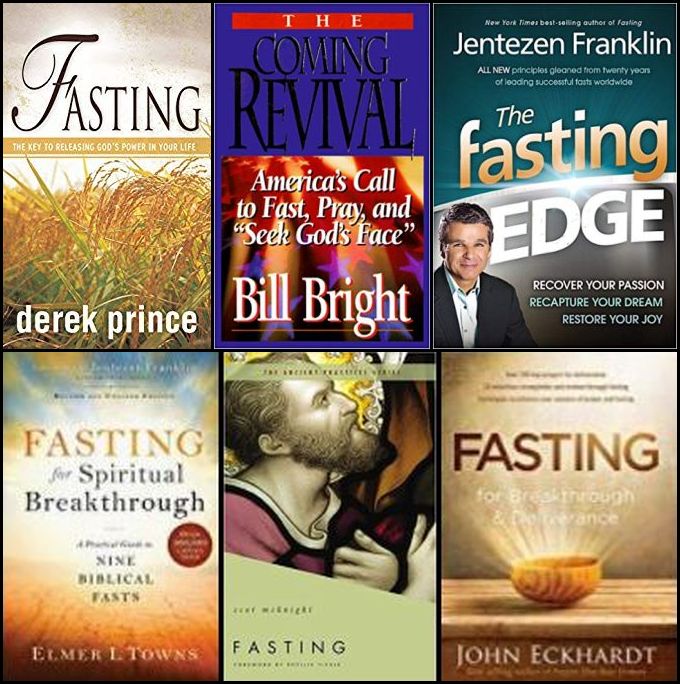
What are some good books on prayer?

I am always thrilled when one of the ladies asks me a question, either a theological question, one on Christian life, or a book recommendation. It means she is thinking, seeking God’s glory, and striving on her walk. With so much negtivity around, it’s great to be reminded, that nothing and no one will overthrow Jesus’s church. It is thriving, growing, and will endure till the last day. There are still many Christians on earth who care about the way God wants to receive worship and prayer and who care about their Christian walk. What a blessing the brethren are.

prayer

A reader recently asked me for recommendations on books about prayer. My first thought immediately went to the Valley of Vision. Valley of Vision! It’s a book OF prayers by Puritans. But reading it will teach you to pray. It is THE most convicting, moving, and stirring book one could hope to read! (after the Bible). These Puritans’ prayers are deep and God centered. I’d say it’s #3 of best loved books in the English language, with the Bible first and Pilgrim’s Progress next. If you have those three books on your shelf, the seeds of theological solidity have been planted, with more books to sprout as you go.

Also, I recommended “The Power Of Prayer In A Believer’s Life“, by C.H. Spurgeon, a collection of sermons. Charles Spurgeon preached numerous times on prayer.

Considered by his peers then and now as “The Prince of Preachers,” Charles Spurgeon built London’s Metropolitan Tabernacle into the world’s largest independent congregation during the nineteenth century. While many factors have been highlighted that help explain the effectiveness of Spurgeon’s preaching, the foremost secret that empowered Charles Spurgeon was his devotion to prayer.

Or this one on Amazon is a good one.

7 classics on PRAYER: Here is the blurb:

This fantastic compilation brings you 7 Christian classics on PRAYER. Ever struggled with how to pray, what to pray for, or just needed encouragement to keep praying? These powerful writings will stir your heart and strengthen your faith, helping you grow in communion with God.

 How To Pray – by R. A. Torrey [12 chapters]
• With Christ in the School of Prayer – by Andrew Murray [32 chapters]
• Prevailing Prayer – by D. L. Moody [11 chapters]
• How I Know God Answers Prayer – by Rosalind Goforth [10 chapters]
• Answers to Prayer – from George Muller’s Narratives [6 chapters]
• Power Through Prayer – by E. M. Bounds [20 chapters]
• A Short and Easy Method of Prayer – by Madame Jeanne Guyon [24 chapters]


Jeanne Guyon was a Catholic Mystic, so that section of the book appears to be the only dud chapter.

I am extremely hesitant to recommend something newer. Of late many people have been writing about prayer, but the authors are outight heretics or in some cases blossoming heretics. Or they quote Catholics or mystics in the book. Others twist the discipline of prayer into a prosperity or self-help notion. If you know of a recent and solid book on prayer, please do share. When I recommend, I think it’s better to stick with the more solid older books on this subject. See what a search for ‘Christian books on prayer’ yields:

Clipboard01

One can always go to the gty.org store and look for something there, or the same at Ligonier.org. Banner of Truth books is pretty trustowrthy, this is their page on the subject of prayer

Thanks for the question, keep them coming!

Posted in discernment, theology

“Error almost always begets more error”: One last PS on women preaching

I know I’ve been writing about women who step into biblically unauthorized leadership positions frequently of late. I thought I was done, but then I came across something and I wanted to add to the cache of previous essays I’ve done in the last couple of weeks. I believe this is a highly important topic. However, I also believe this will be the end of the topic for a while. The previous essays on the topic of women preaching are here:

Puritan Wives: Anne Hutchinson- Screeching Usurper or Passionate Devotee?

Beth Moore has a lot to Answer for in the Normalization of Women Preaching/Teaching Men

Is it OK to Have a Woman Pastor? Sarah Stewart Thinks So

I was continuing to read about Anne Hutchinson, cleaning out some bookmarks of sites I’d intended to use but hadn’t. I got re-involved in the topic. Anne Hutchinson is such an amazing case study of the damage one lone woman could do to the faith. In this article written in the New England Quarterly in 1937, I thought this author did a good job of summing it up. In the first sentence, the ‘they’ refers to the Puritan colonists-

While they were maintaining a precarious existence, Anne Hutchinson joined them. At first she was welcomed as the godly wife of a pious and successful merchant; but before she has been long in Massachusetts, she broached a doctrine that was absolutely inconsistent with the principles with which the colony had been founded. She began to affirm a new basis for absolute truth: immediate personal communion with the Holy Ghost. If this communion has been merely for the purposes of illuminating the meaning of Holy Scripture, the puritans might have had no quarrel with her. The communion she described, however, was one which resulted in immediate revelation from the Word. To accept her doctrine would mean the abandonment of the fundamental belief for which the Puritans had crossed the water- the belief that truth for man was to be found in the Bible.
Her errors led to the logical conclusion, one which Anne propounded herself, that ministers were not needed, since, according to Mrs. Hutchinson, God preferred to deal with his children directly.

Morgan, E. (1937). The Case against Anne Hutchinson. The New England Quarterly, 10(4), 635-649. doi:10.2307/359929

Anne preached, taught men, caused division, (for which she was unapologetic), and she claimed she received direct revelations that were not in the Bible. Her behavior and her assertions might have helped the Puritan cause to begin to fail and almost caused the colony itself to fail.

In this simple sentence, the author in Biblical Doctrine makes a distinction between personal revelation and Holy Spirit illumination, saying,

However the Bible says that illumination does not render the need for human teachers unnecessary (Ephesians 4:11; 1 Timothy 3:2; 2 Timothy 4:2). ~Biblical Doctrine, MacArthur & Mayhue, Eds.

Two essays were published today which remark on the evangelical church’s tendency to allow and even seek after personal revelation and emotional experience at the expense of biblical truth. Sadly, though there are many men engaging in the pursuit, more women than ever are at the forefront of this error. If you notice, it’s the females who tend to bring in emotionalism, mysticism, and direct revelation to the church. This opens the door wide for all sorts of errors, such as women preaching or pastoring, and then all kinds of heresies, as John MacArthur points out here. Sadly, the result is fragmentation of the body-

Seduced by Mysticism

That is why they put such an emphasis on doctrine. … Today’s evangelicals are losing the will to hold that line. Voices within the camp are now suggesting that experience may be more important than doctrine after all. Modern evangelicals can no longer define their identity in terms of doctrines they hold in common because the movement has become fragmented doctrinally.

There are many reasons for the fragmentation, as there are many attacks on the global church. But no matter the main causes, fragmentation and watered down doctrine is devastating.

One of the ways this doctrinal slide is occurring is on the back of the Evangelical Social Justice movement sweeping in. Several elders in the faith wrote a Statement opposing Social Justice and affirming the doctrinal truths the church has held dear for millennia. After the Statement was published, the original writers & signers were tasked with writing an essay to explain each of the Statement’s Articles. Justin Peters was assigned #9: Heresy.

He gave an interesting overview of what heresy is and isn’t, how the Evangelical Social Justice movement is introducing it, and as one of the results,

 There can be no credible doubt that the ESJ movement is promoting egalitarianism.

Women preaching may be a secondary or tertiary error to some, but no matter where any theological error is on the scale of errors, unchecked drifting from the narrow way of truth leads to heresy- always. Pastor Peters said,

Error almost always begets more error.

Sisters, be vigilant in your own walk. Stay in the Word, pray deeply and persistently, guard against error, and test all things.

The Lord will return soon. Until He does, let Him find us doing well for His name.

error and truth discernment

Posted in theology, word of the week

Sunday Word of the Week: Fruit of the Spirit, Peace

By Elizabeth Prata

On Sundays I usually post a theological word with its definition, then an explanation, and use it in a verse. I also use a picture to represent the concept. This is my effort to maintain a theological literacy among the brethren and between generations, something I believe is critical. We have to know what we believe, why, and know the words to express it. Words like Justification, Immanence, and Perspicuity have all been a Sunday Word of the Week.

Similarly, when we discuss other words representing the fruit of the Spirit, such as love, peace, and joy, we think we know what they mean, but often times these culturally embedded words have a totally different flavor when used from a biblical context. It is true of the words pertaining to the Fruit of the Spirit. Even these ‘simpler’ biblical words are misunderstood.

Therefore, over the next few weeks the Word of the Week will be one of the Fruit of the Spirit. Previously I published short essays about Love, and Joy. This week it’s Peace.

But the fruit of the Spirit is love, joy, peace, patience, kindness, goodness, faithfulness, gentleness, self-control; against such things there is no law. (Galatians 5:22-23)

What does ‘peace’ mean? I hear people saying in their decision-making, “I have a peace about it.” Is Galatians talking about that kind of peace? Or, is it the peace that comes after a war or a struggle with someone?

The Greek word as it’s used in the verse is (they think) from eiro. It means in this verse, a harmony and an accord.

Once we possess the Spirit, we are no longer at enmity against the Lord. (Ephesians 2:16). We have peace with Him since we are no longer rebelling against Him. We have relational peace. Strong’s defines it partly as:

According to a conception distinctly peculiar to Christianity, “the tranquil state of a soul assured of its salvation through Christ, and so fearing nothing from God and content with its earthly lot, of whatsoerer sort that is”: Romans 8:6; namely, is used of those who, assured of salvation, tranquilly await the return of Christ and the transformation of all things which will accompany that event,

John Gill Comments on the two kinds of peace, peace with God and peace with each other, on the Gal 5:22 verse,

which is another fruit of the Spirit: and designs peace with God in a man’s own conscience, produced there by the Spirit of God, in consequence of peace being made by the blood of Christ; and that through the application of the blood of Christ for pardon, and of his righteousness for justification to the soul of a sensible sinner by the blessed Spirit, the effect of which is peace, quietness, and tranquillity of mind; also peace with men, with the saints, and with all others; for such who are under a work of the Spirit of God, and are influenced and led by him, seek after the things which make for peace and edification among the brethren, and are desirous if possible to live peaceably with all men: hence appears another grace in them,

But beyond that, as the verse in John 13:34-35 says,

A new commandment I give to you, that you love one another: just as I have loved you, you also are to love one another. By this all people will know that you are my disciples, if you have love for one another.

We cannot have peace with one another if we are feeling less than loving.

What was “new” about this commandment? Love wasn’t new, it is in the Ten Commandments. What was new was the depth and the extent of the love Jesus commanded His people to do. Jesus loved His own to the end, fully and consistently and completely. He gave the sop to Judas. Giving the morsel to someone at a dinner was a manner and custom in Israelite banquets. The host showed utmost respect and love to a person, by personally handing him a morsel, sometimes even placing it in the recipient’s mouth himself. Judas was to betray Jesus in mere hours, but Jesus still loved Judas to the end. He gave him the sop. THAT is the new kind of love.

The fruit of the Spirit is all one fruit. It isn’t that we work on peace one week and then patience the next… The first fruit mentioned is love. ALL other fruit stem from this one fruit. If we are loving we will be patient, we will be joyful, we will be gentle, we will employ self-control, and so on. Jesus was at peace relationally with Judas the Betrayer and demonstrated that peace through His loving act of giving the morsel.

Peace with one another is to be sought because we love.

~~~~~~~~~~~~~~~~~~~~~~~~~~~~~~~~~~~~~~~~

Here is a wonderful 45 minute sermon by Harry Walls at Grace Community Church about the kind of love Jesus expects from us.
Connecting with Quality Love by Harry Walls

Here is an article about Peace from Compelling Truth:
In What Way is Peace a Fruit of the Spirit?

peace verse.jpg
EPrata photo
Posted in potpourri, theology

Prata Potpourri: Parenting, Discernment book review, Prioritizing family, Songs of Lament, more

Hello and welcome to another edition of Prata Potpourri. I’ve found some interesting links and tossed them into the mix for your consideration. The week ended on a good note for me. To be honest it started on a good note, so all in all it was a good week! I hope it was for you as well. The rapture didn’t happen this week but since it’s always imminent, it could happen next week. What a blessing it will be to be in glory, seeing Jesus’ face, and rendering the perfect service and worship He deserves.

Meanwhile the dawn hasn’t broken and I’m sipping coffee in the quiet, with the vigorous rooster next door announcing the imminent arrival of Aurora. Later I will have to attend to some adulting by paying bills and choosing health care since Open Enrollment is ongoing. Maybe clean the apartment. But the precious moments between waking and arising, and heaving ho to the tasks ahead is the sweet spot of Saturday morning. I hope you enjoy a few of these during your down time, whenever you can find some.

Samuel D. James’s review of the book The Coddling of the American Mind: How Good Intentions and Bad Ideas Are Setting Up a Generation for Failure and how it’s really about parenting. Man, this guy can write.

Founders talks about living the cessationist life

Keith Getty says that when only constant happy hymns are sung it further saddens the downcast since they cannot reach the joyful heights. He longs for congregations to sing a few songs of lament.

Aimee Byrd, the Housewife Theologian, remarking on how even the word sin is going out of style

Dallas Holm muses in his moving and stirring praise letter about Gospel Missionaries.

The always impressive Ayanna Thomas with a lesson on How To Apply Scripture.

Hannah Anderson’s new book All That’s Good: Recovering the Lost Art of Discernment is reviewed by the ladies at Out of the Ordinary. I haven’t read the book and I’m not that familiar with Anderson. But I’m always looking for a good book on discernment. Let me know if you read it and like it.

Do you stint the Lord with the excuse that you must prioritize family? Meager with time or money or service for the Lord? Michael Coughlin had me at Spurgeon…and the Spirit had me at stint.

I love Bud Alheim‘s Puritan quotes:

puritan quote.jpg

This Britain’s Got Talent clip of the singers performing the classic song White Cliffs of Dover, a WWII song. The surprise at the end, had me in tears. It got me thinking about true bravery and sacrifice, and the endless wars our globe has endured and will endure, as we are promised (Matthew 24:6. Wars have scarred generations of humans from the beginning and has corrupted even the ground with blood, hate, and bones. But then I got to thinking about the end of war, and I began to long even more for Jesus’s great appearing.

Whoever the BBC Good Food photographers are, they kill me with their luscious pictures of food, expertly photographed. So mouth watering. Stills can get boring but these guys are endlessly creative. Follow them on Twitter, you won’t regret it. @BBcGoodFood
Now they add to my pain with this photo of weekend getaways for foodies. Look at this pub! Just look at it!

bbc good food

Winston Tseng’s parody trash posters have Christians and conservatives up in arms. I say, relax and chill, people. He is an equal opportunity parodist, taking on the NYC MTA, Christians, Trump, and the Red Sox. I’m not a fan of the sentiment but I’m not going to spend social media time or spiritual energy decrying that an unsaved person hurt my feelings with a poster.

This European City map will serve you well in any city in which you travel. It’s highly accurate, from my own experience, lol.

european city map

For moms. I opened with parenting and I close with mommying. Mattea Goff’s comic explaining to her husband why she is so tired in the morning has gone viral.

mom 1mom 2mom 3mom 4mom 5mom 6mom 7mom 8

Posted in discernment, theology

Is Same Sex Attraction Sinful?

After hours of online searching for a biblically sound article on the topic, my friend Pastor James Bell of Southside Baptist Church in Gallatin TN found this article on same sex attraction. It’s written by Paul Barth at Purely Presbyterian. Pr. Bell’s comments are at the beginning and then the rest is Barths’ article.

Pastor Bell introduced it this way:

IS SAME SEX ATTRACTION (SSA) a sin? What does God’s Word say!? THIS IS A SPECIAL EDITION of the Grow in Grace Newsletter…

Sam Allberry, (a homosexual priest in the Anglican Church, and greatly sought after by some key Southern Baptist leaders), testifies:

“I am same-sex attracted and have been my entire life. By that I mean that I have sexual, romantic and deep emotional attractions to people of the same sex. I choose to describe myself this way because sexuality is not a matter of identity for me, and that has become good news.”

Allberry, a minister in the Anglican church, in conjunction with several other pastors, said: “We are committed to building a church that is genuinely welcoming to all people, irrespective of the pattern of sexual attraction which they experience. We would welcome initiatives to help local churches do so in a way that is affirming of and consistent with Scripture and would hope to support suggestions you might wish to bring to Synod to that effect.”

Of Sam Allberry, Russell Moore, the head of the Southern Baptist Ethics Commission, said: “Sam Allberry is a gift to the church. We need his voice!”

Therefore, we ask the following question… and sadly, after hours of searching online…. I found hundreds of articles by pastors and church leaders, supporting homosexuality… and Same Sex Attraction…. Thankfully, below is a solid, Bible saturated article:

Is Same Sex Attraction Sinful?

Paul J. Barth's avatarPurely Presbyterian

Is Same Sex Attraction SinfulSome otherwise conservative Christians are beginning to take a compromising stance on homosexuality. They claim that only homosexual behavior is sinful and that same sex attraction (SSA) is a “sign of brokenness” similar to feelings of grief or sadness, or as one proponent put it, that having SSA is being “born in a broken condition… that does not represent flourishing” similar to being born blind. They claim it is a negative result of the Fall, but not inherently sinful. So their advice for Christians who are same sex attracted is to remain celibate and that their SSA is not sinful and doesn’t need to be repented of.

One pastoral candidate was asked if he believed that “his homosexual feelings, attractions, thoughts, and desires are sinful.” To which he answered: “I believe my same-sex attractions are broken, but I do not believe they are sinful. It is…

View original post 2,001 more words