Posted in theology

Marooned with husband: A Sailing Story

By Elizabeth Prata

For two years in the 1990s I was a live-aboard yachtsman on a 37 foot sailboat. My husband and I sailed from Maine to the Bahamas and back, twice.

Our boat

You might have heard about the Florida “snowbirds” who travel from some northern snowy state to Florida for the season to escape the cold. Liveaboard yachtsmen do that too, but aboard their own boats. We’d decided to give it a try, since my husband had sailing experience from owning a schooner in previous years. Solo sailing (“singlehanding” in the yachting lingo) is hard and only for the intrepid, but when I appeared on the scene he decided that the time was right and the two of us went off into the sunset.

Continue reading “Marooned with husband: A Sailing Story”
Posted in theology

A Few Thoughts

By Elizabeth Prata

Some random thoughts…

Do you ever pray and pray and then the thing you prayed for…the opposite happened? And then you feel like you didn’t pray enough? Or with enough fervency? When what you were praying for fell through and you think, it’s your fault? “If I prayed more…” “If I prayed more strongly…” “If I prayed better…”

I know it’s not up to me. God is sovereign. The verse says the prayers of a righteous man avail much. (James 5:16). It doesn’t say the prayers of a righteous man avail all. Still, it’s hard not to wonder, “Could I have done more?”


I was a journalist in the early 2000’s. I covered local politics and government. It really IS like watching sausage being made…sometimes rotten sausage. Messy and unappetizing. The local powers that be at the time had a stranglehold on the town. Nepotism reigned, town hall department heads were filled with relatives and friends. They felt like they owned the town. They felt entitled to do what they wanted. The newspaper at the time had a monopoly and created the narrative the officials desired, which reflected the elites’ views. The townspeople had to accept it because they didn’t have an alternative. But they were often angry and upset.

I came along and established a free and fair objective newspaper. I reported the truth, without fear or favor. In one incident, I was covering a local Town Council race and discovered that some of the valid write-in votes had been thrown out. Amazingly, I got the election clerk at the time on the record saying she and the poll workers threw them out “because they didn’t like the names that were written in”.

This was around 2003 or so. Seventeen years ago…a different time. I was incensed. When it came out in the paper the people were incensed. The write-ins would not have made any difference to the outcome of the race. But it made a huge difference to the person that took their precious vote, considered who to write in, and placed their invaluable emblem of free and fair election into the ballot box. That it was thrown out by elites with a false sense of entitlement was provoking in the extreme.

The Town Manager was no fan of mine but he did have a sense of right and wrong. Throwing out votes was wrong. He contacted the Secretary of State to ask what to do. The ballots had already been sealed and sent to the capitol. I don’t remember what happened after that, except that the Election Clerk almost lost her job, was reprimanded, and had to attend trainings for a while afterward.

And less than half a generation later, we have alleged wholesale election fraud in the 2020 Presidential Election. Ballots thrown out, found in ditches, others never mailed. And the mainstream press, the people I used to call my colleagues, failing to cover it. Social media suppressing it. I’m more than disappointed, and also more than relieved I don’t have to call them my colleagues any more.

It made me think of how low we’ve sunk- from an embedded town manager caring enough about someone’s local write-in vote to act immediately, to workers, politicos, and citizens allegedly participating in national fraud at the highest level…and in such a short time.

To me, it’s a grief, but it’s also a way to praise and admire my God. His ways are not our ways. His creativity in bringing about His will & plan is breathtakingly awe-inspiring. Though I do not like the progression of what I see, I much more revere what I don’t see, that is, His working in the world as Supreme God. God is working. We may not always like the sausage we’re served, but it is God who made it, and thus, worthy of consumption.


“For My thoughts are not your thoughts, Nor are your ways My ways,” declares the LORD. (Isaiah 55:8)


Jesus said we do not need to worry. Matthew 6:25: “For this reason I say to you, do not be worried about your life, as to what you will eat or what you will drink; nor for your body, as to what you will put on. Is not life more than food, and the body more than clothing?

So let us watch and marvel at His word, feel joy in His promises, even as we see others’ needs rise and they walk about in confusion and fear…because that represents a tremendous opportunity to share Jesus with them!


Posted in theology

Why the United States seems to have gone crazy

By Elizabeth Prata

Yesterday on the blog I asked the question “Is America Under Wrath?” The answer is yes. Humans have been under God’s wrath since the Garden. I noted, however, that there are different kinds of wrath. We think of eternal wrath, as in lost people enduring for their punishment for their sins in hell. We also might think of eschatological wrath, the fire and brimstone kind of holy fury poured out on the world during the end of the last days during the Tribulation. But there is also a sowing and reaping wrath, cataclysmic wrath, and for today’s discussion, the wrath of abandonment.

Continue reading “Why the United States seems to have gone crazy”
Posted in prophecy, theology

Is America under wrath?

By Elizabeth Prata

The year 2020 has been a hard one. There hasn’t been a lot of good news. In fact it has been a grief to see countries close and cities lock down, churches shuttered, and missionaries booted out, making it difficult to personally gather to worship Jesus and share the Good News. Time has passed and we’re now looking at 2021, but no one except God knows if the upcoming year will be any better for us here in America or elsewhere.

People are asking, “Is the wrath of God upon us?” “Is the wrath of God about to be poured down?” “Is judgment here?”

Yes. But it has been since the Garden. Let me explain the different kinds of wrath related to different kinds of judgment. Because there are different types of wrath and except for the eschatological wrath due to come at the end of the last days, the other kinds of wrath have always been in play.

When we think of ‘God’s wrath’ or ‘Judgment’, we think of the stark example of what happened to Sodom and Gomorrah (and Admah and Zeboiim) in Genesis 19. Those sinful cities serve as an example of what happens when a town gives itself over to indulging in immorality, like widespread homosexuality. (Jude 1:7). God rained down fire and brimstone, destroying the cities and all flesh that were within them.

But there are actually different types of wrath. Some are unseen because they’re internal, others are seen but difficult to identify specifically as wrath or simply a ‘natural’ a consequence of the Fall. Some wrath of God abides on the ungodly every day, and it always has since Genesis 3.

Thomas Hooker, a Puritan preacher of the 1600s, said in his book The application of redemption by the effectual work of the word, and spirit of Christ, for the bringing home of lost sinners to God (don’t you love their lengthy titles, lol? And their antiquated spelling? )

who shal comfort, who can releeve what ever he doth, wherever he is, the wrath God abides upon him, thou art not within the Mercy nor the compass of that Redemption?

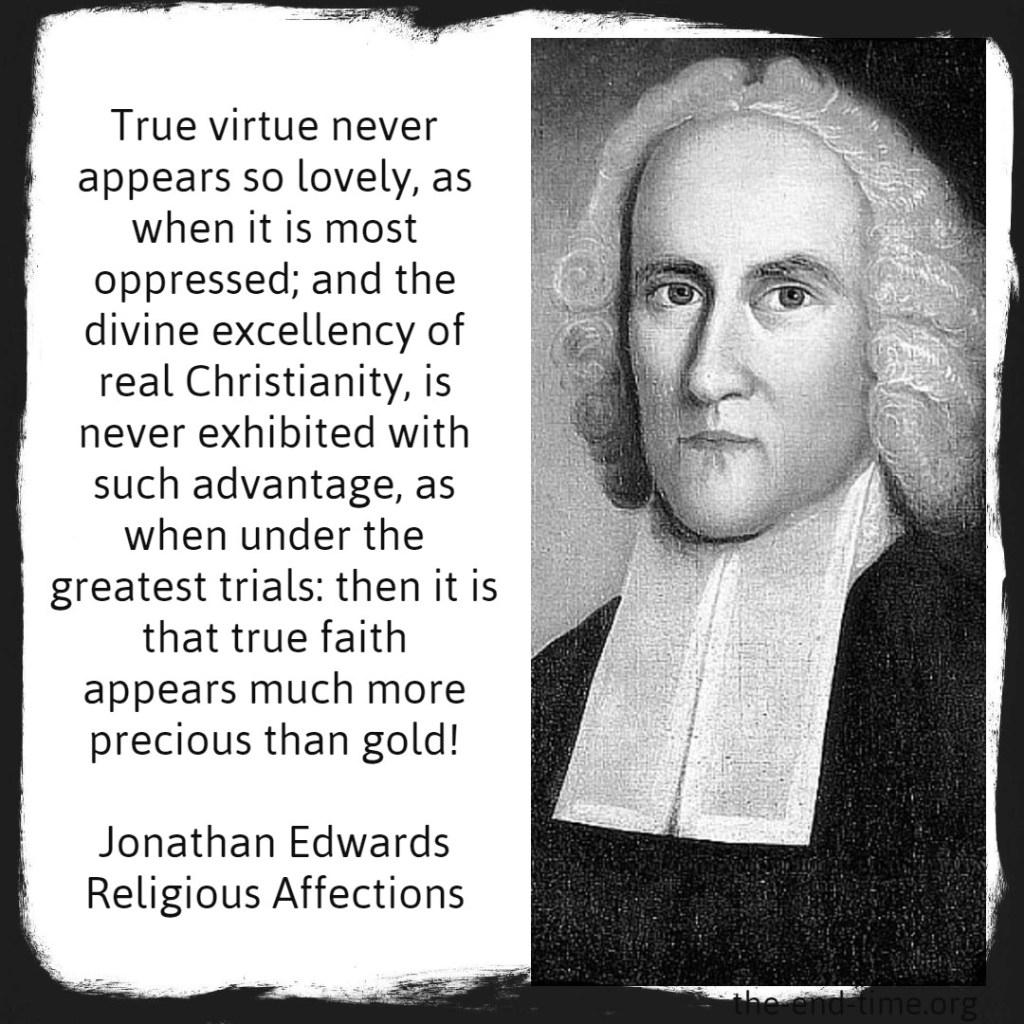
Jonathan Edwards said the word “wrath” 52 times in his famous sermon Sinners in the Hands of an Angry God. He said “anger” 6 times. He preached,

The Wrath of God burns against them, their Damnation don’t slumber, the Pit is prepared, the Fire is made ready, the Furnace is now hot, ready to receive them, the Flames do now rage and glow.

What IS the wrath? Most people, if they think of God’s wrath at all either think of Jesus exhausting it on the cross for forgiven sinners, or the last day when Jesus returns in wrath, blood, fire etc to pour His wrath out on unforgiven sinners.

The wrath of God is not an easy topic. It is not a popular topic. It is not often directly preached from pulpits, nor spoken of on social media or in conversation. But it is an important topic. Upon death, the final state of all humans who were not saved during life will be to endure horrific wrath forever. The wrath hangs over every unsaved person while they are alive.

The wrath is an attribute of God. And though we love to think of Jesus the babe meek & mild, especially during Christmas season, He is also wrathful. He will return to deliver His stored-up wrath one day.

John MacArthur preached on this a number of times, here is a paraphrase / excerpt from one of the sermons. Please note that MacArthur took the biblical evidence of wrath and placed them in a descriptive list.

1. Eternal wrath – because it is the punishment that God brings upon unbelieving sinners forever in hell. (Matthew 25:41-46, many other verses).
2. Eschatological wrath, that is the wrath of God that is released at the end of the world described by some of the Old Testament prophets, described by Jesus Christ Himself in the Olivet Discourse, and clearly laid out for us in the book of Revelation. (Luke 21:23, Romans 2:5, Revelation 6-18).
3. Cataclysmic wrath, like a tsunami, a volcano, a hurricane, an earthquake… Noah’s Flood and the destruction of Sodom, Gomorrah, Admah, & Zeboiim are examples of this wrath. Cataclysms are a reflection of the judgment of God. (Numbers 16:31-35).
4. Consequential wrath. Consequential wrath is the sowing and reaping wrath, you live a certain kind of life and you set in motion certain forces that will produce judgment. The resulting wrath can be reflective of the consequence of the sin-choice a person makes. (Acts 5:4-5, 1 Corinthians 11:29-30). AIDS was a consequential wrath for indulging in homosexuality.
5. The wrath of abandonment. It is that wrath exhibited by God when He turns His back on a group, society, or individual. (Romans 1:24, 28, 28).

We should be careful though, not to attribute any particular event as an example of a specific kind of wrath. The tornado-wind that destroyed Job’s house was not wrath. (Job 18:18). The man born blind was not experiencing a lifetime of infirmity due to sin. (John 9:2-3). The Tower of Siloam fell over because the Tower of Siloam fell over. (Luke 13:4). Someone whom God has seemed to have turned over to their sin in a wrath of abandonment could become the unlikeliest convert (Saul/Paul).

Unlike in Edwards or Hooker’s time, in today’s Christianity God is talked of as a kindly grandfather in the sky, or Jesus is treated as a romantic boyfriend or buddy. However, God’s wrath is real. It is already present and it is also to come. Humans may not live any way we want and God will sit idly by smiling upon His wayward children. He has high moral standards and a high holy standard. Departure from His standard will result in wrath. Since none of us can attain these standards on our own, it means we are all due to experience His wrath. This presents a problem because none is righteous, no, not one. We are all separated from God. Yet He desires communion with His creatures.

Graciously, Jesus lived a perfectly holy life, died on the cross as the sacrifice, having exhausted all of God’s wrath for those whom He will save, and after laying dead in the tomb for three days, God raised Jesus to life. Those who repent of their sins and turn to Jesus as Lord and Savior will never experience His wrath. Praise God for that.

We do seem to be experiencing a wrath of abandonment here in America at present. I’ll write about that tomorrow on why I think so and explore Romans 1 as the biblical foundation for why I believe it.

Since we have now been justified by His blood, how much more shall we be saved from God’s wrath through Him! (Romans 5:9).

Repent now, while there is still time.

After the arrest of John, Jesus went into Galilee and proclaimed the gospel of God, and saying, “The time is fulfilled, and the kingdom of God is at hand; repent and believe in the gospel.” (Mark 1:14-15).

wrath verse

—————————————–

Further Reading

Delivered By Grace: The Wrath of God

GotQuestions: What is the biblical understanding of the wrath of God?

Posted in theology

Head versus Heart

By Elizabeth Prata

My cat died in August. Eight months before that, my other cat died. I’d had them for 7 years and 15 years.

Even though months have passed, when I come home and open the door I still sometimes expect Murray to come bounding over. Sometimes when I make the bed I still expect to find Bert under the covers. Sometimes when I hang my keys I still remind myself to use the high hook so the cat won’t play with them…until I remember. There’s no cat.

I was married once. He had an affair and left abruptly. It was rapid. For a long time I reached over in bed expecting to find the husband. For a long time I glanced at the other garage bay expecting to see his car. For a long time when I opened the closet I expected to see golf clubs.

Continue reading “Head versus Heart”
Posted in theology

The brevity of a long life

By Elizabeth Prata

Saturday morning on Twitter, Dan Phillips, author of The World Tilting Gospel and God’s Wisdom in Proverbs tweeted of the news of 90-year-old Sean Connery’s death,

Ohhh, no. Saddened. Don’t really know what to say. SUCH an iconic, one-of-a-kind actor. Loved his work since I was a kid. I wish he’d ever shown a glimmer of understanding of the Gospel, let alone faith in Christ. Did he even know a genuine Christian? Celebrity isolates badly.

Tweet
Continue reading “The brevity of a long life”
Posted in theology

God’s power

By Elizabeth Prata

When we think of the incommunicable attributes of God, his power often comes to my mind first. He upholds the entire universe by His will…He made the universe with His word! My 2nd graders were discussing who was the smartest, after a boy confidently proclaimed he was the smartest one in the room. A tiny girl from the back of the line piped up, “God is the smartest. He can make people!” Out of the mouth of babes, she nailed it.

Earthquakes fascinate me. I’ve only been in one, a tiny one here in Georgia. The ground seems to be solid, yet earthquakes can turn it to liquid in a moment. The earth shakes and rolls and buildings totter like a hut. That is scary to me. I hope I’m never in a big earthquake.

Greece/Turkey experienced a large quake last week, a 7.0. IRIS, or Incorporated Research Institutions for Seismology, comprises virtually all US universities with research programs in seismology. Their visual data gif for that earthquake‘s waves are amazing and sort of hypnotic to watch:

“Watch the waves from the M7.0 earthquake near Turkey roll across seismic stations in Europe. This animation, called a Ground Motion Visualization (GMV), shows the motion of the ground as detected on seismometers across Europe – each dot is a seismic station and when the ground moves up it turns red and when it moves down it turns blue.”

The visualization struck me, how such a large portion of the earth was impacted by the 7.0 quake. Seen from an ‘above’ perspective, the power of God to hold the earth in His hands and shake it like a toddler shakes a toy just struck me all over again how powerful He is.

I think it’s important to keep His power in mind. We’re flooded with teachings about His love, His kindness, His humility, His condescension to stoop down and reach out to save us sinners, that sometimes we could tend to diminish His august majesty and forget His total and absolute power.

Reading Job 38-42 will bring these things to mind again. The longest discourse in the Bible spoken by God himself, we see His power and wisdom as He reminds Job of it via His creation work. It all begins with Genesis 1:1, said to be the most important words in the entire Bible, “In the beginning, God…” He created all that there is by the power of His mighty word, and everything subsequent all stems from that fact.

“He is the image of the invisible God, the firstborn of all creation: for by Him all things were created, both in the heavens and on earth, visible and invisible, whether thrones, or dominions, or rulers, or authorities—all things have been created through Him and for Him. He is before all things, and in Him all things hold together. He is also the head of the body, the church; and He is the beginning, the firstborn from the dead, so that He Himself will come to have first place in everything. For it was the Father’s good pleasure for all the fullness to dwell in Him, and through Him to reconcile all things to Himself, whether things on earth or things in heaven, having made peace through the blood of His cross”. (Colossians 1:15-20).

Praise this thrice-holy, powerful God, praise His holy name!

Posted in theology

The incident in the Garden instructs us about false teachers

By Elizabeth Prata

Genesis 3. Ohhh, Genesis 3. We all know that was the Fall of man at the prompting of satan-serpent. Satan spoke, Eve listened, Adam joined, and here we are.

This century is full of rampant false teachers, false prophets, false teaching, and heterodox doctrine. If you picture the church as a boy’s room and he knocks over his ant farm, ants crawling everywhere and hard to catch them all, you have the idea.

The Bible gives us much information that these days would come. (2 Timothy 3:1-5). It’s OK, God prepared us ahead. We are not unaware of satan’s schemes. (2 Corinthians 2:11). Except, some people are unaware of his schemes. It’s up to us to help those who are weaker, unaware, or in danger. (1 Thessalonians 5:14, Jude 1:23). So pastors, teachers, people with the gift of discernment, speak out.

I recently wrote about Beth Moore, posing the question “Is Beth Moore possessed?” I personally believe she is. Others don’t. Either way, most of the people in my sphere know she is a false teacher, doing damage. My question roused a great many people who shared their opinions on social media. The week taught me two things: first, that the state of discourse is deplorable among professing Christians. Many of those people should be embarrassed at their publicly hateful and unchristian rejoinders. I wrote about the state of discourse here.

Secondly, it demonstrated the depth of the need to continue exhorting against false teachers. We need to keep promoting the value and importance of discernment, and to continue to help those who are under deception. Several comments I received that were frequently repeated need addressing. They were: Beth Moore (or whoever) cannot be a false teacher because she hasn’t denied Jesus (2 Peter 2:1, Jude 1:4). Beth Moore (or whoever) can’t be false because she talks about Jesus so much.

Genesis 3 opens with this statement:

Now the serpent was more crafty than any beast of the field which the LORD God had made. (Genesis 3:1). God wanted us to know that this is the first thing to know about satan. The word crafty is also translated cunning or subtle.

It would not be subtle for a false teacher to go around saying “I deny Christ. Let me teach you the Bible”. No, satan’s more subtle than that.

See the scene in the garden. Satan first cast uncertainty on what Eve knew by asking it in the form of a question, forcing her to defend God while simultaneously planting a seed of doubt. He also phrased it in a sincere attitude, as most false teachers do. They do not care about you, they only care about money. But satan was crafty and came across as friendly. “Hath God said?” …

Secondly, satan mixed truths, half-truths, and outright lies in his conversation. So do false teachers.

You will not surely die‘ is a flat out lie. Adam and Eve died physically eventually but they died spiritually on the spot.

Your eyes will be opened: this is truth. He just omitted the consequences. But do we really need something extra to open our eyes? False teachers often add to the Bible by promising secret knowledge, a perfect method, an experience. The Spirit’s illuminating ministry already opened our eyes. Do we want our eyes opened, or isn’t the Bible enough? Eve’s eyes were already opened, having a perfect one-on-one relationship with perfect God and with her perfect husband.

You will know good and evil is also a total truth. But do we want to know evil? Only satan is subtle enough to suggest that knowing evil is a good thing, that it’s something that you should want.

You will be like God is a lie. Only God is like God. There is none like Him. (Isaiah 46:9).

You notice that after encountering satan in the serpent, Eve’s perspective shifted. Suddenly she wanted to know evil. (!) She wanted the fruit for food (even though hunger was alien to her). She wanted to be wise, even though she lacked for no knowledge. Eve lacked nothing. But after speaking with the serpent, she suddenly had sensations she’d never had before; hunger, desire, yearning, jealousy. Satan incites us to desire things we never knew we wanted. He draws us away from contentment.

That is what false teachers do. A good and true teacher of the Word leaves you feeling full, knowing Jesus more, loving Him better, understanding sin more deeply. A false teacher leaves you hungry, yearning, and discontent.

We don’t assess a false teacher solely on how we feel, it’s never appropriate to do that even for good reasons. The point here is that encountering satan in the form of His false teachers will shift your perspective, move you from the seat of contentment to one of discontent, and incite yearning, desire for fleshly lusts, and other spiritually damaging things that all take the focus away from God.

Eve suddenly saw the fruit was good, not God. She saw evil was desirable to know about, not God. She saw the tree was a delight to the eyes, not God. In all those subtle ways, satan (and his false teachers) deny Jesus. Here is Barnes’ Notes on 2 Peter 2:1, when false teachers deny the Lord:

This must mean that they held doctrines which were in fact a denial of the Lord, or the tendency of which would be a denial of the Lord, for it cannot be supposed that, while they professed to be Christians, they would openly and avowedly deny him. To “deny the Lord” may be either to deny his existence, his claims, or his attributes; it is to withhold from him, in our belief and profession, anything which is essential to a proper conception of him.

Source

And here is Barnes’ notes on Jude 1:4, denying the Lord,

It cannot be supposed that they openly and formally did this, for then they could have made no pretensions to the name Christian, or even to religion of any kind; but the meaning must be, that “in fact” the doctrines which they held amounted to a denial of the true God, and of the Saviour in his proper nature and work.

Source

Jesus is too precious to deny, either flatly as atheists and pagans do, or functionally, by teaching or accepting teaching that offers a different Jesus. A substituted Jesus is no Jesus at all. The word of God is sure, infallible, inerrant, and the only truth we can cling to with security, to do good work in His name. (2 Timothy 3:16-17)

Posted in theology

This is what repentance looks like: Dawn Hill in a moving testimony

By Elizabeth Prata

I don’t know this lady. A virtual friend on Facebook shared this video.

Dawn Hill repents of being a false prophet and for being part of the NAR. She urges women everywhere to discern properly, test all things, focus on Jesus Christ, and not swim in emotionalism and prophetic words that are only vain imaginations and fleshly lusts. She pleads with her audience to throw away her work, her book, and any and all of her old material. She urges women to submit to the authority of the Bible as the only sure word.

Continue reading “This is what repentance looks like: Dawn Hill in a moving testimony”