For the time will come when they will not tolerate sound doctrine; but wanting to have their ears tickled, they will accumulate for themselves teachers in accordance with their own desires, 2 Timothy 4:3.
The verse says that they, meaning professing Christians, will refuse sound doctrine. Instead, they will heap up teachers to suit their passions…so, Jesus raises up an Osteen for those who want to suit their easy life, no speaking of sin passions; a Beth Moore for those who want to indulge their usurping passions, a Kenneth Copeland or Joyce Meyer for those who want to indulge greedy passions, and so on.
Far from being innocent victims of false teachers, followers of false teachers are guilty in their intentional accumulation of them to suit their desires. False teachers would not exist if people subdued their ungodly lusts and submitted themselves to God. Instead, He raises up people like a Beth Moore so that those who do have ungodly passions will be drawn to her. He raises up a Benny Hinn so that those who want attention and fame through false healing will suit their ungodly desire and it will become evident where their heart is. And it’s not a heart that tolerates sound doctrine. A false teacher exists to scratch their wicked itch.
What does a false teacher get out of it? Indulgence in his or her own ungodly passions- money, fame, attention, whatever it is in their heart that needs to perpetuate this appearance of Godliness, though they deny its power. (2 Timothy 3:5).
It’s a symbiotic relationship made in hell, the worm and the serpent, intertwined, rolling around on the stubble, indulging their wickedness in the name of Jesus. Woe to them all.
Yesterday I posted a critique of Beth Moore’s Instagram tutorial on prayer. There was some that was good in it and much that was concerning. That critique is here. Today I’m posting information I’ve learned from a course I’m taking at The Master’s Seminary track called Institute for Church Leadership. It is titled The Practice of Prayerand Dr. Brad Klassen is leading it. The class provides lay training for the local church. Previously I completed one track and earned a certificate in Sound Doctrine. Now I’m taking classes in the track in Christian Living.
The class is so rich with biblical concepts, practical guidelines, and is so highly exalting of Jesus that I wanted to share some of what I am learning. I’m 50% finished with the class so there is more to go, but of what I’ve learned so far, it’s tremendous.
I don’t think anyone, if asked, would answer a query about their prayer life with “It’s perfect! No need to improve!” We all can do better in praying. This infographic from Crossway asked 14,000 people about the state of their prayer life. Here are the results:
Jesus prayed. The New Testament shows him constantly slipping off to a place by himself to pray, as seen in Mark 1:35, Luke 5:16, Matthew 14:23. Jesus is the model for us in all things, since we are to pursue being Christ-like. If He pursued prayer, we should too. Therefore prayer should be a priority for us. In addition, there are many benefits to prayer for the willing and disciplined Christian:
Foremost, it effects forgiveness of sin unto salvation. It also cleanses the conscience of the penitent.
Prayer promotes holiness and mortifies sin, not just unto salvation but for every and any Christian afterwards.
Prayer taps God’s strength to meet daily needs.
Prayer gives opportunity to experience God’s goodness.
Prayer submits us to the will of God and acknowledges His sovereignty.
Prayer expresses true love for others; our hearts follow what we pray for.
Prayer acknowledges dependency for success in ministry.
Prayer renders the study of scripture effective.
Prayer indicates the condition of one’s soul.
Prayer gives God glory!
So, prayer is important. But what IS prayer? It’s not just slapping two hands together in thoughtless requests as you distractedly think of all the stuff you have to do that day. It’s not a mumbled request for traveling mercies as you hurtle down the driveway, late for work. All too often we relegate prayer to the last item on the list and then it gets short shrift, if we do it at all. I’m guilty of this.
Prayer is not a wish, magic that ‘releases’ God, a mystical meditation, or a way to receive revelation. We were created in the image of God to have communion with our Creator on a personal level, therefore prayer is natural to us. However, the Fall and the original sin has distorted our innate impulse to commune with the true God. (Romans 1:21, 25). We need to have a biblical concept of prayer.
“As the creature communes with his Creator, he also fastens it to the assistance of the Holy Spirit, to the Intercession of Jesus Christ, and to the bedrock of the Word of God.” ~Dr. Brad Klassen, The Practice of Prayer.
We’ve looked at the importance of prayer, the benefits of prayer, what prayer is and is not. Now we look at the components of prayer.
In my class, Dr. Klassen recommended the ACTS approach. A stands for Adoration, C = Confession, T = Thanksgiving, S = Supplication. It follows the concept Jesus gave in the Lord’s Prayer.
Components of prayer ACTS: Adoration
Adoration renders to God the reverence, trust and love He deserves. Biblical prayers of adoration include Moses’ prayer in Deuteronomy 32:1-4; Job’s prayer in Job 42:1-6; Solomon’s prayer in 1 Kings 8:22-24, and Daniel’s prayer in Daniel 9:4. You can review those prayers to see what adoration is and how these men structured their prayer. You can even use these prayers as a basis for speaking scripture back to God, something He loves. When we use God’s own verses by praying Scripture to Him, what we are doing is aligning ourselves with His heart and praying according to His will.
You can use those biblical prayers and others I’ll share under the C, T, and S acronyms,, by re-stating it, reading it directly to Him, allowing its concept to form a picture in your mind, or just meditate on the verse before you begin your prayer.
Components of Prayer ACTS: Confession
Confession is to express our agreement with God’s revelation of Himself and His assessment of us. Our confessions must be based on what God has already revealed in scripture about that sin. Don’t be general about your sin, saying , ‘O Lord, forgive my many sins…’ I’m guilty of this. I gloss over the sin and use generalities, as of it makes it less ugly to God. We’re not fooling God. He already knows about our sin. Confession is to acknowledge His sovereignty and omniscience by aligning our heart and mind with the ugliness He sees in that specific sin. So be specific in showing your hatred for that sin as it is expressed in His word.
Biblical confessions include the negative (our own sins) and positive (who Jesus is). Biblical confessions of sin can be seen in many Psalms, and also Psalm 32:5 and Daniel 9:13-20.
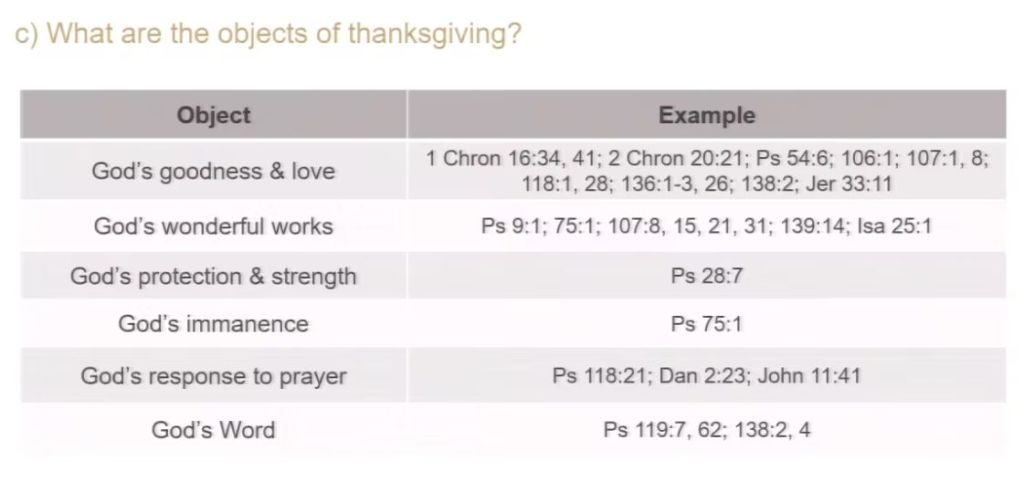
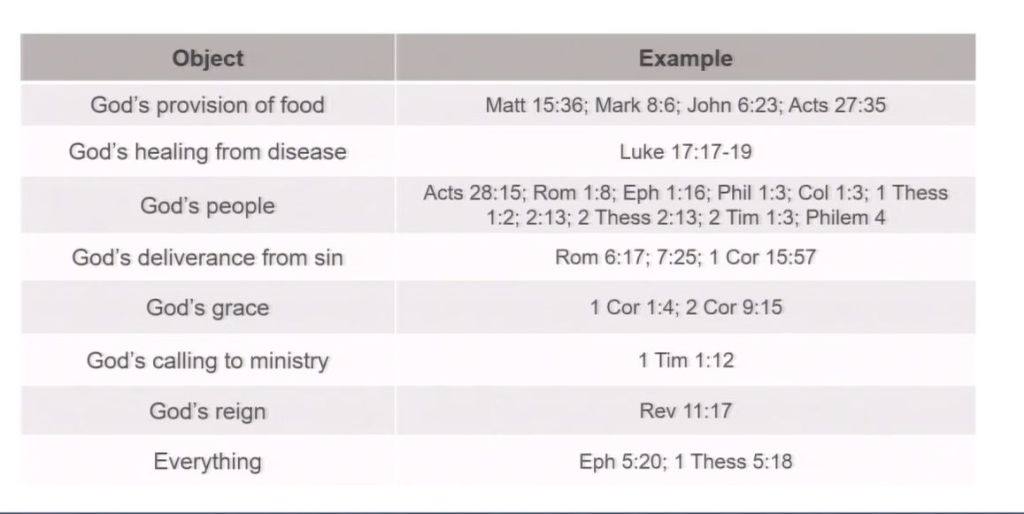
A definition of biblical thanksgiving (gratitude) is to “express our appreciation for the benefits or blessings to the one who is the source of such gifts, in a humble spirit of dependency.” ~Dr. Brad Klassen
Synonyms for thanksgiving are; appreciate, acknowledge, contentment, or ‘to bless’. Praying our gratitude to God cultivates an awareness, or an alertness, to intentionally observe the goodness of God and His undeserved mercies on us, the creatures, in our lives.
We are thankful for so MANY things! From ICL Class The Practice of Prayer
Components of Prayer ACTS: Supplication
Supplication or petition means bringing our requests for the needs of others and ourselves to God. Supplication is not only physical needs, for God knows what we need before we even ask Him. He is mindful of our physical needs (Matthew 6:25-32), though we certainly can and should ask for help with food, clothing, housing, and the like. It’s OK to bring our physical needs to Him in prayer. But don’t stop there. Ask Him to aid you in pursuing holiness, in sanctifying your walk, in being diligent in ministry, etc. As it’s said in Matthew 6:33,
But seek first His kingdom and His righteousness, and all these things will be provided to you.
I hope you have enjoyed my quick tutorial on prayer. We looked at what prayer is & isn’t, the importance of the discipline, praying God’s word back to Him, the components of prayer using the acronym ACTS, and verses of prayer we can read, meditate on, and model.
Below please find good resources on prayer that may help you further as you engage with God in prayer. I hope you do. I hope I do! Personal communion with Him is a privilege, and a duty, and a loving act to a good and gracious Father.
EM Bounds is known for his classics on prayer. Here is one that happens to be online. E.M. Bounds on Prayer
Simplify your Spiritual Life: Spiritual Disciplines for the Overwhelmed, book, Don Whitney
Valley of Vision: A Collection of Puritan Prayers, book, compiled by Arthur Bennett, Editor. Also online: here
Tim Challies’ chart in visual theology, 25 Attributes of God. You can include acknowledgement of these attributes day by day in your prayers as part of your adoration.
The Hidden Life of Prayer, David McIntyre, book available at Amazon etc., but also online for free.
The Doctrine of Repentance, Thomas Watson. A Puritan Paperback.
A Method for Prayer, Matthew Henry, online here updated in modern language, also available as a book to buy.
I heard about Beth Moore’s proposal to offer a video tutorial on prayer. What a coincidence, I thought, I’m taking a class on prayer right now. I wonder what she will be teaching, I asked myself. Would it be worth it to compare the two approaches, The Master’s Seminary’s class I’m in, and Beth Moore’s? Yes, I decided. So that is what this is.
There will be two parts. This first one will explain why I’m doing this, and I’ll look at the pros and cons of Moore’s tutorial.
Part 2 will be summaries of what I have been learning at TMS/ICL from Dr. Brad Klassen, who is leading it. Part 2 is here.
Beth Moore is an Anglican Lay Eucharistic Minister who left the Southern Baptist Convention earlier this year and forsook being a lifetime Baptist. She has been speaking and teaching for about 40 years, and has been publishing books and studies for 30. Her ministry is called Living Proof. She has a wide reach and is incredibly influential.
She is also a false teacher. This has been substantiated numerous times by me, other women, and pastors/theologians, so I won’t go into lengths here. The highlights, or lowlights, of her ministry includes mysticism, rebellion against scripture, denial of the sufficiency of scripture, poor hermeneutic, eisegesis, and pop psychology.
My ministry is to women and it grieves me to see so many women led astray by the Living Proof ministry and Beth Moore’s faulty approach to the Christian life.
2. There were 3,150 women listening within the first 5 minutes. Three hours later, the number jumped to 21,800. By early morning, 54,300 people had tuned in to either the live video or the posted video afterwards. Just during the time I’m writing this, 20,000 more watched. It’s up to 75,000 views now.
Women were tuning in from Japan, Europe, the UK. Moms were listening with their daughters, wives with their husbands. One said she planned to start a mom’s prayer group. Beth Moore’s reach of false doctrine into the lives of the undiscerning and the unwary is large, global, and permeating. I do what I can within my sphere and use my gifts to combat Moore’s false doctrine and poor biblical example to those with ears to hear.
[I]n Romans 16:17, he warned, “Watch out for those who cause divisions and create obstacles contrary to the doctrine that you have been taught; avoid them.” Avoid, Rebuke, Call Out: To avoid them, you have to know who they are. You can’t avoid somebody if you don’t know who they are. This idea of identifying and avoiding shows up in 1 Corinthians 5:11; 2 Thessalonians 3:6, 14; 2 Timothy 3:5; 2 John 10.” ~John Piper
When I write critiques of Beth Moore I invariably receive comments that say she preaches truth. Yes, there is some truth to what she teaches. There were some truths she taught in this lesson. Yet false doctrine doesn’t knock on your door with a tee shirt that says “Heresy here.” It’s subtle, destructive, and spreads like gangrene. It must be addressed.
Moore had some positives in her 45-minute lesson. These are things I agree with and are biblical.
–She emphasized the importance of prayer. –She noted the need to have an intercessory life. –She said she starts her prayer with confession of sin so she can be cleansed, and with praise/thanksgiving. –She said she speaks scriptures back to God and we should combine prayer with scripture.
Moore reaffirms her romantic interest in Jesus
In practical manner, she said we should– –Set a time to pray and that sticking to it helps develop the habit. –Pray in the same place each day, for the same reason, hardening a discipline we want to encourage in our Christian life. –Exclude any possible distractions that would hinder the development of this discipline. –Pray in expanding spheres. For example, first for your family, then extended family, friends, unknown people, government, missionaries or countries. This pointer reflected the expanding spheres of Acts 1:8 when Jesus said to His disciples to witness to Jerusalem, Judea, Samaria, and to the ends of the earth. –Pray for others to help us remember the global church and guard against self-absorption.
These are the usually taught points for developing a habit of prayer. All good.
Prayer Tutorial Cons: Objectionable Content Ahead
It was great to see the massive interest in the topic. It’s heartening to see so many women clamor to be present at a tutorial on prayer. I don’t think anyone, if asked, would answer a query about their prayer life with “It’s perfect! No need to improve!” We all can do better in praying. But to Whom do we pray? Why do we pray? How do we pray? What does the Bible say about prayer?
These questions were not addressed, or if so, only briefly and offhand. This tutorial was absent of a grounding in scripture. Yes, scripture was mentioned- in general. Only three actual verses with addresses were given as far as I caught. One of those was totally twisted. One other verse was referred to but address not given. This is a poor showing for someone who says she has been a Bible teacher for 40 years and whose entire ministry is founded on promoting biblical literacy.
Who, What, Why, When, Where?
Moore displaying one of her prayer journals
WHOdo we pray to? The object of our adoration was not explored. Yet this is where we should begin. Moore could have started, should have begun, with extolling God’s sovereignty, kingliness, sovereign ordination of all things. Positionally showing us as the creature, and He as Creator, signals the foundational point: our dependence on Him. A few verses here – in full, with addresses – would have gone a long way to setting the tone.
WHATdo we pray? She should have continued by teaching about Jesus’ own emphasis on prayer, as seen in Mark 1:35, Luke 5:16, Matthew 14:23. Jesus is the model for us in all things, since we are to pursue being Christ-like. What did Jesus pray about? How did He answer the disciples’ request in Luke 11:1, ‘Lord teach us to pray’. Moore missed an opportunity to use Jesus as the model, which also would have emphasized why prayer is important, (because it was important to Him). See this quote from from a Dallas Theological Seminary article:
Prayer reveals our priorities in life. “If I examine my prayers from this past week in light of the Great Commandment (Matt 22:37-40) and the Great Commission (Matt 28:18-20), how much did my prayers center upon God’s wisdom and power to obey these commands? If I’m honest, my prayers often focus on the physical realities of life with food, clothing, housing, and health. Jesus does not prevent us from praying for these things but reminds us the Father “knows” and “sees” all of our needs (Matt 6:25-32). Jesus challenges us to move beyond seeking and growing anxious over physical realities to focusing our primary efforts and affections on God’s kingdom (Matt 6:33)“.
WHY do we pray? Moore could have talked about the benefits of prayer. There are many, which I’ll address in part 2. But Moore’s sole emphasis seemed to be either that her “method” will help keep the word of God alive/fresh/vivacious in us; or that it satisfies a need God has to delight in us. She said, “He wants His joy to be complete by seeing our joy in Him.” There was no verse given for this statement. God IS complete, whether or not we pray to Him. It’s dangerous to casually state what God wants with no verse attached. We have the mind of Christ but we can’t read the mind of Christ.
The word of God IS alive and always will be. “For the word of God is living and active, and sharper than any two-edged sword, even penetrating as far as the division of soul and spirit, of both joints and marrow, and able to judge the thoughts and intentions of the heart.” (Hebrews 4:12).
[The views for her tutorial are up to 80,000 now.]
She so often stated axioms focusing on how much God loves us to pray to Him, it became clear that what she believes keeps the word of God alive in us, is God thinking of His joy in our prayers. The focal point for a relentless 47 minutes was us.
“I love to think of Him looking forward to me getting up [in the morning], I love knowing I’m loved and He wants to spend time with me.” ” ~Beth Moore on why we pray, Instagram Prayer tutorial 12/30/2021
Prayer reveals our view of self in relationship to God and others.
An ongoing issue that I and many others have with Moore’s teaching is that it relies on the mystical. She claims to hear directly from God in various ways, ways that aren’t the written word. Which, if you think about it, is ironic for a ministry founded on the goal of advancing biblical literacy among women. By this point in her career, Moore too often tells you what she claims to have directly received and teaches that. The ways that Moore claims to hear from God outside the Bible are in visions, dreams, pictures in her head, a compelling force, impressions, voices, God telling her, God teaching her, and just plain speaking over her. (Source).
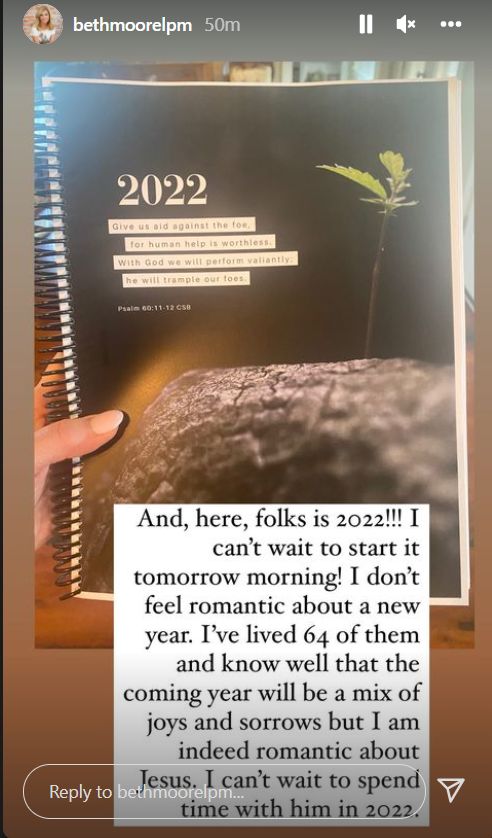
Moore said that she bases the upcoming year her life in Christ, on a verse that the Lord will directly give her.
“I love to see if the Lord will press a verse on my heart, that something will jump out at me a couple of weeks before the New Year. I love watching for Him to tell me what would be a key verse for this next year that will be a theme for the year.” ~Beth Moore, Instagram Prayer tutorial 12/30/2021
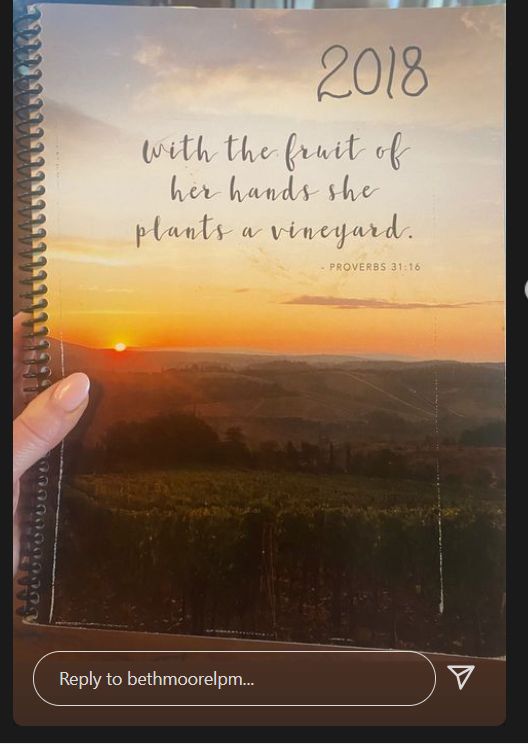
Once she receives this verse by direct revelation she adds it to the cover of her spiral prayer book and goes forward with that verse as her keystone. There were several other examples in the short tutorial where Moore said she relies on impressions or ‘leading’ or ‘laying on her heart’. She did not refer to the Bible verses for prayer except in 3 cases. Acts 12, incomplete verse address where the church was praying for Peter in Jail; Psalm 60:11-12, her key verse for last year the Lord mystically gave her; and Psalm 57:7-8. More on that last one at the end.
We don’t listen for the Spirit nor wait for Him to tell us anything that is outside of the Bible. The Bible is closed, there is no more revelation. (Deuteronomy 12:32, Revelation 22:18-19).
Moore’s Christian walk includes in large part waiting for God to drop teachings, advice, and verses into her head as she looks out for signs. This is mysticism, and it colludes God into a walk that diminishes His sovereignty. What happens when the key verse God allegedly gave her doesn’t match up with how her year turned out? She either has to stretch the verse into meanings it doesn’t intrinsically have, or she has to blame God for failing to hold up His part.
Me-me-me; I, I, I
Moore is self-centered. Her teaching method is eisegetically twisting verses to be about us. I wrote in 2011 after seeing her at a Living Proof live for two days, “Beth Moore has a way of explaining the Bible while not really explaining it, exalting God with her words yet diminishing His character at the same time.” I was horrified after she took a section of Deuteronomy exalting the LORD and making it about us. She is still at it. There was just so much talk about self in her tutorial, pointing God to us instead of us looking up to God.
An example of eisegesis from the lesson would be:
Awake, my glory! Awake, harp and lyre! I will awaken the dawn. Psalm 57:8
Moore was telling her audience here that she prays upon arising, first thing in the morning. She slides out of bed and onto her knees. She likes the morning time because of the freshness of the day and the potential for a clean slate after she confesses sin. Fine. Then she said, said of that verse, “I love that my praise helps wake up the dawn. It’s figurative language but I just love it.”
Our praise of the Ancient of Days has nothing to do with the dawn’s existence or its rising, or not rising. A commentator explains that verse:
David’s tongue will lead, and his psaltery and harp will follow, in these hymns of praise. I myself will awake, not only, “I will not be dead, and drowsy, and careless, in this work,” but, “I will be in the most lively frame, as one newly awakened out of a refreshing sleep.” He will awake early to this work, early in the morning, to begin the day with God, early in the beginnings of a mercy. When God is coming towards us with his favours we must go forth to meet him with our praises. ~Matthew Henry’s commentary on the whole Bible
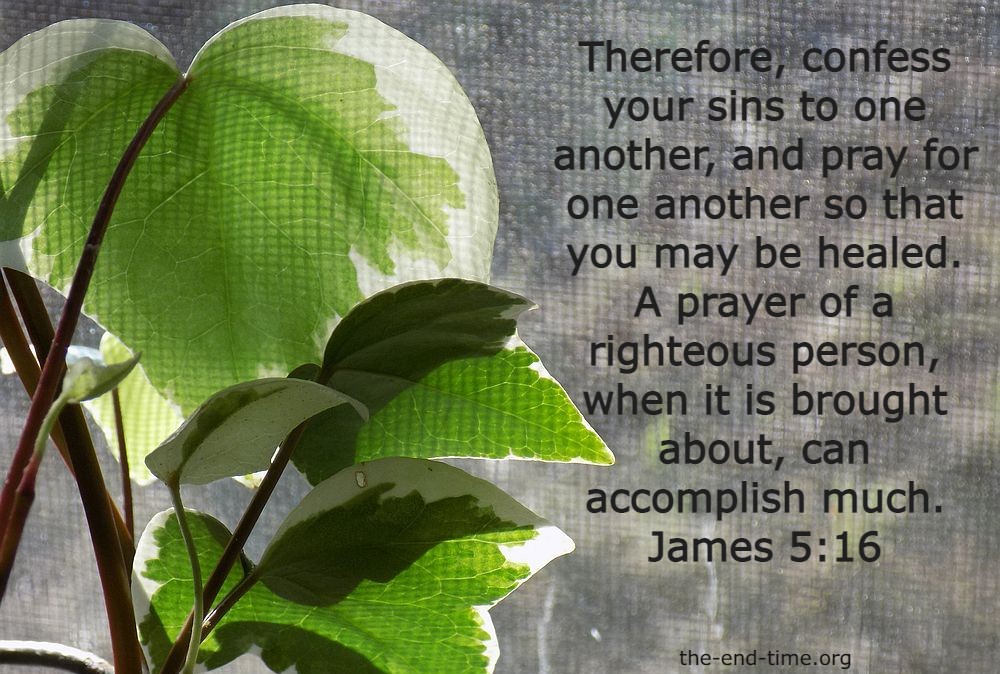
Women are taught badly if they listen to Beth Moore. Example: One woman said, “I love how you addressed how to discern who to pray for by the leading of the Spirit.” The Bible tells us who to pray for. Here is where Moore could have taught using the actual Bible and not a mystical process. The Bible tells us to pray for one another (James 5:16, Romans 1:9). To pray for pastors and spiritual leaders: (Ephesians 6:19-20), Colossians 4:3). The sick (James 5:14-15). Government leaders, Kings etc (1 Timothy 2:1-3). Our enemies (Matthew 5:44, Acts 7:59, 60). Israel, everyone, ourselves…and so on. We don’t need to look for signs to decide which Bible verse to adopt or wait for a mystical impression to decide who to pray for.
Conclusion
The Instagram Beth Moore Prayer Tutorial had some good points but was laced with enough poison to damage you. Its relentless focus on self, her mystical approach threaded throughout, and the absence of any real Bible teaching makes this Prayer Tutorial from Beth Moore one to skip. Yet 88,000 people have already viewed it, and it’s only 16 hours since she concluded. I pray you remain outside one of those 88,000 souls looking for teaching from Beth Moore.
Tomorrow I’ll write up some of the great things about prayer from the Bible. It’s full of advice, expectation, and model prayers from the hearts and minds of Moses, David, Job, Solomon, Daniel and other Bible men and women.
It happened that while Jesus was praying in a certain place, when He had finished, one of His disciples said to Him, “Lord, teach us to pray, just as John also taught his disciples.” And He said to them, “When you pray, say: ‘Father, hallowed be Your name. Your kingdom come. ‘Give us each day our daily bread. ‘And forgive us our sins, For we ourselves also forgive everyone who is indebted to us. And do not lead us into temptation.'” (Luke 11:1-4)
It’s time for an annual wrap-up of the blog doings! I like the end-of-year wrap-ups. It’s good to take stock, review what I’ve done, and decide what my next year’s goals may be.
I think it’s especially important for people who have a ministry in Jesus’ name. I am always concerned that I write about things of Jesus that are accurate, well-interpreted, and edifying the reader or listener. I am concerned that I don’t drift, nor neglect my salvation. Publishing in the name of Jesus for all the world to see carries with it a heavy responsibility. If Jesus even considers me a teacher, then the burden to rightly divide the word is even more paramount. (James 3:1). As a Titus 2 older woman, I also feel a responsibility to minister correctly to the younger. I take these verses seriously:
3Older women likewise are to be reverent in their behavior, not malicious gossips nor enslaved to much wine, teaching what is good, 4 so that they may encourage the young women to love their husbands, to love their children, 5 to be sensible, pure, workers at home, kind, being subject to their own husbands, so that the word of God will not be dishonored. (Titus 2:3-5).
Dishonoring the word of God is the worst.
So how was 2021? Well, let’s begin at the beginning, 2009. I started the blog The End Time in January 2009 on Blogspot. Thirteen years!!! I named it The End Time, Because we are IN the end time, even though I knew I might be lumped in with the many crackpots and fringe theologians milling about in the prophetic waters. So many of them do newspaper eisegeses, that is, looking at the news headlines and back-matching verses to them and pronouncing the end is near. I was that way too, in the early years of salvation and the early blog. I know why, too. I was SO thrilled with finally having a framework and understanding why the world was the way it was. Why Israel is hated and there never seems to be a peace treaty that lasts. Why people are so awful. How the world got here, because it sure was obvious it didn’t appear from nothing and banged open for no reason of a sudden. My eyes had been opened and I was relieved and entranced.
But the Lord in His graciousness soon grew me out of that, and I went on to just plain theology and discernment. As for the discernment, I’ve noted concerns in the past with David Platt early on, Rachel Held Evans, Jen Hatmaker, the IF:Gathering bunch (especially Jennie Allen), Ravi Zacharias early on, Ann Voskamp, Joyce Meyer, Jen Wilkin. I’ve called out films from the Kendrick Brothers like Fireproof and The War Room, also The Shack – both the book and the movie…and more. I’ve reviewed books with discernment in mind, like The Circle Maker. I’ve warned about movements like Lectio Divina and Spiritual Formation and Romancing Jesus as a boyfriend, and so on.
My highest views for any given month are always related to a post about Beth Moore, and that has held true from 2011 when I first started writing about her, to this month. But I persist in discernment, speaking up when I see something off, or “almost right” as Spurgeon famously said.
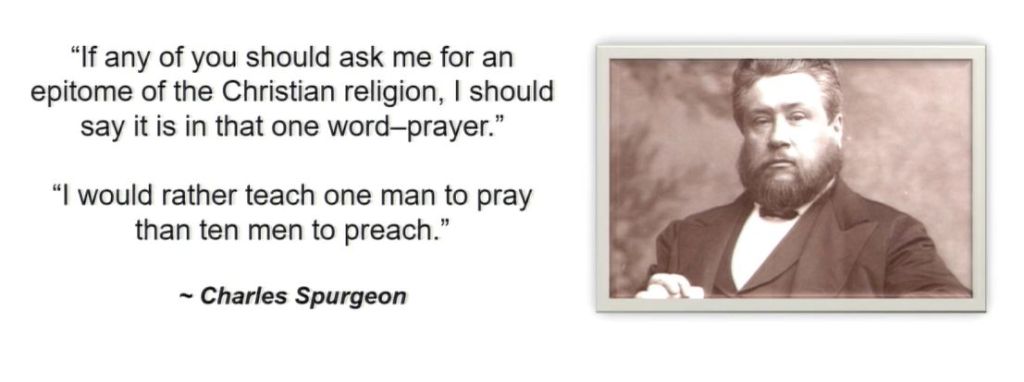
“Discernment is not knowing the difference between right and wrong. It is knowing the difference between right and almost right.”—C.H. Spurgeon
One person – even one – who sees a false teacher for who she or he is, and repents, is worth it. It’s why discernment people do what we do. It’s why I do what I do.
An example: I received a comment in real life from a woman friend who said ‘the best thing I ever did for her was point her to John MacArthur.’ Not only she enjoys his content, but her son and the whole family does too.
Another comment on my Twitter thread about Beth Moore’s Anglicanism this month was from a gentleman who said his eyes have been opened, and he repented of steering his wife to Beth Moore material which he had done even recently.
If anything I print or say in the discernment realms steers someone TO a great ministry or AWAY from a false one, I am thrilled. It is a great credit to The Holy Spirit who opens eyes, raises up good ministries, and a gives illumination to minds. Who wouldn’t be thrilled to be even a tiny part of that?!
2021 has been interesting on the blog. Each year the views increase, and for that I am grateful. As my visibility increases, a few more people ask me to be a guest on their podcasts. I was interviewed on Confidently Called Homemakers, The Bud Zone, and Striving for Eternity, with an upcoming interview on A Word Fitly Spoken.
I started my own podcast, imaginatively called The End Time Blog podcast. It’s just me reading what I wrote that day. I did it so my friends who have recently had children can listen because they no longer have time to read. In 2021 my commitment to getting solid content out there remains steadfast. I thank the Holy Spirit for that.
I received an email from the producers at the Dr. Phil television program to appear on their show about The Great Resignation, because I’d written about The movement called The Great Resignation, Or, The Great Laziness. The premise as stated to me was that there would be a debate for and against people quitting their jobs, a movement that has swept America since the pandemic. I declined, but then they asked to use my essay and the blog name etc in the show and in print materials. I don’t know how that went because I don’t have a TV and the show is not streamed online for free. But I didn’t get any bumps in views on my blog that week over the normal, so they probably abandoned it and focused on the angry guy who quit with profanity over the intercom. TV, you know.
On the individual blog essay front, my essay Bullet points on why Joyce Meyer is a false teacher received a lot of views, which I am grateful for, as perhaps someone will come out of Meyer’s false teaching. I posted several creation essays extolling Jesus as Creator, an aspect of His work which I love to study.
I re-posted an old series I’d written called Back to Basics, just cutting through the culture and clutter to re-focus on the most important things, like the Holy Spirit, Prayer, being Born Again, and the like.
In February it came to our attention that Canadian officials were persecuting the church in the Great White North, and I along with many other bloggers and journalists focused on Pastor James Coates’ efforts to resist that tyranny. I posted some articles about that situation here, here, here.
In June, the talk was of Southern Baptist Convention presidential candidate Pastor Ed Litton’s plagiarism. I wrote about it here, here, and here.
In August, I posted a week of Discernment essays in a series I felt was needed. Essay #1 is here. Then I did a week on Heaven, needing to cleanse my theological palate after all the putridness of the plagiarism scandal and the Ravi Zacharias scandal. This is Heaven Week essay #1.
In October I was blessed to attend the national G3 Conference, which I adored. Here is an essay of photos and blurbs about that three-day trip to Atlanta.
The battle of women in church leadership heated up during the year. Of course, I pushed back against that, since the Bible says “no,” at least, leadership positions that put women in authority over men. Here, here.
November was not so busy. In fact, the third week of October I got a stomach flu then pneumonia. I spent two weeks battling a 102 fever and was out of work. I returned in November but staggered around trying to regain my strength. Then I got Flu A. I spent 4 more days at home. In December I got a sinus infection which I’m still battling. Oy.
I’d posted an essay in December reporting where Beth Moore landed, after her noisy March declaration announcing her departure from the Southern Baptist Convention. She’d been vaguely tweeting about a new “liturgical church” she and her religiously apathetic husband Keith had been attending. She gushed and gushed about it.
I researched where, found it, and I’d reported, “Beth Moore is Anglican Now“. it isn’t a secret, Moore was asked by Bishop Clark of the Anglican Diocese of the Western Gulf Coast, Woodlands, TX, to speak a devotional to his people, which she did on November 10, 2021, and at that time identified her church.
My post generated a lot of interest. But we are a visual people nowadays, and when someone posted a satirical tweet saying it wouldn’t be long before Beth Moore would look like Moira Rose in the ending to the TV show Schitt’s Creek, I knew it to be a truism. I also knew it would not be long before Beth was at the pulpit serving or speaking in some way. After all, it was mere weeks after becoming a member that she was asked to MC an event and also to teach a class to an audience that included ordained leaders, presumably men. And sure enough, it happened. I posted the look-alike photos and showed screen shots of her in church doing just that.
It caused a Twitter meltdown. It also caused Moore to be nationally trending. Several journalism outlets picked up the story and reported the news as a ‘social media uproar.‘ Glad to help.
The top search query for all the year that landed people on my blog is “Melissa Moore”. The top essay is still, since 2016, an essay about Melissa Moore’s unbiblical divorce. Top Ten search queries for the year are listed below. That the query ‘Beth Moore Anglican’ is in the list is amazing, because that issue only came up two weeks ago.
Melissa Moore
Ravi Zacharias Last Words
Types Of Glory
One World Religion 2022
One World Religion Center
Beth Moore Anglican
Beth Moore Salary
Beth Moore Net Worth
Jennie Allen Theology
Joyce Meyer False Teacher
A topic that caught the people’s attention is the reporting I did on the One World Religion center opening in 2022. A LOT. I mean, hundreds of thousands. I thought it was significant enough to report on, and it seems lots of other people thought it was significant enough to search for and read about. THIS is why I do what I do. I hate to think of hundreds of thousands of people searching for information on the One World Religion center and what it means, and landing on a crackpot’s page.
On the top ten there was one query about a theological issue, the different types of glory. That’s good. Sure, I wish people would search for more theological topics, but I have no angst about the discernment questions. John MacArthur has stated many times over his 50 years of ministry that “The greatest threat to the church is lack of discernment,” as he said again in his December newsletter. So if I can serve through my discernment gifting in a way that edifies, helps, or even provokes, I am content.
I enjoyed some good movies this year, including the Mully Movie, a true story. “MULLY the true story of Charles Mully, whose unlikely stratospheric rise to wealth and power leaves him questioning his own existence, searching for meaning in life. Against the better judgment of family and community, MULLY sets out to enrich the fate of orphaned children across Kenya. Jeopardizing his own life and the security of his family, Charles Mully risks everything and sets in motion a series of events that is nothing short of astonishing… as he created the World’s Largest Family.” Really good! Free on Youtube.
I wrote about my personal life in reviewing 2021 at my other blog, The Quiet Life My Year in Review.
My goals for next year on this blog are the same as they have always been. As long as the Spirit sustains me, I will continue to write about theological topics, including prophecy, discernment, and encouragement. We are 365 days closer to heaven than we were at this time last year. What a day that will be when we are finally home!
To all my readers, donors, pray-ers, Thank you! To my critics, trolls, harassers, Bless you all. I mean it. I love the Lord and that means I care for the souls of those who are angry, in anguish, or just plain ignorant. It means I love His people and long for the day when faith becomes sight. Meanwhile, I write.
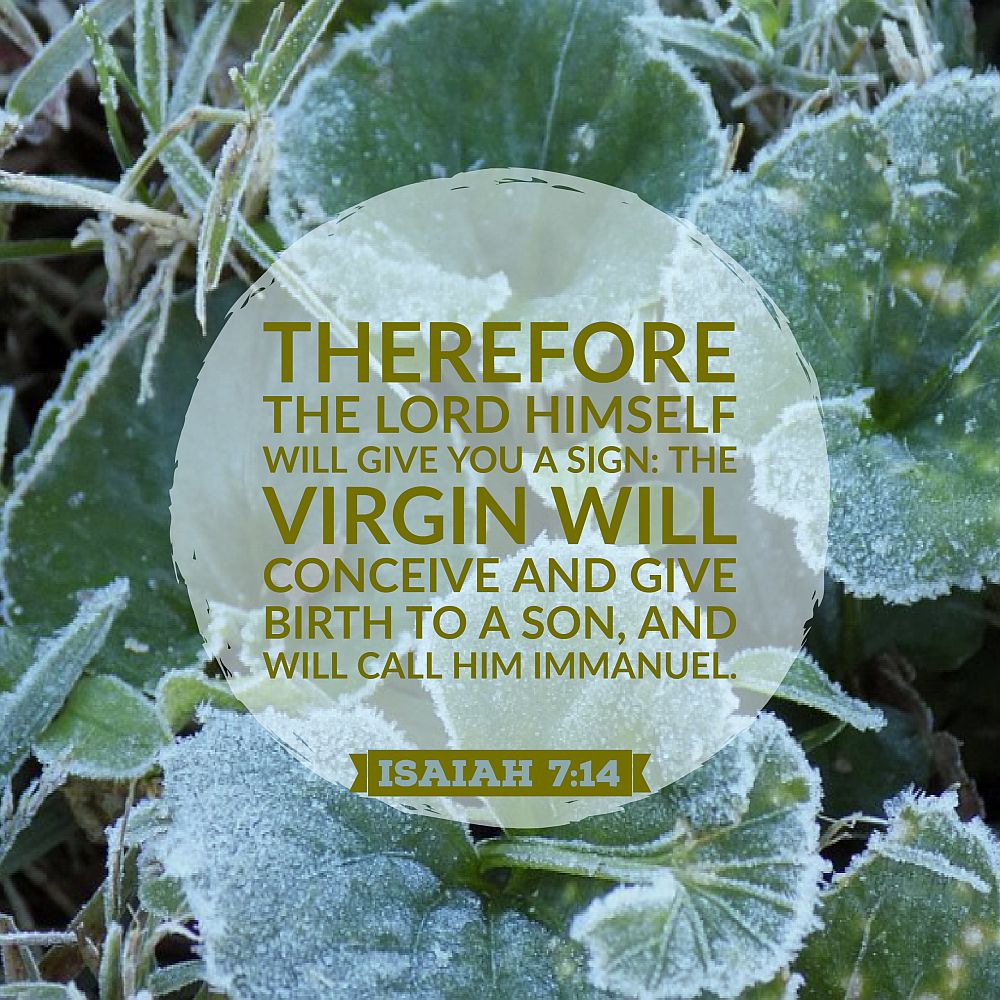
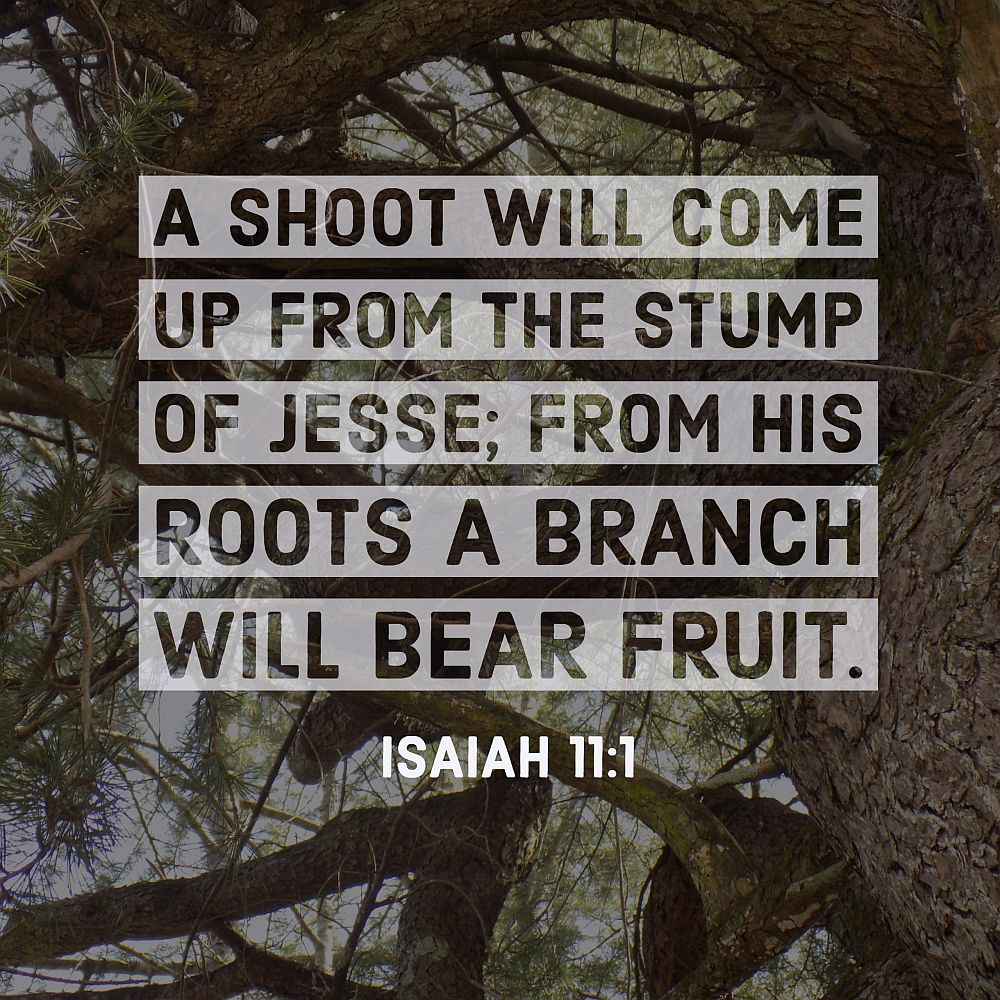
Thank you to everyone who messaged me that they were enjoying my Advent Series, “Thirty Days of Jesus”. I had the idea a few years ago to distill Jesus’ prophesied coming, His early life, His adult life, Ascension, and prophesied return all in one flow using just scripture overlaid on a photograph.
It was hard to choose but I narrowed it down to 30 pics and 2 postludes. On most of the posts I included a few links for people to follow up the theme of the scripture in a credible ministry.
Some folks said they missed a day here and there so I said I’d put the entire series together in one post. Here it is!
Click on the picture you want to see, it will enlarge. These are in order from Day 1 to Postlude 2. Thanks and have a Happy New Year!
I’ve always been a reader. As a child, I read to escape the world around me. Reading is an effective way to do that, especially if you have a lot of imagination and are willing to go where the book takes you.
Series are comforting to me. These days as an adult I like progressive reality competition programs such as Blown Away or Great British Bake Off. I like them because the program is always the same. I don’t have to invest time and energy into learning a new set of characters of deal with unexpected situations. Yet the meat of the show changes, they bake different things, they make different things out of glass.
As a kid I liked book series’ where the same thing happened. The structure was always the same, same characters, only the plot changed, yet its bones were basically the same from book to book.
I always “had my nose in a book” as my mother used to sniff. I loved Nancy Drew. The ‘cases’ were interesting to me a kid, and I liked the female heroine. I got one after another out of the library.
On Christmas morning sometime around 50 years ago, I eagerly woke up and vaulted out of my bed. I ran to the living room and burst through the door. We had cathedral ceilings, so we could always get a ten foot tall tree in there. It was majestic. But almost as majestic was the pyramid of Nancy Drew books that seemed almost as tall as the tree! All the books were there that had been published so far in the whole series, arranged standing up unwrapped, in a pyramid. What a dazzling sight! I was so happy!
I was comforted by that gift. I knew I’d have many happy hours ahead of living in Nancy’s world. These are the ‘cases’ I remember best. The cover art has been changed through the years, at least 4 times, the original covers in the 1930s, again by Rudy Nappi in the 1960s (these are the ones I remember, from my era) and some by Bill Gillies in the 1950s and recent updates by Sabrina Gabrielli in the 2000s.
This site has the cover art, synopsis of all the books, and more information about the series.
The next best gift I received was from my father around 25 years ago. He usually just sent a check but that year he gave a gift certificate to Barnes and Noble bookstore (or Borders, I forget which). It was for $200! I was so happy! Usually when I went to the bookstore (remember them?) I’d have to winnow from the 4800 books I wanted down to one. I have to count my pennies. A gift certificate meant I could just buy whatever book I wanted. It was totally opposite to the way I usually shop and it was great!
The Bookstore folks would not allow cash back, they’d just reduce the amount on the gift card till it was gone. The store was far from me and out of my way I knew I would not likely get back there any time soon. So I spent it all at one go! I stayed there browsing for hours, considering, deciding, until I had spent every last penny and it was great.
The absolute best gift I ever got though was quite different from books. It was received sometime near my birthday December 2003 and the second week of January 2004. This one is completely unlike the Nancy Drew books or the bookstore gift certificate. Why? Because unlike a book that you’ve read once and then you know it, this gift never wears out. It is endless in its giving. It was the moment that the Lord broke in to my life in my early 40s and caused me to see my sin for what it was-rebellion against a Holy and Righteous God. He gave me a spirit of repentance. I fell down on Him, crying out something similar to Paul’s everlasting cry,
“O wretched man that I am! who shall deliver me from the body of this death? I thank God through Jesus Christ our Lord.” (Romans 7:24, 25).
He lifted me from my sin, washed me with His blood, turned me round so I could pursue holiness instead of sin.
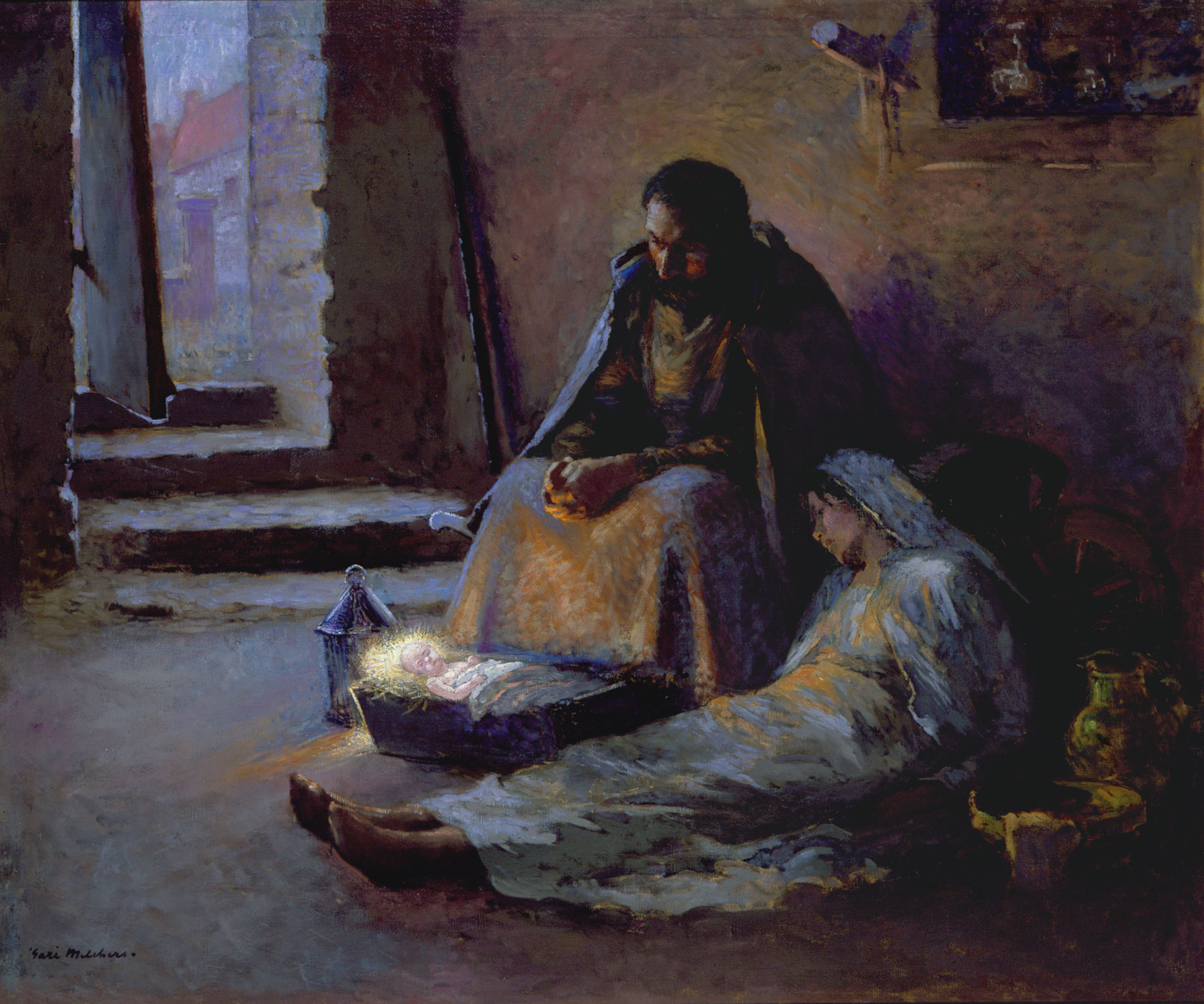
I love biblical art, and I’m entranced with a few particular pieces. One I come back to a lot happens at Christmas time, and I love to look at it. I’ve written about it before. It is called The Nativity, by Gari Melchers.
When preaching about this moment in history, Pastor S. Lewis Johnson emphasized the virgin conception rather than the virgin birth. He preached that the birth was typical, human, bloody, and messy. It was the conception that was immaculate. The art by American painter Gari Melchers depicts a scene more reflective of a birth than most nativity scenes usually do.
Here, we see a deeply concentrating Joseph gazing at his newborn son, perhaps pondering the spiritual implications of this new physical life that promised to bring new spiritual life to one and all. Note his furrowed brow. Mary, exhausted, drooping, leans against her husband sleepily, a recently used washbowl and cloth by her side. Is the glow from the Babe’s head, or the lantern that has been set next to Him? The scene depicts exhaustion, wonder, light, and hope.
Julius Garibaldi Melchers (1860-1932) was an American artist. He was one of the leading American proponents of naturalism. He won a 1932 Gold medal from the American Academy of Arts and Letters, according to Wikipedia.
As for the setting itself, it is unusual in that it does not show the usual display of a barn or stable, with animals around. Certainly the Wise Men from the East were not present. Historically we know that appeared up to two years later, when Mary and Joseph were living in a house and the babe was a toddler. This is another reason I’ve always liked this painting, above all others. It is more closely historical and accurate than many people know in setting the scene in the animal section of a house.
It was highly likely, almost certain, that Mary gave birth in a house. Perhaps the house was crowded with other relatives who’d arrived for the census prior to their arrival, so the only spot left was the downstairs entry where the animals were usually kept. Here is information about the likelihood that Jesus was not born in a barn or stable, but in a home, and probably a relative’s domicile. The essay also discusses what is meant by “inn”, and more.
The mention of a ‘manger’ in Luke’s nativity story, suggesting animals, led mediaeval illustrators to depict the ox and the ass recognising the baby Jesus, so the natural setting was a stable—after all, isn’t that where animals are kept? (Answer: not necessarily!)
The third issue relates to our understanding of (you guessed it) the historical and social context of the story. In the first place, it would be unthinkable that Joseph, returning to his place of ancestral origins, would not have been received by family members, even if they were not close relatives.
No one has ascended to heaven but He who came down from heaven, that is, the Son of Man who is in heaven. (John 3:13)
Barnes’ Notes has something to say about that-
And no man hath ascended into heavens – No man, therefore, is qualified to speak of heavenly things, John 3:12. To speak of those things requires intimate acquaintance with them – demands that we have seen them; and as no one has ascended into heaven and returned, so no one is qualified to speak of them but He who came down from heaven.
This does not mean that no one had Gone to heaven or had been saved, for Enoch and Elijah had been borne there (Genesis 5:24; compare Hebrews 11:5; 2 Kings 2:11); and Abraham, Isaac, and Jacob, and others were there: but it means that no one had ascended and “returned,” so as to be qualified to speak of the things there. Source- Barnes Notes.
We remember Paul was carried up to the Third Heaven, but he was firm that it was unlawful to tell specifics.
“I know a man in Christ who fourteen years ago was caught up to the third heaven. Whether it was in the body or out of the body I do not know—God knows. And I know that this man—whether in the body or apart from the body I do not know, but God knows—was caught up to paradise and heard inexpressible things, things that no one is permitted to tell.” (2 Corinthians 12:2–4).
It is distressing that people are claiming that they have been to heaven and back when the Bible says they have not. It’s worse when they are unlawful and express the things they allege to have seen there. Even worse, when they make money from their tales by writing books, or approve movie scripts of their alleged heavenly trips to and from the Third Heaven. Trading on the name of Jesus and false notions about His heavenly abode to accumulate riches for one’s self is crass.
This does not faze many people though, who plow right ahead with touting their alleged visions and visits. Here is one, Jesse Duplantis, claiming just such a thing below, with Justin Peters refuting his claims biblically.
Friends, what we say about Jesus matters. Speaking casually about things of which we know nothing is a sin. There are plenty of Proverbs warning about impertinent or foolish speech. Colossians 2:18 warns that the people who go on about these things would defraud YOU of your prize.
Let no one cheat you of your reward, taking delight in false humility and worship of angels, intruding into those things which he has not seen, vainly puffed up by his fleshly mind, (Colossians 2:18)
And their supposed visions are puffing them up. It brings the attention onto the person speaking them, not the Person they are about. Be careful in speaking of which we know nothing, and be careful about believing things spoken from those who know nothing. Both are dangerous
Christmas advent. We are coming toward the end of our look at the life of Jesus through scripture. The first section of His life was seen through verses focused on prophecy, arrival, and early life.
The next section of verses looked at Him as the Son, second person of the Trinity.
We proceeded into looking at Jesus as the Son and His preeminence, His works, and His ministry. Under ministry & works, I chose verses showing His attributes and aspects of being servant, teacher, shepherd, intercessor, and compassionate healer; and His attributes of omniscience, having all authority and power, and sinlessness.
Now after Jesus was born in Bethlehem of Judea in the days of Herod the king, behold, magi from the east arrived in Jerusalem, saying, 2“Where is He who has been born King of the Jews? For we saw His star in the east and have come to worship Him.” 3When Herod the king heard this, he was troubled, and all Jerusalem with him. 4And gathering together all the chief priests and scribes of the people, he inquired of them where the Messiah was to be born. 5They said to him, “In Bethlehem of Judea; for this is what has been written by the prophet:
6‘AND YOU, BETHLEHEM, LAND OF JUDAH, ARE BY NO MEANS LEAST AMONG THE LEADERS OF JUDAH; FOR FROM YOU WILL COME FORTH A RULER WHO WILL SHEPHERD MY PEOPLE ISRAEL.’” (Matthew 2:1-6).
Setting: Jerusalem
Characters: The Magi from the east, Herod, and the Scribes & Priests
Event: Finding the Christ Child
The Magi were likely some Alchemists/Astrologers/Science men etc. MacArthur describes them this way –
Because of their combined knowledge of science, agriculture, mathematics, history, and the occult, their religious and political influence continued to grow until they became the most prominent and powerful group of advisors in the Medo-Persian and subsequently the Babylonian empire. … We learn from the book of Daniel that the magi were among the highest-ranking officials in Babylon. Because the Lord gave Daniel the interpretation of Nebuchadnezzar’s dream-which none of the other court seers was able to do-Daniel was appointed as “ruler over the whole province of Babylon and chief prefect over all the wise men of Babylon” (Daniel 2:48). (Source).
The Wise Men were monotheistic, that is, they believed there was only one God. Because of the influence of Daniel in those long ago centuries, knowledge about Yahweh still existed in their canon. We know Daniel was a sincere and learned worshiper of Yahweh, so it is likely he taught the wise men of Babylon all about our God.
I know that the Wise Men didn’t arrive at the stable when Jesus was a baby. But, that’s the set.
That knowledge was retained, and it came down to the moment when the Wise Men of Jesus’ day saw the star.
Now after Jesus was born in Bethlehem of Judea in the days of Herod the king, behold, magi from the east arrived in Jerusalem, saying, “Where is He who has been born King of the Jews? For we saw His star in the east and have come to worship Him.” (Matthew 2:1-2).
That is all we know about the Magi, but even with this scant information, we know that they knew there would be born a King of the Jews. Their journey from the east, (likely Babylon) was a journey of about 800-900 miles. They traveled by caravan. Having armed guards to protect them as was the custom of the day is probable, since they were carrying expensive items, especially the gold.
They made that difficult and dangerous months-long journey. The Magi had incomplete knowledge of the King of the Jews, Daniel was long gone 700 years before, and any remaining Hebrews in Babylon likely had probably long since apostatized.
What would spur influential Nobles like the Magi to seek out the Christ child with such single-minded purpose? We don’t know but we can surmise that their knowledge was incomplete. They were not known as strong worshipers of Yahweh but custom says they were Zoroastrians.
More astonishingly, not only did the Magi make the effort to journey to Jerusalem, (a HUGE undertaking), not only did they diligently seek the Child, and then trek to Bethlehem, they fell down and worshiped Him! They did not come to simply gather intel, they did not come simply to offer gifts. They weren’t rubberneckers or looky-loos. They came to WORSHIP HIM.
Let us contrast the diligence and humility of the Magi, pagans from a far-off land, to the Priests & Scribes, priests to the very Jews of whom Jesus had come to be king.
Imagine the scene. A caravan of Nobles along with their animals, tents, and guards, a HUGE retinue, arrives in Jerusalem. It would be akin to the Presidential Motorcade, with the cadre of motorcycles at the front, police cars with sirens, several black SUVs, and all the trailing cars. It’s a hubbub.
The Magi started asking around where is the King of the Jews, and finally got to Herod. Herod was troubled. I would be too if such a large company arrived at my door. But Herod, the Scribes, and Priests evidence no amazement. Worse, when they were asked where is the Christ child to be born, the Priests and Scribes answered immediately. The knew the scripture from Micah 5, and said ‘Bethlehem’. /Yawn/
It is not recorded that the Scribes and Priests said ‘we shall look into this as well.’ They did not ask why the Magi had arrived. Crickets. These Jerusalem men had full knowledge, revelation given to them by Yahweh Himself in the Old Testament. They spend their days studying, talking, interpreting. But when the moment came, in the form of a noticeable retinue of seekers from the east asking for the Messiah, they didn’t even walk the 5 miles to Bethlehem to check it out!
We think of others in the Bible who had incomplete knowledge, but still expended a great deal of effort to find God. The Ethiopian Eunuch, traveled all the way to Jerusalem to worship God. He was in charge of all the treasure of Queen Candace, but was humble enough to admit admitted his incomplete knowledge. He was willing to be taught.
Queen of Sheba of 1 Kings 10:1. Now when the queen of Sheba heard about the fame of Solomon in relation to the name of the Lord, she came to test him with riddles. 2 So she came to Jerusalem with a very large entourage, with camels carrying balsam oil and a very large quantity of gold and precious stones.
She spoke with Solomon for a long time and was amazed. She concluded, “Blessed are your men, and blessed are these servants of yours who stand before you continually and hear your wisdom! 9 Blessed be the Lord your God who delighted in you to put you on the throne of Israel; because the Lord loves Israel forever, He made you king, to do justice and righteousness.” (1 Kings 10:8-9).
Queen of Sheba was careful to question Solomon in relation to the name of the Lord, and also attributed Solomon’s success to God.
No wonder Jesus pronounced woes upon the Scribes and Priests! They had the most knowledge yet were the most apathetic.
Just because a person has head knowledge does not mean much. The rough fishermen whom Jesus called to be His disciples did not have as much knowledge as the Priests & Scribes. Yet they followed Him when called. Mary, though a young girl, was submissive, obedient, and humble. She knew she was a sinner in need of a Savior.
The difference is acting on the knowledge you DO have. Mary said yes. The Ethiopian Eunuch said please teach me. Sheba traveled to find out more. The Magi sought the Child so they could worship Him. Put your head knowledge into action in service to the Lord. Don’t rest in your head like the Scribes & Priests. Their apathy soon turned to hostility. There are only two responses to Christ: worship or rejection. Whatever knowledge you have, whether a seasoned theologian or a new convert-act on it. Act: pray, seek, question, learn, and above all, involve the heart: worship.










 the-end-time.org