Posted in encouragement, grace, repentance, salvation, sin

The Most Terrifying Thing God Can Do: In which I testify to God’s grace in giving me over to my sin

Last week Tim Challies posted an article titled The Most Terrifying Thing God Can Do. It’s a terrifying article. It crushed me reading it and apparently it did for many others as well. I saw this article referred to and re-posted numerous times.

The most terrifying thing God can do is to turn an unsaved person over to his sin. Here is a sample of the scriptural truths the article contains:

We speak often of hell and eternal consequences for sin, but perhaps we give too little attention to God’s action against sin in this world and this life. God’s punishment for sin is sin. His punishment is allowing people to experience the life-stealing, soul-rotting consequences of their sin. He expresses his wrath by allowing them the very thing they want. He does this because when they get the thing they want, it only deepens their destruction. 

In this way, sin is its own punishment. And in all the world I see nothing more terrifying than this: the prospect of God allowing people to experience the full impact and weight of their sinfulness. Nothing is more terrifying than God determining that he will no longer restrain the evil within them.

This is a terrifying thought.

This would be a terrifying event.

For me, the event was not hypothetical. It actually happened. Just before I came to salvation, God turned me over to my sin.

It is a fearful thing to fall into the hands of the living God. (Hebrews 10:31)

I’d lived for 43 years as a sinner, but I had one particular besetting sin that consumed me. After so many decades, the Lord turned me over to it and released restraint. He turned me over to my sin so that I’d choke on it, and by virtue of contrast, thirst for His purity and holiness. After a few mercifully short years, I cried for mercy to the God that I would finally acknowledge and my sin that I would finally admit.

I remember the day when I realized that the sin wasn’t so fun anymore. I realized that my sin had me, I didn’t have it. Like a rabbit in a snare, I tried to shake loose of it, and could not. This perplexed me, because I had always been able to do anything I’d set my mind to. This was different. I was trapped. (Romans 7:14)

Now I know that we are slaves to sin, in bondage to it and to the god of this world, satan. But like quicksand, the more I tried to get out of my sin on my own terms and in my own effort, the more I foundered. I truly felt like I was sinking, forever to be engulfed in a toxic brew of my own making, sinking under the weight of it. My lips were only inches above the water and I felt I had only moments to go, relatively speaking, before I’d sink below the surface to rise no more. And it was cold.

Just prior to salvation, I was attempting to chronicle my experience in art, trying to puzzle out in visuals what words could not express. A spiritual process was happening to me, but I did not understand that it was spiritual. I only knew it was something. I was in a 1 Corinthians 2:14 situation. So I thought that whatever was happening to me I could try and figure it out by making visuals instead of words.

I wrote a little book called “Story of a Fly”. I look back on it now and I see clearly that it is a record of my coming to faith. It contains images and groanings my soul was expressing that words could not convey. As for the title, I think flies are disgusting, and I had no idea why I chose a fly to represent me, the main character in my little book. In retrospect, it was because I was under bondage to satan, also mentioned in the bible as the Lord of the Flies (Baal-zebub or Beelzebul).

In my book, I ‘knew’ there existed a secret kingdom, existing in the midst of and alongside the world I could see. I wanted to go there.

I’d traveled a good deal out in the American West. One of the native mythologies was a trickster god called Kokopelli. He plays the flute and is seen as a spirit of music. He’s also a fertility god and god of agriculture. In my deepest recesses I ‘felt’ that a trickster god was preventing me from obtaining the kingdom, represented below. I called him the ‘fly-wrangler’.
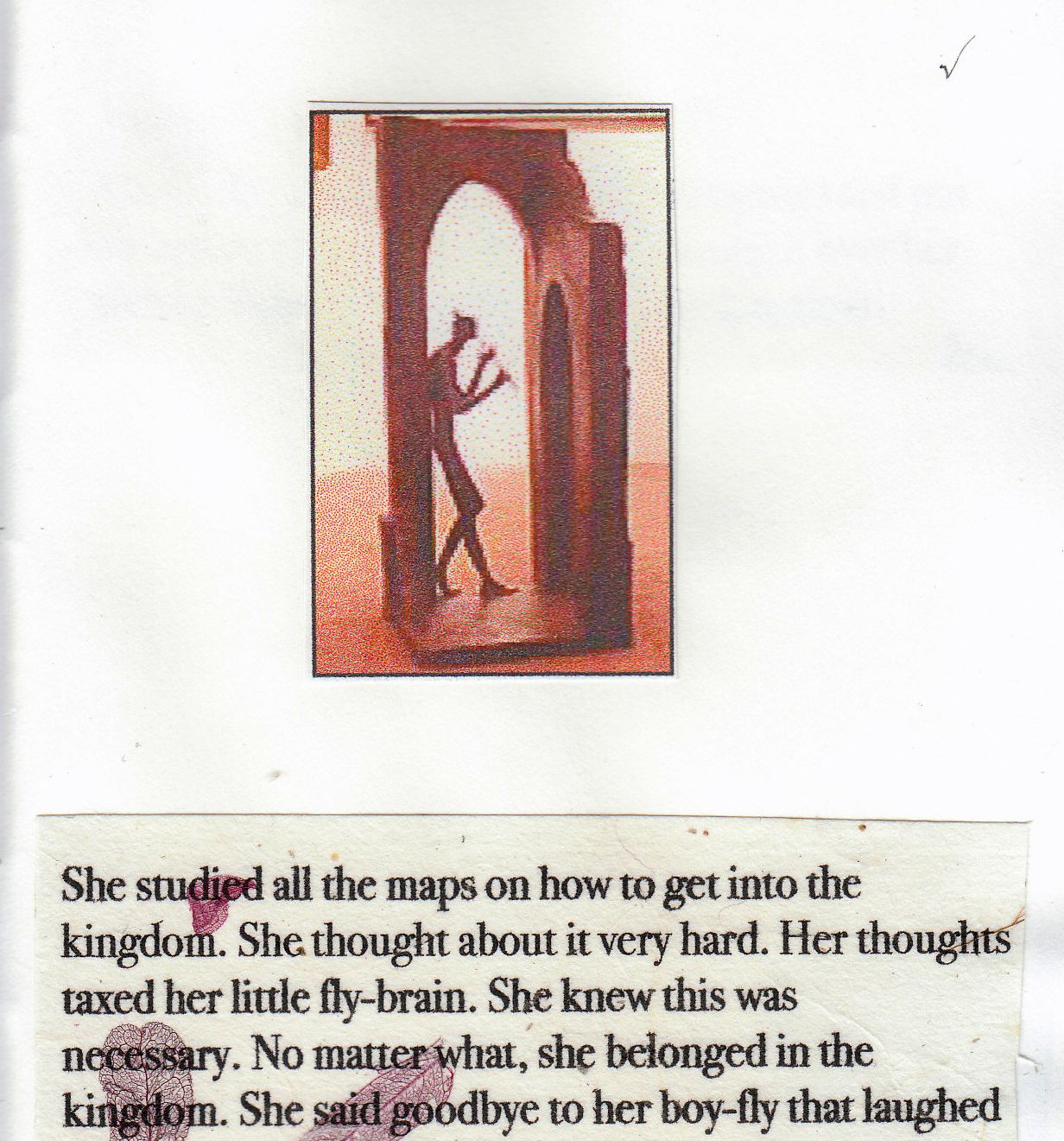
I was searching, seeking, making a long and winding road…but not obtaining this kingdom I wanted to enter so badly.

I felt I was so close and was about to triumphantly enter the kingdom! But there was a barrier. It was insurmountable.

It felt like I was a fly in a jar, captured. I was free to fly around in the jar but not free to get out and go into the kingdom. It was very frustrating. Of course, this feeling I’d had I now know was the weight of sin. Psalm 38:4 is so true! Without repenting no one can ever enter the kingdom of God. I had to deal with my sin.

I could not figure out why I was not enjoying the peace I’d so longed for. I was trying so hard! Yet now I know-

For by grace you have been saved through faith. And this is not your own doing; it is the gift of God, 9 not a result of works, so that no one may boast. (Ephesians 2:8-9)

All the while, God had given me over to my sin, which I still pursued, though I did not want to anymore. The law of diminishing returns was clearly demonstrating that it was not a worthwhile pursuit.

And that is the last page of the little book. The last page depicts a woman who was well and truly locked in sin. Being given over to sin is truly terrifying. There is a soul-numbing effect that God’s release to sin as punishment has on a person. At least it did to me. The grief is violent, desperate, physical, all-consuming. Spiritual torment! And yet I didn’t know what I was grieving over!

I left many more subsequent pages in the book because I ‘knew’ the story was not going to end there. I did not know what to do next or what would happen next, but the girl was not going to be left in the jar. It just couldn’t end this way…could it? But the grief was an agony.

Not too long after I decided that my sin was the hindrance. I repudiated it. I sought God, who was holy and I repented. Of course the Lord enlivened my spirit and drew me to that point. I had not a clue what to do except wallow in my sin and cry. It was the Lord who was the catalyst.

And you were dead in the trespasses and sins in which you once walked, following the course of this world, following the prince of the power of the air, the spirit that is now at work in the sons of disobedience— among whom we all once lived in the passions of our flesh, carrying out the desires of the body and the mind, and were by nature children of wrath, like the rest of mankind. But God, being rich in mercy, because of the great love with which he loved us, even when we were dead in our trespasses, made us alive together with Christ—by grace you have been saved… (Ephesians 2:1-5)

Being given over to sin is terrifying. That feeling never left me. It fuels me, it haunts me. Sin is a terrible thing. Even more terrifying is God allowing us to bask in it, wallow in it, then sink in it. Obey the Lord. Be grateful for His grace. He saved us from a ghastly fate.

Posted in beth moore, jared wilson, sharon lareau, sin

6 destructive Church Trends; Pastor’s Wife, Get Real; Beth Moore Simulcast review; Death of PM service; and wearable real-looking wings!

6 Destructive Trends Happening in Your Church by Jared C. Wilson is an excellent article. I love lists, bullet points,and outlines, and this one hits all the points. The article is a synopsis of a longer work,from  Mr Wilson’s book–

The Prodigal Church: A Gentle Manifesto against the Status Quo, by Jared C. Wilson. The book blurb reads:

In The Prodigal Church, Jared Wilson challenges church leaders to reconsider their priorities when it comes to how they “do church” and reach people in their communities, arguing that we too often rely on loud music, flashy lights, and skinny jeans to get people in the door. 

Writing with the grace and kindness of a trusted friend, Wilson encourages readers to reexamine the Bible’s teaching, not simply return to a traditional model for tradition’s sake. He then sets forth an alternative to both the attractional and the traditional models: an explicitly biblical approach that is gospel focused, grace based, and fruit oriented.

My favorite one is #4. Closely followed by #5.

————————————————-

This next article was published today by Baptist Press. It is titled,

FIRST-PERSON: Pastor’s wife, be real!

HOBBS, N.M. (BP) — It is the loudest silence, a moment so brief it is imperceptible to the untrained ear — that moment between reality and response when faced with the traditional Sunday greeting of “How are you?”
Inside there is a heart crying out to be known. Yet, as we turn up our smiles, we turn down the volume on the voice of truth. I am fine. I am great. My life is in order.
Pastor’s wife, we are facing an epidemic in our churches. It is the epidemic of being “fine.” Somehow we have bought into the lie that if anyone knew our true humanity and all of its nagging sin nature, we would be ostracized.

I love the church assembly. Some assemblies are more genuine than others, and of course none are perfect. At least if they had been perfect, they shine was off the moment I joined. However, one thing bugs me about church.

As much as we complain that church isn’t a show, we put on a show all the time, in pretending we’re fine. We’re not. How do I know we’re not? We’re sinners, (Romans 3:10) and we live on a world whose ‘god’ is currently the author of evil. (2 Cor 4:4) Of course we’re not fine. Get real.

——————————————–

Mrs Sharon Lareau has taken much time, prayer, and study to present to us women a Living Proof Live Simulcast Review, Part One. She extensively compares what Beth Moore was teaching at this latest simulcast, to the Bible. I recommend her presentation to you, urgently.

In a companion essay to her review, Mrs Lareau examines the main idea Beth Moore so fervently delivered in the simulcast, the message that all women are lacking and need to hear, which is that we need a big romance with Jesus. Mrs Lareau looks at this teaching in her essay Romance with Jesus: The Bigger Picture. This is also an excellent essay that I recommend to you. Good gravy, just go to Mrs Lareau’s page and bookmark it. You will be glad you did. 🙂

——————————————–

Another good one from Reformation 21, The Death of the Evening Service

When I was first asked about my “vision” for the church, I made the point that I’d like to see better attendance at the evening service. From some outside the church I received a few silly suggestions, but I resolved to do two things: 

1. Not coerce or manipulate people to come to the evening service.
2. Let the gospel do its work.

So why is retaining the evening service a good idea?

——————————————–

Now’s your chance to see Alexis Noriega’s beautiful pair of human-sized pneumatic articulating feather wings, which she made for Halloween. She will be posting a tutorial soon for people interested in building their own pair. Pretty cool.

Fly Like an Eagle

Posted in grace, poem, sin

The winds of sin: A Poem

The winds of sin blow strong
The hearts of stone weigh heavy
The minds of shadow love darkness
The evil day His will prolongs.

The wicked will not prosper
They answer for their deeds
Their names not found on the roster
They stand before Him, these weeds

The winds of grace blow strong
Sin, death and hell cast out
All is fresh and new in beauty
Jesus reigns in glory over the throng

By EPrata

Posted in death, discernment, hell, jesus, love, sin, wrath

When love includes hate

I had a Twitter interaction this week. With an opening like that, you know how the rest of this is going to go.

There are Christians on Twitter who tweet verses about God’s love. This is fine and great. I do that too! But there is an overemphasis in social media on God’s love, and rarely presentation of our personal sin, or His wrath, or the world’s curse or death, or hell. Yet Jesus spoke more of hell than heaven.

As the writer at Bible.org stated,

It may be worth noting that in Deuteronomy 28 (and following), the blessing section (28:1-14) is a great deal shorter than the cursing section (28:15-68). 

Speaking only of hell or wrath isn’t good either. God is a balanced and perfect God, and speaking of any and all of His attributes is always fruitful. But the excessive focus on “love” is, well, sickeningly sweet to me. Presenting only the ‘good’ attributes like love to the world, gives the world a picture of a Holy and Sovereign God as needy and wimpy.

Here is how the Twitter conversation went. I saw this tweet being re-tweeted by someone who I follow and follows me:

So I replied with this from Revelation 19:11,

And she valiantly and staunchly tweeted back:

She didn’t even tweet back a verse of love, but instead chose to deliberately cut out the part of the verse that says He makes war and judges. Those attributes are not so popular, and they get very little airing on public forums like Facebook, comment sections, and Twitter. So I answered:

And there was no reply.

I had heard a Phil Johnson sermon this weekend that I enjoyed. (What Phil Johnson sermon ever isn’t to enjoy? 🙂 Here is the part where Pastor Johnson was explaining how an overemphasis on Jesus’ love diminishes even the holy attribute of His love to a man-centered false notion of love that is far from the truth. Here is Pastor Phil Johnson:

Love Not The World

Now this is vital, because there are a lot of people who want to make the principle of love a kind of ethereal goodwill that is strewn about indiscriminately on every conceivable object. In fact, in the culture of American Christianity, if you include the mainstream denominational groups and everyone in our society who uses the label “Christian,” I think it’s fair to say that the prevailing notion of Christian charity in society at large is an idea of love that is always benevolent, always congenial, always positive about everything. 

I hear this all the time. Years ago, when I first began to investigate and catalogue the Christian resources on the Internet, I made a large list of links to other Christian Web sites. And in order to keep them all straight in my own mind, and in order to help Christians who might not be very discerning about doctrinal dangers on the Internet, I classified my links to other web sites Web sites according to their doctrinal soundness. So there’s large a category of links I have labeled helpful, and then there are other categories called “Bad Theology” and “Really Bad Theology.” And then a few years ago I found I had to add a category called “Really, Really Bad Theology.” And I’ve annotated every link on those pages to help explain why I categorize them as bad.

And to this day, nearly every week of my life, I get e-mail messages from people who are convinced that it is inherently unloving to label anyone else’s ideas bad theology. And they write me to chide me for posting my disagreements with other Christians’ doctrine on the Web. 

But the love that is called for in the New Commandment is not a vague, indiscriminate congeniality. Real love for the truth necessarily involves hatred for error.

Real love for God includes hatred of error. One error is the gauzy exclusive focus on Jesus-as-boyfriend, “in love” with His bride wearing a wrath of braided daisies and never the Crown of many diadems. Here is where the rest of the Revelation 19:11 verse takes us. To verses 12 and 13:

And I saw heaven opened, and behold, a white horse, and He who sat on it is called Faithful and True, and in righteousness He judges and wages war. 12His eyes are a flame of fire, and on His head are many diadems; and He has a name written on Him which no one knows except Himself. 13He is clothed with a robe dipped in blood, and His name is called The Word of God.

The picture of Jesus than the one where He is smilingly depicted as sitting among the disciples among a field of, um, daisies is the one that social media and immature Christians exclusively present. The picture of Jesus as a bloody, judging, sin-avenger? Not so much.

Both pictures are true. Always tweeting, showing, describing, or even living, one picture of Jesus exclusively and not the entirety presents a false God.

John MacArthur’s sermon “Why the World Hates Christians, Part 1” also urges us Christians to speak of Jesus and His holy attributes of wrath, sin, judgment etc. It’s important. Don’t neglect putting them out into the world, he said, because it’s sin if we don’t. Here is Pastor MacArthur:

The world will hate you if you “start identifying evil as evil. We don’t want to do that. Let me help you. The Pope is evil. He is from the Kingdom of Darkness. He is anti-christ. Anyone who would say atheists are going to heaven, is anti-christ. Jesus said you will die in your sins and where I go you’ll never come because you believe not on Me. Not only do you need to believe on god but on Jesus Christ.

Homosexuality is evil. Gender identity tampering is evil. Adultery is evil. Fornication is evil. Lying is evil. Pride is evil. Self-centeredness is evil. Self-righteousness is evil. That’s why they killed Jesus, because He said their religion was evil. … 

John 7:7 says that the world hated Me before they hated you, because I testify of the world that its deeds are evil. If we don’t SAY that, we’re sinning. You can say it in love, but it has to be said.

Call evil what it is: evil.

We must love and talk of the attributes of God that the world hates to hear about, such as judgment, hell, wrath, and sin. If we don’t, who will?

Posted in lot, open door, prophecy, sin

A tale of two doors

EPrata photo

I was reading 2 Thessalonians and I read this verse from 2 Thessalonians 2:5-7,

Do you not remember that when I was still with you I told you these things? 6And you know what is restraining him now so that he may be revealed in his time. 7For the mystery of lawlessness is already at work. Only he who now restrains it will do so until he is out of the way.

I’d always focused on extracting the meaning from the part of the verse that says “he who restrains” but this time I was focused on the “mystery of lawlessness.” My mind began to question. “Why is lawlessness a mystery? The Bible speaks of sinfulness often. That’s what sinfulness is, lawlessness. So why is it a mystery? We’ve been living with it for 6000 years…”

I find that asking questions of myself about the meaning helps me dig deeper. I’m not speaking of doubting the meaning. Nor am I suggesting I am questioning God’s judgment. I am asking myself what, who, when, where, why questions like a journalist would do to get at the truth of a story. ‘Why is this word here? Who was Paul writing to? Why is his tone so abrupt? What is the city or geographical location? What was the context?’ Those kinds of questions.

So why is lawlessness a mystery? Let’s hold that thought while I take you down another line of inquiry and then I’ll tie the two together.

I was listening to a John MacArthur sermon last Saturday morning. It was titled, “Heaven: The Future of Christians.” In the sermon MacArthur was talking about salvation and the process of getting into heaven. He explained this verse:

From the days of John the Baptist until now the kingdom of heaven has suffered violence, and the violent take it by force. (Matthew 11:12)

He said of the narrow way, the small door of Matthew 7:14, that it’s hard to go through. “Why? Why is it so hard?” He’d said-

“First, it’s hard to find because it’s small, second, to go through you have to strive. You have to agonize. You have to be violent about it. You have to press into it…”

It is hard to go through the door of repentance. It is the most difficult thing a person will ever do. Turning your back on your own wickedness and lawlessness is agonizing over our sin nature and violence because one is turning one’s back on one’s self. It is hating not just the sin IN us, but our very selves because sin is our very nature.

In a different sermon but on the same verse, Matthew 7:13-14 and the narrow door, MacArthur paints a picture of the struggle to come to repentance and salvation-

So Jesus says in Matthew 11:12, “The Kingdom of heaven suffers violence and the violent take it by force.” What amazing words. There’s a certain violence in coming to salvation. You’re in the throes of a war and a battle with your own soul to release your love of sin and self and pride. It’s a wrenching experience. Luke 16:16 says, “Every man presses into it.”

Becoming a Christian is not easy. It’s hard. Another way to say all that is that the Kingdom opens up to those who seek with all their hearts. You’re not going to sleep your way into the Kingdom. The Kingdom requires earnest endeavor, untiring energy, utmost exertion.

Pressing into the door with all exertion and violence. His word-pictures brought to mind another door that people were pressing into.

The door to Lot’s house at Sodom.

The men who were deep in sin and given over to it were pressing into the door with violence and all exertion. Here is the scene at Genesis 19:9-11.

EPrata photo

But they said, “Stand back!” And they said, “This fellow came to sojourn, and he has become the judge! Now we will deal worse with you than with them.” Then they pressed hard against the man Lot, and drew near to break the door down. 10But the men reached out their hands and brought Lot into the house with them and shut the door. 11And they struck with blindness the men who were at the entrance of the house, both small and great, so that they wore themselves out groping for the door.

The men were immersed in their sin-nature and they exhausted themselves trying to go through the door to perform their sin. They wanted to go through the door from bad to worse. The penitent person wants to go through the door from worse to best.

In referring back to the Matthew 11:12 verse,

From the days of John the Baptist until now the kingdom of heaven has suffered violence, and the violent take it by force.

I’d always pondered over that scene at Lot’s hose. The men had obviously experienced something supernatural, they’d all just been struck blind. But their sin was so potent they still tried to beat down the door with violence. This is a peek at the mystery of lawlessness.

Lawlessness is a mystery because mystery means veiled from our full perception. We know that in 1 Corinthians 13:12 we see through a mirror dimly

For now we see in a mirror dimly, but then face to face. Now I know in part; then I shall know fully, even as I have been fully known.

We can’t fully comprehend the mystery of Jesus, the mystery of the heights and the depths of His glory, the mystery of his perfections. It is partly veiled from us. It is the same with sin. The full height and depth of sin is partially hidden from us. This fullness will come when the Man of Sin is revealed, who is the antichrist. We have a sense of the mystery of lawlessness now, because John said there are many antichrists. We know from history what Hitler did. But sin can be and will be so much worse than that when it’s full expression is revealed in the Tribulation, embodied by the man whose nickname IS sin.

Just as Jesus’ glory is infinitely beautiful, so is sin infinitely gross and putrid. The fullness of sin’s depravity is hidden from us and its full expression is not revealed … yet. We see sin through a mirror dimly.

This essay is the tale of two doors. The door to salvation which the penitent presses into, exerts himself toward with violence. Then there is the door to sin which the impenitent presses into, exerts himself toward with violence. They exhaust themselves groping for the door to the next layer of descending depravity, the depths of which is bottomless like the pit where the worst of the demons are being held in chains, restrained from expressing themselves until the time of Revelation 9:2 arrives.

The path is wide and leads to a big door, or the path is narrow and leads to a small door. My hope is that many more will press into the small gate and change from goat to sheep. Use all exertion, violence and pressing into repentance, forsaking all behind, even yourself.

Posted in depravity, encouragement, sin, tulip

Total depravity in a baby

Wikimedia Commons

I remember very shortly after being saved I was witnessing to a friend. She was the kind of person who was ‘rational’, ‘logical’ and ‘mathematical.’ Since Paul witnessed to Gentiles by starting with the creation, I did too. Sadly, she dismissed Genesis’ creation account because obviously, the light being created as Genesis 1:3 could not have come before the sun’s creation, as Genesis 1:14. Obviously. Therefore the creation account must be wrong.

So I skipped ahead and told her about Eve’s and Adam’s sin in the garden. I shared that after the sin had occurred, their very biology was now polluted and cursed, and all subsequent children, such as murderous Cain, were totally depraved since birth. Therefore we do not do right and are excluded from God’s heaven- unless we repent and ask Jesus to forgive.

That didn’t get a logical reaction. It got an emotional one. She heatedly rejected the notion that children and babies are totally depraved. She fervently argued against the concept that babies and children naturally do wrong. Even associating the word sin with baby caused a visceral reaction in her.

EPrata photo

That was 11 years ago and I never forgot.

First some definitions. Total depravity does not mean that everyone, including children, are as bad as they can be all the time. There’s your Hitlers and there’s your Mother Teresas. Both are in hell now BTW.

Total depravity is about the original sin and how it affects us today. It speaks to the extent of our sin, our sin nature, and our complete inability to do anything for God that will be pleasing to Him. Some people such as John MacArthur prefer the term “absolute inability” rather than total depravity.  John MacArthur said of the concept,

“…we are so hopelessly and thoroughly wicked that not one of us could ever truly love God unless God Himself enabled us to do so. That is the doctrine of total depravity in a nutshell. It means that we are totally unable to save ourselves.” 

Charles Spurgeon said of total depravity,

By original sin we mean the evil quality which characterizes man’s natural disposition and will. We call this sin of nature original, because each fallen man is born with it, and because it is the source or origin in each man of his actual transgressions. By calling it total, we do not mean that men are from their youth as bad as they can be. Evil men and seducers wax worse and worse, “deceiving and being deceived” (2 Tim. 3:13). Nor do we mean that they have no social virtues toward their fellowmen in which they are sincere. … What our Confession says is, “That they have wholly lost ability of will to any spiritual good accompanying salvation.”

In 1985 John Piper said of total depravity,

Total Depravity Our sinful corruption is so deep and so strong as to make us slaves of sin and morally unable to overcome our own rebellion and blindness. This inability to save ourselves from ourselves is total. We are utterly dependent on God’s grace to overcome our rebellion, give us eyes to see, and effectively draw us to the Savior

Now, surely babies aren’t totally depraved? They’re so cute and such a blank slate and not even able to comprehend what sin is. Right?

Wrong.

There is a cottage industry of Americas Funniest Videos (AFV) that show the “cute” things babies, toddlers, and kids do. The audience laughs and titters and applauds, and goes “awww.” But it’s not funny. These clips from AFV have been wow-ing and charming and entertaining audiences for 25 years. Yes, AFV is 25 years old. But when I see clips like this, it only makes me sad, because they are a 25 year chronicle of our sin nature.

This clip won. It is in the top pantheon of best loved clips.

Why waste a good tantrum when no one is around to see it?

This toddler is absolutely totally aware of what he is doing. He knows how to present screams and anguish to maximum effect, and knows when it’s useless to continue. He is manipulating the adults. He is lying.

Not so innocent, eh?

But some may protest, how about babies. Little, little babies, they surely don’t know right from wrong. They don’t lie, manipulate, or do things in secret?! How could you think they are totally depraved and have a heart full of sin.

Here, 18-month-old twins play, scream, and jump with each other during nap time. The mom heard the noise and turned on the baby monitor so she could talk to them.

The second the twins hear the mom’s voice, they drop. They know they are supposed to be sleeping and weren’t. They knew they were disobeying the higher authority.

Total depravity is in us, it is our very nature. It goes from corner to corner in all areas of our mind, heart, strength,and soul. There is no “flawed thinking.” There is no untainted corner of our mind whereupon one day we will suddenly become spiritual and be able to retreat to that pure corner and “choose Jesus.” We are fallen creatures completely unable to do right in God’s eyes. We need Him.

Thank God He knows this. God sent His Son to live the life we cannot, due to our complete inability to be righteous. Born of woman and from the Father in heaven, He lived the sinless life we could not. He was hated, spit on, mocked, stripped, beaten and hung from a tree. He endured God’s wrath for sin. He took it- our punishment. Then He died.

Pleased with His Son’s life, and His death, and God’s wrath exhausted upon the Son, He raised Jesus to life and ascended Him to heaven. Now, anyone who cannot and never will do right in God’s eyes, but who are at enmity with Him and are His enemy, can come through the Door, who is Jesus. He is the Door to life, and if confessing and repenting to Jesus, He will forgive and they may enter heaven through Him.

Jesus said to him, “I am the way, and the truth, and the life. No one comes to the Father except through me. (John 14:6)

Our sin nature is so total, even babies show it. But if we have the faith of a child and repent, He will grant everlasting life. He sends the Spirit to dwell in us and give us His power to resist sin. He grows us in Christ’s likeness.

At the resurrection of the saints He will blessedly remove us from the presence of sin. Imagine a world where every conversation will be holy. Where every emotion will be perfect. Where there are no hidden agendas, no secret sins, no hypocrisy. Where we worship Jesus perfectly. Where our motives are pure and no one is manipulated, lied to, or pressured. No depravity, and total ability.

What a day that will be. Thank you Jesus, for saving your elect.

Posted in grace, hope, prophecy, revelation, sin, wrath

"Be saved today"…what are we actually saved from?

I love it when preachers, teachers, theologians talk about the Wrath of God. I do love the wrath of God because it is part of Him and His holy and perfect attributes. I do not love that people will undergo the suffering of His wrath due to the penalty of their sins. The wrath is a serious, serious thing.

I love it when preachers, teachers and theologians speak of the wrath because many others of them who are supposed to teach the full counsel of God do not. I know of churches where a pastor might go into a long, involved altar call, pleading with folks to come forward as music softly plays, and yet never mention wrath, sin, death, or hell. This is not the full counsel of God. Here, Bob DeWaay explains what the full counsel of God actually is.

As I have had people explain it to me: “people don’t go to church to feel worse about themselves.” So, it is deemed irrelevant to discuss the sin nature, and relevant to help people feel better about themselves. What about the glory of God? Are we to hear a powerful, Biblical presentation of God’s glory, His holy nature, our fallen condition, and the necessity of a blood atonement to appease the wrath of God (Romans 3:25)? Again, these matters are not likely to be deemed relevant to many.

Before my own conversion, I heard people say things like ‘the lost need to be saved’. I did not understand what “lost” meant. I joked that those dumb Christians were always going on about being lost but I knew exactly where I was. Har har har. And as for “saved? I had no clue what the threat was that we needed saving from. Yet this is exactly the reason why we should not dilute or on any way water down the message Jesus gave to us, His ambassadors. Ambassadors in real political jobs must convey the message from their superiors exactly as stated. It is not up to the Ambassador to change the message. (2 Corinthians 5:20). We are only witnesses and messengers, and the message has been set. It includes the “unpalatable” doctrines of sin, death, hell, and wrath. There is nothing that keeps wicked men, at any one moment, out of hell, but the mere pleasure of God. ~Jonathan Edwards, “Sinners in the Hands of an Angry God”.

The fact is, God’s wrath is the threat. And it is very real. Here are some theological thoughts from J.A. Milliken, and E.E. Carpenter, on what God’s wrath is and why we need saving from it.

WRATH, WRATH OF GOD

Used to express several emotions, including anger, indignation, vexation, grief, bitterness, and fury. It is the emotional response to perceived wrong and injustice. Both humans and God express wrath. When used of God, wrath refers to His absolute opposition to sin and evil. When used of humans, however, wrath is one of those evils that is to be avoided.

The OT speaks very frequently of both God’s wrath and human wrath, but the wrath or anger of God is mentioned three times more often than human wrath. There are some 20 different Hebrew words, used approximately 580 times, that refer to God’s wrath in the OT.

the wrath or anger of God is mentioned three times more often than human wrath.

… These anthropopathic terms must not be construed in such a way as to attribute to God the irrational passion we find so frequently in man and which is ascribed to pagan deities. They do, on the other hand, point to the reality and severity of God’s wrath in the OT (Isa. 63:1–6). God’s wrath is not capricious but is always a moral and ethical reaction to sin. Sometimes that sin may be spoken of in general terms (Job 21:20; Jer. 21:12; Ezek. 24:13) and at other times specified as the shedding of blood (Ezek. 8:18; 24:8), adultery (Ezek. 23:25), violence (Ezek. 8:18), covetousness (Jer. 6:11), revenge (Ezek. 25:17), affliction of widows and orphans (Exod. 22:22), taking brethren captive (2 Chron. 28:11–27), and especially idolatry (Ps. 78:56–66). The means by which God expressed His wrath was always some created agency: His angels, His people the Israelites, Gentile nations, and the forces of nature.

God’s wrath is not capricious but is always a moral and ethical reaction to sin. 

In the prophetic books the wrath of God is commonly presented as a future judgment. It is usually associated with the concept of “the day of the LORD” (Zeph. 1:14–15), or simply “that day.” That day will be a great and terrible day, a day of darkness and gloominess, day of the vengeance of God (Joel 2:2, 11; Isa. 63:4). While some of these prophetic utterances may have referred to the judgment of God in history, their ultimate fulfillment will come in a final act by which the world and its inhabitants will give account to God (cp. the NT use of the “day of the Lord,” 1 Thess. 5:1–9; 2 Pet. 3:10).

The wrath of God is not mentioned as frequently in the New Testament nor is there the richness of vocabulary that is found in the OT. There are only two primary NT terms for wrath: thumos and orge. Both are used to express a human passion and a divine attribute or action. When used of human passion, wrath is repeatedly named in lists of sins that are to be avoided, and if not, may incite God’s wrath (Eph. 4:31; 5:6; Col. 3:8; Titus 1:7).

Some have seen a distinction in meaning in these synonyms, the difference being that thumos expresses a sudden outburst of anger whereas orge emphasizes more deliberateness. There may be an intentional difference in occasional uses of the terms, but this does not prevent both terms from being condemned as vices when applied to human passion. In addition, both terms are used to describe the character of God, particularly in the book of Revelation.

There is great emphasis in the NT placed on the wrath of God as a future judgment. John the Baptist began his ministry by announcing the wrath of God that is to come, from which men should flee (Matt. 3:8). Jesus, likewise, pronounced a wrath that is to come upon Israel and produce great distress (Luke 21:23). Paul speaks of a day of wrath to come that awaits some, but from which believers are to be delivered (Rom. 2:5; Eph. 2:3; 1 Thess. 2:10). The idea of a future wrath of God is unfolded on a large scale in Revelation. It is described in very graphic terms, as cataclysmic upheavals in the universe (Rev. 6:12–17), “the winepress of the fierce anger of God, the Almighty” (Rev. 19:15 HCSB), and “the cup of His anger” (Rev. 14:10).

John the Baptist began his ministry by announcing the wrath of God that is to come, from which men should flee

In the NT the wrath of God is not only a future judgment, it is a present reality. It does not merely await people at the future judgment. Jesus stated that the wrath of God abides on unbelievers, and consequently they stand presently condemned (John 3:18, 36). For Paul, God’s wrath is revealed against all ungodliness and unrighteousness of men (Rom. 1:18), all people in their natural state are “children under wrath” (Eph. 2:3 HCSB).

Theological Considerations: The doctrine of the wrath of God is unpopular in much modern theological discourse. Some deny that there is ever anger with God. Others think of God’s wrath as an impersonal moral cause-and-effect process that results in unpleasant consequences for evil acts. Still others view God’s wrath as His anger against sin but not the sinner.

God’s wrath is real, severe, and personal. The idea that God is not angry with sinners belongs neither to the OT nor to the NT. God is a personal moral being who is unalterably opposed to evil and takes personal actions against it. Wrath is the punitive righteousness of God by which He maintains His moral order, which demands justice and retribution for injustice.

God’s wrath is real, severe, and personal.

Moreover, God’s wrath is inextricably related to the doctrine of salvation. If there is no wrath, there is no salvation. If God does not take action against sinners, there is no danger from which sinners are to be saved. The good news of the gospel is that sinners who justly deserve the wrath of God may be delivered from it. Through the atoning death of Christ, God is propitiated and His anger is turned away from all those who receive Christ (Rom. 3:24–25). Therefore, those who have faith in Christ’s blood are no longer appointed to wrath but are delivered from it and appointed “to obtain salvation” (1 Thess. 1:10; 5:9).

SOURCE: Millikin, J. A. (2003). Wrath, Wrath of God. In C. Brand, C. Draper, A. England, S. Bond, E. R. Clendenen, & T. C. Butler (Eds.), Holman Illustrated Bible Dictionary (pp. 1688–1689). Nashville, TN: Holman Bible Publishers.

What do the wrath and salvation have to do with each other?

“Wrath” is a strong term, reserved in the English language almost exclusively for describing “God’s anger” with human beings and their sinful actions. The Greek word orgē expresses the idea of “justifiable anger for unjust actions.” It is used throughout the New Testament to describe God’s anger toward the sins and unbelief of humanity.

The Old Testament and the New Testament both teach that God is storing up His anger for the great and final day of judgment. This day is frequently called the Day of the Lord. The concept of the Day of the Lord was developed by the prophets to warn Israel and the nations that no one can escape the righteous outpouring of God’s wrath (Amos 5:18–20). This day was still spoken about by the New Testament prophets, John the Baptist and John the visionary (Matt. 3:7; Rev. 6:16–17).

Those who do not profess faith in the risen Christ remain in their sins and will be subject to God’s wrath, whereas those who believe in Him are delivered (Eph. 2:3; 1 Thess. 1:10). The good news of the New Testament is that Jesus has come to deliver us from the wrath of God (Rom. 5:9). Those who have been delivered are reconciled with God because they are no longer under condemnation (Rom. 5:10; 8:1).

Those who do not profess faith in the risen Christ remain in their sins and will be subject to God’s wrath, whereas those who believe in Him are delivered

God’s wrath will be poured out on the devil, his angels, and all who rebel against Him. This is graphically portrayed in the book of Revelation, as we see scene after scene of God executing judgment on the ungodly. God’s stored-up wrath will be unleashed in awful ways, as He brings destruction on: the earth, those dwelling on the earth, the merchants of the earth, false religions, the antichrist, and all the enemies of the gospel. Ultimately, God’s wrath will be satisfied when He has put the devil, his angels, and all unbelievers in the lake of fire, to be tormented for eternity in eternal separation from God (Rev. 14:10; 20:10–15).

SOURCE: Carpenter, E. E., & Comfort, P. W. (2000). In Holman treasury of key Bible words: 200 Greek and 200 Hebrew words defined and explained (p. 427). Nashville, TN: Broadman & Holman Publishers.

Do we have hope to escape the wrath, then?

Here is how Jonathan Edwards concluded his masterpiece sermon “Sinners in the Hands of an Angry God

And now you have an extraordinary opportunity, a day wherein Christ has flung the door of mercy wide open, and stands in the door calling and crying with a loud voice to poor sinners; a day wherein many are flocking to him, and pressing into the kingdom of God; many are daily coming from the east, west, north and south; many that were very lately in the same miserable condition that you are in, are in now an happy state, with their hearts filled with love to him that has loved them and washed them from their sins in his own blood, and rejoicing in hope of the glory of God.

BE SAVED TODAY

Posted in death, hell, judgment, prophecy, second coming, sin, wrath

Preaching wrath-sin-death-judgment as well as salvation-grace-redemption-hope

“Wrath”. EPrata photo

A third of the Bible is prophecy. There are fulfilled prophecies, prophecies that have been fulfilled and will be again (double prophecies, Pentecost, Acts 2:14-21), and prophecies that are yet to be fulfilled. (Christ’s second coming)

There are complicated prophecies, (Book of Obadiah, Daniel’s prophecies) and simple prophecies. (Messiah will be born of a virgin, (Isaiah 7:14). Prophecies that involve war upon nations (Ezekiel 35:4) and prophecies that involve just one individual. (Eve will be the mother of all the living, Genesis 3:20; Mary a virgin would give birth, Luke 1:35).

Many Christians are fascinated by prophecy and study them diligently. But there is a prophecy that many people don’t like to study and it is one that affects all people, Christian and non-Christian alike.

Jesus said He is coming again to judge the living and the dead. (Ecclesiastes 3:17; Jeremiah 17:10). Non-believers will be judged based on their works and condemned, and believers will be judged not unto condemnation but still, judged according to our works.

No Christian likes to be thinking about the prophecy of being weighed in the scales and found wanting. No one likes to think they have disappointed Jesus. We all want to hear “Well done, good and faithful servant.” (Matthew 25:23). Not all of us will. Some will enter heaven by the skin of their teeth. (1 Corinthians 3:15).

Yet Christians are told several times about our coming judgment (not unto condemnation, but according to our works).

Believers are judged at the Judgment Seat of Christ (Romans 14:10-12). We will all have to give an account of ourselves. Jesus will judge the decisions we made, whether they were founded on the flesh or upon Him.

One subset of judgment will be teachers of His word. Teachers of the Bible will be judged more strictly-

Not many of you should become teachers, my brothers, for you know that we who teach will be judged with greater strictness. (James 3:1).

Grumblers will be judged-

Don’t grumble against one another, brothers and sisters, or you will be judged. The Judge is standing at the door! (James 4:11, James 5:9).

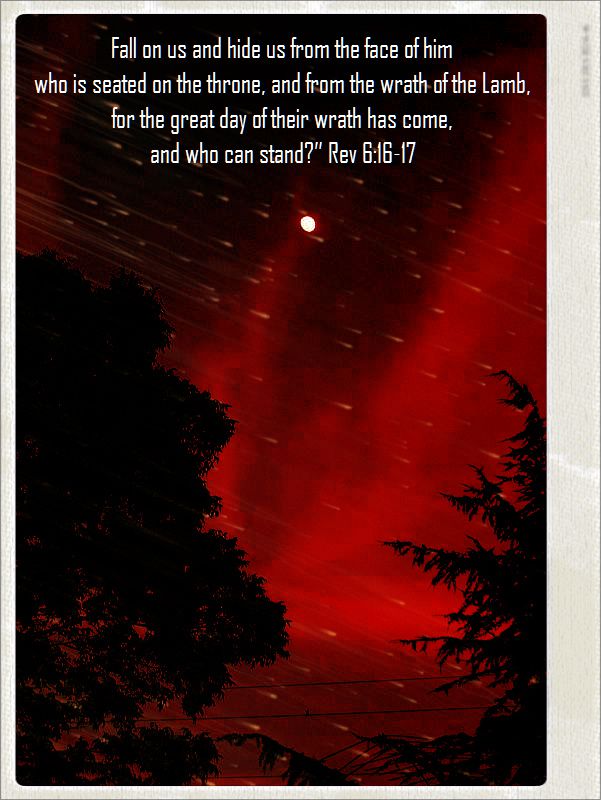
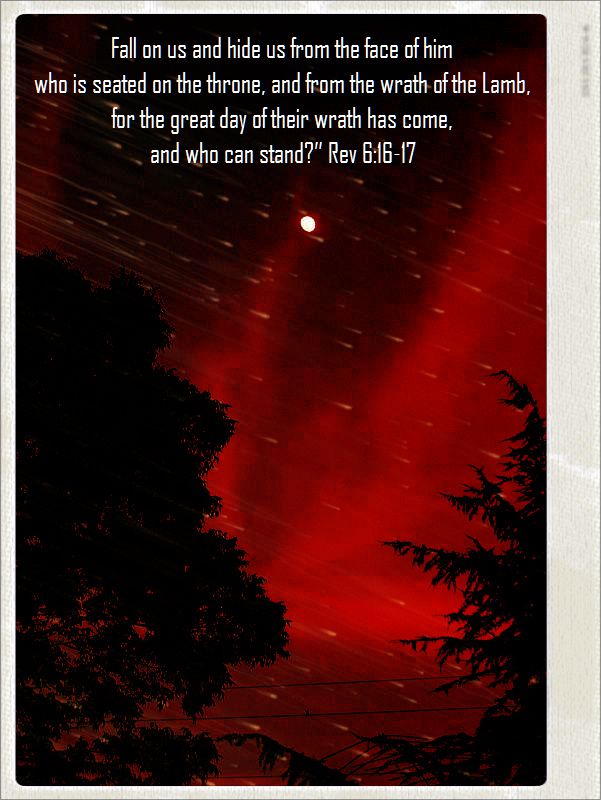
“Doom sky”. EPrata photo

All non-believers will be judged. As much as a Christian cringes at the thought of being judged by the Mighty Righteous God, non-believers absolutely hate us even mentioning it to them! The lost person becomes angry at the very thought of them having failed the standard God sets forth. Yet it will happen, at what is called the Great White Throne Judgment of Revelation 20:11-15.

This judgment does not determine salvation because the lost person’s eternal state is fixed at death. Everyone at the Great White Throne will be an unbeliever who has rejected Christ while they were living and is therefore already doomed to an eternity in the lake of fire. (Revelation 20:12). The judgment they will be experiencing is their life works projected like a mirror against a holy and righteous God and the level of their torment assigned. Yes, there are different degrees of punishment in hell.

Believers should think about this most difficult subject for several reasons. First, because as each person is cast (thrown) into the Lake of Fire (Revelation 20:15) we can easily what John Bradford said. He was a martyr, imprisoned for the faith in 1553. As prisoners were paraded to the execution stake, Bradford would exclaim,

The pious Martyr Bradford, when he saw a poor criminal led to execution, exclaimed, “there, but for the grace of God, goes John Bradford.” He knew that the same evil principles were in his own heart which had brought the criminal to that shameful end. (Source A treatise on prayer by Edward Bickersteth (1822).

Over time the phrase has been amended to say “There but for the grace of God, goes I.” Any one of us could be that person facing the wrath of Jesus, condemned and tossed into the torment forever, unless it had been Him sovereignly saving us. We are no longer under wrath, but at one point in our lives, we were. Don’t forget that.

Second, the Christian should ponder these things because we must give the full counsel of God as we witness. (Acts 20:27). We must share the bad news before we can get to the Good News. The bad news that there is no one righteous, no, not one. (Romans 3:10). We all fall short of the glory of God and are destined for the Lake of Fire forever, to be punished for our sins by the Judge. We tend to shorten the witnessing moment because we expect the outrage and anger when sharing that the person we are talking with is a sinner in need of the grace of Jesus. It’s hard to make someone angry. Even pastors shorten the counsel of God, by omitting the sin-death-wrath-punishment part and then quickly get to the part that they think is more palatable, or “attractive.”

“Red heaven” EPrata photo

The full counsel means both sides, His sovereign choice of the people He elects to salvation, and the personal responsibility of each man to repent and believe else be eternally responsible for their sin. Spurgeon said of the full counsel of God

Running away with half a Truth, they are like men that go through the wilderness wearing only one shoe—they become lame in one foot—and that makes them limp all over. It does not matter which foot it is that is lame—the man is a cripple if either foot is thus afflicted.

Think often of the prophecy of the Second Coming of Jesus. He spoke of it more often than anything else. The Bible refers of it constantly. Within the Second Coming are a host of different prophecies. I agree, they are interesting to study. However, we need to remember that we labor for a holy God and He will return to judge the living and the dead.

Acts 10:42
He commanded us to preach to the people and to testify that he is the one whom God appointed as judge of the living and the dead.

Romans 14:9
For this very reason, Christ died and returned to life so that he might be the Lord of both the dead and the living.


2 Timothy 4:1
In the presence of God and of Christ Jesus, who will judge the living and the dead, and in view of his appearing and his kingdom, I give you this charge: preach the word; be ready in season and out of season; reprove, rebuke, exhort, with great patience and instruction

———————————————–

Further reading

What does it mean to preach the whole counsel of God

The whole counsel of God

What is the difference between the Rapture and the Second Coming?

Posted in abortion, molech, Obama, planned parenthood, prophecy, sin

Planned Parenthood: The Handwriting is on the Wall

Rembrandt: Belshazzar’s Feast

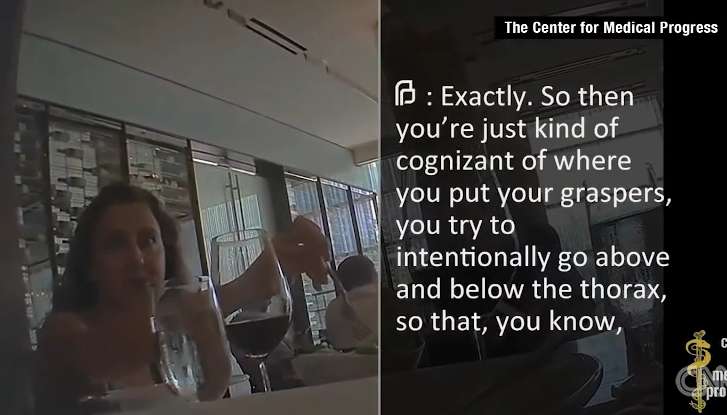
This week, an undercover video surfaced. It recorded in audio and video a conversation held during dinner in a restaurant between two people from the Center for Medical Progress and a Planned Parenthood Doctor/Administrator. CNN summarizes,

Planned Parenthood exec, fetal body parts subject of controversial video

An anti-abortion group has released an online video that it says documents how Planned Parenthood is selling fetal organs for a profit, a felony, while violating medical ethics by altering normal abortion procedures so as to preserve the organs.

The Doctor eats heartily and drinks swellingly as she casually describes how she shreds the baby in the womb so as to preserve the lucrative organs for later financial gain.

CNN screen shot

CNN screen shot

CNN screen shot

I don’t know which is worse, the fact of their shocking murderous activities, their duplicity in allegedly illegally selling human organs and tissue, the chilling language that coldly describing their calculating killing, or the party atmosphere in which this is all set.

You shall not give any of your children to offer them to Molech, and so profane the name of your God: I am the LORD. (Leviticus 18:21)

The Leviticus verse makes it clear that sacrificing your child to a false god is profaning the LORD.

Her swilling wine and partying at the table while describing an abomination against the Lord reminded me of another party atmosphere where the participants profaned the LORD and thought nothing of it…until His Hand appeared.

Molech was an ancient false God of the Ammonites, and the Israelites imported him into the land. Parents would place the baby in the statue of Molech’s belly and a fire would be kindled. The child would be burned alive as a sacrifice.

In Daniel 5 we read of the riotous party that King Belshazzar had, using God’s holy temple implements for an orgy. Unaware or uncaring of his blasphemy, he carried on. King Belshazzar was son of Nebchadnezzar, King of Babylon.

King Belshazzar made a great feast for a thousand of his lords and drank wine in front of the thousand. 2Belshazzar, when he tasted the wine, commanded that the vessels of gold and of silver that Nebuchadnezzar his father had taken out of the temple in Jerusalem be brought, that the king and his lords, his wives, and his concubines might drink from them. 3Then they brought in the golden vessels that had been taken out of the temple, the house of God in Jerusalem, and the king and his lords, his wives, and his concubines drank from them. 4They drank wine and praised the gods of gold and silver, bronze, iron, wood, and stone. (Daniel 5:1-4)

It was the last straw for a profane King. The Jewish Encyclopedia describes it:

It is stated in Dan. v. that Belshazzar gave a banquet to the lords and ladies of his court, at which the sacred vessels of the Jerusalem Temple, which had been brought to Babylon by Nebuchadnezzar at the time of the Judean captivity in 586 B.C., were profaned by the ribald company. In consequence of this, during the turmoil of the festivities, a hand was seen writing on the wall of the chamber a mysterious sentence which defied all attempts at interpretation until the Hebrew sage Daniel was called in. He read and translated the unknown words, which proved to be a divine menace against the dissolute Belshazzar, whose kingdom was to be divided between the Medes and Persians. In the last verse we are told that Belshazzar was slain in that same night, and that his power passed to Darius the Mede.

Immediately the fingers of a human hand appeared and wrote on the plaster of the wall of the king’s palace, opposite the lampstand. And the king saw the hand as it wrote. 6Then the king’s color changed, and his thoughts alarmed him; his limbs gave way, and his knees knocked together. (Daniel 5:5-6)

Belshazzar knew that something drastic was happening, as the Jewish Encyclopedia says, a message of divine menace. He could not read the message so he called for Daniel. Daniel said-

And you his son, Belshazzar, have not humbled your heart, though you knew all this [about the humiliation of proud King Nebchadnezzar], 23but you have lifted up yourself against the Lord of heaven. And the vessels of his house have been brought in before you, and you and your lords, your wives, and your concubines have drunk wine from them. And you have praised the gods of silver and gold, of bronze, iron, wood, and stone, which do not see or hear or know, but the God in whose hand is your breath, and whose are all your ways, you have not honored.

24“Then from his presence the hand was sent, and this writing was inscribed. 25And this is the writing that was inscribed: Mene, Mene, Tekel, and Parsin. 26This is the interpretation of the matter: Mene, God has numbered the days of your kingdom and brought it to an end; 27Tekel, you have been weighed in the balances and found wanting; 28Peres, your kingdom is divided and given to the Medes and Persians.” (Daniel 5:22-28)

God hates to be profaned. He hates sin. He is patient, but His patience comes to an end at His appointed time. That night, Babylon fell to the Medes and Belshazzar was killed.

Dr Albert Mohler’s piece on the Planned Parenthood video was excellent. I linked to it above and below. He brought out a good point. He said

We must pray that this video will mark an important turning point in our nation’s conscience. Images and words can become seared in our minds. The horrifying knowledge of harvested baby hearts must lead to our own broken hearts. A nation that will allow this, will allow anything.

God knows this, he is ever before us and ahead of us. The child killers are sinners but those who ‘close their eyes’ to it are also sinning against the LORD. He said in Leviticus,

If the members of the community close their eyes when that man sacrifices one of his children to Molek and if they fail to put him to death, I myself will set my face against him and his family and will cut them off from their people together with all who follow him in prostituting themselves to Molek. (Leviticus 20:4-5 NIV)

One doctor in one organization at one dinner is not the same as a King who sets a profaning example before an entire nation. Or is it? The doctor was speaking FOR Planned Parenthood. Planned Parenthood receives a sizable Federal subsidy. Here are a few facts

  • Planned Parenthood’s net revenue increased 5% to total of $1.21 billion in its organizational fiscal year ending on June 30, 2013,
  • 45% of that revenue–$540.6 million–was provided by taxpayer-funded government health services grants,
  • In the year that ended on Sept. 30, 2012 it did 327,166 abortions.

So the organization for which the doctor was speaking is funded by the states and the US government. Obama has actively fought de-funding Planned Parenthood at the national and the state level. It is a trickle-up effect, landing squarely at King Belshazzar Obama’s desk.

I can’t proclaim what the LORD will do in this instance, I can only explain what the LORD has said. His character is such that if He hated child murder in the past He hates it now. If He punished those who profane His name in the past, He will punish them now. He is the same yesterday, today, and forever; (Hebrews 13:8) He changeth not. (James 1:17, Malachi 3:6a).

Whether the secret video is something that as Al Mohler said will either prompt our national conscience to action or sear it further, only time will tell. But … the Handwriting is on the Wall.

———————-

Further reading

Abortion and the Campaign for Immorality

“A Lot of People Want Intact Hearts These Days” — Planned Parenthood, Abortion, and the Conscience of a Nation

Posted in rebel, sin

"Blank the alligators" he said, and was immediately killed

This came across Jake Tapper’s twitter stream. Tapper is a correspondent for CNN. I thought it had an interesting spiritual application.

Man mocks alligators, jumps in water and is killed in Texas

A man who apparently mocked alligators, then jumped in the water — despite warning signs — is dead after being attacked in Texas. Orange County Justice of the Peace Rodney Price told CNN affiliate KFDM that Woodward ignored verbal warnings and a posted “No Swimming Alligators” sign and seemed to mock the deadly creatures before going in the water. “He made preparations before going in. He removed his shirt, and removed out his billfold…”…someone shouted a warning and he said ‘blank the alligators’ and jumped into the water and almost immediately yelled for help,” Price said….. “It’s heartbreaking. It hurts, a lot,” the witness said.

The man was 28 years old. He had recently moved to Texas from St. Louis.

Screen shot from the news article and video

Spiritual application:

There were plenty of signs posted about what not to do, which were visible and evident. One was posted under a spotlight. Also, there were witnesses pleading with to change from his intended path due to obvious and imminent danger. He ignored them all.

His decision to persist was not impulse. He did so deliberately. He chose to rebel, taking calculated steps to complete his decision.

He mocked the giant animal, shaking his fist at it and ignoring the fact that it could crush him in an instant.

Moments later, he was dead.

It IS heartbreaking and it DOES hurt a lot when we see loved ones persist on their path of destruction.

If the rebellion and hubris of man is so persistent with visible warnings and earnest pleas from witnesses who know the territory and behavior of alligators, what kind of persistent rebellion is in a man who ignores the pleas of Gospel witnesses who know the territory and behavior of God? If a man will mock a dangerous creature in front of him, he will mock a powerful God above him.

Man’s sin goes deep.

And blasphemed the God of heaven because of their pains and their sores, and repented not of their deeds. (Revelation 16:11, KJV)