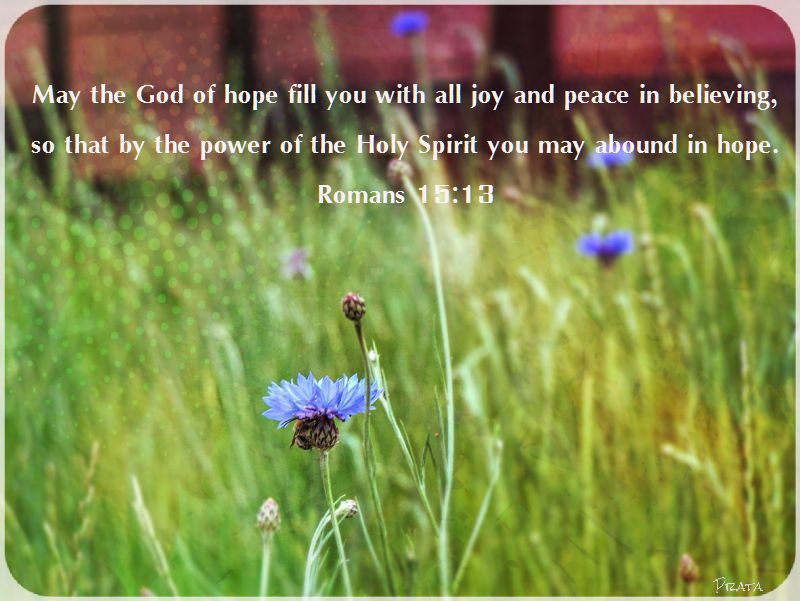
A short burst of encouragement from a verse, with photo.
EPrata photo
Friends, the road is long. The road is winding. We cannot see around the curve. We know there are dangers, roils, and snares as well as blessings and joys. However, we know the end of the story. It ends in glory. Keep walking the road in Jesus’ name, rejoicing as you go.
What glories await! There are things now conceived of, inexpressible and majestic! Paul was overwhelmed with the vision of our future home and the surpassing greatness of the revelations he was blessed to receive.
A song by Matt Papa and Matt Boswell at the Getty’s site, “Almost Home”. Every day that passes is one day closer to seeing Jesus, our eternal Rest, and reunion with loved ones. Hang in there, walk joyfully toward the Great Light!
Jesus promised us trials in this world, but He followed that promise with a reminder, He has overcome the world. (John 16:32-33). There are many reasons we undergo trials. Sometimes it’s to count it all joy that we are participating in the trials Jesus underwent. Sometimes it’s because the testing we receive through a trial helps us discern the will of God. (Romans 12:2). Trials produce endurance (James 1:2-4). Testing and trials prove our faith. (1 Peter 1:6-7).
We live on a battlefield, and it isn’t even our home turf we are fighting for. Our home is in heaven, we are strangers and aliens here. Satan wants to subdue us, break us, entice us into a snare and immobilize us. We are warned to remain vigilant (1 Peter 5:8, Matthew 26:41). So we fight, relentlessly, constantly.
1 Corinthians 16:13 says, Be on the alert, stand firm in the faith, act like men, be strong.
The Lord didn’t leave us defenseless. He gave us armor. We are outfitted from head to toe, and we hold a mighty sword.
and take the helmet of salvation, and the sword of the Spirit, which is the word of God, (Ephesians 6:18)
The sword is specifically the word of God. It is the only offensive weapon in the Christian’s armor. The helmet, breastplate, shield, belt, and shoes are defensive.
The sword mentioned in the verse is not a broadsword. It is a sharp dagger, which all soldiers had at hand.
What happens though is that a Christian may be vigilant for a while, and then he lays down his sword (which is the scripture). He is sitting at the campfire, mending his shoes or polishing his breastplate. The vigilant soldier keeps the sword handy for taking up when the battle heats up again. But some lay it down in the grass, and wander a bit away, looking for daisies to pick, or to follow a butterfly. They wander farther and farther, and then suddenly the battle heats up and they are caught without their only offensive weapon! They go back to try and find it but weeds have sprung up and hidden the sword.
Matthew Henry says,
Those who would prove themselves to have true grace, must aim at all grace; and put on the whole armour of God, which he prepares and bestows. The Christian armour is made to be worn; and there is no putting off our armour till we have done our warfare, and finished our course. (Matthew Henry)
Don’t let too many days go by without reading the Word. When Jesus was tempted by the Devil, He countered with the word. And the fact that the Ephesians verse distinguishes between the two types of swords, the broadsword v. the dagger and specifically used the word for dagger in this case, means that the the Christian is to wield it with precision. Jesus knew exactly which scriptures to use in reply to the devil. A Christian who knows some scripture but not many isn’t going to be an effective soldier nor a good witness.
There is no armor specified for the back, but only for the front of the body; implying that we must never turn our back to the foe (Lu 9:62); our only safety is in resisting ceaselessly (Mt 4:11; Jas 4:7). Jamieson Fausset Brown)
Is your Bible in the weeds, metaphorically? Or is it by your side, in your heart, on your mind? Be a good soldier, and have your offensive weapon ready when trials come. They will come. Jesus promised it. And He always keeps His promises.
In these apostate times it’s easy to become depressed at all the false teaching, the turning aside of beloved friends, the wolves coming out of the woodwork. God promised this, He said it would happen and it is.
But His promises of faithfulness are just as sterling and perfect, too. There is a verse I love. It is John 10:35-
If he called them gods to whom the word of God came—and Scripture cannot be broken—
The verse is part of a longer conversation between Jesus and the Pharisees, but let’s focus on the fragment inserted into the verse: scripture can’t be broken.
In today’s world, everything breaks. I have a Weber Showcase & Fixture Co. turn of the last century Banker’s Chair. It is heavy oak, with a steampunk mounting and swivel that would hold a tank. It is well made. Only in the last year did it break. The threads stripped enough so the chair won’t stay high at the table for me to use it. In the beginning of the 20th century and the century before, they made things to last.
Now, everything’s broken. We have broken marriages, broken homes, disposable toasters, throw away watches. Your TV breaks? Buy another. Dishes are no longer carefully handed down from generation to generation, when they break, just go to Target and buy some more.
Scripture CANNOT be broken. It will never be broken. Pulpit Commentary says of the John 10:35 verse,
cannot he broken; loosed, destroyed. A fine testimony to the confidence which our Lord exercised in the Holy Scripture. He was accustomed to educe principles of life from its inward structure, from its concealed framework, from its underlying verities.
There is one other point I think we ought to notice. And that’s that little statement, “And the Scripture cannot be broken,” in John 10 verse 35. That gives us some idea of our Lord’s view of the word of God. The Scripture cannot be broken. It is of indefectible authority. It cannot fail and the things that it teaches cannot fail either. All of the designs and purposes of the word of God shall be accomplished, just as all of the designs and purposes of the Son of God shall be accomplished. The Scripture cannot be broken. That’s striking isn’t it?
What joy to see our Savior model complete trust and rest in His Father’s word. We do the same. We know that though false religions will come, and wolves and destroyers; so will peace, fulfillment of all the scriptures, and everlasting promises of the Lord our God.
The scripture cannot be broken. In wrapping ourselves in the scriptures, we cannot be broken either. No matter how upsetting, no matter how concerning, no matter how terrible things get, all the promises God said would happen will happen- including His working things to the good, our coming hope and joy, the Banquet, Jesus with us in person, eternal perfect worship. All of it. Because…scripture cannot be broken.
Some sayings sound legitimate on their surface. They sound pious. They sound biblical. Like this one: “Cleanliness is next to Godliness”. Only problem is, that one isn’t in the Bible. At all.
Yesterday I wrote about the verse in Colossians 2:18,
Take care that no one keeps defrauding you of your prize by delighting in humility and the worship of the angels, taking his stand on visions he has seen, inflated without cause by his fleshly mind,
I’d noted that the false professors, i.e. false believers were standing on three things that were designed to draw people away from the faith, or at least dilute their effectiveness for a while: delighting in humility, worshiping angels, and visions/experiences.
The humility part sounds good, doesn’t it? But if you really think about the phrasing here, ‘delighting in humility,’ you begin to realize that delighting in your own humility is not humble at all! In fact, that s pride not humility, and we know what God says about the proud. They fall.
Part of humility is claiming to be uncertain. In other words, they said then and are still saying today that if you’re certain about an interpretation, or certain that Jesus is coming back, or certain about anything, you’re not humble. This is called the Hermeneutic of Humility. It was a problem then, as seen in Colossians 2:18, and it’s a problem today. Just think of all the people who say we need to approach the Bible with ‘nuance’ and ‘we can’t be sure’. (“I’m too humble to claim anything for certain!” they claim)
Mike Ratliffe said, “Hermeneutic of Humility” is a way of looking at our faith and interpreting the very Word of God through a filter that sees certainty as a product of pride and uncertainty as a virtue. … These people contend that to be certain divides people while uncertainty creates an environment of unity.
However the mantra that doctrine divides is a misconception. True doctrine does divide, and that is a good thing, because that is what it is supposed to do. But first let’s define hermeneutics.
CARM defines Hermeneutics as “The science of interpretation. Theologically, and biblically, speaking it is the means by which a person examines the Bible to determine what it means.”
The hermeneutics of humility says that anyone saying for sure what the Bible means is being proud and displaying arrogance. Ultimately, it is a subtle denial of the truth.
“There’s a new hermeneutics, a new science of interpretation called the Hermeneutics of Humility, and this is serious to the people who espoused this and their Hermeneutics of Humility say, “I’m too humble to think that I could ever know what the Bible really means and so I can only offer my opinion and I certainly can’t say that this is in fact the truth.” (source)
Now, while it is good to be humble (that’s why this saying is a subtle trick), let’s look at the difference between personal humility and interpretive humility. In personal humility, Romans 12:3 says,
“For by the grace given to me I say to everyone among you not to think of himself more highly than he ought to think, but to think with sober judgment, each according to the measure of faith that God has assigned.”
In other words do not exalt yourself, but think soberly and judge rightly.
“Do your best to present yourself to God as one approved, a worker who has no need to be ashamed, rightly handling the word of truth.” (2 Timothy 2:15).
Do we suppose that sober judgment and rightly handling the truth means that we can never know what it means? As Paul would say, “What a ghastly thought!” Denying that the Bible can be clear is denying the work of the Holy Spirit, who makes it clear. (John 14:25-26).
Yet the issue is a delicate one. Professor of religion and philosophy Winfried Corduan said, [link is to a .pdf]
“…the Bible is the inspired Word of God. And Jesus has promised the Holy Spirit to lead us into truth (John 14:26; 16:13). The Christian interpreter ought never to proceed without relying in both mind and spirit on God’s gracious gift of illumination. Nonetheless, the presence of the Holy Spirit in the life of the believer (undeniable though it is) does not provide a short cut through the hermeneutical process. The obvious counter-example to any such presumption is found in the fact that Christians who are equally committed to the discovery of truth disagree with each other. But the Holy Spirit does not teach different truths to such believers. Apparently it is possible to (at least claim to) rely on the Holy Spirit alone and not arrive at truth. Consequently it is best to say something along the line that the Holy Spirit’s work of disclosure is not entirely divorced from the human task of interpretation.”
It is why we strike a balance between personal humility and interpretive humility in the learning process, and boldness and confidence in proclaiming what we have learned.
If you think about it, if you’re too humble to say anything about the Bible’s contents for certain, then, what is there to proclaim? Proclaiming biblical truths would be seen as prideful, so we must remain silent…and therefore never tell anyone the Good News? Would such a conversation go like this: ‘Um, I think I have the answer to the problem you are having, it may be sin, but maybe not, and repenting of sin is the solution, but I can’t say for sure that repentance actually is, it might be a work, which would be bad but it might not be a work, but I can’t say for sure if repentance is required,…” and so on? The doctrine of the clarity (or perspicuity) of Scripture (that the central message of the Bible is clear and understandable, and that the Bible itself can be properly interpreted in a normal, literal sense) has been a cornerstone of evangelical belief ever since the Reformation. ~John MacArthur The reason why these sayings resonate is because they sound almost right. There is a grain of truth to the fact that we need to demonstrate humility when we approach the scriptures. It is an interpretive humility we need to possess. But once we come to a settled conviction, then, we’re sure that we know, because the Spirit will confirm in to our soul and our mind will be transformed. How is the Spirit supposed to transform the mind if the mind never settles on anything for sure.
“God is a speaking God. The Father is the one who, in the words of the creeds, est locutus per prophetas. [spoken through the prophets]. Most of what God does, creating, commanding, warning, communicating, promising, forgiving, informing, comforting, etc., is accomplished by speech acts. Moreover, God’s speech agency is the epitome of clarity and efficacy.”
Pride rears its head in people exhibiting a lack of interpretive humility when we believe we have got the meaning right before we have made the appropriate effort to recover it, as Vanhoozen explains. In other words rightly divide and make a sober judgment and with the aid of the Holy Spirit we will know what God is saying to us as far as our assigned faith will take it. Clearly and definitively. Because what good is unknowable truth?
Ultimately as Vanhoozen says, “Humility must be balanced by conviction. The uncommitted interpretation is not worth hearing.“
What a person adhering to a hermeneutic of humility is really saying is that:
–I am too lazy to put in the effort to really understand God’s written word, –If we can’t know for sure what the Bible means, then I don’t have to follow its commands, –Look at me, I’m so humble I won’t even try to figure out what God is saying, –God spoke but not clearly enough to understand it. [He is a God of confusion].
Ask the Spirit to aid you in remaining personally humble, and seek His aid in being interpretively humble. Then, when the Spirit illuminates a truth to you, proclaim it boldly and certainly! The Bible never says that bold faith is arrogance. Peter and Paul were definitely certain of what they taught!
–In whom we have boldness and access with confidence through our faith in him. (Ephesians 3:12)
–Proclaiming the kingdom of God and teaching about the Lord Jesus Christ with all boldness and without hindrance. (Acts 28:31)
“Scripture itself at tests its own perspicuity, but not to the point that it can not be misunderstood or is in every point equally simple and clear. The doctrine does not rule out the need for interpretation, explanation, and exposition of the Bible by qualified leaders. The doctrine does mean that Scripture is clear enough for the simplest person, deep enough for highly qualified readers, clear in its essential matters, obscure in some places to people because of their sinfulness, understandable through ordinary means…“Professor Larry Pettigrew, The Master’s Seminary
Put on your armor and wield some truth!
Sir Gawaine the Son of Lot, King of Orkney, by Howard Pyle (1903)
I really enjoy photography, looking at photos and taking them. I have many photos that I enjoy digging out and looking at and playing with as digital software technologies continue to be made available.
As I look at them, more often than not, a Bible verse comes to mind. like the Penobscot Bay schooner I’d snapped it was while passing by the schooner we were on, the ‘do not drift away’ verse from Hebrews. It’s here.
I’ll be doing this more often. A short burst of encouragement from a verse, with photo. Here is today’s-
Friends, the road is long and we cannot see around the curve. However we know the end of the story. It ends in glory. Keep walking in Jesus’ name, rejoicing as you go.
New song by Matt Papa and Matt Boswell at the Getty’s site, “Almost Home”. Every day that passes is one day closer to seeing Jesus, our eternal Rest, and reunion with loved ones. Hang in there, walk joyfully toward the Great Light!
A remarkable book called A bunch of everlasting; or, Texts that Made History was written by by Frank Boreham, who lived from 1871-1959. He published this remarkable book in 1920. The reason it is called ‘texts that made history’ is because Boreham is exploring the scripture that the recipient identifies as the one that broke through his dead soul to revive it to regeneracy. Conversion stories are always wonderful to read, and his book is full of them. He delves into how the verse woke up a dead heart and it’s a joy to read over and over how sometimes just a snippet of God’s word regenerated a soul.
In Martin Luther’s case, the Light dawned with the sudden understanding of the just shall live by faith. (Romans 1:17,Galatians 3:11,Hebrews 10:38)
Before we get to the everlasting text, here is about the author of the book, a short bio from the Frank Boreham Tribute site, regarding this Christian Preacher and prolific writer you should know. He died on May 18, 1959, in Melbourne, Australia.
Dr. Frank William Boreham (FWB) was born March 3rd 1871 in Tunbridge Wells, Kent. Although being raised in a Christian home, it wasn’t until he left home to take up employment in London that he shortly afterward became a Christian. His conversion was so dramatic that he quickly sensed a call to be a preacher. But he realised that his ability to preach would be greatly enhanced by improving his ability to write. He also reckoned that a preacher’s reach could be dramatically improved by writing. This resulted in him being published at quite a young age and gaining a profile that many preachers with much more experience had not yet attained. He was given a scholarship by the great Charles Haddon Spurgeon to Pastors College where his four year program was cut short when the College asked him to go to New Zealand and join the growing band of Baptist pioneers in a small town outside of Dunedin called Mosgiel. This town was largely the making of F.W. Boreham. It became the backdrop to many of his 55 best selling books that would go on to attain sales and re-sales of what is estimated conservatively to be around 20 million copies. Toward the end of his life, FWB was honoured by Queen Elizabeth with an OBE for Services to Preaching and Literature. He is regarded by Banner of Truth Trust as one of the 20 greatest preachers of all time.
One of the 20 greatest preachers of all time? Why didn’t I know this sooner! As Warren Wiersbe said, “I trust that a generation ignorant of Frank W. Boreham has not arisen.” I will do my best to commend to you this writer, preacher, and Christian of excellent quality so as the Body, or even one of us, might become edified.
Now here is the excerpt from Boreham’s book, A Bunch of Everlasting and the text that awoke Martin Luther-
It was the unveiling of the Face of God! Until this great transforming text flashed its light into the soul of Luther, his thought of God was a pagan thought. And the pagan thought is an unjust thought, an unworthy thought, a cruel thought.
Look at this Indian devotee! From head to foot he bears the marks of the torture that he has inflicted upon his body in his frantic efforts to give pleasure to his god. His back is a tangle of scars. The flesh has been lacerated by the pitiless hooks Martin Luther’s by which he has swung himself on the terrible churuka. Iron spears have been repeatedly run through his tongue. His ears are torn to ribbons. What does it mean? It can only mean that he worships a fiend! His god loves to see him in anguish! His cries of pain are music in the ears of the deity whom he adores! This ceaseless orgy of torture is his futile endeavour to satisfy the idol’s lust for blood.
Luther made precisely the same mistake. To his sensitive mind, every thought of God was a thing of terror. ‘When I was young,’ he tells us, it happened that at Eisleben, on Corpus Christi day, I was walking with the procession, when, suddenly, the sight of the Holy Sacrament which was carried by Doctor Staupitz, so terrified me that a cold sweat covered my body and I believed myself dying of terror.’ All through his convent days he proceeds upon the assumption that God gloats over his misery. His life is a long drawn out agony. He creeps like a shadow along the galleries of the cloister, the walls echoing with his dismal moanings. His body wastes to a skeleton; his strength ebbs away : on more than one occasion his brother monks find him prostrate on the convent floor and pick him up for dead. And all the time he thinks of God as One who can find delight in these continuous torments! The just shall live, he says to himself, by penance and by pain. The just shall live by fasting: the just shall live by fear.
‘The just shall live by fear!’ Luther mutters to himself every day of his life. ‘The just shall live by faith!’ says the text that breaks upon him like a light from heaven.
‘By fear! By fear!’ ‘By faith! By faith!’
With the coming of the text, Luther passes from the realm of fear into the realm of faith. It is like passing from the rigours of an arctic night into the sunshine of a summer day; it is like passing from a crowded city slum into the fields where the daffodils dance and the linnets sing; it is like passing into a new world; it is like entering Paradise!
——————
Further Reading–
You can read the Boreham book either online or download it here
I’m home with a high fever today and all that comes with it. I think it’s time to post something I’ve been thinking about for a while. Scripture, just scripture. What are some of your favorites? Here are a few of mine, and why.
These verses from the opening of John’s Gospel move me every time I read them. I don’t know why. They just do.
In the beginning was the Word, and the Word was with God, and the Word was God. He was in the beginning with God. All things were made through him, and without him was not any thing made that was made. In him was life,a and the life was the light of men. The light shines in the darkness, and the darkness has not overcome it. (John 1:1-5).
Beginnings and endings, Genesis and Revelation, my two favorite books. How can one not love the majestic sweep of the opening lines of all of human history?
In the beginning, God created the heavens and the earth (Genesis 1:1)
This verse is devastating to me. So much wasted flesh, so many to mourn. Such a holy God to worship. It’s a crushing yet wondrous verse that to me, dramatically shows the ease with which God moves within His plan to bring all enemies under His submission. For all the thousands of years of struggle, in but one moment, the angel finishes it with four devastating words; the earth was reaped.
So he who sat on the cloud swung his sickle across the earth, and the earth was reaped. (Revelation 14:16)
And I’ll finish with something a bit more upbeat. I love this from Revelation because it is Jesus-centered.
And I saw a mighty angel proclaiming with a loud voice, “Who is worthy to open the scroll and break its seals?” And no one in heaven or on earth or under the earth was able to open the scroll or to look into it, and I began to weep loudly because no one was found worthy to open the scroll or to look into it. And one of the elders said to me, “Weep no more; behold, the Lion of the tribe of Judah, the Root of David, has conquered, so that he can open the scroll and its seven seals.” (Revelation 5:2-5)
How about you? Post your favorite verses here. Let’s bask in the word and praise and worship the Spirit who inspired them, the God-Man who conquered and saves, and the God who is eternally holy.
Ladies, be aware of when the church diminishes your value to Christ by scheduling fun activities-lite for you instead of Bible studies with meat. At a certain point, kids graduate from the Thanksgiving kids’ table to the adult table. You should, too.
Not that scheduling a ladies night around a fun activity isn’t worthwhile. Sometimes it’s relaxing to get together at a home or in the Fellowship Hall with other like-minded friends and just hang out. It’s even more fun to hang out by doing something or creating something than just to sit around and chat. But if your church believes exclusively that these kinds of Ladies Ministry outings and events are a substitute for learning theology, then gently but insistently remind them that your value in Christ is not about decorating cookies and scrapbooking, it is growing in grace in likeness of Christ and knowledge of Him. The only way to do that is by the Word as the Spirit applies it- as you learn it.
Here is Michelle Lesley having stated it so well. This is a re-blog of an excellent piece she wrote, titled,
You remember the story. Jesus comes to Mary and Martha’s house. Martha’s Pinteresting up the place while Mary sits at Jesus’ feet to listen to Him teach. Martha gripes to Jesus that Mary should help her and Jesus says no because it’s better for her to listen to Him than fold napkins into the shape of swans or whatever. Moral of the story- Martha needs to relax and not let other things distract her from Jesus.
That’s a good, true, and important takeaway from this passage, and one that we would all do well to heed.
But did you ever stop to think that Mary and Martha aren’t the main characters in this story? Jesus is. Jesus is the main character in every Bible story, so our primary focus should always be on Him: what He said and did and was like.
What was Jesus teaching that day at Mary and Martha’s house? The passage doesn’t tell us the topic He was speaking about, but we are privy to a very important lesson He imparted through the scenario with Mary and Martha. A lesson about the way God loves and values women.
Remember how women were generally regarded at that time? They didn’t have much more value than livestock, furniture, or a man’s other possessions. They were considered intellectually inferior, they weren’t formally educated, and their legal and social standing were often tenuous at best. They could not go beyond the Court of the Women at the temple for worship. There was even a traditional prayer Jewish men recited in which they thanked God for not making them a woman, a Gentile, or a slave. Women were low man on the totem pole, so to speak.
And that’s where we find Martha. She wasn’t doing anything wrong that day. In fact, in her culture, she was doing everything right. If anything, Mary would have been the one viewed as being in the wrong because the teaching was for the men, and it was the women’s job to bustle around taking care of all the hospitality duties. Martha knew this. Mary knew this. Jesus knew this. Everyone else present knew this. Martha must have wondered why someone hadn’t yet shooed Mary out of the living room and into the kitchen. So her statement to Jesus in verse 40, “Lord, do you not care that my sister has left me to serve alone? Tell her then to help me,” was probably not just, “I need another pair of hands,” but also a bit of, “Mary is forgetting her place. This isn’t what proper women do.”
Oh yes it is.
Whatever else He might have been lecturing about that day, that was one of the lessons Jesus taught Mary, Martha, the rest of their guests, and Christendom at large.
Women aren’t second class citizens in the Kingdom of God. We are precious and valuable to Him. He has important, worthwhile work for us to do – His way – in the body of Christ. And He wants us trained in His word in order to carry out that work. How did Jesus teach that lesson?
First, He allowed Mary to stay and receive His teaching (39). (We see this echoed in God’s instruction to the church in 1 Timothy 2:11: “LET a woman learn…”) It hadn’t slipped Jesus’ mind that she was sitting there. He could have told her to leave, but He had no intention of doing so. Jesus wanted Mary there. He wanted to teach her and to have her learn God’s word from Him.
Next, when someone tried to take Mary away from hearing and being trained in God’s word, Jesus – God Himself – answered with a resounding NO. This “will not be taken away from her,” Jesus said. Mary, and Martha too (41), could arrange centerpieces or turn a cookie into a work of art any time or never. But this, the teaching of God’s word, was urgent. Vital. Jesus didn’t want either of them to miss it by focusing on the trivial things they thought they should be pursuing.
And He doesn’t want us to miss it either, ladies.
Jesus pulled women out of the craft room and into the study. Is the women’s ministry at your church trying to pull them back?
Is the women’s events page on your church’s web site filled exclusively with painting parties, fashion shows, ladies’ teas, and scrapbook sessions?
Does your women’s ministry do canned “Bible” studies authored by women who offer nothing but personal stories, experiences, and false doctrine?
Are the Marys in your church who want to sit at the feet of Jesus and hear His word rightly handled and taught being scolded by the Marthas for not staying in their place and embracing the banality the women’s ministry is doling out?
Is this it? Is this all women are good for in the church- fluff and false doctrine?
Jesus didn’t think so.
Let’s have our women’s ministries train women in the full scope of biblical womanhood. Let’s be serious students of God’s word by picking it up and studying it like mature women. Let’s get equipped to teach and disciple other women who are babes in Christ. Let’s share the gospel with the lost. Let’s learn how to train our own children in the Scriptures and be the ones to raise the bar for what the kids at our church are being taught. Let’s roll up our sleeves and get our hands dirty ministering to those who are ill, in prison, lonely, poor, elderly, considering abortion, experiencing crisis; who have wayward children, problems in their marriages, a parent with Alzheimer’s, or have lost a loved one.
Women are worth more and capable of more than the bill of goods they’re being sold by “Christian” retailers suggests. More than cutesy crafts and fairytales masquerading as biblical teaching. Let’s put the “ministry” – ministry of the Word and ministry to others – back in “women’s ministry.”
Women’s Ministries at Grace Church exists to encourage women to worship our Savior and Lord Jesus Christ through the study and application of Scripture and the deepening of relationships with other women for fellowship and accountability.
The fellowship has the express purpose of application of scripture and accountability under it. Note that in order to do that, first comes worshiping Jesus through study.
Jesus promised us trials in this world, but He followed that promise with a reminder, He has overcome the world. (John 16:32-33). There are many reasons we undergo trials. Sometimes it’s to count it all joy that we are participating in the trials Jesus underwent. Sometimes it’s because the testing we receive through a trial helps us discern the will of God. (Romans 12:2). Trials produce endurance (James 1:2-4). Testing and trials prove our faith. (1 Peter 1:6-7).
We live on a battlefield, and it isn’t even our home turf we are fighting for. Our home is in heaven, we are strangers and aliens here. Satan wants to subdue us, break us, entice us into a snare and immobilize us. We are warned to remain vigilant (1 Peter 5:8, Matthew 26:41). So we fight, relentlessly, constantly.
1 Corinthians 16:13 says, Be on the alert, stand firm in the faith, act like men, be strong.
The Lord didn’t leave us defenseless. He gave us armor. We are outfitted from head to toe, and we hold a mighty sword.
and take the helmet of salvation, and the sword of the Spirit, which is the word of God, (Ephesians 6:18)
The sword is specifically the word of God. It is the only offensive weapon in the Christian’s armor. The helmet, breastplate, shield, belt, and shoes are defensive.
The sword mentioned in the verse is not a broadsword. It is a sharp dagger, which all soldiers had at hand.
Sword: CC0 Public Domain Free use No attribution required. Grass, EPrata photo
What happens though is that a Christian may be vigilant for a while, and then he lays down his sword (which is the scripture). He is sitting at the campfire, mending his shoes or polishing his breastplate. The vigilant soldier keeps the sword handy for taking up when the battle heats up again. But some lay it down in the grass, and wander a bit away, looking for daisies to pick, or to follow a butterfly. They wander farther and farther, and then suddenly the battle heats up and they are caught without their only offensive weapon! They go back to try and find it but weeds have sprung up and hidden the sword.
Matthew Henry says,
Those who would prove themselves to have true grace, must aim at all grace; and put on the whole armour of God, which he prepares and bestows. The Christian armour is made to be worn; and there is no putting off our armour till we have done our warfare, and finished our course. (Matthew Henry)
Don’t let too many days go by without reading the Word. When Jesus was tempted by the Devil, He countered with the word. And the fact that the Ephesians verse distinguishes between the two types of swords, the broadsword v. the dagger and specifically used the word for dagger in this case, means that the the Christian is to wield it with precision. Jesus knew exactly which scriptures to use in reply to the devil. A Christian who knows some scripture but not many isn’t going to be an effective soldier nor a good witness.
There is no armor specified for the back, but only for the front of the body; implying that we must never turn our back to the foe (Lu 9:62); our only safety is in resisting ceaselessly (Mt 4:11; Jas 4:7). Jamieson Fausset Brown)
Is your Bible in the weeds, metaphorically? Or is it by your side, in your heart, on your mind? Be a good soldier, and have your offensive weapon ready when trials come. They will come. Jesus promised it. And He always keeps His promises.
For you will not abandon my soul to Hades, or let your Holy One see corruption.
(Acts 2:27, Psalm 16:10)
He describes his resurrection: God loosed the pains of death, because it was impossible that he should be holden of it; ōdinas—the sorrows of death; the word is used for travailing pains, and some think it signifies the trouble and agony of his soul, in which it was exceedingly sorrowful, even to the death; from these pains and sorrows of soul, this travail of soul, the Father loosed him when at his death he said, It is finished. Thus Dr. Godwin understands it: “Those terrors which made Heman’s soul lie like the slain (Ps. 88:5, 15) had hold of Christ; but he was too strong for them, and broke through them; this was the resurrection of his soul (and it is a great thing to bring a soul out of the depths of spiritual agonies);
this was not leaving his soul in hell; as that which follows, that he should not see corruption, speaks of the resurrection of his body; and both together make up the great resurrection.” Dr. Lightfoot gives another sense of this: “Having dissolved the pains of death, in reference to all that believe in him, God raised up Christ, and by his resurrection broke all the power of death, and destroyed its pangs upon his own people. He has abolished death, has altered the property of it, and, because it was not possible that he should be long holden of it, it is not possible that they should be for ever holden.”
Henry, M. (1994). Matthew Henry’s commentary on the whole Bible: complete and unabridged in one volume (p. 2069). Peabody: Hendrickson.









 the-end-time.org