Posted in prophecy, Uncategorized

A mighty scene in heaven

The Tribulation is a future prophesied time of distress on the earth that will be unequalled in affliction, so Jesus said. (Matthew 24:21). This is because He will pour out all His stored-up wrath onto the unbelieving world, and He will punish the nation Israel for their rebellion against Him.

A series of judgments in sets of 7 are unleashed from heaven to earth in proceedings that become progressively worse as each set is executed. The angels are mainly the agents who deliver the wrath.

The judgments go in this order-

The 7 Seals. The seal judgments open the events with a dramatic moment in heaven where John of Patmos had been given the vision which recorded that Jesus is the only One who is worthy to open them. Revelation 5:1-5 records this scene:

Then I saw in the right hand of him who sat on the throne a scroll with writing on both sides and sealed with seven seals. 2And I saw a mighty angel proclaiming in a loud voice, “Who is worthy to break the seals and open the scroll?” 3But no one in heaven or on earth or under the earth could open the scroll or even look inside it. 4I wept and wept because no one was found who was worthy to open the scroll or look inside. 5Then one of the elders said to me, “Do not weep! See, the Lion of the tribe of Judah, the Root of David, has triumphed. He is able to open the scroll and its seven seals.”

The detail that the document was sealed on both sides has meaning. It indicates that it is a legal document. Bible Study Tools explains,

Concerning this practice, Weemse wrote, “For the manner of writing the contract, he who was to buy the ground wrote two instruments; the one to be sealed with his own signet, the other he showed unclosed to the witnesses, that they might subscribe and bear witness of that which was written. This, the witnesses did subscribe UPON THE BACK of the enclosed instrument” . . . Gaston Maspero gave an example of an enclosed document being used as evidence. “Contracts stamped upon clay tablets have been found in Babylonia, enclosed in an envelope of clay, on the outside of which an exact duplicate of the contract is impressed: if in the course of time any disagreement arose and it was suspected that the outside text had been tampered with, the envelope was broken in the presence of witnesses to see if the inside text agreed with it or not.” The fact that the sealed scroll of Revelation Rev. 5:1+ had writing on both the inside and the outside (Rev. Rev. 5:1+), in the same manner as Jeremiah’s and other deeds of purchase in Israel’s land redemption system, indicates that it is a deed of purchase.

The document with the seals upon it is in fact the title deed to the earth.

The revelation then turns to the actual opening of the seals. Jesus has triumphed – on the cross –  and the document is opened by Him who is triumph itself. The judgments begin. The 7th seal unlocks the next series of judgments, which are the Trumpet Judgments. (Revelation 8). These are worse. The ultimate purpose of the judgments are to render wrath for His glory onto the peoples, so they will repent under the knowledge of His active anger. Revelation 8 has the first half of the Trumpet Judgments and the angel announces woe to those on the earth as the worsening of the second half of the trumpet judgments begin. (Revelation 9).

Revelation 10 announces the beginning of the next series of judgments, the Seven Thunders. However in an unusual move, the voice from heaven called out for John to seal up this series of judgments and not to write them down. We do now know why the Seven Thunders are sealed nor do we know what they contain, if they are judgments at all.

The last set of judgments are the Bowls. These are truly the worst of the worst. By now the world has either repented and given Jesus glory, or has confirmed their permanent state of rebellion by accepting the devil’s mark of the beast. The mark is a mark of worship of the antichrist and displays allegiance to him (and the devil). (Revelation 13:15-16).

The scene shifts from the throne as seen in previous judgments, to the sanctuary. The door to the sanctuary is opened and it is an incredible view. Revelation 15:5-8 concludes this chapter and the introduction to the last judgments.

After this I looked, and the sanctuary of the tent of witness in heaven was opened, and out of the sanctuary came the seven angels with the seven plagues, clothed in pure, bright linen, with golden sashes around their chests. And one of the four living creatures gave to the seven angels seven golden bowls full of the wrath of God who lives forever and ever, and the sanctuary was filled with smoke from the glory of God and from his power, and no one could enter the sanctuary until the seven plagues of the seven angels were finished.

No one was allowed to enter. Not the other angels, not glorified humans, no one. Is the reason so that no man or angel may intercede? Is it because God’s glory is so powerful, even for a holy angel or a glorified man? Nevertheless, the angels, those mighty and holy angels, are given the task of delivering the last 7 judgments on the earth.

This is the God of power and judgment. His mercy seat has become a judgment seat. All the millennia of patience, the times of overlooking man’s ignorance (Acts 17:30) are over. He is no longer reasoning with man. (Isaiah 1:18). His might is come to the fore and the sanctuary is filled with smoke. No one is allowed entry. God commands the 7 powerful angels to dispense His final wrath.

It reminds me of the verse in Isaiah 63:3.

I have trodden the winepress alone, and from the peoples no one was with me; I trod them in my anger and trampled them in my wrath; their lifeblood spattered on my garments, and stained all my apparel.

He does indeed tread the wine-press, but it is the great wine-press of the wrath of God (Rev. 14:19, M. Henry). Our precious Lord had taken on all of God’s wrath, had drunk the cup on the cross. He “treads the wine-press” here not as a sufferer, but as an inflicter of vengeance.

It’s good to dwell on God’s love. It”s also good to remember His other attributes- power, wrath, sole arbiter of justice. It is good to remember that these scenes in heaven are future, perhaps to occur in our own generation.  Be clear-eyed about who our God is. He isn’t a romantic Jesus skipping among the daisies to wrap us in His manly arms. He is not a cash machine dispensing wealth from heaven. His attributes include love and mercy, to be sure, but also power, wrath, and justice from the very sanctuary in heaven. He is mighty.

For our God is a consuming fire. (Hebrews 12:19)
Posted in prophecy, Uncategorized

Did you know…about ‘The Nazarene’? Bible fact

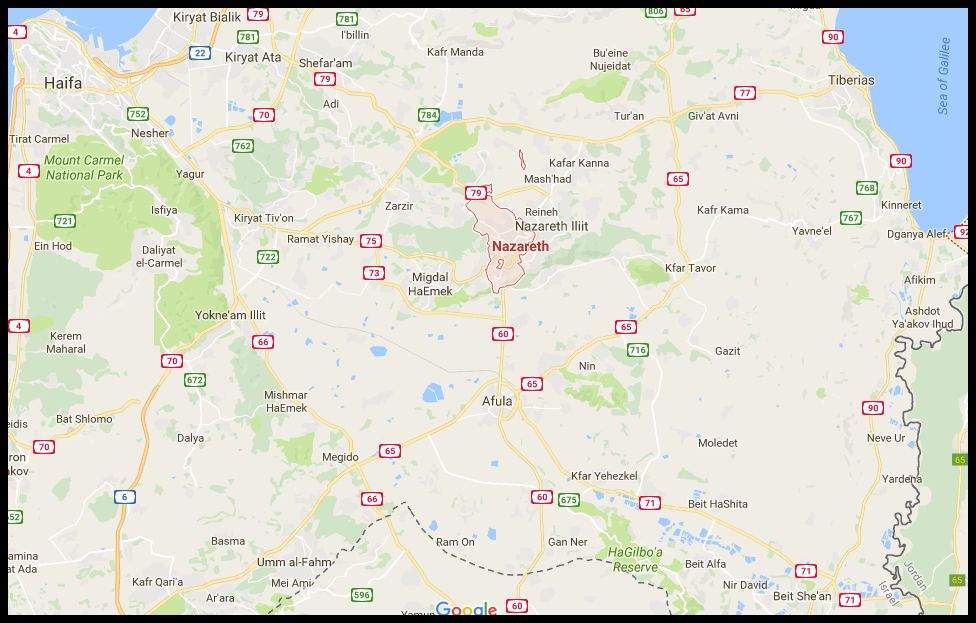
We know that Jesus was from Galilee in a region called Nazareth. The region’s largest city is Nazareth. People from that region were often dubbed Nazarenes. Geographic identifiers in the Bible are pretty common. Saul of Tarsus is one. Mary Magdalene might have been so named because she was likely from the town of Magdala. But did you know there might also be a prophecy associated with the name Nazarene? Faithlife Study Bible has more.

Within the four gospels and the book of Acts, the term “Nazarene” (translated from the Greek nazōraiōn or nazōraios) appears about 19 times. It occurs once in an allusion to a prophecy (Matt 2:23) and is applied once to the newly formed group of Christians (Acts 24: 5). All 17 remaining instances of “Nazarene” apply directly to Jesus (Matt 26:71; Mark 1:24; 10:47; 14:67; 16:6; Luke 4:34; 18:37; 24:19; John 18:5, 7; 19:19; Acts 2:22; 3:6; 4:10; 6:14; 22:8; 26:9).

The prophecy quotation from Matthew 2:23 comes in the context of Joseph receiving a dream which tells him to leave Egypt and go to Israel. The passage recounts that in response to the dream, Joseph settles his family in a town called Nazareth (Matt 2:19–23). The Gospel of Matthew connects this geographical movement fulfilled what was spoken by the prophets: “He will be called a Nazarene.” However, an Old Testament text making any statement similar to this does not exist—meaning that another explanation is required.

A few plausible options are available to resolve this issue. The author of the Gospel of Matthew may have been employing a pun or wordplay by associating the Hebrew word for “branch” (netser) in Isaiah 11:1 with the word designating a person as a resident of Nazareth (a “Nazarene”; nazōraios in Greek). The reference to “branch” would have been significant because it symbolized Jesus as a king from the lineage of David.

A second more plausible explanation is that the author may have been alluding to several statements made by a variety of Old Testament texts that focus on the obscurity and humility of the Messiah (e.g., Psa 22:6–8; 69:8, 20–21; Isa 49:7; 53:2–3; 7–8). The term Nazarene had a derogatory connotation, referring to someone from an obscure or insignificant town (John 1:45–47). During Jesus’ day, the town of Nazareth was insignificant from the perspective of Jerusalem (John 7:41–42, 52).

Much later, the term Nazarene appears in the account of the charges leveled against the Apostle Paul. He was facing trial for stirring up dissension, supposedly desecrating the temple, and serving as the ringleader of the “sect of the Nazarenes” (Acts 24:1–5). Jewish Christians were probably given the label because of their connection with Jesus of Nazareth. It likely served as a pejorative term when applied to the Christian community.

DAVID SEAL, Barry, J. D., Mangum, D., Brown, D. R., Heiser, M. S., Custis, M., Ritzema, E., … Bomar, D. (2012, 2016). Faithlife Study Bible. Bellingham, WA: Lexham Press.

There is always more to study with the Bible. We know what we know until there is more to know!

Posted in prophecy, Uncategorized

Do we have the ability to interpret our own circumstances? Should we?

The title’s question is an important one. According to New Age-ish teachers like Henry Blackaby in his Experiencing God study,

God speaks through circumstances to reveal himself, his purposes and his ways.

What Blackaby means in using the word circumstances, is Providence. J. Vernon McGee said providence is “the means by which God directs all things — both animate and inanimate, seen and unseen, good and evil — toward a worthy purpose, which means His will must finally prevail. Or as the psalmist said, “his kingdom ruleth over all” (Psalm 103:19).” I. E. Circumstances.

Blackaby teaches people how to interpret those circumstances through which he claims God is speaking. So let’s look at an example of how well or badly this kind of personal interpretation might go.

But Jonah rose to flee to Tarshish from the presence of the LORD. He went down to Joppa and found a ship going to Tarshish. So he paid the fare and went down into it, to go with them to Tarshish, away from the presence of the LORD. (Jonah 1:3)

Let’s put that circumstance-interpreting to the test. In his sermon on Jonah 1:1-3 titled Sin’s Stupidity!, Ian Hamilton said,

When Jonah arrived at Tarshish, he might have said, ‘Oh! Wow! This is providential! There’s a ship going to Tarshish, just what I’m looking for!’ We are never the best judges in discerning the significance of God’s providence. God’s providence will never overrule His commandments. If you’re ever in a quandary, obey the commandment and leave it to God to sort out the providence. You and I, at our best, are no infallible interpreters of providence. Obey the commandment, and leave God to work out the providence. The Lord Jesus Christ ultimately did that. When all the providences around His life seemed to shout out that He had been ultimately, irrevocably and finally abandoned and forsaken, He still prayed, ‘My God, My God.’ He was obedient unto death, even death on a cross.

Look! A ship loaded and ready to go to the exact place I want to go!  It must be God’s Providence! (Prata photo)

In today’s parlance of interpreting circumstances as Blackaby advised, we might say something exactly like the hypothetical statements Hamilton said Jonah might have said. Leave the interpretations alone and stay with the more sure word. (2 Peter 1:19).

Greg Gilbert of 9Marks reviewed Henry Blackaby’s Experiencing God study. He related a similar example of a person interpreting circumstances and backward proofing it through scripture to confirm.

George Whitefield, the great preacher in the Great Awakening and Edwards’s friend, admitted that even he had fallen into this kind of error. Prior to the birth of his only son, Whitefield announced that the boy would be a great preacher and that he would be great in the sight of the Lord. Four months after his birth, though, the child died. Whitefield recognized his mistake and wrote: “I misapplied several texts of Scripture. Upon these grounds, I made no scruple of declaring ‘that I should have a son, and his name was to be John,'” (in Iain Murray’s Jonathan Edwards, p.241-2). Whitefield had taken the angel’s declaration to Zechariah as his own, and had thus fallen into error. Let that be a caution to us as Christians to always read the Bible in its context.  

No, we don’t use the scriptures to confirm what we have first intuited as a circumstance for action. Mr Gilbert continues with a solid reminder about omens, providences and circumstances.

God’s normal way of operating in His people’s lives is to shape them by His Word, to transform their minds by His Holy Spirit, and to sanctify their reason so that they can consider and weigh alternatives and make wise decisions.

Key words, “wise decisions.” Jonah had made a decision, nothing more, which happened to be in direct rebellion to God’s clear word. No amount of personal circumstance-interpreting will ever trump what God hath said. Relying on omens and circumstances shifts the onus of the decision from the person making it to some kind of externals, such as to Providence or to God. His commands and His wisdom is in His word. Let obedience begin and end there.

For the foolishness of God is wiser than human wisdom, and the weakness of God is stronger than human strength. (1 Corinthians 1:25).

Posted in prophecy, Uncategorized

UN creates global gay watchdog post

The United Nations took action last week to protect global homosexual and transgender activity by appointing a “czar” to investigate discrimination and violence against them.

Vitit Muntarbhorn Appointed First UN Investigator on LGBT Violence and Discrimination

UNITED NATIONS — The Human Rights Council (HRC) has appointed international human rights expert Vitit Muntarbhorn as the first U.N. independent expert charged with investigating violence and discrimination based on sexual orientation and gender identity. John Fisher, Geneva director of Human Rights Watch, said his appointment on Friday “made history” and “will bring much-needed attention to human rights violations against LGBT people in all regions of the world.”

The Washington Blade, which describes itself as “America’s Leading LGBT News Source”, reported similarly-

U.N. appoints first-ever LGBT rights watchdog

The U.N. Human Rights Council (HRC) on Friday announced it has appointed the U.N.’s first-ever independent expert who will specifically investigate anti-LGBT discrimination and violence around the world. Vitit Muntarbhorn is an international law professor at Chulalongkorn University in Bangkok. … The vote is the first time the U.N. has approved a resolution that specifically deals with issues related to sexual orientation and gender identity. The U.N. Human Rights Council on June 30 approved a resolution that created Muntarbhorn’s position. The event was the highest-level meeting on LGBT rights that has ever taken place at the U.N.

Saudi Arabia, a nation in which homosexuals are murdered, other Muslim countries, and Russia were disapproving of the creation of a LBGT Investigator. The said they will not cooperate. The United Sttes, however, was effusive n its approval. US Secretary of State John Kerry, US Ambassador to the UN and the Director of Human Rights Global were approving of the measure.

The Bangkok Post reports on the reaction to the installation of a LGBT “Czar”

The appointment of renowned human rights expert and social commentator Vitit Muntarbhorn as the UN’s first independent expert to investigate violence and discrimination based on sexual orientation and gender identity has won widespread approval around the world. … Ty Cobb, director of Human Rights Campaign Global, was quoted on washingtonblade.com as saying Mr Muntarbhorn’s appointment was “a huge step forward for LGBTI human rights worldwide”.

Mr Muntarbhorn’s duties will include

assess the state of LGBTQ human rights, liaise with LGBTQ advocates and allies around the world and engage with governments and civil society to make recommendations for combating violence and discrimination against LGBTQ people. In addition, the expert will serve as a bridge between the U.N. Human Rights Council and the organization’s General Assembly, and be empowered to issue private communications to governments, including in emergency situations.

One might imagine an “emergency situation” similar to the incident that occurred in Orlando Florida where a gunman had targeted homosexuals in the nightclub Pulse, and killed many attendees there. As a matter of fact, it was in reaction to that specific articular event that the United States called on the UN to

not only condemn the terrorism that resulted in the mass killing of 49 people at a gay nightclub in Florida over the weekend, [June 12, 2016] but also to protect gay, lesbian, bisexual and transgender people from such attacks. … Deputy U.S. Ambassador to the U.N. David Pressman, speaking at the election of Fiji Ambassador Peter Thomson to the post of 71st General Assembly president, said protecting the dignity of all human beings should be at the heart of the General Assembly’s work going forward. He said outrage at the killing should be directed at protecting members of the LGBT community “not just around condemning the terrorists who kill them.”

The matter was referred to the Human Rights Council (HRC) of the United Nations on July 1, the next day after the shooting, and after four hours of debate, the HRC voted to create the position. Muntarbhorn was tapped and his three-year term began September 1.

HRC member countries voting YES on the resolution to create a Gay Czar were-

Albania, Belgium, Bolivia, Cuba, Ecuador, El Salvador, France, Georgia, Germany, Latvia, Mexico, Mongolia, the Netherlands, Panama, Paraguay, Portugal, South Korea, Slovenia, Switzerland, Macedonia, the U.K., Venezuela and Vietnam. (23)

Countries voting NO on the resolution were-

Algeria, Bangladesh, Burundi, China, Congo, Cote d’Ivoire, Ethiopia, Indonesia, Kenya, Kyrgyzstan, Maldives, Morocco, Nigeria, Qatar, Russia, Saudi Arabia, Togo and the United Arab Emirates. (18)

Countries abstaining on voting the resolution were-

Botswana, Ghana, India, Namibia, the Philippines and South Africa. (6) Even though South Africa has strong constitutional protections for homosexuals, so strong that are dubbed “The Rainbow nation”, their abstention was on the basis that the HRC was moving “too fast”.

Countries which co-sponsored the resolution were-

Argentina, Brazil, Chile, Colombia, Costa Rica, Mexico and Uruguay.

The NY Times reported that the move was a “a bold step toward recognizing that gay, lesbian, bisexual and transgender people fighting for equality are pursuing fundamental human rights.”

The world believes that L(esbian), G(ay), B(isexual), T(ransgender), I(ntersex), Q(uestioning) or whatever alphabet letter you want to include in the ever-growing list, is a basic right. As far as it is a basic right to sin, they are correct. Homosexuality is a sin, as the Bible makes clear. (Genesis 19:1-13; Leviticus 18:22; 20:13; Romans 1:26-27; 1 Corinthians 6:9). If homosexuals want to sin with impunity, that is their basic right, but there is a dire consequence individually (hell upon death) and collectively (judgement upon a nation, Romans 1:26-27). The Romans passages tell us that specifically that homosexuality is a result of denying and disobeying God. When a nation has been given over as the verses in Romans describe, widespread societal homosexuality or approval of it is the result. Once again,  What does it mean when the Bible says, God gave them over?”

God’s giving over sinful mankind has a dual sense. First, in an indirect sense God gave them over simply by withdrawing His restraining and protective hand, allowing the consequences of sin to take their inevitable, destructive course. Sin degrades man, debases the image of God in which he is made, and strips him of dignity, peace of mind, and a clear conscience. Sin destroys personal relationships, marriages, families, cities, and nations It also destroys churches. Thomas Watson said, “Sin … puts gravel in our bread [and] wormwood in our cup” (A Body of Divinity [Carlisle, Pa.: Banner of Truth, 1983 reprint], p. 136).

In a second, direct sense God gave … over rebellious mankind by specific acts of judgment. The Bible is replete with accounts of divine wrath being directly and supernaturally poured out on sinful men. The flood of Noah’s day and the destruction of Sodom and Gomorrah, for example, were not indirect natural consequences of sin but were overt supernatural expressions of God’s judgment on gross and unrepented sin

We know that the time is coming when God will give over the world to its choice, sin, and then directly pour out His judgment. The Man of Sin (antichrist, 2 Thessalonians 2:3) will appear and promote and allow any and all manner of sin one can dream of. Man is inventive in ways to sin, (Romans 1:30) and thus it will be a horrific time. That future time will be a period when God sends down His direct judgment for sin. Until that Day, one can easily see the progress that global sin is making in the world.

Specifically, what does it mean that the reprobate mind has reached the highest levels of government? Subsequent to the US Supreme Court’s 2015 Ogberfell v. Hodges decision regarding approval homosexual marriage in all the land, John MacArthur preached a sermon called “We Will Not Bow“. In it, he remarked about what happens when such sin permeates the highest levels:

Get ready folks, the reprobate mind has now reached the highest levels. And that level will demand the reprobate mind everywhere else. And where that mind dominates—the end of Romans 1, where there is a depraved mind—then everything that’s improper begins to happen. “All unrighteousness, wickedness, greed, evil, envy, murder, strife, deceit, malice, gossips, slanders, haters of God, insolent, arrogant, boastful, inventers of evil, disobedient to parents, without understanding, untrustworthy, unloving, unmerciful, and though they know the ordinance of God, that those who practice such things are worthy of death, they not only do the same, but they give hearty approval to those who practice them.”

There is no higher level on earth than the United Nations … Praise God that the highest levels for the Christian has no limit because its upper reaches are Jesus Christ, in whom our minds are no longer darkened by sin but are illuminated by His righteousness, glory, and holiness.

Posted in prophecy, Uncategorized

The apostasy and hatred of the Pharisees made them plot to kill Lazarus

The Plot to Kill Lazarus

When the large crowd of the Jews learned that Jesus was there, they came, not only on account of him but also to see Lazarus, whom he had raised from the dead. So the chief priests made plans to put Lazarus to death as well, 11 because on account of him many of the Jews were going away and believing in Jesus. (John 12:9-11)

This man [Nicodemus] came to Jesus by night and said to him, “Rabbi, we know that you are a teacher come from God, for no one can do these signs that you do unless God is with him.” (John 3:2)

Imagine a religion so apostate that the leaders and adherents of it plot to kill the person upon whom had been given the greatest supernatural blessing and sign directly from God- resurrection. And it’s not that the Pharisees didn’t know that Jesus was from God, Nicodemus tells us they did.

The evil of the religion as it had become when Jesus arrived is something we often forget to look upon in horror and disgust. Jesus certainly did. Wolves bring leaven.

Yet to tolerate spiritual leaven is to invite apostasy. Christians seem more interested in following the super gentle, easy-to-follow, blonde haired, blue eyed, Caucasian surfer Jesus instead of the one that beckons us to pick up our crosses, follow him, and seek the lost (Matt. 10:38) (CARM)

The Pharisees had piled hundreds of laws onto the Jews over time, a total of 614 had been invented by them by the time Jesus came. The People were staggering under the weight of Law and worse, the Pharisees displayed no grace to help alleviate their burden. Only hypocrisy. Therefore, Jesus was incensed at what was done in His name.

After Lazarus’ resurrection, the people continued to bear witness of Jesus’ sign.

The crowd that had been with him when he called Lazarus out of the tomb and raised him from the dead continued to bear witness. The reason why the crowd went to meet him was that they heard he had done this sign. So the Pharisees said to one another, “You see that you are gaining nothing. Look, the world has gone after him.” (John 12:17-19)

The leaven the false ones bring always includes self-satisfaction. The Pharisees, Sadducees and Scribes were in it for themselves, not the glory of God. It’s the same today.

To tolerate this spiritual leaven means to invite apostasy.  Like leaven, error gradually creeps into the church and spreads to all parts, causing the whole to elevate itself with pride and do what is right in one’s own eyes instead of that which is right in God’s.  2 Thess. 2:3 speaks about the great apostasy that is coming.  However, it cannot occur without a host of lesser apostasies within the Church that will ultimately deceive Christians and prepare the ground for the arrival of Antichrist. (CARM)

Apostasy is evil and its deepening never stops. It only progresses. It winds up to a point where the leaders of it want to kill the very man, Lazarus, who could bear witness to the power and grace of a holy God just by the fact that he could draw breath. The apostate wants no such Good News however. He seeks to stop it and silence it in any way possible. Death, that’s what apostasy brings. Praise God that He sent His Son to witness to the grace and mercy of His Holy Name. Rather than seeking to kill, we seek to love, build up, and we remain in His hand until the day He returns or brings us home.

Posted in prophecy, Uncategorized

Psychological impact of the Tribulation: people will literally be scared to death

OVERVIEW OF END TIME PROPHECY

In my essay yesterday about Why We Should Value Prophecy, I laid out some reasons why prophecy is just an important kind of biblical literature as other types of biblical literature, such as Law, History, Poetry, Wisdom, or Gospel. I also laid out some thoughts as to the purpose of prophecy.

By now (in 2016) most of the past prophecies have been fulfilled. There is one prophecy that has not been completely fulfilled however, and that is the bundle of prophecies relating to the time of the end of the end. We are in the end time. We have been in the end time since Jesus ascended, and will be until He returns in glory and judges all things, completes his 1000 year reign on earth, and then dissolves the Universe in a fervent heat and makes all things new. The prophecies remaining to be fulfilled describe all things through the end of Revelation 22, which include the Rapture, the Tribulation, the Millennial Kingdom, Satan Released for the Last Battle, and the New Heavens and New Earth.

I’d said a moment ago that the prophecies relating to the end time have not been completely fulfilled. Many of the prophecies are in a state of being fulfilled, while others are definitely not happening yet. Prophecies relating to the end time describe the symptoms of this long stretch of time between the two comings of Jesus. So while the prophecy of Paul in 2 Timothy 3 are describing general conditions during this wide swathe of time, the specific prophecies of certain events have not occurred. That’s the interesting thing about prophecy. One prophecy can have a dual fulfillment, a far fulfillment, a discrete, one-time fulfillment, or a continual fulfillment.

Since it has been a long while since the last fulfilled prophecy, Jesus’ incarnation, death, and resurrection, people may become lulled into a sense of security and mock the end time prophecies and judgments. Even this is prophesied! Peter wrote in 2 Peter 3:3-4,

First of all, you must understand that in the last days scoffers will come, scoffing and following their own evil desires. “Where is the promise of His coming?” they will ask. “Ever since our fathers fell asleep, everything continues as it has from the beginning of creation.”

PSYCHOLOGICAL IMPACT OF THE END TIMES

The nature of sin and the end time are inextricably intertwined. The reason for the prophecies of the end of time are because of sin. Ever since Adam sinned in the Garden and man lost his position of pure fellowship with God, as humans and as a world, we have been in a continual state of devolvement and uncreation. Since the moment Eve bit the fruit and gave some to her husband, who was with her, (Genesis 3:6) all events have been working toward the end of God’s plan. It began with one sin and it will end with all sin.

Sin is the reason for the end time. Because the end time events are about judgment for sin.

We downplay sin. We have respectable sins. We sin and do not repent. As a church we do not regard the spiritual battles with enough fervor. Where is the David tearing his clothes and crying out to God? Where is the city like Nineveh crying out for mercy in sackcloth and ashes from the king down to the lowliest slave? Where are the pray-ers and fast-ers interceding in the battle? Where is the concern for holiness in the church? Not that there aren’t any, but the general trajectory of sin is that it tries with unceasing vigilance to corrupt our hearts and our churches. We already know what unresolved sin does to the human mind of the unsaved person- he is a total slave to it. Their minds are corrupt.

So that is the time of the end. More and more people will be totally corrupted by total sin, and not care.

This will make for an insane society. (Romans 1:28-32, Genesis 6:5, Matthew 24:37). We already see the effects of so much sin on human civilization. It can’t be refuted that civilization of these days has hurtled down the road of libertinism, depravity, murder, and more. Marriage, the first God-given institution, is being dismissed and redefined. Gender itself, a biological absolute from God, is also being corrupted by the doctors’ scalpel and the personal wills of depraved individuals. Life is not valued, ethical restrains are by the wayside, and the age-old cherished values of courage, personal duty, and honor are now old fashioned words, mocked by post-modernists.

And yet today’s depravity and sin-loving condition (Romans 1:32) is nothing, nothing to what is to come.

For out of the heart come evil thoughts, murder, adultery, sexual immorality, theft, false testimony, and slander. (Matthew 15:19).

If all those things are in the heart and come out as we see now, what till the Tribulation be like when there is no restraint at all on mans’ proclivity to seek satan and his evil?! (2 Thessalonians 2:7).

I have tried and failed in past essays to bring to bear the totally depraved and horrific time the Tribulation will be. Because we often cannot or do not understand the nature of sin, we downplay the Tribulation’s evil, ghastly and grotesque condition. However it will be a time when men will simply go mad from what they see.

I’d read somewhere, I’m sorry I forget where, the verse from  Deuteronomy 28:34, a section called The Curses of Disobedience, a number of judgments to come upon the People. The the verse states,

so that you are driven mad by the sights that your eyes see.

Men’s behavior will be so depraved that just looking at what is happening will cause a person to go insane. We don’t even know the half of what sin can do. We haven’t even scratched the surface yet. While the Deuteronomy verse describes an event that has already occurred and passed into history, it mirrors the conditions of the Tribulation. Calvin says of the Deuteronomy verse that,

He adds that there shall be no end to their affliction, until the magnitude of their calamities shall stupefy them.

Matthew Henry says of the verse,

To complete their misery, it is threatened that they should be put quite out of the possession of their minds by all these troubles 

Walvoord says of the verse,

The afflictions mentioned here result from defeat in battle. The military exemptions mentioned in 20:5–7 would be reversed without God’s protection (28:30). Livestock and children would be lost forever (vv. 31–32). Foreign armies would reap the benefit of the farmers’ hard work (v. 33). These devastating losses would produce insanity (v. 34) and painful boils (v. 35; cf. v. 27).

If men’s minds were not able to apprehend the effects of defeat in battle, what of their mental state when actual hell is loosed on earth? When sin reigns? Jesus foretold the following as regards the Tribulation:

  • Men fainting from fear and the expectation of the things which are coming upon the world; (Luke 21:26)
  • And upon the earth distress of nations, with perplexity; (Luke 21:25, KJV)
  • Then the kings of the earth and the great ones and the generals and the rich and the powerful, and everyone, slaved and free, hid themselves in the caves and among the rocks of the mountains, calling to the mountains and rocks, “Fall on us and hide us from the face of him who is seated on the throne, and from the wrath of the Lamb, for the great day of their wrath has come, and who can stand?” (Revelation 6:15-17)

The Tribulation period will be a time of extermination. God will exterminate sinners from the world as cockroaches in disgust and fury. Here is one pastor’s description:

Verse 26, “Men fainting from fear and the expectation of the things which are coming upon the world.”

So we are in the end of the time of the Tribulation when the universe as we know it is being dramatically altered. And first is chaos before there is reconstruction. There’s only one way to deal with all of the things that happen which we went through last time, dismay among nations. The word in the Greek is sunoche and it’s only used one other time in the New Testament, it’s a rare word. It means anguish. It describes a kind of human emotion which is overwhelming and overpowering. It even could be translated severe anxiety. There is…there is a sense of terror and a sense of anxiousness that knows no bounds and no relief. It is compounded by perplexity. The word aporia only here in the New Testament. It’s as if the Holy Spirit uses words that define a time the likes of which has never existed and picks words that are very, very rare for such a rare time. Aporia, perplexity, it simply means confusion in its most severe form. 

Shock is so great that we are told that men are fainting from fear. And fainting is a rather benign way to translate another rare word used no where else in the New Testament, aposuche (?). What that word means is to breathe out or to expire. That’s another word for to die. People will be scared to death. People will be scared to death. People all over the world will die of terror because of what is happening and because what is happening they know will lead to further horrors. (Source)

Even with that, there is no way to describe it. No one would really want to, anyway. We often dwell on the depths of God’s love, knowing that we can’t truly comprehend such eternal, perfect, infinite love. Just so, we cannot really understand sin. It also is boundless, eternal, and utterly incomprehensible to its depths. We think we understand sin. We don’t. The Tribulation pagans and the saved will, because they will see it almost fully. Even then, they will not see what the nature of sin can do to its ends, because Jesus said that if He would not cut short the time, no flesh would be saved at all! (Matthew 24:22-23). Sin destroys utterly.

Prophecy isn’t a sphere of study for the prurient intellectual dabbler. It is a serious sphere given to us by the grace of God so we may answer the question Peter asked. He explained the coming end of time judgments and fulfillment of prophetic promises, and asked his flock the following:

Since all these things are thus to be dissolved, what sort of people ought you to be in lives of holiness and godliness, waiting for and hastening the coming of the day of God, because of which the heavens will be set on fire and dissolved, and the heavenly bodies will melt as they burn! (2 Peter 3:11-12)

Peter made the connection between prophecy and holy living. Prophecy isn’t a distant realm of study for future generations to study. It’s present and it informs us in this day and ever day toward our holy pursuits. Knowing what is coming because we have the blessed advantage of peeking into to the future from God’s word, what sort of people are we to be?

My call is to urge us now, me included, to live in purity. Pursue holiness. Repent often, and in sincerity. Witness of Jesus and His truths. We do not want our best friend left behind. We do not want our worst enemy left behind. We praise Jesus for His soon return in glory and wrath, to render justice for sin. We know that is necessary. But we don’t have to ignore the prophecies, we don’t have to diminish the prophecies, we don’t have to be casual about the prophecies.

Keep this in mind: the truth of the last of the last days will be such that men’s brains will figuratively explode with incomprehensibility because of what they see.

Even so, come Lord Jesus. (Revelation 22:20).

Posted in prophecy, Uncategorized

Why we should value prophecy

With all the prophesying ‘prophets’ these days, and ‘words from the Lord’, and alleged divine revelations, it is easy to dismiss real biblical prophecies. Don’t be tempted to lump in the false revelations with the real ones. We should highly value the prophecy of the Bible. (And only the prophecy of the Bible).

The Bible is not one “book,” it is a “library” of sixty-six books that were written over a period of more than a 1,500 years by many different authors. These authors were “inspired” in their thinking and writing by the Holy Spirit. Thus the Bible is the inspired Word of God without error. It also has the human “touch” from its authors. Paul is different than David, who is different than James or Moses. So their “style and personality comes out to us. … The Bible is Literature, as is any book filled with language. It has: Law, History, Wisdom, Poetry, Gospel, Epistles, Prophecy, and Apocalyptic. Literature. (Source) Continue reading “Why we should value prophecy”

Posted in prophecy, Uncategorized

There is only one way to heaven and it’s exclusive

Exclusive

Christianity is the way to heaven. It is the only way. More specifically, the way to heaven is belief in the Son.

But to all who did receive him, who believed in his name, he gave the right to become children of God, (John 1:12)

John wrote the Book of John so that we may believe. You might be surprised to know that the word faith is not discussed in the book of John. But the word belief is all over that book.

1. The Christianity of the Bible is exclusive in that the faith will not accept sinners into it. You cannot have Jesus and your sin, too. Repentance is key, and obedience to Him who gives the spirit of repentance. Unrepentant homosexuals will not enter heaven. (1 Corinthians 6:9). Nor will idolaters, nor adulterers nor any other unrepentant sinner, no matter what their flavor of sin. Religious diversity is a lie. (Isaiah 45:5). Tolerance of sin is death. (Revelation 2:20-23).

2. Christianity is exclusive of people who come another way, except through the Son. Those who try to come in another way are a thief and a robber. (John 10:1). The following “inclusive” doctrines or religions are false.

Universalism, the belief that eventually all persons are saved, or,

Inclusivism, which assumes that all world religions point to a common truth that at the end of the day will be discovered to have been Christ. (source)

Jesus said to him, “I am the way, and the truth, and the life. No one comes to the Father except through me.” (John 14:6). underline mine.

If you believe you can reach the Father in heaven through Buddha or Ganesh or Allah or Thor or by any other god, then what Jesus said above is a lie. If Jesus lied, then that means Bible can’t be trusted, because Jesus said all scripture points to Himself. (John 5:39).

Inclusive

1. Christianity is inclusive in that there exists a way to reach the Father. God’s perfect fellowship, perfect harmony, and perfect delight within His three persons was all sufficient for eons. In eternity after some time had passed, (an oxymoron, I know), God created man. However, in His timing and for His reasons, He chose to create man so as include man within His loving circle.

1a. After the Fall, man was excluded from heaven. No one could see the Father at any time. Ever. The inclusiveness of Christianity means that God sent His Son to make a way to include Humans within their intra-Trinitarian fellowship once more. Humans; men, women, old, and child, can be included in His righteousness once again.

2. Christianity is inclusive in that any person from any tribe, nation, or tongue who has believed on the Son and is continually obedient to Him is saved. People from the north, south, east, and west are going to be represented at the Marriage Supper of the Lamb. (Revelation 7:9).

Christianity includes both genders, male and female. Greek and Jew. Slave and free. Old and young. Rich or poor. (Galatians 3:8, Titus 2:1-6, James 2:3). Those who would repent and believe will be included, no matter their station in life. The only boundary to the inclusivity of Jesus is the person’s response to Him.

Don’t apologize that Jesus is the only way to heaven. It is truth. And if a person really, truly understood sin, they would be grateful that there exists a way to heaven at all! And how many ways do we need? We can only travel on one road at a time. I much prefer the narrow path that Jesus gave us than some broad path that man made.

Jesus Christ is the exclusive way to heaven. I’m glad, because He is perfect, He is righteous, and He is wonderful. His way never changes. We never get lost on His way, once we’re found, we’re found. Best of all, His way takes care of sin once and for all. No other way does that, can do that, or ever will do that.

Jesus is the only way. He is both exclusive and inclusive. If you believe this message, you’re probably included. If you do not believe this message, you’re excluded. You see, belief in the Son means His way, or no way. Jesus not only taught he is both inclusive and exclusive at the same time, but He is the dividing line between the two.

blue sky with branches verse

Posted in prophecy, Uncategorized

The crooked speech of gossip

Introduction

God hates sin.

Let me say that again.

God hates sin.

Of course, we know that, but sometimes we let our minds pass over it without thinking more deeply about the fact that God hates sin. Really hates it. Why does God hate sin?

God hates sin because it is the very antithesis of His nature. The psalmist describes God’s hatred of sin this way: “For You are not a God who takes pleasure in wickedness; no evil dwells with You” (Psalm 5:4). God hates sin because He is holy; holiness is the most exalted of all His attributes (Isaiah 6:3; Revelation 6:8). His holiness totally saturates His being. His holiness epitomizes His moral perfection and His absolute freedom from blemish of any kind (Psalm 89:35; 92:15; Romans 9:14).

The Bible presents God’s attitude toward sin with strong feelings of hostility, disgust, and utter dislike. For example, sin is described as putrefying sores (Isaiah 1:6, NKJV), a heavy burden (Psalm 38:4), defiling filth (Titus 1:15; 2 Corinthians 7:1), a binding debt (Matthew 6:12-15), darkness (1 John 1:6) and a scarlet stain (Isaiah 1:18).From: GotQuestions, Why Does God Hate Sin? For the rest of the essay, go to link here

If I let my mind do it, I’d be telling myself what a good person I am. Hey, I’m not a murderer. I’m not a thief. I’m not a rapist. I’m not queer. Hey, I don’t do those big sins! I’m pretty good.Not so much.

I do the “respectable sins”. I sure do. According to Jerry Bridges in his book “Respectable Sins: Confronting the Sins We Tolerate“, respectable sins are the ones we don’t repent of, and nobody calls us to account for them. These are the sins we all collude over because we all do them, hence, the tolerating. What are some of these respectable sins? Pride, worldiness, anxiety, impatience, selfishness, gossip…

Am I proud? Yes. Am I selfish? Yes. Do I gossip? Yes. I’m a sinner! A disrespectable one!

Part 1: Sins of the Tongue

We can dispense with the obvious first. Some sins of the tongue are so immediately identifiable as inappropriate that we can and do call the speaker on those. Lewd jokes or using the F-word, especially in mixed company, at work, or worse, at church, are not tolerated.

If you ever read any parts of Proverbs at all, you run up against warnings about engaging in various types of bad speech. There are over 60 different verses addressing poor speech/right speech. There are lots of sins of the tongue besides lewdness and profanity, such as gossip, white lies, critical/harsh words, slander, insults, sarcasm/ridicule.

When Isaiah was given the vision of God on His throne, and He saw the majesty and perfection of our God, what did Isaiah say? I am a man of unclean heart? I am a man of unclean mind? No, though he was a man of unclean heart and mind (as are we). He said,

Woe is me! For I am lost; for I am a man of unclean lips, and I dwell in the midst of a people of unclean lips; for my eyes have seen the King, the LORD of hosts!” (Isaiah 6:5)

Where did the angel cleanse Isaiah with the hot coal from the altar? On his breast to cleanse his heart? On his head to cleanse his mind? No. On his lips. Why? McLaren says

The vision kindled as with a flash Isaiah’s consciousness of sin. He expressed it in regard to his words rather than his works, partly because in one aspect speech is even more accurately an act, as it were, of character, and partly because he could not but feel the difference between the mighty music that burst from these pure and burning lips [of the seraphim] and the words that flowed from and soiled his own.

Though we are saturated through and through with sin, our heart, mind, strength and soul are all drenched with impurity and pollution. However, the mouth gives birth to the sin inside us. James said in James 3:10,

And so blessing and cursing come pouring out of the same mouth. Surely, my brothers and sisters, this is not right!

Sins of the mouth also include hasty words, flatteries, anger. (Prov 29:5, 11, 20). Proverbs warns against hasty words, and James 1:19 advises us to be slow to speak.

Part 2: Gossip

Let’s talk about gossip. It might be a ‘respectable sin’ on earth but God spoke against “sins of the tongue”manytimes in scripture. Don’t be fooled. Gossip is a big sin.

Proverbs 4:24 says,

Put away from you crooked speech, and put devious talk far from you.

And Matthew Henry’s Commentary on the Whole Bible says of the Proverbs 4:24 verse,

Our hearts being naturally corrupt, out of them a great deal of corrupt communication is apt to come, and therefore we must conceive a great dread and detestation of all manner of evil words, cursing, swearing, lying, slandering, brawling, filthiness, and foolish talking, all which come from a froward mouth and perverse lips, that will not be governed either by reason or religion, but contradict both, and which are as unsightly and ill-favoured before God as a crooked distorted mouth drawn awry is before men. All manner of tongue sins, we must, by constant watchfulness and stedfast resolution, put from us, put far from us, abstaining from all words that have an appearance of evil and fearing to learn any such words.

Let no corrupting talk come out of your mouths, but only such as is good for building up, as fits the occasion, that it may give grace to those who hear. (Ephesians 4:29).

Only such as good for building up…how many times do we fail at speech that is solely for the other person’s good? How many times even in church do we gossip?

A dishonest man spreads strife, and a whisperer separates close friends. (Proverbs 16:28)

Whisper campaigns can be devastating. Sometimes a Christian doesn’t mean to spread tales or doesn’t know the tales are untrue. It’s still sin. Sadly, other times, people deliberately whisper against others, even those who sit in the same pew. Whisper campaigns are-

-a method of persuasion in which damaging rumors or innuendo are spread about the target, while the source of the rumors seeks to avoid being detected while spreading them. Wikipedia

Part 3: The Solution

In returning to the moment when Isaiah realized the magnitude of his sin, and how it’s expressed via his lips, McLaren says,

The next stage in Isaiah’s experience is that sin recognised and confessed is burned away. Cleansing rather than forgiveness is here emphasised. The latter is, of course, included, but the main point is the removal of impurity. It is mediated by one of the seraphim, who is the messenger of God, which is just a symbolical way of saying that God makes penitents ‘partakers of His holiness,’ and that nothing less than a divine communication will make cleansing possible. It is effected by a live coal. Fire is purifying, and the New Testament has taught us that the true cleansing fire is that of the Holy Spirit. But that live coal was taken from the altar. The atoning sacrifice has been offered there, and our cleansing depends on the efficacy of that sacrifice being applied to us.

We’re warned to put to death our sin. (Colossians 3:5). And yet, I don’t. I don’t regularly murder, but I readily kill their character, name, or reputation through gossip, thoughtlessness, or hasty words. Daily I pray for strength to speak words that only build up. Every day I fail. Given the numerous verses which warn about gossip or other poor speech it seems that this particular sin is important to God for us not to commit. I continue in my pursuit of good speech.

I can console myself that several of the heroes of the Bible were caught up in the sin of gossip and complaining and tale-bearing.

Miriam and Aaron spoke against Moses because of the Cushite woman whom he had married, for he had married a Cushite woman. And they said, “Has the LORD indeed spoken only through Moses? Has he not spoken through us also?” And the LORD heard it. (Numbers 12:1-2)

But it is no consolation at all. The second part of this verse says, And the LORD heard it. Gulp.

In 1 Timothy 3:3, the passage outlining qualifications of overseers, the candidates are warned not to be quarrelsome. Matthew Henry has explained the word quarrelsome,

He must be patient, and not a brawler, of a mild disposition. Christ, the great Shepherd and Bishop of souls, is so. Not apt to be angry or quarrelsome; as not a striker with his hands, so not a brawler with his tongue; for how shall men teach others to govern their tongues who do not make conscience of keeping them under good government themselves? Matthew Henry’s Commentary on the Whole Bible

Isn’t that a good insight? A brawler with the tongue. One who can govern his or her tongue is worthy to lead.

The solution:

–Remember, the LORD hears it.

–Let us confess our sin of gossip and tale-bearing when we do stumble.

–Adhere to the verse which admonishes that we should sanctify our lips by only allowing good speech such as for building up.

–Repeat

The Conclusion

There is an obscure prophecy in Zephaniah. At the end of time at the conversion of all the nations, the Lord promises that,

For at that time I will change the speech of the peoples to a pure speech, that all of them may call upon the name of the LORD and serve him with one accord.”

Interpreters are divided as to exactly what this will mean. Does the pure speech refer to one language, as prior to the dividing of the peoples at the Tower of Babel when God confused the languages? Some think that this verse promises a reversal of the confusion of multiple languages and a return to one language, whether that possibly will be Hebrew, or not.

Jamieson, Fausset, Brown Commentary explains,

turn to the people a pure language—that is, changing their impure language I will give to them again a pure language (literally, “lip”). The confusion of languages was of the penalty sin, probably idolatry at Babel … The full restoration of the earth’s unity of language and of worship is yet future, and is connected with the restoration of the Jews, to be followed by the conversion of the world. Compare Isaiah 19:18; Zechariah 14:9; Romans 15:6, “with one mind and one mouth glorify God.” The Gentiles’ lips have been rendered impure through being the instruments of calling on idols and dishonoring God (compare Ps 16:4; Ho 2:17). Whether Hebrew shall be the one universal language or not, the God of the Hebrews shall be the one only object of worship. Until the Holy Ghost purify the lips, we cannot rightly call upon God (Is 6:5–7).

Yet others think the verse in Zephaniah means less the literal ‘one language’ theory as a pure lips to call upon God once again interpretation. (As Adam and Eve did before the Fall.)

Instead it means the renewal of once-defiled speech. One’s lips represent what he says (the words spoken by his lips), which in turn reflect his inner life (cf. Isa. 6:5–7). The nations, formerly perverted by the blasphemy of serving idols, will be cleansed by God for true worship. As a result the nations, turning to reverential trust in God, will call on the name of the LORD and will evidence their dependence on Him by their united service (shoulder to shoulder). In J. F. Walvoord & R. B. Zuck (Eds.), The Bible Knowledge Commentary: An Exposition of the Scriptures

What a blessing to have only blessing come from our lips! As James said above, blessing and cursing from the same mouth? It is not right! Yet there will be a day when only blessing will emerge from our glorified lips, no inner stain to pollute pure worship and the name of the Lord as we vocally call hallelujah upon Him. And the LORD will hear it.

Further Reading:

The Sin of Talking Too Much

Posted in prophecy, Uncategorized

The coming darkness

This was first published in October 2009 on this blog.
In him was life; and the life was the light of men. And the light shineth in darkness; and the darkness comprehended it not.” (John 1:5)

Ye are all the children of light, and the children of the day: we are not of the night, nor of darkness.” (1 Thessalonians 5:3-5)

I traveled across country in a VW van when I was 32 years old. Off the beaten trail in Arizona is a border town called Bisbee. It is a wealthy town, having been the seat of the most lucrative copper mine in American history. The mine closed after a hundred years in 1975 but almost immediately re-opened as a tour attraction. Retired miners give the tours, which start in the changing room. You must don a hard hat, a raincoat and a miner’s light.

The miner’s light is key. Continue reading “The coming darkness”