Posted in culture shock, encouragement, jesus, the world

The very real effects of culture shock, Part 1

Introduction
Part 1: Examine the very real effects of expatriate living and culture shock.
Part 2: Examine the very real effects of expatriate living and culture shock on the Christian, this time from a Christian worldview.
Part 3: What to do about those stresses.

~~~~~~~~~~~~~~~~~~~~~~~~~~~

Laundromat in Baños, Ecuador. It cost a quarter and they give you
a rock to use to scrub. Soap not included. EPrata photo

In the Introduction to this Culture Shock series, I’d related several expatriate experiences I’d had while visiting abroad for longer than usual vacation periods. There are very real stresses which emerge physiologically, mentally, and emotionally when chooses to dwell in a nation in which one was not born. This fact also applies even when a person has moved from one nation to the next and their native language is spoken in both places, such as moving from the US to the UK, or Canada to Australia. Culture shock is a real event.

I’d mentioned that in these days with quickly shifting cultural sands disorienting us and putting us off balance, Christians experience a similar culture shock. The earth is not our home. In that sense we are expatriates. Our citizenship is in heaven.

Expatriates find that they experience stress while living abroad. In this essay I’ll look at the stresses expatriates experience from a secular perspective. In the next essay I’ll compare these stresses to the Christian’s experience of living on earth while not being OF the earth, heaven’s expatriates, as it were.

I do want to mention that I’m not a fan of Psychology or secular counseling, but the fact is the body and mind do go through physiological changes when living under pressure in an unfamiliar culture in which one is NOT trying to assimilate. It’s hard when we are in the world but not trying to reach the world nor adopt the world’s habits. Let’s acknowledge it’s stressful. The following is from The Expat Exchange. Though they were written for the secular Expat, one can see the pattern can be applied to the citizen of Heaven in today’s hostile World. I’ll explore this more in the next essay. And incidentally, I am sure that missionaries are given a thorough grounding in what to expect when moving overseas, but the shock of adjusting to being there can’t be learned from a classroom, but experienced mentally, physically and emotionally.

Top Ten Reasons why Expats get stressed

1) Long and unusual work hours due to doing business in different time zones and a 70%-of-the-year travel schedule for the working spouse.

2) A “trailing expat spouse” who has given up a career to move abroad with his or her working spouse and is adjusting to not only a new country, but a new lifestyle.

3) New stresses for our expat children: a new school, new multi-cultural friends, a different native language, new teachers and teaching methods, and not to mention, full immersion into a culture other than their own.

4) As new expats, our most comfortable support system of friends and family have gone from being neighbors and parents to voices on the phone or words on an email. Creating a new local support system takes a lot of time and emotional energy, and can be a stressful endeavor, especially for first time expats.

5) A certain amount of lost independence due to language barriers is stressful, making everything from arranging for house repairs to ordering a pizza over the phone very frustrating.

6) The dynamics of an expat marriage inevitably change with the new responsibilities and roles that come along with a move overseas, creating a certain amount of stress for each spouse.

7) For “Single Global Professionals,” between building a social network outside of work without the benefit of a spouse, and not having a sense of “community” or roots, being abroad alone can be both a stressful and lonely place to be.

8) Finances. In many instances, home leaves, house hold expenses and medical procedures/visits are all paid out-of-pocket before employer reimbursement (depending on your employer situation), so having a healthy savings account and good credit is a must to move abroad.

9) Being Unhappy. Having a negative attitude or feelings about where you are; unrealistic expectations of your new life in your new country, and expecting perfectionism from yourself and the culture around you is a breeding ground for self-induced stress and a recipe for marital unhappiness. Your unhappiness is a feeling even your children pick up on.

10) Poor stress coping skills.

Ponder these, and think about them both in terms of the intent of the original article aimed toward secular expats, but also think of them in terms of being a Christian expat. Tomorrow, I’ll re-phrase the above top ten stresses into Christian expat stresses and perhaps they will speak to what you may be going through.

Do not be conformed to this world, but be transformed by the renewal of your mind, that by testing you may discern what is the will of God, what is good and acceptable and perfect. (Romans 12:2)

Introduction
Part 1: Examine the very real effects of expatriate living and culture shock.
Part 2: Examine the very real effects of expatriate living and culture shock on the Christian, this time from a Christian worldview.
Part 3: What to do about those stresses.

————————————

Further reading

How can Believers be in the world but not of the World?

What does it mean for Christians to be in the world but not of the world?

Blog Series at Grace to You, In the World, but not of it

Posted in jesus, Mosul, prophecy, woe

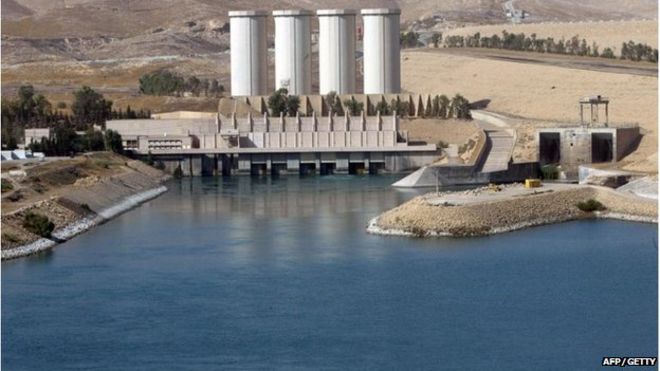
Mosul Dam at risk of catastrophic failure

Introduction & Background

BBC

A news headline caught my eye last week. It is from the UK Telegraph, and consists of a dire warning from US officials regarding the Mosul Dam.

US warns of ‘tsunami wave’ across Iraq if the Mosul Dam collapses

Iraq’s Mosul Dam faces “unprecedented” risk of a “catastrophic failure” that would unleash a wave of water which could flatten cities and kill hundreds of thousands within hours, the US has said. The American government issued an unusually stark warning of the horrors that face Iraq if the dam gives way, describing a “tsunami-like wave” that would crush nearly a third of the country.

Iraq’s power grid could be entirely knocked out and parts of major cities would be underwater for weeks like areas of New Orleans after Hurricane Katrina, the US said. The Iraqi government would be unable to direct an evacuation because Islamic State of Iraq and the Levant (Isil) still controls much of the territory near the dam and so people need to prepare to evacuate on their own, the US said.

The 2014 article from the BBC recounts the reasons why the dam is so unstable-

Instrument of war
However, since its completion in the 1980s, the dam has required regular maintenance involving injections of cement on areas of leakage. The US government has invested more than $30m (£17.9m) on monitoring and repairs, working together with Iraqi teams. The black flags of jihadist group Islamic State flew over the Mosul dam for 10 days before it was recaptured by Kurdish and Iraqi ground forces. In 2007, the then commanding general of US forces in Iraq, David Petraeus, and the then US ambassador to Iraq, Ryan Crocker, warned Iraq’s PM Nouri Maliki that the structure was highly dangerous because it was built on unstable soil foundation. 

“A catastrophic failure of Mosul dam would result in flooding along the Tigris river all the way to Baghdad,” [200 miles away] they said in a letter. “Assuming a worst-case scenario, an instantaneous failure of Mosul dam filled to its maximum operating level could result in a flood wave 20 metres (65.5ft) deep at the city of Mosul,” it said.

So the dam itself is faulty and now that the terror group ISIS has captured so much land in the surrounding area fears are they will use the dam as an instrument of war. The situation has not improved much since ISIS took over surrounding area and even had taken over the dam briefly in 2014, because, as this CNS News article from yesterday states,

The situation worsened when ISIS terrorists overran the dam and held it for several weeks in 2014. Since then, efforts to reinforce the dam’s foundations have not been adequate, partly because ISIS still controls the factory that produces concrete for the dam. (source)

Catastrophic Effects of Dam Busting

This situation brings to mind two items, First is Dam Busters and the Geneva Convention, and second is the Great Tribulation.

Familiar to many people are the battles of WWII. We all know the names of battles such as The battle of the Bulge, Bombing of Berlin, The London Blitz, and D-Day. Less familiar is Operation Chastise.

According to Wikipedia,

Prior to World War II, the British Air Ministry had identified Germany’s heavily industrialised Ruhr Valley, and especially its dams, as important strategic targets: in addition to providing hydro-electric power and pure water for steel-making, they also supplied drinking water and water for the canal transport system. The methods used to attack the dams had been carefully worked out. Calculations indicated that repeated air strikes with large bombs could be effective, but required a degree of accuracy which Bomber Command had been unable to attain in the face of enemy defences.

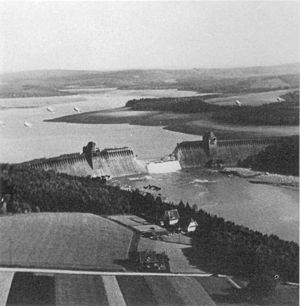
The Möhne dam the day following the attacks.
16–17 May 1943. Wikipedia

The movie “The Dam Busters” is the story of one scientist who developed a special bomb that could skip over water, avoid the torpedo nets, and then sink against the bottom of the dam in order to explode it at a sensitive point. The concept is of an earthquake bomb. Once the bomb was developed, the Operation was a success but there was heavy loss of Allied life due to the pilots having to fly so low to drop the bombs. The Operation was successful for the British both in its short-term and its long-term effects. But at what cost?

Flying Officer Frank “Jerry” Fray wrote of the experience of seeing the Valley after the dam breach-

When I was about 150 miles from the Möhne Dam, I could see the industrial haze over the Ruhr area and what appeared to be a cloud to the east. On flying closer, I saw that what had seemed to be cloud was the sun shining on the floodwaters. I looked down into the deep valley which had seemed so peaceful three days before [on an earlier reconnaissance mission] but now it was a wide torrent. The whole valley of the river was inundated with only patches of high ground and the tops of trees and church steeples showing above the flood. I was overcome by the immensity of it.

This is the same level of damage the opening articles were mentioning if the Mosul Dam in Iraq collapsed.

The destruction was so cataclysmic that it prompted a new resolution to the Geneva Convention. In 1977, Article 56 of the Protocol I amendment to the Geneva Conventions, outlawed attacks on dams “if such attack may cause the release of dangerous forces from the works or installations and consequent severe losses among the civilian population.”

ISIS, Infrastructure, and the Great Tribulation

Recently, people have been making date predictions about the start of the Great Tribulation. Some have said it will begin in March 2016, which is now. FYI, it is not going on now. The Tribulation has not begun. We know this because the church has not been removed from the earth yet, which will happen prior to the beginning of the Tribulation wrath being poured out.

Setting a specific date for the start of this worst event to ever happen on the face of the earth (Matthew 24:21) is forbidden by scripture, (Matthew 24:36, Acts 1:7), but people do it anyway. Sigh. One reason we are not to date set is that continual date setting with failure to fulfill destroys the confidence in weak Christians. That is sad. It also tarnishes the study of prophecy in general, and prophecy is extremely important.

What I find troublesome is the people who make fun of this date setting. Christian mockers mocking the event’s non-event. The Great Tribulation is no laughing matter. Jesus warned that it will be the WORST time on earth, ever. This means worse than the Flood of Genesis when every person on earth save 8 drowned. Every animal died (except on the ark). The Great Tribulation will be worse. It will be blood and anger and horror and demons abounding. It will be destruction and war and hate and brutality. It is not something to be taken lightly and certainly not to be made fun of.

One reason I mention prophecy quite often is because I want people to understand that the way things are will end. We are living on borrowed time, nationally speaking. What we see in our countries will exist no more. Infrastructure will crumble. Bridges, dams, walls, towers, will come down. Governments will l dissolve and reform to form a global tyranny. People will kill for no reason, or just because. The world’s most vulnerable – widows, children, poor, pets/animals – will be at most risk. People will simply not care one bit for their neighbor. People will be killed for a sip of water, or because they wore blue that day or they didn’t walk fast enough. The Great Tribulation literally will be hell on earth.

The dams in WWII that were busted caused so much havoc and death that the World decided not to use them as targets ever again. When the dams were busted in WWII 1,600 civilians were killed.

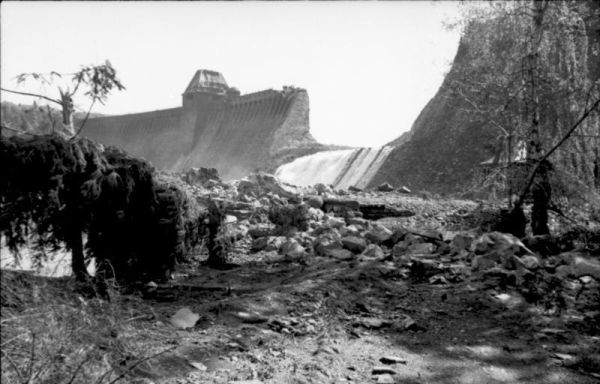
Here, the breach in the Mohne Dam’s massive wall gives way to a scene
of utter devastation as millions of gallons of water flooded into the valley
Image: Schalber, cc-sa-3.0 DE)

Prophecy authenticates the speaker, so this means ultimately God’s word is authenticated as He speaks and His prophecies come true. (Deuteronomy 13:1-3). Prophecy is supposed to quicken us and enliven us as we are ever-aware that this is not our world. We are not citizens of earth. We are citizens of heaven.

During the time of the Tribulation, do we think for one moment that some terror group won’t hesitate to destroy any dam? Any bridge? ISIS already destroys for the sake of destroying. What do we think will happen when the Restrainer has left the earth and allows man his full range of sinful impulses?

The devastation upon earth during the Tribulation will be uncountable. If the Mosul Dam is teetering on the brink of failure now, just imagine the horror of that and other catastrophic failures during the time of greatest woes ever occurring on the earth. Don’t take the Tribulation lightly and certainly, please, don’t mock even those who set dates about it. It is the second heaviest subject in the Bible, permanent wrath in hell being the worst. The Tribulation will be hell on earth and hell will have to enlarge its mouth for it to accept the many thousands at a time to enter it as will happen during the Tribulation.

Pray for souls to be saved now, during the age of grace. Be a living witness of the cause of Christ, warning of the wrath to come, in all due gravity and urgent pleading. If the Mosul Dam fails it will be like a mosquito bite compared to the devastation daily occurring during the Time of Jacob’s Trouble.

Posted in adam, beauty, curse, encouragement, jesus

If earth is this beautiful…

When Adam sinned, the Lord our God, creator of all, cursed the ground.

“Because you have listened to the voice of your wife
and have eaten of the tree
of which I commanded you,
‘You shall not eat of it,’
cursed is the ground because of you;
(Genesis 3:17)

I live in a rural area. Not every place on earth looks like this, I know. But I’m astounded that ANY place looks like this, after the curse.

If God’s earth is THIS beautiful after the ground has been cursed, then imagine the beauty of heaven! Look toward the reward- being in God’s family, perfected in glory, and seeing the face of Jesus, amid inexpressible sounds and sights of beauty of such scope that we cannot even imagine! (2 Corinthians 12:4)

But, as it is written, “What no eye has seen, nor ear heard, nor the heart of man imagined, what God has prepared for those who love him”— (1 Corinthians 12:9)

Posted in bible study, concordia, discernment, encouragement, jesus, small group

How do I lead a home bible study?

Some readers have asked how to start or lead a home group Bible study. This is a great question. There are many reasons why you might want to start a small group study in your home or at work. In these days of rising apostasy, some people are finding they are not receiving good instruction at their church from the pulpit or their Sunday School class. Others have left their church and have not found another one yet, but do not want to leave off fellowship with like-minded believers. Some are in a megachurch and this is the best way to connect with fellow believers for study and prayer. (Acts 2:42). Still others are born leaders with the gift and heart for teaching.

First before starting a group at your home, if you are members of a church, be sure to discuss this with your pastor. You don’t need his permission to start one, but if you want the credibility of your church and his endorsement, you will need to submit to him for pastoral oversight- especially if you’re a woman intending to minister to other women this way. More on that from 9Marks of a Healthy Church folks.

Another note I’d like to stress is that if you’re a woman wanting to start a home group study, you do NOT need to remain in the women’s aisle at the book store when perusing curricula. There is no biblical command to study only from guides written by women, and there are many good reasons not to. Here is one prime example of how or why it might be better to study from a curriculum written by a man.

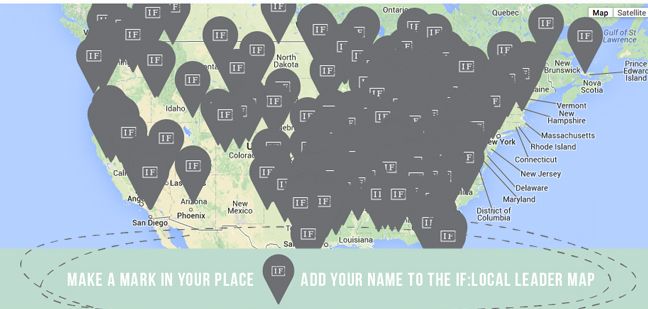
The IF:gathering is the biggest phenomenon you may never have heard of. That is because it is an organization founded by women who do their work mainly online. Though there are small group gatherings in real life, of course, called IF:table, these come about because of their organizational and promotional work in the largely hidden realm of social media. In other words, if you’re not clued in, you would never know that this is going on:

Every pin on that map, screen shot from last week, is a gathering under the auspices and curriculum of the IF:gathering, called IF:table. IF:table is women meeting up in homes and back yards to discuss the Bible in a fellowship atmosphere with an outlined curriculum. When I first looked at the IF:ladies and their local gatherings a few years ago, there were white spaces on the map where there were still no gatherings being held. You can see how they have gathered steam over the last two years. Now there are no white spaces east of the Mississippi.

The problem is, the IF:curriculum is less than solid. After all, the name IF comes from the women’s foundational premise; “IF God is real, then what?” These women promote a social gospel in lieu of the true Gospel among other issues with their hermeneutic. I’ll link to the biblical reasons why I’ve come to this conclusion below. IF is a liberal, questioning, soft ‘Bible’ study designed exactly for women who are always striving to learn but never able to come to knowledge of the truth. It’s a curriculum designed to feed into women’s vulnerabilities and capture them in a snare. We are the weaker vessel, and sadly, the success of IF:table proves it. (1 Peter 3:7).

For among them are those who enter into households and captivate weak women weighed down with sins, led on by various impulses, 7always learning and never able to come to the knowledge of the truth. (2 Timothy 3:6-7).

So aside from the biblical vulnerability we have to following the false, how do the IF: ladies successfully get so many women to gather in back yards? By making it easy. Here is their curriculum explanation outline-

IF:table- A place to gather women and share a simple meal and dive deep with people over real stories and Christ centered conversations. A time for a whole lot of laughter – and maybe a few tears – but time spent that leaves us with glad hearts. Full hearts. Grateful hearts. 

We’re inviting you to join us by hosting a dinner with us. Once a month in your local communities 

The vision is-
     6 women
     4 questions
     2 hours
     (Acts 2:46) 

Invite your people, prepare a simple meal, and we will provide the conversation cards 2 weeks before each IF:Table.

Source

Therefore the question I was asked, what solid alternatives are there? becomes important. Where can women and/or their husbands turn to find materials that will aid the leader in setting up a consistent, biblical fellowship study in your home?

First let’s look at the reasons to have a small gathering in the first place, and what they are and what they are not.

From the 9Marks men, Using Small Study Groups to Cultivate Fellowship defined,

They are not support or counseling groups, and they are not pure study groups. Rather, they are used to cultivate spiritual fellowship together, a fellowship informed by Scripture and pursued through prayer, study, and interpersonal reflection.

I would go to that link above and read that essay from 9Marks and read any others they have at the site. 9Marks is a website dedicated to helping Christians find resources and answers in today’s practical church life.

From Grace To You here are some short essays on the mechanics of the small group study fellowship:

Elements of Productive Bible Study: Believe
Elements of Productive Bible Study: Meditate
Elements of Productive Bible Study: Teach

LifeWay has a series of free articles that outline the elements of leading a good Bible discussion at home,

How to Lead a Successful Discussion-Driven Bible Study (Introduction)

  1. Prepare Yourself Mentally and Spiritually to Lead
  2. Develop a Discussion Plan that Works
  3. Handle Conversation Hogs and Rabbit Chasers
  4. Connect Between Group Sessions
  5. Start a Group Strong by Answering Why? Who? and What? First

This is a leader recommended book though Westminster Bookstore:
Iron Sharpens Iron! Leading Bible-Oriented Small Groups that Thrive

Small Bible-study groups are great places for Christians both to interact with God’s Word and to share their lives with others. They provide relaxed and informal settings which facilitate growth in grace and understanding. Orlando Saer provides a realistic and practical guide for anyone leading or wanting to lead such a group. This book will give you the tools you need as a leader to see your group thrive.

Now that I have done my duty grounding you and offering resources as to the reasons for and how-tos of leading a small group study in your home, here are a few curricula you may find useful.

The first thing to do is browse for materials at a trusted store. If you’ve decided to go under the auspices of your pastor/church, he/they can direct you. If you are on your own, then you find that the materials offered at various brick and mortar bookstores or online can be wild and woolly. LifeWay offers much, but much of what they offer is heretical. Picking through their offerings would be fraught with time-consuming danger, even for the most discerning. I like Westminster Bookstore which has a Reformed bent to it. Shopping at their online store one would be less likely to come across heretical materials.

Concordia University is a Lutheran University in Portland OR and branches elsewhere which has a pretty good online bookstore attached to it. You can try for materials there. I have not done a ton of business through Concordia so as always, think, pray, and discern for yourselves.

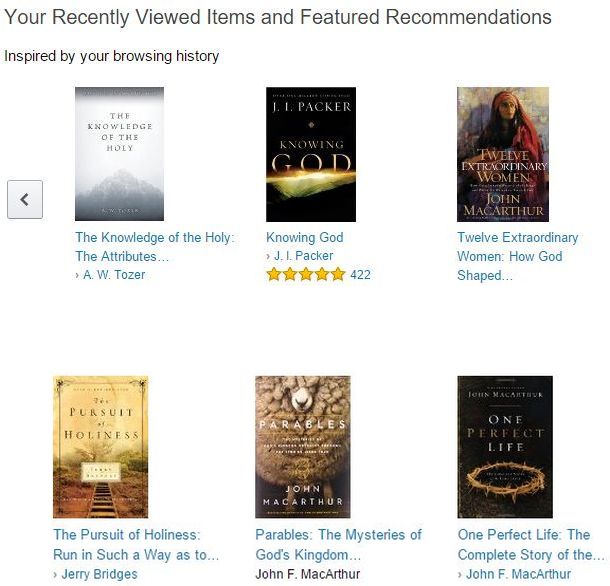
Also, Amazon is helpful for their reviews as well as their recommendations. One thing that is sometimes useful is that as you browse and buy books at Amazon, the logarithm behind the search function begins to “know” what you like and pairs your search with like-books from your browsing history, your purchases, and others’ as well. ‘It’ makes recommendations for you. If all you do is buy Beth Moore and Lisa TerKeurst books then that is the kind of book that will be recommended to you. After a while of browsing and buying solid books you can then begin to trust the recommendations a bit more and explore them. This is a screen shot from my recommended section:

Here are a few leader friendly, seemingly doctrinally solid, and engaging to the participant materials that yielded up when I searched for “small group Bible study curricula” at Westminster Books and elsewhere. I say seemingly not to cast aspersion but to let you know I have not read these books nor done any studies through them. As always, choose wisely.

The Practice of Godliness Small-Group Curriculum: Godliness Has Value for All Things 1 Timothy 4:8. Jerry Bridges

I have read the Jerry Bridges book The Joy of the Fear of God and it’s good.

TULIP: The Pursuit of God’s Glory in Salvation (John Piper Small Group, 2009)

For women, by women, there are Bible Studies with Lydia Brownback, a recommended writer from both Challies and Leslie Wiggins at Discerning Reader. This synopsis of Brownback was written in 2008

Lydia Brownback is the author of several books. She served as writer-in-residence for Rev. Alistair Begg and as the broadcast media manager for the Alliance of Confessing Evangelicals. A regular speaker at women’s conferences, Brownback also blogs at The Purple Cellar. She holds degrees from Syracuse University and Westminster Theological Seminary.

There is Todd Friel’s Drive By series. The Drive By Theology series has a study guide to accompany it. The Drive By title indicates that the theme is developed in numerous short audio lessons one can listen to on a short drive to work, say, no longer than 10-20 minutes. In the case of DB Theology, Steven J. Lawson is the main lecturer. The study guide accompanies the audio series. It is good for small groups because each lecture is short, leaving time for group discussion, and the .pdf curriculum helps the leader facilitate. There are various uses for the curriculum, as mentioned here in the introduction

How much you learn from this curriculum will depend on how much you put into it. You can go all out and turn this into a year-long project or simply use it as a way to look into a few of the things that catch your interest. If you want to understand more about how different denominations within the Church view the ordo salutis, spend some time looking at their teachings. Whether you are using this as a family study at the dinner table, a self-improvement project, a summer project for your kids to study, or a Bible curriculum for your homeschooler, you will find exciting things as you learn about how God has revealed Himself to us in the pages of Scripture

I also recommend Chris Powers, an artist who makes animations and creates doctrinally solid study guides to go with them. His materials are free. You can download The Word of the Cross study guide here. It is also available in Spanish. The Supremacy of Christ is available too, and it also has a Spanish translation.

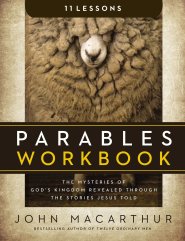
John MacArthur’s new book Parables is a wonderful read, and a new study guide/workbook will be available on March 1, 2016. The Publisher’s synopsis says,

This workbook has been designed to enhance readers’ experience of reading the book and is intended both for individual use and for study in a small-group setting.

So now that you know of some of the organizations, people and teachers that come recommended with study guides for small groups, and can continue to search on your own, I hope the Lord leads you to a good one and that your small groups thrive. Fellowship is important and I admire anyone with the gift of hospitality and teaching who bring people together under their roof to exalt Jesus and learn more about Him.

Though the IF:ladies make hosting a groups study look inviting and easy, with their softly photographed flower-laden tables and their 4 easy question cards, but hosting a group is not easy nor should it be taken casually. Also, the ladies make hosting a Bible study look at once inviting and impossible-to-achieve.

Sure. My backyard looks like that.

It’s the Lord’s own word you’re gathering to learn more of, after all. So it shouldn’t be casual or easy. But the Holy Spirit gives aid and comfort, leads and directs. HE is in charge of our souls pointing us to Christ, and anyone who wants to lead people to that end will find help from Him. That is a guarantee, because He promised to do so, and His promises never fail.

———————–

The End Time: IF:gathering review part 1

TruthKeepers: IF:gathering…is it a movement of God?

Sola Sisters: Strong warning about the IF:gathering

Posted in bible, jesus, scripture photo

Scripture photo: Anguish ("Church Bulletin" series)

Here’s a change of pace for your next church bulletin cover. Pain and anguish. In the verse, Paul is about to discuss the judicial hardening of the Jews’ hearts to many of their souls’ eternal destruction. As Jamieson Fausset Brown Commentary explains,

the bitter hostility of his nation to the glorious Gospel, and the awful consequences of their unbelief, weighing heavily and incessantly upon his spirit.

Paul’s response to God’s sovereign election and His judicial work among the people is an appropriate one. Our response to sin and rejection of Jesus should be the same. If all scripture is sufficient for teaching, reproof and correction, then it’s my dream that someday the church bulletin people will include some verses that do just that, as the Romans 9:2 verse does, illustrating a response to sin that is as much human as it is proper. Instead, we get a continual drip of insipid love and encouragement verses which is my opinion only serve in some cases to deepen the complacency of the self-satisfied Christian and most times, are ignored by the rest. How about some balance here, people?

OK, this is me pursuing the impossible dream… Soapbox over for today.

Scripture photo “Church Bulletin” series #1, Vulture

Scripture photo: “Church Bulletin” Series #3, Hell

Scripture photo “Church Bulletin” series #4, Lake of Fire

Scripture photo: “Church Bulletin” series #5, Wrath

Posted in apostles, encouragement, jesus, nathanael, philip

Nathanael was looking for something good

Philip found Nathanael and said to him, “We have found him of whom Moses in the Law and also the prophets wrote, Jesus of Nazareth, the son of Joseph.” Nathanael said to him, “Can anything good come out of Nazareth?” (John 1:45-46a)

This verse is from chapter 1 of the Gospel of John. The context is that Jesus has begun calling His disciples, who would become the Apostles a year and a half later. In the previous verses, He had called Andrew and his brother Simon (who shall be called Peter). Now, Philip who was from Bethsaida, went to Cana where Nathanael was from, to tell him the news.

Source

Nathanael’s skepticism rested on the fact of Jesus’ origins, which were from Nazareth, a backwater. So Nathanael’s skepticism revolved around the location, not the Person. Though we often focus on the part of the verse that says “from Nazareth?!” let’s focus on the part before that. Note Nathanael said, “can anything GOOD…” This shows that Nathanael knew of the Messiah and was looking for Him. He knew His appearance would be GOOD. Nathanael believed.

Nathanael had a seeking heart because he truly studied the scriptures. As verse 45 shows, Philip and Nathanael studied the Law, Moses and the Prophets. As for Nathanael’s character, in verse 47 when Jesus saw Nathanael coming toward Him, Jesus said there was no deceit in Nathanael and that he was a true Israelite.

Nathanael was a simple man, indeed from a not much bigger backwater than Nazareth (Cana), in a backwater district, in a time of apostasy. Not many people around him believed the truth. The Samaritans believed a blended religion, the Pharisees believed a works religion, the Sadducees didn’t believe in supernatural resurrection or angels and were against the Pharisees who did, and most regular people were either unknowing, hypocrites, or apathetic. As a matter of fact, Luke 4:33-34 records Jesus at Capernaum teaching at the synagogue. A demon-possessed man in the synagogue cried out when Jesus taught, because of His authority in His proclamation of the truth of God. Jesus cast him out, His first exorcism. Can you imagine a synagogue so devoid of truth that before Jesus’ arrival, the demon inside the man felt so secure he had never cried out before? Demons should never feel comfortable in church!

It was a time of apostasy, God hadn’t spoken in 400 years. He had sent no prophet (until John the Baptist). God had done no miracles. He had been silent.

Synagogues in the small towns had limped along, (with demons in them) the Temple in Jerusalem grew bloated with wares, graft, and hypocrisy thanks to the religious hierarchy.

And yet, among all this, there was faithful Simeon, and Anna, there was Zacharias and Elizabeth, Joseph and Mary, John the Baptist, and the men who would become the Apostles. And there was Nathanael, who was looking for something GOOD (just had a hard time believing it would come from Nazareth, lol).

In this current time of apostasy (when wasn’t the world apostasizing?!) we look at our leaders and sometimes we are greatly disappointed. Just as those regular people of Nathanael’s time were looking at the hypocritical Pharisees, the corrupt Annas or Caiaphas, the arrogant and zealous Saul (later, Paul), the ordinary people must have felt let down by those who were in charge of leading them in the truth just as we are let down by many of our leaders today. There has always been a shepherd problem.

“Woe to the shepherds who are destroying and scattering the sheep of my pasture!” declares the LORD. (Jeremiah 23:1)

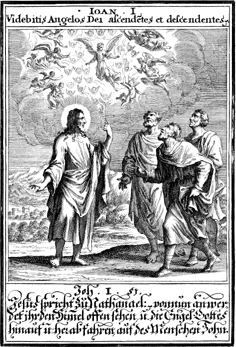
Jesus and Nathanael
WEIGEL, Johann Christoph 1695, Woodcut. Source

Yet there were simple people in small towns, laboring diligently during the week and on Sabbaths, attending synagogue to learn about the promised Messiah. Who was the first person Philip went to tell the good news that Messiah had been found, the priest in their local synagogue? No! Philip went immediately to tell his friend, Nathanael. These first century men and women persevered, they believed with a child-like faith, simple and in which there was no deceit. There were no layers of corruption to the faith that Nathanael evidenced, no arrogance. With seeking heart he and his friend Philip must have gone to hear John the Baptist, and when Jesus arrived, and said ‘Follow Me’ they did.

And we should do the same. We labor during the week, we worship on Sunday, we follow Jesus as He commanded. His word is in the Bible now, not spoken to us on a hillside at Bethsaida, but we believe. No matter what our leaders do, we trust the promises in His word just as Nathanael and Philip did in that long-ago apostate time. We follow, seek, trust. Nathanael was looking for something GOOD, and He came. We should also have seeking hearts.  Are you looking for He who was written of in Moses and the Prophets? Like Nathanael during a time of low worship and little truth, we are also looking forward to something GOOD. He will come again

in a moment, in the twinkling of an eye, at the last trumpet; for the trumpet will sound, and the dead will be raised imperishable, and we will be changed. For this perishable must put on the imperishable, and this mortal must put on immortality…(1 Corinthians 15:52-53)

Posted in church, holy spirit, jesus, the body

Ladies, resolve not to over-extend yourself in ministry this year

If you resolved this year to be more submissive to Jesus, more useful to the Body, and/or employ the Spirit’s gifts for His glory, here is a bit of food for thought. Even if you didn’t resolve those things…here you go!

The New Testament teaches us that Christ is THE HEAD of the church and we are members in vital union with vital ministry to each other– 1 Corinthians 12; Ephesians 4:11-16. But reading something in the Bible does not mean “experiencing” it. For the most part, churches today do not function as bodies in which all the members are connected to the Head and to one another in vital union and ministry. Frankly, I’m glad my own PHYSICAL body is not in the shape many churches are in— if it were: My mouth might start talking against my ears. My feet might stop listening to my head, My hands might run off and ‘join’ another body, etc! ~Pastor James Bell

How to maximize your Kingdom impact in 2016 

By Jack Graham
December 30, 2016 

But as it is, God arranged the members in the body, each one of them, as he chose. If all were a single member, where would the body be? As it is, there are many parts, yet one body. 1 Corinthians 12:18-20. 

Several years ago, I got suckered into buying one of those pocket knives that has everything on it you could imagine. It has a can opener, about five different sized blades, tweezers, a toothpick, a nail file, and screwdriver heads. If there was something you could use a pocket knife for, this one claimed it could do the job. 

But here was the problem: none of the tools on the knife worked very well. The blades were dull, the tweezers and toothpick fell out and got lost, and the screwdriver heads were so small that I couldn’t use them to turn a screw. 

The tool was so versatile, but didn’t do anything well. And as I look at a lot of Christians today, they’re a lot like that knife. So many are multi-talented and well-rounded, but they rarely commit to doing one thing really well. They’re spread so thin that their impact is minimized. 

As you step into 2016 this week, put your focus on one thing you want to do well in the coming year. Resolve to make a deep impact in one place. Do what you do well, and you’ll make a tremendous difference for the Kingdom in the coming year! 

CONCENTRATE ON ONE AREA OF KINGDOM IMPACT IN THE COMING YEAR AND WATCH GOD WORK THROUGH YOU IN A POWERFUL WAY!

I have found that in loving Jesus, in loving the saints, and in gathering with the congregation, there exists a tendency to become “busy.” Sometimes we say “yes” to a task, or a ministry, and it is’t really for us, but we feel like we “need” to say yes. Or even if we aren’t asked, sometimes we women feel the need (silent pressure?) to jump in anyway so as to be seen “doing our part.”

Resist that pressure, whether it comes from leadership or your own self. Slow down and examine whether it is something that will glorify the Lord, or will take away from family, or will use your gifts…in other words, examine your motivations for stepping into a use within the body. I’m careful not to get spread too thin. When I do spread myself thin, my mood sours and it’s not pretty. I thrive when I am mindful of doing the things I truly feel the Lord is guiding me towards and doing the m well and 100% to my ability.

On the other hand, as Pastor Bell noted, doing nothing isn’t helping the Body either. The Spirit delivered gifts so as to maximize all the saints’ usefulness here on earth. He has stationed us here and there knowing what gift within which person will best serve the Lord’s church for it’s growth and Jesus’ glory. Since each of us has a gift or gifts, and each of us is called to use them, it stands to reason that doing nothing isn’t serving the Lord in any meaningful way, and is in fact an abuse of the Spirit’s patience and ministry.

A hand is a hand. It doesn’t try to be a foot. And it doesn’t lay dormant, either. Work, but work wisely.

EPrata photo

Posted in decisional regeneration, false, jesus, urbana15

Urbana15 and other large conferences are false Christian-making factories

At St. Louis Missouri, a large conference/Christian event is held the last week of December. It’s a student missions conference and the name matches the year it’s held, i.e., Urbana15. This past year, David Platt and Francis Chan were featured speakers, among other 180 men and women. You may know that Mr Platt was an American pastor at a church in Alabama, but gave that up to become president of the Southern Baptist Convention’s International Mission Board, which is an office in which he currently serves as of this writing. He is also an author, noted especially for the NY Times bestselling book Radical: Taking Back Your Faith from the American Dream.

Francis Chan was a pastor of a church he founded but gave that up to become, well I don’t know what he does anymore exactly. Writes books and is an itinerant speaker I guess.

The Urbana15 promotional material listed reasons why students should attend, and one of them is to encourage students use the days between Christmas and New Year’s Day in a more sacred way. They offer seminars, speeches, workshops, counseling, exhibits, missions opportunities, etc, I’m all for that. The material also says the event is not specifically an evangelistic event, because the target demographic is Christians interested in international missions, who are between the ages of 17 and 29 (though there is no upper age limit). Their FAQ material answers the question,

IS URBANA 15 FOR NON-CHRISTIANS?
Urbana 15 is a missions conference and not specifically an evangelistic event. However, God has used Urbana to bring many people to faith in the past, and we anticipate that some non-Christians may attend Urbana 15, as well.

I am not a fan of conferences. One reason is the impersonal nature of them. Lots of people hide in plain sight at places where tens of thousands or more people gather. Pastors and teachers have a personal job in discipling and teaching in a personal way, which is impossible to do when speaking to hordes.

Also, the tendency for false doctrine and false professions of faith increase as the size increases. There is special danger in conferences aimed at women and youth. The Georgia Passion conferences aimed at youth, and conferences for women like IF:Gathering, Living Proof, Unwrap the Bible aimed at women, all host false teachers. The Bible states that youth and women have special vulnerabilities (1 Timothy 3:6, 2 Timothy 3:6, 1 Peter 3:7) so of course satan aims conferences at those demographics. At Passion, a gathering for 18-25 year olds held at three linked locations in Georgia in early January, several false teachers and singers are always on the lineup.

Worse, Passion rules forbid adults to attend, unless and only if you are a pastor accompanying the youth. Can you imagine, Paul traveling around Asia Minor, to the 7 churches, saying, ‘Send your youth to Damascus to a gathering where doctrines will be taught but you CANNOT do your job as a parent and accompany your child to see if it’s sound doctrine! And pay for the privilege!’ And then you find out that Hymenaeus and Philetus, in addition to Peter and John will be teaching in the arena. Do you think any teacher with discernment is going to stand on a stage with the false teachers in the first place? No.

Some conferences are good. Of course John MacArthur’s Shepherds Conference, the Inerrancy Conference, Strange Fire, G3 Conference, are all good. I can’t make a sweeping generality and say that ALL conferences are bad. However note that the aforementioned good conferences are aimed at men, not women or youth. They are sponsored by churches with strong doctrine. Their environment does not encourage false confessions of faith. And that is why I’m writing. The false professions.

The promo material states one of the reasons to attend Urbana15 is

… is more than its parts. Urbana is a chance to share five days with a diverse group of 16,000+ people who—like you—think carefully about their Christian faith and want to make the world a better place.

Then Jesus came to them and said, “All authority in heaven and on earth has been given to me. Therefore go and make the world a better place disciples of all nations, baptizing them in the name of the Father and of the Son and of the Holy Spirit, and teaching them to obey everything I have commanded you. And surely I am with you always, to the very end of the age.” (Matthew 28:18-20).

See? Already there was a ‘going astray’ because missionaries and disciples are not called to make the world a better place. We don’t encourage Christians, especially youthful, impressionable potential missionaries, to go out and make the world a better place. The world will never be a better place until Jesus returns and restores it. Making the world a better place is not our mission on earth. That mission is stated above, in the Great Commission verse. It’s making disciples in the faith.

Knowing the event is not an evangelistic event yet the likelihood that non-Christians will be invited is a reality. If a person is really a Christian, they have a heart for the lost, and would want to invite a non-saved friend to the event. That is normal and not so much the problem. The problem is with the decisional regeneration rampant at large conferences. “Choosing to follow” or “deciding for Christ” or “inviting Jesus in” have become synonymous with the supernatural act of Godly justification. They’re not the same thing.

Let’s start with some photos from the Urbana15 event and tweets about it. At an admittedly non-evangelistic event, the Lord has caused 681 non-Christians to “make a decision of faith to follow Him”?

Is that how it works? At a light-show, non-evangelistic event, you giddily decide, follow, and commit in a horde doing the exact same thing?

Casting one’s self at the mercy of Christ upon having been given the faith to see one’s position in Christ as a hell-bound sinner is one thing. But at events like Urbana, this broken-hearted, eternity-changing regenerational moment is treated like an game at a toddler birthday party. “Here’s a glowstick, break it open if you want heaven when you die!”

I’d like to remind us all of the gravity of joining the faith. In Acts 5:12-13 we see the reality of what a large congregation of true Christians do: cause respect and fear.

At the hands of the apostles many signs and wonders were taking place among the people; and they were all with one accord in Solomon’s portico. 13But none of the rest dared to associate with them; however, the people held them in high esteem.

Why did they hesitate to join them? As John MacArthur wrote, “These unbelievers had respect for the followers of Jesus, but feared the deadly potential of joining the church.” At Solomon’s portico, not a glowstick was in sight. But there were plenty of giddy joiner-uppers at Urbana15:

Or is it more like when Jonathan Edwards preached his famous sermon Sinners in the Hands of an Angry God, he preached hell, sin, wrath, death, and the Good News. I was not present at Urbana15 but I have been present through audio at many, many modern-day conferences and sin, wrath, death, and hell are rarely preached. I doubt at Urbana did the speaker mention those necessary components of the Gospel, else the giddy throwing hat moment would have looked more like it did when confronted with our sin before a holy God as Isaiah was (“I am undone!”) and Peter (“depart from me, I am a sinful man!”) or as it did when Edwards preached, the scene recorded in Stephen Williams’ diary:

before the sermon was done there was a great moaning and crying went out through ye whole House…. ‘What shall I do to be saved,’ ‘Oh, I am going to Hell,’ ‘Oh, what shall I do for Christ,’ and so forth. So yet ye minister was obliged to desist, ye shrieks and cry were piercing and amazing.”

To demonstrate your status as a child of God in the new creation, don’t be so upset over your sin and final destination, just giddily throw your cap over a wall when you “decide”? Is that how it works? Hmmm.

Absent the gravitas, and absent (probably) the serious preaching on sin, death, hell and wrath, and absent the ability for a pastor who knows his congregation to meet with and disciple the new convert, or chooser-follower, worst of all is this. The chooser-follower, sans hat and clutching a broken glowstick, is pronounced a new Christian. See tweet:

THIS is why I am against conferences.

Given the number of false positives in the Bible, (Demas, Judas, Mrs Lot..) and given the numbers of those who believe they are saved but dreadfully discover they are not on His Day (Matthew 7:21-23), is it wise to immediately declare someone a Christian after one quick profession of faith allegedly cemented by a thrown hat and a broken glowstick? Especially since the Bible shows us it takes time for the proof, their fruit, to ripen. No. It is not wise. John 6:66 shows that many who “chose to follow” Jesus turned away when things got hard. As a matter of fact, most of them did.

But wait, evangelicalism today, as represented by the actions at conferences like Urbana15, gets worse. The gravity and solemnity of the Lord’s Table AKA communion should be utmost in people’s mind and hearts. One of two NT God-given ordinances, baptism being the other, it should only be undertaken by those who know they are saved, and have prepared their mind and heart, and have confessed of life’s daily sin, and repented, and are sure they have no stumbling block between a brother and…well you see the idea. There is a high benchmark given in the Bible to engage in this solemn occasion. But the Convention mentality of evangelicalism today makes a mockery of that by inviting one and all to partake en masse.

As for evangelicalism resulting in hordes storming the pearly gates, it is not so. Pentecost aside, it is a solitary thing. Here is John MacArthur:

You Must Enter the Narrow Gate Alone

That fact is implied in the text. The word “narrow” in verses 13‑14 gives the idea that the gate is very narrow. In fact, some Bible commentators say that the best contemporary expression of it would be to think of a turnstile. A person has to go through a turnstile alone; The passageway through a turnstile is very narrow; its metal arms don’t allow more than one person through at a time. Zoos, train stations, and airports have turnstiles. If a group of people are in a hurry to go in or out, they can’t go through together. They have to go through one at a time. That’s the way it is with the narrow gate. People don’t come into the Kingdom of Christ in groups. 

Here is my friend Pastor Phil Andrukaitis properly preparing his flock to engage in communion.

Good day my FB friends. 

As another new year is upon us, so is the first “Fellowship of the Lord’s Supper” for 2016 within the Christian community of faith. This sacred act of worship [commonly identified as “The Lord’s Supper,” “Communion,” “Breaking Bread,” “The Lord’s Table”] is a worshipful remembrance of Jesus Christ’s sacrificial death on the cross for our sins. Moreover, Christians are told to continue on with this worshipful act until Jesus returns, implying that Jesus rose from the dead. 

For those individuals who have been “born-again” by the Spirit of God and the Word of God, they are experiencing a new relationship with God, as sinners “saved by the grace of God.” They are no longer estranged from God. 

Why? Here are four, glorious reasons: God has acted on behalf of sinners through Jesus first, by turning away His divine wrath from sinners and directed His wrath upon Jesus. Second, Jesus has paid our sin debt because we cannot; sinners like you and me are spiritually bankrupt. Third, God the Father has declared sinners “not guilty” because Jesus took upon Himself our guilt and shame as He was crucified on the cross. Finally, God the Father has reconciled sinners to Himself through His Son. Therefore, there is no other way for sinners to be saved. Faith in Christ’s atoning work and resurrection from the dead is the only way to be saved. 

Therefore, as the Christian community gathers to worship God the Father, Jesus Christ the Son of God, through the ministry of God the Holy Spirit, may each local church family take the time [at least the day before celebrating Communion] to prepare their hearts. In other words, before the Lord’s Supper is administered, may the brethren of a Christian fellowship beg forgiveness of others for the wrongs they have committed. After all, “nobody who avoids this approach to his brother can go rightly prepared to the table of the Lord.” [Bonhoeffer] 

There is great joy in the presence of the angels of God when one sinner repents. Imagine the great joy in heaven when local fellowships whose relationships are fractured by sin and are on the verge of collapse, repent and cry out to God and others for forgiveness?
God intended for His Table to be an occasion of great joy for the Christian community, not another religious act tacked on at the end of a service. Oh that God’s people would truly seek to be reconciled with one another and with Him. Please, for the sake of God’s name, for the sake of the fellowship, and for the sake of your own soul, begin preparing your heart now. Do not wait until Sunday morning, especially while sitting in the worship service. Start now.

So that is why I do not like conferences especially aimed at women and youth. Since we are especially vulnerable we must be especially vigilant. If you are a woman or a youth or a parent of a youth, Christiany-sounding conferences might seem like a good idea on the surface. To cull from the herd the weaker members to bring them a place where there isn’t proper oversight and often is much false teaching, is counterintuitive to biblical commands. Large conferences are places where sound teaching is often absent, where the necessary solemn atmospheric mood cannot be adequately instilled, where professions are pronounced instantly genuine, where conversions cannot adequately nurtured in timeliness or in depth, where the solemnity of the ordinances are are not maintained, and where rather than reverence, silliness and giddiness prevails.

Avoid them. Take a small group ministry trip if you must, but thoroughly vet it before-hand. It is better to stay locked into your local fellowship where accountability and oversight are more rigorous. Weep and mourn the carnival atmosphere that surrounds Christianity and be an Ezra, weeping and pleading for the people:

O my God, I am ashamed and blush to lift my face to you, my God, for our iniquities have risen higher than our heads, and our guilt has mounted up to the heavens. 7 From the days of our fathers to this day we have been in great guilt.” (Ezra 9:7a)
Posted in encouragement, jesus, prophecy, spiritual warfare

The names of Satan

Spiritual warfare is very real. Even pagans are in a constant state of war. To be a pagan is to be at war- against God. To be a Christian is to be at war- against the flesh, the world and the devil. Life on earth is a battle.

EPrata art

God did not leave us unequipped. He gave us armor.

Take the sword of the Spirit, which is the word of God.”—Ephesians 6:17.

TO BE A CHRISTIAN is to be a warrior. The good soldier of Jesus Christ must not expect to find ease in this world: it is a battle-field. Neither must he reckon upon the friendship of the world; for that would be enmity against God. His occupation is war. As he puts on piece by piece of the panoply provided for him, he may wisely say to himself, “This warns me of danger; this prepares me for warfare; this prophesies opposition.” 

Difficulties meet us even in standing our ground; for the apostle, two or three times, bids us “Stand.” In the rush of the fight, men are apt to be carried off their legs. If they can keep their footing, they will be victorious; but if they are borne down by the rush of their adversaries, everything is lost. You are to put on the heavenly armor in order that you may stand; and you will need it to maintain the position in which your Captain has placed you. If even to stand requires all this care, judge ye what the warfare must be! 

~Charles Spurgeon, The Sword of the Spirit

By the words in the Bible, we are given to understand that our life is a fight. Here is the enemy:

He is a formidable enemy. Left to our own devices, warring against Satan would be as a mosquito to an atom bomb. However God’s power so far exceeds the atom bomb that when facing Him, this seemingly formidable enemy, the devil, becomes the mosquito! Our Holy Father is the all powerful God, and He has won the victory already. He has overcome the world. (John 16:33).

What we must do is put on our armor, pray always, and stir one another up to good works. Confessing our sin and repenting of it, we gain more strength in wielding the sword of the Lord which is His word, we have ample military support to stand against the world, the devil, and the flesh.

Our Jesus has fulfilled the prophecy:

He will swallow up death forever, and the Lord GOD will wipe away tears from all faces; the rebuke of His people he will take away from all the earth; for the LORD has spoken. (Isaiah 25:8 )

Posted in discernment, ihop, jesus, ronnie floyd

Have ye so little faith? SBC President Ronnie Floyd at IHOP; a discernment lesson

The President of the Southern Baptist Convention (SBC) last night appeared on the stage at the One Thing conference with one of Christianity’s biggest false prophets and the leader of a hugely growing cult, Mike Bickle of the International House of Prayer Kansas City (IHOPKC). Why did Mr Floyd do this? He explained early in his speech, from what he can see of the world, the storm has come and it demands urgency of action.

“When it feels like the ship is sinking, everyone needs to grab a bucket.”—Ronnie Floyd President of the Southern Baptist Convention, explaining why he appeared at at IHOPKC (cult) One Thing conference on Dec 28, 2015.

We are to be urgent in Christian action, redeeming the time spent for our Lord in His work. But do the times demand blind panic, partnering with darkness, and other pragmatic man-made moves that display our urgency, misguided though it may be? Should ‘the times’ be the prompt for action instead of the Gospel? No.

I spent a good deal of ink in another blog post explaining the context of the situation. This essay which follows is what they call in writing class an ‘explode the moment’ or honing in to focus minutely on a particular aspect of the context. In this case, it’s the biblical scene on the boat when the disciples asked if Jesus cared or not that they might be perishing. Let’s use this for a discernment lesson. Sadly, it’s a reverse lesson, as Mr Floyd’s actions unwittingly teach us what NOT to do.

Peace Be Still, Arnold Friberg

And a great windstorm arose, and the waves were breaking into the boat, so that the boat was already filling. 38But he was in the stern, asleep on the cushion. And they woke him and said to him, “Teacher, do you not care that we are perishing?” 39And he awoke and rebuked the wind and said to the sea, “Peace! Be still!” And the wind ceased, and there was a great calm. 40He said to them, “Why are you so afraid? Have you still no faith? (Mark 4:37-40)

Mr Floyd, have you so little faith? The boat is not sinking. (Mark 4:37-40, Matthew 14:31, Luke 8:25). Did the disciples grab a bucket? We know the answer.

carest thou not that we perish?—Unbelief and fear made them sadly forget their place, to speak so. Luke has it, “Lord, save us, we perish.” When those accustomed to fish upon that deep thus spake, the danger must have been imminent. They say nothing of what would become of Him, if they perished; nor think, whether, if He could not perish, it was likely He would let this happen to them; but they hardly knew what they said.

And he said unto them, Why are ye so fearful?—There is a natural apprehension under danger; but there was unbelief in their fear. It is worthy of notice how considerately the Lord defers this rebuke till He had first removed the danger, in the midst of which they would not have been in a state to listen to anything.

how is it that ye have no faith?—next to none, or none in present exercise. In Matthew (Mt 8:26) it is, “Why are ye fearful, O ye of little faith?” Faith they had, for they applied to Christ for relief: but little, for they were afraid, though Christ was in the ship. Faith dispels fear, but only in proportion to its strength. (Jamieson, Fausset & Brown, Commentary Critical and Explanatory on the Whole Bible)

These were seasoned fishermen. They knew when a storm as raging enough to swamp a ship. In their case, the waves actually were overtowering the ship, and they rightly knew conditions were the foundering sort. Paul knew when the ship was in peril, Jonah knew. I’ve been in a mighty storm on a small yacht. Seamen know when the storm imperils lives. We don’t blame the men for fearing.

But when fear comes, especially when it is a fear based on what man’s eyes can see, the proof in the pudding is how you deal with the situation.

I know of a small, rural SBC church that hired another pastor after their long-term pastor left. The new pastor made lots of exegetical mistakes in preaching. Some left. The new pastor had an unfortunate (and disqualifying) tendency to rough anger. More left. Sunday attendance numbers couldn’t be explained away any longer by “those who are sick with the flu going around” or “those who are traveling this holiday weekend”. Attendance was declining and it showed. So, events were held to grab more people and get them in. Evangelists were hired. Inflatables were inflated. Hot dogs were eaten. Those pragmatic approaches did not work. So more left. Panic set in. Tithes dipped below healthy levels, and the wild eyed panic turned to fear. The smell of desperation caused more to leave. Therefore, anger abounded and it was taken out on staff. Staff left. So more people left with the staff. Sermons now focused on tithing, or on rebuking those who stayed. So even more left.

You see the circle-the-drain pragmatic approach does not work. The disciples in the boat could have furiously bailed. They could have tossed one of them overboard like Jonah. They could have hove to or gone under bare poles. They could have prayed. Instead, they panicked.

Jesus rebuked the sea and then rebuked the men. But notice that the fear they had of the storm was replaced in spades by fear of what they had seen Jesus do. He has power over the weather and sea and waves, and instantly they obeyed Him. The men became exceedingly terrified. I’d imagine that if the IHOP people were ever to see a REAL miracle they would not only become terrified, they would drop dead of heart attacks on the spot.

Jesus IS the calm. Always rely on Him.

He knew a storm was coming. He knew. But He had no concern. It was the sleep of fearlessness. It was the sleep of trust. It was the sleep of sovereignty. It was the sleep of omnipotence. He knew He could awaken at any moment and stop the storm. (source)

When it feels like the ship is sinking, one does not run around in a panic, begging those with theological unorthodoxy to join in bailing the boat. That displays lack of faith and is an action motivated by fear.

And then once He stilled the storm, verse 25 says, He said to them, “Where’s your faith? “Where’s your faith? I’m sure they were hanging their heads. That was embarrassing. That was shameful. Oh, we saw Him raise the dead, we saw Him control the fish, we saw Him cast out demons, we saw Him heal all those people. This is embarrassing. Where’s your faith? Couldn’t you believe Me for this? (source)

Can’t we believe Jesus that He is building His church and the gates of hell will not prevail against it? Is the ship foundering? No.

Yes, there is excess water in the ship because false teaching brings it. Yes there is excess baggage in the ship, weighing it down because the sin within false doctrine is heavy. (Psalm 38:4). Mr Floyd’s action to partner with those who weigh down the faith is counter-productive and a bad example of what to do in discernment situations. When the waves threaten to overpower, you don’t pragmatically look for hands to bail the ship, you look to the one who calms the storm. It is not a situation of “any port in a storm” but the One who creates the port. And the storm. And the calm.

When we see our church local or global seems to be faltering, as Mr Floyd did, he was seeing through man’s eyes. Jesus’ church is not foundering. But sometimes a local church does die. Or sometimes as a church is diminishing in numbers, Jesus makes a move through the members’ prayer. I know of another small, local SBC church where the members had died or drifted away. It was a long-term church, it had been existing a long time in that spot. But it was small now and it was dying. The leaders prayed. Along came a contingent of pastors and leaders who wanted to plant a new church, and felt led to ask the dying church to rent their space. It was the answer to prayer, and a new church was planted inside the old church. The old church hadn’t panicked. They hadn’t gone around to the Mormons and the Seventh Day Adventists and the Catholics, false ‘christians’ all, and asked to partner, giving the excuse that the times warranted drastic action. No, they kept their eyes on Jesus, were patient, and they prayed.

When the storm comes, discernment is all the more needed. Panic, fear, and distress will make a person want to make bad decisions. Even the fervency of a person like Mr Floyd who seems to love the faith enough to want revival and want people to pray, can perform wrong-headed actions if motivated by fear from seeing things through a man-made perspective.

And it is my prayer that your love may abound more and more, with knowledge and all discernment, so that you may approve what is excellent, and so be pure and blameless for the day of Christ, (Philippians 1:9-10 )