Posted in bible, encouragement, judgment, prophecy, tribulation

End time encouragement from a long-past prophet: Habakkuk

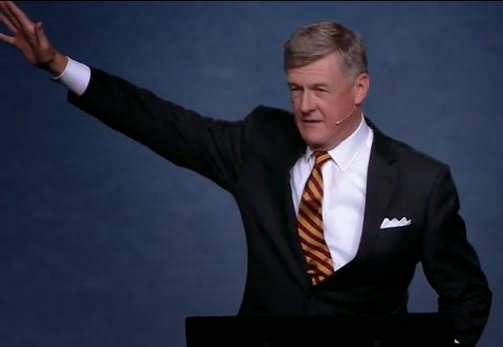
My friend, Pastor Phil Andrukaitis of the First Baptist Church of South Portland Maine, preached on Habakkuk 3 recently. I am on the email list for the sermon notes, and I was struck by how encouraging the notes were. Because:

  • it is always good to be energized by the profound truths of God’s word
  • it is always wonderful to remember that prophecy points to the sovereignty of God
  • it is comforting to see there are faithful pastors laboring in all parts of this country and the world, serving and ministering to our Lord

I asked Pastor Phil to reprint the notes. They include a thoughtful and discerning introduction. Please be encouraged with either or both, the introduction or the sermon notes themselves. I added the photos and artwork. They are not original to the sermon.

Please continue to pray for pastors all over the world who preach the Gospel faithfully and discerningly. There are 4,500 pastors meeting in Sun Valley CA right now at the annual Grace Community Church/Masters College Shepherds’ Conference. There are thousands of other pastors right now working out sermon notes, praying in tears for their sheep, visiting the sick, building a new church, or doing any of the myriad and seemingly impossible things God calls His under-shepherds to do.

Pastor Phil Andrukaitis

It is only by the Holy Spirit that these men are able to lift themselves up each day under the workload, to have the word of God illuminated to them, to have kindness and comfort to offer the grieving or sin-stricken, to have strength to have the difficult conservations and uncomfortable confrontations.

And when I came to you, brethren, I did not come with superiority of speech or of wisdom, proclaiming to you the testimony of God. For I determined to know nothing among you except Jesus Christ, and Him crucified. (1 Corinthians 2:1-2)

Good pastors are a gift from God.

And I will give you pastors according to mine heart, which shall feed you with knowledge and understanding. (Jeremiah 3:15)

The introduction and sermon are long. Print it out, mull it over, return to it when you have time. These are God’s words, delivered through a pastor’s heart, and offered in love and truth to comfort you.

SERMON INTRODUCTION

Phil Andrukaitis
Good afternoon my family and friends,

As a pastor, I have a divine responsibility to shepherd my flock [and to encourage other Christians] by strengthening their faith with the Bible and by preparing them for future trials and tribulations, which lie ahead for all of us. Knowing my own weaknesses and failings, I still press on to model my faith with my life, as this is part of the process of making disciples.

Question: My family and friends, are we ready to experience the difficult times that are coming to our country? As I read the Book of Habakkuk, this prophet of God was told what was in store for his nation. This news was so disturbing for Habakkuk, it caused him to tremble. I believe God is allowing discerning Christians, along with many American citizens, to see ominous signs for our nation. And some folks are trembling.

The concept of the Rapture is embraced as an escape plan among many Christians. While I believe Scripture promises the church to escape the “Great Tribulation,” the church may very well experience smaller tribulations [e.g., the collapse of our economic system, martial law, restricted freedoms, fear in the streets, etc.] before the actual rapture of the church.

My brothers and sisters, I urge you in the name of the Lord not to dismiss current events or to become discouraged by them. Rather, we are to embrace God and His Word, as did Habakkuk. Therefore, let each Christian embrace his God-given assignment and enable the church to fulfill the Great Commission, making disciples of Jesus Christ.

I pray that Habakkuk’s message will strengthen your faith and prepare you to stand firm on the Rock of our salvation, Jesus Christ.

Your servant in Christ,
Pastor Phil

SERMON TRANSCRIPT

This morning, I begin this sermon not with a story to illustrate the passage; rather, with the text itself. It is one of the most magnificent pieces of Hebrew poetry [comparable to Psalm 23]; the closing verses in the Book of Habakkuk (3:17-19 – NASB):

Though the fig tree should not blossom and there be no fruit on the vines; though the yield of the olive should fail and the fields produce no food; though the flock should be cut off from the fold and there be no cattle in the stalls; yet, I will exult in the LORD, I will rejoice in the God of my salvation. The Lord GOD is my strength, and He has made my feet like hinds’ feet, and makes me walk on my high places.
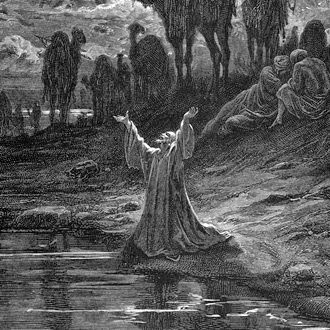
Gustav Dore: Habakkuk crying out in prayer

Did you hear Habakkuk’s words with your soul? But wait: Unless we understand these words in the context of the chapter, in the context of the book, and in the context of its setting, Habakkuk’s words of praise would be wrongly interpreted and misapplied to our lives. Therefore, let us begin with the fact that Habakkuk is a devout servant of God who…

  • grieved over his nation’s wickedness,
  • wrestled with theological perplexities,
  • and shook with fear when God told him what was coming to the nation.

God was bringing judgment to His people. Yet, Habakkuk declared his faith and expressed praise to the Lord GOD, in spite of the news he learned (Habakkuk 3). How is that possible?

So as not to get ahead of myself, permit me to ask you two questions: First, what was the most gut-wrenching, painful experience you have ever had? Second, how long did it last and what were the consequences? Perhaps some of you have experienced one or more of the following:

• The death of a parent, spouse, child, or friend
• An act of violence committed against you [rape, beaten, robbed, etc.]
• News that your health is failing – you have only three months to live
• The rejection of your spouse [divorce]; the betrayal of a friend; the discipline of a church
• The consequences of a sinful decision that brought overwhelming guilt and shame

Okay, now that you are in the moment for just a moment, what were your thoughts towards God when you were in that time of trouble? Were you praying? Were you crying? Were you afraid? Were you angry? Did you doubt God’s love? Were you filled with despair? How did you get through this painful experience?

Transitional Sentences

Having jolted your memory, you are now ready to connect with the prophet’s words and emotions; but just for a little bit. I do not want to offend anyone by minimizing your gut-wrenching painful experience, but when God told Habakkuk what was coming to the nation, within the prophet’s lifetime, Habakkuk wrote,

I heard and my inward parts trembled, at the sound, my lips quivered. Decay enters my bones, and in my place I tremble. Because I must wait quietly for the day of distress, for the people to arise who will invade us (Habakkuk 3:16 – NASB).

Yet, immediately following these words,

• Habakkuk did not stare at the horrific news he just received.
• Habakkuk did not become paralyzed in his walk with God.
• Habakkuk did not run away from God; rather,
• Habakkuk grounded himself in what he knew to be true about God and praised the Lord.

Historical Setting

Okay, before we proceed further, you might be asking, who is Habakkuk? There is nothing known about the prophet’s personal life. While students of Scripture have speculated that Habakkuk was of a priestly family, the Scripture is silent on this issue.

Habakkuk’s name means, “to embrace.” Based on the prophet’s words, it appears that Habakkuk embraced God [God’s glory, will, purity, heart, people, and suffering]. While all the other prophets spoke for God to the people, Habakkuk speaks openly to God about people.

Habakkuk wrote this book approximately 2 years before the first of three deportations to Babylon [B.C. 605, 597, 586]; 20 years before king Nebuchadnezzar eventually destroyed Jerusalem with a great slaughter. Habakkuk was a contemporary of Jeremiah. Moreover, there is a sense in the text that Habakkuk is also living in Jerusalem.

• We know that Jeremiah lived through the two-year siege of Jerusalem. Jeremiah describes God’s wrath against Jerusalem (Lamentations 2), whereby the Babylonian military forces first starved the people into submission and then broke through Jerusalem’s wall, slaughtering, plundering, and destroying the people and the city.

• However, as for Habakkuk, we do not know if he perished in the two-year siege or died by the sword when the Babylonian forces ransacked the city. However, when the prophet heard the news from God, what was to come, it is no wonder the prophet shook with fear.

I heard and my inward parts trembled, at the sound, my lips quivered. Decay enters my bones, and in my place I tremble. Because I must wait quietly for the day of distress, for the people to arise who will invade us (Habakkuk 3:16 – NASB).

In order to understand more fully Habakkuk’s prayer of praise in Chapter 3, let us review quickly a summary of the Chapters 1 and 2.

Summary Points in Chapter 1

Habakkuk’s 1st Complaint (1:2-4)

• God, why do You seem so indifferent to my prayers?
• God, why did You allow Israel to go so far with their sins?
• God, why do You not bring justice to the land?

Evidently, the time for divine judgment was now. From the Book of 2nd Chronicles, the godly reforms King Josiah instituted were reversed by his wicked sons, especially by king Jehoiakim. Consequently, Israel was rife with the following sins:

The people were idolatrous, especially as they sacrificed children upon the altars of demons, for financial and agricultural prosperity.

  • Corruption in the highest political and religious offices were the norm [Observation: perhaps that is why the nobility were first to be carried off in the first of three deportations to Babylon].
  • Jerusalem’s officials abused their authority and power, bringing injustice to the widows and the poor.
  • Bloodshed and crime were rampant throughout the land.
  • The Word of God was rejected; so were the prophets, as they were persecuted.
  • Consequently, the people of the land refused to repent of their sins.

God’s Reply to Habakkuk’s 1st Complaint (1:5-11)

God said, I am bringing the Chaldeans [Babylonians] to judge My people [Israel].

Habakkuk’s 2nd Complaint (1:12-2:1)

• But God, the sinfulness of the Chaldeans is worse than the sinfulness of the Jews!
• God, how can You endorse evil people to do Your divine work?
• God, You are too holy to look upon sin.
• God, the cruelty of the Chaldeans is known worldwide! They will destroy us!

To feel the horror that filled Habakkuk’s soul, imagine ISIS forces overwhelming this nation, as they are overwhelming the nations of Iraq and Syria.

Summary Points in Chapter 2

God’s Reply to Habakkuk’s 2nd Complaint (2:2-20)

• God declares: The just shall live by faith [present the gospel]
• God declares: I will judge the Chaldeans for their sins [5 woes]

–greed and aggression (5-8)
–exploitation and extortion (9-11)
–violence (12-14)
–immorality (15-17)
–idolatry (18-20)

Summary Points in Chapter 3

Even though Habakkuk did not understand everything about God and the course of action He was taking against Israel, the prophet offers a powerful prayer of praise.

First, Habakkuk makes a request of God (2).

–Revive Your work.
–Make Your work known.
–Be merciful when You express Your wrath.

Observations about Habakkuk’s request

1. Habakkuk knows what is coming and expressed his fear, along with his faith in God.

2. Understanding that God is holy, Habakkuk knew that God must judge sin. Habakkuk does not ask for personal deliverance, ease of suffering, defeat over the Chaldeans, or for Israel’s deliverance.

3. Rather, Habakkuk asked for God’s will to be done. Hmmm, this is reminiscent of the Lord’s Prayer. Consider the following questions: Are we more concerned about…

…our personal welfare or God’s will in our lives?
…which political party will win next year’s election or purity of the church?
…becoming more like Christ or securing material possessions?
…our comforts in this life or the kingdom of God?

Do you seek the shadow of the Jesus’ cross looming over this passage? Habakkuk asks, “in wrath remember mercy.” Habakkuk knew that God could no longer tolerate Israel’s sin. God’s righteous character demands that He judge sin.

God is still the same God today. He does not change. He cannot look upon our sin without judging us. That is why God sacrificed His Son on the cross for our sins. When Jesus hung on the cross, He alone bore the wrath of God so that you and me could escape God’s wrath. Indeed, God did remember His mercy while pouring out His wrath on His Son. We do not deserve to be saved. God held back the judgment we deserve [mercy] and gave to every sinner who has believes, eternal life [grace].

Listen, my friends, there is no sin in your life beyond the cross. Even though no one else knows about your sin, God knows. Come to Him in faith, believing that the blood of Jesus cleanses you from all your unrighteousness.

And to my brothers and sisters in Christ, God continues to bestow mercy and grace on our lives. Forsake the sin that so easily cripples your walk with God by calling out to Him to revive your heart for Him.

Second, Habakkuk remembers the deeds of God (3:3-15).

God displayed His majesty to the world.
God displayed His power over the nations [the Exodus and the plagues].
God displayed His presence among His people [Mount Sinai].
God displayed His glory, causing the nations to fear Him [Joshua 10].

What was God’s purpose in all of His deeds? The answer is clear: To demonstrate to His salvation for a people He loved.

Applications from Habakkuk’s remembrance

1. Read Scripture and understand how God has demonstrated His faithfulness in the past. A good place to begin would be at the cross. Think through how God took steps to bring Jesus into this sin-cursed world. In your mind, imagine yourself among the fickle crowds that called for the death of Jesus. See with your mind’s eye how Jesus carried His cross for you; the soldiers who nailed Him to the cross. Listen to His last words from the cross. These actions on our part have a way of strengthening our faith and making more intimate our personal relationship with Jesus.

2. Think back how God has delivered you in the distant and recent past. Be sure to tell others about His faithfulness.

3. Parents and grandparents, how are we demonstrating our faith and what values are we setting before our children? It is true that many young people are leaving the church. Might the problem lie in our homes and the manner in which we live out our faith?

Third, Habakkuk confesses his fear because he knows what lies ahead of him (16).

Habakkuk knew what was coming. If the Spirit of God told us of our future, I do not think we would be able to handle it, as God permits a measure of intense suffering for many of us. Read Peter’s first letter as suffering is a major theme he addresses (1st Peter 2:20-25; 3:13-17; 4:12-19).

Is it any wonder then, that we often times design our lives to avoid future suffering? God’s Word says, “Many are the plans in the heart of man, but the answer comes from the Lord.” God desires that we learn to walk by faith and not by sight or to solely lean on our own understanding (Proverbs 3:5-6). Therefore, as Habakkuk’s heart melted in fear, his faith did not paralyze his walk with God.

Applications from Habakkuk’s confession

I do not read tea-leaves. I do not listen to Glenn Beck. I am not a pessimist. However, you do not have to be a rocket scientist to see that difficult days lie ahead for this nation.

God has not spoken to me, as He did to the prophet Habakkuk; however, His Word speaks to all of us. And our country, like ancient Israel, is rife with the same sins. God is going to judge America for her many sins. The question is, when will this judgment fall?

As your pastor, I have a divine responsibility to strengthen your faith with the Word of God and by modeling my life before you; making disciples of Christ.

My brothers and sisters, are our souls ready to experience what is coming to our country? God told Habakkuk what was coming and the news caused him to tremble. God is allowing us to see the signs in our country and across the world and I sense that people are beginning to tremble.

I believe many of us think that the Rapture is the church’s escape plan. Yes, I believe Scripture promises the church to escape the Great Tribulation; however, there will be many smaller tribulations, [like the collapse of our economic system, martial law, restricted freedoms, fear in the streets, etc.] that impact the church.
My brothers and sisters, I urge you in the name of the Lord not to dismiss current events or to become discouraged. Rather, we are to embrace God, as did Habakkuk, seek to fulfill our mission as a church, bringing Jesus into the lives of others.

With that being said, let us look at the final portion of Habakkuk’s prayer of praise.

Fourth, Habakkuk praises God because… (17-20)

–God’s sovereignty never changes (17).
–God’s salvation is sure (18).
–God’s strength will help us walk with Him (19)

Though the fig tree should not blossom and there be no fruit on the vines;
though the yield of the olive should fail and the fields produce no food;
though the flock should be cut off from the fold and there be no cattle in the stalls;
yet, I will exult in the LORD, I will rejoice in the God of my salvation.
The Lord GOD is my strength, and He has made my feet like hinds’ feet,
and makes me walk on my high places.

Applications from Habakkuk’s praise

When the Chaldeans ransack the nations, they wiped out the permanent crops [figs, grapes, olives], the basic food and the flocks. In other words, God oversaw the destruction of Israel’s economy. What did that mean for the people of Israel? There was no food in the land. The absence of social services, like those of today, guaranteed that the young, the old, and the sick would most likely die of starvation.

What do we say today, when any of us lose our job and become unemployed; when the insurance runs out; when social security check is denied? Even worse, what might be our reaction should Wall Street collapse, wiping out all of our savings?

A word to the wise and prudent: Our country is on the verge of economic collapse. Even now, America is financially bankrupt, not to mention morally and spiritually bankrupt. Even though many people may lose everything, God remains in control. After all, He is responsible for removing those things in our lives.

Conclusion

This is Communion Sunday. Someone has said that God tries our faith so that we may try God. When God gives His people unwanted burdens, God also provides His undeserved blessings. Therefore, thankfulness comes from what is in our hearts, not what is in our hands.

Even though I have lost everything [consider Job], I will rejoice in the Lord for He has guided my steps into this experience. May each of us cultivate a heart like that of Habakkuk, of Job, and of Jesus. Amen.

—————————————————————-

First Baptist Church 879 Sawyer Street ~ South Portland, Maine 04106
Office: (207) 799-4565 Fax: (207) 799-5922
Website: http://www.spfbc.com Email: southportland.fbc@gmail.com

Posted in abide, encouragement, vine

The vine, the abiding, and the dead branch

I am the vine; you are the branches. Whoever abides in me and I in him, he it is that bears much fruit, for apart from me you can do nothing. (John 15:5)

We’ve been having many storms the last two weeks. Ice, sleet, freezing fog, snow, and wind. Three winter storms in the last two weeks, a lot for us. The first storm was the worst. Many thousands of people were without power. Many tree limbs came down.

There was a branch in my yard that came down yesterday. It was a biggish limb, torn right off from a large tree in the back yard. I’d planned to take a photo of it to illustrate the verse, but the yard got cleaned up before I came home from work. So I found this branch in the sheep pasture instead.

Look at it. The limb is dead, that kind of dead, rusty brown that pine trees turn when they are good and dead. It is no longer connected to the tree. That limb can stay on the ground there as long as it wants but it will never do anything except lay there and get dead-er. It will not grow longer. It will not spring pine needles, It will not bear pine cones. It will not house birds. It will not shade worms. It will only lie there, dead.

It is apart from the tree.

Do not be apart from the vine. Jesus is the vine, providing life-flowing sustenance, strength, power. Abide in Him.

Posted in encouragement, ligonier, steven lawson

Excerpts from Ligonier’s ‘After Darkness, Light 2015 National Conference

Sermon Highlights from After Darkness, Light: 2015 National Conference

Sinclair Ferguson’s sermon “Christ’s Message to the Church

The Reformers warned us that darkness will once again overcome large portions of the church if the gospel is not proclaimed and defended in every generation. Through the Apostle John, our Savior issued a similar warning to the seven churches of Asia Minor, calling them to return to Him lest they fall into darkness and their lampstands be removed. In this message, Dr. Sinclair Ferguson considers what Christ might have said if one of the seven letters to the churches in Revelation 2:3 had been specifically addressed to the church in the modern West in this message.

Biblical Christianity is not going to an assembly where the word of God is preached biblically. Biblical Christianity is being in an assembly where the word of God jumps out of the pulpit and starts running around the church and transforms people’s lives.
~Sinclair Ferguson

Steven J. Lawson’s message, A Puny God-

If the church has a low view of God, its light will be dim, and the darkness will not be pushed back. … In this message, Dr. Steven J. Lawson proclaims the centrality of a high, biblical view of the Lord, calling upon God to restore the truth about His transcendent majesty and holiness in His church.

In every generation when the church stands strong, it is in those hours in which the church has the highest view of God in those hours in which the church has languished in its impotence and it’s had so little effect upon the world around it, is when the church has had such base and low views of God. If we are to have a reformation, if we are to have a revival in this hour, in this day, it will be a reformation and a revival that begins in the knowledge of God. ~Steven J. Lawson

Better to have small faith in a great God, than great faith in a small god. Your faith is only as good as the object upon which it is cast. ~Steven J. Lawson

Conference Organizers write:

2015 National Conference: Audio and Video Now Available
from Nathan W. Bingham Feb 25, 2015 Category: Events

“God’s people must cry out for His revival and a restoration of the light.” —R.C. Sproul

Last week we held our 2015 National Conference on the theme, After Darkness, Light. We explored our need to be revived and restored to a high view of God, His law, His people, and His plan for the world.

We are now pleased to announce that the conference messages are available to stream for free on Ligonier.org or YouTube, purchase as a digital download, or pre-order on DVD and CD.

Purity in a Digital Age by Tim Challies
Repentance & Renewal by Rosaria Butterfield
Paganism in Today’s Culture by Peter Jones
Pre-Conference Panel Discussion
Christ’s Message to the Church by Sinclair Ferguson
A Puny God by Steven Lawson
Questions & Answers #1
No Place for Truth by Alistair Begg
Jesus Made in America by Stephen Nichols
Whatever Happened to Sin? by Russell Moore
It’s All about Me by R.C. Sproul Jr.
Questions & Answers #2
I Will Build My Church by W. Robert Godfrey
Do Not Love the World by Kevin DeYoung
The Least of These by Sinclair Ferguson
It’s Just a Book by W. Robert Godfrey
Holy, Holy, Holy by R.C. Sproul

Optional Sessions:

Lessons From the Upper Room by Sinclair Ferguson
The Daring Mission of William Tyndale by Steven Lawson
Abortion Front Lines with John Barros and R.C. Sproul Jr.

Posted in beth moore, encouragement, reading, worldview

The moment Jesus entered heaven, Reading as parenting, A Prophet for an Un-discerning Church, Worldview

Mark Jones at Reformation 21 wrote a tremendously uplifting essay. Tremendous. Christ’s Entrance into Heaven speculates on the scene in heaven, after Jesus ascended to heaven. Here is how it begins:

Have you ever wondered what it must have been like when Christ entered heaven after having ascended? This was a unique moment in redemptive history, and one that we should probably meditate upon a lot more than we do. At the risk of being occasionally speculative, here are some thoughts on Christ’s entrance into Heaven as the glorified God-man.

The effect upon those in heaven must have been incredible. We are told that there is much joy in heaven when a sinner repents (Lk. 15:7). But what about the joy when Jesus, who saves all who enter heaven, arrived to take his seat at the right hand of the Father?

Please read his short piece. You will be glad you did.

A reader sent the following, JC Ryle on 8 Symptoms of False Doctrine. Here it is in its entirety. It was posted at the link in 2013 but written in 1967 and published in the excellent Banner of Truth. His list is as true or truer today than ever.

Many things combine to make the present inroad of false doctrine peculiarly dangerous.

  1. There is an undeniable zeal in some of the teachers of error: their ‘earnestness’ makes many think they must be right.
  2. There is a great appearance of learning and theological knowledge: many fancy that such clever and intellectual men must surely be safe guides.
  3. There is a general tendency to free thought and free inquiry in these latter days: many like to prove their independence of judgment, by believing novelties.
  4. There is a wide-spread desire to appear charitable and liberal-minded: many seem half ashamed of saying that anybody can be in the wrong.
  5. There is a quantity of half-truth taught by the modern false teachers: they are incessantly using Scriptural terms and phrases in an unscriptural sense.
  6. There is a morbid craving in the public mind for a more sensuous, ceremonial, sensational, showy worship: men are impatient of inward, invisible heart-work.
  7. There is a silly readiness in every direction to believe everybody who talks cleverly, lovingly and earnestly, and a determination to forget that Satan often masquerades himself ‘as an angel of light’ (2 Cor. 11:14).
  8. There is a wide-spread ‘gullibility’ among professing Christians: every heretic who tells his story plausibly is sure to be believed, and everybody who doubts him is called a persecutor and a narrow-minded man.

All these things are peculiar symptoms of our times. I defy any observing person to deny them. They tend to make the assaults of false doctrine in our day peculiarly dangerous. They make it more than ever needful to cry aloud, ‘Do not be carried away!’

From J. C. Ryle’s Warnings to the Churches [Banner of Truth, 1967], ‘Divers and Strange Doctrines’, pages 76-77, with slight editing.

As someone whose profession is education and whose specialty is literacy, I appreciated this post from The Christian Pundit regarding Reading As Parenting

Reading as Parenting

When we think about parenting, the word “books” probably isn’t the first thing that comes to mind. But reading to our children is a fundamental aspect of parenting little people, though we rarely talk about it in the context of raising children.

Here is something I’ve posted before but am doing again. Todd Pruitt at the Mortification of Spin, on Beth Moore, A Prophet for an Un-discerning Church

But those who don’t much care about popularity or physical safety have in recent years been willing to challenge some of the outrageous claims and troubling teachings coming from Beth Moore. It would be one thing if Beth’s claims of direct revelation, sloppy exegesis, and squishy ecumenism were confined to a small corner of the church. The trouble is that Beth Moore is hugely popular which means she has a lot of influence.

What is your worldview?

Barna noted that substantial numbers of Christians believe that activities such as abortion, gay sex, sexual fantasies, cohabitation, drunkenness and viewing pornography are morally acceptable. “Without some firm and compelling basis for suggesting that such acts are inappropriate, people are left with philosophies such as ‘if it feels good, do it,’ ‘everyone else is doing it’ or ‘as long as it doesn’t hurt anyone else, it’s permissible.’ In fact, the alarmingly fast decline of moral foundations among our young people has culminated in a one-word worldview: ‘whatever.’ The result is a mentality that esteems pluralism, relativism, tolerance, and diversity without critical reflection of the implications of particular views and actions.”

This Barna study quoted above was conducted in 2002, thirteen years ago as of this writing. He noted that the study and survey was aimed partly at young people, and it is to be strongly noted that the young people who expressed such a world-view thirteen years ago are now the adults of today. And these adults are having children of their own, and passing the worldview on to them.

Posted in encouragement, ephesians, redeeming the time

Redeeming the Time

Ephesians 5:15-16

Look carefully then how you walk, not as unwise but as wise, 16 making the best use of the time, because the days are evil.

Of this passage in context, Matthew Henry said,

“These verses contain a caution against all manner of uncleanness, with proper remedies and arguments proposed: some further cautions are added, and other duties recommended.”

 One of the cautions is that the days are evil, so we redeem the time. If we do, we are wise. Henry further comments on the part about redeeming the time,

It follows, redeeming the time (v. 16), literally, buying the opportunity. It is a metaphor taken from merchants and traders who diligently observe and improve the seasons for merchandise and trade. It is a great part of Christian wisdom to redeem the time. Good Christians must be good stewards of their time, and take care to improve it to the best of purposes, by watching against temptations, by doing good while it is in the power of their hands, and by filling it up with proper work—one special preservative from sin.
Our time is a talent given us by God for some good end, and it is misspent and lost when it is not employed according to his design. If we have lost our time heretofore, we must endeavour to redeem it by doubling our diligence in doing our duty for the future.

The Bible Exposition Commentary by Warren Wiersbe says of the Eph 5:15-16 verses,

It is a mark of wisdom (v. 15). Only a fool drifts with the wind and tide. A wise man marks out his course, sets his sails, and guides the rudder until he reaches his destination. When a man wants to build a house, he first draws his plans so he knows what he is doing. Yet, how many Christians plan their days so that they use their opportunities wisely? True, we cannot know what a day may bring forth (James 4:13–17). But it is also true that a planned life can better deal with unexpected events. Someone said, “When the pilot does not know what port he is heading for, no wind is the right wind.”
Life is short (v. 16a). “Buying up the opportunity—taking advantage of it.”

An old Chinese adage says, “Opportunity has a forelock so you can seize it when you meet it. Once it is past, you cannot seize it again.” Our English word opportunity comes from the Latin and means “toward the port.” It suggests a ship taking advantage of the wind and tide to arrive safely in the harbor. The brevity of life is a strong argument for making the best use of the opportunities God gives us.

I ask Jesus to expand the time for me, to help me make use of the time, and to convict me when I fail to be “wise.” He always hears that prayer, because it belies a heart that wants to glorify Him more, and not less. If I can glorify Him one minute more each day, even one minute, by purposeful prayer, or conduct, or bible study, then that is a beautiful thing.

EPrata artwork, paper collage, scanned, & digitally altered
Posted in death, encouragement, lazarus, resurrection

O death, where is your victory?

I don’t understand all that God does, or why. We understand some, because He revealed it to us in His word and through His Son.

But death…when a friend or loved one dies, it’s so sad. Even Jesus wept at the death of his friend Lazarus. He wept even knowing He would raise Him.

But what a spectacular event!

The Death of Lazarus

1Now a certain man was ill, Lazarus of Bethany, the village of Mary and her sister Martha. 2It was Mary who anointed the Lord with ointment and wiped his feet with her hair, whose brother Lazarus was ill. 3So the sisters sent to him, saying, “Lord, he whom you love is ill.” 4But when Jesus heard it he said, “This illness does not lead to death. It is for the glory of God, so that the Son of God may be glorified through it.”

5Now Jesus loved Martha and her sister and Lazarus. 6So, when he heard that Lazarus was ill, he stayed two days longer in the place where he was. (John 11:1-6)

I Am the Resurrection and the Life

17Now when Jesus came, he found that Lazarus had already been in the tomb four days. 18Bethany was near Jerusalem, about two miles off, 19and many of the Jews had come to Martha and Mary to console them concerning their brother. 20So when Martha heard that Jesus was coming, she went and met him, but Mary remained seated in the house. 21Martha said to Jesus, “Lord, if you had been here, my brother would not have died. (John 11:17-21).

Jesus Raises Lazarus

Giotto: Raising of Lazarus

38Then Jesus, deeply moved again, came to the tomb. It was a cave, and a stone lay against it. 39Jesus said, “Take away the stone.” Martha, the sister of the dead man, said to him, “Lord, by this time there will be an odor, for he has been dead four days.” 40Jesus said to her, “Did I not tell you that if you believed you would see the glory of God?” 41So they took away the stone. And Jesus lifted up his eyes and said, “Father, I thank you that you have heard me. 42I knew that you always hear me, but I said this on account of the people standing around, that they may believe that you sent me.” 43When he had said these things, he cried out with a loud voice, “Lazarus, come out.” 44The man who had died came out, his hands and feet bound with linen strips, and his face wrapped with a cloth. Jesus said to them, “Unbind him, and let him go.” (John 11:38-44).

How beautiful is the glorification of the Father through His Son. And, His words echo in a spiritual truth- ‘death, let him go.’ Jesus is Master over death. He let us go! What a day it will be when Jesus says finally to satan, let go all my people, and satan is cast into the Lake of Fire.

Death, where is your victory? Where is your sting?

Posted in angel, countenance, encouragement, prophecy, wisdom

A godly face radiates His glory

In Adult Bible Study we are going through Acts. I am also listening to John MacArthur preach through Acts. When reading the part where Stephen was dragged in front of the Sanhedrin and about to answer charges of blasphemy, we read the following:

And gazing at him, all who sat in the council saw that his face was like the face of an angel. (Acts 6:15)

As is the way with the Spirit, he got my attention to focus on the part that said ‘the face of an angel.’

I envisioned Stephen’s face full of serene glory, bright and shining. It reminded me of the verse when Moses had been with God and Moses’ face shone so brightly the people were scared and urged Moses to cover it with a veil. (Exodus 34:30, 35, cf. 2 Corinthians 3:13).

Other incidences of a person’s face shining with glory were also in the New Testament, this time it was Jesus-

There he was transfigured before them. His face shone like the sun, and his clothes became as white as the light. (Matthew 17:2)

Now about eight days after these sayings he took with him Peter and John and James and went up on the mountain to pray. And as he was praying, the appearance of his face was altered, and his clothing became dazzling white. (Luke 9:29)

Moses, Stephen, Jesus, faces shining with glory. I want that. I want that because when someone sees me I want them to see Jesus. I don’t want them to see my face, but a serenely joyful face, so different from the faces in the crowd. I want people to notice something different about me. The something different, of course, is Jesus.

But how? Moses was with God Himself on Mt Sinai. That was a unique occurrence. Jesus is, well, Jesus, and though He was fully man He was also fully God. So X that off the list. Stephen was filled with the spirit at a moment when supernatural ability was promised God’s people. (Matthew 10:19-20).

Still…if the Spirit’s ministry is to point people to Jesus I want Jesus to be evident in me. I know the fruit the Spirit grows will do that.

But if the ministry of death, in letters engraved on stones, came with glory, so that the sons of Israel could not look intently at the face of Moses because of the glory of his face, fading as it was, 8how will the ministry of the Spirit fail to be even more with glory? (2 Corinthians 3:7-8)

What else will do that? I found an answer in Ecclesiastes 8:1

Who is like the wise?
And who knows the interpretation of a thing?
A man’s wisdom makes his face shine,
and the hardness of his face is changed.

Wisdom. The kind of wisdom that emanates and makes a face soften. Here is what the Jamieson-Fausset Commentary explains about the Ecclesiastes verse:

Praise of true wisdom continued (Ec 7:11, &c.). “Who” is to be accounted “equal to the wise man?… Who (like him) knoweth the interpretation” of God’s providences (for example, Ec 7:8, 13, 14), and God’s word (for example, see on Ec 7:29; Pr 1:6)?

face to shine—(Ec 7:14; Ac 6:15). A sunny countenance, the reflection of a tranquil conscience and serene mind. Communion with God gives it (Ex 34:29, 30).

The Matthew Henry Commentary on the Whole Bible says of the Ecclesiastes verse,

Wisdom: It beautifies a man in the eyes of his friends: It makes his face to shine, as Moses’s did when he came down from the mount; it puts honour upon a man and a lustre on his whole conversation, makes him to be regarded and taken notice of, and gains him respect (as Job 29:7, etc.); it makes him lovely and amiable, and the darling and blessing of his country. The strength of his face, the sourness and severity of his countenance (so some understand the last clause), shall be changed by it into that which is sweet and obliging. Even those whose natural temper is rough and morose by wisdom are strangely altered; they become mild and gentle, and learn to look pleasant.

The way to softening our countenance is wisdom. We absorb wisdom from above by holding close communion with Christ. We read His word, the best – and only – wisdom. Prayer is close communion with Christ, an intimate privilege that delivers wisdom because in prayer we contemplate Him. Proclaiming His truths, as Stephen did, will increase our wisdom because if what comes out of us defiles us, alternately His truths enliven us with His glory. (Mark 7:20, James 3:6).

NH Old Man of the Mountains,
a granite face. Source

To understand this as a full truth we look at its opposite. If wisdom of God softens our face and makes it serenely radiant, a man with no Godly wisdom will have a hard face. The ultimate example of this is the antichrist. We read in Daniel 8, one of the antichrist’s qualities is that he has a hard face.

And in the latter time of their kingdom, when the transgressors are come to the full, a king of fierce countenance, and understanding dark sentences, shall stand up. (Daniel 8:23 KJV)

Friends, the gentle disciplines of reading the bible, prayer, and proclaiming His truth will transform us, and it’s not only the mind that is transformed (Romans 12:2) but when the mind is drenched with wisdom, truth, Jesus, it will alter our very countenance.

The upshot is, close communion with God will alter our face.

And we all, with unveiled face, beholding the glory of the Lord, are being transformed into the same image from one degree of glory to another. For this comes from the Lord who is the Spirit. (2 Corinthians 3:18).

For God, who said, “Let light shine out of darkness,” has shone in our hearts to give the light of the knowledge of the glory of God in the face of Jesus Christ. (2 Corinthians 4:6)

Behold His glory and it will shine upon you today, reflecting back to a dark world that needs to see it.

Posted in encouragement, good blogs, links

Lists, lists, we all like lists. Listapalooza

When I was an editor/reporter I wrote lots of articles. Knowing I had readers of different ages, interests, and ability levels, I liked to write a variety of styles in the newspaper. Long, short, easy reading, casual reading, scholarly writing. And lists. I always liked bullet point, browsable, easily consumable lists. That was my favorite. So here is a list of lists.

These Christian writers present a list of excerpts and/or links, either daily or weekly. If you don’t have a lot of time and want to just scan a list, this list is for you.

Dan Phillips at Pyromaniacs has collected a list of red light warnings to be on the lookout for when testing whether a teacher may be heading down the road of falsity. His is an invaluable list. I recommend bookmarking it or copying it and printing it out. It’s called Red Lights.

Red Lights

It occurred to me that many might be served if we offered warning-signs of (at worst) false or (at best) unreliable teachers. Here are a number of such indicators. Some are instantly obvious; others only over the passage of time (cf. 1 Tim. 5:24). Any one of these should signal alarm. Found all together in the same person, trainwreck is assured.

Al Mohler puts out The Briefing each day. He writes that this list is a “Daily worldview analysis about the leading news headlines and cultural conversations.”

Tim Challies publishes an A La Carte each day.

Erin Benziger posts This N That at Do Not Be Surprised on Fridays.

Trevin Wax also posts Trevin’s Seven on Fridays. Or maybe he changed the name to “Worth a Look”. I’m not sure.

Julia at Steak and a Bible has a semi-regular “Don’t Miss” list

If you know of a good blog that publishes a browsable list pretty frequently, lt me know and I’ll add it.

Enjoy!

Posted in encouragement, God, grace

So much grace and good gifts from the Father

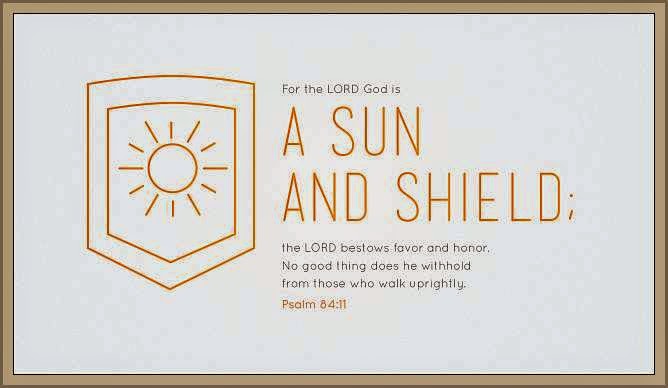
For the LORD God is a sun and shield; the LORD bestows favor and honor. No good thing does he withhold from those who walk uprightly. (Psalm 84:11)

Gill’s Exposition of the Entire Bible

For the Lord God is a sun and shield,…. Christ is “the sun of righteousness”, and it is in the house of God that he arises upon his people with healing in his wings, Malachi 4:2 he is like the sun, the great light, the fountain of light, the light of the world, that dispels darkness, makes day, and gives light to all the celestial bodies, moon and stars, church and ministers; he is a “sun” to enlighten his people with the light of grace, to warm them with the beams of his love, to cheer and refresh their souls with the light of his countenance, and to make them fruitful and flourishing and he is a “shield” to protect them from all their enemies; he is the shield of faith, or which faith makes use of, against the temptations of Satan; he is the shield of salvation, and his salvation is a shield which shelters from divine justice, and secures from wrath to come:

The graces of our Lord are manifold. He bestows grace upon grace to His children who believe in Him. What joy we have in worshiping and loving our Jesus.

He gives us the sun and our shield, as Charles Spurgeon says,

“A sun above, a shield around. A light to show the way and a shield to ward off its perils.”

His good gifts don’t stop there, He gives favor and honor, too. Grace upon grace. As T. Guthrie says of Psalm 84:11-12,

Mountains have been exhausted of their gold, mines of their diamonds, and the depths of ocean of their pearly gems. The demand has emptied the supply. Over once busy scenes silence and solitude now reign; the caverns ring no longer to the miner’s hammer, nor is the song of the pearl-fisher heard upon the deep. But the riches of grace are inexhaustible.

Turn to sweet Jesus today, pray for Him to comfort you, enliven your weary heart, to strengthen your legs and straighten your arms for the days ahead. Draw His grace around you as a blanket of eternal love from our wonderful God.