Posted in encouragement, praise

Loving Jesus for Who He is

This was first published on The End Time on 8/20/2012

He was manifested in the flesh,
vindicated by the Spirit,
seen by angels,
proclaimed among the nations,
believed on in the world,
taken up in glory.
(1 Timothy 3:16)

Hans Memling: Christ surrounded by musician angels

Our love for Him does not rest on positive circumstances. It does not rest on signs or gifts or prosperity or works. It rests on the simple fact that He is the only One deserving of all glory. He is the Sinless, Perfect One, and He came down to the dirt and the mire to life a life under submission to God and to die an unjust agonizing death so our sins would be propitiated.

Be humble in yourselves but boast of Jesus. Be meek in attitude but be confident in His promises. He is coming soon, and all promises will soon be fulfilled. Won’t it be awesome when we see Him as He is?

Beloved, we are God’s children now, and what we will be has not yet appeared; but we know that when he appears we shall be like him, because we shall see him as he is.” (1 John 3:2)

Posted in encouragement, fellowship

True Christian Fellowship

Fellowship is defined as friendly association, especially with people who share one’s interests.

In Acts 2:42 we read that Christian fellowship was practiced among the new believers in the new church

They were devoting themselves to the apostles’ teaching and to fellowship, to the breaking of bread and to prayer. 

At Bible.org we read the following opening paragraphs regarding fellowship and what it has come to mean. I agree with these statements, and I’m disappointed that what passes for fellowship today is often absent some critical ingredients. More on that in a moment.

Introduction
In Acts 2:42 we read that one of the four things the early church devoted itself to was “fellowship.” Fellowship was a very important part of their reason for meeting together. It was one of their objectives. But what is fellowship? 

We often hear people talking about fellowship. We hear it said that what we need is more fellowship. But our modern ideas of fellowship have become so watered down that the word no longer carries the same meaning it did in New Testament times. 

We are not surprised that the early church devoted itself to “the apostles’ teaching” and also “to prayer.” Apart from the ministry of the Holy Spirit, these are the two most important means of growth, power, and effectiveness in the Christian life and this is everywhere evident in the rest of Scripture. 

But Luke tells us these early Christians also devoted themselves to fellowship. They just didn’t have fellowship; they devoted themselves to it. This means that fellowship was a priority and one of the objectives for gathering together. They made fellowship a priority. 

Today, however, we often view fellowship as what we do in “fellowship hall.” It’s the place where we have casual conversations and savor coffee and donuts. This is not bad and can contribute to fellowship, but it falls far short of fellowship according to biblical standards and according to the meaning and use of the Greek words for fellowship.

In today’s watered-down Christian fellowship world, we’d simply be “devoting ourselves” to more coffee and donuts and sitting for longer periods on the hard folding chairs before the Youth come and take them away so the kids can start AWANAs. But is that true fellowship?

The critical ingredient that is often missing from Christian fellowship, even when it’s organized and intentional, is talk of Jesus. See this paragraph from John Bunyan’s allegorical book, Pilgrim’s Progress,

Now I saw in my dream, that thus they sat talking together until supper was ready. So when they had made ready, they sat down to meat. Now the table was furnished with fat things, and with wine that was well refined; and all their talk at the table was about the Lord of the hill; as, namely, about what he had done, and wherefore he did what he did, and why he had builded that house; and by what they said, I perceived that he had been a great warrior, and had fought with and slain him that had the power of death, Heb. 2:14,15; but not without great danger to himself, which made me love him the more.

The beginning of fellowship is to focus on Jesus, talk with praise and awe about all that He has done, and by the end of the fellowship time, you love Him all the more. Yet too often when we finish our fellowship time, no one has even mentioned Jesus.

The Bible.org article continues,

You may be thinking, “My view of fellowship is much richer and deeper than mere social activity. True fellowship involves getting together for spiritual purposes: for sharing needs, for prayer, for discussing and sharing the Word to encourage, comfort, and edify one another.” And you are right. This certainly is an aspect of Christian fellowship, and one much more important than the first idea. It is an area of fellowship that is often lacking in the church today and one that needs to be remedied. But even this does not comprehend or grasp the full and rich meaning of “fellowship” in the New Testament.

The article goes on at length to describe the deeper aspects of true Christian fellowship. We also have fellowship with the Holy Spirit (2 Corinthians 13:14) and that is a rich study in itself. The Bible.org study begins its conclusion this way-

Fellowship in the body of Christ is certainly no side issue. It was one of the four things the early church devoted itself to, and from this brief study, we can see why. It is a means of support and encouragement to others and of ministry in the Savior’s enterprise on earth. We have seen four words (relationship, partnership, companionship, and stewardship) that describe the general emphasis of this New Testament concept, but how does this carry over into specifics? How do we have the kind of fellowship that encourages, edifies (builds) and serves one another? How do we find the strength, the wisdom, and the courage to have true fellowship?

I encourage you to read the article. At the very least, fellowship in the “fellowship hall” over coffee and donuts is a mere social activity. Let us seek deeper fellowship, and devote ourselves to it, making Jesus central in the conversation and fellowshipping with the Spirit.

Posted in assurance, encouragement, pilgrim's progress, salvation

How to guard from carnal thoughts and actions. What will do it?

I am reading and studying the John Bunyan book Pilgrim’s Progress. John Bunyan wrote this book in 1678. I am using a study guide from Mount Zion Bible Institute (free) and also notes and commentary from Ken Puls of Founder’s Ministries/Founder’s Press.

I absolutely love the language of the old Puritan times. At one point, Christian had fallen asleep and now had to retrace his steps because he had lost his scroll. The sun was setting and he worried would not make it to the safe and secure way-station Porter’s Lodge before dark. He had been told there were lions awaiting (though chained). He was nervous about the noise the doleful creatures would make.

I wrote this during my reflection time-

When I stray from the righteous path or lose my scroll, the night time noise of the doleful creatures disturbs my heart and troubles my mind.

Christian made it to the Porter’s Lodge, where he engages in conversation with Prudence. She asks Christian,

Saco Museum Panorama of Pilgrim’s Progress

Prudence: Can you remember by what means you find your annoyances at times as if they were vanquished?
Christian: Yes:
–when I think what I saw at the cross, that will do it;
–and when I look upon my broidered coat, that will do it;
–and when I look into the roll that I carry in my bosom, that will do it;
–and when my thoughts wax warm about whither I am going, that will do it.

What a wonderful summation of how to remain on the righteous path, and so to banish carnal thoughts and wayward behavior!

Ken Puls wrote: [excerpted]

The conversation at Palace Beautiful continues with Prudence asking Christian some questions. Prudence represents our carefulness to walk in the wisdom and truth of God’s Word. To be prudent is to live and act with discretion and to exercise good judgment. Prudence is the practical outworking of wisdom. Christian prudence is godly wisdom in action, as we apply God’s Word to what we think, say and do.
Piety began the discussion by drawing out Christian’s story and testimony for the benefit of all in the Palace; Prudence probes deeper. She presses Christian into a more weighty conversation that explores his inner motivation and struggles. Her questions focus on: 

1. His inward battles with former lusts
2. His fortitude to fend off carnal thoughts and worldly temptations
3. His strategy to guard his heart and mind against sin

I’ll focus on the third question and excerpt Puls’ notes here-

Prudence then asks Christian about his strategy to guard against carnal thoughts. What means are most effective in vanquishing besetting sin? 

Christian mentions the value of meditating on God’s Word. He ponders the truth of Scripture and preaches it to himself. He anchors his thoughts in the promises of the gospel: the cross of Christ (the place of deliverance), the imputed righteousness of Christ (the coat he now wears), the assurance of salvation (his roll that he carries close to his heart), and his destination (eternal life in heaven). 

Finally Prudence asks him why he is so eager to reach heaven. Christian is anchored in God’s Word and aiming for eternity. He has embarked on a journey and understands that this world is not his home. It is filled with sin, death, trials and afflictions, and it can wearisome as we press on day by day. We must remember that we are just passing through. Christian longs for the joys that await us in glory: 

There we will see Christ face to face (1 John 3:1-3; Revelation 22:4).
There we will be free, not just from sin’s condemnation and power, but from its presence (Revelation 21:27, 22:3).
There we will have life eternal; there will be no more death (Isaiah 25:8; Revelation 21:4).
There we will be in the company of angels (Revelation 4:8) and the redeemed (Philippians 3:20) forever.

When you are discouraged…plagued by carnal thoughts…have sinned…drifted a bit…with ease and alacrity one can return to Jesus! Think of the cross, reflect on your salvation, look into the Book, and ponder your eternal destination.

That will do it.

Posted in encouragement, glory, joy, praise

A Sinner’s Joy Unspeakable

Sunday, and every day, is a good time to think about our salvation. And I do. I’m forever grateful, fully knowing my sinfulness, reprobate mind, and hate toward God prior to salvation.

but God shows his love for us in that while we were still sinners, Christ died for us (Romans 5:8)

How humbling it is to know that though I hated Him, He loved me, and in His due time, He brought me to salvation.

I’m often struck by Jonathan Edwards’ sermon Sinners in the Hands of an Angry God. the image of the gossamer thread holding us aloft while we dangle unknowingly over the open flame of hell is a potent one. I wrote this poem, and then below my poem are the excerpts from which I took inspiration from Edwards sermon and his book religious Affections.

With all Due Gratitude Toward the One Who is Able to Save
By Elizabeth Prata

Sinking in sorrow and shame
A slender thread
was enough
to keep me from the flame

The slender thread
The blood of Christ
My sin my shame
His blood sufficed

He lifted me from the muck and mire
Forever free from damning hellfire
Turning to Him who loves and saves
Fearing never the darkest graves

The slender thread pierced my cold dead soul
To worship life’s eternal flame
In one fell stroke
Sin’s power no longer my yoke

What sweet refrain can I freely sing
What joy in Jesus forevermore,
His blood it banished
My sins from east to west, O King!

~EPrata

“There is nothing that keeps wicked men at any one moment out of hell, but the mere pleasure of God.” — By the mere pleasure of God, I mean his sovereign pleasure, his arbitrary will, restrained by no obligation, hindered by no manner of difficulty, any more than if nothing else but God’s mere will had in the least degree, or in any respect whatsoever, any hand in the preservation of wicked men one moment.

O sinner! Consider the fearful danger you are in: it is a great furnace of wrath, a wide and bottomless pit, full of the fire of wrath, that you are held over in the hand of that God, whose wrath is provoked and incensed as much against you, as against many of the damned in hell. You hang by a slender thread, with the flames of divine wrath flashing about it, ~Jonathan Edwards,Sinners in the Hands of an Angry God

After the Bad News, comes the Good News

1 Peter 1:8: Whom having not seen, ye love; in whom, though now ye see him not, yet believing, ye rejoice with joy unspeakable and full of glory.

Their joy was full of glory. Although the joy was unspeakable, and no words were sufficient to describe it, yet something might be said of it, and no words more fit to represent its excellency than these, that it was full of glory; or, as it is in the original, glorified joy. In rejoicing with this joy, their minds were filled, as it were, with a glorious brightness, and their natures exalted and perfected. It was a most worthy, noble rejoicing, that did not corrupt and debase the mind, as many carnal joys do; but did greatly beautify and dignify it; it was a prelibation of the joy of heaven, that raised their minds to a degree of heavenly blessedness; it filled their minds with the light of God’s glory, and made themselves to shine with some communication of that glory. ~Jonathan Edwards, Religious Affections

Posted in encouragement, faroe islands, missionaries

God’s word goes out and does not return void: Faroe Islands

I love mission stories. It warms my heart to hear tales of past missionaries’ work, and the fruit their work might be bearing nowadays. I love to hear of people turning to solid ministries to seek truth in sermons, books, or commentaries. That’s why this monthly letter I receive from John MacArthur’s Grace to You ministry was a refreshing balm to a weary soul. I hope it encourages you as well.

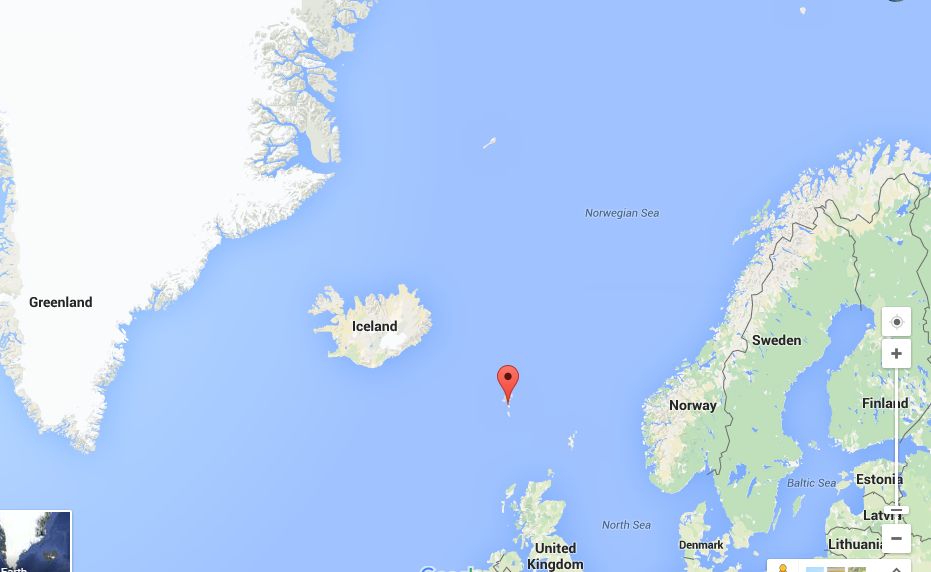
Source: Google map

———-begin excerpted letter————-

The Faroe Islands 

It’s hard to fully express our overwhelming joy as we see the Lord blessing and working through the ministry of Grace To you. He is doing glorious things all across the planet- including in places I’ve known little about until recently. 

The Faroe Islands is one such place. After a worship service at Grace Community Church, where I pastor, a man named Bernhard introduced himself to me. While visiting the United States on business, he wanted to meet me so he could express his gratitude for Grace to You’s ministry to him and others in his obscure corner of the world. 

The Faroe Islands comprise eighteen small, rocky islands halfway between Norway and Iceland. Their jagged cliffs are lashed year-round by powerful Arctic winds. While the natural scenery is stunning, tourism is limited due to the nation’s remote location. The major industry is commercial fishing in the volatile North Sea. 

Over the centuries, the Faroese people have endured Viking invasions, the Black Death, (which killed half the population), and many seagoing tragedies. those historic challenges, along with isolation and elements to which the Faroese are exposed, have forged a small but resilient population of just 50,000. As you can imagine, reaching the Faroese with the gospel also involved some resilience. 

No true evangelistic work ever took root on the Faroe Islands until 1865 when a Scottish missionary, William Sloan, arrived. While in Scotland, Sloan had been forced by his fiancee to choose between marriage and the Faroe mission field. To the benefit of the Faroese, including those living today, he sailed alone to fish for souls in a land of pagan fishermen. Through many years of going door to door selling books and conducting Bible studies, William Sloan established thirty-six churches spread among the islands. Evangelicals in the Faroes now make up one of the highest percentages of evangelicals on any nation on earth. 

I didn’t even know that population existed until the last few days. But my education has been rapid thanks to my encounter with Bernhard. he gave me two fascinating books, which I immediately read. But the letter Bernhard handed me made a greater impression, a letter that in a sense, involves you and friends like you.

John, my dear brother, what a blessing your ministry has been in my life. I have listened to many hundreds of your sermons over the past five years. Without your teaching, how empty my understanding and life would be. The Faroese church desperately needs a reformation. Like churches elsewhere, our churches are really falling apart.  That is why Grace To You’s online teaching is such a sweet and fresh breeze to our hearts.  At forty-six, I am the oldest of five brothers; we all listen to your sermons. We have your commentaries and many of your other books as well. many of my friends also listen. I guess what I’m trying to say is that we really love you and hope to see you in the Faroes sometime.

God’s word never returns void- it always accomplishes His divine, saving sanctifying, comforting, and equipping work. While we call ourselves a mass-media ministry, our focus isn’t the size of our reach. It’s not about numbers of people.  We are all about unpacking God’s word for individual men and women, verse by verse. There are no unimportant issues or people. And thanks to the technology at our disposal,  there’s essentially no area too small or remote to reach. What an exciting time to minister biblical truth.

———-end excerpted letter————-

Source: Google maps

Further reading

CNN: Faroe Islands, Bleak, Beautiful Land of Grass Roofs

The Atlantic: Faroe Islands in Pictures

Faroe Islands, Backbone of our monarchy

When he arrived 27 years old in 1865 he had to start from scratch.  The language was Faroese, but the language of the church and the whole Civil Service was Danish.  He worked 13 years without seeing any fruit and being often scorned by the dead Lutheran state church –  but then awakenings broke out, and many new assemblies were spontaneously planted.

Posted in culture shock, discenrment, encouragement, jesus

The very real effects of culture shock, Part 3 (final)

Introduction
Part 1: Examine the very real effects of expatriate living and culture shock.
Part 2: Examine the very real effects of expatriate living and culture shock on the Christian, this time from a Christian worldview.
Part 3: What to do about those stresses

In the Introduction to this Culture Shock series, I’d related several expatriate experiences I’d had while visiting abroad for longer than usual vacation periods. There are very real stresses which emerge physiologically, mentally, and emotionally when chooses to dwell in a nation in which one was not born. This fact also applies even when a person has moved from one nation to the next and their native language is spoken in both places, such as moving from the US to the UK, or Canada to Australia. Culture shock is a real event.

I’d said the earth is not our home. In that sense we believers are expatriates. Our citizenship is in heaven. The jarring difference between our home by citizenship and our home by residency is growing wider every day.

In part 1 I’d shared a list of stressors secular expatriates feel when living abroad. In the second part, I translated those secular stressors into stresses Christians feel as expatriates from heaven living in a hostile world. Things are getting more disorienting every day. The “glory days” of Christianity, are all gone, if they ever existed at all. We ARE strangers in a strange land and the times show us that more as every month passes. Yet many Christians are still shocked at the hostility and unfriendliness in their work or in their social circle or even within their families for their faith. Christians become upset over the political process currently happening in America. They are surprised when friends on Facebook suddenly turn angry, bitter, and mean. They are astounded when seemingly solid marriages break up. They are complaining on social media and at the proverbial water cooler about the state of the church (which is admittedly declining, and declining fast).

Expatriation means a break with home – where you come from and your mother tongue – it requires a mental readjustment to meet the demands of your new life which is often governed by specific rules to which you need to adapt and familiarise yourself. Source

The mental – and emotional –  expatriation that occurs when transferring one’s citizenship from the nation of Earth to the City of Heaven does require a major readjustment. The new Christian life is demanding, and this does not change if one is an old Christian, either. The Lord said to pick up one’s cross every day, (Luke 9:23) and from newbies to veterans, pew-sitters to leaders, the adjustment is daily and ceaseless because sanctification is ceaseless. (Until the moment of glorification, that is!) Releasing attachment from the world is ongoing. Scanning one’s life for idols is constant.It takes energy adn sometimes heartache not to assimilate in the world even while we are in it. (John 17:14-15). Just imagine Jesus, who was not of this world but lived in it for 33 years, perfectly and without sin. The Original expatriate. (John 8:23).

In this part: what to do about our surprise, shock, and upset as we grow apart from the culture that wants to hold tight to us.

First, let’s give ourselves a bit of a break. The earth is the only home we’ve known. Though we know by faith and from the Bible that our home is in heaven, we have not seen it. So when we are caught off guard during a controversy, a tragedy, or a disappointment, though the head-knowledge is strongly present, it sometimes takes a while for the heart to catch up and sort it out. It hurts to lose your church. It pains us to be marginalized from a previous social circle. It is a grief when family distances themselves.

The remedy for culture shock as always is Jesus. He is the remedy for everything.

First, you know the old adage, “Some Christians are so heavenly minded they are no earthly good.” This is a lie straight from satan’s doubly forked tongue. The ONLY way we can be of any good is from, to, through, and because of Jesus, and He is in heaven. Further, the Bible says,

Colossians 3:2 says, Set your mind on things above, not on the things that are on earth.

Contrast the above command with the enemies of Christ who focus on earthly things. It does not end well.

Philippians 3:19 says, Their end is destruction, their god is their belly, and they glory in their shame, with minds set on earthly things.

Matthew 16:23 says, Jesus turned and said to Peter, “Get behind me, Satan! You are a stumbling block to me; you do not have in mind the concerns of God, but merely human concerns.

This is what it means to be in the world but not of it. Don’t become too attached to human concerns. Of course we can be concerned when our favorite candidates’s presidential campaign does not go well, but we should not engage in public hand-wringing. Of course we can be attuned to the economy’s ups and downs, but the schemes and philosophies of man should not rule us. Of course we are involved with the other elements that make up a society, such as technology, business, culture, trade, communications – but those will not last. We might care about the wind farm going over the hill or the bypass being planned for the neighborhood or the bandwidth of our local communications utility – but those things will pass away. Getting TOO involved in the cultural details will shift our focus from the heavenly home above and Jesus as the ruler, creator, sustainer, savior, priest, judge, etc. Shepherd the things that are impacting our lives here on earth but let them go if they are causing a stumbling in our witness.

Have you ever met someone who was so heavenly minded they were so earthly good? No, you haven’t, and I haven’t either. I have met heavenly people who exhibit the fruits of the spirit and they are plenty good on earth, as a witness to the grace of Jesus Christ. They are patient, joyful, kind, self-controlled, kind, good, and gentle. Their Facebook page is not littered with rants against this candidate or that one. Their conversation is not peppered with complaints about the lousy internet service. Their faces are not all sour because their stock took a slight dip.

From the essay The Futility of Political Change:

Part of the fallout from the emphasis on political activism in the church is the denigration of God’s sovereignty. If we truly believe the Lord is the Author of history and that He is orchestrating all things according to His will, do we really need to throw so much of our time, energy, and resources into supporting candidates and ballot measures? Or is it that He has temporarily lost control, and we need to gain it back for Him? 

As John MacArthur explains, that’s simply not the work we’ve been set aside for:

We can’t protect or expand the cause of Christ by human political and social activism, no matter how great or sincere the efforts. Ours is a spiritual battle against worldly ideologies and dogmas that are arrayed against God, and we achieve victory over them only with the weapon of Scripture. The apostle Paul writes: “For though we walk in the flesh, we do not war according to the flesh. For the weapons of our warfare are not carnal but mighty in God for pulling down strongholds, casting down arguments and every high thing that exalts itself against the knowledge of God, bringing every thought into captivity to the obedience of Christ” (2 Corinthians 10:3-5 NKJV). 

God simply is not calling us to wage a culture war that would seek to transform our countries into “Christian nations.” To devote all, or even most, of our time, energy, money, and strategy to putting a façade of morality on the world or the appearance of “rightness” over our governmental and political institutions is to badly misunderstand our roles as Christians in a spiritually lost world.

So as heavenly expatriates, keep focused on the home to which we will all return.

Secondly, all the expatriate sites say how important it is to make friends in the new location. For Christians, this means developing relationships in and among solid Christians who will lift you or help you by a sacred word, pray for you, and keep you accountable. Start with friendships at church. Make overtures, or host a couple or a new friend or two. Be friendly and kind.

I know this isn’t some of “y’all’s” cup of tea. It isn’t really mine. It isn’t a negotiable though. (Hebrews 10:25). Anyway, I like the old story about the man who quit coming to church. After a while his pastor came to visit the man in his home. A roaring fire was burning in the fireplace. The two sat in companionable silence for a while. The Pastor asked the man why he stopped coming to church and being involved with the people there. The man had a list of complaints that were mostly petty. In response the pastor simply poked the fire iron into the fire, and drew out one ember. Soon, the ember faded and then went out. The pastor simply got up and left, and the next week the man was back in church.

Third, in secular expatriate advice, they advise being ‘open to new experiences’. In Christian expatriate life, we translate their advice to at to “serve”. Doing so gets your mind off yourself. We stretch ourselves when we are called to serve in an area of ministry. (Romans 7:6)

In a secular list of advice for the expatriate, it is warned, “Don’t keep all the pressure of your new life to yourself.” We translate that to “pray without ceasing.” (1 Thessalonians 5:17). Who should we list our complaints to? Jesus. I find this index card very helpful. It was posted on Facebook by a friend today. As the world becomes more brutal, people are more raw. This includes Christians.

Prayer helps us keep our perspective. Lay it all at His feet, from the trivial to the mundane to the tragic woe. He is listening, because He is our priest, interceding for us. (Romans 8:34).

I think I’ve dragged out the metaphor long enough. In order to minimize the very real effects of Christian culture shock in these brutal days:

–Set your mind on the things above
–Develop Godly relationships
–Serve
–Pray

If you do those things you will not be so culture shocked. Personally, I’m looking forward to the shock of living my little life on earth and then the next second being called by Jesus in the rapture and established upon the New Jerusalem which is in heaven! I will have a lovely time being shocked senseless amid the presence of the Savior, the Tree of Life, the saints, the angels, and the glory of God. Now THAT’S culture shock!

Posted in culture shock, encouragement, jesus

The very real effects of culture shock, Part 2

Introduction
Part 1: Examine the very real effects of expatriate living and culture shock.
Part 2: Examine the very real effects of expatriate living and culture shock on the Christian, this time from a Christian worldview.
Part 3: What to do about those stresses

—————————————

Top, GraphicsFairy.com. Bottom, EPrata photo

In the Introduction to this Culture Shock series, I’d related several expatriate experiences I’d had while visiting abroad for longer than usual vacation periods. There are very real stresses which emerge physiologically, mentally, and emotionally when chooses to dwell in a nation in which one was not born. This fact also applies even when a person has moved from one nation to the next and their native language is spoken in both places, such as moving from the US to the UK, or Canada to Australia. Culture shock is a real event.

I’d said the earth is not our home. In that sense we believers are expatriates. Our citizenship is in heaven. The jarring difference between our home by citizenship and our home by residency is growing wider every day. Left, heaven above, earth below.

In part 1 I’d shared a list of stressors secular expatriates feel when living abroad. In this part, I’m translating those secular stressors into stresses Christians feel as expatriates living in a hostile world. Things are getting more disorienting every day.

I am writing from a westerner’s perspective. America was founded by Pilgrims seeking freedom to worship. Puritans were almost successful for a short while in instituting a near theocracy. The First and Second Great Awakenings were events from times past on which today’s Christian looks fondly. We fervently wish all to be saved, and we look back onto those past eras in America of the 1600s, 1700s and 1800s, and even the early part of the 20th century, and long for the times when it seemed everybody believed.

However those are vestiges, mere shadows of a Christianity that even at the time, wasn’t all it seemed to be. The word is hostile to Christianity. America is hostile to Christianity. it always has been. The Christians of any perceived Golden Era were merely cultural Christians, shallow believers going along to get along, pressured by the wider culture to conform. But most of them didn’t really believe.

Today’s Christian of a certain age grew up in church, the Bible Belt was a real section of the country where it seemed that everyone worshiped the same Jesus, and our nation was strong, thriving, respected, and great. God and country.

No more, if it ever was.

I personally believe the Lord is doing us a favor by showing us, albeit rapidly, how shallow the American Christianity was and is, and how few people adhered to what the Bible commands from us as true believers. However much we understand the head knowledge that we are considered as enemies, it still hurts when that fact is brought home to us. Head knowledge from accepting the word from the Bible and boots on the ground experience are two entirely different beasts, and it sometimes takes a while before the latter catches up with the former.

In rapid fashion, even the most head-in-the-ground Christian is beginning to experience lost friendships and splits over faith. More and more false teachers are being promoted by satan. The more believers point them out, the more furious fellow pew sitters, friends or even family become. It hurts to lose friendly or family relations, even as we know that it would occur (because Jesus said it would). (Matthew 10:35, Matthew 10:21, Luke 12:53).

Cultural attitudes toward work, finances, the economy, politics, our nation, schooling, sexuality, marriage, and even gender are changing fast. It’s disorienting, even as we attempt to adjust to the changing landscape yet remain tranquil and calm with the peace of Jesus as our aura. Made even harder is that secular expatriates try to assimilate, but as Christians we must remain in the world and not of the world. We want to integrate, but not assimilate.

Integration occurs when individuals are able to adopt the cultural norms of the dominant or host culture while maintaining their culture of origin. Source

I’d posted in the last part that secular expatriates experience ten major stress-related triggers. Below, I reformatted those top ten secular stresses into stresses that hopefully may seem similar to today’s Christian. Even without my re-formatting, a Christian would easily recognize the ten stressors if they wanted to apply them to their own circumstance.

1.) Long and unusual work hours due to the fact that Christians are never “off” and are always “on” and like the Father, always working. (Col 3:23, John 5:17).In these brutal days, there is all the more work to do, ministries to fill, and faltering friends to hold accountable or to comfort when tragedy happens.

2) A “trailing Christian spouse” who has given up a career to move abroad with her working spouse and is adjusting to not only a new country, but a new lifestyle, especially when the feminist culture mocks women for submitting to her husband. (1 Peter 3:1)

3) New stresses for our Christian children: school, new non-Christian friends, a different native language, counter-Christian teachers and teaching methods, and not to mention, full immersion into a culture other than their own. It stresses the parents to know how best to protect children from secular influences. (Proverbs 1:8).

4) As new Christians, our most comfortable support system of non-Christian friends and family have gone from being neighbors and parents to enemies of the Christ in us. (Matthew 19:29). Creating a new local support system takes a lot of time and emotional energy, and can be a stressful endeavor, especially for babes in the faith.

Finding a church so as to merge into a support system of comfort and accountability early on in your Christian expatriate life is essential. (Acts 2:42). Yet many churches teach false doctrine and babes are especially vulnerable because they cannot always detect the false, and instead of a new support system for growth in the faith, what they get is drawn into a pit from which, if they escape by grace of God, having then to start over and dispense with the teachings that have now polluted their brain. (Hebrews 3:13).

5) A certain amount of lost independence due to language barriers.

6) The dynamics of a Christian marriage inevitably change with the new responsibilities and roles that come along with a move of citizenship from the World to the nation of Heaven, creating stress for each spouse. (Ephesians 5:22-27)

7) For “Single Global Christians,” between building a social network outside of work without the benefit of a spouse, and not having a sense of “community” or roots, being abroad alone can be both a stressful and lonely place, especially if one has been disowned for the faith or lives where there literally is no visible network and speaking of Jesus means death.

8) Finances. In many instances, the transfer of citizenship from the World to the City of Heaven reduces the Christian’s economic status in life. This is especially stressful when one has been immersed in hearing Prosperity Gospel and one wonders why “it’s not working for me.” For others, being a citizen of Heaven means persecution comes in stolen property, schemes to steal one’s home, or persecution where one loses everything.

9) Being Unhappy. Having a negative attitude or feelings about where you are; unrealistic expectations of your new life in your new country, and expecting perfectionism from yourself and the culture around you is a breeding ground for self-induced stress and a recipe for marital unhappiness. Your unhappiness is a feeling even your children pick up on.

10) Poor stress coping skills. Usually due to a lack of prayer and a lack of studying the Bible.

Over the last decades, who hasn’t been influenced in perspective when watching grainy lack and white Billy Graham Crusades and saw thousands of seekers streaming forward? Who hasn’t been affected by seeing many ‘walk the aisle’ at revival after revival? Which grandmother doesn’t fondly recall the glory days of Christianity when the churches were full and everybody came to dinner on the ground?

Those days are all gone, if they ever existed at all. We ARE strangers in a strange land and the times show us that more each day. Yet still, many Christians are shocked at the hostility and unfriendliness in their work or in their social circle or even within their families.

In the next part: what to do about it.

Introduction
Part 1: Examine the very real effects of expatriate living and culture shock.
Part 2: Examine the very real effects of expatriate living and culture shock on the Christian, this time from a Christian worldview.
Part 3: What to do about those stresses.

———————————

Further reading

How can Believers be in the world but not of the World?

What does it mean for Christians to be in the world but not of the world?

Blog Series at Grace to You, In the World, but not of it

Posted in culture shock, encouragement, jesus, the world

The very real effects of culture shock, Part 1

Introduction
Part 1: Examine the very real effects of expatriate living and culture shock.
Part 2: Examine the very real effects of expatriate living and culture shock on the Christian, this time from a Christian worldview.
Part 3: What to do about those stresses.

~~~~~~~~~~~~~~~~~~~~~~~~~~~

Laundromat in Baños, Ecuador. It cost a quarter and they give you
a rock to use to scrub. Soap not included. EPrata photo

In the Introduction to this Culture Shock series, I’d related several expatriate experiences I’d had while visiting abroad for longer than usual vacation periods. There are very real stresses which emerge physiologically, mentally, and emotionally when chooses to dwell in a nation in which one was not born. This fact also applies even when a person has moved from one nation to the next and their native language is spoken in both places, such as moving from the US to the UK, or Canada to Australia. Culture shock is a real event.

I’d mentioned that in these days with quickly shifting cultural sands disorienting us and putting us off balance, Christians experience a similar culture shock. The earth is not our home. In that sense we are expatriates. Our citizenship is in heaven.

Expatriates find that they experience stress while living abroad. In this essay I’ll look at the stresses expatriates experience from a secular perspective. In the next essay I’ll compare these stresses to the Christian’s experience of living on earth while not being OF the earth, heaven’s expatriates, as it were.

I do want to mention that I’m not a fan of Psychology or secular counseling, but the fact is the body and mind do go through physiological changes when living under pressure in an unfamiliar culture in which one is NOT trying to assimilate. It’s hard when we are in the world but not trying to reach the world nor adopt the world’s habits. Let’s acknowledge it’s stressful. The following is from The Expat Exchange. Though they were written for the secular Expat, one can see the pattern can be applied to the citizen of Heaven in today’s hostile World. I’ll explore this more in the next essay. And incidentally, I am sure that missionaries are given a thorough grounding in what to expect when moving overseas, but the shock of adjusting to being there can’t be learned from a classroom, but experienced mentally, physically and emotionally.

Top Ten Reasons why Expats get stressed

1) Long and unusual work hours due to doing business in different time zones and a 70%-of-the-year travel schedule for the working spouse.

2) A “trailing expat spouse” who has given up a career to move abroad with his or her working spouse and is adjusting to not only a new country, but a new lifestyle.

3) New stresses for our expat children: a new school, new multi-cultural friends, a different native language, new teachers and teaching methods, and not to mention, full immersion into a culture other than their own.

4) As new expats, our most comfortable support system of friends and family have gone from being neighbors and parents to voices on the phone or words on an email. Creating a new local support system takes a lot of time and emotional energy, and can be a stressful endeavor, especially for first time expats.

5) A certain amount of lost independence due to language barriers is stressful, making everything from arranging for house repairs to ordering a pizza over the phone very frustrating.

6) The dynamics of an expat marriage inevitably change with the new responsibilities and roles that come along with a move overseas, creating a certain amount of stress for each spouse.

7) For “Single Global Professionals,” between building a social network outside of work without the benefit of a spouse, and not having a sense of “community” or roots, being abroad alone can be both a stressful and lonely place to be.

8) Finances. In many instances, home leaves, house hold expenses and medical procedures/visits are all paid out-of-pocket before employer reimbursement (depending on your employer situation), so having a healthy savings account and good credit is a must to move abroad.

9) Being Unhappy. Having a negative attitude or feelings about where you are; unrealistic expectations of your new life in your new country, and expecting perfectionism from yourself and the culture around you is a breeding ground for self-induced stress and a recipe for marital unhappiness. Your unhappiness is a feeling even your children pick up on.

10) Poor stress coping skills.

Ponder these, and think about them both in terms of the intent of the original article aimed toward secular expats, but also think of them in terms of being a Christian expat. Tomorrow, I’ll re-phrase the above top ten stresses into Christian expat stresses and perhaps they will speak to what you may be going through.

Do not be conformed to this world, but be transformed by the renewal of your mind, that by testing you may discern what is the will of God, what is good and acceptable and perfect. (Romans 12:2)

Introduction
Part 1: Examine the very real effects of expatriate living and culture shock.
Part 2: Examine the very real effects of expatriate living and culture shock on the Christian, this time from a Christian worldview.
Part 3: What to do about those stresses.

————————————

Further reading

How can Believers be in the world but not of the World?

What does it mean for Christians to be in the world but not of the world?

Blog Series at Grace to You, In the World, but not of it

Posted in culture shock, encouragement, expatriate, the world

The very real effects of culture shock, Introduction

This is an Introduction to a series.

Part 1: Examine the very real effects of expatriate living and culture shock.
Part 2: Examine the very real effects of expatriate living and culture shock on the Christian, this time comparing the effects through a lens of the Christian worldview.
Part 3: What to do about those stresses.

——————————————-

Visible Christianity as it has been known for these past decades is declining in the West. Of course the true church still spotless and gleaming white. But the surface “Christian-y” (not Christianity) culture in America is fast falling away. It has been a disorienting process for some. The ground is made of shifting violently sand, and especially unaware or new Christians, have been put off balance.

Friends quickly anger if you talk negatively about a favored idol-teacher. Facebook comment sections blow up in anger from previously mild-mannered friends. Family members are irritated by all your Jesus talk. Work spaces no longer tolerate your prayer lunch group- if it’s Christian. Muslim employees receive a private prayer room and Halal cafeteria. Portrayals of our faith in media have become simply cartoonish. All this and more gives the Christian coming to terms with the new normal (read: hostile world) a feeling of upset and disorientation.

It’s culture shock. That is because the moment we’re justified, our citizenship transfers from the world to heaven. We become expatriates, dwelling in a place that is not our home any longer.

I’ve mentioned before on this blog and my other blog that during the 1990s I traveled widely. My husband and I loved to pick up and go, and the sub-text was that we would also keep our eyes open for a warm weather, inexpensive place to winter over. Maine is cold. Brrr.

We spent time in Florida, Texas, the desert of the American Southwest, but also the Bahamas, and Ecuador. We traveled to Europe but it seemed too expensive to become an expatriate in those places. The European Union hadn’t been formed yet, and even after it was, the borders were still pretty tight in those early days. Of course as Maine residents, we visited Canada frequently but as a winter getaway for snowbirds, well, it defeats the purpose.

The sprawling city of Quito, Ecuador. EPrata photo

We liked Ecuador a lot. At the time, American money would last a long time there. The government had been pretty stable, and thanks to Ecuadoreans we knew, we were given a tour from north to south. My husband I liked Cuenca, a colonial city of universities and at a lower altitude than Quito. The height of Quito’s location at nearly 10,000 feet made for pretty thin air and a long time to cook anything, so we liked Cuenca which was at about 8200 feet above sea level. Warm, but not hot like at the seacoast or the jungle.

When we were in Quito, we found a cool bookstore called Confederate Books. It is touted as South America’s best selection of English-language books. Indeed, I found a rare Brautigan there. We spoke to the owner, who was from America, for a long time about what it is like to live as an “ex-pat.” An Expatriate is someone who lives outside their native country. It’s a person who is settled in another land. We were considering living in Ecuador for the mild winters down at the equator. Though we were in Ecuador for a month, we knew there was a huge difference between visiting and living in a third world nation.

Culture shock is an experience a person may have when one moves to a cultural environment which is different from one’s own; it is also the personal disorientation a person may feel when experiencing an unfamiliar way of life due to immigration or a visit to a new country, or a move between social environments… Source

After our conversation at Confederate Books, we emerged into the strong equatorial light onto Amazonas St, which is the bustling main shopping street in the high-altitude city of millions, we began walking toward where the restaurants were. My husband had a special kind of belt where he kept the money and copies of our passports for ID etc. Since we were always together, he carried the money and papers for us both. Pickpockets were a huge problem. As we walked, we began talking as we were jostled in the crowd, and then we began arguing. I don’t remember what over. Angry, at one point I turned on my heel and stomped off in the other direction.

The crowd quickly closed in and within a minute I realized I had done something very stupid. I was a woman alone, in a non-English speaking country (and not many Quitenos spoke English) and I had no ID and no money. It was in my husband’s belt, who had now disappeared from sight and was lost in the crowd. I couldn’t even take a cab back to the rental apartment, nor was there anyone home for me to call even if I managed to find a phone, scrape some coins, and know how to dial in a third world country. (This was pre-cell phone days). Suddenly my sunny shopping day was fraught with danger and anxiety. I quickly turned around and hustled to find my husband.

Life as an expatriate requires significant effort to adapt to new social and cultural environments. Source
In my inaugural trip of my decade of traveling, I spent a month alone in Italy. The first week was with an ex-pat American family my mother had known. The last two weeks I was going to meet up with a group and I would participate in an archaeological dig. So in reality I was only totally on my own for a week. I wanted to make my way down from Milan where the plane had landed, to the Italian Riviera to Siena, Florence, then Rosia, the little Tuscan town where the dig was going to happen.

What living in Italy for a week all on my own meant was that reading train schedules, ordering food in a restaurant, finding the grocery store, completing a reservation at a hotel, had to be done by no one else but me, all by myself in a foreign language with no support system. Finding attractions, safely walking the streets, handling money and making sure I received the correct change, etc, was all very taxing. Not knowing what to do with even the smallest of details gives you a fight or flight feeling. One is never sure if one is stumbling into a dangerous situation or not. All the signals are mixed.

Me in Portofino, Italy

Traveling from Portofino to Florence we hurtled through mountains and the train would go through tunnels. At one point I was standing outside my little compartment and a nice looking well dressed Italian gentleman tried to start a conversation. I had no clue if he was hitting on me, casing my pockets, or something else. It was something else. He said through gestures that when we go thru a tunnel it’s a good time for pickpockets to grab what they can from your person or your luggage. He was patiently trying to give me a warning. He recommended sitting back in my compartment with my valuables on me. I went from being scared of him to being scared of pickpockets during the brief but frequent tunnel blackouts.

When you’re alone in a strange land, you have no idea who is a threat or what situation is safe or could lead to disaster. You have no idea that a benign situation could suddenly explode into a dangerous one, or a trying one, or a misunderstanding one. Your normal reactions are all off.

Culture shock is a real thing. Shock being the focus. Here is some information from Expat Exchange on the stress of living abroad in another culture. Here is the ExPat Exchange-

It only takes six weeks and one foreign language for the average expat to figure out that life overseas is not for the faint of heart. …

What is stress?

According to thinkquest.org “stress is a particular pattern of disturbing psychological and physiological reactions that occur when an environment event threatens important motives and taxes one’s ability to cope. In plain English, stress is the “wear and tear” our bodies experience as we adjust to our continually changing environment.”

This 4-part series is one of encouragement. Here is the point, if you have not seen it by now.

Christians are expatriates.

Let me say that again. This world is not our home. We are born on earth, we live on earth, and we are OF the world … until the moment of justification. When we are saved, our citizenship immediately transfers to Heaven, and we become strangers in this land. (Philippians 3:20). Those around us are enemies of us becuase they are at enmity with the God in us. (Romans 8:7). We still live here, but we are strangers. We think of heaven, we long for heaven, we are of heaven. (Colossians 3:2). The citizens of earth consider us their enemy (consciously or unconsciously). We are not of this world, but we are still in this world. (John 17:14–19).

Lately, pressures have been building even for those fortunate enough to have been placed by God in nations where persecution is not overtly occurring. Christians are finding that we are standing on very shifting sand as expatriates. The times are changing rapidly and hostility against us here in the former land of free speech are living through a culture shift that, taxes our ability to cope. As the ExPat Exchange site mentioned, living for a prolonged time in a nation that is not our own and is in fact hostile to us taxes us to the point of stress, where physiological reactions occur.

Culture shock, personal loss, and discouragement are at all time highs, just as discernment is at all time lows. It’s taxing all right.

Of course, over this series, I will reiterate that unlike earthly expatriates, we have the Spirit in us to help us live tranquilly even if everything around us is being dismantled. So our experience isn’t exactly like other expatriates, but it is similar and I’d like for us to recognize the real stresses many of the brethren are enduring.

This was the introduction. So what’s next?

Part 1: Examine the very real effects of expatriate living and culture shock.
Part 2: Examine the very real effects of expatriate living and culture shock on the Christian, this time comparing the effects through a lens of the Christian worldview.
Part 3: What to do about those stresses.