Posted in encouragement, Uncategorized

Reformation resources for you!

The 500th anniversary of the Reformation is coming up on October 31st. This is the date when, 500 years ago, Roman Catholic monk and professor Martin Luther nailed his 95 Theses to the University of Wittenberg’s chapel door. Nailing a tract on the door was not in itself an act of rebellion, but rather the usual and customary method of starting a discussion among scholars of religious points of the day. It was the 16th century’s version of the internet.

However, Luther’s theses were not just questions and discussion points, but a devastating critique of Roman Catholic practices. Luther had found in his studies that Roman Catholic faith and practice varied greatly from the word of God. Luther was especially upset over the practice of Indulgences, or payment to the Church for reduction or absolution of certain sins. Paying for sins to be forgiven seemed incredibly wrong to Luther. He wrote up his questions, intending to spark a discussion.

He sparked a discussion.

The discussion has been ongoing for 500 years.

The discussion split The Catholic Church and pitted it against those who were protesting, now known as Protestants.

The most confusing thing to me when I was an unsaved person was the Catholic Church. I thought it was a Christian church. Because of its size and longevity, I thought it represented true Christianity. What I didn’t know was that the Roman Catholic Church (RCC) is as far from Christianity as the east is from the west. It does not represent the faith of Jesus, but instead is a false belief system.

The protest Luther made was against certain practices and doctrines of the RCC. For example, the Jesus we know through the inspired scriptures is the central authority, not the Pope or other officials. Practices and rituals and good works do not save. Indulgences are nowhere found in the Bible. Though Luther initially wanted to renew the church, eventually it divided over these and other issues, and the Protestant reformation began.

Here are some Reformation Day resources for you-

Why We’re Protestant: An Introduction to the Five Solas of the Reformation Kindle Edition. A paperback edition exists. By Nate Pickowicz, Foreword by Steven J. Lawson. Nate is a pastor who shepherds a church in New England. His wife Jessica has written a Bible study to go along with MacArthur’s new book, Biblical Doctrine and facilitates a Facebook group regarding the weekly study sessions.

Synopsis: How do you discern true vs. false Christianity? In the days of the Protestant Reformation, the core tenets of the faith were strenuously examined. In the end, the Reformers maintained that at the heart of the Christian faith stood five main credos: sola Scriptura, sola gratia, sola fide, solus Christus, and soli Deo gloria. This book examines these five “solas” and makes a definitive case for why we’re Protestant.

Reformation Women: Sixteenth-Century Figures Who Shaped Christianity’s Rebirth

By Rebecca VanDoodewaard. Rebecca and her husband William used to run a blog I liked, called The Christian Pundit.

Synopsis: Women are an essential element in church history. Just as Deborah, Esther, and the New Testament Marys helped shape Bible history, so the women of the Reformed church have helped to make its history great. In Reformation Women, Rebecca Vandoodewaard introduces readers to twelve sixteenth-century women who are not as well known today as contemporaries like Katie Luther and Lady Jane Grey. Providing an example to Christians today of strong service to Christ and His church, these influential, godly women were devoted to Reformation truth, in many cases provided support for their husbands, practiced hospitality, and stewarded their intellectual abilities. Their strength and bravery will inspire you, and your understanding of church history will become richer as you learn how God used them to further the Reformation through their work and influence.

Long Before Luther: Tracing the Heart of the Gospel From Christ to the Reformation by Nathan Busenitz  (Author), John MacArthur (Foreword)

Synopsis: Where was the gospel before the Reformation?

Contemporary evangelicals often struggle to answer that question. As a result, many Roman Catholics are quick to allege that the Reformation understanding of the gospel simply did not exist before the 1500s. They assert that key Reformation doctrines, like sola fide, were nonexistent in the first fifteen centuries of church history. Rather, they were invented by Martin Luther, John Calvin, and others.

That is a serious charge, and one that evangelicals must be ready to answer. If an evangelical understanding of the gospel is only 500 years old, we are in major trouble. However, if it can be demonstrated that Reformers were not inventing something new, but instead were recovering something old, then key tenets of the Protestant faith are greatly affirmed. Hence, the need for this book.

The Mother of the Reformation: The Amazing Life and Story of Katharine Luther

by Ernst Kroker. Synopsis- The author paints an intimate picture of Katie and of family life in the Black Cloister during the formative years of the Reformation, showing how Katie s marriage to Martin Luther was a multifaceted vocation, with such tasks as household brew mistress, cloister landlady, property overseer, gardener, cow- and pig-herder, and fishwife. Indeed, Katie oversaw their home much like a lord in her kingdom, yet in the midst of it all stood the man to whom her work, concern, and duty were directed.

Resources for children

The Barber Who Wanted to Pray by R.C. Sproul

Synopsis: This imaginative tale from R.C. Sproul, based on a true story, begins one evening with Mr. McFarland leading family devotions. When his daughter asks him how she should pray, Mr. McFarland shares a 500-year-old story about a barber and his famous customer.

Master Peter is a barber well-known to all in his village. One day, when Martin Luther the Reformer walks into his shop, the barber musters up the courage to ask the outlawed monk how to pray. Luther responds by writing a letter to the barber. The barber’s life and many others’ are changed as they encounter a model for prayer by using the Lord’s Prayer, the Ten Commandments, and the Apostles’ Creed.

Martin Luther- Christian Biographies for Young Readers, by Simonetta Carr
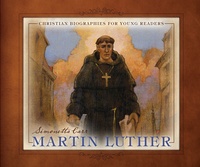
Synopsis- Five hundred years ago, a monk named Martin Luther wrote ninety-five questions, hoping to start a discussion about sin and repentance at the University of Wittenberg in Germany. In a few months those questions had stirred the nation; a few years later, the continent. Today we know that those questions changed the course of both the Western church and world history. In this volume for children, Simonetta Carr tells the compelling story of this father of the Protestant Reformation, tracing his quest for peace with God, his lifelong heroic stand for God’s truth, and his family life and numerous accomplishments. The Reformer’s greatest accomplishment, she writes, “has been his uncompromising emphasis on the free promise of the gospel.”

Movie

Martin Luther: The idea that changed the world, PBS documentary, 9/2017, as synopsized by Banner of Truth Trust here. The PBS documentary has an extended trailer here. Official website here.
 

Posted in encouragement, Uncategorized

We’re not THAT bad of sinners, are we??

Who goes to heaven?

“I’m a pretty good person. I’m going to heaven for sure.”

“I’m nice. Definitely I’m going to heaven.”

“I’m certainly not a Hitler! It’s people like serial killers or dictators that won’t go to heaven.”

If you’re like me, you hear comments like that all the time. I used to think that I was nice enough and that I was headed for heaven too.

But then a little worm of doubt would set in. I’m nice, most people are nice, but if that was true why is the world like it is? Why would heaven be any different than earth if all the same people just transfer from here to there?

In witnessing to people and telling them they are sinners as I am, they reject almost instantly the notion that their sins would prevent them from going to heaven. This is because they compare their sins to other people, and always the worst people, of course. Hitler, Idi Amin, OJ Simpson, Jeffrey Dahmer… now those are some bad people. I’m not like them. Ergo, I am heaven bound.

Trying to let people know the level of their depravity is a hard task. Even most Christians don’t truly understand the depths to which our sin have plunged. I’m reminded often by the Holy Spirit that no matter how wretched I know I am, there are still many layers of muck I can sink to. I’m often astonished at how deep my sin goes.

We’re not good. We’re bad. As a matter of fact, we’re a lot worse than we think.

Unsaved people will balk at this truth. We’re wretched, really putrid. Here is an example from the bible of how wretched we are.

As we were going to the place of prayer, we were met by a slave girl who had a spirit of divination and brought her owners much gain by fortune-telling. She followed Paul and us, crying out, “These men are servants of the Most High God, who proclaim to you the way of salvation.” And this she kept doing for many days. Paul, having become greatly annoyed, turned and said to the spirit, “I command you in the name of Jesus Christ to come out of her.” And it came out that very hour.

But when her owners saw that their hope of gain was gone, they seized Paul and Silas and dragged them into the marketplace before the rulers. (Acts 16:16-19).

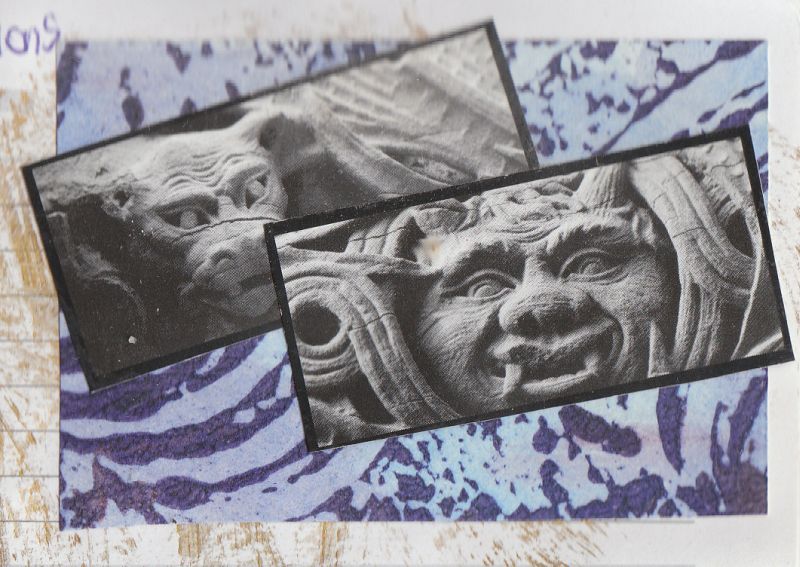
demons
EPrata collage

Notwithstanding the issue of slavery, the owners of the girl were using her to get rich. She had a demon and that demon could access the world behind the veil and prophesy unknown things. Since people have always been curious about the future and what is hidden to us, they paid good money to hear fortunes told.

When the owners saw that their means of gain was gone, they roused a riot and went to the lawmakers and decision-makers for redress.

They did not celebrate that the girl had been delivered. They were not happy that her very body was now released from use by a potent spirit. They did not care that this young, vulnerable girl had been used by demons. They were only ticked that their fortune was vaporizing.

This is exactly the same situation as a child molester kingpin now ticked that his best girl had been saved out of his grip. Exactly. The. Same. This is deep wretchedness. We are sinners through and through. Do not think for a moment that your sin (and mine) is not as bad. It is and it could and would wax worse and worse had not the Lord saved your soul.

This link goes to a short bio of this young girl from BibleGateway, called All the Women of the Bible: The Demon-Possessed Damsel. It is extremely interesting.

We are wretches, sinners and we are due the righteous penalty for our sin. But God…if not for Him…if not for His proactive election of those who would become His… Oh! Oh!

We love because he first loved us. (1 John 4:19).

He loved us despite our wretchedness. He loved us despite our dirtiness. He loved us anyway. I’m eternally grateful for His love. I’m eternally relieved He has dealt with my sin. It is now forgotten, nailed to the cross, and as far from the east is from the west.

Thank you Lord for dealing with my wretched sin in this magnificent way you have ordained.

unspeakable glory
EPrata art
Posted in encouragement, Uncategorized

Prayer, an act of worship

Excerpt from David McIntyre’s The Hidden Life of Prayer, chapter 6. This book, written in 1913, is available for free online, as well as for purchase in book or Kindle form.

The prayer of faith, like some plant rooted in a fruitful soil, draws its virtue from a disposition which has been brought into conformity with the mind of Christ.

1. It is subject to the Divine will-“This is the confidence that we have in Him, that, if we ask anything according to His will, He heareth us” (1 John 5:14).

2. It is restrained within the interest of Christ-“Whatsoever ye shall ask in My name, that will I do, that the Father may be glorified in the Son” (John 14:13).

3. It is instructed in the truth-“If ye abide in Me, and My words abide in you, ye shall ask what ye will, and it shall be done unto you” (John 15:7).

4. It is energized by the Spirit-“Able to do exceeding abundantly above all that we ask or think, according to the power that worketh in us” (Eph. 3:20).

5. It is interwoven with love and mercy-“And when ye stand praying, forgive, if ye have ought against any; that your Father also which is in heaven may forgive you your trespasses” (Mark 11:25).

6. It is accompanied with obedience-“Whatsoever we ask, we receive of Him, because we keep His commandments, and do those things that are pleasing in His sight” (1 John 3:22).

7. It is so earnest that it will not accept denial-“Ask, and it shall be given you; seek, and ye shall find; knock, and it shall be opened unto you” (Luke 11:9).

8. It goes out to look for, and to hasten its answer “The supplication of a righteous man availeth much in its working” (James 5:16, RV).34

But, although the prayer of faith springs from a divinely-implanted disposition, there is nothing mysterious in the act of faith. It is simply an assurance which relies upon a sufficient warning.

rejoice in hope prayer

Posted in encouragement, Uncategorized

Righteousness v. Wealth

I was saying last night at Bible Study that I live paycheck to paycheck. The relentlessness of always minding the budget and working assiduously to stretch it to the end of the month gets tiring and frustrating at times. The discussion was about contentment v. discontentment. I said I work hard to avoid being discontent with my circumstances by keeping my trust and faith and eyes on Jesus and not on my circumstances. I hope I avoid discontentment, at least.

So this morning I was reading the Bible in my quiet time, and along comes this verse. It was immensely encouraging. I pray it might be to you as well, if you’re living on the thin side.

Better is a little with righteousness than great revenues with injustice. (Proverbs 16:8).

Hmmm, interesting! What can it mean? Matthew Henry’s Commentary provides a succinct interpretation:

Here, 1. It is supposed that an honest good man may have but a little of the wealth of this world (all the righteous are not rich),—that a man may have but little, and yet may be honest (though poverty is a temptation to dishonesty, ch. 30:9, yet not an invincible one),—and that a man may grow rich, for a while, by fraud and oppression, may have great revenues, and those got and kept without right, may have no good title to them nor make any good use of them.

2. It is maintained that a small estate, honestly come by, which a man is content with, enjoys comfortably, serves God with cheerfully, and puts to a right use, is much better and more valuable than a great estate ill-got, and then ill-kept or ill-spent. It carries with it more inward satisfaction, a better reputation with all that are wise and good; it will last longer, and will turn to a better account in the great day, when men will be judged, not according to what they had, but what they did

Henry, M. (1994). Matthew Henry’s commentary on the whole Bible: complete and unabridged in one volume (p. 990). Peabody: Hendrickson.

My interpretation: Righteousness reaps more contentment than do riches, because riches are from the world and righteousness is from Jesus.

Selah!

treasure

Posted in encouragement, Uncategorized

Time of refreshing

I’d had a hard week, a long one. It had been a few days since I’d read my Bible. I was 6 days overdue for reading the pages in the book Biblical Doctrine I’m studying with an online group, and the new weekly study was going to come out the next day. If I didn’t do some reading I’d be a week behind in the study, and I was already a few days behind in Bible reading. When I read the ten pages suggested for the Doctrine study, I always also read a chapter in The Hidden Life of Prayer by David MacIntyre. I hadn’t read that either, even though it would only represent a few pages of reading and wasn’t especially hard or time-consuming.

It infuriates me when I do this. I exclaim aloud as Paul did in Romans 7:15-20, 24 why do I do the things I don’t want to do and do the things I don’t want to do? Who will deliver me from this body of death?

I didn’t desire to be behind any more. Nor did I want to neglect my God any further. I buckled down and read all my pages, the Bible, the weekly Bible Study, and my chosen book on Prayer. I took a leisurely two and a half hours to do it, though given the number of pages, the actual reading time could have been shorter. But the amazing thing is, the longer I read the Word, and the deeper I went into the Doctrine study, the more relaxed I became. I wanted to stay with it. I enjoyed it tremendously. I luxuriated in reading a bit, then lifting my eyes and praying in exultation, pondering a while, then reading some more. I was amazed when I finished, it felt like just one minute had passed.

When I finished I felt refreshed and relaxed. I felt good, through and through. Why is that?

I confessed my laziness to several of the men in my Bible Study group the next night. I mentioned the amazing feeling afterward, the energy and freshness I’d felt when I concluded my personal session. Why is that? And why do I put it off when I know that the Lord is worth the discipline, and that I’ll be receiving the gift of His presence through the scriptures, not to mention the bonus of the fresh and energized feeling?

They both said,

The law of the Lord is perfect, reviving the soul; (Psalm 19:7).

The answer is simple- the scriptures refresh like no other activity, item, discipline, food or drink on earth. They refresh totally because they are not from earth.

His word revives the very soul.

bible reading 1

Posted in encouragement, Uncategorized

Kay Cude poetry: Our Fortress Prevails

Poetry by Kay Cude. Used with permission. Artist’s statement below.

I keep returning to our (me!!) needing to “remember” God’s promises and provision. GOD THE I AM is the only fortress in Whom we find a righteous protector, defender and provider. He is the only place of eternal refuge from the world’s continuing tragedies and chaos. He is the stronghold Who is and Who will provide peace, wisdom, understanding, instruction and endurance.

OUR FORTRESS PREVAILS

Posted in encouragement, Uncategorized

Miserable Wives

Author and blogger Doug Wills wrote an essay last week about “Miserable Wives.” Many wives might see themselves in the essay. I know I did.

The article centers on wives who are in a good enough marriage, with husbands who are loving enough, in churches that are solid enough, living on means that are, well, enough. But for some reason, these wives are still discontented.

Her discontent grows and it threads through her entire outlook, until her current mood is king (or queen, actually) of the house. The husband then begins a cycle of indulging her temper and her mercurial moods. Eventually, if it becomes an entrenched pattern, it is usurpation by the wife, who is effectively leading the house through her emotions/tempers/disconsolate outlook. This is sin.

Here is one excerpt from the essay Miserable Wives that I thought was especially perceptive:

You said that Jon isn’t meeting your needs, and that you don’t feel nourished and cherished. You said that he isn’t “feeding” you. But Jon is not failing to feed you in the midst of a famine. He is trying to figure out what to do about the fact that you have gone on a hunger strike. When Jon reads Scripture to the kids, what do you do? Are you off in the kitchen doing the dishes? Perhaps making a little extra noise?

I used to do that. Make a little extra noise. And feel perversely satisfied in doing it, too.

Here’s another excerpt from  Doug Wills’ article:

The hidden assumption in this (for both you and Jon) is that you take these emotional states as reliable and authoritative, instead of rejecting them as being the most manifest and bald-faced liars. You say that you know Jon loves you, but then you say in the next breath that you feel unloved. And in every battle between your knowledge and your feelings, which one wins? You take the word of your lying feelings over the word of your accurate assessment, over against your knowledge. Your feelings are your authority, even when you know they are being deceitful.

Today I’d like to launch my main point from Doug Wills’ essay about the wifely discontent. Women today are fairly bombarded with claptrap from Women’s Ministries, female Bible Studies, and lady Bible leaders who often teach to the lie that it is OK to indulge our emotions even if they are opposed to the knowledge of what Christ has done for us and our life in Him. There are lessons which are mainly based on the destructive notion that our self-esteem, or some kind of inherent female “value” has more import than it actually does. But that is a blog essay for another day.

The main cause is discontentment with Jesus. There’s another I’ll explore below. Many female Bible teachers are explicitly and overtly teaching women to be discontent with Him. The quotes below are from women who are alleged Bible leaders. These are popular female ‘Christian’ teachers busy publicly expressing the highest and most corrupt kind of discontent there can be: discontent in Jesus.

Example #1: Priscilla Shirer explains that she became sad at the daily ‘chore’ of the spiritual disciplines such as prayer and Bible study because,

My spiritual disciplines became more of a chore, a duty, an effort. … He just wasn’t knocking my socks off anymore, and I wasn’t sure why. (source – NYT)

The Westminster Shorter Catechism says that Man’s chief end is to glorify God, and to enjoy him forever. (Psalm 86, Psalm 16:5-11, 1 Peter 4:11). The Catechism doesn’t say, “Jesus’ chief end is to knock our socks off and enjoy us forever.” The NY Times author noted that Shirer’s description of her relationship with her Creator-Savior sounded more like a marriage on the rocks. Even secular people get it. Shirer was discontent with the quantity or the quality of what Jesus wasn’t doing for her. Piled on top of the Genesis 3 affliction is discontent with the affliction-giver Himself.

Example #2: Author of the perennial devotional bestseller Jesus Calling, Sarah Young, who said,

“I began to wonder if I … could receive messages during my times of communing with God. I had been writing in prayer journals for years, but that was one-way communication: I did all the talking. I knew that God communicated with me through the Bible, but I yearned for more. Increasingly, I wanted to hear what God had to say to me personally on a given day.” (underline mine. Source – Challies).

It wasn’t enough for Sarah to enjoy Jesus as creator, priest, intercessor, savior, friend, groom, provider, etc. It wasn’t enough for her to enjoy Him through His word, delivered by His own blood, the Spirit, and kept alive by the blood of the saints. No, she yearned for more. Her declaration means that she believes the sufficiency of the Bible is not enough. She is discontented with Jesus. The entire cottage industry of her Jesus Calling books is based squarely on female discontent.

Example #3: Beth Moore. source Charisma Magazine,

“We are settling for woefully less than what Jesus promised us,” said Moore. “I read my New Testament over and over. I’m not seeing what He promised. I’m unsettled and unsatisfied.

Beth Moore. Please stop speaking. Just please stop.

Lysa TerKeurst wrote a book called Becoming More Than a Good Bible Study Girl. In one of the chapters the question is posed, Is Something Missing in Your Life? The synopsis states:

Lysa TerKeurst knows what it’s like to consider God just another thing on her to-do list. For years she went through the motions of a Christian life: Go to church. Pray. Be nice.

Longing for a deeper connection between what she knew in her head and her everyday reality, she wanted to personally experience God’s presence. Source: Becoming More Than a Good Bible Study Girl, Amazon book blurb.

Why is there a disconnect between what TerKeurst knew in her head and what she experienced every day? Why is she seeking an experience over that which she knows to be true? Isn’t what we know from the Bible, enough? Not for these women. And these women teach.

The issue of discontent is also rooted in a forgetfulness of who we are in Christ. Who are we? What is our purpose? As women, are we forgotten? Do we matter? Key questions, all!

“In Christ” is a key phrase. Our identity is “in Christ”. Paul wrote the phrase ‘in Christ’ about 83 times! Here is a great example from Ephesians.

so that Christ may dwell in your hearts through faith—that you, being rooted and grounded in love, 18 may have strength to comprehend with all the saints what is the breadth and length and height and depth, 19 and to know the love of Christ that surpasses knowledge, that you may be filled with all the fullness of God. (Ephesians 3:17-19).

Women, sisters, wives, moms, grandmoms, we are IN Christ. He is the pinnacle of all the universe. He is the apex, the majestic mountaintop, the perfect image of God. Jesus is pre-eminent. And we are IN Him.

As Wills concluded his article, he wrote, “Self-identity comes through surrender. This way of contentment really is plausible.”

Yes it is. We can do all things through Christ who strengthens us, including living a contented life for His glory as a wife, mother, woman, in Christ. It’s who we are. I pray you are satisfied in the knowledge of our identity in Christ, and that it fills your heart as well as fill your head. Don’t let the fake Bible teachers inspire discontent in you. Don’t let your own flesh spark discontent in you, either. 🙂 Our identity is In Christ, and He is sufficient.

wedding gown wife

——————————————-

Further reading:

John MacArthur 5-min clip and short essay on discontentment

Focus on the Family: Divorce begins with deception
Discontent is dealt with in this essay

Desiring God, Jon Bloom: Lay aside the weight of discontentment

Posted in encouragement, Uncategorized

A Response to the Las Vegas Shooting

I did not know about the massacre in Las Vegas until this afternoon. I read about it on my lunch break, and I was absolutely crushed. It is the worst mass shooting in US history, surpassing the Pulse Nightclub shooting in Orlando that occurred in June 2016, that killed 49 people and wounded 58 others.

Below, the windows of the hotel room from which the shooter blew out in his rampage against humanity…and God. (Psalm 51:4).

Las_Vegas_Shooting-640
Photo credit: John Locher/Associated Press

Staying for an extended time at the Mandalay Bay hotel in Las Vegas, man named Stephen Paddock has been named by officials as the Texas man who apparently or allegedly used one of a number of available guns in his possession to massacre 58 people attending a concert below, and injuring 515 others. He shot out his hotel room windows and rapid fired into the crowd. Terror reigned for 10 long minutes, while people dropped all around. Others huddled behind makeshift shelters, while others lay motionless on the ground wondering if this was their last moment on earth.

Inevitably, after a mass shooting or terror incident like this, there is outcry and perplexity as to the nature of evil. Why do these things happen? Why are some people so evil? Why does God allow this? These are common questions bounced around on the interview shows, pews, or dinner tables subsequent to events like this.

I came across a tweet by a woman recently wondering about a fictional character named Thulsa Doom that appears in stories, comics, and movies. She wrote:

tweet

I know the author of the tweet and her husband, neither of them believe in Jesus as savior.

If one is not a believer, they are still led by satan, the father of lies, who was a murderer from the beginning. If one is saved and believes in Jesus, they have come to the light and are no longer evil, but holy. There are only evil people, and holy people. They might be totally nice people, but they are evil because they are rebelling against God and they refuse to believe on His Son. (John 6:29).

However, the unsaved never, ever, ever understand the nature of evil. Rejecting evil would be rejecting their very selves, their nature, and their worldview. But people still wonder. The big question of evil is ever-present.

After 9/11/2001 John MacArthur delivered a sermon addressing the issue of that terrible day when Muslim terrorists attacked the United States by flying planes into buildings and killing many thousands of people. There is a justified and mournful anger we feel when sin has reached a level of such evil. MacArthur said at that time,

But all of that frames up a kind of anger that is, I guess, what we could call “holy anger,” or “righteous indignation,” as it’s been called. I think…I think we have to be angry at what sin has done to this world. I think we have a right to be angry at the wretchedness of sinful people. I think we have to be angry when…when life is taken because murder…that’s murder…all of these are acts of mass murder, we certainly have a right to be angry with a mass murderer. We have every right to be angry with a man who shoots up and kills his family, as we’ve seen in the last few days out here on the west coast, a couple of places, one in our own area. We have every right to be angry with a man who walks laden down with bombs into a pizza parlor in Jerusalem and blows up 21 people. And it isn’t that our anger is reserved just for the man himself, although it is certainly right to have a righteous anger against one who violates the command of God not to kill, one who is so wicked and so wretched as to take life. It’s a bigger anger than that. It’s anger with the whole of the unrighteous reality that exists in our fallen world.

But … the wages of sin is death. Death exists and it is going to happen to each and every person (save those who are glorified in the unique forthcoming event of the rapture). Hebrews 9:27 says it is appointed to man to die once, then the judgment.

Four years ago a shooter entered an elementary school and shot 20 small children and 6 adults. It was terrible. Pastors all around the world tried to help their congregants understand this evil, an evil so foreign that it defies comprehension. Pastor John MacArthur made some remarks prior to beginning his sermon that Sunday, and his comments are biblical and helpful then and they are the same today in the wake of the Las Vegas massacre. The clip is five minutes and I have transcribed much of it below. A Pastoral Response to the Newtown Massacre

It’s important to be able to answer the questions when they come to us about why things like this happen. I’ll give you some things to think about.

But first, understand that to a severe degree this was a young man whose life was given over to satan. Satan is a murderer from the beginning. He is the ultimate killer who, in effect, brought temptation to Eve which killed the entire human race. So he [the shooter in Newtown] is an agent of satan in every sense.

You also know from the New Testament that God has turned over to satan the power of death – but only within the limits within which God will allow him to operate. So yes, this is a satanic act.

At the same time we know from Genesis verse 50:20 that man meant it for evil but God meant it for good. The good in this is that very one of those little children entered the presence of Christ in the eternal. Such is the kingdom of heaven. God gathered them to himself’…

The other message is this. Everybody is going to die and you don’t know when. You better be prepared. You are not in charge of when your death will take place, necessarily, and you need to be ready by putting your trust in Lord Jesus Christ. No one died who was not going to die. Everybody faces that. The only salvation is in Jesus Christ.

The lesson here is that sin in the world means those who are enemies of God are evil, and they do evil things, like murder.

However, God means it for good. Some good, somewhere or some time, will occur. If any of those who died were saved, the good is that they are now are enjoying eternity with their Groom. Salvations might occur. Other Good will come about we are not privy to as yet. However, God meant it for GOOD.

The next lesson is that everyone dies. It might be in a horrific shooting or cancer or a freak accident, but death happens to us all. Therefore the question is not ‘why do these things happen?’ The question is, ‘after these things occur, what happens next?

Jesus is our only hope. He IS hope. He welcomes those who repent of their sins and turn to Him in faith. May this horrific event be used for GOOD in your life and your heart and your mind. May it result in a holy GOOD in ways we will later find wondrous. Meanwhile, God’s wrath is upon the ungodly because sin still reigns in this world. Jesus is the hope.

For the grace of God has appeared, bringing salvation for all people, 12training us to renounce ungodliness and worldly passions, and to live self-controlled, upright, and godly lives in the present age, 13waiting for our blessed hope, the appearing of the glory of our great God and Savior Jesus Christ, 14who gave himself for us to redeem us from all lawlessness and to purify for himself a people for his own possession who are zealous for good works. (Titus 2:11-14)

Posted in encouragement, Uncategorized

“And they crossed over on dry land…”

We know about Moses. We love him. We know of his his foibles, his sins, and his great faith. Moses is in the Hebrews Hall of Fame Faith and rightly so. He was used mightily by God.

Moses was the instrument God chose to use to display His salvific power when the Hebrews were pursued by Pharaoh’s army at the Red Sea. Read from the word:

Then Moses stretched out his hand over the sea, and the LORD drove the sea back by a strong east wind all night and made the sea dry land, and the waters were divided. 22And the people of Israel went into the midst of the sea on dry ground, the waters being a wall to them on their right hand and on their left. (Exodus 14:21-22).

I remember the Indonesian Christmas Tsunami of 2004. I’ve watched news of other tsunamis since. I’ve seen the movie The Perfect Storm, with the boat climbing up that 100′ tall wave. I saw a video of a Puerto Rican dam break in the aftermath of Hurricane Maria. A rushing wall of water is destructive and definitely in the top pantheon of fear-inducing natural disasters.

The Hebrews had lived in Egypt for generations. The Nile floods annually. They were certainly familiar with the deadly properties of wayward water.

We read the Bible and we believe all that is within it. (At least, I hope you do). But let’s take the time to really regard that moment. With the Egyptian Army in full pursuit, and with the vast Red Sea in front of them, the escaping Hebrews seemed trapped. Moses had prayed and received an answer. God would allow them to cross the Sea on dry ground. Moses walked down the incline and put his foot on the dry ground, and continued through the wall of water, across the Sea.

It was one thing for Moses to trust God in faith and to step out, but would the grumbling and skittish Hebrews follow?

By faith the people crossed the Red Sea as on dry land, but the Egyptians, when they attempted to do the same, were drowned. (Hebrews 11:29).

sand_0001
EPrata photo

They did. But imagine that moment. Imagine it as if it were you. You pick your way down the incline, taking care to step carefully over wet vegetation and slippery rocks. You glance to the left and see a towering wall of water and you glance to the right and see an equally imposing wall of water. You look up. The water goes to the sky a long way, and perhaps you can even see fish swimming in the wall. Does your mind even comprehend what you are seeing? Can you process this? Do you dare walk in between the walls of water, trusting God to uphold them for as long as necessary?

You do.

The biblical record states that when the people of Israel finished walking through, and the Egyptian army went in, the Lord closed the wall of water and the Egyptians were thrown into the sea in the midst. It does not state that any of the people of Israel had turned back, lingered, or hesitated on the shore. It does not say that any of the Hebrews had decided to make camp and think it over first. They crossed. All of them.

We can laud them for their faith, and we should. They saw. It was an incredible moment, filled with tension and fear, both of the water and of the Lord. (Exodus 14:31). But as is said in the New Testament,

Jesus said to him, “Have you believed because you have seen me? Blessed are those who have not seen and yet have believed.” (John 20:29).

Friend, you (and I) are blessed. We believe by faith. We step out in minor and major ways, every day. We trust the invisible Lord to lead us across the slippery ground, over the rocks, and onto the dry sand, and He gets the glory. (Exodus 14:17-18).

He leads. We follow. He gets glory, our faith increases, so we can follow Him more, so He gets more glory, and our faith grows…

Praise Him for the cycle of life eternal.

Posted in encouragement, Uncategorized

Jesus, bread of life (Chris Powers animation underway)

Chris Powers, artist, illustrator, and animator, is hard at work creating a new animation. Here, he

share with you a few screenshots from the sketching process for the next animation (the one based on “Let All Mortal Flesh Keep Silence”).

The one featured below presents Christ as the “heavenly food” given for the life of His people (essentially a visual representation of Jesus’ teaching in the second half of John 6). The other two pictures are of cherubim, both in the heavenly throne room and as represented on the “mercy seat” of the ark of the covenant…..the connection between the heavenly throne, the ark, and the cross will be central in this animation.

full of eyes

You can check out his work at https://www.patreon.com/fullofeyes or at his website fullofeyes.com . His work is free, and study guides have been developed to accompany the animations. They are also translated into Spanish and Portuguese.