My favorite doctrines are Grace, followed by Providence.
Grace that is extended by our loving God is shocking and amazing and wonderful. I was saved later in life and I remember what it felt like to live a sinful life in rebellion against God. It was confusing and upsetting, most of the time.
I read a lot, and enjoyed historical books and the world’s myths. As I read books, all the world’s made-up gods were capricious or unloving or dismissive of humans. That seemed weird to me. Even when I read of the Founding Fathers and learned about their deism, that god also seemed weird to me. The deist god created everything – including humans – but then retreated from humankind’s affairs and let us wind down of our own accord. I could not reconcile that. No one creates something only to walk away from it. Weird.
But I was pretty OK with a god who created me but left me alone to do what I wanted. As long as ‘he’ didn’t interfere with my life.
Grace given by a loving God was foreign to me and unthinkable. Because that would mean He was involved with humans, lovingly.
But that and only that God is the one true God.
He pre-existed since forever, but at the appointed time set by the Father, He came in the form of a baby who grew to be a man-God, teaching and loving and performing miracles. He died for our sins and absorbed the wrath of God on our behalf.
Amazing Grace! how sweet the sound It was not a sweet sound to me then, but it is now.
That saved a wretch like me I used to close my mouth if I happened to be at a Church service, like at Christmas, and this hymn came on. I wasn’t a wretch!, I’d mumble. And close my mouth, refusing to say the lyrics.
I once was lost, but now am found I didn’t know I was lost and I didn’t know I needed to be found.
Was blind but now I see I didn’t know I was blind. Revelation 3:17 may apply here: For you say, I am rich, I have prospered, and I need nothing, not realizing that you are wretched, pitiable, poor, blind, and naked.
That the Lord of All would stoop to save a wretch like me, covered in mud and dwelling with the pigs, like the Prodigal, is amazing. That He would walk into Jerusalem, knowing the cries of Hosannah! would turn bloody and hateful a week later. That He went toward his kangaroo trials, his scourging, and his death, even death upon a cross, to save filthy sinners, is amazing. What grace!
Thank you Lord, for your grace!! How wonderful that even when we’ve been there 10,000 years, we’ve no less days to sing God’s praise than when we first begun. An eternity praising You is not enough, but what grace that I am able to do so in the first place.
Was blind but now I see…
Not by works of righteousness which we have done, but according to his mercy he saved us, by the washing of regeneration, and renewing of the Holy Ghost; Which he shed on us abundantly through Jesus Christ our Saviour; That being justified by his grace, we should be made heirs according to the hope of eternal life. (Titus 3:5-7)
I’ve written about the brilliance of the sparkling jewel that is Jesus. That brought to mind other jewels. I am a girl, after all, lol.
The Parable of the Pearl of Great Value Again, the kingdom of heaven is like a merchant in search of fine pearls, who, on finding one pearl of great value, went and sold all that he had and bought it. (Matthew 13:45-46).
In the time when this text was written, pearls were the most valuable item of all. The most precious wasn’t gold, though gold was precious. Not diamonds, or other gems which are mentioned, (e.g. rubies, Prov 3:15) or silver, pearls where the most sought-after item. This makes sense, being a desert region.
The pearl oyster is found in the Persian Gulf and the Red Sea.
Pearls are mentioned often in the New Testament. Jesus said for believers not to throw their pearls before swine. This is a contrast of the hightest vs. lowest. Pearls, being the most expensive, are representative of God’s truth, His word. Pearls are not to be thrown before swine, the lowest of all animals to the Jews. Swine in the metaphor is representative of the worst pagans who reject, mock, and dismiss Jesus and His word.
Temple prostitutes often braided pearls into their hair as a show and display. Paul was saying in both 1 Peter 3:3-4 and 1 Timothy 2:9-10 not to dress the same as the pagan women and especially not even close to looking like the temple prostitutes. Here in 1 Timothy 2:9-10 we read,
likewise also that women should adorn themselves in respectable apparel, with modesty and self-control, not with braided hair and gold or pearls or costly attire, but with what is proper for women who profess godliness—with good works. That’s why Paul connected respectability and modesty in the verse with pearls and costly attire. Culturally, it was pagans and loose women who made a show of their wealth through the way they dressed, especially with the pearls, if they had them.
Pearls are also mentioned in Revelation 21:21. It is where we get the colloquial reference to “pearly gates”.
And the twelve gates were twelve pearls, each of the gates made of a single pearl, and the street of the city was pure gold, like transparent glass.
Since the walls are 1500 miles high and the gates in the walls would also have to be 1500 miles high, these pearls might be symbolic and not actual. Or they are real and made by Jesus and not by an oyster. Either way…Read this quote John MacArthur offers from his sermon on the verse, “The Capital City of Heaven“.
And then, we’ll close with this tonight, John describes the gates. And this is mind boggling. Now remember, these gates could well run the full height of the city. Verse 21, “And the twelve gates were twelve pearls.” That is some oyster. No, these have to be pearls of God’s own making. These pearls are like nothing ever produced by an oyster. Each one of the gates was a single pearl, a 15-mile-high pearl…1500-mile-high pearl. Why? Well maybe there’s some marvelous spiritual symbolism there.
John Phillips writes this, “How appropriate. All other precious gems are metals or stones, but a pearl is a gem formed within the oyster. It is the only one formed by living flesh. The humble oyster receives an irritation or a wound and around the offending article that has penetrated and hurt it, the oyster builds a pearl. The pearl, we might say, is the answer of the oyster to that which injured it. And the glory land is God’s answer in Christ to the wicked men who crucified heaven’s beloved and put Him to open shame. How like God it is to make the gates of the new Jerusalem pearls. The saints as they come and go will be forever reminded as they pass the gates of glory that access to God’s home is only because of Calvary.
“Think of the size of those gates. Think of the supernatural pearls from which they are made. What gigantic suffering is symbolized by those gates of pearl? Throughout the endless ages we shall be reminded by those pearly gates of the immensity of the sufferings of Christ. Those pearls hung eternally, as it were, at the access routes to glory will remind us forever of One who hung upon a tree and whose answer to those who injured Him was to invite them to forever share His home,” end quote.
Beautifully said, isn’t it? Heaven is entered through suffering by a wounded Redeemer. And we’ll always be reminded of it as we pass the pearls.
Pearls are beautiful, but Jesus is the most beautiful of all. That was a little information on pearls in biblical times. The luster and polish of a gorgeous pearl will be nothing compared to the glory of Jesus we will see when we get there.
I’m so glad I have a Savior who is eternal. Because He is eternal, He is independent, self-sustaining, and forever self-sufficient. He is outside of time and matter, therefore He is the I AM, as seen in these statements-
I AM the Bread of Life (John 6:35, 41, 48, 51); I AM the Light of the World (John 8:12); I AM the Door of the Sheep (John 10:7, 9); I AM the Good Shepherd (John 10:11,14); I AM the Resurrection and the Life (John 11:25); I AM the Way, the Truth and the Life (John 14:6); I AM the True Vine (John 15:1, 5).
And these absolute statements:
Jesus said to them, “Truly, truly, I say to you, before Abraham was, I am.” (John 8:58)
God said to Moses, “I am who I am.” And he said, “Say this to the people of Israel: ‘I am has sent me to you.’ ” (Exodus 3:14).
Praise Him today for one of His attributes. Or all of them!
You do not have, because you do not ask. (James 4:2b)
So if you who are evil know how to give good gifts to your children, how much more will your Father in heaven give the Holy Spirit to those who ask Him! (Luke 11:13)
The second scripture above from Luke is a story Jesus delivered just after teaching the disciples ‘The Lord’s Prayer’, in the section on how to pray.
We know of the more familiar examples of Bible people asking things boldly. David, Jeremiah Habakkuk, Job, Hannah…they all asked for things of the Lord and did so honestly, with raw intensity. There is no doubt that they were sincere believers who felt awe and reverence for God. They feared Him. Yet when it came time to pour out their heart in naked emotion or bold prayer requests, they did.
Here is a less well known example of someone in the Bible asking for something of her (earthly) father, boldly. Achsah. Here she is in scripture, Judges 1:12-15,
EPrata photo
And Caleb said, “He who attacks Kiriath-sepher and captures it, I will give him Achsah my daughter for a wife.” 13And Othniel the son of Kenaz, Caleb’s younger brother, captured it. And he gave him Achsah his daughter for a wife. 14When she came to him, she urged him to ask her father for a field. And she dismounted from her donkey, and Caleb said to her, “What do you want?” 15She said to him, “Give me a blessing. Since you have set me in the land of the Negeb, give me also springs of water.” And Caleb gave her the upper springs and the lower springs.
Was Achsah too bold? Was she greedy? Was she rebellious in her asking when she should have remained meek and submissive? The Jamieson Fausset Commentary explains it this way
that is, when about to remove from her father’s to her husband’s house. She suddenly alighted from her travelling equipage—a mark of respect to her father, and a sign of making some request. She had urged Othniel to broach the matter, but he not wishing to do what appeared like evincing a grasping disposition, she resolved herself to speak out. Taking advantage of the parting scene when a parent’s heart was likely to be tender, she begged (as her marriage portion consisted of a field which, having a southern exposure, was comparatively an arid and barren waste) he would add the adjoining one, which abounded in excellent springs. The request being reasonable, it was granted; and the story conveys this important lesson in religion, that if earthly parents are ready to bestow on their children that which is good, much more will our heavenly Father give every necessary blessing to them who ask Him.
The last sentence of the commentary explanation harks back tot he verse from Luke above. And here is another short explanation of this small incident from Judges about Achsah, it is Matthew Henry from his Complete Commentary. The tenth commandment was “Do Not Covet.”
From this story we learn,
1. That it is no breach of the tenth commandment moderately to desire those comforts and conveniences of this life which we see attainable in a fair and regular way.
2. That husbands and wives should mutually advise, and jointly agree, about that which is for the common good of their family; and much more should they concur in asking of their heavenly Father the best blessings, those of the upper springs.
3. That parents must never think that lost which is bestowed upon their children for their real advantage, but must be free in giving them portions as well as maintenance, especially when they are dutiful. Caleb had sons (1 Chr. 4:15), and yet gave thus liberally to his daughter.
Ye have not because ye ask not! Now, just because we ask, doesn’t mean we will get what we ask. God is not a magic genie, bestowing upon us all that we desire. There are conditions to asking boldly of our Father in prayer. First, the rest of the James verse explains that sometimes we do not receive because we ask wrongly. If we are asking in order to indulge our passions, it will not be granted. If we regard iniquity in our heart, prayer will not be heard. (Psalm 66:18). There are other conditions, too, which if in place mean the prayer will not be heard, no matter how bold it is. (source with scriptures here,please look at the list).
Conclusion:
Prayer: Nothing is too great and nothing is too small to commit into the hands of the Lord!
— A. W. Pink
Our Father who is holy, will give good gifts. Be bold in prayer, be diligent in asking, be sure of the result.
———————————————————
Further resources:
Sermon “Pray Boldly“, here John MacArthur explains the weird scene from Luke 11
jmac sermon “don’t be afraid to ask’
A number of you have said on Facebook or have emailed me that the times are certainly troubling you, and your spirits have wilted in discouragement. I always respond that there are two sure-fire ways to stay encouraged. No, three!
2. Stay in the word. Open your Bible and taste. Taste and see that the LORD is good. Oh, the joys of those who take refuge in him! (Psalm 34:8)
Those two disciplines keep your eyes on the Lord, which is both being obedient to Him and keeps us in His peace.
3. Listen to great sermons from credible Bible expositors. Hearing the word explained and participating in a joyful exposition is a wonderful way to stay encouraged. I recommend:
I know there are many other preachers and teaches who edify you and me, for example, Alistair Begg, Charles Spurgeon (audio reading of his sermons is available) and of course my/your own pastor, among many others.
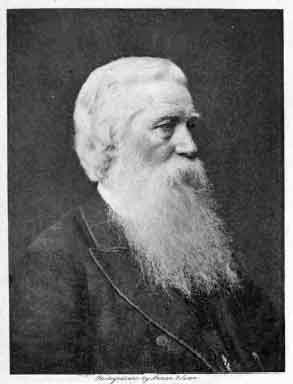
I am adding a 4th mechanism to the list. I have been reading missionary biographies and I personally find them extremely encouraging! I hope you do too! For example, John G. Paton’s “Thirty Years Among the South Sea Cannibals” is a tremendous story that shows the difficulty of the spread of the Gospel (only 1 soil in four accepts it), the tribulations of missionaries, their total reliance on Jesus and how their faith increased because of it, their constant heavenward perspective, the beauty and celebration when a soul converts, and much more. Missionary stories humble me, make me grateful, and help me picture heaven
It is the Christ of the Bible which John G. Paton took with him to the New Hebrides Islands in 1858, to witness to the natives among the island group now known as Vanuatu. The book depicts Paton’s mission, a Scottish born man and called to minister to the cannibals of Tanna Island. Landing with his pregnant wife in 1858 he recounts the labors among “painted savages who were enveloped in the superstitions and cruelties of heathenism at its worst.” There’s joy when one native converted, weeping when there is betrayal by tomahawk or war club. Paton’s wife and child died, Paton himself was ill to near death many times from fevers and ague, and most other missionaries were killed outright. His life was threatened daily and the physical work of just staying alive was very trying. Yet Paton persisted lovingly in sharing Jesus’ Gospel with the natives, and also dispensed medicines and education.
Four years later, the natives loving Paton but hating “The Worship and his Jehovah,” caused Island-wide war to break out. He and two remaining missionaries were evacuated off the island. Paton spent some years in Australia and Scotland fundraising for the mission. He returned on the missionary ship Dayspring 4 years later.
There is much more. His personal story does have a happy conclusion. When he and his new wife returned, they re-settled on a different island, and over the course of many years successfully shared the Gospel and the natives were converted.
Here are a few sweet excerpts. Paton’s relationship with his father is beautiful.
that blessed custom of Family Prayer, morning and evening, which my father practised probably with out one single avoidable omission till he lay on his death bed, seventy -seven years of age; when, ever to the last day of his life, a portion of Scripture was read, and his voice was heard softly joining in the Psalm, and his lips breathed the morning and evening Prayer, falling in sweet benediction on the heads of all his children, far away many of them over all the earth, but all meeting him there at the Throne of Grace.
The first of many war scenes, early in the book:
Party after party of armed men going and coming in a state of great excitement, we were informed that war was on foot; but our Aneityumese Teachers were told to assure us that the Harbor people would only act on the defensive, and that no one would molest us at our work. One day two hostile tribes met near our Station ; high words arose, and old feuds were revived. The Inland people withdrew; but the Harbor people, false to their promises, flew to arms and rushed past us in pursuit of their enemies. The discharge of muskets in the adjoining bush, and the horrid yells of the savages, soon informed us that they were engaged in deadly fights. Excitement and terror were on every countenance ; armed men rushed about in every direction, with feathers in their twisted hair, with faces painted red, black, and white, and some, one cheek black, the other red, others, the brow white, the chin blue in fact, any color and on any part, the more grotesque and savage-looking, the higher the art! Some of the women ran with their children to places of safety; but even then we saw other girls and women, on the shore close by, chewing sugar-cane and chaffering and laughing, as if their fathers and brothers had been, engaged in a country dance, instead of a bloody conflict.
The beginning of the end, war breaks out and Paton fled, spending the night high in a tree above marauding cannibals.
Being entirely at the mercy of such doubtful and vacillating friends, I, though perplexed, felt it best to obey. I climbed into the tree, and was left there alone in the bush. The hours I spent there live all before me as if it were but of yesterday. I heard the frequent discharging of muskets, and the yells of the savages. Yet I sat there among the branches, as safe in the arms of Jesus. Never, in all my sorrows, did my Lord draw nearer to me, and speak more soothingly in my soul, than when the moonlight flickered among these chestnut leaves, and the night air played on my throbbing brow, as I told all my heart to Jesus. Alone, yet not alone! If it be to glorify my God, I will not grudge to spend many nights alone in such a tree, to feel again my Saviour’s spiritual presence, to enjoy His consoling fellowship. If thus thrown back upon your own soul, alone, all, all alone, in the mid night, in the bush, in the very embrace of death itself, have you a Friend that will not fail you then?
With no mission board to support or guide her, and less than ten dollars in her pocket, Gladys Aylward left her home in England to answer God’s call to take the message of the gospel to China. With the Sino-Japanese War waging around her, she struggled to bring the basics of life and the fullness of God to orphaned children. Time after time, God triumphed over impossible situations, and drew people to Himself. The Little Woman tells the story of one woman’s determination to serve God at any cost. With God all things are possible! Gladys lived from (1902-1970).
Through Gates of Splendor is the true story of five young missionaries who were savagely killed while trying to establish communication with the Auca Indians of Ecuador. The story is told through the eyes of Elisabeth Elliot, the wife of one of the young men who was killed.
Find some other missionary stories, there are many lists out there of “10 Missionaries every Christian ought to know” and so on. Many missionaries have gone forth. The more modern stories can be heard or read from Dispatches from the Front: Stories of Gospel Advance in the World’s Difficult Places. I am sure that their stories will inspire you and encourage you. We all need some encouragement in these days. I can’t wait to meet Paton, Nate Saint, Gladys Aylward, and all the rest in heaven!!
Look in the Bible for how many times clouds are mentioned. The word is used for different reasons and in different ways. It is fun to think of His grace in giving us the literal clouds, which shield us from the hot sun, or which gives us rain. The variety and wonder of the different shapes of clouds: nacreous, cumulus, tubular, cirrus, etc, and the different reasons for clouds, both literal and symbolic, is a study in itself.
The best reason to think of clouds is that Jesus will return in one!
It seems that every day we awaken to a new tragedy. Maui fires, extreme heat, store shooting, hurricane…
How can this happen, people wonder. Why does this keep happening, people wonder. It happens because of sin. Man is born a sinner, and it is only God’s common grace that retrains every man from murdering every day. However, God’s restraining grace is lifted as He abandons a nation.
So, man turns to false religion to help him restrain the evil in him. But this does not work, either. The harder man tries, the more he fails.
“False religion cannot restrain sin in the heart, although it can mask it with self-righteousness.” Principles of God’s Judgment
When an individual or a nation resists the Law, the conscience, and common grace in creation long enough, God gives them over to the lusts of their heart.
“God will abandon sinners to their own choices and the consequences of those choices. And just what is this abandoning act on God’s part, it is the removal of restraining grace. It is when God lets go and turns a society over to its own sinful freedoms and the results of those freedoms. No Scripture more directly confronts this abandonment and its consequences than Romans 1 does.” When God Abandons a Nation
Three times you have the statement, “God gave them over.” This term paradidomiin the Greek can have a judicial sense. It can be used of a judgment made on a criminal who was then handed over for punishment. Each of these phrases expresses the fact that the wrath of God has acted judicially to sentence sinners. It is God officially giving them over. It is God letting them go to the uninterrupted cause and effect their sinful choices produce. When this judgment falls, there is a depriving of restraining grace and sin runs rampant through a society. When God Abandons a Nation
And false religion includes the atheist and agnostic, the ‘no-choice’ person, because those are just religion of self. This is why we need Jesus, all people do. The sin of man is inherent in his heart and only Him from above who is without stain can resolve our sin problem. All men need the Gospel.
The Gospel is not “having purpose in your life”. It is not “accepting Jesus” or praying a prayer. The Gospel which everyone needs is good news, as Ligonier explains:
“The gospel is called the ‘good news’ because it addresses the most serious problem that you and I have as human beings, and that problem is simply this: God is holy and He is just, and I’m not. And at the end of my life, I’m going to stand before a just and holy God, and I’ll be judged. And I’ll be judged either on the basis of my own righteousness–or lack of it–or the righteousness of another. The good news of the gospel is that Jesus lived a life of perfect righteousness, of perfect obedience to God, not for His own well being but for His people. He has done for me what I couldn’t possibly do for myself. But not only has He lived that life of perfect obedience, He offered Himself as a perfect sacrifice to satisfy the justice and the righteousness of God.”
“The time is fulfilled, and the kingdom of God is at hand; repent and believe in the gospel.” (Mark 1:15)
The sad truth is that man is not good. This is not an anomaly. The man who shot the elementary students at Sandy Hook, the man who shot the movie-goers in the theater in Colorado, the who shot the homosexual club-goers in Orlando … at Dollar General… this IS man.
There’s weakness, and then there’s weakness. It depends on which kind you’re talking about.
Christian women are noted as the weaker vessel. (1 Peter 3:7).
As for Christian weakness in general, we’re all weak, we are supposed to be. Paul said that Jesus replied to him,
‘My grace is sufficient for you, for My power is perfected in weakness.’ Therefore I will boast all the more gladly in my weaknesses, so that the power of Christ may rest on me. That is why, for the sake of Christ, I delight in weaknesses, in insults, in hardships, in persecutions, in difficulties. For when I am weak, then I am strong. (2 Corinthians 12:9-10).
There’s weak because we’re laden with sin that makes us weak. That is one reason we strive not to sin. We pick up our cross daily and slay sin. When we do sin, it’s important to address it by repenting to Jesus and making things right with the other person, if you had involved another person in your sin. Sin is one reason we become weak and ineffective.
There’s weak because we understand our depravity and seek the Spirit’s strength. There’s weak when we see how powerful Jesus is, and understand our own powerlessness in the face of His omnipotence. There’s physically weak, due to illness temporary or permanent.
In some cases, God gives us weakness. He gave to Paul a “thorn in the side” both to keep Paul humble, and to demonstrate that all we need is His grace (not our own strength). (2 Corinthians 12:7)
In America where I’m from, strength is valued. Strength, bravado, and self-sufficiency are nationally recognized attributes, idols, even. In addition, American Feminism has also contributed to a national consciousness that we woman are supposed to have it all together and be capable of all things at all times. “I can bring home the bacon AND fry it up in a pan” as the old TV advertisement alleged.
The attributes of weakness, meekness, and humility aren’t as valued as they are in other nations. But it’s OK to be weak. It’s good. Why?
It’s God who strengthens us. I can do all things through him who strengthens me. (Philippians 4:13).
Wouldn’t you rather have His strength than your own strength, anyway? 🙂
We worship an orderly God, whose prophecies, whose seasons, whose mankind progresses according to His will. What a blessing it is to know we submit to a God who is perfect, whose mighty hand is outstretched to make Himself known and His works, including the animal world, are a wonder.
Below is a poem by Kay Cude. Right-click to enlarge in new tab. Or read below-
“Foamy crystal drops of damp, and he alights with ease; to rest upon a liquid bed, his heart content and pleased; To linger there and end his day, the journey hard and long; the banks call out to lay upon, his heart by rest made strong.”
1There is an appointed time for everything. And there is a time for every matter under heaven— 2A time to give birth and a time to die; A time to plant and a time to uproot what is planted. 3A time to kill and a time to heal; A time to tear down and a time to build up. Ecclesiastes 3:1-3






 the-end-time.org