Posted in discernment, jesus calling, Lent, the shack

Prata’s Potpourri: Discernment, Lent, Sinclair Ferguson, Jesus Calling, battling bitterness, more

Here in North Georgia we have run the gamut with weather. Snow flurries so pretty and swirling the bus driver at our school said it was like being inside a snow globe. Then we had a harsh freeze and temps in the low teens with bad wind chills. Yet today things bounced back with sunny and warm air and the forsythia is popping out. I love the early spring here in the south (early compared to my previous abode in Maine). Once last week in a warm spell, I heard peepers.

Peepers are tiny frogs, which according to Wikipedia,

is a small chorus frog widespread throughout the eastern USA and Canada. They are so called because of their chirping call that marks the beginning of spring. 

Spring means Easter and Easter means to Lent or not to Lent. The Lenten season began yesterday.

Lent, yes or no? By 9Marks
Five reasons not to observe Lent by Entreating Favor
Origins of Lent at Grace To You

In this day and age of apostasy, hatred, and brutality- and I’m speaking of inside the church- a bitterness grows in the wounded Christian heart. Bitterness is a killer, Eric Davis says, we have to be on guard against it. Here are some ways to combat it as outlined in Davis’ essay The Normal Battle with Bitterness

Seven years ago Dr Al Mohler wrote against a novel that was sweeping the church, The Shack. Tomorrow I am doing a retrospective on the book and digging deeper into the discernment realm by jumping off from this article from Dr Mohler, but until then, here is his article, The Shack — The Missing Art of Evangelical Discernment

Need encouragement? Sinclair Ferguson provides, in his essay A deeper lineage than our genes

Here is Lil, a pastor’s wife at Embracing the Lovely on Why I won’t be finishing Jesus Calling by Sarah Young

I’m 9 days into the New Year and 10 days into reading “Jesus Calling” by Sarah Young. It’s been one of the best selling devotionals for the past 10 years, so I decided to pick up a copy on New Year’s Day. … I’m on Day 10 and I just can’t bring myself to read any more. I. Just. Can’t.

We in America have been blessed with the opportunity for unfettered freedom of speech. The internet has been a boon for those wishing to use it for a Christian witness. However, Twitter is making some troubling moves. Read more at the Daily Signal

The ever gently discerning Mrs Sharon Lareau has completed her second part of reviewing Beth Moore’s Audacious simulcast, here.

One side note. In the satanic effort to get feminism into the faith and into women’s hearts, I keep reading about having audacious faith, praying audacious prayers, of discipling an entire generation, of stepping into leadership roles, of being a brave girl.

Yet I am living a little life in an out of the way place and the only thing I’m stepping on is a juicebox or cheerios at snack time in kindergarten. I am not brave or audacious or leading. I don’t have “crazy strong risky dreamer kids” and I am not running a multi-million dollar corporation ministry or globetrotting to empower local women. I don’t really rather be doing this in my living room over coffee with you. No. Please don’t come over for coffee. If you do, my table won’t be artfully arranged with perfect flowers and I won’t be artfully arranged with a Bohemian scarf draped over my shoulders and I really do not believe laundry is a holy experience.

Brave, audacious, leaders, empowered… Whatever happened to submissive, meek, quiet, and sober? Out of fashion I guess. I am simply a para-professional working in a public school who grocery shops at a local Mom & Pop store and goes home and reads the Bible and repents and asks Jesus to help me be a better witness for His name tomorrow than I was today. The Christian life is wondrous and hard. It’s at home and at work, not necessarily at a huge conference I’ve founded or in Africa where I go when I leave my two toddlers behind to do some more important work or discipling an entire generation (an entire generation? and anyway, doesn’t the Bible already tell us to disciple generationally? Duh). These younger women really have to get a grip on themselves by getting over themselves.

Next, a lot of great photos of satisfying perfection at work. For the OCD in you or the person who just exults in symmetry and order, here you go. You’re welcome.

Posted in beth moore, bible teaching, dignity, discernment, ethics

Photojournalism and an undignified Beth Moore

I was formerly a news journalist, working at my own weekly I’d started and also worked as a features writer and photographer for the Athens daily. I was big on journalism ethics. One of the things I’d seen happen increasingly over the years is that when a reporter, photojournalist, or editor didn’t like the person being reported on, they would deliberately use disparaging adjectives, or if in a photo, select a photo that showed the person on a bad light or with a goofy expression, or in some other way, undignified.

What I understood as proper photo-journalism ethics is reflected in this excerpted photo ethics statement from the National Press Photographer’s Association

  • Be accurate and comprehensive in the representation of subjects.
  • Be complete and provide context when photographing or recording subjects. Avoid stereotyping individuals and groups. Recognize and work to avoid presenting one’s own biases in the work.
  • Treat all subjects with respect and dignity. …
  • Editing should maintain the integrity of the photographic images’ content and context. …

I personally believe that journalism and photography ethics should be applied to bloggers, including lay-bloggers with no journalism associations. And ethics is always the watchword for Christians. (Psalm 25:21).

When a newspaper publishes letters to the editor which are opinions from readers, they don’t publish all of them. A large city newspaper might receive hundreds of letters to the editor or emails opining on a recent report. Did you ever wonder how they decide to publish this one and not that one? They take the preponderance of opinion and publish a representational number. If there’s an election coming and 100 people write in that John Q. Politician is good, and 30 people write that John Q. Politician is bad, they might publish 3 of the good and one of the bad. It’s representative of the situation. That’s what newspapers do, reflect the general situation.

What I try to do when representing a person I’m blogging about in photography is find a provided head shot the subject has proffered, or some other representationally accurate photo. By that I mean it is a photo showing the person of his correct age and represents the usual stance or expression of the person. In other words, paparazzi try to find the ONE photo of a celebrity where they are in dishabille, or wearing casual clothes that make them look worse than they usually do. How does the person usually look? If you are blogging about a person regarding their work, then show them in work clothes. If you are blogging about a stay-at-home mom, then casual clothes and home setting is appropriate. Et cetera and so forth.

Representationally accurate….and now we get to Beth Moore.

Five years ago I wrote my first blog critical of Beth Moore and her teaching. As a brief rabbit trail I’ll say that back then it was one of the earliest essays anywhere on the internet critical of Beth Moore. Her teaching was bad but more subtly bad back then, and I remember having an excessively difficult time finding other essays, especially written by men, that confirmed what I saw and understood to be negative about her teaching. Five years later we all see the devastatingly satanic decline in her teaching. In this essay I’ll double down on one of the most troubling things that has declined, her teaching style.

Five years ago I’d written in part 2 of the series, “Troubled By Beth Moore’s Teaching” that I was troubled by her lack of dignity in teaching. Of all the things I’d written negatively about, her legalism, twisting scriptures, lack of transparency etc, my critical words about her teaching style drew the most heat from Moore supporters. I was excoriated for even daring to say it. Many women who wrote to me said it was unfair and improper even to rate her on style.

No, I’d pushed back, the Bible has much to say about a woman’s dignity in public. Comportment is addressed for each gender and at every age, and is especially important for leaders and teachers. This issue is specifically addressed in multiple verses.

Instructions specifically to be dignified:
Show yourself in all respects to be a model of good works, and in your teaching show integrity, dignity, (Titus 2:7)

The Greek word for dignity in the Titus 2 verse means:

“solemnly respectable.” reflects what has been transformed by God and exhibits “moral and spiritual gravity (gravitas)” – like what attends a deep, godly character.

Instructions for Ministers:
A bishop then must be blameless, the husband of one wife, vigilant, sober, of good behaviour, given to hospitality, apt to teach; Not given to wine, no striker, not greedy of filthy lucre; but patient, not a brawler, not covetous;” (1 Timothy 3:2-3)

Instructions for wives of ministers:
Even so must their wives be grave, not slanderers, sober, faithful in all things.” (1 Timothy 3:11)

Instructions for aged men:
For the grace of God that bringeth salvation hath appeared to all men, Teaching us that, denying ungodliness and worldly lusts, we should live soberly, righteously, and godly, in this present world.” (Titus 2:11-12)

Instructions for aged women:
Older women likewise are to be reverent in their behavior, not malicious gossips, nor enslaved to much wine, teaching what is good, so that they may train the younger women to love their husbands, to love their children, to be self-controlled, pure, workers at home, kind, being subject to their own husbands, so that the word of God will not be dishonored.” (Titus 2:3-5)

Do you get the idea that the church leaders, teachers, and elders should be dignified? I hope so. These and other scriptures are clear on the subject. Anyone who has seen a Beth Moore clip knows that her self-control and circumspectness is less than optimal. Her bio says she ‘teaches with energy and passion.’ She even calls herself obnoxious. I call it undignified. And undignified teaching is a poor witness.

Lately I’ve been seeing photos of Mrs Moore in strange and wild positions, gesticulating madly like she’s beating wasps. She stands in a hula hoop. She zanily sweeps the stage. She has participants come on stage and hold placards. She cuts up. She’s undignified.

But these photos, are they doing a Christian disservice to Moore? Let’s take a look at a few.

I decided to scan through a number of recent Moore clips. I chose different venues. I looked at Moore on a large-venue stage, intimate setting, and being interviewed. I looked at 11 or 12 of them, and noticed the same thing in each. The preponderance of her teaching style now is zany and undignified. And worse, remember that Mrs Moore is a 58-year-old grandmother. We cannot attribute her teaching style to over-exuberant youth. She should be applying Titus 2 verses to her life and her teaching behavior so as to demonstrate it to the generation coming up. Sadly, Mrs Moore completely fails in this regard.

To be fair and ethical, I looked at an equal number of clips from Kay Arthur, whom I consider to be a dignified female Christian teacher. I looked at an equal number of settings Mrs Arthur was teaching in as well- the interview, an intimate setting, a large-venue. In none of them did I find Mrs Arthur zanily sweeping the stage, standing in a hula hoop, or otherwise using inappropriate props for a Bible lesson or a Christian speech. In none of them did I see her facial expression veer to the clownish and comical, and in none of them did I see wild gesticulations like beating wasps or arms flailing as when walking into a spider web.

I also looked at Martha Peace giving a The Master’s College lecture on the subject of women discipling women, and a Susan Heck lesson. Ditto. No zaniness in sight and all those aforementioned women were dignified, comporting themselves as the Bible says an elder female teacher should.

Are there times when Beth Moore is standing behind a podium speaking in a dignified manner? Of course. Her undignified approach to teaching is not 100% saturated with zaniness every minute. I am speaking of the preponderance of time, and I am speaking of frequently, and I am speaking of representationally. Remember, in 1997 in an interview with Baptist Press, Moore herself said she is obnoxious. She has not calmed down since then, and is in fact, worse.

Now when I see a crazy photo or screen shot of Beth Moore, I have determined for myself that it’s representative of her usual teaching style. In my little exercise comparing Moore with Arthur, Peace, Fitzpatrick and Heck, it was startling to see Moore’s antics compared to the other teachers. Dignity. Sisters, dignity is a highlight of any Christian woman. No, I’m not saying that we can’t laugh or joke or have a good time. I’m not saying never to use props, but I am emphatically against them most of the time. The Bible is the only visual we need.

Christian women and especially teachers should be mindful of the grace that was bestowed on us and comport ourselves with dignity. A dignified posture is to be sought at all times, but especially when we are teaching about the Lord, who is the expression of dignity itself.

Posted in buzz words, Christian vocabulary, discernment, words

New liberal buzzword: "faith streams"

The definition of jargon is Jargon is

“a literary term that is defined as a use of specific phrases and words by writers in a particular situation, profession or trade. These specialized terms are used to convey hidden meanings accepted and understood in that field. Jargon examples are found in literary and non-literary pieces of writing.”

It’s not only a literary device, but certain buzzwords can exist in any organization, including Christianity. When you hear or read new ones, discernment picks up. The words release, favor, manifest, anointing, seed are markers of a prosperity speech. Gnosticism is rife with references to secret, knowledge, levels, ascend, divine, lost books, etc. An emergent church will speak of vision casting, contextualize, becoming, having a conversation, missional, narrative, story

I’ve been seeing and reading people use the word streams or faith streams lately. As in, “People from different faith streams came together at the football field for prayer.” Or, “People from different faith streams are welcome to attend our church.” I’ve seen it used on various liberal websites and recently I heard Beth Moore use the term. I decided to look into it.

Streams or faith streams comes from Richard Foster’s book Streams of Living Water: Celebrating the Great Traditions of Christian Faith. Richard Foster is known in Mystical/Emergent circles as an expert on spiritual formation. He has been deeply influenced by Mother Teresa and other Catholic mystical contemplatives, and in turn has influenced many others such as Watchman Nee and Henri Nouwen. Streams of Living Water is synopsized here in this Resource Guide,

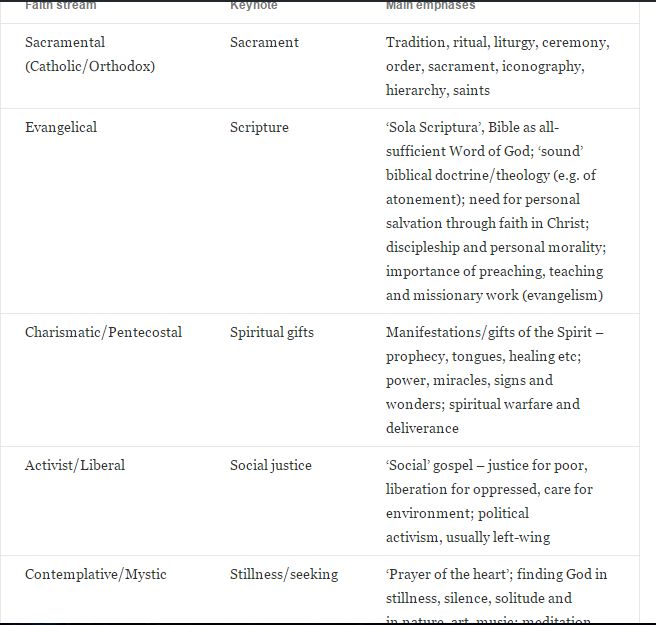
Foster begins Streams of Living Water with the assertion that Jesus is the source of each of the great traditions of Christian spirituality—Contemplative (the prayer-filled life), Holiness (the virtuous life), Charismatic (the Spirit-empowered life), Social Justice (the compassionate life), Evangelical (the Word-centered life) and Incarnational (the sacramental life). Once Foster persuades us that each tradition has its source in the life of Jesus, he devotes a chapter to each of the six traditions.

Incarnational really means Roman Catholic. Immediately we understand there is a problem, if the author of Streams is saying that Jesus is the source of Roman Catholicism. He is not, Satan is the source of Roman Catholicism. The Resource Guide continues,

The church is the Body of Christ. Not surprisingly, its history has been washed by movements that have become great traditions. And each of these traditions finds its origin in the life of Jesus. The life of Christ is our template for living a life of prayer, purity, power, passion, proclamation, and presence. Jesus is our model for balanced and holistic living. An overemphasis on doctrine and division has resulted in the visible church bearing more resemblance to a shattered vase than the pulsating body of Christ. It’s time to put the pieces of the chalice back together.

Streams means that those who believe the liberal/Richard Foster doctrines, one will claim brotherhood in Christ with the following versions of Christianity, only one of which is truly and thoroughly valid. Below we have not a summary as we did above, but a table from the “Evangelical Liberal’s” blog, illustrating Foster’s version of faith streams, or traditions.

Words matter. Sin is not mistake. Justification, sanctification, glorification are important doctrinal words to know, understand, and use. Propitiation, redemption, adoption, are theological words with meaning, a meaning that used to be commonly understood by Christians. Redefining words or worse, co-opting words and symbols are satan’s work. Gay used to mean happy. Rainbow used to mean God’s covenant with man, now when it’s used it means perverted love among and between homosexuals. The term contemplative prayer confused many people because we are told in the Bible to contemplate God and to pray. Therefore contemplative prayer can’t be bad. Can it? Yes, it can.

Look into the origins of words. Think about what you’re saying. Before you use a new word, know and understand its origins. It might be the culture’s substitute for a theological word that is important to keep using. The word, like contemplative prayer, might not mean what you think it means, inconceivable as that may be. When you say faith streams, you’re picking up on Richard Foster’s melding of false faiths with Christianity. All streams do not lead to the ocean, just as all paths do not lead to God. Beware, think, study, and don’t be quick to abandon OUR words that have been commonly understood for centuries. Our Christian vocabulary is important, protect it.

Posted in bible art journaling, coloring, discernment, mandalas

Bible art journaling: No, no, no (reprise)

Using one’s Bible as a sketch pad for one’s art is becoming even more popular than when I first wrote about it in November 2015. Housewife Theologian Aimee Byrd wrote about it this week here-

You Can Get with THIS, Or You Can Get with THAT

I’ve recently encountered a new trend among women to do some “artistic” journaling in their Bibles. …And before I critique this, let me just say that I’m all for art. … But what I am talking about is more like turning your Bible reading into craft time.

Erin Benziger plans to speak about it in an upcoming Equipping Eve episode. [Link will be posted when available].

I made note of the women above and I’m re-posting my essay below so ladies can get several female perspectives on the trend. In addition to looking at Bible art journaling, in my essay I commented on the trend of Adult Christian Coloring, particularly coloring Mandalas. So here you go: “Bible Art Journaling, no, no, no” redux, with some edits:

—————————-

A friend made a comment on Twitter last night. She posted a photo of a Bible that had been altered by the owner having added paintings all around the edges of the margins. Apparently it’s called Bible Art Journaling. Apparently Bible Art Journaling is a “movement”.

Many visually oriented folks know that prayer journals and art journals are a great way to record thoughts and reactions to scripture. I mentioned in last night’s essay that I made art journals and individual little books during my process of coming to salvation and just afterwards. As a new babe in Christ I had difficulty grappling with new doctrines and I’d often try to visualize them since words failed me. I also used my art journal to make collages in praise to the Lord. I was so excited! The depth of my gratitude overflowed and words failed me then, too, so I’d use pictures to express what I felt. I did them in my blank sketchbook, though, NOT in my Bible.

I have had a lifelong aversion to writing, drawing, or even underlining any book whatsoever. Not novels, not textbooks, nothing. I never even wrote my name in one. I don’t write in my bible nor do I underline anything in it. Since that book is God’s Holy Word I feel even more strongly that a Bible should be handled with gravitas and respect. I’ve never underlined or written anything in any of my Bibles. “Prettying up” a Bible with my own art is not necessary and mixes my paltry words and pictures with God’s. Besides, the Bible isn’t an art project! We don’t need tutorials explaining why gesso is not a good idea to use on the thin pages of God’s word, but stencils are!

Google Image search results page for search term “Bible art journaling”

Now, if the Bibles being decorated don’t violate the Second Commandment by depicting an image from heaven nor does the owner bow down to it, then why am I writing about it? Where is the concern? Isn’t it just a matter of preference?

I have three answers for that.

1. Yes, it is a matter of preference. There is no commandment that a Christian can’t find solace in creative work on the pages of one’s Bible. But not everything allowed is profitable. (1 Corinthians 10:23). See #2.

2. I don’t want to disrespect the young woman linked to here, but I do have concerns with this approach to “encountering Jesus.” This page is a tutorial page on how to “journal your Bible.” It’s called Bible Art Journaling Challenge, and the woman promises to “Help you encounter Jesus through creativity” through “52 weeks of life-changing creative fun!” She’s not the only one. Bible Art Journaling is being promoted this way in many places.

Now here’s the issue. There is nothing wrong with art. There is nothing wrong with creativity. There is nothing wrong with collages, illustrating a prayer, painting a verse. Visuals combined with words often helps us meditate on the Word. Here is a collage I did when I was a babe, regarding 2 Corinthians 4:4 and satan’s blinding of men to the truth. All the while people play games with their life, never heeding the seriousness of it and the squandered worship they could be performing.

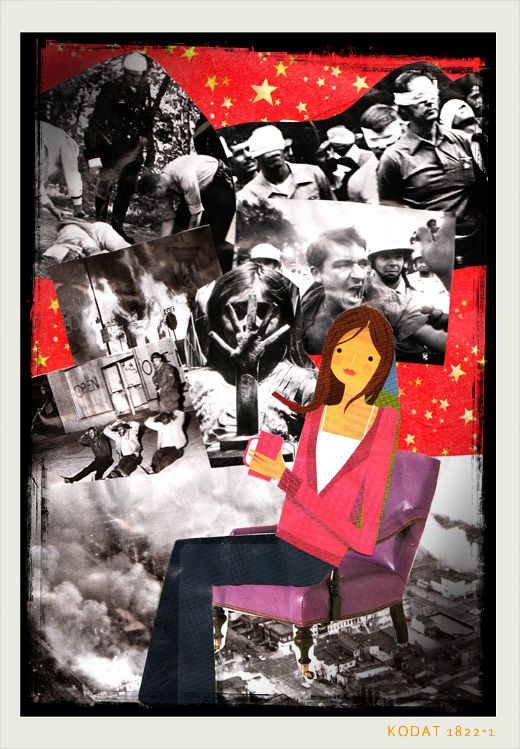
Here is another one I did as a babe in Christ, musing on Philippians 4:7 and the peace that passes all understanding. No matter if there is violence, war, explosions, the gal sipping tea is peaceful and unperturbed because she has Christ.

Another creative outlet I employ is spending a lot of time matching a verse with one of my photographs, all the while thinking of what the verse means. I shared these with you to show I’m not a wordsmith purist nor an old fuddy-duddy, lol. Creativity is good. Visuals are good. It’s just not a substitute for engaging your mind totally on the unadulterated word of God. Reading God’s Word is the encounter with God. Painting swirls on a Bible page is not an encounter with God.

The difference is, God’s word should stand alone and not become an “fun activity.”

We read that satan is the most subtle creature in the Garden. (Genesis 3:1.) If he can do anything to divert a Christian’s attention from the pure, unadulterated word of God, he will do it. This Bible art journaling is just such an activity. The Bible is not an art project. Coloring on its pages does not bring you closer to Jesus. Painting on its pages does not spark an encounter with Him. Reading His word, meditating on it, and obeying it is what illuminates the mind of God to us. Satan is an incremental foe. I have no idea abut the theology of this blogger but this one paragraph struck me as the best description of satan’s ploy in incrementally changing our stance on doctrine.

Incrementalism is the single best arrow in Satan’s quiver…It is a subtle approach to change masked as genuinely positive, and since it always comes in slow, bite size chunks over time, you do not even feel that you have been deceived until too late.

See what this blogger said about her jump into the journaling Bible movement. Again, I don’t disrespect her, but her opening statement seems to perfectly capture the incremental nature of satan’s ploy as explained above,

Truth be told, I had resisted this whole “art journaling in your Bible” movement at first since I already do a lot of Bible studying and I didn’t want to take time away from that in order to “play”. BUT, the seed was planted. Just about every time I cracked open my Bible I could see how I could incorporate this into my life by keeping it simple and recording what I was already learning. (source)

So once the seed was planted when she opened her Bible she didn’t see Jesus anymore but all she saw was how to use the space for her art. See? It’s a problem. We have blank sketch books for art. We have altered book tutorials. Not Bible art. As a matter of fact, Bible art journaling IS a form of altered book art.

Altered books: An altered book is a form of mixed media artwork that changes a book from its original form into a different form, altering its appearance and/or meaning. An altered book artist takes a book (old, new, recycled or multiple) and cuts, tears, glues, burns, folds, paints, adds to, collages, rebinds, gold-leafs, creates pop-ups, rubber-stamps, drills, bolts, and/or be-ribbons it. The artist may add pockets and niches to hold tags, rocks, ephemera, or other three-dimensional objects.

Here is an example of altered book art:

Source

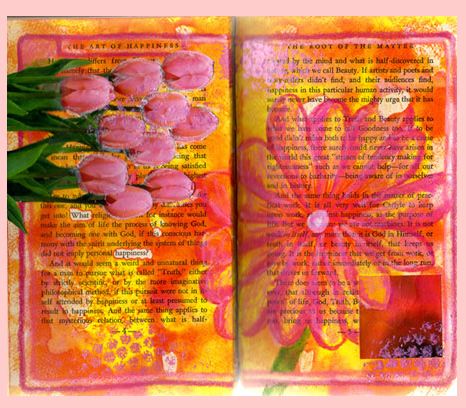
Here is an example of MY altered book art:

EPrata art

Here is an example of altered Bible art:

Source

Bible art journaling obscures God’s word. It competes with it. To be fair, the Bible art journaling blogger does not advocate abandoning devotional time nor substituting creative time for actual Bible study. But that is the subtle genius of satan. He is an incremental foe. A sly insertion of an activity with the Bible instead of reading the Bible itself is the goal. A familiar proverb or saying goes,

“If the camel once gets his nose in the tent, his body will soon follow.”

#3. I’d said that satan is subtle. Usually there is not anything particularly wrong with an activity or practice. You can’t point a finger and show the smoking gun. However the incremental nature of satan, taking an inch here, a half an inch there, over time chisels away at the foundation and all of a sudden you look around and wonder, “how did I get here?”

Just as Catholic labyrinths were re-branded as Protestant prayer walking, just as occult channeling was re-branded as “hearing from God”, just as mystical “contemplative prayer” was re-branded as “Protestant contemplative prayer”, just as Hindu Yoga was re-branded as ‘Christian Yoga’, just as Wiccan pentagrams were re-branded as “circle making”…”. Remember enneagrams? Those have Sufi roots. Bible art journaling is already melding with Hindu Mandala coloring. “Color your way closer to God?” No, no, no.

This Mandala Coloring Book For Grown Ups Is The Creative’s Way To Mindful Relaxation

For the unfamiliar, a mandala is a sacred symbol in Hinduism and Buddhism, made from a nest of squares and circles, that represents the cosmos. As the Asian Art Museum put it: “mandalas are not just images to view, but worlds to enter — after recreating the image in their mind’s eye, meditators imaginatively enter its realm.”

Oh! You mean, an encounter with the divine through creativity! Like this Christian description!

Bible art journaling is part of the growing, Illustrated Faith and Bible doodling movement where many are creating on the pages of their Bible. The idea is to engage more freely with the Word of God in new ways and to record personally inspiring scriptures in creative and artistic ways, which serve to remind us of moments in our personal journey with God. (source)

Or like this book available at Amazon, coloring Hindu mandalas to match Christian hymns.

Abide: An Adult Coloring Book Featuring 30 Great Hymns of the Faith: Where Art-Therapy and Soul-Therapy Meet

With original mandala artwork and hymn excerpts to color, Abide is certain to stimulate spirit and heart. Turn on some background music to play along as you color. Each coloring sheet is one-sided, with hymn texts printed on the back of each design.
Carefully selected hymns to appeal to young and old. Original mandala artwork. Artistic script designs. Simple, but beautiful mandala designs.

Source

People, Mandalas are HINDU. They are not, nor will they ever be CHRISTIAN. They represent something sacred to the unsaved. Something sacred to the unsaved is an IDOL. We are back to the Second Commandment I opened this essay with. Don’t believe me? See mandalas defined-

Definition of mandala:Mandala (Sanskrit Maṇḍala, ‘circle’) is a spiritual and ritual symbol in Indian religions, representing the universe. The basic form of most mandalas is a square with four gates containing a circle with a center point. In Hinduism, a mandala (yantra) is a two- or three-dimensional geometric composition used in sadhanas, puja or meditative rituals. It is considered to represent the abode of the deity. Each yantra is unique and calls the deity into the presence of the practitioner through the elaborate symbolic geometric designs. According to one scholar, “Yantras function as revelatory symbols of cosmic truths and as instructional charts of the spiritual aspect of human experience”. (source)

Do you really think it’s innocent to color a mandala just because some money-grubbing, undiscerning author re-packaged a pagan activity by pasting a line from a beloved hymn over the top of it and adding “Christian” to the title?

That is where Bible art journaling leads. It’s a diversion.

The Puritans had a high view of the Bible. Puritan Richard Baxter wrote in the mid 1600s,

The reading of the word of God, and the explication and application of it in good books, is a means to possess the mind with sound, orderly, and working apprehensions of God, and of his holy truths: so that in such reading our understandings are oft illuminated with a heavenly light, and our hearts are touched with a special delightful relish of that truth; and they are secretly attracted and engaged unto God and all the powers of our souls are excited and animated to a holy obedient life.

Therefore I do not believe that painting butterflies on my Bible’s pages is an encounter with Jesus. Doing so incrementally adulterates it, alters it, and then slowly degrades the high view we should have of it. The Bible is not an art project.

See? I like butterflies. Really.
Posted in bible, discernment, facebook, scripture twisting

"Anyone can find the dirt in someone"… How Facebook helps twist God’s Word

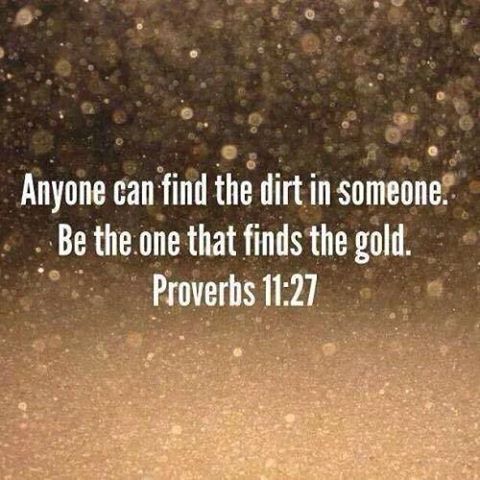
Have you seen this on Facebook? It is a wonderful sentiment. I approve of the concept of looking at the positive and trying to find the good in a person.

Seeing this makes me emit an instant, “awww” and want to press “Like” and “Share.”

But I don’t. Why?

There is a Bible verse attached to the sentence. A Bible verse is the word of GOD. So I must treat it with respect, and at the very least, look it up to make sure that someone making the scripture picture didn’t accidentally make a typo on the address. So I check to see if the verse and the address match up?

No. Here is what Proverbs 11:27 actually says.

  • Whoever diligently seeks good seeks favor, but evil comes to him who searches for it. (ESV)
  • The one who searches for what is good finds favor, but if someone looks for trouble, it will come to him. (HSCB)
  • If you search for good, you will find favor; but if you search for evil, it will find you! (NLT)

No matter what translation you look at the verse in, the sentiment expressed on the photo is not the same as the one stated in the Word. Every translation mentions evil, but the scripture photo mentions only good. The verse is saying that the person who goes looking for trouble will find it but those who do good will receive favor from God and men.

That’s the trouble with Twitter, Facebook, etc. Only half the verse is shown. Or it’s ripped from its context (Jeremiah 29:11 comes immediately to mind). The context in which this verse was ripped then twisted is embedded among-

Proverbs contrasting the nature and destiny of the righteous and wicked (11:1–31). The righteous follow a clear path in life, are delivered from troubles, are generous, and strengthen their communities. The wicked hoard money but are not saved by it, are a curse to their families and communities, and face certain punishment.

Garrett, D. A. (1998). The Poetic and Wisdom Books.

In untwisting the twisted part of the verse Matthew Henry says of it:

1. Those that are industrious to do good in the world get themselves beloved both with God and man: … that seeks opportunities of serving his friends and relieving the poor, and lays out himself therein, procures favour. All about him love him, and speak well of him, and will be ready to do him a kindness; and, which is better than that, better than life, he has God’s lovingkindness.
2. Those that are industrious to do mischief are preparing ruin for themselves: It shall come unto them; some time or other they will be paid in their own coin. And, observe, seeking mischief is here set in opposition to seeking good; for those that are not doing good are doing hurt.

Henry, M. (1994). Matthew Henry’s commentary on the whole Bible: complete and unabridged in one volume.

The verse is not about finding a nice quality in a person among other negative qualities. It is about a person himself doing good as opposed to evil. The one who does good receives favor from men and God. The one who does evil, piles evil back onto himself. It’s actually the opposite of what the Facebook photo verse is stating.

The Facebook twisted version makes man the hero.
The Bible’s version makes God the hero.
See the difference?

And does it make sense to put a scripture address on a verse that is totally re-phrased in man’s words, anyway?

EPrata photo

That’s the problem with twisting a verse. It’s a problem also when we carelessly re-tweet it or share it without proper investigation. We add to the general confusion regarding what the Bible actually says. Of all things on this earth the one thing we should be the most careful with is God’s word. Yet on social media, a powerful influencer of minds and hearts, it is the most carelessly handled. It’s sad that so many have shared and liked this verse that is not a verse and means what it does not mean.

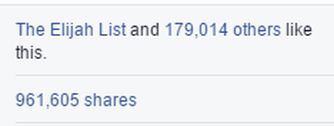
Now, I’m not condemning any of the nearly 1 million people who shared it. It’s a nice sentiment. I wanted to post it myself. But if you want to send around a nice sentiment like this one, there are plenty of them in the Bible that mean exactly what they mean without omitting important parts of the verse or twisting it. You have your pick of verses that urge us to edify each other, to cover each other’s sins, or to love one another.

Before pressing “Like” or “Share” please stop and look it up. Make sure the verse is addressed correctly and isn’t twisted.

Don’t twist the Bible

Posted in discernment, heaven, heaven tourism, macarthur, spurgeon

Heaven tourism books are bad; some heaven books are good

“Heaven tourism” is a phrase I believe was coined by blogger Tim Challies, picked up and used frequently by teacher and lecturer Justin Peters. It is a phrase indicating that a person has had some sort of trauma like a car crash or medical issue, or perhaps was in desperate emotional state, and in the unconscious portion of their trauma, they claimed to have visited heaven.

When ‘coming to’ they remember their alleged visit or vision, and write it down, later to become a book or a movie.

None of these visits are real. No person has gone to heaven and returned, (John 3:13; Deuteronomy 30:12) with the exception of the few persons in the Bible such as John, Paul, Ezekiel, or Isaiah and having subsequently written inspired text. John Gill’s Commentary says of the John 3:13 verse:

And no man hath ascended into heaven,…. Though Enoch and Elias had, yet not by their own power, nor in the sense our Lord designs; whose meaning is, that no man had, or could go up to heaven, to bring from thence the knowledge of divine and heavenly things; in which sense the phrase is used in Deuteronomy 30:12

John MacAthur’s sermon says of the John 3:13 verse,

You either take what Jesus says, or you’re a fool because, you can’t ascend into heaven and find the answers for yourself.

And yet these books keep coming. it is part of the demonic delusion and apostasy that satan, god of this world, instills in the vulnerable, ignorant, or hapless.

A new book is out by a man named John Burke. You see in his summary below that he did the typically wrong approach to biblical interpretation. He collected man’s stories and experiences, affirming them as true and credible, and then compared them to the Bible. He is in effect saying that the experience, simply because it occurred and mimicked something from holy text, that it must be true. The blurb says, their ‘experiences point to the heaven promised in the Bible’. Well, it’s the Bible that points to heaven, and as a matter of fact, the Bible’s version of anything is the only credible word on anything, because it comes from God, who cannot lie.

Imagine Heaven: Near-Death Experiences, God’s Promises, and the Exhilarating Future That Awaits You

Burke shows how the common experiences shared by thousands of near-death survivors–including doctors, college professors, bank presidents, people of all ages and cultures, and even blind people–point to the exhilarating picture of Heaven promised in the Bible.
This thrilling journey into the afterlife will make you feel like you’ve been there, forever changing the way you view the life to come–and the way you live your life today. You’ll discover Heaven is even more amazing than you’ve ever imagined.

We should be exhilarated at the glorious future awaiting us not because John Burke said so. We should be exhilarated by our glorious future not based on the flimsy experiences of man but by the word of God as revealed in the Bible. These heaven tourism books, like the one above, are specifically saying to you, “Never mind what God said about heaven, John Burke’s version will exhilarate you! Joe Schmoe’s tale will really get you going!” Blasphemous, isn’t it.

The Bible says we never look to experience first, it can be faulty. We look to God’s word first. Even the Apostles who were privileged to see a vision of Jesus transfigured along with Moses and Elijah, said that they do not preach their experience but test all things against the word of God. If that was the Apostle’s approach, men whom the Lord chose to carry His first message and were personally taught by Him, and who later wrote His words by Spirit-inspiration, would have preached their experience. But none of them did.

How much more important would it be for us today to follow their command and avoid preaching our experience? More to the point, how much more prideful and narcissistic is it to reject their commands and do it anyway? (2 Peter 1:20).

Do not preach your experience. Here is an excerpt from an essay written by Dr Bob Luginbill from the University of Louisville titled Scripture versus Personal Experience. I’m not familiar overall with the teaching of Dr Luginbill, but everything I read on this page discussing scripture vs. experience is explained well and accurately from the Bible.

In reality, of course, God is the One who determines how and when He communicates to us, and as it says in the book of Hebrews, “in these last days he has spoken to us by his Son”, even though before the incarnation He had spoken to us via prophets “at many times and in various ways” (Heb.1:1-2 NIV). So it is Jesus who is the Message; and He is “the Word of God” (Rev.19:13). We now have the whole written word of Him who is the Living Word, and that is the place to which we are now to direct our attention, namely to the truth of the holy scriptures. And we can certainly do so, because not only do we all have Bibles, and not only is the Body equipped with teachers who can illuminate it for us, but we all also actually have the Holy Spirit indwelling us for illumination, and He is “the [very] Mind of Christ” 

It certainly made sense for God to speak directly to, say, Enoch, before the Bible existed in any form. But if He really were communicating directly to believers in a verbal way today, wouldn’t that undermine the authority of the Bible, and all pastor-teachers, and in fact everything anyone else might say or have said to us except this special person – because after all the person with that special channel would be getting it directly from God. But the Lord has established His Church for a reason, and the mutual support we give each other for learning the truth is a very large part of what we are supposed to be about – this service is a large part of the basis for our eternal rewards. If there were a direct channel, we wouldn’t need each other much at all.

I do not recommend the Burke heaven tourism book or any of the books in this panorama below, many of which I have read myself and have found them to be unbiblical.

If you want to read books that are based on the Bible’s presentation of heaven, please consider some of the following. I’ve read all of them.

John MacArthur: The Glory of Heaven

A quick look at a list of bestselling books and you’ll see that heaven is a hot topic. After all, who doesn’t wonder and long to know more about the place you’ll forever live in the presence of God, untouched by sorrow, pain, and fear. What will it be like? What will you do in heaven? How will you recognize and relate to loved ones there?  

The problem is, runaway books about heaven are selling—and misleading people—by the millions. They are filled with fabricated, fictional accounts that claim to tell the truth about heaven. John MacArthur critiques those claims—and offers an in-depth, biblical explanation of God’s eternal city—in a fully revised, new edition of The Glory of Heaven. You’ll discover what the Bible really teaches about your glorious future home.

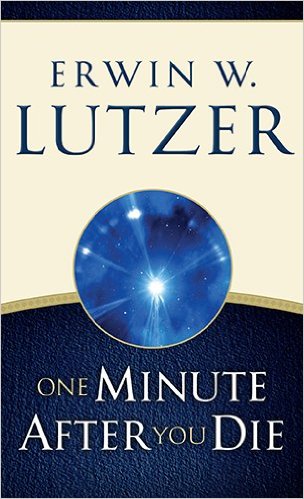
Erwin Lutzer: One Minute After You Die

“One minute after you die you will either be elated or terrified. And it will be too late to reroute your travel plans.” 

Death comes to all, and yet death is not the end. For some, death is the beginning of unending bliss, for others, unending despair. In this latest edition of the bestselling book One Minute After You Die, Pastor Erwin W. Lutzer weighs the Bible’s words on life after death. He considers: Channeling, reincarnation, and near-death experiences; What heaven and hell will be like; The justice of eternal punishment; Trusting in God’s providence.

Randy Alcorn: Heaven

What will heaven be like? Randy Alcorn presents a thoroughly biblical answer, based on years of careful study, presented in an engaging, reader-friendly style. His conclusions will surprise readers and stretch their thinking about this important subject. Heaven will inspire readers to long for heaven while they’re living on earth.

Randy Alcorn/Charles Spurgeon: We Shall See God- Charles Spurgeon’s Classic Devotional Thoughts on Heaven

Some of Spurgeon’s most powerful sermons were those that he preached on the topic of Heaven. … Randy Alcorn has compiled the most profound spiritual insights on the topic of eternity from these sermons and arranged them into an easily-accessible highly inspirational devotional format complete with his own comments and devotional thoughts.

The Bible is the only reliable source regarding heaven. Honor our Jesus, who descended from his abode in glory to live as a man on an earth whose ground had been cursed, absorbed all God’s wrath meant for us, died a horrible, humiliating death, and was buried in a borrowed tomb. His life of preaching and teaching and the Spirit’s subsequent inspired texts should be honored as the first and the last word. If you would rather look at heaven through Joe Schmoe’s eyes and not through the Spirit’s truth, you have a serious problem.

——————————–

Further reading

LifeWay abandons heavenly visitation resources

A Justin Peters video teaching: Heavenly Tourism (one hour)

Tim Challies on the topic of Heaven Tourism

Posted in discernment, encouragement, pastors, preachers, truth

Aren’t there ANY good preachers/churches left?

I hesitate to begin this essay by saying “In these times of apostasy” because the times have always been apostasizing. The moment that the truth is declared, someone falls away from it (Eve, Cain, Judas, Demas, Simon Magus…). The truth is always opposed by those who hate God.

Of late, however, it seems that some men we have always been able to count on are falling. The Bible is clear that even leaders who have been seemingly faithful over decades are not immune from the ravages of apostasy. Length of time in the faith is no guarantor of continued faithfulness. Ending well is just as important as beginning well. (2 Timothy 4:7).

In addition, the Spirit is always revealing the wolf in sheep’s clothing. John Piper has been displaying zero discernment. I wrote about Ravi Zacharias’ questionable credentials, heretical associations, and leaky theology here. Billy Graham said that anyone who is sincere and really believes something is up there will be in heaven with the saints. I think those are the three best recent examples of how sin works in the heart and how the Holy Spirit works in the Body to reveal it.

Just as the truth is always opposed, the truth is always upheld. The Lord raises up good men to speak His Gospel. In Romans 10:14 Apostle Paul asked the following questions

How then will they call on him in whom they have not believed? And how are they to believe in him of whom they have never heard? And how are they to hear without someone preaching?

The questions are not rhetorical. They are actual. The mechanism through which God has said He will use as the catalyst for conversion is His Gospel, preached by truthful men, to hearts He will release from the bondage of sin. (John 14:6, Acts 4:12). Therefore it makes sense God will always have good men preaching it, does it not? Because if He didn’t, who could hear?

Therefore in every generation God raises up men who will stand for truth and speak God’s word. In Isaiah 55:11 God told prophet Isaiah

so shall my word be that goes out from my mouth; it shall not return to me empty, but it shall accomplish that which I purpose, and shall succeed in the thing for which I sent it.

So though it seems today like there are no trustworthy pastors and preachers and teachers, there are. There has to be, for where else will God speak His Word and souls be claimed?

So who are these good or solid preachers? Well, first, do not overlook your own pastors and teachers. I know that many of you are grieved deeply that there seems not to be a good church in your area. With apostasy rising fast it is true that a solid church is a gem these days. Remember, this has always been the case. Throughout every age, even in America, there have always been large, geographical dead spots where the Bible is being proclaimed in perverted or twisted manner, or there isn’t any truth being proclaimed from a set body of gathered believers at all. Miles and miles might separate one good church from another, neither of them reachable for many people.

But laboring quietly in some corner of a church might be a good Sunday School Teacher. You could go to his class. Quietly knitting together some women under a ministry in a church there might be a woman with a heart for theology and the Bible. Maybe your church has a good music minister who sings hymns. Though the church in its entirety may not be great food perhaps there is one hook onto which you can hang your hat- and support and pray for the others who are not as solid. Come alongside them and help with encouragement and pointing to solid doctrine. Sometimes all it takes is one, strong, praying, persevering person to turn things around in a church. You don’t know what the Holy Spirit has in mind the next week, day, year.

Meanwhile, here are some men who are currently pastoring churches and speaking the truth as unmixed by man’s contamination as it’s possible to do. These are men we hear on the radio but are actually pastors of actual churches many people actually go to. You could, as well.  A friend of mine is moving out to CA to attend The Master’s College and will attend this church and will be present at the 47th anniversary of MacArthur’s installation as pastor-teacher at GCC.

Don Green, pastor of Truth Community Church. 4183 Mt Carmel Tobasco Rd, Cincinnati, OH 45255. Sermons can be heard at sermon audio here, or iTunes, Facebook page.

Alistair Begg, pastor of Parkside Church, 4520 S Arlington Road, Uniontown, OH. Radio program where sermons can be heard,Truth for Life.

Phil Johnson, pastor GraceLife Pulpit, one of the ministries at Grace Community Church, 13248 Roscoe Blvd, Sun Valley, CA 91352. Sermons here

Dan Duncan, Believers Chapel, 6420 Churchill Way, Dallas, TX 75230. Mr Duncan is BC’s current pastor, sermons here. S. Lewis Johnson was formerly pastor of Beleiver’s Chapel. Vast sermon archive here.  Both men are featured on the sermon schedule at Expositor.fm

John MacArthur, pastor of Grace Community Church, 13248 Roscoe Blvd, Sun Valley, CA 91352. Since February 1969, John MacArthur has been preaching verse-by-verse at that location. I’ve listened to him since 2007 or ’08. He is my favorite pastor.

Oftentimes I’ve heard people say that John MacArthur is the Spurgeon of this generation. Well, is he?  I decided to check. I am familiar with Charles Spurgeon, loving his sermons and reading them online quite often. I’ve also read his biography. Spurgeon’s output was prodigious, and his nickname “The Prince of Preachers” is well-earned. Is John MacArthur’s output even close to the beloved Spurgeon’s? Does he earn the privilege of being compared to the Prince of Preachers? I decided to do a comparison.

Now, comparing is difficult because of the time gap between the two men’s preaching eras. But as a quick draft, I put together the following information:

So that will give you an idea as to why I am blessed to have been led by the Spirit to John MacArthur’s radio program and then to the rest of his output, his associations, and his ministries.

Readers might be familiar with the fact that I write some discernment essays. One indicator of the first steps of drifting away from the truth is who a person associates with. In 1 Corinthians 15:33 Paul said,

Do not be deceived: “Bad company ruins good morals.”

In Proverbs 22:25 we read that we should not be hanging around angry people “or you may learn their ways and get yourself ensnared.

Associating or worse, partnering with, immoral or sinful people engenders deception and ensnarement, so saith the LORD. So when we read of Ravi Zacharias praising heretic Joyce Meyer on her television show or joining with New Apostolic Reformation conferences, or Beth Moore teaching alongside Christine Caine and Roma Downey, or John Piper with Louis Giglio or Christine Caine, or Ronnie Floyd embedded in IHOP or partnering at Synergize Conference with John Bevere or Leonard Sweet…you know that even if someone has the best of intentions their good character will be corrupted. “Do not be deceived.” At the very least, such decisions betray an astonishing lack of discernment and disregard for the holy nature of the faith these teachers are supposed to be upholding. (2 Corinthians 6:14)

But the opposite is true too. In discernment, if you are not as strong on discernment as you’d like to be yet, and you have found one good bible teacher to listen to either in real life or online, draw a circle around that man and then widen the circle. Who is in that pastor’s circle? Who does that pastor praise and recommend? Who does he quote favorably? Who does he partner with in spiritual endeavors such as book collaborations or conference speaking? I learned of most of the above men after having listened to John MacArthur’s conference sessions and in that way, was introduced to more men of faith I could trust.

Magnets have a north pole and a south pole. Though the iron filings at first are mixed, the nearer they draw to the magnet, the more the magnet will pick up and attract the filings that match that pole. I say these things to remind us that in days of apostasy (which is every day) the world will constantly be trying to pry open your tolerance. But the way is narrow. It bears repeating, the way is narrow, AND there are only two roads, narrow and broad. There is no middle ground. So it is the same with true doctrine and false. Eventually, a person will be attracted to one pole or another, as this experiment demonstrates.

Other men who I recommend who either are currently pastoring a church or who have gone on to glory or are in another teaching position, are,

Mike Riccardi, RC Sproul Sr, James Montgomery Boice, Steven J. Lawson, Ligon Duncan, Paul Washer, any teacher from The Master’s Seminary.

Don’t despair. There ARE good churches. If there isn’t one in your immediate area, pray and perhaps the Spirit will lay on your heart to either plant one or move closer to one. If your church seems to be struggling, don’t despair then, either. Maybe the Spirit is preparing you to take on a role there which will swing things upward. Sometimes the Spirit allows a person to be the lone beacon of light at a church in order the strengthen them for something ahead, or to teach endurance. In that case it would be for Jesus’ glory and your good that you remained. (Romans 8:28).

I hope this list and the encouragement has helped you.

Posted in discernment, nar, new apostolic reformation, ravi zacharias, truth

On Discerning Ravi Zacharias: It’s time to say what needs to be said

Ravi Zacharias is an Indian born,  Canadian-American Christian whose ministry is apologetics. Zacharias speaks at large gatherings, conferences, and events on the topics of Christianity and defending the faith. He also has a radio program, “Let My People Think.” He is well known for being intelligent, philosophical, and an excellent speaker in his command of the English language.

Even though there are some towering men of the faith, we must continue to do our duty and test all things against scripture. No one is immune from error or sin. Let us examine Mr Zacharias.

Ravi Zacharias talks to pastor Joe Coffey at Christ
Community Chapel about answering objections to Christianity.
Source TMDrew, CC

The link below brings you to an essay written in 2008. Since that time Ravi has descended further into questionable associations. At one point he praised Catholic Mystic Henry Nouwen, in addition to compromising on Mormon theology as you will read in the link below of that, and other compromises

Ravi’s slide downward

Though Ravi later retracted his endorsement of Nouwen and Merton here

But let’s take a look at his activity and statements over time, and compare to scripture.

2009: Ravi signed the ecumenical document called the Manhattan Declaration which calls for Catholics and Protestants to partner on moral issues (source). This is a violation of 2 Corinthians 6:14 and Ephesians 5:11.

2012: Ravi appears on Joyce Meyer Today, and says to Meyer, “God has used you” and calls her a ‘great bible teacher’ (youtube clip). This is a violation of one of the qualifications of elders, that they protect the sheep and remain in sound doctrine according to the biblical qualifications of teaching elders as per 1 Timothy 3:1-7 and Titus 1:5-9. His endorsement of Meyer was also a violation of the advice on Proverbs which says leaders use their wisdom to guide and lead. (Prov. 11:14; 24:6).

Ravi Zacharias calls false teacher Joyce Meyer a great teacher?

2014: Ravi waffles on age of earth, Ken Ham has response. This denies the clear and straightforward text of Genesis and is a setting aside of Romans 15:4.

2015: Credible allegations were made that Ravi has allegedly inflated/exaggerated/misrepresented his scholarly credentials. Proverbs 19:9 says he who breathes out lies will perish. When the allegations surfaced, certain information was immediately removed from the Ravi Zacharias International Ministries (RZIM) website. The allegations claimed,

-He was not a visiting scholar at Cambridge.
-He claims to have lectured at the world’s most prestigious universities.
-He claims to be a scholar yet has published nothing in scholarly journals and does not have peer reviewed research.

Next, sadly, from the RZIM FAQ page,
Ravi Zacharias Ministry holds no official theological position on:

Creation: “RZIM does not have an official ministry position on the age of the earth. The focus of RZIM is apologetics and evangelism, and thus we do not address particular questions about creation…”

Calvinism v. Arminianism: “RZIM does not have an official ministry position on the doctrines of Calvinism or Arminianism, and we have staff members holding to a variety of views in both of these doctrinal traditions.” (PS you’ll notice errors in their explanation of Calvinism on the linked page)

Eschatology: “Dr. Zacharias has not spoken on matters relating to the end times, nor does RZIM endorse any official view on matters of eschatology.”

Catholicism: “RZIM does not have an official ministry position on the doctrines of the Catholic tradition; RZIM focuses its ministry on evangelism and apologetics and strives to stay true to that vision. Some of Ravi Zacharias’s favorite authors are Catholic (namely G.K. Chesterton and Malcolm Muggeridge), yet he recognizes that there are significant doctrinal differences between Protestants and Catholics.” [doctrinal differences?!?!]

Erm, kind of hard to engage in solid apologetics without an official position on many of the bible’s doctrines.

2016: In April 2015, Ravi Zacharias was part of a conference which was set to scrutinize The New Apostolic Reformation, during the Worldview Apologetics Conference held at Antioch Bible Church in Redmond. The co-authors of two books outing the NAR (R. Douglas Gievett, professor of philosophy in the Talbot School of Theology at Biola University, and Holly Pivec, journalist) wrote the following at their blog:

My co-author, Doug Geivett, will speak alongside other high-profile evangelicals–including Ravi Zacharias, Norman Geisler, and Calvin Beisner–who will present on other important topics. Doug will give two presentations on the NAR, titled “The New Apostolic Reformation: What You Need to Know” and “God’s Super-Apostles: Where They Fall Short.”

And yet in January 2016 Ravi will partner with Domininist/NAR teachers at a conference called Synergize, the very movement a previous conference which Ravi attended that had sessions exposing these people as false teachers.

Finally, the smooth talk. If you listen to enough of Zacharias you notice he uses mostly rhetorical contrivances, philosophy, and looong anecdotes but not a whole lot of Bible. He is an ecumenical philosopher, not a solid apologist. The reason he uses fine sounding arguments and rhetorical tricks is that he is the kind of man Paul is describing being the opposite of himself, in 1 Corinthians 2:4-5,

and my message and my preaching were not in persuasive words of wisdom, (like Ravi) but in demonstration of the Spirit and of power, 5so that your faith would not rest on the wisdom of men, (Ravi again) but on the power of God. (as Paul does).

I also personally attended a Ravi Zacharias speech in Athens GA and I enjoyed it mainly because he is a smooth talking man who uses language so well.

I tell you this so that no one may deceive you by fine-sounding arguments. (Colossians 2:4)

What does everyone say when they mention Ravi Zacharias? “The Spirit is powerfully using Ravi!” No, but they do say, “Ravi’s so smart!” What would people say if they had heard Paul preach, who is just as smart as Ravi if not smarter? “Paul’s so smart!” or would they say, “Paul preaches in the power of the Spirit of God!” They would say the latter, and they did (1 Corinthians 2:4).

THINK about it.

—————————

FMI on the New Apostolic Reformation here

Posted in discernment, facebook, false teachers

"Be Careful Who You Post on Facebook"

I’d written recently that there were pros and cons to using social media as a Christian. It’s useful for staying in touch with distant family or friends, to learn of new pastors & ministries, or to share the Gospel. It’s not useful when we publicly sin or cause a stumbling block to a weaker brother, or in trying to tighten up time management. There are a lot of temptations on social media, that’s definitely a con.

One thing that is also a con but is part of the reality of life as a Christian anyway (i.e. there’s no escaping this) is the weak Christian who posts or repeats quotes and tidbits from ministries that are run by a false teacher. We agonize over our brethren who are embroiled in the snares of the devil and who prove it by unidscerningly following them, and by repeating the lies the ministry puts out there.

A pastor named Jordan Hall wrote a heartfelt warning about this and I re-post it here. In my opinion they are good words well stated. I use most of the discernment ministries Pastor Hall mentioned, and I’d also suggest my own The End Time blog, Sharon Lareau at Chapter 3 Ministries, Erin Benziger at Do Not Be Surprised, Sunny Shell at Abandoned to Christ, and Aimee Byrd at Mortification of Spin (The Housewife Theologian), DebbieLynne Kespert at The Outspoken Tulip, and already mentioned in the essay, Amy Spreeman at The Berean Examiner.

His warning:

———————————-

By Jordan Hall

Not too long to read: My friends, from a pastor’s heart, we must be careful who we quote on Facebook and whose material we share. Please take the time, before you do either, to spend just a single minute to research the individual or ministries you’re promoting by sharing their material. Before you quote or post a meme from Beth Moore, Proverbs 31 Ministries, Joyce Meyer, Joel Osteen, Andy Stanley, Steven Furtick or other popular ‘Christian’ leaders or organizations, please search the web with their name and the word ‘discernment.’ You’ll find the information you need in no time flat, and you’ll avoid causing your Facebook friends to stumble by introducing them to chaff and tares.

Why do that, you ask? Do that because Romans 16:17 tells us to “Mark those that cause divisions and create obstacles that are contrary to the doctrine taught [in Scripture].” That instruction is two fold (A) Mark them – that means to qualify, characterize and typify them as dangerous as a warning to others and (B) avoid them. When you post something from TD Jakes or Andy Stanley you are marking them as trustworthy. You are then exposing your friends and loved ones to their false teachings.

It is here that some say, “Well, I liked the quote. I’m not endorsing the person.” Well, I get that. Really, I do. I’m sure Charles Finney or Adolf Hitler might have said something at some point I might agree with. But, we shouldn’t go around quoting Hitler or Finney. Whether you like it or not, it IS an endorsement, and you might turn people onto ministries that are spiritually toxic.

Likewise, be careful when you “like” statuses that repeat the words of false teachers. I know you like the person who posted it. I know you liked their good intentions. But for the love of Jesus (literally), do not ‘like’ the words that proceed from the mouth of those who masquerade as shepherds but are inwardly wolves. Do not give the impression to your friend that you like it that they appreciate false teachers. Rather, you ought rather to mourn and warn them.

Here’s a tip for your convenience if you think, “Good grief, am I supposed to research every pastor or ministry I post or ‘like’ on Facebook” (the answer is YES, by the way). As stated above, google “person/ministry’s name” and “discernment.” You’ll find a wealth of resources from polemicists (those who specialize in errant teachings) like Chris Rosebrough, the late Ken Silva, Amy Spreeman, Michelle Lesley, Jeff Maples, Pulpit & Pen and more. Discernment is a gift of the Holy Spirit, and God has gifted people with discernment to edify and equip the church.

Finally, this is the information age. This does not require going to the library and looking up handwritten sermon manuscripts on the microfiche. A discerning Christian, through just a little bit of research (literally, just minutes) can determine wolf from lamb in short order. For the love of Jesus and his church, please be careful with what you post.

EPrata photo

Posted in christine caine, discernment, false teacher

Six reasons not to follow Christine Caine

Six reasons why Christine Caine should be avoided. I’m sure there are more reasons.

1.  Christine Caine engages in New Age practices condemned in the Bible, such as this “impartation” described in the link. (Acts 8:17-20, Matthew 6:9, Isaiah 57:8, Revelation 9:21). Simon the Magician tired to grab the power of the Spirit the wrong way and he was cursed for it.

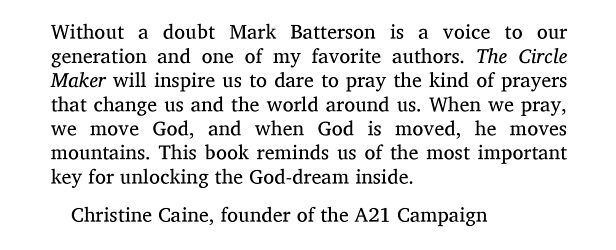
In addition, Christine Caine endorses practice of pagan/witchcraft as seen here in Batterson’s Circle Making book blurb–

2.  Christine Caine usurps male authority and rebels against the clear word of the Bible
She is an ordained pastor and functions in that capacity. Worse, she enjoys teaching young women to step into leadership roles that scripture forbids and is unashamed to say so. (1 Timothy 2:12; Revelation 2:20)

3.  Christine Caine is part of the rise of the Feminine Church of Eden. (Revelation 2:20).

But what we see with most of these women that are rising in popularity is what appears to be a female dominant role in their personal marriages. Beth Moore regularly travels to speaking and teaching engagements without her husband, as well as these others. Christine Caine is an ordained pastor of her “church” in Australia, and also regularly speaks and travels without her husband. Husbands aren’t overseeing their wives’ writings and teachings, and any attention that they pay to their wives’ work is not through the lens of Scripture.

4.  Christine Caine partners with heretics, promotes them, and endorses them. 1 Corinthians 15:33, 2 Corinthians 6:14; Romans 16:17-18,Ephesians 5:11). Christine Caine admits her spiritual roots were sprung from the bad fruit of heretics.

5.  Christine Caine is a member-leader in a doctrinally heretical word-faith church. (1 John 1:6-7). Or, as SBTS President Dr Al Mohler put it, a prosperity movement for millennials that minimizes the Gospel content and diffuses a presentation of ‘spirituality’ instead.

6.  Christine Caine twists scripture. (2 Peter 3:16).

Here she is twisting a scripture that warns against false teachers, that is actually rebuking those who warn against false teachers – something the false teachers often do. Here is a Pastrix Caine sermon review.

What shall we do if we see a sister following these false teachers? Warn them, lovingly. If needing to a second time, warn them lovingly again, seasoning your speech with salt. If they persist despite the warnings and either don’t have a husband to oversee them, have no proper oversight from a husband who has abdicated his duty, or who just are or are married to a discernment klutz, then various scriptures say either to admonish them strongly a third time and/or to break fellowship. Breaking fellowship might seem a hard thing to do, but remember, if a sister persists in her sin or won’t hear you after giving them the scriptures, that means they have already broken fellowship with Jesus.

When we see a believing sister (or someone who at least professes Christ) who insists on following a false teacher despite the facts, like above, it’s hard to know when to speak, when to remain silent, when to strongly exhort and when to be gentle. How many times does one snatch an undiscerning/uncaring sister from the fire and withstand their resulting tantrums that you didn’t allow them to get burned?

As for a person who stirs up division, after warning him once and then twice, have nothing more to do with him, (Titus 3:10)

And have mercy on those who doubt; save others by snatching them out of the fire; to others show mercy with fear, hating even the garment stained by the flesh. (Jude 1:22-23)

So do we warn, reject, have mercy, snatch from the fire, or fearfully hate the polluted flesh? Or all of them at different times? And when?

Here, Sinclair Ferguson gives excellent, EXCELLENT advice which for me, answers that question. The Proverb from chapter 26:4, Answer not a fool according to his folly, lest you be like him yourself, is immediately followed in verse 5 thus: Answer a fool as his folly deserves, That he not be wise in his own eyes.

He said those two verses would seem to be at counter-productive odds, even contradicting each other. But they don’t, and his teaching at a Ligonier Conference on when to answer and when not to answer is clear and helpful.

SDG.