Posted in discernment, Uncategorized

Mike Pence, the “Billy Graham Rule” and Pharisees

Of late the secular world has mocked a Christian. It’s not news.

Except that the Christian they mocked was the Vice President of the United States, which tends to be news. Further, the mocking ensued because Pence had said he chooses to honor his wife by not spending time alone with women, including eating in restaurants alone with them.

Gasp. Yawn.

This week Vice President Mike Pence was called everything from crazy to bizarre to employing ‘benevolent sexism’ to being a misogynist. In one of the more tame news articles about the issue was the UK Guardian. I chose The Guardian over CNN, NPR, Time Magazine etc. specifically because the media outlet is not American and hopefully they would have some objectivity. Author of the article, Jessica Valenti, opened it this way:

this week a Washington Post article about Karen Pence revealed that the vice-president will not eat a meal with a woman other than his wife. Those on the right are commending Pence’s marital devotion and moral fortitude, claiming that such a rule is a smart defense against sexual temptation.

One conservative blogger questioned where there was ever a good reason for a married person to eat out alone with a member of the opposite sex; the former CEO of the blog RedState chimed in to answer: “Planning your spouse’s surprise party or funeral and that is it.”

penceLeft, VP Pence with wife Karen at Pre-Inaugural dance. Source

So far, so good. Valenti ended her article this way:


Pence is a misogynist. We know it from his voting record, we know it from the things that he’s said about women’s rights and now we know it because of his odd personal rule not to dine with women alone. But let’s not let one man’s sexism distract us from his whole party’s sexist agenda.

OK, so maybe the objective perspective I was hoping for isn’t there after all. But are we surprised? No.

Alternately, The Baptist Press wrote:

Southeastern Baptist Theological Seminary President Daniel Akin responded that he has made the same commitment to his wife Charlotte … Akin, author of two books about marriage based on the Bible’s Song of Solomon, told Baptist Press, “The day I married Charlotte I made the same pledge to her that Mike Pence has made to his wife. I have never broken it. I promised her I would never be alone with any woman other than she. I did not make this promise because I am afraid of women or think they are of lesser value and worth than men. I made it because I know the sinfulness of my own heart.

“The Bible teaches us that King David was a man after God’s own heart,” Akin said in written comments. “But because he was at the wrong place, at the wrong time and with the wrong person, he lied, committed adultery and murdered. I doubt I love God more than David. If something like that could happen to him, then it could happen to me. My goal is to go to my grave being faithful to Charlotte. I really don’t care what the world thinks when it comes to this issue.”

Akin’s explanation goes to the heart of Godly conduct. There is a difference between loving God and wanting to honor Him through our behavior, and men who want to appear sincere because they seek man’sglory and applause.

In the late 1940s and 1950s, the Rev. Billy Graham became the
‘primary engine of America’s Cold War religious revival.’ Source
Courtesy of Billy Graham Evangelistic Association BY TIM FUNK

Mike Pence’s vow comes from what’s colloquially called “The Billy Graham Rule.”

In 1948 when the famed traveling evangelist was starting what became his itinerant global program, Graham realized that certain problems had consistently plagued previous traveling preachers. At that time, Graham was also grievously affected after reading the 1927 book by Sinclair Lewis, Elmer Gantry.

Gantry is an incendiary indictment upon huckster preachers. Author Lewis exposed the fictional character’s hypocritical mindset from the inside of the huckster’s conscience and showed the true evil of religious charlatanism. The book infuriated America. Here is Wikipedia with a synopsis of the book’s reception:

The result is a novel that satirically represents the religious activity of America in evangelistic circles and the attitudes of the 1920s toward it. On publication in 1927, Elmer Gantry created a public furor. The book was banned in Boston and other cities and denounced from pulpits across the United States.

Elmer Gantry had a profound effect not just on America, but on the young up and coming traveling evangelist Billy Graham, who urgently and vocally stated he wanted to avoid any perception of similarity to the scurrilous Gantry.

Adding insult to injury, Graham was particularly stung after seeing an Atlanta Journal Constitution photographic array that juxtaposes one photo of a smiling, hearty, waving Graham with another photo of men carrying away two huge bags of money after the Crusade’s love offering in that city. Graham wrote,

The day after the closing meeting on December 10 [1950], the Atlanta Constitution, accompanying its wrap-up story of the Crusade, printed two pictures side by side. In the first, I was grinning broadly and waving good-bye as I stepped into a car for my departure to South Carolina. In the next, two Crusade ushers, with a uniformed police sergeant between them, could barely wrap their arms around four bulging money sacks. “GRAHAM ‘LOVE OFFERING’ COLLECTED AT FINAL SERVICE,” read the caption. I was horrified by the implication. Was I an Elmer Gantry who had successfully fleeced another flock? Many might just decide I was.

Graham wanted at all costs to avoid that perception. Graham’s main concern, as he wrote in his autobiography and stated in interviews and press conferences, was public perception. Obedience to Biblical precepts were not mentioned nearly so often and never as the main reason Graham instituted his Rules, one of which involved the ‘never alone with women’ vow. There are actually 4 “rules” the then-group created for themselves as a boundary of their personal conduct while away from home. One was the aforementioned “never eat alone/be alone with a woman”. Also, never to inflate attendance numbers and always report honestly. Third, be scrupulous and transparent in finances. Last, they would avoid criticism of local churches.

According to Graham’s autobiography Just As I Am,the magazine Christianity Today has a short recounting of how this ‘rule’ began:

“Sinclair Lewis’s fictional character Elmer Gantry had given traveling evangelists a bad name. To our sorrow, we knew that some evangelists were not much better than Lewis’s scornful caricature. One afternoon during the Modesto meetings, I called the team together to discuss the problem. Then I asked them to go to their rooms for an hour and list all the problems they could think of that evangelists and evangelism encountered. When they returned, the lists were remarkably similar, and we soon made a series of resolutions that would guide us in our future work.”

I make the point that it is good that men (and women) want to conform to God’s standards of behavior with respect to personal piety. It’s good. However where the sticky wicket comes in is the motivation for doing so. Is the person doing it to please God, or men? (Galatians 1:10).

Graham says of the issue, “There is always the chance of misunderstanding. I remember walking down the street in New York with my beautiful blond daughter, Bunny. I was holding her hand. I heard somebody behind us say, ‘There goes Billy Graham with one of those blond girls.'”

Graham and his associates also charted a careful, if rather unusual strategy to ensure the evangelist would not be tainted by the suspicion of sexual impropriety. From that point on, Graham would not to travel, meet, or dine alone with any woman other than his wife Ruth — even his very own daughters when they came of age.

~Source, Billy Graham, Elmer Gantry, and the Performance of a New American Revivalism, a dissertation by Kurt A. Edwards

The favorable side of adopting “rules” are that they can be a personal stamp on biblical precepts, applied to life. Following rules is to be done unto the glory of God to the praise of God. Personal piety is an act of worship, it’s not an external performance. The danger with man-made “rules” are more numerous. You have the danger of hypocritical piety. You have the danger of elevating your rule over the Bible. You have the danger of the rule becoming codified into tradition. You have rather than upholding God’s precepts, disobedience of them. In Graham’s case, if Mr Edwards’ quote is correct, Graham chose to sacrifice his relationship with his adult daughters so as to avoid perceptions of impropriety and man’s disapproval.

The Bible says in Ephesians 6:4, “Fathers, do not exasperate your children; instead, bring them up in the training and instruction of the Lord.” And in Colossians 3:1 we read, “Fathers, do not provoke your children, lest they become discouraged.”

Early Graham Crusade poster

Here at Ligonier, Jerry Bridges discusses:

The most proximate cause of the Pharisees’ antagonism toward Jesus, however, lay in His ignoring of their hundreds of elaborate but petty rules that they had devised for interpreting the law of God. Not only did they devise these hundreds of man-made rules, but they had also elevated them to the level of Scripture, so that to break one of their rules was to violate the law of God itself. And yet these rules not only obscured the true intent of God’s law, but also, in some cases, actually violated it (see Mark 7:9–13).

Are Billy Graham’s four “rules” God-honoring, or Pharisaical? Again, it depends on the reason for creating the rules and it depends a few other things, too. Here, Cameron Buettel’s recent series at John MacArthur’s site helps. He wrote that there were several biblical earmarks of these corrupt [Pharisaical] characters. One of them is:

If You Supplement Scripture with Man-Made Rules, You Might Be a Pharisee

The Pharisees were far more fixated with enforcing their own pharisaical legal code than they were with administering God’s law. They did this by adding mountains of unbiblical fine print to biblical commands as well as inventing their own doctrines apart from Scripture:

Cameron wrote in another part to the Legalism series,

Thankfully, we don’t have to live under the oppressive minutia of pharisaical rules. Nonetheless, many Christians do live their lives in bondage to a similar strain of legalism—one where their Christian identity is largely defined by man-made rules.

That was certainly the case in my earliest experiences as a new Christian. The church I attended had roots in the holiness movement, and the pastor was certainly old school. He believed that salvation was solely by God’s grace, but maintaining that salvation was another story altogether.

My early Christian education primarily revolved around what not to do. Drinking, gambling, dancing, and close proximity to the opposite sex were all strictly taboo. Maintaining that code of conduct made me a member in good standing at my local congregation. Admittedly, I believe following those rules spared me from a lot of personal grief as a young man. But trying to live out those prohibitions was detrimental to my theology—I developed an inverted view of sanctification, believing that good works were the requirement rather than the natural fruit of spiritual regeneration. Source

Establishing our own rules bounding our personal godly conduct can be good. However, they can easily morph into external appearances for man’s approval. As I read numerous and voluminous primary and secondary sources in Graham’s case, Graham had primarily instituted the rules known as the Modesto Manifesto due to his intent to avoid public perception as an Elmer Gantry huckster-type character. And that’s not a good enough reason. (Matthew 23:5).

If one plans to institute rules for one’s life along biblical lines, I believe President Akin’s intent proves the more eternal one. It is an intent grounded in the question, ‘Do I love God more than I love the applause and regard of men?’ It is, ‘Am I being faithful to His precepts and carrying them out in life, to His glory?’ Only the individual man or woman knows their most secret temptations, and appeals to the Spirit might have resulted in their decision to establish personal rules. Others deal with temptations a different way. Ultimately, don’t let the rules become all.

As Buettel stated, we need to be wary of  ‘adding mountains of unbiblical fine print to biblical commands as well as inventing our own doctrines apart from Scripture’ in order to pursue holiness. Though personal rules might help. It’s the Holy Spirit who conforms us to Jesus, through our resistance to temptation and mortification f sin, not how well we appear to others.

For you did not receive a spirit of slavery that returns you to fear, but you received the Spirit of sonship, by whom we cry, “Abba! Father!” (Romans 8:15).

Posted in discernment, Uncategorized

How to Contend for the Faith Part 3- Putting it all together

The End Time: How to Contend for the Faith Part 1
The End Time: How to Contend for the Faith Part 2

————————————————

In Part 1 I outlined the fact that we’re all called to contend for the faith. This includes witnessing, protecting the message from corruption, and correcting ourselves and others when the message is corrupted, which inevitably tends to happen. I also addressed what I call ‘drive-by commenters’.

Though we all read the same Bible, Christians disagree. What is the root of disagreement? In part 2 I outlined three reasons why disagreements arise.

In this part, I offer some biblical ideas about how to positively engage in civil discourse that becomes contentious.

Mixed messages?

And there’s the rub. The Bible offers lots of verses on how to speak civilly, but also offers contrasting examples of people delivering their message both civilly and in seemingly uncivil ways.

For example …  Jesus and John the Baptist called the Pharisees vipers. Paul suggested the Judaizers emasculate themselves. He called the false apostles ‘deceitful workmen’, he affirmed the well-known idiom that the Cretans were ‘always liars, evil brutes, lazy gluttons.’ Peter said of the false ones that ‘they were brute beasts, creatures of instinct, born only to be caught and destroyed, and like beasts they too will perish.’ Jude said that false ones were ‘dreamers [who] pollute their own bodies,’ and are ‘grumblers and fault finders; they follow their own evil desires.’

Name calling? Rough language? There sure are some mixed messages. For example, on the one hand, James 3:10 says let not praise of Jesus and cursing of men come from your lips. Yet Paul praised Jesus in Galatians 1:5, and in verse 8 he pronounced a curse on the false Christian men leading his flock astray! He let praise and cursing come from his lips, and in rapid fire succession, too! Though skilled in every kind of discourse, Paul also employed holy sarcasm. Can we be sarcastic too? Maybe. Maybe not?

I am not suggesting that the Bible is in error in any way. The examples of the Bible writers were not prescriptive, merely descriptive. The Holy Spirit inspired all the men to write what they did. Jesus speaking to the Pharisees, well, He’s Jesus! But I am saying that we should be discerning as to when to use which rhetorical device. Proper discourse takes tact and maturity, caution and patience. Sometimes in the heat of the moment, I lack all four! Gah. Erring on the side of gentleness is best in all cases. I say this from sad experience.

In searching for articles related to civil discourse and theological discourse, I found this one from the magazine published for Methodist Seminarians by Stephen Rankin titled Christian Ethics: Christian Witness in Trying Times. I don’t know about the author in general nor the publication itself, but I liked the article. In it, the author sorts through the various verses that speak to “a Christian engaging a whole range of contentious matters and doing so with both charity and bold truth-telling.” It’s a difficult line to maintain, for me it is, anyway.

One caveat: I do not intend to say that civil discourse means agreeing with others in different faiths. Being civil does not imply agreement. If you Google “fostering civil discourse” combined with the word “Christian” you’ll receive lots of pages teaching that civil discourse means agreeing foundationally at some level “with the LGBT community”, or that persons in “an Abrahamic faith such as Christians and Jews and Muslims all have the same spark of God-knowledge in them”, and so on. Being civil in discourse does not necessarily mean agreement. It is a kind of discourse that acknowledges that we have disagreements – even within and among Christians – but maintains a kindly relationship even as we seek to persuade all men anyway. (2 Corinthians 5:11). This is increasingly difficult to do in these do not judge, angry, flash-point times.

Here is a pertinent excerpt from Mr Rankin’s article. In it, he had given several personal or cultural examples of discourse, then said let’s go to our sources, the Bible.

What does the Bible say?

Going to Our Sources

As we practice thinking about civil discourse, what biblical and theological resources come to mind? The temptation to ask, “What would Jesus do?” I cannot resist, so let us see what we can find by looking at the Gospels. In the Sermon on the Mount, we hear of the blessedness of meekness, of mercy, of being peacemakers. Later, in Matt 5, we read Jesus’ injunctions about how we express anger and to reconcile quickly with our opponents (5:21-26). Yet this same Jesus in the same Gospel refers to those religious leaders who opposed him as hypocrites, white-washed tombs, and snakes (ch. 23). It is not so easy to get a clear and unambiguous picture from scripture as to how to engage in conflict with opponents.

By today’s standards, would the Apostle Paul be guilty of “uncivil” discourse? Consider his recounting his confrontation with Peter in Gal 2:11, “But when Cephas came to Antioch, I opposed him to his face” (NRSV), and he goes on to explain what he saw wrong with Peter’s action around Gentile Christians. The whole letter to the Galatians shows Paul’s alarm and he uses, at times, very colorful words to issue his warning. Paul could be one tough customer!

We do not find, therefore, a simple rubric for engaging in civil discourse, yet we need scriptural guidance.

No simple rubric indeed. I’ve often been confused as to the correct approach to take at any given time. However, the author does offer two important verses to help us navigate the thorny issue of proper boldness buttressed with love; or if you prefer, love buttressed by boldness…

Romans 12:14-21 is full of gentle wisdom, especially v. 18: “If it is possible, so far as it depends on you, live peaceably with all” (NRSV). “If it is possible….” Sometimes it isn’t possible. You cannot control the other side of the debate. All you can do is be responsible for you. But this is where the other injunctions found in this passage come into play: Don’t repay evil for evil (as in railing for railing). Leave vengeance to God. Overcome evil with good. And, to go back to Jesus’ words in the Sermon on the Mount: “Love your enemies and pray for those who persecute you” (Matt 5:44, NRSV). If I can manage to follow these points, I’ll do well in conflict.

And:

The second passage that consistently comes to mind as I contemplate the goal of civil discourse is Eph 4, especially v. 15: “But speaking the truth in love, we must grow up in every way into him who is the head, into Christ” (NRSV). As with Rom 12, this passage addresses a community of Jesus’s followers, and a particularly relevant one for our consideration. Ephesians 2 shows that this congregation is made up of Jew and Gentile, culturally distinct and often suspicious of each other’s backgrounds – a breeding ground for hostility. The immediate context of ch. 4 speaks to the link between sound doctrine and growing to maturity – to the full measure of the stature of Christ. 

It’s good to remember the point of theological discourse – growth. Whether it’s the doctrinal edification of a brother, or my own growing fruit as I exhibit patience and gentleness, good discourse should be profitable for all involved.

In truth, we disagree on a significant range of theological and ethical questions, no matter what our denomination’s official stances may be. We, likewise, must with courage and gentleness engage the core issues of the faith, around which we commit to the unity of the Spirit in the bond of peace. This desired aim takes work, persistence, courage, and epistemic humility. The Ephesian Christians – made up of Jew and Gentile alike – had to do the same kind of work.

Those precepts make sense to me. Whether it’s Methodist against Methodist as in Mr Rankin’s example, Jew v. Gentile, Christian v. lost person, Arminian v, Calvinist, no matter what the level of polarization seems to be, it’s difficult to maintain the “civil” in civil discourse. Yet we must. I believe it’s incumbent upon Christians to provide the example for right speech in the world. If we can’t or won’t do it, who will? We have the Spirit.

How to apply all this?

As an application, I’ll share what I do. I don’t have it all figured out. I still struggle with all these issues and I know I fail sometimes. I have found it helpful to:

1. Wait. Knee-jerk reactions to an abrupt comment doesn’t advance the conversation. And that is always the goal. Advance the conversation- not my agenda.

2. Pray. Pray for the Spirit to create a right attitude in you. Before you answer and during the waiting, whether it’s a few minutes or a day, pray for your heart and the other person’s heart to be opened to biblical truths, spoken boldly in love. Or, if you prefer, spoken in love with boldness.

3. Use more scripture, not less. Use the Lord’s words. Those are the ones that penetrate. Not our persuasiveness nor our opinion.

Also, I don’t engage with straw men. That’s when someone asserts I’ve said something in my essay that I hadn’t, and then argues from that incorrect position. I don’t waste time correcting them. I simply say that I hadn’t said that, and if they’d like to continue conversing, which I would love them to do, please copy-&-paste the pertinent part from my essay from which they would like to launch a discussion. Straw men are a passive-aggressive way to derail your thread and get the commenter’s agenda out there. Guard your comment stream.

I also do not allow drive-by commenters. I addressed this in part 1.

I do not allow someone to post links to places where bad doctrine abounds. I rarely allow a link at all, unless it’s to a really credible ministry I don’t have to take a lot of time to investigate links. I need to stay focused on the ministry at hand, not follow someone else’s rabbit trail, as sincerely as they may have offered it.

I don’t allow people to post bad doctrine. I’m responsible for what happens under my name, and I’m careful and ruthless in this regard. Sometimes I am charged with ‘limiting free speech.’ This is a ridiculous assertion and do not let it guilt you. No one has a “right” to post undoctrinal things under the banner of my name. You would not allow it in your home and you shouldn’t allow it under your social media.

I view my Facebook, Twitter, email, and blogs as part of my home. They are an extension of me and a reflection of me. Which is to say, they are a reflection of Christ in me. Guard the deposit.

Conclusion

Mr Rankin concludes:

Although most of us likely feel caught in the middle (the left, right, and center/middle construal is not helpful, but that’s another matter), we are effectively being forced to have an opinion about serious matters. We all have Facebook friends who post unguarded and sometimes cruel comments. How do we manage?

Always Representing the Lord
Inevitably, as followers of Jesus we will either cast him in a good light or a bad one. Our goal must always be to represent Christ faithfully, especially in the heat of the moment: to love our enemies and pray for those who might spitefully use us, even while we speak the truth to them.

If you adopt one or more of the scriptures listed here or in part 2 as your foundation for theological discourse, then the application will happen in an organically spiritual way.

Maranatha!

—————————————

Further reading

The End Time: How to Contend for the Faith Part 1

The End Time: How to Contend for the Faith Part 2

Ligonier Devotional: Contend for the Faith

Grace To You Q&A: How to Contend for the Faith

CARM.org: What is Apologetics? An Outline

Posted in discernment, Uncategorized

How to Contend for the Faith, part 2. Why Christians Disagree

Part 1 here

Part 3 here

In today’s ‘tolerant’ and ‘don’t judge’ atmosphere, when discussing biblical things, if the other person blows up it’s often seen as a failure of communication on our part. But in many cases it’s not.

Though we can’t account for how other people respond, there are many Bible verses given over to what kind of speech we are to employ. Here are just a FEW!

  • Words from a wise man’s mouth are gracious, but a fool is consumed by his own lips (Ecclesiastes 10:12).
  • The quiet words of the wise are more to be heeded than the shouts of a ruler of fools (Ecclesiastes 9:17).
  • A soft answer turns away wrath, but a harsh word stirs up anger. The tongue of the wise commends knowledge, but the mouths of fools pour out folly. (Proverbs 15:1-2)
  • A gentle tongue is a tree of life, but perverseness in it breaks the spirit. (Proverbs 15:4)
  • Anyone who says to his brother, ‘Raca’ is answerable to the Sanhedrin. But anyone who says, ‘You fool!’ will be in danger of the fire of hell (Matthew 5:22).
  • Do not let any unwholesome talk come out of your mouths, but only what is helpful for building others up according to their needs, that it may benefit those who listen (Ephesians 4:29).
  • Let your conversation be always full of grace, seasoned with salt (Colossians 4:6).
  • But now you must rid yourselves of all such things as these: anger, rage, malice, slander, and filthy language from your lips (Colossians 3:8).
  • With the tongue we praise our Lord and Father, and with it we curse men, who have been made in God’s likeness. Out of the same mouth come praise and cursing. My brothers, this should not be (James 3:9-10).
  • Everyone should be quick to listen, slow to speak, and slow to become angry (James 1:19).
  • Therefore encourage one another and build each other up (1 Thessalonians 5:11).
  • Yet do not regard him as an enemy, but warn him as a brother (2 Thessalonians 3:15).
  • Let us therefore make every effort to do what leads to peace and to mutual edification (Romans 14:19).
  • Brothers, if anyone is caught in any transgression, you who are spiritual should restore him in a spirit of gentleness (Galatians 6:1).
  • He must gently reprove those who oppose him, in the hope that God may grant them repentance leading to a knowledge of the truth. (2 Timothy 2:25).

Before we get to solutions in the next part, let’s look at-

1. What civil biblical discourse is
2. Why Christians disagree

Here, James A. Herrick, Professor and chair of the Department of Communication at the Christian institution Hope College, partner with the Reformed Church in America, states from his article What Do We Mean By “Civil Discourse”: A Biblical Model of Managing Disagreement that civil discourse is:

… talk—including conversation, dialogue, speech making and writing— on questions of moral significance. By ‘moral significance’ I mean questions that affect the choices we make, individually and in groups. Discourse, then, is talk or communication about (1) our choices and (2) about the principles we embrace that influence those choices. Ultimately, discourse is talk about the way we are going to live our lives as individuals and in communities. … So, understanding how discourse can be improved is important.

I’ll insert here that as we discuss ideas and interpretations from the Bible, there’s no higher ‘moral significance’ to be had on earth. The highest basis for any conversation is when we speak of Jesus from His Word. Therefore, the principles to be understood from these conversations are or should be highly prized.

I’d also add that these conversations are of moral significance but are also of theological significance. And lest a person think that ‘theological conversation’ or is only for seminarian eggheads, if you say “God is love” you have just uttered a statement of theological significance. Theological discourse just means talking about Jesus or conversing about things from the Bible.

Professor Herrick resumes his definition of discourse, now explaining when disagreement enters into it:

One more nuance should be added to our definition of ‘discourse,’ for the term also tends to simply staking out and defending a position on an issue, and in this way entering into the larger arena of public discussion of that issue. That is, inherent in the very concept of discourse are both the presence of disagreement and the goal of persuasion. I take these two components to be a facts about our efforts to talk through important issues—(1) we usually run into disagreement, and (2) we typically seek to persuade those with whom we disagree. It is precisely these elements which make it so vitally important that our discourse be civil discourse, that is, that our efforts to persuade those with whom we disagree be hemmed in by some sort of ethic of advocacy that keeps the discourse constructive and respectful. 

Of disagreement, I’m frequently asked, ‘If two people are Christians and read the same Bible, why do they disagree on what it says?’ It’s a good and valid question. Here, Professor Herrick outlines three reasons why in his view, Christians disagree.

1. Sin
2. Ignorance
3. Clash of worldviews

1. Sin is always the root of disagreement. Herrick gives the example of the church members at Corinth. Their failure to address sin caused a disagreement between themselves and their overseer, Paul.

2. As for the second reason disagreements arise, ignorance, Paul mentioned those often. He said ‘don’t be ignorant’ over spiritual gifts. (1 Corinthians 12:1). Paul said don’t be ignorant about eschatology. (1 Thessalonians 4:13). Paul also said not to be ignorant of satan’s schemes. (2 Corinthians 2:11). And what are some of the most vociferous theological arguments about? Eschatology, spiritual gifts, and satan’s schemes. Ignorance of the Bible’s contents itself also factors into this reason why Christian disagree.

3. Worldviews. Any worldview that excludes God will be wrong about the source of truth, morals, righteousness, etc. Any Christian where Jesus is not at the center of their worldview, will also be incorrect in a number of ways.

Knowing what theological discourse is, and why disagreements occur within such discourse is helpful to know as a basis. Tomorrow, Lord willing, part 3 will look at on what to do about differences when they arise in theological discourse. Solutions, we need solutions! 🙂

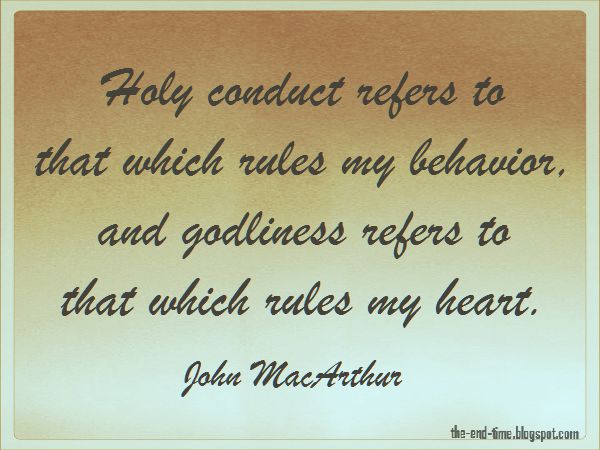
holiness and godliness
How to Contend for the Faith, it can be confusing part 1

How to Contend for the Faith: Putting it all together part 3  

Posted in discernment, Uncategorized

How to contend for the faith, it can be confusing, Part 1

How to Contend for the Faith Part 2: Why do Christians Disagree?

How to Contend for the Faith Part 3- Putting it all together

Introduction

The practicalities of how to contend for the faith is a big subject. We’re told to contend, of course, many times and in many ways. For example, Jude wanted to write a nice, little encouraging letter, but found that because of false brothers teaching false doctrine, he had to do his duty first.

Beloved, although I made every effort to write you about the salvation we share, I felt it necessary to write and urge you to contend earnestly for the faith entrusted once for all to the saints. (Jude 1:2)

Paul was sure that in his absence the Philippians will be “contending side by side for the faith of the gospel,” (Philippians 1:27).

Paul urged Timothy to “fight the good fight“. (1 Timothy 6:12).

Stand firm, do not turn, speak truth, and so on.

It’s important to consider, especially in this day and age of social media platforms with widespread audiences watching us, reading our words, and listening to our debates. Even in Solomon’s Portico or at the Areopagus or on the hillside at the Sermon on the Mount, with tens of thousands in attendance, today’s audiences who either lurk or engage with us online are an order of magnitude larger than those audiences.

But how? How do we contend appropriately? Sometimes we’re called to be gentle, other times to be direct. Righteous anger is allowed, but not unrighteous anger, and don’t let the sun set on any anger. Paul used holy sarcasm, but are we allowed to? Maybe? Maybe not.

I’ll do my best to answer the above but first, there is one part of online life in civil discourse I’d like to address as I fold it into the larger issue of appropriate theological discourse. I call these the “Drive By Debaters”.

Drive-By Commenters

It’s when someone takes the time to read the post. They take the time to comment on the post. But when they reply they state their position and end it by saying “I don’t want to debate.”

This kind of comment is opposed to true theological discourse, and even undermines it. It shuts down the point of any biblical discussion, which is to work together to arrive at a common understanding, mutual edification, and brotherly love with Christ as a center point. That kind of comment says ‘I’m right, you’re wrong, and I don’t care if you accept it or not, I just wanted to use your platform to say so. Buh-bye.’

The purpose of discussing biblical principles, interpretations, or concepts in person or online is to arrive at a common understanding. It’s to teach and be taught. The drive-by debate-denier displays they have an unteachable spirit.

Likewise, you who are younger, be subject to the elders. Clothe yourselves, all of you, with humility toward one another, for “God opposes the proud but gives grace to the humble.” (1 Peter 5:5).

What I do if someone says “I don’t want to debate” on one of my platforms (Facebook, Twitter, blog, or email) is to engage once more by gently asking a question about what they’d said. Sometimes they’ll come back and we can begin discussion. If they don’t, I delete their original comment. I figure, if they don’t want to discuss, then we won’t discuss. At all.

I won’t allow my platforms to be used by drive by commenters, because from the outset they display that they are not interested in the rules of honest civil engagement. We should all seek wisdom, then understanding. This should be true from the top-most sage teacher to the newest babe.

Wisdom is to be highly prized. Proverbs 4:7-9 says,

The beginning of wisdom is this: Get wisdom,
    and whatever you get, get insight.
8 Prize her highly, and she will exalt you;
    she will honor you if you embrace her.
9 She will place on your head a graceful garland;
    she will bestow on you a beautiful crown.”

How Should We Contend?

As for my main point, how to contend. I contend a lot. I share with friendly people and unfriendly people. Some of the most unfriendly people I deal with are those who claim they are Christians but are not. When addressing their sin, they explode in myriad ways. When pointing out their favorite teacher is false, they go off like a rocket. If you really want to poke a bear, either discuss their sin with a false professing Christian, or identify their favorite teacher as false. Both discussions go to the same root: sin. Satan is protective of his peoples’ sin and it does not like to be exposed to the light of day. (John 3:19). That’s why the person explodes on you.

Some Bible verses call for gentleness on the part of the deliverer of the message, other Bible verses call for firmness, harshness even. In today’s ‘tolerant’ and ‘don’t judge’ atmosphere, when discussing biblical things, if the other person blows up it’s often seen as a failure of communication on our part. But in many cases it’s not, and don’t be afraid of it if it happens to you. I’ll share this verse again and again in the other upcoming parts:

The descendants also are impudent and stubborn: I send you to them, and you shall say to them, ‘Thus says the Lord GOD.’ 5And whether they hear or refuse to hear (for they are a rebellious house) they will know that a prophet has been among them. 6And you, son of man, be not afraid of them, nor be afraid of their words, though briers and thorns are with you and you sit on scorpions.b Be not afraid of their words, nor be dismayed at their looks, for they are a rebellious house. 7And you shall speak my words to them, whether they hear or refuse to hear, for they are a rebellious house.(Ezekiel 2:4-7).

Not that we are Prophets like Ezekiel was, but in New Testament times we are God’s witnesses, His ambassadors, people with a sent message. We are one of the ways Jesus uses to either draw people to Himself through the Gospel message, or we are one of the ways He will condemn them on the last day, if they refuse the message. In our case we say ‘Thus says the LORD’ via His written word.

In addition to sharing the Gospel, we are called to warn, encourage, rebuke, teach and exhort and so on. We are constantly called upon to employ a humble attitude and to contend in myriad ways. Though our proclamations sometimes will not be received well either, we still speak them. The LORD assured Ezekiel and He gives us the same assurance in Luke 12:4 and Revelation 2:10.

In the next part I’ll sift through the various verses that discuss our speaking up in warnings and rebukes and exhortations, and being a witness through appropriate theological discourse in difficult times. There’s a lot to it, but mainly it boils down to two ingredients; speaking the truth, in love. I’ll share my perspective on this tomorrow.

Posted in discernment, Uncategorized

How does the Holy Spirit lead us?

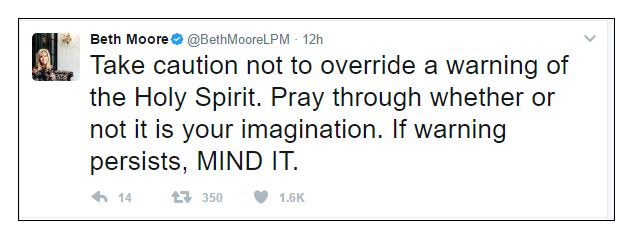
On Facebook last night I’d posted a mini-discernment lesson regarding a tweet Beth Moore had written advocating a process for distilling whether a prompt from the Holy Spirit is legitimate or if it’s your own imagination. I wrote the following in response to her tweet:

moore tweet

Beth Moore is an alleged ‘Bible teacher’. She has 753,000 followers on Twitter alone. The following comment is something she taught a few hours ago on Twitter. Nothing in the Bible says what she taught and teaches. What solid and credible Bible teachers do is teach their pupils to go externally and seek the source of all truth, the Word of God. Moore teachers women to go internally and rely on mystical warnings, feelings, and prompts. What Moore is actually teaching is the insufficiency of scripture and the sufficiency of ourselves in obeying personal feelings.

If Moore was a true Bible teacher she should have written that we seek wisdom from the Bible and follow its commands. We do not rely on the timing of mystical feelings in order to make decisions. We don’t even have to wonder if it is our imagination if we read it in the Word of God. Here is what she should have written-

“Take caution not to override a command of the Lord in His word. Pray persistently in seeking the strength from the Lord you need to obey what is written. Mind the Lord and His statutes.”

I thought that it would be obvious that Moore is teaching something extra-biblical. Obvious.

I was wrong.

I received several comments, one of which asserted that I’d misunderstood the tweet. While it’s always possible I misinterpret an author’s intent within the confines of a 140 character tweet, in this case I’ve studied Moore’s work widely enough to know that I had not done that in this case. I also thought the tweet was plain enough in its assertion.

Another commenter tried to to convince me that there was room for direct revelation. She knows there’s room, she said, because though 99% of the time scripture is enough, sometimes God speaks “very clearly” to her and she knows it’s Him because what He says comes true according to her wishes and wants at the time.

If scripture isn’t sufficient 100% of the time, it is not sufficient at all. God is not speaking clearly or audibly to anyone in any form, not in…

whispers
prompts
leadings
warnings
impressions on our heart
‘told me’
spoke audibly

…because the Bible says that God has spoken though His Son, who IS the Word. (Hebrews 1:2)

Peter said personal experience is never a proper validation of God’s authority, because the word is more sure. (2 Peter 1:19). I notice in these kind of discussions that people assert that it must be God is telling them stuff because what they wanted is coming true. However I notice it never seems to be the case that ‘the Lord told us very clearly one of us will die from cancer’, or ‘the Lord told us very clearly that we will never have children,’ or ‘the Lord told us very clearly that I should stop sinning via pornography.’ No, the direct leading of the Spirit people claim they receive are never that kind, the type that brings bad news against their wish list or commands the person to slay their besetting sin.

Worse, women who claim “He told me very clearly that…” means the woman is claiming prophet status – which elevates her to a position she does not have. Moreover, it discourages other women who have not had the privilege of “hearing directly from God”. They begin to doubt their situations when they aren’t given such personal, clear commands.

One commenter did ask a good question, which formed the basis for this post. She asked, “Where does the Holy Spirit come into it?” Her question is a good one, but a sad one. An entire generation of women have been taught by the Beth Moores etc. that we should expect to be directly (or audibly) led by God, that they do not know what to be led by the Spirit actually means. So here is a post on what it means to be led by the Spirit.

We know the Spirit does lead us. One verse in particular comes to mind, Romans 8:14, where it says so.

For those who are led by the Spirit of God are the children of God.

Now, the Holy Spirit does guide us and convict us and teach us and help us but not in a way we know at the time. You might look afterwards and say, gee, that sure was from the Lord. But at the time, we cannot, must not, rely on feelings, prompts, whispers, inclinations, or imaginations, and attribute them to God. That is dangerous because the flesh is at war with the Spirit. One can never really know if it’s the flesh or not. We are commanded not to obey the flesh, but to slay it. (Mt 16:24). Just because Beth Moore teaches that if the feeling hangs around long enough it must be God is ridiculous on the face of it. The flesh is persistent. Very persistent.

It’s also mysticism and divination to follow promptings and claim they were from God. How can we interpret? We can’t, we’re sinful. So while the Spirit leads, His main ministry is to point to Jesus, who is the Word. John 16:14. That’s why a good teacher also points to the Word, which is more sure.

Here is John MacArthur on the Romans verse 8:14, with a very simple explanation of the Spirit’s leading:

How does He lead us? Two ways. Externally, by the Scripture – externally, by the Scripture, Psalm 119:18: “Open my eyes that I may behold wonderful things from Your law.” Show me the truth of Scripture. Externally by Scripture, internally by sanctification. Those two ways. Externally, Scripture; internally, sanctification.

Therefore, there’s no need for a teacher such as Moore to teach an extra-biblical process for figuring out if the prompting is imagination or not.

Sinclair Ferguson at Ligonier Ministries has a good take on leading by the Spirit, which concurs with MacArthur’s in terms of the main leading of the Spirit being illumination of the scriptures. Remember, the point of the Spirit’s ministry is to point to Christ – who is the Word. (John 16:14, 1 John 4:2).

Spirit of Light, by Sinclair Ferguson
Why, then, are Christians today—in contrast to their fathers—so thirsty to experience immediate revelation from God, when His desire for us is the ongoing work of the Spirit opening up our understanding through the mediated revelation of the New Testament? There seem to be three reasons:

1. It is more exciting to have direct revelation rather than Bible revelation. It seems more “spiritual,” more “divine.”

2. For many people, it feels much more authoritative to be able to say, “God has revealed this to me” than to say, “The Bible tells me so.”

3. Direct revelation relieves us of the need for painstaking Bible study and careful consideration of Christian doctrine in order to know the will of God. In comparison to immediate revelation, Bible study seems—to be frank—boring.

Lest we be brow-beaten and develop a kind of siege mentality as Reformed Christians, here are some things we should bear in mind about the work of illumination:

This is the divine method that produces authentic Christian growth, because it involves the renewal (not the abeyance) of the mind (Rom. 12:2) and it is progressive (it takes time and demands the obedience of our wills). Sometimes God does things quickly. But His ordinary way is to work slowly and surely to make us progressively more like our Lord Jesus.

The result of the Spirit working with the Word of God to illumine and transform our thinking is the development of a godly instinct that operates in sometimes surprising ways. The revelation of Scripture becomes, in a well-taught, Spirit-illumined believer, so much a part of his or her mindset that the will of God frequently seems to become instinctively and even immediately clear—just as whether a piece of music is well or badly played is immediately obvious to a well-disciplined musician. It is this kind of spiritual exercise that creates discernment (see Heb. 5:11–14).

In other words, the Spirit leads us by slowly conforming us to Christ-likeness through the application and illumination of the word in us. Our affections change. As MacArthur above said, by the word externally and by inner sanctification as the word works through us.

Now, is there such thing as impressions or promptings? Ferguson below then Phil Johnson below that, explain…yes…and no.

Ferguson from the Ligonier article above:

Well-meaning Christians sometimes mistake the Spirit’s work of illumination for revelation, which, unhappily, can lead to serious theological confusion and potentially unhappy practical consequences. But the doctrine of illumination also helps us explain some of the more mysterious elements in our experience without having to resort to the claim that we have the gift of revelation and prophecy.

Here the late John Murray spoke with great wisdom: “As we are the subjects of this illumination and are responsive to it, and as the Holy Spirit is operative in us to the doing of God’s will, we shall have feelings, impressions, convictions, urges, inhibitions, impulses, burdens, resolutions. Illumination and direction by the Spirit through the Word of God will focus themselves in our consciousness in these ways. (Collected Writings, I, p. 188).

Again, it’s through the Word.

Phil Johnson, Shepherds Conference 2002, “Super Seminar: Private Revelations”

Now, does the Spirit of God ever move our hearts and impress us with specific duties or callings? Certainly. But, even in doing that, He works through the Word of God. Experiences like this, impressions and all, are not in any sense prophetic or authoritative except as they echo what the Word already says. They are not revelation. Those sensations, those impressions, those feelings you get are not revelation, but they are the effect of illumination. When the Holy Spirit applies the Word to our hearts, and opens our spiritual eyes to His truth. And, we need to guard carefully against allowing our experiences and our own subjective thoughts and imaginations to eclipse the authority and the certainty of the more sure Word of God. This is a very practical application of the principle of Sola Scriptura.

Think about this…to what ever degree you seek private messages from God outside His Word, you have abandoned the principle of Sola Scriptura.

It is simpler and more direct to say something like “My husband and I decided to adopt 3 children” rather than “The Spirit led us to the adoption agency.” It’s more honest to say, “We decided to purchase the organ for the church because we adhere to the biblical principle of cheerfully giving” than to say “We felt led by the Spirit to drive down Main Street where we saw the organ store and God clearly told us to buy it.”

The Spirit leads us into sanctification, where we gradually and inexorably conform to Jesus’ likeness, not by having Him specifically give us explicit directions for certain actions at any given time. But what a joy to know He does lead us!

Posted in discernment

What was the worst danger to Paul? (Hint: It wasn’t robbers, shipwreck or stoning)

Look at the list of devastating experiences Paul said he had endured for the Gospel:

Five times I received at the hands of the Jews the forty lashes less one. Three times I was beaten with rods. Once I was stoned. Three times I was shipwrecked; a night and a day I was adrift at sea;on frequent journeys, in danger from rivers, danger from robbers, danger from my own people, danger from Gentiles, danger in the city, danger in the wilderness, danger at sea, danger from false brothers (2 Corinthians 11:24-27a)

I’ve lived on a sailboat and traveled 12,000 miles on it. It was the scariest thought that over any of those nautical miles, one slip of the foot or one swipe of the boom or one misjudgment and a coral reef would rip the bottom of your boat open like a jagged can opener, and you could be in the shark infested waters in a split second. That never did happen to us, but it did to Paul. There he was in stormy waves, legs dangling enticingly below the surface of the water, freezing salt-soaked hands clinging to scraps of wood for a day and a night. /Shudder/

I’ve never been robbed and beaten but I know those are terrible things. People who have been robbed or assaulted recall that there remains in them a feeling of violation and threat for many months or years afterward.

And stoning? Being pelted with rocks by an angry mob, any one rock would crush your head? Awful.

Paul’s sufferings as an Apostle for the name of the Lord are well documented. Through all he rejoiced. That’s one lesson. God’s grace was sufficient for him. That’s another lesson.

But did you notice one of the hardships Paul chose to include? This is today’s lesson.

“danger from false brothers”.

Can it be true that Paul equates shipwreck, robbery, beating, city danger, (which included riot, theft, and beatings,) and wilderness danger (which included robbery, bears, venomous snakes, torrential rain, and blizzards), hefty dangers to be sure, with the danger of false brethren??

Yes. Is there any worse danger than a danger to the soul?

False brethren are divisive, sly, and greedy. (Romans 16:17, Matthew 7:15, 2 Peter 2:1-3). They upset whole families, corrupt, poison, and are leaven that spoils the whole lump. (Titus 1:11, 2 Timothy 2:17, (Galatians 5:9). They are hypocrites, liars, and have seared consciences. (1 Timothy 4:2).

Far from the tolerant or even dismissive attitudes many people have today about the danger of false teachers, false doctrine, and false brothers, they present just as much if not more of a major danger as the other hazards Paul lists. They creep in unnoticed (Jude 1:4). That’s one reason why it’s important even as a layman, to hone your discernment skills, and if you’ve been given discernment as a gift, to be extra vigilant so as to ensure that on one “creeps in unnoticed.”

John MacArthur writes of the false brethren noted in the verse, from his commentary,

But the most insidious danger of all was the false brethren, who posed as believers and then tried to destroy Paul’s ministry. The false apostles at Corinth were prime examples of such treacherous pseudo-brethren, as were the Judaizers (Gal. 2:4). Because of the danger posed by false believers, Paul warned  the elders of the Ephesian church, “From among your own selves men will be speaking perverse things to draw away the disciples after them” (Acts 20:30).

Barnes wrote in his notes, that the danger from false brethren was “the crowning danger and trial to Paul, as it is to all others.”

We should think well of our church family and not look at each person suspiciously or askance. However, false believers DO exist. Remember that Paul considered false believers one of his greatest trials and dangers. False believers pose a serious threat, and we should take Paul’s admonition seriously.

————————–

Further reading

Ligonier:  “If true faith is the instrument by which the righteousness of Christ is imputed to us, how do we know that we have true faith? How do we know that we are not only professing faith but also possessing it?” Read Faith and Fruit

Posted in discernment, Uncategorized

Is the god of The Shack the God of heaven?

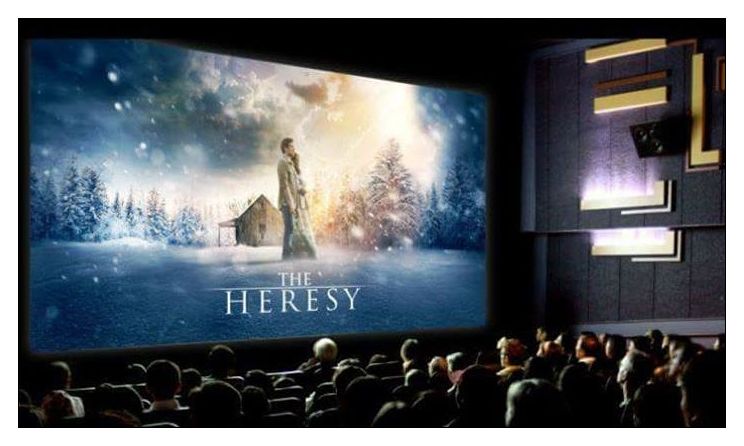
Almost ten years ago author William P. Young published what became a phenomenal success in the  publishing world, a book called The Shack. It has recently been made into a movie, which was released this past weekend.

I’ve written about The Shack’s theological issues and heresies before, and many other people have written against it as well. As a matter of fact, I was so upset about The Shack’s heresies and inroads in deluding my friends, that I write about it on my personal blog in 2008. It as that essay that started me thinking about creating a second blog to deal solely with theological issues, and a few months later I began my blog The End Time, which you are reading now.

I mulled over whether to post about The Shack, and had decided against it. There is already so much circulating about the movie that any Christian can easily find what they desire about the film, both supportive AND negative, more’s the pity.

But my friend Pastor James Bell of Gallatin TN wrote an essay and emailed it out, and I truly enjoyed his perspective. Pastor Bell isn’t a towering name in the evangelical world like Paul Washer. He’s not a preacher leading a famous church like John MacArthur. Nor is he President of a seminary like Dr Albert Mohler. He’s not someone of whom you have likely to have heard. He is a regular pastor who lovingly and consistently labors over his sheep in his section of the world, contending, encouraging, and sharing his wisdom and perspective via his pulpit and Facebook. He has been pastor at his church for 42 years, a feat I greatly admire the Holy Spirit for sustaining.

I’m going to re-post his piece because it’s wise and discerning and I wanted to give it an audience that might not otherwise be exposed to it. His piece is thorough because it’s a white paper, so it’s long. That’s OK. Just settle in and read it when you have time and no distractions.

So, Pastor Bell’s piece is below and then below that I post a link to my own essay about The Shack which also contains further links explaining why The Shack, book or movie, is not good food for the Christian, no matter how fervently a friend might gush that ‘it’s just so encouraging.’ The Shack is not encouraging. Really. It’s not. Please don’t convince yourself that The Shack is OK to read or watch because ‘it’s just fiction’. It’s not. Really it’s not.

——Pastor James Bell, Southside Baptist Church, Gallatin TN——

The Shack!  In January, 2008, I went to Amazon.com, and was immediately amazed at all the praise of the book from pastors, theologians, and teachers along with other folk.

From the many reviews, I was promised that this was a most exciting book, that I would not be able to put it down, that it would be life-changing, that it would be a great resource to help folk win over bitterness and anger, that it was a great story of forgiveness, that most of all it was a great story about the love of God— especially about actually experiencing the love of God and experiencing close fellowship with God.

Moreover, I was promised that I would learn much about the true nature of God. So, I immediately ordered, received, and read the entire ‘SHACK’ book.

Here is some of what I found.

William P. Young, who calls himself, Willie, writes an apparently fictitious story about a man named Mack who (as a child) was beaten with a belt and with Bible verses by a drunken father. He later graduates from Seminary, marries and has a family. He, Mack, is described as not very religious and occasionally showed up at the local ‘pew and pulpit Bible church’… But Mack is an angry man. He is angry at God and especially after one of his children is abducted and murdered. However, it is evident that Mack’s concepts of God, the Bible and the Church of Jesus Christ are very flawed.

It is indeed a real life tragedy that masses folk— the religious, the not so religious and even many genuine Christians— have serious false concepts about God, the Bible and the Church of Jesus Christ.  To solve this problem, Young’s book weaves an imaginary story to show how Mack was introduced to a very different god from the one he grew up hearing about.

However, now we are confronted with a new problem: The god Young creates for Mack is very different from true and living God revealed in Holy Scripture, who is quickened to believing hearts by the wonderful COMFORTER, the Holy Spirit.

Thus, The Shack is a very tragic book. As I read the book,

I went from being badly bored to being really sad.

Religious Fiction is a poor substitute for Biblical truth and also a poor substitute for truth teaching soundly grounded in and faithful to the pure revealed Word of God.

The Holy Spirit is the Spirit of Truth, He leads us into all truth; and it is the truth that sets us free.

The Shack is tragic because it is the story of a troubled man who clearly has a false concept of God, who is given yet another set of false concepts of God from the imagination of William Young.

Mack started with an idol and ends with a different idol. O, but many will protest—the story ends with Mack being forgiven and forgiving, set free and happy!

Yes, you can make fiction fit your desired conclusion.  And, indeed, in real life there are multitudes who FIND a false peace and a false freedom by means of various false gods and religions.

Bottom line: Here are a few of the troubling quotes from THE SHACK.

I will reference the page numbers:

1. Page 16, We learn that Mack literally receives a type written note from ‘Papa’ [God]… telling Mack, “Mackenzie, It’s been a while. I’ve missed you. I’ll be at the shack (the place where Mack’s daughter was killed) next weekend if you want to get together. – Papa

COMMENT: Nowhere in 248 pages does Mack ever receive any specific instruction or revelation from God through the written Word of God! Instead he receives this above note; plus massive amounts of imaginary communication, via visions, dreams or whatever.

Of course, the defenders will claim that the book is ‘based upon’ much Scripture! Yes, there are a few concepts here and there that ‘square with’ Scripture… But no one ever bothered to tell Mack!  For after all, Mack was enjoying a far superior way of God’s communication– God speaking in one’s mind and in visions and dreams.  This is nothing but deadly… a path where every man will lean upon his own understanding.

Page 65- Mack, “In seminary he had been taught that God had completely stopped having any overt [open, not hid] communication with moderns, preferring to have them only listen to and follow sacred Scripture, properly interpreted, of course. God’s voice had been reduced to paper and even that paper had to be moderated and deciphered by proper authorities and intellects.”

COMMENT: William Young (henceforth- WY) sets forth a bad situation and then offers his solution. I’m sure that there are religionists who are as he describes above. But that is not the Biblical model. Moreover, WY never offers the Biblical model as a solution, but rather he sets forth his own imagined solutions. This is true over and over in the book.

But also, if you take at face value the above statements— WY is SLAMMING the true nature and place of God’s Word. Indeed, he obviously does not hold to the absolute authority of God’s Word… for he does not set forth the revelation of God’s Word as solution for the problems Mack faces.

Mack is presented as needing to REALLY KNOW GOD and how to enter into a LIVING RELATIONSHIP with God, of how to understand the human problem of suffering, of how to deal with bitterness and anger, of how to have hope and joy.

The Holy Bible is FULL of amazing and manifold revelation of God! Manifold attributes of God are unfolded and HUNDREDS of names of God the Father, the Son and the Holy Spirit are given.

And the Holy Spirit, who BREATHED OUT the Sacred Scriptures, is now the believer’s DIVINE COMFORTER AND TEACHER… And IN CHRIST, our hearts are now HIS HOME… By the Holy Spirit, Almighty God makes His home in the believer’s heart. Indeed, the true Christian life is not religion but a living RELATIONSHIP.

The Bible is full of divine revelation as to suffering, as to depression and anger, bitterness, forgiveness, etc… and THE HOLY SPIRIT is ever present to personalize and apply the truth to hungry hearts.

But WY never tells Mack any of this. He never tells him that every real Christian is a believer-priest with the Holy Spirit, the MASTER TEACHER indwelling! WY never points Mack to any of the DIVINELY REVEALED NAMES OF GOD… and there are over 200 of them!

INSTEAD, WY pushes aside the pure and wonderful God-breathed Word of God in favor of his imagination. And thus, WY introduces Mack and all the rest of us to WY’s triune God!

1. God the Father is ‘Papa’… and he is a SHE— (page 82)-  Mack arrived at the shack, knocked on the door, “the door flew open, and he was looking directly into the face of a large beaming African-American woman.”… and her name (page 86) is… “You may call me Elousia.”  How interesting.  God in His God breathed book has given divine revelation of His name… In fact, He has revealed Himself by many names. ELOUSIA is not one of them! Yes, the word ‘ELOUSIA’ has historical connections with false gods and has a root meaning of ‘tenderness’…

Is there ‘tenderness’ with the LORD, GOD ALMIGHTY? Yes! But consider: Let’s say, that your name is ‘John Henry Jones’… but I refuse to call you by your name… I give you a name that I want to use! EVEN ON A HUMAN LEVEL, THAT WOULD BE ARROGANCE and disrespectful.

But in The Shack, the author is supposed to be revealing the true God. We are dealing with ALMIGHTY GOD, WHO has revealed himself in creation, in redemption and with a multitude of divinely sanctioned attributes and names.

And all of God’s names and attributes, given in sacred Scripture, REVEAL who God is and what He is like. WY rejects a ton of Biblical revelation and creates his Shack god that has the features and characteristics that WY wants and not more. Such is the way with all man-made idols.

2. God the Son, Jesus is called Jesus in the book; and the Holy Spirit is shown as an Asian woman (page 87) whose name is Sarayu. Once again, there are many glorious descriptions and names given the blessed Holy Spirit in the pure Word of God. Sarayu is not one of them. Again, much like Elousia, Sarayu has a background in manmade religion… and also means, ‘air or wind.’

BUT HERE IS WHAT WE HAVE:

WY says he wants to show us what God is like; and yet he REJECTS, ignores, counts as unworthy of consideration the God-breathed revelation of Scripture and substitutes with his own creations! This is astonishing. And the masses love him for it!

3. All throughout The Shack, WY sets forth a very humanized god– all in the name that we need a God that understands us, that loves us, that wants a relationship with us.

And WY’s ‘Papa’ god is not only a woman, but she is VISIBLE to Mack and she has the SAME WOUNDS on her body as Jesus… (Page 95)…”…and for the first time Mack noticed the scars in her wrists, like those he [Mack] now assumed Jesus also had on his. She allowed him to tenderly touch the scars, outlines of a deep piercing… tears were slowly making a way down her face…

COMMENT: There is a ‘theological’ name for this false teaching: From Wikipedia, the free encyclopedia. Patripassionism is a Christian heresy from the time of the early church. Its adherents believe that God the Father [Patri] was incarnate and suffered on the cross. This is problematic in the context of the doctrine of the Trinity because the Christian Scriptures record Jesus Christ as speaking to God the Father while he was on the cross.

Let me be plain: On the authority of God’s holy Word, there is not the slightest bit of truth in what WY is saying.

If one is writing a book about a mere human; and they take ‘literary liberties with a few of the facts and details… OK… it helped make a good story or a good movie… it was ‘based on fact’…. But not a true history lesson.

HOWEVER, in dealing with Almighty God— to deny and ignore His revelation and to create a god one likes and to set him forth as VISIBLE when He is not— SUCH is not literary liberty. It’s just not the truth.

4. And then… on page 96… When Jesus cried out, “My God, My God, why hast thou forsaken me?”….. WY’s god says, “Regardless of what he [Jesus] felt at that moment, I never left him.”

Wow! Now… who shall I believe— WY?  or Jesus?

I’ll stick with JESUS!

5. Page 119-120… Mack asks the Shack god woman—“Weren’t you always running about killing people in the Bible? You just don’t seem to fit the bill…. But if you are God, aren’t you the one spilling out great bowls of wrath and throwing people into a burning lake of fire?”

WY’s created god of his imagination says, “I am not who you think I am, Mackenzie. I don’t need to punish people for sin. Sin is its own punishment, devouring you from the inside. It’s not my purpose to punish it; it’s my joy to cure it.”

BE IT FROM Mack’s misconceptions about God’s righteous judgments… set forth in a way to slander the righteous character of the True God or in WY’s blatant denial of the holy wrath of God— IN BOTH CASES, horrifying man pleasing deceptions are set forth!

In a strange twist, WY has his papa/mama god saying, “Lies are one of the easiest places for survivors to run. It gives you a sense of safety, a place where you only have to depend on yourself. But it’s a dark place, isn’t it?” (page 187)

Such are the deceptions of the Shack book— The masses run to them. Man has always loved his own creations! Man loves a humanized god. He seeks to hide from the true God revealed in the Word of God and revealed in creation and revealed in the VISIBLE image of the invisible God, Jesus; and made real to human hearts by the indwelling Holy Spirit.  But in the end, such hiding only brings darkness!

6. Page 198-  “Mackenzie, religion is about having the right answers,…but I am about the process that takes you to the living answer and once you get to him, he will change you from the inside… You may see me in a piece of art, or music, or silence, or through people, or in Creation, or in your joy and sorrow… And you will hear me in the Bible in fresh ways. Just don’t look for rules and principles; look for relationship—a way of coming to be with us.”

As is often the case, the false and the true are mixed. Such is the case here.  By the way the reality is that you can be almost anyone from any background and love the Shack. Why? It has no clear revelation or solutions. Each man is left to his own subjective interpretations.

A false dichotomy: The informal fallacy of false dilemma involves a situation in which two alternative statements are held to be the only possible options, when in reality there exists one or more other options which have not been considered. The concept is also known as false choice, false dichotomy, falsified dilemma. WY once again sets up a false dichotomy: 1. On the one hand we have all of Mack’s false concepts about God, about the Bible and about church… 2. Then WY will produce his solution in some form of his subjective, humanized sweet all love god.

WHEN ALL THE WHILE,

1. Yes, Mack has some real problems… many folk do; and there are real, even major problems in the churches… In fact— A lot of what claims to be God’s church, according to the Word of God, is not! She is harlot. She is not bride. She is broad road to destruction…. With a multitude of options, ideas, and experiences.

2. But the REAL solution is not found in subjective imagination or humanistic creation. You see, the problem is not that the Bible and/or Biblical Christianity has been tried and found lacking. The sad reality for most… and certainly for Mack… BIBLICAL CHRISTIANITY and the true triune God had never been experienced.

From page 202, it is clear that Mack only had a ‘works’ concept of how to relate to God. He was a stranger to grace through faith in Jesus Christ.

WY IN 248 PAGES NEVER CLEARLY SETS FORTH THE BIBLICAL TRIUNE GOD NOR THE PROFOUND GOSPEL OF GOD’S AMAZING GRACE.

REALITY: God SPEAKS in and through the Bible, quickened to us by the Holy Spirit… and HE DOES NOT STUTTER!  God’s Word is not opinion; nor is it for us to simply read and give our opinion.  The Bible is the infallible written Word of God, quickened to us by the Holy Spirit.

In and through the Word of God, God speaks and THUS there are Sins to confess; Promises to claim; Attitudes to change; Commands to keep; Examples to follow; Prayers to pray; Errors to avoid and Truth to believe!

BUT FIRST OF ALL AND MOST OF ALL—The Word of God has been given to us that we might KNOW the God of the Word. Above all else the Bible is God-breathed revelation of GOD HIMSELF.

Closely tied into this, of course, is the God-breathed revelation of God having created man for fellowship with God, the revelation of man’s fall into sin and the glorious story of REDEMPTION… of fellowship and RELATIONSHIP restored through Jesus Christ the LAMB of God!

There are several good books dealing with the Divine Attributes of God, with lots of Scripture:
1. J. I. Packer– Knowing God.
2. A. W. Tozer– The Knowledge of the Holy.
3. A. W. Pink– The Attributes of God

———-end James Bell   /   http://www.southsidegallatin.org———
The End Time: The Shack: A discernment lesson. More links here

The Quiet Life: The Shack is a devilish deception. More links here

Posted in discernment, Uncategorized

Angels: Majestic messengers of God

Valentine’s Day has just passed, two weeks ago. All those chubby little Cupid cherubs flying around with stubby wings, shyly lobbing arrows to create ever more happy, lovestruck couples. Sigh. Cupid comes from Greek and Roman mythology.

The Renaissance Italians did a good job of presenting constant erroneous depictions of angels. Although initially slender, Cupid, the god of love, was increasingly shown as a chubby boy with wings. Wikipedia explains,

In classical mythology, Cupid (Latin Cupido, meaning “desire”) is the god of desire, erotic love, attraction and affection. He is often portrayed as the son of the love goddess Venus and the war god Mars. He is also known in Latin as Amor (“Love”). His Greek counterpart is Eros.

Beginning in the early 1400s, Donatello began the Renaissance revival of the Middle Ages’ depictions of the putto, Italian derivation of the word toddler or child. Soon, the myth of Cupid blended with the putti in art and you had infant angels flying all over the place in paintings, sculpture, and architecture. They became ubiquitous, so much so, that the biblical description of the majestic Cherubim were diminished in peoples’ minds down to the infantile antics by harmless flying cherubic toddlers. This is a peeve of mine.

The picture shows an architectural detail of the Old Sacristy
in the church of San Lorenzo in Florence, by Donatello, 1428-43.
The Rustic Banquet, detail of putti making music,
from the Sala di Amore e Psiche (1528)

The putti and the cherubs are as far from the truth of angelic activity and majesty as the east is from the west. So what roles do angels perform for God?First, the Bible tells us that there is a hierarchy of angels. There are thrones, and powers, and dominions.

The collection of holy (and sometimes unholy) angels is called the heavenly host, the word host in this context indicating an army. God is called the Lord of Hosts. (GotQuestions, See 1 Samuel 1:3; Psalm 24:10; Isaiah 22:14; Jeremiah 2:19; Amos 4:13; Haggai 2:9; Zechariah 8:6; and Malachi 2:16.We are more used to thinking of angels as ministering spirits, (Hebrews 1:14, Matthew 18:10), flying here and there at God’s command, delivering messages and helping people. (Daniel 9:20-21, Luke 1:26-27, Luke 2:10).

We see angels helping Jesus after His Temptation. (Matthew 4:11). We know that sometimes we entertain them unawares. (Hebrews 13:2).Though angels are servants of God, ministering, helping, watching, (Daniel 4:17) and messaging, they are in fact powerful soldiers, enacting God’s judgments. In Revelation we see the angels as extremely active in carrying out God’s judgments. We read of one event early in the Bible of this power angels have to slay many at the same time, in 2 Chronicles 32:21, where an angel of the LORD was sent to kill 185,000 Assyrian soldiers at once. Angels gave the LAW! (Acts 7:53, Galatians 3:19).

Why then the law? It was added because of transgressions, until the offspring should come to whom the promise had been made, and it was put in place through angels by an intermediary. (Galatians 3:19).

Barnes’ Notes says of the Galatians and Acts verses of the Angels giving the Law,

And it was ordained by angels – That is, the Law was ordained by angels. The word ordained here διαταγεὶς diatageis usually means to arrange; to dispose in order; and is commonly used with reference to the marshalling of an army. In regard to the sentiment here that the Law was ordained by angels, see the note at Acts 7:53. The Old Testament makes no mention of the presence of angels at the giving of the Law, but it was a common opinion among the Jews that the Law was given by the instrumentality of angels, and arranged by them; and Paul speaks in accordance with this opinion; compare Hebrews 2:2.

In Revelation, powerful angels stand on the sun, they hold back all 4 winds, they deliver the Gospel to the entire world at once…and this. Just this:

Then I looked, and behold, a white cloud, and seated on the cloud one like a son of man, with a golden crown on his head, and a sharp sickle in his hand. 15And another angel came out of the temple, calling with a loud voice to him who sat on the cloud, “Put in your sickle, and reap, for the hour to reap has come, for the harvest of the earth is fully ripe.” 16So he who sat on the cloud swung his sickle across the earth, and the earth was reaped.

17Then another angel came out of the temple in heaven, and he too had a sharp sickle. 18And another angel came out from the altar, the angel who has authority over the fire, and he called with a loud voice to the one who had the sharp sickle, “Put in your sickle and gather the clusters from the vine of the earth, for its grapes are ripe.” 19So the angel swung his sickle across the earth and gathered the grape harvest of the earth and threw it into the great winepress of the wrath of God. 20And the winepress was trodden outside the city, and blood flowed from the winepress, as high as a horse’s bridle, for 1,600 stadia.

God’s Providence is the understanding that God is in control of all things, and He commands and decrees all outcomes. Angels are important agents of providence, enacting God’s will so that His decrees come to pass in His will and timing.We do not worship angels. (Colossians 2:18, Revelation 22:8-9), but we do respect God’s creation. We respect His orderly fashioning of all things, including the angelic hosts in their spheres. Angels are not winged infants full of childish antics. They are majestic beings as part of God’s order who enact important tasks in worship and obedience for the LORD of Hosts.

~~~~~~~~~~~~~~~~

Further Reading

There is much on the internet about angels, most of it foolish and non-credible. Here are some good study resources about angels. The study of angels is called angelology. Always remember, no matter how interesting angels are, and when you begin studying them you’ll see how often they appear in the Bible, they are servants of the Most High just as we are. They are not to be worshiped or idolized.

Every reference to angels is incidental to some other topic. They are not treated in themselves. God’s revelation never aims at informing us regarding the nature of angels. When they are mentioned, it is always in order to inform us further about God, what he does, and how he does it. Since details about angels are not significant for that purpose, they tend to be omitted. Source: Millard J. Erickson, Christian Theology, Baker Book House, Grand Rapids, 1983, p. 434

Essay by Phil Johnson, Angels- Messengers and Ministers of God 

Sermon: Angelic Messengers, Revelation 14:6-11

Sermon: Good Angels, Martyn Lloyd-Jones, part of the Great Biblical Doctrines series

Who are the only named angels in the Bible?

Posted in discernment

To serve man

I used to watch the old anthology series from the 1950s and 60s called The Twilight Zone. Rod Serling used to intone a message at the beginning, and then there was doo-doo-doo-doo music, and the black and white episode would begin.

My favorite episodes were “Time Enough At Last“, “The Shelter” and “To Serve Man

About To Serve Man, I am going to SPOIL it for you. The episode is 55 years old but still has cultural (and moral) repercussions. Don’t read this if you don’t want to hear about the ending.

Wikipedia says,

“To Serve Man” is episode 89 of the anthology series originally airing on March 2, 1962 on CBS. The story is based on the 1950 short story “To Serve Man”, written by Damon Knight. The title is a play on the verb serve, which has a dual meaning of “to assist” and “to provide as a meal”. The episode is one of the few instances in the series wherein an actor breaks the fourth wall and addresses the viewing audience at the episode’s end.

Here is Wikipedia’s full synopsis of the episode:

The Kanamits, a race of 9-foot-tall aliens, land on Earth. One of them addresses the United Nations via telepathy, announcing that his race’s motive in coming to Earth is to aid humanity by sharing their advanced technology. After answering questions, the Kanamit departs and leaves a book in the Kanamit language without comment, which leads Michael Chambers, a US government cryptographer, to be pressed into service.

Initially wary of an alien race who came “quite uninvited”, international leaders begin to be persuaded of the Kanamits’ benevolence when their advanced technology puts an end to hunger, energy shortages, and nuclear proliferation. Trust in the Kanamits seems to be justified when Patty, a member of the cryptography staff led by Chambers, decodes the title of the Kanamit book: To Serve Man. The Kanamits submit to interrogation and polygraph, at the request of the UN delegates. When declaring their benevolent intentions, the polygraph indicates that the Kanamit is speaking the truth.

Soon, humans are volunteering for trips to the Kanamits’ home planet, which they describe as a paradise. Kanamits now have embassies in every major city on Earth. With the Cold War ended, the code-breaking staff has no real work to do, but Patty is still trying to work out the meaning of the text of To Serve Man.

The day arrives for Chambers’s excursion to the Kanamits’ planet. Just as he mounts the spaceship’s boarding stairs, Patty runs toward him in great agitation. While being held back by a Kanamit guard, Patty cries: “Mr. Chambers, don’t get on that ship! The rest of the book To Serve Man, it’s… it’s a cookbook!” Chambers tries to run back down the stairs, but a Kanamit blocks him, the stairs retract, and the ship lifts off.

Michael Chambers’s ship quarters are a cot in a spartan interior. A voice offers him a choice of dish at all the regular meal times. Each time he refuses food with increasing irritation. At last he says to the audience: “How about you? You still on Earth, or on the ship with me? Really doesn’t make very much difference, because sooner or later, all of us will be on the menu… all of us.” The episode closes as he gives in and breaks his hunger strike.

The episode was rated the best twist ending ever. It certainly has stuck in my memory.

The title To Serve Man is a play on the verb serve, which has a dual meaning of “to assist” and “to provide as a meal”.

We see what we want to see, based on our expectations, and previous experience. We usually connect the new to the known.

When satan comes along, he does not announce himself as a tiny man with horns in a red jumpsuit holding a pitchfork. He deceives. He deludes the unwary into thinking he is there to serve you. But satan actually is there to serve you.

Do not give dogs what is holy, and do not throw your pearls before pigs, lest they trample them underfoot and turn to attack you. (Matthew 7:6).

Be sober-minded; be watchful. Your adversary the devil prowls around like a roaring lion, seeking someone to devour. (1 Peter 5:8)

Beware of false prophets, who come to you in sheep’s clothing but inwardly are ravenous wolves. (Matthew 7:15).

Satan wants to serve you … up on a dinner plate.

But we are not unaware of satan’s schemes. (2 Corinthians 2:11)

For examples, false teachers begin softly, humbly. They seem kind and willing to serve the local or the global body. But false teachers are actually waiting for the moment to pounce. They patiently build up a loyal following, they insulate themselves, and they wait. They are wolves. Wolves are patient, the pack will track a caribou for days. See how wolves hunt:

A wolf pack may trail a herd of elk, caribou or other large prey for days before making its move. During this time, they are already hunting, assessing the herd, looking for an animal that displays any sign of weakness, and this is just the beginning. Wolves must also factor in other conditions that will affect the hunt; weather and terrain can tip the scales in favor of predator or prey. For example, a wide-open plain favors the ungulates, who, if full-grown and healthy, can outrun the fastest wolf. On the other hand, crusty snow or ice favors the wolves whose wide round paws have evolved to perform like snowshoes and carry them effortlessly over the surface. An experienced wolf is well aware that hoofed animals break through the crust and can become bogged down in deep snow.

Do not entertain false teachers. Do not coddle them, forgive them, allow them, make excuses for them…Titus 1:16 says,

They profess to know God, but they deny him by their works. They are detestable, disobedient, unfit for any good work.

Of that verse, John MacArthur preached:

The next time you see a false teacher, you might say, “You rebellious, empty-talking, deceitful, lying, evil beast, slow-bellied glutton.” And you would certainly be within the framework of Scripture. You might have to cope a little bit with 2 Timothy 2, verse 25, which says, “We are to rebuke them with gentleness.” So say it kindly.

Remember, false teachers and false Christians don’t want to serve you, even if their mouths profess it. They want to serve you … up to the wolves…lions…pigs. Satan’s book…it’s a cookbook.

Posted in discernment, Uncategorized

Greed is good?

We know from Revelation what the very last days will be like; the people respond uniformly to the Antichrist (except for the Christians) and allow him to coalesce the world’s broken economy into a one-world economy around his mark. (Revelation 13). All of chapter 18 in Revelation gives the Christian what s/he needs to know about the world economic system run by the Antichrist just prior to Christ’s return. It is one that still has a healthy trade in luxuries, despite the desperately impoverished condition in which most of the world’s population dwells, and despite the people knowing that it is God sending the judgments! (Revelation 16:9).

For all the politically liberal people’s talk of social justice, sharing equally, and helping the poor, we see the stark opposite when push comes to shove during the Tribulation. The poor cry for bread and the rich buy and sell fine flour and wheat, ignoring their cries even as they die in the street.

It’s partly why the Tribulation will occur, to allow sin to run its full course, revealing the depths of man’s depravity.

We as humans are greedy. Greed defines us. It’s a besetting sin that the sinful person lives with every day. The Christian must guard against and slay the remnants of greed still within us. How many Bible verses warn against greed!

Then he said to them, Watch out! Be on your guard against all kinds of greed; life does not consist in an abundance of possessions. (Luke 12:15 )

The love of money is a root of all kinds of evil, (1 Timothy 6:9-10)

Do not put your trust in wealth (1 Timothy 17-18)

Greed is listed among the sins which will prevent one from attaining heaven:

For of this you can be sure: No immoral, impure or greedy person – such a man is an idolater – has any inheritance in the kingdom of Christ and of God (Ephesians 5:5).

It’s interesting that the verse connects greed and idolatry. See here in the Tribulation, when money is in short supply and supplies are in short supply, at least for the common person, they still create idols out of gold and silver in order to worship!

The rest of mankind, who were not killed by these plagues, did not repent of the works of their hands nor give up worshiping demons and idols of gold and silver and bronze and stone and wood, which cannot see or hear or walk, (Revelation 9:20)

The movie Wall Street came out in 1987. The 80s were a heady time of pell-mell stock surges, whirling real estate flips, dizzying income heights…it seemed that nothing was impossible and money would last forever. In that atmosphere came the movie Wall Street, in which financier and stock raider Michael Douglas’s character Gordon Gecko famously gave his ‘greed is good’ speech. Here it is in part:

I am not a destroyer of companies. I am a liberator of them! The point is, ladies and gentleman, that greed, for lack of a better word, is good. Greed is right, greed works. Greed clarifies, cuts through, and captures the essence of the evolutionary spirit. Greed, in all of its forms; greed for life, for money, for love, knowledge has marked the upward surge of mankind. And greed, you mark my words, will not only save Teldar Paper, but that other malfunctioning corporation called the USA. Thank you very much.

It’s easy for us to look back on the 80s and point fingers at the excesses which were fueled by greed. But are the times so different now? We are still greedy, and at least the fictional character Gordon Gecko and the men he was based on were true to their sin. In today’s time we have an unhealthy attraction to the Prosperity Gospel, which is just anther ‘greed is good’ speech cloaked in Jesus’ name. Which is worse. Way worse. Yet if the remnants of greed are present in a Christian’s heart, the Prosperity Gospel will be attractive to him.

9Marks asks the question, Why Is the Prosperity Gospel Attractive?

Sadly, in spite of the Scriptures’ clear warnings, the prosperity gospel has a large and growing group of followers. This isn’t hard to understand, since the message appeals so directly to our native greed. Yet it is sad and bewildering that many people remain in the movement for a long time, even their whole life, since its preachers cannot fulfill their promises.

‘Our native greed’. Greed is not good, ladies and gentlemen. Greed is bad.

The author continues in his interesting essay to briefly present the psychology of the Prosperity Gospel, its effects, and at the end he offers ‘immunization instructions.’ In America we’re plagued with the likes of prosperity theologists Joyce Meyer, Joel Osteen, Kenneth Hagin, but other continents have their plagues too. Africa and Latin America also are rife with prosperity gospel preachers deluding the unwary.

The 9Marks article ends with this:

Above all, present Christ as the pearl of great price, who infinitely surpasses in value anything that this fleeting world may offer (Mt. 13:44-46; Phil. 3:7-8)

When you have Jesus, you already have everything. When you have Jesus, there’s no need for greed. Or a prosperity gospel, which is no gospel at all.