Posted in discernment, Uncategorized

Why is it so hard to pray?

We’re commanded in many places in scripture to pray. We have the duty of continual communion with Him. And yet, so often we don’t pray as we ought. Why is this?

ben-white-342165
Photo by Ben White on Unsplash

It seems so easy. Praying isn’t as hard as spreading asphalt in Nevada on a summer day. It isn’t battling a five-alarm fire in the canyons. It isn’t helping your mother with Alzheimer’s. All you do is sit in your air conditioned place, put your hands together, and speak to Jesus, our friend.


But is that all prayer is? No.

David McIntyre in his 1912 book, The Hidden Life of Prayer (free online) explains why praying is so hard sometimes. He tells why we do not do it as we ought. The Hidden Life of Prayer was one of the books that Tim Challies selected for his program “Reading Through the Classics.” Challies wrote,

McIntyre was a Scottish preacher who succeeded Andrew Bonar as minister in Finnieston and later served as principal of the Bible Training Institute in Glasgow from 1913 to 1938. His book was first published in 1913.

McIntyre is insightful when he writes this,

Our Lord takes it for granted that His people will pray. And indeed in Scripture generally the outward obligation of prayer is implied rather than asserted. Moved by a divinely-implanted instinct, our natures cry out for God, for the living God. And however this instinct may be crushed by sin, it awakes to power in the consciousness of redemption.

anna-king-298822
Photo by Anna King on Unsplash

McIntyre is powerful when he writes this,


And yet, instinctive as is our dependence upon God, no duty is more earnestly impressed upon us in Scripture than the duty of continual communion with Him. The main reason for this unceasing insistence is the arduousness of prayer. In its nature it is a laborious undertaking, and in our endeavor to maintain the spirit of prayer we are called to wrestle against principalities and powers of darkness.

We know that we do not wrestle with others, but with powers and principalities of the air. And who is the prince of the power of the air? Satan. (Ephesians 6:12, Ephesians 2:2). But to put the two concepts together as one of the reasons prayer is so arduous, we have a powerful truth.

And lest we think that even if we had an easy life with no problems, or can slack off due to our tight communion with God, McIntyre write this about Jesus:

And this one who sought retirement with so much solitude was the Son of God, having no sin to confess, no shortcoming to deplore, no unbelief to subdue, no languor of love to overcome. Nor are we to imagine that His prayers were merely peaceful meditations, or rapturous acts of communion. They were strenuous and warlike, from that hour in the wilderness when angels came to minister to the prostrate Man of Sorrows, on to that awful “agony” in which His sweat was, as it were, great drops of blood. His prayers were sacrifices, offered up with strong crying and tears.

natalie-collins-177063
Photo by Natalie Collins on Unsplash

“Prayer is the key of heaven; the Spirit helps faith to turn this key.” ~Thomas Watson.

Posted in discernment, Uncategorized

Biblical Doctrine: Ladies, Study along with Jessica Pickowicz, & #ReadWritePlan2017

Ladies, Jessica Pickowicz, wife of Nate Pickowicz, who authored Why We’re Protestant and Reviving New England, wrote a Bible study to go along with MacArthur’s and Mayhue’s tome, “Biblical Doctrine.”

I have a dear friend who is attending The Master’s University. He returned home for summer break and arrived at my door in July with a surprise gift of this wonderful book. Even more wonderful, it is signed by John MacArthur and a verse was selected to include with the signature!

readwriteplan 5

I can’t figure out if the verse is an encouragement or a warning to me. Hmmm. Likely both, since I need both!

I love that he did this and I put it proudly on my theological bookshelves. And there is sat, all 1000 plus pages of it. Once in a while I’d look at it as I passed my shelf, and mourned its size and how I was going to approach this study.

Providentially, Jess had been writing a study guide and lessons to go along with the book, and announced it about a month after I’d received the book! The study began this week.

Concurrently, an internet annual organization plan for writers is going on. It’s by Alexandra Haughton and it’s called #ReadWritePlan. What you do it post one photo a day for a month, according to their schedule, showing your favorite pens, planners, papers, highlighters, bulletin boards, desk area, etc. In other words, what does it look like where you write and study?

I love this stuff! But I missed the first week of ReadWritePlan2017 and decided to forgo it until next year. Then the Biblical Doctrine study came up, complete with its choice of binder covers (color, or B&W), papers to be printed, and pads and pens and highlighters suggested. So now I’m back in on ReadWritePlan.

Here is my first post, the preface to ongoing thoughts about the Biblical Doctrine Study I plan to post, combined with a ReadWritePlan once for all post. This is my place, the spot where I study the Bible, read the Bible, listen to sermons, and write my blog essays.

I live in a 425 sf apartment. Mainly it’s two rooms with a small kitchen and a tiny bathroom. I love it. My dining table was a garage sale find of one of those 1950s with formica top and metal legs. Since everything HAS to be both organized and available, yet fit into the tiny space, here is what I did. The dining table has become my office with the laptop prominently located. Next to the table is a bookcase containing a good light, speakers, and office supplies as normal. It is all within reach without me having to get up out of my office chair.

readwriteplan 2

Coffee, tea, or water is always on the coaster, out of the way of the cat who likes to jump on the table and curl up on his bed. Below, take a tour of my bookcase with me. Top shelf, printer, pencil and pen cup, brown leather notebook I take to church. Second shelf, MacArthur Study Bible and smaller Bible with Grant Horner bookmarks for my ongoing Reading Plan.

Next to that is the laminator and the scanner. Bottom shelf, notebooks, legal pads, printer paper, binders of ongoing studies, like the Biblical Doctrine textbook, and books I’m currently reading.

readwriteplan 1

The weekly Biblical Doctrine Pickowicz Study is issued on Thursdays but my Thursdays are straight out 14 hours, and I don’t arrive home until about 9:30pm. So I dedicate Friday evenings for delving into the week’s study. It’s perfect. I come home, take a nap, awake refreshed and settle in to the quietude with a cuppa and all the time in the world.

Below, doing the first week’s lesson, yay!

readwriteplan 6

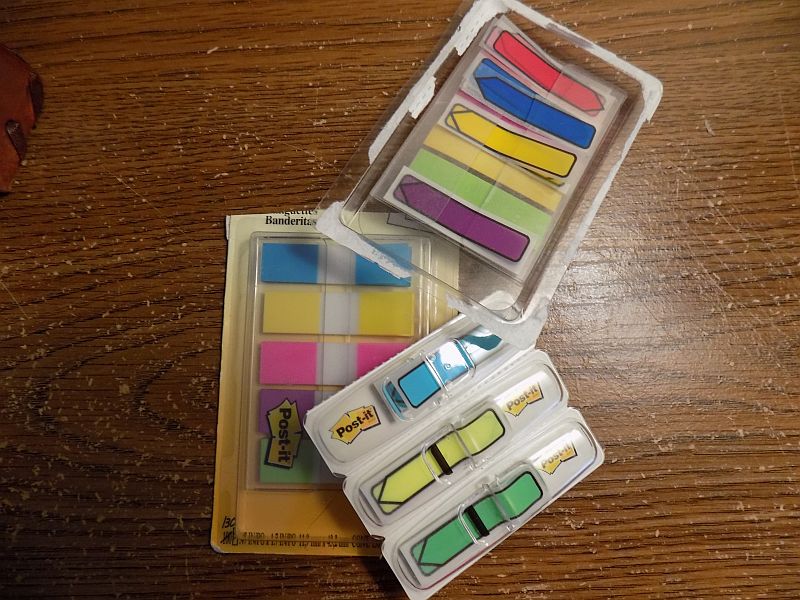
Jessica offers tips on highlighting for various study-reasons. However, I never, ever, ever, ever write or highlight in any of my books. Ever. Instead, I buy thousands of transparent Post-It arrows in neon colors and put them happily all around. I love my Post-It arrows.

readwriteplan 3

readwriteplan 4

I encourage you to look into the Biblical Doctrine Bible Study. Jess has not only created a Study Guide but also a Facebook Group of like-minded women who are participating in the study, which is expected to last two years. Women from their 20s to their 70s have been added, women who are homeschooling or not, married and not, disabled and healthy, living rural or citified. We are all different but have Christ in common.

Here are the pertinent links for you.

Jess Pickowicz at Beautiful Thing: Biblical Doctrine study, articles

Beautiful Thing’s Biblical Doctrine Facebook Study Group

Biblical Doctrine the book for purchase at Grace To You

For purchase at Amazon, it’s $20 off right now.

Posted in discernment, Uncategorized

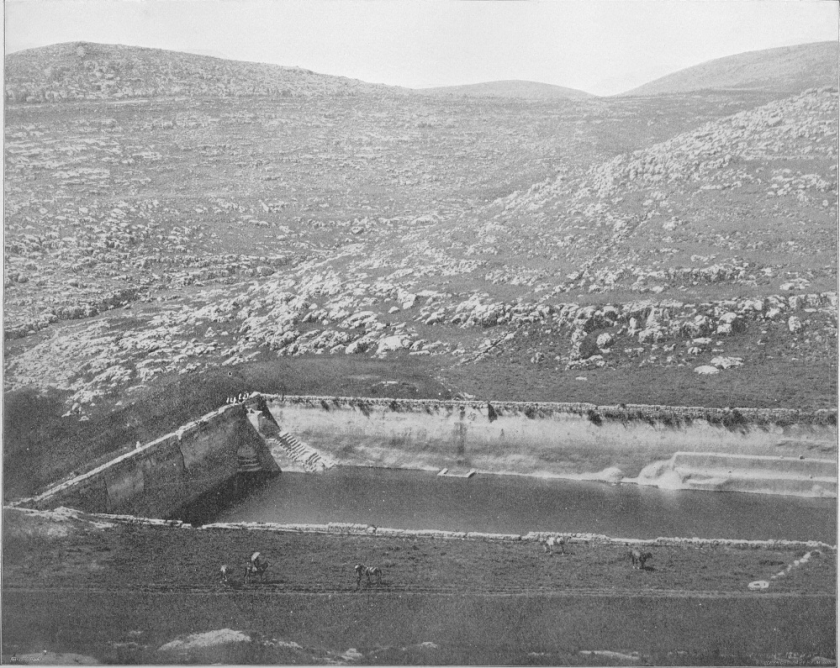
Lower pool of Solomon: ancient photo

Most of the changes that have occurred in the Middle East in Israel’s area occurred after the early 1900s when loads of immigrants resettled there subsequent to WWI. SO when you see photos of the area taken in the late 1800s and early 1900s, it’s isn’t like looking at a 100 year old photo, it’s like looking at a 1000 year old photo.

I like to look and think about when Jesus walked. The book Earthly Footsteps of the Man of Galilee contain 384 Original Photographic Views and Descriptions of Places Connected with Earthly Life of Our Lord and His Apostles, Traced with Note Book and Camera. It was published in 1894.

lower pool of Solomon.png

Here is the caption given in the book Earthly Footsteps:

‎The above view of the lowest and most extensive of the Pools of Solomon gives one an idea of the masonry used in the structure of this remarkable reservoir. Our artist stood upon a hill to the north of this pool. You may see in the picture our horses and dragoman down in the valley, and the few people at the further corner of the pool look like Liliputians. To the south beyond we see one of the Judean hills. If this reservoir were full it would float one of the largest of ocean steamers. In the narrow valley a short distance below the pools is the little village of Urtâs, with ancient ruins, which is supposed to be the Etham where Josephus says were the Gardens of Solomon. There are gardens and fountains there at this day, and it is very probable that upon those fertile slopes running down to the green cup of the hills lay the vineyards, orchards and pleasure grounds of Solomon; and he, walking through his great plantations here, may have communed with his own spirit and arrived at the solution of the problem that “all is vanity and vexation of spirit.” Perhaps here after the cares of state he “went down into the garden of nuts to see the green plants of the valley; to see whether the rose budded and the pomegranates were in flower.” Near by on the summit of her hill, “clothed with the olive, vine and figs,” sits “the little town of Bethlehem,” where in a low khan was born “a greater than Solomon,” who “opened a fountain in the house of David for sin and uncleaness.”

You can also learn more here about the Jerusalem aqueduct system.

When you study the Bible, it’s also good to look at maps, atlas, photos, and geography, as well as history so that when a verse describes activity at an aqueduct or pool, or stopping up a well, or the caves etc., you can really visualize it.

When we read the Bible we know it’s real, but sometimes tend to think that the events and people depicted are far away or even characters instead of living people. King David lived then and he lives now. Being able to have a picture in your head brings things more to mind and helps set events in context.

Posted in discernment, Uncategorized

Dancing at the Pour-off

Camping is fun … as long as I don’t have to sleep on the ground, lol. In the mid 1990s my husband and I bought a WV Westphalia pop-up Camper van and we traveled across the USA at the southern tier. We fell in love with Texas, and especially Big Bend National Park.

Here we are in the Chisos campground. Yes, we brought our cat. Hiking and exploring was part of the allure, and in examining the trail brochures, one day we decided one day to hike the Window trail.

The Window Trail is a 5.5 mile lightly trafficked out and back trail located near Terlinguo, Texas that features a waterfall and is rated as moderate. The Window Trail begins near the Chisos Basin lodge, descending 800 feet over about two miles through rolling hills and vertical rock walls to a narrow pouroff, which overlooks the surrounding Chihuahuan Desert. The trail is usually dry, but the pouroff area is very dangerous during flash-floods. Source

We were strongly warned, very strongly, not to step too close to The Window, which is an opening in the mountains to a view over the desert. Very high up. The continual water at what’s called The ‘pour-off’ had smoothed the rocks at the pour-off and it was slippierer than it looked, even in dry conditions. The drop is thousands of feet.

Not my photo.”The Window is a slit in Chisos Mountain Ranges where one could
glimpse the Chihauhuan Desert plain below. ” Source

I am a bit hesitant of heights and a scaredy cat in general, so I heeded the warnings and stayed back. My husband thought it was funny to go closer and do a dance. Ha. Ha.We were warned how fast the fall could happen, even if you’re wearing appropriate footwear. The rocks are smooth as glass, they provided no traction and no grip. It was pure luck he didn’t fall.

~~~~~~~~~~~~~~~~~~~~~~

When you’re saved, your eyes are opened and you realize there is no such thing as luck. The LORD has numbered the days of each person on earth. We are immortal until that day arrives. However, the walk is still slippery. Any Christian could fall at any time, me included. And unlike in other life experiences where the longer you go the easier it gets due to your accumulated experience, in Christian life, the longer you go the harder it gets.

This is because we increasingly mourn over our and others’ sin. Or we get casual and then comes Jesus’ chastisement in order to grow us. Or we love people more and become sensitive to their burdens. There are lots of reasons why life with Jesus grows sweeter, but harder.

The Bible warns of the way of the slip. He who thinks that apart from Jesus he has sure footing is likely due for a slip. These verses make it clear that our ultimate security in Christ is permanent, but our walk is fraught with temptations and dangers. Take care not to temporarily slip.

They will lift you up in their hands, so you will not slip and fall on a stone. (Psalm 91:12)

My steps have held fast to Your paths. My feet have not slipped. (Psalm 17:5)

He will not let your foot slip– he who watches over you will not slumber; (Psalm 121:3).

For all that, Paul warns the Christian,

Therefore let anyone who thinks that he stands take heed lest he fall. (1 Corinthians 10:12)

I think of the dance at the edge of The Window where the pour-off was so slippery. Do we treat sin that way? Dance up to the edge of it, abusing God’s grace and tempting the devil?

We have to do our part. Resist sin, follow His commands. A true Christian can never irrevocably fall from grace, but we can slip and fall into sin. Over-confidence can be an enemy.

Let no one say when he is tempted, “I am being tempted by God”; for God cannot be tempted by evil, and He Himself does not tempt anyone. But each one is tempted when he is carried away and enticed by his own lust. (James 1:13-15).

I was listening to Martyn Lloyd Jones yesterday. He was talking about the simplicity of the Gospel and clarity of the Gospel life. Sometimes we over-complicate things, making them out to be more opaque than they are. Life in Christ is simple, very simple. Resist sin, do not tempt it, and heed the Bible’s commands.

If you do well, will you not be accepted? And if you do not do well, sin is crouching at the door. Its desire is contrary to you, but you must rule over it. (Genesis 4:7).

Posted in discernment, Uncategorized

The worst example of fake news

There is a concern with #fakenews these days. It’s news that is written to be deliberately misleading, biased, or circulated knowingly with purposes to outrage or confuse. This isn’t new. The old Soviet Union Communists of the 1950s were great at propaganda, which is what fake news used to be called. They were masters at spreading disinformation.

The Yellow Journalism age of the US in the late 1800s was another era of patently fake news, sensationalized simply to sell more papers, protect reputations, or to build reputations. (“Puff Graham“)

Fake news has been with us a long time. I can point to a very early example. Certainly the worst:

While they were going, behold, some of the guard went into the city and told the chief priests all that had taken place. And when they had assembled with the elders and taken counsel, they gave a sufficient sum of money to the soldiers and said, “Tell people, ‘His disciples came by night and stole him away while we were asleep.’ And if this comes to the governor’s ears, we will satisfy him and keep you out of trouble.” So they took the money and did as they were directed. And this story has been spread among the Jews to this day. (Matthew 28:11-15).

Fake news has been with us since forever. It has certainly been useful to the lost, greedy, and craven. Isn’t it wonderful to know that there is one source to which you can go that will always be reporting the truth?

bible with glasses 2

Posted in discernment, Uncategorized

How does satan snatch away the seed from the hard ground?

In one of Jesus’ parables, we read,

When anyone hears the word of the kingdom and does not understand it, the evil one comes and snatches away what has been sown in his heart. This is what was sown along the path. (Matthew 13:19).

In the beginning parts of the parable, Jesus had given the vivid picture of the sower scattering seeds along the ground. The seeds fell on different types of ground, hard, rocky, thorny, and good. Later, the disciples asked Jesus to explain the meaning of the parable. He did, and His explanation of the different types of ground and the destinies of each seed is above.

The “path” mentioned is the path that the farmers and other people would walk in between fields. It was so heavily trod that they became hard packed, almost like cement. In Leviticus 23:22 it’s mentioned as a rule that the farmers were not to harvest to the very edges of the field, so that those who are traveling or poor could glean from the stalks that were alongside the path. You might remember Ruth gleaning Boaz’s field. (Ruth 2:2-3). As Jesus and His disciples walked along the fields, they plucked some grain to eat as they passed. (Matthew 12:1). These paths were very hard and well-traveled.

In Barnes’ Notes it’s explained about the paths. As expected, the vivid picture of the hardened path, the seed, and the birds scooping away the exposed seeds is visually understandable.

He is represented by the fowls that came and picked up the seed by the way-side. The gospel is preached to people hardened in sin. It makes no impression. It lies like seed on the “hard path;” it is easily taken away, and never suffered to take root.

But I’d like to focus on the part of the parable verse that mentions that the evil one comes along and snatches the seed away. I ask myself, how does the evil one do this? In what manner? Thanks to the visual nature of the parable we can readily understand that he does, but how?

Someone asked me recently how does the devil do his work, how does spiritual warfare operate. It’s a good question and it is something that though the parable’s images are understood, it what is meant by ‘digging deeper.’ Ask yourself questions as you read. Listen to others ask questions. Pray and ponder a while. Do a parallel verse search. Look up the important words in the verse in Greek or Hebrew. Consult commentaries.

In the Greek, the word for hearing is in the continuous present tense, setting an immediacy to the situation. As stated here in Vincent’s Word studies in the New Testament, “the action is exhibiting action in progress, and the simultaneousness of Satan’s work with that of the gospel instructor. ‘While any one is hearing, the evil one is coming and snatching away, just as the birds do not wait for the sower to be out of the way, but are at work while he is sowing.'”

I am reminded of fishing boats and shrimp boats pulling up a catch, and the cloud of seagulls and other scavenging birds are plucking the fish from the nets even as they are pulled to the boat’s deck. The ground is so hard the seed of the Word never makes any impression in it, and the birds come snatch it almost immediately.

Here is Gill’s Commentary on the subject of how the devil snatches away the seed. This is aimed at the unsaved, but the point has lessons for the saved, which I’ll explore below.

Then cometh the wicked one, Satan, the devil, Mark 4:15 who is, by way of eminency, so called, being the first creature that became wicked, and the worst that is so; who is entirely and immutably wicked; whose whole work and employment lies in wickedness; and who, was the original cause of the wickedness that is among men, and which he is continually instigating and promoting: … This evil spirit, as soon as ever he observes one hearing the word, especially that has not been used to attend, comes immediately, and, as he is hearing,

catcheth away that which is sown in his heart: not the grace of God, which being once implanted in the heart, can never be taken away by Satan; but the word which was sown, not in his understanding, in a spiritual sense, nor even in his affections, so as to love it, delight, and take pleasure in it; much less in his heart, so as to become the engrafted word able to save, or so as to believe in it, and in Christ revealed by it; but in his memory, and that but very slightly neither; for the heart sometimes means the memory; see Luke 2:51.

Besides, the word only fell “upon”, not “into” his heart, as into the good ground, as the metaphor in the parable shows; and it made no impression, nor was it inwardly received, but as soon as ever dropped, was “catched” away by the enemy; not by frightening him out of it, by persecution, as the stony ground hearer; nor by filling the mind with worldly cares, as the thorny ground hearer; but by various suggestions and temptations, darting in thoughts, presenting objects, and so diverted his mind from the word, and fixed his attention elsewhere; which is done at once, at an unawares, secretly, and without any notice of the person himself; so that the word is entirely lost to him, and he does not so much as remember the least thing he has been hearing:

this is he which receiveth the seed by the way side; such an hearer is comparable to such ground, on whom the word has no more effect, than seed sown upon a common beaten path.

The saved can never have the Gospel seed snatched away from Jesus’ hand. John 10:28 explicitly says so. But even though satan cannot destroy the salvation of the saved by snatching the gospel seed from the ground into which it is sown, he can diminish our effectiveness. We, too, can be tempted as the unsaved Gospel-hearers can be tempted. The word will never be “entirely lost” to us, as Gill said it will be of the hard ground unsaved, but we can be tempted by–

–various suggestions and temptations,
–darting in thoughts,
–presenting objects,
–and so diverted his mind from the word, and fixed his attention elsewhere
–which is done at once, at an unawares, secretly, and without any notice of the person himself;

Here is John MacArthur on his version of how the devil snatches the seed away from the unsaved, but has application for us in satan’s ever-present attempt to divert us from our effectiveness:

In other words, when someone does not respond to the gospel initially, when they’re hardhearted and stiff necked, Satan just snatches it away. He just blinds them to its true value. How does he do that? Well, there are a lot of ways. One way he does that is send false teachers along to say all of that stuff was lies. Don’t believe that stuff. Another way he snatches the seed is by the fear of man. People don’t respond to it because they’re afraid they might lose their reputation or they might be kicked out of their little group or somebody might think they’re a religious fanatic.

Sometimes Satan uses pride. People are just know-it-alls. They just don’t want to admit that they need some help, that they need some information, that there’s some things they don’t know. Sometimes Satan snatches it away through doubt. Sometimes he snatches it away through prejudice, sometimes through stubbornness. Sometimes through the love of sin the person doesn’t want to give up. Sometimes through procrastination. But one way or another or a combination of ways, when it hits that hard stuff, Satan snatches it away and the person so easily forgets that it ever came.

When we procrastinate, become stubborn, prideful, doubtful, follow false teachers, or fear man, satan is snatching away our effectiveness of His word and our growth.

I told the person asking how spiritual warfare works that it isn’t done by being against people. No, our battle is against the evil one who is prince of the power of the air. Also, it is a battle of the mind. Spiritual transformation happens in the mind, and what we think becomes what we say and then what we do. Don’t let satan steal your effectiveness. If we’re saved then that means the word was sown on good soil. Keep aerating the soil of our heart by turning over His word constantly in our minds. Unearth sin and reject it, confessing and repenting. Let the roots of His truths grow deep into our heart and then we will stand like trees beside the waters, and cannot be moved. (Jeremiah 17:8, Psalm 1:3).

Maranatha!

crackSatan snatches away the seed that falls on the hard ground almost immediately as it it sown.

——————————————–
Further Reading

Truth Or Territory: A Biblical Approach to Spiritual Warfare
Posted in discernment, Uncategorized

You (I) don’t have to say everything

There’s always controversy in the world. We live in a contentious world, led by a liar who is also a thief and a destroyer. Ergo…contention.

Contention is not restricted to the secular world. Watching the news has become a chore for those who still persist in viewing it is often seen as simply sandbox yelling and fisticuffs at a juvenile level. The news itself, when the ‘journalists’ get around to reporting it, is evil, heartbreaking, and soul denting.

Controversy also occurs in the Christian world. It has since the beginning, the very beginning. They killed Jesus, the only perfect, sinless, and loving human being ever to walk the earth. People who long for the early days of the first century church need to remember that false doctrines, false prophets, and false teachers crawled in like a tsunami of cockroaches and permeated the faith right away. The Apostles had to spend a lot of time stamping them out. It even affected Peter and Barnabas, who had to be corrected publicly by Paul. There were Nicolatians, the Judaizers, the Gnostics,  those who went the way of Balaam, individual false teachers going from town to town, the Pharisees, and many others who had to be opposed with a voice from the pastor or leader. Vigilance was necessary.

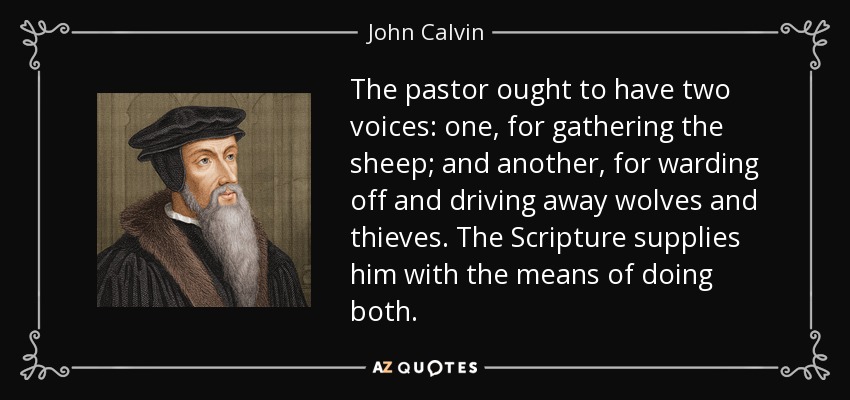
John Calvin said that a pastor must have two voices. One, for gathering the sheep; and another, for warding off and driving away wolves and thieves. The Scripture supplies him with the means of doing both.

However, you notice that the Bible’s writers did not spend a lot of time opining about the culture. They did not opine about every emperor transition, every tragedy, every riot or mob incident or organization or guild. There was one mention by Jesus of the Tower of Siloam incident which seemed to have happened “off stage” and was only spoken of as an object lesson for death.

Our hurry-up, social media, 24-hour news culture seems to demand from us an opinion on just about everything. These days, it demands that the opinion has to come with some form of outrage or offendedness.

I was a journalist for almost 8 years. I worked for weeklies, dailies, and contributed to a monthly. I was a news reporter so I had to be in tune with the culture and fresh news. I was an editor so I had to have an opinion about it, and write it in such a way so as to help people make sense in their daily lives of what they read. I won awards for news editorials. I was good at it and news opinion was a constant thread in my work no matter what other kind of journalism I was working at.

However all those habits and works were a detriment to me when it came time to be saved and begin a writing ministry. I had to go slower. I had to step out of the cycle. Most painfully, I had to learn that I didn’t have to have an opinion.

People smarter than me have opinions on the culture, on today’s news, on the secular and religious controversies. People who have more information have opinions. People with more talent have opinions. People who are men, the leaders and pastors have opinions.

I’ve mentioned that I really enjoy Samuel D. James’ writing. He published an essay recently called The Bible is Not a Slideshow for Your Hot Take

Mr James wrote about the aftermath of the news that comedian Robin Williams had taken his own life. It’s a good moment and a good impulse when the Chrisitan wants to capture the moment and impart some Christian worldview truths. “This is good, and normal,” he wrote. However, too often we do not have all the information necessary to do so in a God-honoring way. As time went on, more information came out that added dimension and nuance to the Robin Williams tragedy. If the Christian who had written superficially in the immediate aftermath did so in a less than God-honoring way (“Click to like!”) then it’s a tragedy for us too.

What I am saying is that cheaply thought, cheaply written responses to these events by definition betray the Christian commitment to the centrality of truth.

Aaron Armstrong wrote a similar essay with an ever more pointed headline: No You Don’t Have to Comment On Everything

I have opinions about politics, including American politics. I occasionally share those opinions. But usually, I prefer to keep my mouth shut. Why? It generally comes down to one thing. A proverb, in fact. “A fool does not delight in understanding, but only wants to show off his opinions” (Proverbs 18:2, CSB).

When the James White-Brannon Howse issue came to the fore, I had an opinion. When it continued, I had an opinion. As it subsided, I had an opinion. I didn’t share my opinion, except for one private query with my very short answer. Why? The men were handling it. Phil Johnson was on it. The men of GTY were on it. Others behind the scenes were on it. In the end Justin Peters and his church elders from Kootenai Church were on it. They knew more. They had a bigger platform. They were more humble. They had more spiritual insight. They possessed more experience.

I feel that the above mentioned controversy was a good test for me. It took a long time for me to subside the drive to be first, get a word in, have a published opinion. This was difficult for a hard-boiled journalist taught to be first, get a word in, have a published opinion. It’s even harder when the Lord has given the spiritual gift of exhortation. I always want to speak, but I don’t always have to speak. There is a time to speak and a time to be silent. (Ecclesiastes 3:7).

Sometimes I’ll feel led to have a public opinion. That’s OK. But not every time. Not all the time.

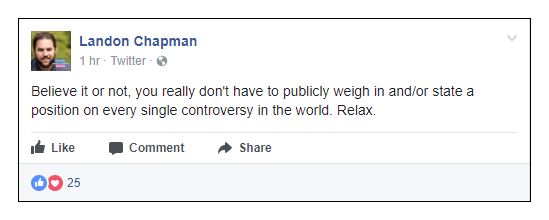
It IS more relaxing to not feel like I have to publicly weigh in or have a public position on every single controversy in the world. Sometimes in my news days I felt like a minnow in a washing machine. I don’t want to feel that way as a Christian. I want to exude a steadiness, a patience, a reserve, a solidity.

I’ll let my favorite pastor and one of Christendom’s most respected living teachers have the last word. Whether you feel led most times or only sometimes to state your position on social media or other forms of wide communication…

Posted in discernment, Uncategorized

The arrogance of self-sufficiency

“I’m self-sufficient. I’m proud of it.”

That was me, before I was saved. I was saved by grace of Jesus Christ. My parents were intensely interested in raising their children as “self-sufficient” and “independent”. I heard those words so often. I had to ‘figure it out’ or ‘do for myself’ more times than not. By the time I reached adulthood, I was proud of all the things I could do by myself, for myself, leaning on no other. Asking for help was anathema.

Of course all the instilling of self-sufficiency was a stumbling block to bending the knee, realizing how hopeless I was on my own, and asking Jesus for help. The fact that He calls us and we don’t choose Him is a grace that will manifest itself in untold aspects throughout all eternity. I never would have asked. He chose me.

The pagan heart builds many idols. Any and all idols are in opposition to God. Idols are an enemy of God, and at enmity with Him. For me, the root of all that vaunted self-sufficiency is pride. I was proud of all that I could do. I was proud that I needed no one. I was proud of my capabilities- capabilities I’d cultivated and no one else.

Anything can be an idol. Self-sufficiency is one.

The Chaldeans were swimming in self-sufficiency. This idol permeated their actions and drenched their hearts in evil. Habakkuk proclaimed against it in chapter 2 of the book of Habakkuk. This prophet pronounced 5 woes on the Chaldeans (though they were not named, this was the original target audience.) As scripture has one meaning but many applications, these verses can and do apply to us today as we learn object lessons about doing for ourselves and not bowing to God’s will for us.

The fifth woe was the woe upon idolators (2:18–20). In poignant verses, God asks if idols can speak-

What profit is an idol when its maker has shaped it, a metal image, a teacher of lies? For its maker trusts in his own creation when he makes speechless idols! Woe to him who says to a wooden thing, Awake; to a silent stone, Arise! Can this teach? Behold, it is overlaid with gold and silver, and there is no breath at all in it.(Habakkuk 2:18-19).

Oh! How terrible for the idolater who asks dead wood and stone to speak! How sad we seek instruction from dead objects and not the Living God!

Any and all idols in our hearts teach us lies. We are the maker of the idol, so because of our sin nature, it teaches us the lie of sin. Can stone awaken and instruct us in the ways of righteousness?

“But I don’t worship idols,” you say. “I don’t ask stone or wood to speak.”

Do you seek instruction from horoscopes? The sun? “Mother Nature”? Do you rely on your intellect? Your capabilities? Your money? All idols! All dead!

The wages of sin is death. (Romans 6:23a). God speaks of this New Testament truth in the Old Testament in Habakkuk 2:8, 2:17…

The Good News is that the rest of the Romans verse continues after speaking of the wages of sin, by a glorious promise.

but the free gift of God is eternal life in Christ Jesus our Lord. (Romans 8:6b)

The antidote to self-sufficiency is humility. As this woman spoke so eloquently on Twitter this week,

Anna Crouse‏ @annacrouse_

Humility isn’t a burden or humiliation or oppressive weight but is the only posture that can receive the wondrous grace gifts of God

Instead of “I can do it” we say “I can’t do it. Lord I need you!”


Resources

Elyse Fitzpatrick: Idols of the Heart
Do you feel discouraged, even defeated, in your battle against habitual sin? Are you dismayed or surprised by the situations that bring out your fear, anger, or distress? Elyse Fitzpatrick delves into the heart of the problem: deep down, we’re all idol-worshippers who put our loves, desires, and expectations in God’s place—and then suffer the consequences of our misplaced affections. Yet God loves his people and can use even our messy lives and struggles for his glory. Fitzpatrick shows us how to better search and know our hearts, long for our gracious Savior, and resist and crush our false gods. Includes questions for further thought.

Posted in discernment, Uncategorized

The Tongue is a Rudder: A Sailing Story

I lived on a sailboat and cruised up and down the eastern seaboard for two years. Just as there is with any lifestyle, there are niches within that lifestyle. The circumnavigators go around the world, traveling for weeks across the seas from one continent to another. These folks are serious, and they generally have sold all they own and permanently live on their boat.

Then there were people like us who lived aboard and cruised along the shoreline. Live-aboard cruisers don’t usually venture far out to sea, though we may be without sight of land for hours or a day or so on an overnight passage. We usually keep our houses and relationship attachments, live this way for a period of time, and then return to life on shore. This is called “swallowing the anchor”. For liveaboards like is cruising is more of an adventure than a way of live.

Then there are the folks who own a sailboat and dock it at a yacht club and sail for a few hours on the weekend. Many of these folks dream of living aboard or circumnavigating but haven’t been able to do so yet.

Though there are tiers of sailors with varying levels of commitment and skill, the Sea can be kind or cruel to each one of us. When an emergency happens while sailing on the ocean it’s just as life threatening whether you’re near shore or in the middle of the ocean.

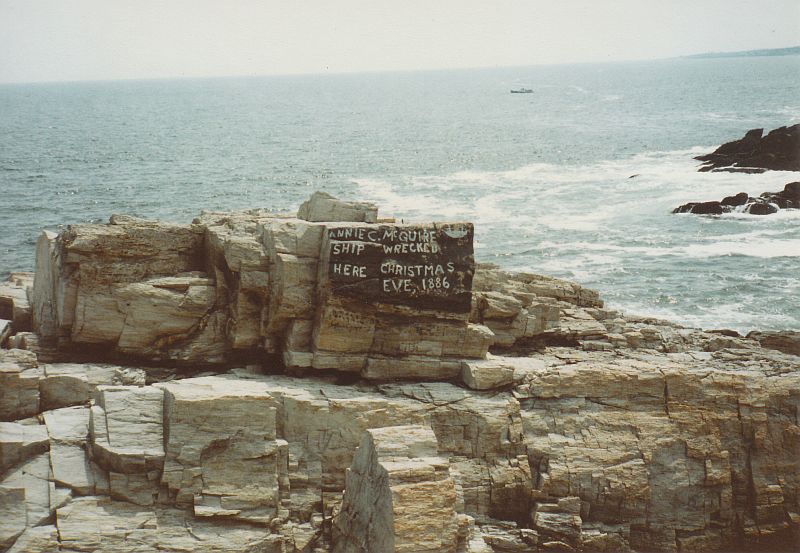
Annie C. Maguire wreck. Portland ME. EPrata photo
photo Collections of ME Historical Society. FMI on the wreck- Source

My husband and I had sailed from Maine to Florida with a variety of passages that included motoring down the Intracoastal Waterway,sailing across huge Rivers and Sounds, and making some offshore overnight ocean passages. We’d finally arrived at Fort Lauderdale’s Las Olas anchorage, the traditional launching off point to cross the Gulf Stream to the nearby nation of The Bahamas. It’s 50 miles, but a tricky 50 miles.

The Gulf Stream is a fast moving river of water atop the ocean. The Gulf Stream is about 60 miles wide and runs at an average surface speed of 5.5 mph. Since the boat can sail at around 5 mph it means that the combined speed plus the Gulf Stream’s fast northward push means you have to make exact navigation maths and be on constant vigilance. You could get pushed to Ireland if you’re not careful. A worse disaster would be pushed a few miles, or even a few feet off course and wind up on the rocks, shipwrecked on the shores of a foreign nation or in hazardous waters.

You need to stay on your toes regarding weather. You’ll be traveling in open ocean, the islands are low, some anchorages will be exposed on one or more sides, and there will be potentially rough passages through reefs and cuts between islands. Source

The warm waters of the Gulf Stream (red). FL is at bottom,
the topmost island left side is town of West End, Grand Bahama Island.

So you start off from Ft. Lauderdale and let the Gulf Stream push you north and your sails push you east toward the intended harbor. The biggest danger is a wind that flows from the north tot he south, and meets the Gulf Stream waters moving from the south heading north. The collisions of southerly flowing air and northerly flowing fast water makes for a steep waves. Steep waves are rough because the front part of the boat (the bow) goes up and then down fast. At least with a rolling wave the boat can roll with it. A steep chop makes the boat pound. Pounding is hard on everyone and is hard on the boat.

Because crossing over the Gulf Stream is a bit dangerous and not for the fainthearted, mariners usually take off from the anchorage in little groups. Safety in numbers. Not that if anything happens we can go from one boat to another to troubleshoot the problem, but if the worst happens we can rescue a person from the water or call for the Coast Guard for help and stand by.

So our little clutch set off in the dark hours, so we would arrive at a time when the rising sun would be over our shoulders and not in our eyes. The weather report was for gentle winds flowing north, which would actually help flatten the Gulf Stream waters.

All was well … sailing over the bounding main … for a while.

The wind unexpectedly shifted from the south to the north, creating that dreaded sharp, steep chop. The boats took a pounding. Then the rain and thunder and lighting started. It was dark and it was rough.Then…one of the boats’ rudders broke.

I think you know how important a rudder is. It is a tiny thing, relatively speaking, a small part of the boat. Not heavy like the motor, not showy like the sails. However it’s the most critical part, since it steers the boat. Without the rudder, our friend’s yacht was drifting helplessly in the storm, in the Gulf Stream, toward the reefs. They were at the mercy of waves, rocks, and winds. They had no control and it was terrifying.

When we put bits into the mouths of the horses to make them obey us, we can guide the whole animal. Consider ships as well. Although they are so large and are driven by strong winds, they are steered by a very small rudder wherever the pilot is inclined. In the same way, the tongue is a small part of the body, but it boasts of great things! James 3:3-5

A small rudder can guide the whole boat. A small muscle like the tongue can guide the whole body. With the rudder not guiding the boat, it was at the mercy of other more destructive things than the pilot’s inclination. Just like the tongue. The ‘pilot’ must be in control of the tongue so it does not become subjugated to other, more destructive things like slander, gossip, tale-bearing, and criticism. These are the rocks and reefs of relationships, as Jude describes in Jude 1:12-13, using the same sailing metaphors of waves, reefs, and winds.

I was busy handling our boat and my husband was on the VHF radio in contact with the stricken vessel. We all had slowed down and were kind of trying to circle around them and stay close. It was hard to do so in the storm. Eventually the other men talked him through and somehow he got his rudder fixed.

We were off course by then so we had to regroup and figure out how to get back on track. The winds were still high and we were in the hump of the Gulf Stream, the current was flowing fast. Entering West End Grand Bahama was a tricky maneuver of sliding between reefs through a narrow channel. We were off by a few feet. However you can see the destruction ready for the unwary in the Annie C. Maguire vintage photo above. They were only off by a few feet also.

Providentially, there was a Good Samaritan who happened to be carrying a VHF radio who happened to be walking the beach who guided us in. If he had not been there we would have ended up on the rocks. It’s another example of how the Lord protected me until the appointed time for salvation, 13 years later.

I’ll never forget the terror of our friends losing their rudder. Even though the James verse about taming the tongue by using marine metaphors is vividly alive for me, I still failed in this last week. I’ve repented. After listening to a lecture by Justin Peters on the importance of wholesome talk and the destructive inclinations of the tongue by gossip I will do better this week. I do not want to end up on the rocks for correction. I am the pilot. I am in charge of my boat. With the Holy Spirit to guide me safely to port, I know I have all the help I need.

EPrata photo

The dark blob in the foreground is a coral head. Their sharpness can rip the keel or underside of your boat like a razor. The boat with two men on it is grounded. The water gets shallow very fast in The Bahamas. In the middle horizon, those brown humps are the land, which is just a few feet above sea level. Now picture trying to find the right channel, in the dark, in a storm, on 0 sleep in the last 24 hours.

Posted in discernment, Uncategorized

Spot the self-refutation: Beth Moore

When the Be Still DVD was issued in 2006, Beth Moore’s participation in what was obviously a mystical/pagan promotion of Eastern Religious prayer practices caused an uproar. This was 11 years ago at this writing and Moore was seen as solidly solid then. Moore issued a clarification and retraction and apology for her participation, saying it was “hugely accidental” if she participated in something unsound. She assured her audience-

Beth Moore 1: “I am not involved in any kind of emergent church movement or any kind of mystical prayer movement.”

Then she continued in her apology, clarifying her words that ended up on the DVD-

Beth Moore 2: “Here’s what I intended to say: pray, pray, and pray some more and learn how to listen for God’s response.”

The two comments are from the same piece of writing. Do you see what I see?

———————————————-

Here is Moore a few years later participating in a mystical prayer experience of Lectio Divina. Photo source: Sola Sisters.