Posted in beth moore, bible

Beth Moore: reactions to Living Proof teaching in Charlotte. Part 3b: The Teaching

By Elizabeth Prata

I went to a Beth Moore convention, and below is a series outlining my reaction. Be sure also to look to the right-menu for the 7-part series of an explanation of why Beth Moore teachings are in error.

All Beth Moore Critiques in One Place

Beth Moore: reactions to Living Proof teaching in Charlotte. Part 1, The Women

Beth Moore: reactions to Living Proof teaching in Charlotte. Part 2, The Music

Beth Moore: reactions to Living Proof teaching in Charlotte. Part 3a, The Teaching

Beth Moore: reactions to Living Proof teaching in Charlotte. Part 3b: The Teaching

Beth Moore: reactions to Living Proof teaching in Charlotte. Part 4: A final word

“Repeat after me”

I had written previously in the 7-part series on Beth Moore about her drift toward Eastern Mysticism, most notably in her participation in the Be Still video touting contemplative prayer and eastern mystical practice. In contemplative meditation, one repeats certain mantras repeatedly. In Buddhism and Hinduism, adherents used chanting as a means of practice. They also use recitation of verses as a way of developing an awareness of the qualities of the Buddha or of the false god they were praying to. Beth Moore had us do a lot of repeating. Sometimes it was a mantra spoken to the person next to us, as when she said “God has a destiny for you” and urged us to turn to the women in the next seat and repeat, “God has a destiny for you.” I am uncomfortable doing that, not the least of which is that I feel silly. I also feel that if the women next to me learns that God has a destiny for her, it was because she learned that from the Bible and not from some schmoe at a conference parroting it back to her.

Frequently she would have us repeat one of the eight points she was building the lesson around, and repeat it as many as 8 times. She addressed that it might seem silly or overdoing it to repeat these things, but she said, she’s a teacher and she knows the value in rote memorization. She’s right, but I’d prefer to spend my rote memorization time memorizing actual Bible verses and not Beth Moore mantras. This parroting practice bothered me.

“Fear the Lord Your Husband”

In the Deuteronomy verse she built her lesson from (Deut 10:11-21) the first part mentioned the fear of the LORD: “And now, O Israel, what does the LORD your God ask of you but to fear the LORD your God, to walk in all his ways, to love him, to serve the LORD your God with all your heart and with all your soul,” I’m an admirer of the fear of the LORD. I told you many times that I am ultra conservative, strict, and dogmatic in my adherence to His ways and precepts. I am a big lover of the fear of the LORD. Here is what Matthew Henry commentary describes as the holy fear:

“We must fear the Lord our God. We must adore his majesty, acknowledge his authority, stand in awe of his power, and dread his wrath. Fear him as a great God, and our Lord, love him as a good God, and our Father and benefactor. We must walk in his ways, that is, the ways which he has appointed us to walk in. The whole course of our conversation must be conformable to his holy will. We must serve him, serve him with all our heart and soul. No single English word conveys every aspect of the word ‘fear’ in the phrase. The meaning includes worshipful submission, reverential awe, and obedient respect to the covenant-keeping God of Israel.”

Here is how Beth Moore treated the subject: “Fear. Oh, the fear. Ladies, I fear my husband sometimes. You know there is a line ya just don’t cross. I know some ladies who won’t cheat on their husband for fear of what he’ll do.” That isn’t a verbatim quote but it is extremely close. Beth Moore has a way of explaining the Bible while not really explaining it, exalting God with her words yet diminishing His character at the same time. She said a bunch of times that she refers to commentaries, but I guess she skipped over what the Matthew Henry Commentary had to say…

The “Reciprocal relationship”.

If you google ‘reciprocal relationship’ you’ll not get many Beth Moore results except from her study of David. But her emphasis on this phrase, and she repeated it many times, was that we want what God has and He wants what we have. It was ill-defined but a permeating leaven throughout the teaching. Now, I looked up the definition of reciprocal relationship, and it is “a mutual agreement to exchange privileges, dependence, or relationship, as in an agreement between two governing bodies to accept the credentials of a physician, dentist, licensed dental professional, or other health professional licensed in either jurisdiction.”

I was horrified at the fear of the Lord teaching because it diminished His august-ness. And here again we have a diminishing of who He is. There is nothing mutual about our relationship with Jesus. We have nothing He wants, except maybe His expectation that we offer Him worship and praise. He has everything we want. She is making the divine relationship of Master-slave into a partnership and that is the oldest satanic lie there is.

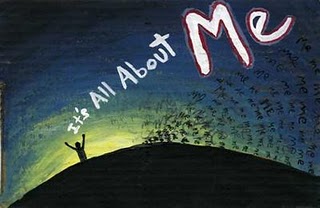
“It’s all about me”
source

I was plenty sick of the words Beth Moore uses in her teaching. There was a lot of talk about toxic relationships, depraved, defeated, poison, deprived, sexual abuse. Frankly, I know why. Because every Beth Moore teaching is about us. It is about how we have all this negativity inside us and once we get clear of that, our relationship with Jesus can really begin. THEN He can use us! We have to ‘break free’ of all that stuff first, and then we will be “impactful for the kingdom” as she put it. Yet every single person in the Bible was a depraved flawed sinner that God used.

But we are all sinners. We all have a past, we all do wrong things, and we’re all totally depraved. Once we are born again, all those sins are forgiven AND they are forgotten by Jesus. But that is not good enough for Moore, because she brings up those sins at every opportunity. Jesus may have forgotten our sins, but Beth Moore never will. And that is good, because once you go through the legalistic teachings of how to break free, how to get out of that pit, and say “So Long, Insecurity”, what happens the next time you feel insecure? You have to do another Beth Moore study.

I’m being deliberately impatient in this section. I do know there is a world of hurt out there. I do know that there are women living in domestic violence, abuse, or ‘toxic relationships’ as Moore says, who don’t feel they are effective for the Lord, or who Moore says CAN’T be effective unless they bust those negative strongholds first. I read recently of a missionary family in India witnessing in a Hindu section extremely hostile to Christians. The missionary dad and his two sons were surrounded in their car, and the mob poured gasoline in the vehicle and burned the man and his two sons alive. His wife, who escaped, said she was “hurt by what they did, but not angry because Jesus said to love our enemies.” Then she went to the hospital. Now there’s a toxic relationship for you. I want us to get some perspective. I read of Phil Masters and his wife Phyllis in Papua Indonesia, and Phil was killed and eaten by cannibals. Phyllis elected to remain in the jungle with her children and continue the mission. I don’t know how she managed it without a Beth Moore study to learn how to break free from insecurity.

Christian faith is NOT about obsessing over wounds and past hurts. You can’t destroy faith with a trial. Trials build faith. Jesus will use you, emotional wounds and all. You don’t need a Beth Moore study to be impactful for the kingdom. You need faith and obedience. At that, even the disobedient prophet Jonah was used for the kingdom…

It’s all about me…even the title of her ministry belies the believer-centeredness of it all: “Because you are living proof of God’s love.” I rather think that the resurrected Jesus is living proof of His love.

Miles McKee at Wednesday Word wrote a marvelous two-part essay on the current state of self-centered Christianity.

McKee said,
“Now here’s something we must grasp: since the gospel is about Jesus, the gospel is, therefore, not focused on the believer. In the genuine gospel, the believer is not on center stage, rather, in the authentic gospel, the limelight falls on Christ alone. There are pastors who dispute this, but let me point out that ever since the fall of man, when sin entered into the human race, the focus of man’s attention has been on himself. “…

“And that, it seems, is exactly how so many churches want it to remain to this day. Life is all about us, the believer! We, not the Lord Jesus, are our chief concern. The preachers preach about us and how our lives can be improved: we sing about us and how much better off we are and how great it is to be Christians. It’s all about us!” … “Eastern religions teach their devotees to look to the inner being and to focus on their experience and condition. There once was a time when there was a great distinction between Christianity and Eastern Mysticism. No longer so!”

“One of the great tragedies in our Churches today is that we take self- centered sinners and teach them how to be self-centered believers. Christ has been dethroned in what should be His own Church and the believer now reigns supreme. We are witnessing the day and age of the decapitated church. Christ the head of the Church (Colossians 1:18, Ephesians 1:22-23) has been all but expelled. The head has been chopped off. In all things, according to the Bible, Christ Jesus is to have the pre-eminence, but now that honor goes to the believer.”

We should know, we’re living proof! My conclusion to the Beth Moore ministry is that it is led by a troubled woman having extended therapy sessions about herself. I learned nothing at the ‘Hold Fast’ teaching from Deuteronomy, except that she took the most God-centered, exalted words in the whole chapter and made them about us.

I will hold fast, though, I am “holding fast the faithful word which is in accordance with the teaching, so that he will be able both to exhort in sound doctrine and to refute those who contradict.” (Titus 1:9) Beth Moore does not teach sound doctrine and I refute her.

I’ll “examine everything carefully; hold fast to that which is good…” (1 Thess 5:21) And after examination, I will not hold fast to Beth Moore for she is is not good. Rather than leading women to victory in Jesus, she is leading women into emotional bondage.

As Miles McKee wrote, “To grow in our Christian life we must practice looking unto Jesus, the one who lived and died for us and is now exalted in glory! There is no other way to run this race (Hebrews 12:1-2)! But how do we do this? How do we look unto Jesus? The first thing that looking to Jesus means is that we must stop continually looking at ourselves and our condition.” But Beth Moore only talks about ourselves and our condition. That’s why, if you want to grow, you have to let her go.

Next a final word, on the difficulties of refuting and exhorting.

Posted in beth moore, bible, bible jesus, legalism

Beth Moore: reactions to Living Proof teaching in Charlotte. Part 3a: The Teaching

By Elizabeth Prata

I went to a Beth Moore convention, and below is the series I wrote of my reaction. Be sure also to look to the right-menu for the 7-part series of an explanation of why Beth Moore teachings are in error.

All Beth Moore Critiques in One Place

Beth Moore: reactions to Living Proof teaching in Charlotte. Part 1, The Women

Beth Moore: reactions to Living Proof teaching in Charlotte. Part 2, The Music

Beth Moore: reactions to Living Proof teaching in Charlotte. Part 3a, The Teaching

Beth Moore: reactions to Living Proof teaching in Charlotte. Part 3b: The Teaching

Beth Moore: reactions to Living Proof teaching in Charlotte. Part 4: A final word

Beth Moore’s text for the 6-hour bible study was Deuteronomy 10:11-21. She also used quite a number of other verses, both from the OT and the NT. Here is the main passage:

“And now, Israel, what does the LORD your God require of you, but to fear the LORD your God, to walk in all His ways and to love Him, to serve the LORD your God with all your heart and with all your soul, and to keep the commandments of the LORD and His statutes which I command you today for your good? Indeed heaven and the highest heavens belong to the LORD your God, also the earth with all that is in it. The LORD delighted only in your fathers, to love them; and He chose their descendants after them, you above all peoples, as it is this day. Therefore circumcise the foreskin of your heart, and be stiff-necked no longer. For the LORD your God is God of gods and Lord of lords, the great God, mighty and awesome, who shows no partiality nor takes a bribe. He administers justice for the fatherless and the widow, and loves the stranger, giving him food and clothing. Therefore love the stranger, for you were strangers in the land of Egypt. You shall fear the LORD your God; you shall serve Him, and to Him you shall hold fast, and take oaths in His name. He is your praise, and He is your God, who has done for you these great and awesome things which your eyes have seen. Your fathers went down to Egypt with seventy persons, and now the LORD your God has made you as the stars of heaven in multitude.”

The NKJV titles that passage “The Essence of the Law”. The HCSB titles it “What God Requires”. NIV’s version is “Fear the LORD”. Even the NLT calls it “A Call to Love and Obedience.” It is a beautiful passage in which His majesty and His Holy character is center stage, prompting all true believers to understand our position below Him, and thus, worship Him for who He is.

Beth Moore’s title for the passage is “His affection is set upon us.”

She explained how she arrives at the lessons she teaches on her tour. She said that when she prays the Holy Spirit will deliver a word to her. In the case for the teaching in Charlotte, it had been “Hold Fast.” In the case of her next tour in Columbia, it will be “Prepare.” This is direct revelation and it is NOT how we study the Bible, much less teach it. She then creates an acrostic of teaching points that begin with each letter in the main word. Ours was –

His affection is set upon us
Only He is your praise
Loving Him awakens your true heart
Doing His will does us good
Fleeing to Him means fleeing with Him
Any tighter embrace will also replace
Satan wants what we have
The Lord is your life

Looks kind of OK, doesn’t it? I won’t explain each of the eight mantras point by point, but share with you some of what troubled me most. I think word studies are good, and I like when teachers look into the Greek or the Hebrew meaning. I am not sure if this manner of exegetical study, finding all the words that relate to a subject and building a lesson out of it is outrageous or wonderful, but I do know that such an approach can be fraught with danger. You lose the context of each passage you are extracting the word from. If you cross OT to NT that context gets more complicated because you have to research whether the word used in a context was meant only for the Jews in the Old Covenant or can be extrapolated into the New Covenant for the Gentiles.

This approach also means that you wind up using a LOT of verses in one study and that tends to feel cobbled together and superficial. You can’t really explain to full depth each verse so you simply refer to them, and there winds up being a lot of different points. It gets unfocused, really fast.

She read the passage and then began by saying that this was “the Law of Love.” I cannot tell you any more than that, because she did not explain it. It is one of my concerns with her teaching. She will make a sweeping claim, and not back it up with scripture. If I was to take a guess I’d say she was teaching that the deliverance of the law in this section of Deuteronomy was all about how much He loves us, when it is really about how much we should love Him.

The next point was that the Israelites were being taken out of Egypt as the release from bondage so that they could have victorious lives. She referred to ‘victory’ constantly but never defined it.  And that Jesus brings us out of [metaphorical] Egypt. Then she said, “Anyone ever been stuck in Egypt too long? There is a land of promise for you and for me. Our promised land is characterized by a place where we live in victory. Where we don’t live in a lot of defeat. We’re walking between those ditches of defeat into victory. And secondly, our promised land is characterized by bearing fruit.” Bearing fruit was never defined. “We can be devalued deprived, depraved” and “we may miss our promised land.” The promised land was never defined. But she has now set up this vague sense of unease…I might miss something if I don’t do it right.

A Beth Moore teaching will be filled with legalism. There will be constant references to “if” you don’t do this, you “won’t” get that. Here is one: “If we don’t hold fast to Him we won’t live in earthly security.” That is a verbatim quote. I would venture to say that Apostle Paul held fast to Jesus as much as any Christian alive or dead, and he never had a day of earthly security in his life. What about Job’s earthly security? Satan tells us to value earthly security. Being alive in Jesus does not mean we get earthly security, as a matter of fact,  Jesus said repeatedly that the opposite will be true. In Luke 14:25 we read that the cost of salvation and subsequent discipleship might mean losing all you have and your life as well.

We love Jesus for Who he is, not for what He can do for us. In Beth Moore’s teachings, it is the opposite. I never heard the words holy or glory. In point 4 where we learn “Doing His will does us good” (and it’s true, doing His will is good for us,) I never heard the rest of the principle: “Doing His will gives Him glory.”

Here is another sweeping claim never backed up by scripture, and actually teaches the opposite of scripture: “He holds tight to us, but are we holding tight to Him? We’re called to a life that’s supposed to work.” Mrs Moore never defined a life that works, nor by whose standard- ours, or God’s? By our standards, Jeremiah’s life failed. He never had a single convert. Jeremiah was friendless, reviled, he was gloomy, negative, and no one wanted him around. According to principles Mrs Moore teaches, Jeremiah must not have been holding fast closely enough. Isaiah never had a following. Noah failed to convert anyone outside his family. Did their lives ‘work’? Her vague concept of a life that ‘works’ is according to man’s standards, not God’s.

She continued, saying “When we latch back on [to Jesus] we have life more abundant here on earth. .. Our life has purpose and life is working with a measurable form of victory.” She did not define victory nor by which tool we measure it. All we know is, IF we don’t do what she said, we WON’T get something good. Those are her nebulous threats. She creates a feeling of amorphous uneasiness that pervades her talks.

Here is another, referring to Deuteronomy 10:12- “God wants everything from us but IF I don’t bring my everything, then my life WON’T work.”

In referring to Isaiah 38:17, “Behold, for peace I had great bitterness: but thou hast in love to my soul delivered it from the pit of corruption: for thou hast cast all my sins behind thy back” she said “He can love you out of the pit.” But I thought He did that at the cross. I thought all believers, once repenting and forgiven by a Resurrected Jesus who is Lord, are yanked out of the pit. Mrs Moore teaches to believers, yet according to her, we are still in the pit and we have to do certain things so that we can access that love of His which will retrieve us out from it. It is that old legalism again.

In my next essay exploring my reaction to Beth Moore’s teaching in Charlotte, I’ll look at Eastern Mysticism, Fear of the LORD, the reciprocal relationship, and finish with ‘It’s all about me.’

Posted in beth moore, bible

Beth Moore: reactions to Living Proof teaching in Charlotte. Part 2, The Music

By Elizabeth Prata

All Beth Moore Critiques in One Place

Beth Moore: reactions to Living Proof teaching in Charlotte. Part 1, The Women

Beth Moore: reactions to Living Proof teaching in Charlotte. Part 2, The Music

Beth Moore: reactions to Living Proof teaching in Charlotte. Part 3a, The Teaching

Beth Moore: reactions to Living Proof teaching in Charlotte. Part 3b: The Teaching

Beth Moore: reactions to Living Proof teaching in Charlotte. Part 4: A final word

I will say right off the bat that I am ultra-conservative in my approach to worship and music. I don’t favor large revivalist type events, and I don’t like loud music either in worship or personally in life. I may be a wet blanket, or even boring when it comes to those things, but I like dignity in a Bible teaching and I don’t apologize for that opinion.

In part 1 of my reaction to the Beth Moore Living Proof tour held in Charlotte this weekend, I noted the scene where women from 34 states and Canada streamed in to the Time Warner arena in advance of a 6 hour session of Bible teaching, broken up over two days. In this essay I’ll advance the scene to the start of the conference, the music from the Travis Cottrell band. From Cottrell’s bio: “For the last fourteen years Travis has served as worship leader at Beth Moore’s Living Proof Live conferences. He and his team have been grateful to minister with Mrs. Moore in all 50 states and in several other countries as well.”

It should also be noted that along with the live Beth Moore tour sessions there is an accompanied simulcast where women in churches around the country can also pay to participate via video. Sometimes there are over 500 annexed simulcast locations participating along with the women at the main location. So when I say that 12,000 women packed the arena to hear Beth Moore speak and praise band Travis Cottrell sing, there are also thousands more participating simultaneously all around the US, so that number swells considerably.

As the lights went down other lights flared up. It was a light show that accompanied the first drum beat. And that percussion was LOUD. I’d estimate they were about 115-120 decibels. Pain begins at 125 decibels. Between the green and red lights sweeping the arena, and the beats that made the floors shake, I was already overwhelmed. And I was only one minute into it. All the women were standing and the captions to the songs were crawling across the jumbo-trons, several of which were stationed adjacent to the stage.

A still of a promotional clip of Living Proof praise singing, Rapid City S. Dakota Nov. 2010.
A still of a promotional clip of Living Proof praise singing,Rapid City S. Dakota Nov. 2010.

I tried to forgive the assault on the senses. I really did. I tried to imagine that they were emulating the verse of the blessed glimpse of heaven were given in Isaiah 6:1-4

“In the year that King Uzziah died, I saw the Lord seated on a throne, high and exalted, and the train of his robe filled the temple. Above him were seraphs, each with six wings: With two wings they covered their faces, with two they covered their feet, and with two they were flying. And they were calling to one another:
“Holy, holy, holy is the LORD Almighty;
the whole earth is full of his glory.”
At the sound of their voices
the doorposts and thresholds shook
and the temple was filled with smoke.”

The Time Warner Arena doorposts and thresholds shook, and they shook hard. I decided right away that I’d spend Saturday’s  musical worship time outside the arena in the lobby. The songs were a mixture of contemporary praise and hymns, but the hymns were blended into the contemporary. So as we were singing a modern song it would blend into an old-fashioned one. I don’t even remember, now which songs were sung, because I was too overcome by the noise and the lights. The session lasted about 20 minutes and it had a mood all its own. The cadence would begin slow and soft, and rise and rise to a climactic moment when those drum beats would shake the house, and then slowly descend back into soft. This method was repeated several times. Rather than be moved by the music, I had a bad emotional and spiritual reaction. I fell to my knees. Crying, I prayed for forgiveness on us all. I really did.

I’m very affected by music. We all are. Nothing jazzes me up like a good ole fashioned singin’. I can sit in a pew and sing the good old hymns all night long and leave feeling terrific. I am not down on singing. It is a fact that music sets your mood and because we can be so moved by it, music can also be used manipulate us. It can bring to mind Godly worship and good thoughts, or it can be so manipulative that it can be its own thing outside of worship, an emotion all in itself, used to manipulate feelings rather than thoughts. It is my opinion that the musical worship at the Beth Moore convention is used for the latter purpose.

I wondered to myself if 12,000 women from 34 states and Canada would still drive 12 hours and spend hundreds of dollars to come to a place where there would be one guy singing The Old Rugged Cross on acoustic guitar, and one woman standing behind a podium speaking only Bible truths. No light show. No concert. No personal testimony of Beth Moore’s life, no jokes about bad hair days, no sweet stories about the husband or the dog, but only hymns and Bible.

These things grow, they get out of hand. I heard one woman near me muse that in ‘the old days’ Travis Cottrell had only one or two accompanists but now he has a whole band and several singers. That’s how it goes. These things only ever get bigger. And somewhere along the way, plain Bible and plain music gets lost in an overwhelming flood of extras, extras that are then used to manipulate and distract.

In the Religious Affections Ministries blog, Scott Aniol wrote, “Emotion, Worship, Revivalism, And Pentecostalism.

He opened his essay with this: From W. Robert Godfrey, “Worship and the Emotions,” in Give Praise to God, Philip Graham Ryken, et.al. (Phillipsburg: P & R Pub, 2003), 368-9: “When emotions are misused, there is a constant danger of manipulation. It is easy for effective leaders to move people, especially trusting and expectant people, to feel what they want them to feel. Easily the church becomes a theater where feeling and catharsis take the place of true faith.”

Beth Moore is all about catharsis. In order to engender the desired condition; music, lights, sounds, and emotions speed that catharsis. Scott Aniol continued his essay by saying, “Grant Wacker, a sympathetic historian of Pentecostalism, comments on this phenomenon in early Pentecostalism: “And then there was congregational singing, one of the most notable and remarked on features of Pentecostal worship. . . . Music offered leaders a ready means for managing the intensity of the service. They could ratchet up the tempo until worshipers broke into ecstatic praise, or tone it down when things seemed to be getting out of hand. Either way, music gave leaders a tool for regularizing the expression of emotion.”

“What Wacker sees as true of early Pentecostalism is even truer with the Contemporary Christian Music phenomenon. Praise songs, which originated in charismatic circles and spread widely in other Protestant churches, seem often to express rather spontaneous waves of emotion. But their use is carefully planned with an eye to the emotional effect on the worshiper. In such a session of singing one can predict exactly when the hands will be raised and when other emotional responses will be exhibited.”

And unknowingly, he just described a Beth Moore praise concert. It is my opinion that the hollower the Bible teaching is, the louder the music. The less the focus is on God, the more the service needs something to fill it, usually with loud music but sometimes with holy roller behaviors such as ‘holy laughter’, tongues, and other emotional-behavioral expressions. But I think the more the world reels toward ever higher assaults on the senses, the less we need it in worship. The more depraved the world gets, the more we should strive for purity in worship. Of course your definition of purity in worship may be different from mine. The point is, that the louder the world gets, the quieter we should get. The more the world puts on a show, the less we should indulge in clamor. The Bible is getting lost in the world, so let’s put it center stage.

Emotions are part of worship, I know, a valid part. We’re filled with love and joy in contemplating the inexpressible Majesty of our God. It is proper to feel shame and repentance in a worship service when we need His forgiveness. Emotions are good as part of worship but they are not the key to worship. If the emotions displace something else, or cloud the reason of your presence there, then the problems begin.

But my problems were just beginning, because then Beth Moore took the stage.

Posted in beth moore, bible jesus

Beth Moore: reactions to Living Proof teaching in Charlotte. Part 1, The Women

By Elizabeth Prata

Beth Moore: reactions to Living Proof teaching in Charlotte. Part 1, The Women

Beth Moore: reactions to Living Proof teaching in Charlotte. Part 2, The Music

Beth Moore: reactions to Living Proof teaching in Charlotte. Part 3a, The Teaching

Beth Moore: reactions to Living Proof teaching in Charlotte. Part 3b: The Teaching

Beth Moore: reactions to Living Proof teaching in Charlotte. Part 4: A final word

Hello all,

I’ve done a 7-part series on Beth Moore, and now I have a few blog entries in mind to share as my reaction from the 6-hour teaching we received in Charlotte at her Living Proof tour. If you are sick of Beth Moore stuff, I don’t blame you…I don’t like to write on one subject so long, myself. But I do think it is important to examine what she teaches. Here’s why:

The Living Proof Tour: Charlotte NC was held in the Time Warner Cable arena, seating about 18,000. The first teaching session on Friday night was held from 7-9:30 pm, and Mrs Moore said that there were about 10,000 present, from two nations (Canada) and 34 states. The second session was on Saturday and the arena was considerably more filled. I’d estimate there were around 12,000 present. One woman I spoke with in the hotel lobby as the ladies were gathering to head out to the Saturday session said that she had driven in the night before from Michigan, twelve straight hours and then went directly to the Friday night session.

Scene is not from my trip, it is from here.

So we have thousands and thousands of Christians pouring in from over half the United States AND Canada to hear 6 hours of Bible teaching. Either this is a very, very good thing, or it is a very, very bad thing. Are these women that in love with the Bible? Are they that in love with Beth Moore? Or is it both?

For one woman standing in the long, slowly moving vendor’s line, that was clearly answered for me. Let me set the stage for you first before I get to the conversation we had. The area outside the arena was full of energy and bustle. Cars, church buses and ladies from the parking lot moving at a half-trot made the 107-degree pavement outside the entry doors a beehive of activity. Women clutching Bibles were streaming in from all directions, all streets, and made a line at the doors go down and around the block. It was general seating, there were no assigned seats. When the doors opened at 5:30 for the 7:00 start, a loud cheer went up and reverberated under the portico, where the lucky ones who’d arrived even earlier got to stand in some shade. At the doors, security men and women checked our bags, but likely all that they found in them were Bibles, tissues, and notebooks.

source

Inside, there was a rush for the seating, refined and polite, as women from the south will do. We found 20 seats together and then my friends scattered to check out the vendors for dinner, since we had driven straight there ourselves and hadn’t eaten lunch nor supper. We were sorely disappointed to find that a hot dog cost $7.50 and a bottle of water was $4. Prices were tripled. I understand that vendors have a captive audience and that prices at hotels and at arenas where most captive audiences congregate are usually higher, but this was grossly excessive to me. I know Beth Moore has nothing to do with the vendors or the pricing, but I was still disgusted. I wasn’t the only one. Women up and down the lines were grumbling. Tonight was going to be a place of worship for 10,000 women and the money lenders and den of thieves had set up outside the temple. It was the impression I got anyway.

As I stood in the long line I struck up a chat with the lady behind me. The conversation between myself (EP) and the anonymous woman (AW) went like this:

EP: Have you gone to a Beth Moore Bible teaching before?
AW: I’ve been following her for 11 years. I’ve done all her studies. The Breaking Free study was really good, because it’s all about yourself.
EP: What am I ‘breaking free’ from?
AW: See, there are all these holes in us. And they fill up with bad stuff.
EP: Like what stuff?
AW: Any bad things in the world, tv, addictions. Your past. There’s a hole God puts in us too but the holes Beth Moore talks about are the strongholds. Beth Moore helps us break free.
[I was struck by how she equalized the God-hole that fills with grace when we accept Jesus and the holes Beth Moore tells us we’re pock marked with].
EP: What if I don’t have anything to break free from?
AW: Oh, you’d be surprised! We all do! That’s what Beth Moore teaches! That’s what I learned during the study!
EP: Are you broken free now?
AW: Yes, now I can live the abundant life.
EP You’re looking forward to tonight, then?
AW: Yes. I mean, I’ve gone to so many of her talks I’ve heard her testimony so many times I know her family even better than I know my own! I even know her dogs’ names and all that, but I’m still looking forward to it.
EP: How is the Bible part of it?
AW: Oh, that’s good too.

Oh my. If this one woman is any indication, we have a significant cult of personality going on here.  I think it is safe to say that we have a Beth Moore groupie… Where is Jesus is in this? It was a question I was going to be asking myself constantly over the next hours and day. Now I know that one woman does not a cult of personality make, but the scene at the arena, the astounding influence her books, lessons, tv show on Life Today, and her studies are having on Christian women everywhere needs to be examined thoroughly. Is this what worship and Bible study has come to these days?

Britton’s review of the Breaking Free study in part 4 of my series “Troubled by Beth Moore’s Teaching: Legalism“, and I’m going to link to it again. I urge you to please read it in its entirety, because it sets up the threads for the next blog entry and actually for the basis of my objections to anything and everything Beth Moore. I call it “Why women need to break free from Beth Moore” and here is a Paige Britton excerpt from the review of ‘Breaking Free’:

“Beth Moore’s book Breaking Free: Making Liberty in Christ a Reality in Life is a condensation of her video-based Bible study of the same name. Written for Christian women, Breaking Free offers readers and participants the “diagnostic tools” to identify and address “areas of captivity” in their lives (p.21). These areas of captivity are variously identified as spiritual oppression, wounds and disappointments, God’s chastisement, mediocre discipleship, and dissatisfaction with the Christian life. Ten central chapters are devoted to exploring the “ancient ruins” and “old bones” of generational sins and past wounds (pp.81-135). From her reading of Galatians 5:1, Moore assumes that Christians can “return to a yoke of bondage” and require further instruction regarding their deliverance (p.21). She assures readers that, whatever their area of captivity, through her study they will indeed enter “the promised land” of “absolute,” “genuine” freedom and liberation, defined as “the abundant and effective Spirit-filled life God has planned” for each individual (pp. xiiif., 34, 2).”

“Throughout her book Moore prioritizes the subjective, experiential elements of the Christian faith. The most serious error resulting from this emphasis is the implication that Christ’s death actually did not secure for us true freedom or the “abundant life” that he promised his followers. Evidently we need to learn some new information and follow some new laws before we can “ignite” the abundant life, or, to put it another way, before God can “deliver us from the bonds that are withholding abundant life” and “set [us] free to be everything He planned” (pp.41, 177, 53, 51). Early on she hints that a secondary “filling” is necessary for the believer to be truly free: “The filling only He can give does not automatically accompany our salvation…”

In preparation for the trip this weekend, I studied Beth Moore intensively. I watched about ten clips from Life Today. I read three transcripts from several of her teachings. I  recalled my notes from the ‘Loving Well’ study I’d forgotten I’d participated in last April at our church’s ladies retreat. I read reviews and blog entries about her of trusted men and women in discernment ministries. I re-read Tim Challies’ “The Discipline of Spiritual Discernment” book. I prayed, and I read the Bible as the Holy Spirit led. I wrote the 7-part series containing my initial conclusions. But I was looking forward to experiencing the phenomenon first hand. There is nothing like being there with no filter to see what’s what. I was hoping, really hoping to have my previous conclusions dispelled. They weren’t. This trip offered me an opportunity to study Beth Moore first hand, and I finalized many conclusions. One of them is that far from leading women into the truths of the Bible, Beth Moore is putting women in bondage.

More in the next blog entry.

Posted in beth moore, bible jesus, bible teaching, discernment

Troubled by Beth Moore’s teaching: Part 7, Conclusion

By Elizabeth Prata

I’ve spent a good deal of blog time writing the last day or so about the errors in Beth Moore’s teachings. I hope that my careful analysis and examples using scripture showed you not only where Beth Moore’s teaching is in need of strengthening, but that it also provided enough of a lesson for how to be discerning of any teacher who teaches the Bible. We all long for good teachers of the Word. We all need strengthening in these evil days, and the Word is truly the only good strengthening there is. We can trust it. We read and study on our own, but who isn’t refreshed by a good teaching among brethren once in a while? Certainly I am. But trusting today’s Bible teachers is another matter entirely.

I’m wary of women teachers. There are good ones, but there are also bad ones. Women have a tendency to teach the Word from emotion and personal experience. Why not? That is how most women relate to the world. But with the Word, it is not the natural way to teach its truths.

I believe the Lord did a good thing putting the brakes on female teachers of the Word. I’m not saying that there should never be women teachers. The Bible shows us that there were women contending alongside Paul. (Phil 4:3). Priscilla was noted along with her husband as a teacher of the Word. (Acts 18:26). Phoebe is noted as an outstanding servant at the church (Romans 16:1) and in Acts 21:8 Philip’s four unmarried daughters are mentioned as prophets. All these women are speaking the Lord’s Truth in public or to the public in some way.

But there is also mentioned a father, apostle, or husband working closely with the woman. I think this is good and wise. Now, before I get thousands of emails calling me a betrayer of my gender, I’m just reflecting back to you from scripture the way God set it up. I think in the cases where women are teachers it takes a special attention to ensure the Word is handled properly because of the tendency to teach emotionally and relationally. I am reminded of the warning we received in 2 Timothy 3:6, “They are the kind who worm their way into homes and gain control over weak-willed women, who are loaded down with sins and are swayed by all kinds of evil desires…”. What is spoken of in the verse just prior is to watch out for people who “having a form of godliness but denying its power. Have nothing to do with them.”

Barnes Notes explains that “For of this sort are they which creep into houses – Who go slyly and insidiously into families. They are not open and manly in endeavoring to propagate their views, but they endeavor by their address to ingratiate themselves first with weak women, and through them to influence men; compare Titus 1:11. … And lead captive silly women – One of the tricks always played by the advocates of error, and one of the ways by which they seek to promote their purposes. Satan began his work of temptation with Eve rather than with Adam, and the advocates of error usually follow his example. There are always weak-minded women enough in any community to give an opportunity of practicing these arts, and often the aims of the impostor and deceiver can be best secured by appealing to them. Such women are easily flattered; they are charmed by the graceful manners of religious instructors; they lend a willing ear to anything that has the appearance of religion, and their hearts are open to anything that promises to advance the welfare of the world. At the same time, they are just such persons as the propagators of error can rely upon. They have leisure; they have wealth; they are busy; they move about in society, and by their activity they obtain an influence to which they are by no means entitled by their piety or talents. There are, indeed, very many women in the world who cannot be so easily led away as men; but it cannot be denied also that there are those who are just adapted to the purposes of such as seek to spread plausible error.”

The verse says that some women are easy prey to seducers, plain and simple, and we see the model of that in Genesis 3:1. So who are the good women teachers? Well, I don’t know. But in one of the blog entries I referred to The Watchman’s Bagpipes, a discernment and apologetics blog run by Glenn E. Chatfield. He had done a point by point look at the statements Beth Moore has made and did so with gentleness but truth.

Glenn E. Chatfield at The Watchman’s Bagpipes said, “While maybe not noticed in her books, Beth Moore’s arrogant and obnoxious behavior on her DVDs are something Christians should not emulate or even condone. Additionally, her teachings are rife with error and pop-psychology. Although Beth Moore indeed has some excellent teachings, her error is of the nature that she should be warned against and not given a pass because of her popularity. Women have much better role models in Kay Arthur, Joni Eareckson Tada, Jill Briscoe, Martha Peace and others.”

I have not personally partaken of any of the teachings of any of these women except for Kay Arthur, and in Kay I found no error. Kay teaches how to study the Bible, precept by precept, and so her studies do a double duty. You learn the Word and you learn HOW to study the Word. But if you decide to investigate any of these women teachings yourself, then I feel if you have read all the blog entries on Beth Moore, have studied what the Bible has to say about wisdom and discernment, and prayed, then you have a good grounding in how to detect solidity in biblical teaching, if it is there, and how to detect if it is not.

Philip Way wrote a good series on “Learn to Discern“. Tim Challies also wrote a good book, “The Discipline of Spiritual Discernment.” Because ultimately, sisters, it is not about Beth Moore. It is about us in our own walk and growth. Are we maturing? Do we rely on the Holy Spirit to lead us into all truth? Have we been practicing discernment? Can we detect whether we ourselves are a silly woman, held captive by sin, or are a sensible pious woman of Proverbs 31?

Pray much and rely on our Helper. In John 14:26 Jesus told the Apostles, “But the Helper, the Holy Spirit, whom the Father will send in My name, He will teach you all things, and bring to your remembrance all that I said to you.” And we know where reliance on Him and His Helper have led us since that time…to a world where the truth has blanketed it, leading us out of sin and darkness. To the only faith where we can know the truth, and know The Truth, personally. Rely on Him always and let Him lead you into good discernment.


Entries in this series

Troubled by Beth Moore’s teaching: Part 1, Introduction and Casualness
Beth Moore plays up the southern belle, delicate flower, Texas big hair, ultra-feminine mystique…something that I as a Yankee find mystifying. It’s a cultural thing, I know. But just because it is a women’s ministry doesn’t mean all women will understand the southern belle, delicate flower, Texas big hair persona or even understand what she’s talking about half the time. However, if the Bible is center stage, it will transcend cultural differences, wouldn’t it? Let’s see.

Troubled by Beth Moore Teaching, Part 2: Un-dignified teaching
In which I look at one of the things that happens when women teach (tag-end questions and affirmation seeking), the undignified delivery of her lessons, and the problems with a rapid-fire teaching.

Troubled by Beth Moore’s Teaching, Part 3: Contemplative Prayer
In which I explain what Contemplative Prayer is, why it is bad, and Beth Moore’s participation in it.

Troubled by Beth Moore Teaching, Part 4: Legalism
In which I define legalism, and show three examples of Moore’s tendency toward it.

Troubled by Beth Moore’s Teaching, Part 5: Personal Revelation
Beth Moore claims direct revelation from God. Is this biblical?

Troubled by Beth Moore’s Teaching, Part 6: Eisegesis, Pop Psychology, & Bad Bible Interpretations
Does she interpret the Bible that badly?

Troubled By Beth Moore’s Teaching, Part 7: Conclusion
It is not about Beth Moore-it is about our own proper discernment. Recommendations for discernment studies and also good women teachers

Posted in beth moore, bible jesus, eisegesis, pop psychology

Troubled by Beth Moore’s Teaching, Part 6: Eisegesis, Pop Psychology, & Bad Bible Interpretations

By Elizabeth Prata

I am working on a series of essays looking at the teachings of Beth Moore. She is currently a wildly popular Christian Bible teacher. Her books, DVDs, lessons, devotionals and tours sell like hotcakes. She regularly fills stadiums and arenas to capacity. She is sought after for speaking engagements and has a regular spot on a television show called Life Today. She teaches Sunday School in her home town of Houston when she is in town and has had that position since 1984.

This essay looks at how Mrs Moore combines improper handling of the Word (eisegesis) with her female-slanted pop psychology that forms the foundation of her current teachings.

First, the pop psychology- You have rights, you know! You have a right to make claims of God! At least, after listening to at least ten clips from Beth Moore’s teaching on Life Today, that seems to be one of the themes popping up more frequently than is wise. I’ll give just one example:

LIFE Today: Beth Moore “Your Right to a Sound Mind
“Every single one of us has the right, in Christ, to be a whole healthy, individual. To have a healthy heart and a healthy mind, it is your right in Christ. Here’s what happens. For a long time we won’t admit we don’t have any stuff at all. But once we do come to grips with the fact that we really do have some pretty severe stuff, the enemy starts playing on us with- he begins to convince us that if we ever did open that can of worms, we wouldn’t even be able to deal with it. So if he ever could convince us, if I ever really looked into my past and dealt with the things that happened to me in childhood, I would go crazy. I would go crazy. Listen, it’s a big one cause it’s a serious threat. Because really, honestly, that could happen. And you know what? I’m really not so sure it couldn’t. Unless you claimed your right. Claimed your right in Christ. [emphasis hers].”

She continues with talks about facing your past, and how that makes the enemy cower.

I translated it word for word, you know. It makes no sense. She is simply babbling. I have no clue as to what the ‘stuff’ is or what the ‘can of worms’ is, or what the ‘serious threat’ is. It opened and closed with the show’s premise: you have some rights in Christ. And you must claim them. Now! I have a few things to say about that.

I mentioned in part one that Mrs Moore teaches a women’s ministry but that not all women have the same cultural background or even the same experience. Not all of us were abused as a kid. Not all of us adopted a child and then gave him back (or lost custody, depending on the story). Some of us don’t even have ‘stuff’ to face and there is not a can of worms in sight. I don’t understand what she is saying and I don’t connect with it. But why should all of that matter? Because Beth Moore uses the Bible as a cure-all for women’s emotional hurts and applies the worst pop psychology to do it. She does not preach from the Word, which delivers consistent understanding, but rather she preaches from her experience and applies the Word, which is hit or miss in the understanding department.

What we have with Beth Moore is a case of eisegesis, and not exegesis. GotQuestions has a great explanation of the difference, and provides a devastating example at the end of the page, and it corresponds exactly to what Beth Moore does in her teaching.

Here is the first paragraph of GotQuestions’ explanation of the difference between eisegesis and exegesis:

“Exegesis is the exposition or explanation of a text based on a careful, objective analysis. The word exegesis literally means “to lead out of.” That means that the interpreter is led to his conclusions by following the text. The opposite approach to Scripture is eisegesis, which is the interpretation of a passage based on a subjective, non-analytical reading. The word eisegesis literally means “to lead into,” which means the interpreter injects his own ideas into the text, making it mean whatever he wants. Obviously, only exegesis does justice to the text. Eisegesis is a mishandling of the text and often leads to a misinterpretation. Exegesis is concerned with discovering the true meaning of the text, respecting its grammar, syntax, and setting. Eisegesis is concerned only with making a point, even at the expense of the meaning of words.”

What Mrs Moore does is begin with a pop psychology point: in this case, your right to be whole and healthy. Others are ‘Pressing past our fears” or “Don’t be Demotivated”, “The Closer They Are, The Worse They Hurt”. She comes to the Bible with an emotional, psychological need in mind, and then finds the verses matching up that will show women how Christianity will take care of it for you. The verses she chooses are used out of context and often just wrong.

When Mrs Moore claimed, “Every single one of us has the right, in Christ, to be a whole healthy, individual,” she did not provide a biblical verse that supported her claim. There wasn’t a Bible verse that supported the premise, and this is also a problem because the Bible is present but little used at a Beth Moore study. With her statement about having certain rights, and about claiming them, there are two issues.

First, we all come to the cross broken. It is what sin does to us. It is what others’ sins do to us. The Lord allows the effects of sin to pollute the world and even unsaved children, or mature Christians are affected by the pollution. We’re ALL broken. We ALL have ‘stuff.’ It is the reason we need Jesus. But the Bible is not a cure-all. It is not to be trotted out and read with an eye for how this verse or that verse is going to magically cure my emotional hurts. I have sympathy and sensitivity for people who have gone through stuff. I have gone through stuff. But the key phrase is “gone through.” I am not stuck in it and if I was I would not use the bible as the self-help book. I have the following attitude toward wallowing in personal hurts:

Now, to the eisegesis of another teaching of hers I’d mentioned from Hebrews called, “Don’t throw away your confidence”. I’ll show how pop psychology will often lead to an understanding of the text that is exactly opposite to its true meaning. She uses Hebrews 10, especially verse 19-20 as the source text, “Therefore, brothers and sisters, since we have confidence to enter the Most Holy Place by the blood of Jesus, So do not throw away your confidence; it will be richly rewarded. By a new and living way opened for us through the curtain, that is, his body,” and verse 36, “You need to persevere so that when you have done the will of God, you will receive what he has promised.”

Moore speaks then of how “we have let the enemy drain us of the confidence and competence we were given in Christ. These are the kinds of things that even when we are in our workplace and something has happened and something has tripped us up or we’re getting intimidated about a presentation we’re about to make, something that we’re about to do out front and it is really not our thing, these are verses you need to be saying to yourself.”

She worries for us that “perhaps you’ve been given somebody the power that only God should have over you and that is under cutting your confidence.” So the teaching is about you, your confidence, and someone else that is moving in on your goods. It is not about Jesus. Eisegesis vs exegesis. But people love her teaching because it’s always about us. To be truthful it’s always about her, but she relates so well to the audience that she makes it seem like it’s about us together, anyone with me on that? But it’s not about Jesus.

I was offended by that teaching, first because Moore seems always to think that women are walking emotional wounds, in need of biblical band aids in order to function. Then I was also offended in the extreme because the source text was NOT about having self-confidence. It was about having confidence in Jesus. The verse actually began with the writer’s use of  “Therefore…” This is an exegetical clue. The point has already been made, and this sentence is the conclusion. For good exegesis we always look to the context, read what is prior to the verse and what is after the verse. Never pick just one verse and then make a popular doctrine of it. Because Moore did this, she got the teaching exactly backward.

The writer had been talking about the sacrifice Jesus made, and how His flesh was the veil that had been torn. The writer explained that without blood there is no remission of sin. Because Jesus did this, and because His sacrifice is perfect, we can have all confidence that our sins are forgiven, forever.

And she taught that the verse was having self-confidence when you walk into a meeting.

Having turned the Bible into stuff about us, she often tells the audience that we have rights. So to close with the opening,  from “Your right to a sound mind”, she had said, “Every single one of us has the right, in Christ, to be a whole healthy, individual”. It was a claim not backed up by scripture. I’m not surprised, because it can’t be backed up by scripture. Scripture actually says the opposite.

Romans 12:1 says “Therefore, I urge you, brothers, in view of God’s mercy, to offer your bodies as living sacrifices, holy and pleasing to God—this is your spiritual act of worship.” If we sacrifice ourselves to God do we have claims later? Takes-backsies? No. The quid pro quo of faith and worship is that His mercy saved us, and in submitting to that mercy we recognize that He has full rights to us because He knows us and He has a plan for us. (Jer 29:11). Sometimes He tells us what the plan is and sometimes He doesn’t. Did He tell Jeremiah ahead of time that he’d minister and exhort 40 years without a single convert? And live friendless? And be thrown into a pit?  Did Jeremiah shout from the pit ‘I have the right, in Christ, to be a whole healthy, individual! And to walk into my meeting with confidence!’ No.

In Beth Moore-land, Nebuchadnezzar was cheated out of his ‘right’ to a sound mind? In Daniel 3:26-30 the king was floored by God’s work with the three in the fiery furnace and proclaimed God as the One to worship. In Chapter 4, Nebuchadnezzar’s pride returned and God made him go insane for 7 years. Beth Moore should look into this outrage. Or maybe the ACLU, his rights were denied.

Are we entitled to a sound body? No. Ask Paul. Paul was buffeted constantly, beaten up, stoned, flogged, left for dead. (2 Cor. 11:23-26). Each time the Lord healed Paul. But Paul did ask if the Lord would lighten satan up a bit on the harsh resistance, but the Lord said, no, My grace is sufficient for you.” (2 Corinthians 12:7-9) And being the slave to Christ that Paul was, he went off to another city to receive some more earthly beatings.

God has a plan and the sacrifice WE make is that we fling ourselves fully at the base of the cross and say “Abba! Father! Use me!” Did you know that we are slaves? Yes, slaves. Paul uses the word but it is often translated bond-servant, or diluted even further to servant. We’re slaves to Christ. Slaves have no rights. Our faith is based on the fact that God is perfect and will use us perfectly for His glory. We certainly don’t have rights and we definitely don’t make claims of God! Here is a great teaching on our slave-Master relationship from John Macarthur.

We’ve gone on a long journey now, from part 1 to part 6, from simple concerns about dignified teaching to proofs of how Mrs Moore twists scripture to the detriment of the honor and glory of God. Verve and energy she has, but underlying that stage frenzy is a lot of false teaching. And just at the time when we need solid teaching most…


Entries in this series

Troubled by Beth Moore’s teaching: Part 1, Introduction and Casualness
Beth Moore plays up the southern belle, delicate flower, Texas big hair, ultra-feminine mystique…something that I as a Yankee find mystifying. It’s a cultural thing, I know. But just because it is a women’s ministry doesn’t mean all women will understand the southern belle, delicate flower, Texas big hair persona or even understand what she’s talking about half the time. However, if the Bible is center stage, it will transcend cultural differences, wouldn’t it? Let’s see.

Troubled by Beth Moore Teaching, Part 2: Un-dignified teaching
In which I look at one of the things that happens when women teach (tag-end questions and affirmation seeking), the undignified delivery of her lessons, and the problems with a rapid-fire teaching.

Troubled by Beth Moore’s Teaching, Part 3: Contemplative Prayer
In which I explain what Contemplative Prayer is, why it is bad, and Beth Moore’s participation in it.

Troubled by Beth Moore Teaching, Part 4: Legalism
In which I define legalism, and show three examples of Moore’s tendency toward it.

Troubled by Beth Moore’s Teaching, Part 5: Personal Revelation
Beth Moore claims direct revelation from God. Is this biblical?

Troubled by Beth Moore’s Teaching, Part 6: Eisegesis, Pop Psychology, & Bad Bible Interpretations
Does she interpret the Bible that badly?

Troubled By Beth Moore’s Teaching, Part 7: Conclusion
It is not about Beth Moore-it is about our own proper discernment. Recommendations for discernment studies and also good women teachers

Posted in beth moore, personal revelation, rightly dividing the word

Troubled by Beth Moore’s teaching, Part 5: Direct Revelation

By Elizabeth Prata

I am working on a series of essays looking at the teachings of Beth Moore. She is currently a wildly popular Christian Bible teacher. Her books, DVDs, lessons, devotionals and tours sell like hotcakes. She regularly fills stadiums and arenas to capacity. She is sought after for speaking engagements and has a regular spot on a television show called Life Today. She teaches Sunday School in her home town of Houston when she is in town and has had that position since 1984.

In exploring whether the content of Mrs. Moore’s lessons contain solid teaching, I’ll be looking at five issues- Contemplative Prayer, Legalism, Personal Revelation, Eisegesis vs. exegesis, and outright error. This part will look at Mrs Moore’s penchant for personal revelation.
——————————————————

Personal revelation…everybody and their brother is a prophet these days. Have you noticed? Seems like everyone has had Jesus show up in their living room, their bathroom, their potato. Seems like some special ones get a free tour of heaven or a lengthy visit with grandpa up there. This is because as the emergent church asked and asked and asked what truth is, actually chipping away at it as they asked, we began to substitute direct revelation and personal experience for truth. If the Bible isn’t thoroughly true, then I’ll just accept these experiences, tongues, visions, and voices as truth. After all, it happened to me, and I know it’s true.

Another effect of the emergent church’s chipping away at truth through incessant questioning is that if there is no one truth, we accept it all. “You had a vision? Cool! Wanna hear mine?” “God talked to you in the shower? He spoke to me in the kitchen!” It is the result of a decade of charismatic emphasis on personal experience as a substitute for systematic theology and disciplined study.

Now, it is true that the LORD speaks to us today. The Lord does speak; through the Bible. Read this for explanation and verses. He spoke to people audibly in the past, mostly to the prophets, but He certainly could speak to someone today, but His word says He concluded His message through His Son. (Hebrews 1:1-2)

But personal experience is NOT a substitute for intimacy with the Lord. The Bible is the only barometer of truth. How often are we are told that we are, could be, and are likely to be deceived? Many times in the Bible! (2 Thess 2:9; John 4:48; Rev 13:14, etc)

Beth Moore often says thing like “God spoke to me…” Or, “God said…” In her book “The Beloved Disciple: Following John to the Heart of Jesus” she wrote that God said, “My child, in between more intense rests, I want to teach you to take Sabbath moments.” It is nice that God speaks in such complete sentences to her. She puts ‘his’ words in quotations, no less! Moore doesn’t say how He spoke it to her…just “God told me.” And look at the sentence carefully: He said he was going to teach her to take these moments. Is a new doctrine being taught? And is it just for Beth Moore? I have no quarrel with someone saying that they feel that Jesus spoke to them through His word.

Here is an example of a direct revelation in a clip from Life Today, called “It’s scary to be us” in which Mrs. Moore said, “He knows it’s scary to be us. And I know that He does. I know that He does. He does not take lightly what you are going through. … I don’t know if we think He is so far removed that He doesn’t feel it, respect it, esteem it… But He knows what you are going through.”

Now that’s a nice sentiment. I happen to believe it is true- He does know what we are going through. He does attend to even the smallest of our needs. Do you know how I know? Matthew 10:29; Matt. 6:25-34; Matt 10:31; 1 Peter 5:7 and others. God knows the number hairs on our heads (Luke 12:7). If a Bible teacher makes a claim that she knows something about God,  I expect that teacher to use the verses as proof of her assertion. All Mrs. Moore said was, “I know that He knows.” That is spiritual arrogance.

God has said: “For my thoughts are not your thoughts, neither are your ways my ways,” declares the LORD.” (Isaiah 55:8). Moore does not use scripture as the basis for making the claim that she knows what God is thinking. That is not only spiritual arrogance, it is dangerous.

In 1997 the Baptist Press began their feature on her with this sentence: “Beth Moore talks about God so personally, it is easy to imagine her reaching over and squeezing his hand.” She does seem to have an over-familiarity with the King Jesus, one that is precious but not so reverential.

In the Old Testament God raised up prophets who spoke for Him after He spoke directly to the prophets. They spoke aloud and they wrote things down. The people knew which prophets were true and which were false by the standard laid out in Deuteronomy 18:22. When the people heard the prophets speaking the words from the LORD, they would have heard something like this:

“But My people have changed their Glory
For what does not profit.
12 Be astonished, O heavens, at this,
And be horribly afraid;
Be very desolate,” says the LORD. ” (Jer 2:11b-12b)

In the New Testament we hear the Lord say through John, “And to the angel of the church of the Laodiceans write, ‘These things says the Amen, the Faithful and True Witness, the Beginning of the creation of God: “I know your works, that you are neither cold nor hot. I could wish you were cold or hot. So then, because you are lukewarm, and neither cold nor hot, I will vomit you out of My mouth.” (Rev 3:14-16)

Because the veil was torn now we all have direct access to the Lord now, our buddy, old pal. We can hear Beth Moore say: “Just that morning God confirmed His desire for me to drive all the way to the other side of Houston…I got in my car and prayed. I pulled out of the parking lot, fighting the tears. A few blocks later as if on autopilot, I turned my steering wheel straight into the parking lot of the Houston Zoo! Christ seemed to say, “Let’s go play.” And that we did. I hadn’t been to the zoo in years. I heard about all the improvements, but I never expected the ultimate: Starbucks coffee! (OK, so I don’t have my health issues down pat.) Can you imagine watching a baby koala take a nap in a tree on a rare cold day in Houston with a Starbucks grande cappuccino in your hand? Now that’s a Sabbath moment! God and I had a blast.” (source)

So now a zombie Jesus takes over the body of a person and drives her to the zoo to watch a koala.

I’m not saying that Jesus doesn’t care for us in all aspects of our being, and that stress reduction isn’t an important part of the life of a restful and healthy Christian. I’m just trying to show how God spoke to His people throughout the eons and that over-familiarity and careless handling of His word diminishes His august majesty when we say things like, ‘I was driven to the zoo by Jesus to watch the koalas.’

The method of receiving her direct revelations changes too. Sometimes it is an audible voice. Sometimes it is in her mind. Sometimes it is across the wall of her heart. Dr. Kurien did a good job of examining the issue at “A Time To Discern”, here. It is a .pdf. If you want even more examples of the direct and personal revelation claims from Mrs. Moore, go on over to The Watchman’s Bagpipes for a gentle dissection and rebuttal, here.

Pastor Bob DeWaay of Twin Cities Fellowship in Minneapolis, Minnesota said- ” We have ideas in our minds – that may or may not be from God. They are not God’s authoritative binding revelation. Ideas, dreams, or visions – are part of God’s Providence and they contain good and evil. We are free to have ideas – but you never know for sure because they are not God’s binding revelation. These words, thoughts, ideas or visions may or may not be from God. There are no new revelations since the closing of the Canon of Scripture.”

This is true. Look what the Bible says is within us: “For from within, out of the heart of men, proceed evil thoughts, adulteries, fornications, murders, thefts, covetousness, wickedness, deceit, lewdness, an evil eye, blasphemy, pride, foolishness. All these evil things come from within and defile a man.” (Matthew 7:21-23)

When Beth Moore says “God told me” I want verses to back it up because that should be the source. Otherwise it could by from any source and according to the Lord’s own Word, that source could be pretty ugly.

In his series, “How does God Guide Us? Guidance Through Divine Whispering (Part 2)”, Mark D. Roberts said: “Unfortunately, a multitude of contemporary Christians have trivialized this ministry of the Spirit. “God spoke to me” has become a virtual replacement for “I thought,” except that by saying “God spoke to me” a person avoids having to take responsibility for his or her actions. After all, if God told me to buy a new computer that I really don’t need, who are you and who am I to question God’s command? Claiming God’s authority for my own thoughts not only appears to protect me from being corrected, but it also gives an added punch to my own preferences…. While recognizing that the Spirit will speak to us, we must also acknowledge our tendency to misinterpret what we hear, or to mistake our own inner voice for the voice of God.” It is an excellent post on the issue of Divine Whispering. Please take a moment to read it. It is not long. Roberts’ whole series examining “How Does God Guide?” us is here.

As I said, the whole “God told me” thing could be real or it could not be real. I tend to think that it’s less real than Moore hopes it is. One of my favorite preachers, Charles Haddon Spurgeon said, “Discernment is not a matter of simply telling the difference between right and wrong; rather, it is telling the difference between right and almost right.” Moore is almost right … but in the end will that be enough?


Entries in this series

Troubled by Beth Moore’s teaching: Part 1, Introduction and Casualness
Beth Moore plays up the southern belle, delicate flower, Texas big hair, ultra-feminine mystique…something that I as a Yankee find mystifying. It’s a cultural thing, I know. But just because it is a women’s ministry doesn’t mean all women will understand the southern belle, delicate flower, Texas big hair persona or even understand what she’s talking about half the time. However, if the Bible is center stage, it will transcend cultural differences, wouldn’t it? Let’s see.

Troubled by Beth Moore Teaching, Part 2: Un-dignified teaching
In which I look at one of the things that happens when women teach (tag-end questions and affirmation seeking), the undignified delivery of her lessons, and the problems with a rapid-fire teaching.

Troubled by Beth Moore’s Teaching, Part 3: Contemplative Prayer
In which I explain what Contemplative Prayer is, why it is bad, and Beth Moore’s participation in it.

Troubled by Beth Moore Teaching, Part 4: Legalism
In which I define legalism, and show three examples of Moore’s tendency toward it.

Troubled by Beth Moore’s Teaching, Part 5: Personal Revelation
Beth Moore claims direct revelation from God. Is this biblical?

Troubled by Beth Moore’s Teaching, Part 6: Eisegesis, Pop Psychology, & Bad Bible Interpretations
Does she interpret the Bible that badly?

Troubled By Beth Moore’s Teaching, Part 7: Conclusion
It is not about Beth Moore-it is about our own proper discernment. Recommendations for discernment studies and also good women teachers

Posted in beth moore, contemplative prayer, legalism

Troubled by Beth Moore’s teaching: Part 4: Legalism

By Elizabeth Prata

I am working on a series of essays looking at the teachings of Beth Moore. She is currently a wildly popular Christian Bible teacher. Her books, DVDs, lessons, devotionals and tours sell like hotcakes. She regularly fills stadiums and arenas to capacity. She is sought after for speaking engagements and has a regular spot on a television show called Life Today. She teaches Sunday School in her home town of Houston when she is in town and has had that position since 1984.

In exploring whether the content of Mrs. Moore’s lessons contain solid teaching, I’ll be looking at five issues- Contemplative Prayer, Legalism, Personal Revelation, Eisegesis vs. exegesis, and outright error. This part will  look at Mrs Moore’s insidious Legalism.

Legalism

Legalism is a reference to the Law, the Law of the Old Testament designed to show us in no uncertain terms that there is nothing that we can do in our own strength that will sanctify us and provide the pathway to heaven. If we rely on the Law, we are dead. Satan’s old trick of instilling in us the notion that we have to do things to get into heaven is alive and well, and has been since the earliest New Testament days. Legalism teaches that we do is more important that what we believe. Paul dealt with the first instance of legalism, busting it out of the water: “We who are Jews by birth and not ‘Gentile sinners’ know that a man is not justified by observing the law, but by faith in Jesus Christ. So we, too, have put our faith in Christ Jesus that we may be justified by faith in Christ and not by observing the law, because by observing the law no one will be justified.” (Galatians 2:15-16)

Ecclesiastes 7:20 reminds us of legalism’s futility: “There is not a righteous man on earth who does what is right and never sins.”

I’d mentioned in the last segment that Mrs. Moore has a tendency to pry apart the tightly woven tapestry of scripture and insert things you have to do, make conditions for salvation (if you do this, then you’re saved) and to teach of a certain way of doing Christianity. Some people say that it is just her style of casual teaching, friendliness and quick speech but she really means that we’re saved by faith alone. But then again, I spoke to the dangers of quick speech and casual handling of the Word. Bible teachers have to say what they mean in precision and back it up with scripture. Oftentimes, Mrs. Moore makes assertions that have no basis in scripture and adds conditions for our faith walk. Here are three examples:

I used one example of legalism at the end of Part 3. It was from her contemplative prayer quote: “[I]f we are not still before Him, we will never truly know to the depths of the marrow of our bones that He is God. There’s got to be a stillness.” So IF you aren’t still you WON’T know God. At least, not like a real Christian. It’s Pharisaical thinking, ‘I do this practice so I’m really more pious than that tax collector over there.’ (Luke 18:11). And the Pharisees were the ultimate legalists.

Here is another example. In one study, Beth Moore is speaking of ‘confidence and competence’ that Christ gives us. The study is based on Hebrews 10:19-20 but her interpretation of the verse is wrong from the beginning. I’ll address her interpretive error in the exegesis vs. eisegesis segment to come.  But once the basic interpretation is wrong it is no surprise that what follows falls into even worse error. I transcribed this- Watch carefully as she inserts conditions to salvation and even outlines the effect of not believing the extra add-ons she includes. “…but what can happen is this … If we receive Christ as our Savior but we never recognize and by faith believe Him to also be our healer and our restorer then we just stay just as cracked as when we got here.”

That’s a blasphemous, heretical statement. Let the momentousness of that statement sink in for a second.

The Gospel is now Law. We have to believe some things above and beyond what the Bible says we believe to be saved. John 6:29 says, “The work of God is to believe in the One He has sent.” We believe the Lord died to save us from our sins and rose again, and we are saved (Romans 10:9). Even better, there’s nothing anyone can ever do to change that (Romans 8:38-39). The moment you asked for your salvation it was delivered. (Matt. 7:7-8). It’s guaranteed forever (Ephesians 1:13-14, 2 Cor 1:21-22).  I certainly don’t see anything about having to believe that Jesus is our Healer and Our Restorer or else we stay cracked.

To continue:

…it [confidence] just bleeds out everywhere, we can’t keep any confidence in there. Because we have never trusted Him to put three pieces of our lives back together. Is this making any sense to anybody? We have all these cracks and all these pieces. … And we’re supposed to be effective here on earth. … Salt and light and profoundly effective, but we can’t be any of that unless we have our God-confidence.”

What she is saying is that —
1. Unless we accept Jesus as savior AND Healer AND Restorer, His work is not sufficient.
2. Unless we get some God-confidence, we are not effective.

Well…Moses wasn’t confident. “Then Moses said to the LORD, “O my Lord, I am not eloquent, neither before nor since You have spoken to Your servant; but I am slow of speech and slow of tongue.” So the LORD said to him, “Who has made man’s mouth? Or who makes the mute, the deaf, the seeing, or the blind? Have not I, the LORD? Now therefore, go, and I will be with your mouth and teach you what you shall say.” (Exodus 4:10-12). By any standard, Moses was effective.

Jeremiah wasn’t confident. His first worry was that he was too young for the job. ” Ah, Lord GOD! Behold, I cannot speak, for I am a youth.” But the LORD said to me: Do not say, ‘I am a youth,’ For you shall go to all to whom I send you, And whatever I command you, you shall speak. Do not be afraid of their faces, For I am with you to deliver you,” says the LORD.” (Jer 1:6-8). By any standard, Jeremiah was an effective man of God.

Now as for this cracked business, the Bible does speak of being cracked: “For My people have committed two evils: They have forsaken Me, The fountain of living waters, To hew for themselves cisterns, Broken cisterns That can hold no water.” (Jeremiah 2:13). The ones who forsook God were cracked- the evil ones were the cracked ones and were bleeding water out everywhere. But when Jesus saves us, we are sealed! “Now He who establishes us with you in Christ and has anointed us is God, who also has sealed us and given us the Spirit in our hearts as a guarantee.” (2 Cor 1:21-22) There is no in-between, being saved but leaking. That is disrespectful to Him and it’s just not biblical. But it is legalism.

I’ve given two examples of Beth Moore legalism. One was from her stance on the DVD “Be Still,” about Contemplative Prayer. One was from an audio teaching about Hebrews 10:19-20. This next example is from her book, “Breaking Free: Making Liberty in Christ a Reality in Life”. It is a review of that book by Paige Britton.

Britton says, “One rather ironic element of Moore’s teaching is her definition of “legalism,” one of the roadblocks we must remove if we want to journey on to authentic freedom. According to Moore, legalism occurs whenever one studies the Word but fails to enjoy God; it is the absence of relationship, passion, engagement of the heart (pp.75, 77). This definition is fine as far as it goes, but it effectively obscures the fact that Breaking Free is all about applying new rules in order to gain what God meant for us as a gift in Christ. Since Breaking Free is also all about experiential things like peace, satisfaction, and the enjoyment of a passionate personal relationship with God, it couldn’t possibly be an example of human-centered, legalistic religion, could it?”

Of course, the answer is yes.

Sister, watch or listen or read her works carefully, carefully, with this in mind: Beth Moore tends to apply conditions for faith that are not in the Bible. She also makes sweeping claims that she does not back up with scripture. It’s worse than Joel Osteen, because there is barely any Gospel if any at all in Osteen’s speeches. In Moore’s there is a lot of Gospelese mixed in with falsity, twisted interpretations, and legalism. Study, pray, and search these things out for yourself!

Entries in this series:

Troubled by Beth Moore’s teaching: Part 1, Introduction and Casualness Beth Moore plays up the southern belle, delicate flower, Texas big hair, ultra-feminine mystique…something that I as a Yankee find mystifying. It’s a cultural thing, I know. But just because it is a women’s ministry doesn’t mean all women will understand the southern belle, delicate flower, Texas big hair persona or even understand what she’s talking about half the time. However, if the Bible is center stage, it will transcend cultural differences, wouldn’t it? Let’s see.

Troubled by Beth Moore Teaching, Part 2: Un-dignified teaching In which I look at one of the things that happens when women teach (tag-end questions and affirmation seeking), the undignified delivery of her lessons, and the problems with a rapid-fire teaching.

Troubled by Beth Moore’s Teaching, Part 3: Contemplative Prayer In which I explain what Contemplative Prayer is, why it is bad, and Beth Moore’s participation in it.

Troubled by Beth Moore Teaching, Part 4: Legalism In which I define legalism, and show three examples of Moore’s tendency toward it.

Troubled by Beth Moore’s Teaching, Part 5: Personal Revelation Beth Moore claims direct revelation from God. Is this biblical?

Troubled by Beth Moore’s Teaching, Part 6: Eisegesis, Pop Psychology, & Bad Bible Interpretations Does she interpret the Bible that badly?

Troubled By Beth Moore’s Teaching, Part 7: Conclusion It is not about Beth Moore-it is about our own proper discernment. Recommendations for discernment studies and also good women teachers

Posted in beth moore, contemplative prayer

Troubled by Beth Moore’s teaching, Part 3- Contemplative Prayer

By Elizabeth Prata

I am working on a series of essays looking at the teachings of Beth Moore. She is currently a wildly popular Christian Bible teacher. Her books, DVDs, lessons, devotionals and tours sell like hotcakes. She regularly fills stadiums and arenas to capacity. She is sought after for speaking engagements and has a regular spot on a television show called Life Today. She teaches Sunday School in her home town of Houston when she is in town and has had that position since 1984.

Contemplative Prayer:

In June 2011, a congregation voted to rejoin the Catholic church. They were so happy, saying, “It’s like correcting 500 years of history.” Their yearning for the ‘rigor’ and authority of the old Catholic traditions is really a disguise and a diversion for a more insidious liberal Christian drift: Catholic Mysticism. The Catholic traditions have always been rooted in what every false religion is rooted in: some Bible PLUS man’s traditions. Some of the Catholic traditions were gained from mystics and monks who claimed special revelations after having engaged in certain kinds of prayer, or other behaviors suspiciously similar to Native American spirit walks and aboriginal dream quests.

It was this problem among many others what Martin Luther rebelled against, stripping away the layers of man-built doctrines to get back to the pure Word taught directly taught to the people and available directly for the people.

Special revelations have always attracted sinful and prideful man. We want to hear from God and we want it now. Diligent searching of the scriptures and patience to wait for His illumination of it to our transforming mind is too hard. A vision will do. Why study hard when I can wait for a neon writing in the sky that I can then use to exalt myself and prove I am really, really religious.

The current drift back toward these practices should not surprise us, it has been a problem since the beginning. Contemplative prayer is a mystical kind of prayer session in which the penitent actively engages in a consciousness-altering methodology in order to better hear the Spirit speaking. As with so many of satan’s successful tactics, true contemplative prayer is a hunk of manure with a superficial layer of something that seems good on the outside. Initially, you’d think that contemplative prayer means being quiet, and pondering the Word in a reverential moment. But it’s not. It’s a practice that emphasizes emptying the mind, rather than filling it with God’s word. Contemplative prayer is the opposite of what a Christian should be engaged in.

That brings to mind this verse: “The Pharisee stood up and prayed about himself: ‘God, I thank you that I am not like other men–robbers, evildoers, adulterers–or even like this tax collector.” (Luke 18:11). And notice who subdued the flesh: man, not the Spirit. The Spirit subdues the flesh (1 Thess. 3:13; 1 Pet. 1:2; Rom. 8:2-4; Gal. 4:6). But in contemplative, mystical practices, man’s efforts are supreme.

Now what does Beth Moore have to do with Contemplative Prayer? In participating in a DVD called “Be Still”, about Contemplative Prayer she identifies herself with those who are part of a growing Counter-Reformation movement. The old ‘God will let me in because of what I do’ and mystical, personal revelation, experiential, vision quest approach to faith (faith by signs and not faith by belief) is becoming increasingly popular even as it has already infiltrated the more conservative shreds of what used to be a strong fundamentalist faith.

Satan got the Catholics long ago. He’s got the liberal Christians now. Who is left? Satan knows that the last bastion of people who preach the truth are the fundamentalist, conservative evangelicals huddled at the corners of places like the Southern Baptist Convention and other pockets, so he figures the best way to attract them to falsity is not by luring them back to the obvious errors of New Age, Wiccan, Buddhist etc. Those practices would turn off the conservative evangelicals, identifying it for what it is, false and wrong. Instead, he turns the prideful eyes to a near-Christian practice, embedded in our religious psyche: Catholic and Orthodox mysticism. All that unpleasantness about the Reformation happened so long ago, can’t we all just get along? And bingo, we have ‘Conservative Queen’ Beth Moore saying:

“You know, one of the things that time [of the Reformation] gives us is that it erases the lines in between people so many different sections of the people of God. Because many years later it doesn’t matter any longer that this person was of this practice in the Christian faith and this person of another. Time somehow blurs those lines and we are profoundly moved by the historical narratives of all their lives, of so great a cloud of witnesses; that we can look back on and see what kept them running the race, what kept them running toward the face of Christ at the end of that finish line.”

So, ‘all that messiness’ was so long ago it doesn’t count anymore? All the martyrs burned for daring to oppose the Catholic Church’s authority can be dismissed, while we embrace the forefathers of this perpetration of evil because we’re moved by their historical narrative? I don’t think so. Yet suddenly the lines are not blurred when she teaches on generational bondage and advises women how to extract themselves from the historical hold addictions have on them…

In the Be Still promotional writing, the producer says of the practice: “We wanted people to know that you don’t have to be a super scholar or saint to experience this type of listening prayer and intimacy with God.” It is the old, false drift to personal revelation extant of the Bible, my truth versus your truth, and experience not scholarship. This appeals to women because they are busy. Either they are at home with kids, in which case their middle name is “run-run-run”, or they are working AND raising kids which means they really have little time at all. Being told by famous Christian women that you don’t have to study and you can just tune into God’s frequency and have it all plopped down into your mind has great appeal. The danger, of course, is that what is plopped down into it may be untruth, but since women are being told they don’t have to study, how will they know?

The Be Still producer continues, “Look for times to stop and grab ‘be still’ moments. One of my favorite times is when I pull into the driveway after being out in traffic or running errands. There is a perfect silence just as I turn the car off and the door is still closed. Sometimes I will sit in the driveway with the Lord for five or 10 minutes before I go into the house. We have these moments all throughout our day, but if we don’t make time to learn to recognize them, we won’t notice them and will miss God’s little gifts of silence and peace.”

But we’re supposed to meditate on the scriptures! you say. “This book of the law shall not depart from your mouth, but you shall meditate on it day and night, so that you may be careful to do according to all that is written in it; for then you will make your way prosperous, and then you will have success.” (Joshua 1:8)

Yes we are supposed to meditate on His Word. Read Charles Spurgeon’s explanation of what that means and how to do it. I don’t see anything in there about emptying your mind, breathing deeply, and sitting in the driveway.

The ‘Buddy Jesus’ from the satirical film, Dogma

Now I want to mention that I think we have become too casual about praying in the Word. The liberal theology of past generation has instilled in us an undue focus on the Buddy Jesus and not the JUDGE ALMIGHTY. We focus on His friendship, His lovingkindness, and forgo the reverence that used to define private worship.

In Old Testament times the High Priest could only enter the Holy of Holies once per year, on the Day of Atonement.

Just because we can do this: “Therefore, brothers, since we have confidence to enter the Most Holy Place by the blood of Jesus, by a new and living way opened for us through the curtain, that is, his body …let us draw near to God with a sincere heart in full assurance of faith.” (Hebrews 10:19-22) doesn’t mean we should be calling quick casual prayers special intimacy with God. New Covenant access to Him doesn’t mean casualness, but that’s what intimacy with Him has become. And that is one of the issues I have with Moore. And what about the thief on the cross? I don’t think he had time to be still and quiet, so he missed out on “God’s little gifts of silence and peace”? Beware teachers who say do it my way or you’re doing it wrong.

Of contemplative prayer, Beth Moore said; “[I]f we are not still before Him [God], we will never truly know to the depths of the marrow of our bones that He is God. There’s got to be a stillness.” There is no biblical support for her statement, which seems absolute and not advisory.

And that brings us to an even greater concern of her teaching: legalism. You have to listen carefully and do a lot of note-taking because she goes so fast, or listen online and use the pause button a lot, but Beth Moore has a tendency to shape the scriptures away from pure faith and toward legalism. She splits sentences, putting a crowbar between words and inserting things you’ve ‘got‘ to do. There is a lot of ‘do this or else’. Re-read her contemplative prayer quote: “[I]f we are not still before Him, we will never truly know to the depths of the marrow of our bones that He is God. There’s got to be a stillness.” Tell that to the thief on the cross.

Entries in this series:

Troubled by Beth Moore’s teaching: Part 1, Introduction and Casualness
Beth Moore plays up the southern belle, delicate flower, Texas big hair, ultra-feminine mystique…something that I as a Yankee find mystifying. It’s a cultural thing, I know. But just because it is a women’s ministry doesn’t mean all women will understand the southern belle, delicate flower, Texas big hair persona or even understand what she’s talking about half the time. However, if the Bible is center stage, it will transcend cultural differences, wouldn’t it? Let’s see.

Troubled by Beth Moore Teaching, Part 2: Un-dignified teaching
In which I look at one of the things that happens when women teach (tag-end questions and affirmation seeking), the undignified delivery of her lessons, and the problems with a rapid-fire teaching.

Troubled by Beth Moore’s Teaching, Part 3: Contemplative Prayer
In which I explain what Contemplative Prayer is, why it is bad, and Beth Moore’s participation in it.

Troubled by Beth Moore Teaching, Part 4: Legalism
In which I define legalism, and show three examples of Moore’s tendency toward it.

Troubled by Beth Moore’s Teaching, Part 5: Personal Revelation
Beth Moore claims direct revelation from God. Is this biblical?

Troubled by Beth Moore’s Teaching, Part 6: Eisegesis, Pop Psychology, & Bad Bible Interpretations
Does she interpret the Bible that badly?

Troubled By Beth Moore’s Teaching, Part 7: Conclusion
It is not about Beth Moore-it is about our own proper discernment. Recommendations for discernment studies and also good women teachers

Posted in beth moore, bible, discernment, teaching

Troubled by Beth Moore’s teaching, Part 2

By Elizabeth Prata In part one of “Troubled by Beth Moore’s Teaching,” I outlined some of my biases, and listed one of my first concerns with her approach to Bible teaching. I’ll go on to the next concern now, a concern about her method of delivery. I’ll get into her theology in part three. In this essay I’ll explore her tendency for seeking affirmation tag-end questioning, the lack of dignity in delivery of the teaching, and her rapid-fire talk. In the next piece I’ll look at her attempts to extract biblical truth from personal experience (eisegesis) and finally, her theology. In one pet peeve that drives me crazy about females in general, as part of their gender rhetoric they ask for affirmation at the end of their sentences. The less secure a woman is, the more she will use questioning affirmations to relate to the audience, whether it is one (husband) or thousands (Beth Moore audience.) An example of Beth’s seeking affirmation at the end of sentences: “Are you with me?” “Do you understand?” She does this a lot. These are called tag-end questions and the woman’s tendency to use them as a method of establishing rapport and relationship building was observed by gender sociologist and linguist Deborah Tannen and Robin Lakoff in the mid to late 70s. People say their research has debunked the female tendency to use hedge language and tag-end questions, but anyone who has listened to a mother on the playground, restaurant, or checkout line knows this kind of speech is alive and well: You hear it in moms who don’t declare things, as in “put your toys away now,” but instead they ask the child’s permission: “Put your toys away now, OK?” It is an unfortunate tendency in women, but it is absolutely credibility-diminishing for women Bible teachers. The Bible is authoritative. Teachers delivering a teaching message from it should be authoritative! Just make declarations about its truths! You don’t have to check for understanding every five minutes. The Holy Spirit does that. He delivers its teaching. (John 14:26). The Spirit delivers the wisdom (Eph 1:17). On to my next concern with her method of teaching. I haven’t gotten to the content yet! I’m going in order of least offensive to greatest offenses. Next: She isn’t dignified. Yes, that’s what I said. Beth Moore is not dignified on her stage. She moves around a lot, quickly delivering scriptures and her interpretations in rapid-fire fashion. She will use tricks like having a wastebasket prop to “throw away” negative behaviors, she presses participants to wear bracelets that supposedly mean certain things (I read this from three blogs) and she will contort, kneel, dance, and generally cut up, sometimes while holding the Bible. Laughter is frequent.
Call me staid (Decorous? Sedate?) but I don’t think Paul hung “I AM” posters around the necks of hapless volunteers in the synagogues when he was reasoning with them…
A Bible lesson is not a comedy routine. I am all for laughter. Our pastor says some funny things sometimes and the congregation will of course laugh. I am among those who laugh loud and I’m sure even the choir can hear me from where I sit. But teaching the Bible with respect requires some gravitas. It requires some dignity. It isn’t a prop or a party trick. I shun antics as the main behavior of the teaching session. Funny sometimes, yes. Zany Bible teachers? No. Lest you think that I am too picky, let’s turn to the scriptures and see what they say about mature leaders of the church handling the word of God.  Be sober, be alert, be wise– Instructions for Ministers: “A bishop then must be blameless, the husband of one wife, vigilant, sober, of good behaviour, given to hospitality, apt to teach; Not given to wine, no striker, not greedy of filthy lucre; but patient, not a brawler, not covetous;” (1 Timothy 3:2-3) Instructions for wives of ministers: “Even so must their wives be grave, not slanderers, sober, faithful in all things.” (1 Timothy 3:11) Instructions for aged men: “For the grace of God that bringeth salvation hath appeared to all men, Teaching us that, denying ungodliness and worldly lusts, we should live soberly, righteously, and godly, in this present world.” (Titus 2:11-12) Instructions for aged women: “Older women likewise are to be reverent in their behavior, not malicious gossips, nor enslaved to much wine, teaching what is good, so that they may train the younger women to love their husbands, to love their children, to be self-controlled, pure, workers at home, kind, being subject to their own husbands, so that the word of God will not be dishonored.” (Titus 2:3-5) Do you get the idea that the church leaders, teachers, and elders should be dignified? I hope so. The scriptures are clear. Anyone who has seen a Beth Moore clip knows that self-control and circumspectness is less than optimal. Her bio says she ‘teaches with energy and passion.’ She even calls herself obnoxious. I call it undignified. Awww, cow patties, you might say. That is part of who she is! She’s from Texas! Well, let’s look at women leaders from Texas and see if they are fast-talking, jumping bean, let-it-all-hang-out leaders:  Laura Bush? Lady Bird Johnson? Kay Bailey Hutchinson? Hillary Clinton? (Beth Moore was raised in Arkansas). Supreme Court Justice Sandra Day O’Connor? Can’t picture them being fast-talking, jumping bean, ‘energetic and passionate’ in front of a crowd in order to get an important point across? There is a reason. It’s distracting to the point you’re making. The problem with energetic and passionate delivery is that is puts the speaker at center stage when it should be the Word. I mentioned Beth Moore’s rapid-fire delivery. This next issue is a bit more problematic. She talks fast. And I mean F-A-S-T. She spits out verses, explains its interpretation like lightning, and then launches into a personal story that supposedly confirms the verse and interpretation. The Word deserves better. It takes a moment to find the address of the verse, it takes a while to absorb the truth being presented. Spitting it out fast and furious, flinging it all around the stage like fast food is not respectful to the Word and its meanings. It also makes it harder to detect error. What I want is gravitas. Beth Moore talks of Bible truths so fast and at such a high pitch, that as Chris Rosebrough of Pirate Christian Radio said, ‘she makes my ears bleed.’ Now a staunch supporter could dismiss the verses on being sober, grave, and self-controlled and put the rest down to my individual preferences. I don’t think so, but in any case, in part three I’ll take a look at some of the more troubling things about Beth Moore’s teaching: its content, her penchant for eisegesis versus exegesis, (those terms are defined here) and aberrant interpretations. Entries in the series- Troubled by Beth Moore’s teaching: Part 1, Introduction and Casualness Beth Moore plays up the southern belle, delicate flower, Texas big hair, ultra-feminine mystique…something that I as a Yankee find mystifying. It’s a cultural thing, I know. But just because it is a women’s ministry doesn’t mean all women will understand the southern belle, delicate flower, Texas big hair persona or even understand what she’s talking about half the time. However, if the Bible is center stage, it will transcend cultural differences, wouldn’t it? Let’s see. Troubled by Beth Moore Teaching, Part 2: Un-dignified teaching In which I look at one of the things that happens when women teach (tag-end questions and affirmation seeking), the undignified delivery of her lessons, and the problems with a rapid-fire teaching. Troubled by Beth Moore’s Teaching, Part 3: Contemplative Prayer In which I explain what Contemplative Prayer is, why it is bad, and Beth Moore’s participation in it. Troubled by Beth Moore Teaching, Part 4: Legalism In which I define legalism, and show three examples of Moore’s tendency toward it. Troubled by Beth Moore’s Teaching, Part 5: Personal Revelation Beth Moore claims direct revelation from God. Is this biblical? Troubled by Beth Moore’s Teaching, Part 6: Eisegesis, Pop Psychology, & Bad Bible Interpretations Does she interpret the Bible that badly? Troubled By Beth Moore’s Teaching, Part 7: Conclusion It is not about Beth Moore-it is about our own proper discernment. Recommendations for discernment studies and also good women teachers