Beth Moore left the Southern Baptist Convention last year, loudly and badly. She is an Anglican now, happy to be proclaiming prayers and Psalms from her home church pulpit. But she is still talking to us in the SBC about how to run things, what should happen, and having opinions all over the place about a denomination of which she is no longer a part.
I was reading through 1 Kings this morning. I came across a reference to the Millo, and made a quick note to follow that up later. Then I read of Ahijah the prophet, and made another note. Uh-oh! My ink ran out. Oh, no, this is my favorite pen! It’s hand made from beautiful wood and has super beautiful fittings. I must replace the ink cartridge right now even though I have another favorite pen right here!
Scroll to bottom after photo for mini-library suggestions of books on grace.
What are these incomparable riches of God’s grace?
First, Christ Jesus.
“But God, who is rich in mercy, because of His great love with which He loved us, even when we were dead in trespasses, made us alive together with Christ (by grace you have been saved), and raised us up together, and made us sit together in the heavenly places in Christ Jesus, that in the ages to come He might show the exceeding riches of His grace in His kindness toward us in Christ Jesus.” (Ephesians 2:4-7).
As we are saved, we step from dead flesh to life eternal. From enemy sinner to forgiven friend. From object of wrath to recipient of grace.
He is GREAT!!
He manifested Himself as man, servant, no less, so that He could live a life full of the same temptations we experience, can you imagine that? “Because he himself suffered when he was tempted, He is able to help those who are being tempted.” (Hebrews 2:18)
GRACE!!
As our High Priest, when we confess to Him, He understands! Thoroughly, bodily, intimately. “For we do not have a high priest who is unable to sympathize with our weaknesses, but we have one who has been tempted in every way, just as we are–yet was without sin.” (Hebrews 4:15).
GRACE!!
Another example of the incomparable riches of His grace is “The Promise of the Holy Spirit” –“On the last day, that great day of the feast, Jesus stood and cried out, saying, “If anyone thirsts, let him come to Me and drink. He who believes in Me, as the Scripture has said, out of his heart will flow rivers of living water.” But this He spoke concerning the Spirit, whom those believing in Him would receive; for the Holy Spirit was not yet given, because Jesus was not yet glorified.” (John 7:37-39).
We are given the grace of Spirit within us and as a result have eternal security of our salvation all the days of our life. Incomparable grace!
“He set his seal of ownership on us, and put his Spirit in our hearts as a deposit, guaranteeing what is to come.” (2 Corinthians 1:22)
What is to come is MORE GRACE!!
When you think of Jesus and what He has done for us and continues to do, don’t you just get weak in the knees? Doesn’t your heart faint with love? He saved us so that He could shower us with His grace. “But the God of all grace, who hath called us unto his eternal glory by Christ Jesus, after that ye have suffered a while, make you perfect, stablish, strengthen, settle you.” (1 Peter 5:10) He is the God of all grace, and He chose to shower us with the riches of that incomparable grace.
Don’t forget to remind each other of these things. Encourage one another. Repeat your testimonies. Share verses, laugh with joy at our Great Savior, who is of all Grace. All is well because Christ Jesus has risen and dwells in His heaven. All of us in Him are testimonies of His grace, and that is all joy.
EPrata photos
Some Suggestions for Books on Grace:
Fundamentals of the Faith: 13 Lessons to Grow in the Grace and Knowledge of Jesus Christ, foreword by John MacArthur
John Bunyan and the Grace of Fearing God, Joel R. Beeke
The Glory of Grace, Lewis Allen
Christian Freedom (Grace Essentials), Samuel Bolton
Grace Abounding to the Chief of Sinners: A Brief Relation of the Exceeding Mercy of God in Christ to His Poor Servant John Bunyan, John Bunyan
All of Grace: An Earnest Word with Those Who Are Seeking Salvation by the Lord Jesus Christ, C. H. Spurgeon
Dark Clouds, Deep Mercy: Discovering the Grace of Lament, Mark Vroegop
Grace Transforming, Philip Graham Ryken
The Grace of Repentance, Sinclair B. Ferguson
Grace Defined and Defended: What a 400-Year-Old Confession Teaches Us about Sin, Salvation, and the Sovereignty of God, Kevin DeYoung
Transforming Grace: Living Confidently in God’s Unfailing Love, Jerry Bridges
I subscribe to Justin Peters Ministries because I like how Justin operates in truth and kindness, I like what he does (evangelism and his rebuttals against false doctrines like health/wealth or word-faith), and I like the encouraging things I read about what the Lord is doing through him.
His reports are uplifting. We need encouragement these days. I like Paul Washer’s mission updates, too. (HeartCry Missionary Society). We can get so caught up in our own spheres we might overlook the grace that is bestowed elsewhere.
I found a new website I enjoy, “Beauty of Planet Earth“. There are all sorts of interesting articles about our home planet, and other planets. Lots of gorgeous pictures, facts about a wide range of subjects, architecture, and more. Like this article: “Priceless Art Found In Paris Apartment Vacant Since 1939.” The only thing that drives me crazy are the ‘science facts’ stating this or that animal died 44,000 years ago, or global warming.
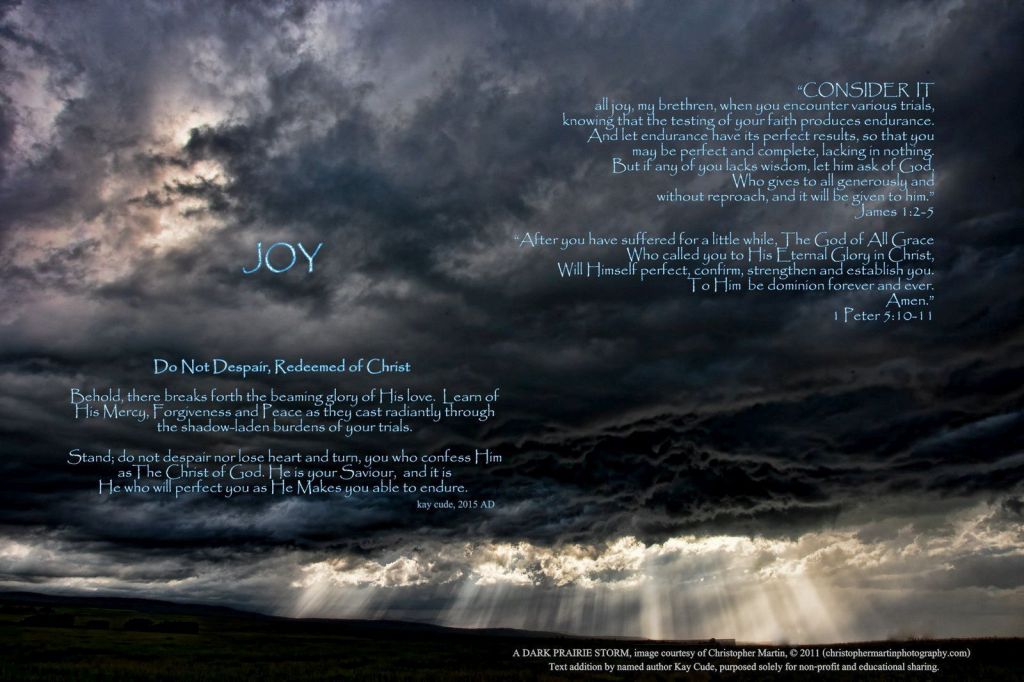
Here is a scripture photo containing scripture against a beautiful photo, with poetry by a friend named Kay Cude. I like her art and she gave me permission to publish some of her poetic scripture art. Right-Click to enlarge in new tab. Please enjoy.
Buffalo Springfield. 1966. For What It’s Worth. An anthem that captured a moment, a movement, a revolution. And it wasn’t about the Viet Nam war.
“For What It’s Worth (Stop, Hey What’s That Sound)“ (often referred to as simply “For What It’s Worth”) is a song written by Stephen Stills. Performed by Buffalo Springfield, it was recorded on December 5, 1966, released as a single on Atco Records on December 23, 1966. … The song is a staple of period piece films about 1960s America and the Vietnam War, such as Forrest Gump, and often used as a common shorthand to quickly establish the atmosphere of 1960s counterculture movement and protests.” (Wikipedia)
I used to vacation in the small village of Lubec, Maine. It is the “nose” on the map of Maine that looks like a silhouette of a dog. It sits across from Campobello Island, New Brunswick, Canada. I mean a stone’s throw. See?
The boat is docked in Lubec, USA. The lighthouse is in Canada.
Sunlight is a precious thing in Maine, especially that far north. Lubec is just 5 miles from the 45th parallel, which is the halfway point between the equator and the north pole. Daylight hours in July (when I visited) are 15 hours but in December there are only 8 hours of sunlight.
There is a street facing Canada called Water Street. There is an old cannery, the town library, a hotel, some pubs and cafes. One place you can stay is called the Betsy Ross B&B. It faces east, toward Campobello Island and has a bank of poppies and other plants growing in front. There is a slight overhang over the flwoers, plus the building is tall. The poppies are aiming, seemingly desperately reaching for the sun, as it rises over Campobello and arcs quickly across the sky before leaving the poppies in shadow again. See?
I wish I had a further-out view for you. But every flower is parallel to the wooden brace you see at a nearly 45 degree angle.
This isn’t a new thought, or an especially creative thought. But I think it is a good thought.
Though creation is fallen, it is still subject to God. Even the plants ‘know’ enough to reach for what is good for them. They need and thrive on the sun.
Isaiah 55:12,
For you will go out with joy And be led forth with peace; The mountains and the hills will break forth into shouts of joy before you, And all the trees of the field will clap their hands.
Barnes’ Notes says,
Here it is an expression of the universal rejoicing which would attend the extension of the kingdom of God on the earth.
The conscience-less creation groans now and will be praising with joy later. Metaphorically? Actually? The Bible doesn’t explain. Yet, we know that God has a relationship with creation. Maybe it’s a general call to praise, or perhaps the trees will clap and the mountains will shout.
For all our human wisdom and machinations and progress, we Christians, do we reach for what is good for us? The Son? With our superior relationship with Jesus over the creation and even over the angels, do we reach? Bask? Long for the Son?
The School shooting was horrific. I shed tears. The teachers and staff of our own school having just released our 500 students for the summer, waving goodbye as they settled into their bus seats and called out to us. It was a sweet parting. But only hours later, a devastated community, parents, and nation parted with 19 children and 2 staff members at another school in our country, parting with their kids in a different way- not in a sweet goodbye, but from massacre.
A shooter, alleged to be 18-year-old Salvador Ramos, opened fire at Robb Elementary School and killed 19 kids and two teachers. He injured two policemen before being shot to death.
I can’t imagine.
I just can’t imagine the grief.
Needless to say, Twitter came alive with all sorts of opinions, reactions, and attempts at comfort. Here are a few.
I long for Jesus’ return. I can’t wait for the Day when all will be resolved to His satisfaction as He’d ordained. I can’t wait for sin to be done. I can’t wait for the glory of the Lord to shine over all, and creation to be released from the curse. I can’t wait to serve Him in person.
I also long for and pray for the salvation of my loved ones. I cry, pray, and plead. I wish all could be saved, but I know all will be saved that are in the Lamb’s book of life, written before the foundation of the world. Meanwhile, since I don’t know who they are, I pray for all.
The Last Things, or Eschatology. is a set of doctrines pertaining to the Lord’s return. Sadly, that sphere of study has a bad reputation. Some fringe people have made too many predictions, too many people have set dates.
Eschatology has a bad reputation partly because people don’t understand it, having been ignored in seminaries for a few decades, and partly because so many people in recent decades have misused it (newspaper eisegesis, date setting, etc). The pendulum swings with regard to Christian trends and eschatology is currently OUT. That is too bad!
But beyond that, there should be a tension between wanting to see all come to salvation, and wanting the Lord to come back. They are not mutually exclusive preferences. They are not mutually exclusive doctrines. We are commanded to share the Gospel with all. Paul desired so much for people to be saved he would change places with an unsaved person if he could! (Romans 9:3)
But we are also told that we should long for His appearing. Paul of all people, pastoral Paul, with his desire to be with the Lord, even longed for judgment to come!
If anyone does not love the Lord, he is to be accursed. Maranatha! (1 Corinthians 16:22).
Maranatha was a common greeting and departure comment by which the early church was known. It literally means, ‘O, Lord come!’
John also expressed his fervent hope in the Lord’s return, as the book of Revelation and the Bible itself ends with it! “He who testifies to these things says, “Yes, I am coming soon.” Amen. Come, Lord Jesus!” (Revelation 22:20)
Longing for sin to be done away with, or wanting to be with the Lord because your heart aches due to family not saved or friends who are going astray is not to be sloughed off. There is nothing wrong with wanting justice to be done, or wanting to see the Lord’s glory. Saying ‘Lord please come’ is perfectly all right and more than all right, we are given a crown for longing for His return! (2 Timothy 4:8).
We’re told repeatedly in scripture to watch and be ready. Should we not express what we are hoping and readying for? Of course we should! The NT uses the word parousia, referring to the eschatological coming of Christ at the end of the age. (e.g., Matthew 24:3; 1 Thessalonians 2:19; 3:13; 4:15; 5:23; 2 Thessalonians 2:1, 8; James 5:7–8; 2 Peter 3:4, 12; 1 John 2:28). It means arrival. In these and other verses, look how many times we see reference to his arrival/revelation/appearing!
According to International Standard Bible Encyclopedia, “The subject of eschatology plays a prominent part in New Testament teaching and religion. Christianity in its very origin bears an eschatological character. It means the appearance of the Messiah and the inauguration of His work;” and “The eschatological interest of early believers was no mere fringe to their religious experience, but the very heart of its inspiration“
Yet in these days people don’t mention last things often. It’s a point of contention now, thanks to the devil. It’s also not mentioned much from pulpits, so the people in the pews don’t often exhort or even look for the coming of the Lord. If I mention it, sometimes I’m even scolded. I’d written on Twitter that if a so and so false teacher does not repent before death, then I long to see the day she is judged by a righteous Christ.
“On the one hand I remember what it was like to be so deep in sin, my worldview was as perverted & warped as hers. She needs Jesus badly. On the other, if she doesn’t repent, I can’t wait for the Day when He opens the books, repeats her awful statement, & pronounces WOE. Mt 12:36!”
A reply came that ‘Rejoicing in someone elses damnation is not cool. Js“. I said back,
Rejoice in His holiness
Rejoice in His justice
Gal 1:9, “As we have said before, so I say again now, if any man is preaching to you a gospel contrary to what you received, he is to be accursed!”
Even though I couched the first part of the statement with a hope that repentance would come forth, and I meant it, the second part of my statement seems to ignite a furor in people. Speaking of Jesus return to right wrongs, to perform justice, or just to enjoy Him, is seen as “unkind” and open to rebuke.
We should be excited for his return, he is our great Hope!
Saying ‘Lord soon come’, is also a way to remind ourselves and others that this world is TEMPORARY. It is not the end. ‘Lord soon come’ is the end. Not this world. We need people to say Lord, soon come, to help expand our mind to remember the future is not…this.
It’s also a way to confirm the Lord’s promise that he will return. We are told to look for it. 2 Peter 3:13 says, “But according to His promise we are looking for new heavens and a new earth, in which righteousness dwells.” Saying Lord soon come is a way to also confirm our trust in that promise.
We are weary and it’s OK to hope for that eternal rest. It’s not to the detriment of the unsaved for us to express that we long for the time when we are released from the burdens of this world. We can still hope for their salvation and also long for our rest.
Anyone who is a false teacher or who isn’t saved is an enemy of God. Often, people focus too much on the false teacher’s feelings rather than remembering that they are at enmity with God and enemies of the faith. We’re on Jesus’ side in this battle, at His great cost. There is nothing wrong with wanting enemies to be dealt with. David wrote a lot about that! We would not have half the Psalms we do if David hadn’t wanted righteousness to reign and enemies judged.
Again, there is nothing wrong for wanting the Lord to come and saying so. There are many biblical reasons for saying pleading for His return. Paul did. John did. We can serve the Lord by praying for salvations AND hoping and desiring His return. The two should be balanced in our heart and mind, but it’s nothing to be chastised for if we express our desire for Him and His righteousness to reign at His return, and evil to be vanquished. What a day that will be!
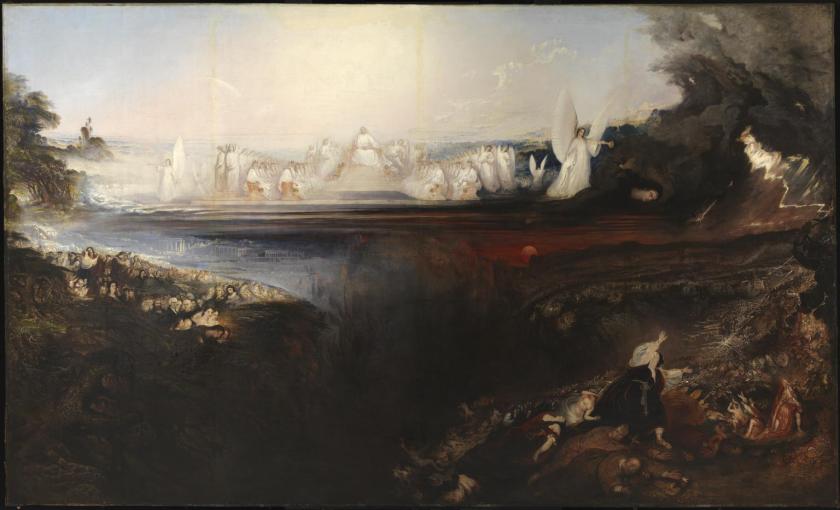
The Last Judgement 1853 John Martin 1789-1854 Bequeathed by Charlotte Frank in memory of her husband Robert Frank 1974 http://www.tate.org.uk/art/work/T01927