“There is no point at which God began. Before God ever made a world, He already existed. And the Scriptures make clear that as He existed from all eternity, there was already in His nature from all eternity the attribute of love. God didn’t become loving at the time of creation, for He has always been a God of love.” ~RC Sproul, The Eternal Love of God
I think of the moving story in the Bible about the Prodigal Son. His arrogance in asking for his inheritance before the Father had died, demonstrating where his heart was…leaving to pursue sin with glee and abandon. His realization that he was in fact worse off than the pigs without the Father, his coming back, resolved to be a lowly servant…the Father running toward His son, who He loves!
It’s me. I wandered in the muck of sin for 4 decades before in His timing, the Father plucked me up. He loved me through all that time, my sin and rebellion he loved me through the ages before I was born. He loved me in infinity before the foundation of the world.
His love is tremendous, expansive, unplumbable to the ends.
Would you love a pig of a person who spit on you and hated your guts? Would you wash him, invite him to your home, a mansion, feed you and take care of your every need? Of course we would not. We don’t. But God does. BUT GOD.
The Nature of God’s Loveby AW Pink
It is eternal. This [is] of necessity. God Himself is eternal, and God is love; therefore, as God Himself had no beginning, His love had none. Granted that such a concept far transcends the grasp of our finite minds, nevertheless, where we cannot comprehend, we can bow in adoring worship. How clear is the testimony of Jeremiah 31:3, “I have loved thee with an everlasting love: therefore with lovingkindness have I drawn thee.”
How blessed to know that the great and holy God loved His people before heaven and earth were called into existence, that He had set His heart upon them from all eternity. This is clear proof that His love is spontaneous, for He loved them endless ages before they had any being.
The same precious truth is set forth in Ephesians 1:4-5, “According as he hath chosen us in him before the foundation of the world, that we should be holy and without blame before him in love: Having predestinated us.” What praise should this evoke from each of His children! How quieting for the heart. Since God’s love toward me had no beginning, it can have no ending! Since it is true that “from everlasting to everlasting” He is God, and since God is love, then it is equally true that “from everlasting to everlasting” He loves His people.
LOVE ETERNAL AND UNCHANGEABLE
By Thomas Reade (1776-1841) GOD is love (1Jo 4:8)! Sweet truth! O my soul, rejoice daily in this blessed revelation, “God is love.” Before all worlds, before any being was formed, “God is love”—love eternal and unchangeable. He is the same yesterday, today, and forever. He is love. How inconceivably great is the love of God! All worlds rolling in the infinite expanse, all beings inhabiting those innumerable spheres, which extend far beyond the boundaries of the most excursive imagination, all the myriads of angelic spirits which dwell forever in the bright effulgence of uncreated light, are only the overflowings of that love, which is inexhaustible. The immense fountain loses not one drop, though countless millions are filled by its streams. It is ever flowing, ever full. “Lord, Thou art love. Oh, fill my soul with Thy love! Thou canst not be diminished, and I shall be made everlastingly blessed.”
By this the love of God was revealed in us, that God has sent His only Son into the world so that we may live through Him. In this is love, not that we loved God, but that He loved us and sent His Son to be the propitiation for our sins. Beloved, if God so loved us, we also ought to love one another. (1 John 4:9-11).
That is just one of many verses in the Bible about the deep and eternal love God has for His people. No matter where you are or what us happening to you, know that if you are a believer, you are loved by God, deeply, thoroughly, eternally.
and I give them eternal life, and they will never perish; and no one will snatch them out of My hand (John 10:28).
In 1 Kings 10:12 we read of the Almug Tree. I enjoy learning about the plants and animals of the Bible, so I was curious about this named tree. I learned that it’s also called the Algum Tree, and that no one is quite sure what type of tree it is. It could be sandalwood. Or not.
For me, the lone tree speaks of God’s wonderful handiwork, not only representing His gift of nature, but brings to mind that His redeemed are not alone, but safely tucked within His Might eternally. And as the brilliance of the sun pierces boldly through the dark-ending of the storm, one thought leads me to another — remembrance of Christ’s death and resurrection. Then speaks to His beloved redeemed: the “things” of this world are now more clearly seen through the light of His Salvation! We must daily pause to remember…
Believers are ordinary. We serve an extraordinary God.
He might use us in extraordinary ways, but we’re all flawed, sinful, ordinary people. He used ordinary grandmother Lois to raise up young Timothy. He took impulsive sons of thunder James and John and made them evangelizing Apostles. He used fishermen, (Peter, Andrew) sellers of purple (Lydia), teenagers (Timothy, Jeremiah, Mary, David), murderers (Paul). He used ordinary people going about whatever they were doing at the time and transformed them into vessels of activity for His glory.
Ordinary life: painting. EPrata photo
Yet there are some who believe that we must be extraordinary in order to make an impact for the kingdom. The movement of a few years ago when the books Radical, Crazy Love, Wild at Heart came out made many people think that they were ineffective unless they made a big and splashy move for the faith. This is not true. Mary and Martha were simply hospitable. Dorcas sewed. Susannah donated. Acts 4:13 says Peter and John were uneducated and untrained.
If you, dear reader or listener, feel marginalized, helpless to DO for God, ordinary, then rejoice. Our persevering faith in ordinary lives is just as valuable to God as a martyr uttering eternally known last words. Just as important as the luminary you read about in the Bible. Just as impactful as the hero in the Bible.
They were continually devoting themselves to the apostles’ teaching and to fellowship, to the breaking of bread and to prayer. (Acts 2:42).
Ordinary life: sweeping
What the Spirit inspired Luke to write was not just the extraordinary means of glory we see occasionally in Acts, such as miracles or healings, but the ordinary means of bringing God glory by a consistently faithful church. They devoted themselves to teaching and gathering and prayer. The extraordinary events died away as the miracles ceased, but the faithful never stopped gathering, learning, and praying.
Day by day continuing with one mind in the temple, and breaking bread from house to house, they were taking their meals together with gladness and sincerity of heart, (Acts 2:46).
Ordinary life: selling. EPrata photo
Note that. ‘Day by day’. The ordinary Christian life is one of persevering in spiritual disciplines day by day, accruing spiritual interest in the bank of heaven. I’m sure your parents taught you that putting 5 dollars a week into savings eventually yields dividends. They did not teach you that putting gluts of startling amounts into your bank account in spurts yields dividends. The way to save is to be consistent over time. It’s the same with the spiritual life. Add to your account day by day.
I’m looking forward to meeting these heroes in heaven but I’m just as eager, if not more, to meet the unknowns who brought God glory with their words or their lives.
Here are a few resources to help quell any anxiety anyone might have that their life doesn’t count, just because they are not running barefoot to Bali getting shot with arrows from cannibals or leading big conferences in arenas filled with thousands of adoring fans.
Here is Michael Horton, who wrote a book called Ordinary: Sustainable Faith in a Radical, Restless World. His book blurb reads as follows:
Radical. Crazy. Transformative and restless. Every word we read these days seems to suggest there’s a “next-best-thing,” if only we would change our comfortable, compromising lives. In fact, the greatest fear most Christians have is boredom—the sense that they are missing out on the radical life Jesus promised. One thing is certain. No one wants to be “ordinary.”Far from a call to low expectations and passivity, Horton invites readers to recover their sense of joy in the ordinary.
Ordinary life: cooking. EPrata photo
If you don’t want to read the entire book, here is Michael Horton with an article on the subject of Ordinary at Ligonier: The Ordinary Christian Life
John MacArthur with a sermon called “The Ordinary Church“. Excerpt: “It was Finney who decided that religion, to be valid, had to have some kind of high impact, high energy emotional element. It was about methods, feelings, experiences, sentimentalism, and it all trumped sound doctrine and theology. Gradual growth, by the normal ordinary means of grace, prayer, the study of the Word, fellowship was exchanged for a radical experience, the anxious bench, and there was introduced into the evangelical world a restlessness of those looking for something extreme.“
Other material that pushes back against the big, splashy, ‘change the world’ mantra are:
Memoirs of an Ordinary Pastor: The Life and Reflections of Tom Carson. D. A. Carson’s father was a pioneering church-planter and pastor in Quebec. But still, an ordinary pastor…
Essay An Unremarkable Faith – “Meet Larry, a thirty-six year old Science teacher. Larry married Cathy 12 years ago. They love each other and enjoy raising their two sons. Larry’s life wouldn’t hold out much interest to the average citizen. His Facebook account doesn’t draw many friends and nobody ever leaves a comment on his blog. In fact, most people would summarize Larry’s life with one word—boring. But not Larry.“
Ordinary Christian Work, essay by Tim Challies. “The questions every Christian faces at one time or another are these: Are Christian plumbers, cooks, doctors, and businessmen lesser Christians because they are not in “full-time” ministry? And what of Christian mothers and homemakers? Can they honor God even through very ordinary lives? Can we honor God through ordinary lives without tacitly promoting a dangerous kind of spiritual complacency?“
Saddleback Church pastor Rick Warren made headlines again this past summer 2022 when he opined at the Southern Baptist Convention about how wonderful he is, listing alleged spiritual and ecclesiastical accomplishments for which he took credit, not giving glory to the Lord at all.
In May 2021, he made headlines again, when he, at his church, ordained three women pastors.
I dug this one out of the 2015 archives, when Warren co-preached at a Catholic Conference. The Bible says not to be unequally yoked with false religionists in spiritual pursuits.
We should also not forget that in 2008 Warren prayed the prayer at the US Presidential Inauguration, praying in the name of the Muslims’ false god ‘Isa’, and had been partnering with Muslims in spiritual pursuits, even claiming they worship the same god as our God. Warren has been false for a long time.
In the first century, there were 7 churches Jesus caused John to write messages for. These were actual churches with actual congregations, doing and saying actual things. Jesus told apostle John, exiled at Patmos, what to write to these congregations. Jesus spoke commendations, criticisms, and instructions. Not all 7 churches were commended. Not all 7 churches were criticized. All had an instruction, though.
The church at Smyrna and the church at Philadelphia were not criticized. The church at Laodicea was not commended. The rest had both.
The churches were: Ephesus, Smyrna, Pergamos, Thyatira, Sardis, Philadelphia, Laodicea.
Can you imagine being assembled on Sunday, hearing a knock on the church door, a messenger arriving and handing a scroll to your pastor, and the pastor reads a letter from the head of the Church, Jesus Christ Himself? Jesus is very much alive and in charge of His global body of worshipers, AKA His bride. He was directly involved then, and He is directly involved now.
Each of the seven churches was not only an actual church but is also a type of church dealing with a problem mentioned in the letters. The problem is not unique to that church for that time. There are always the same kind of systemic problems many churches deal with and have been recurring throughout the centuries. Always, there is a church somewhere that is busy but not alive. Always, somewhere, is a church that is indifferent and lukewarm. On this earth, there is a collection of churches gracefully enduring suffering, or being persecuted. And so on.
Today, consider these churches, their problems, and meditate on whether you are one of the congregants causing the same problem they were criticized for. Look at the commendations and consider what you might do to contribute to a recommendation, if Jesus were to write your church a letter.
Please read Revelation 1-3, it is not hard. Those chapters offer the reader plain language and it’s not heavily symbolic. And, remember, it’s the only book of the Bible that promises twice you will be blessed for reading it.
And behold, the glory of the God of Israel was coming from the east. And the sound of his coming was like the sound of many waters, and the earth shone with his glory. (Ezekiel 43:2)
His feet were like bronze glowing in a furnace, and his voice was like the sound of rushing waters. (Revelation 1:15)
And I heard a sound from heaven like the roar of rushing waters and like a loud peal of thunder. The sound I heard was like that of harpists playing their harps. (Revelation 14:2)
When the creatures moved, I heard the sound of their wings, like the roar of rushing waters, like the voice of the Almighty, like the tumult of an army. When they stood still, they lowered their wings. (Ezekiel 1:24)
EPrata photo
When you’re canoeing or kayaking on a silent river, the only sounds you can hear are birds, whisper of wind in the trees, and the drip of water rolling off the paddle as it comes out of the water.
The sound of rapids can be heard a distance off. The tumult of rushing water is distinctive and signals a major change in the status of the river. Once calm and nearly still, the closer you approach to the rapidly rushing water, the louder it is, and the faster it goes. When you’re right on top of the rapids, that’s all you can hear. One must shout to be heard.
When the prophets were given a glimpse of the throne room and heard the sound like of “many waters”, I don’t pretend to understand what that means or how it sounded in real life to their ears. It’s hard to describe something so supernaturally incomprehensible as the voice of God translated to mere human words. One can only imagine what the sound of His voice is like at full, glorified throttle.
I do know two things though. The sound of Niagara Falls is about 95 decibels, roughly equal to a rock concert. That’s loud.
Second, the voice of Jesus when He returns is a voice that will drown out all other voices. The Mighty Rushing Waters will drown out all voices that deny Him. The Many Waters will drown out all voices that blaspheme Him. The roar of the Rushing Waters will drown out all voices that proclaim a different god.
Albert Bierstad (1830–1902) oil painting, Niagara Falls
In Revelation 6:15-17 it says Then the kings of the earth and the great ones and the generals and the rich and the powerful, and everyone, slave and free, hid themselves in the caves and among the rocks of the mountains, 16calling to the mountains and rocks, “Fall on us and hide us from the face of him who is seated on the throne, and from the wrath of the Lamb, 17for the great day of their wrath has come, and who can stand?”
On His Day, when He speaks with a voice like Many Waters, who can hear another voice? NO ONE. The voice of Jesus in power and strength will be the first, the last, and the only voice of holiness and glory, proclaiming His father the Almighty God! All those that dwell on the earth, the great and the small, the mighty and the lowly, will hear His voice, and who can hear another?
Each day that passes is a day we are in that kayak paddling downstream to the rapids, or on that boat Maid of the Mist approaching Niagara, getting closer to the day when the mighty rushing voice of God will be heard throughout the land. And what a day that will be.
Some sayings sound legitimate on their surface. They sound pious. They sound biblical. Like this one: “Cleanliness is next to Godliness”. Only problem is, that one isn’t in the Bible. At all.
Yesterday I wrote about the verse in Colossians 2:18,
Take care that no one keeps defrauding you of your prize by delighting in humility and the worship of the angels, taking his stand on visions he has seen, inflated without cause by his fleshly mind,
I’d noted that the false professors, i.e. false believers were standing on three things that were designed to draw people away from the faith, or at least dilute their effectiveness for a while: delighting in humility, worshiping angels, and visions/experiences.
The humility part sounds good, doesn’t it? But if you really think about the phrasing here, ‘delighting in humility,’ you begin to realize that delighting in your own humility is not humble at all! In fact, that s pride not humility, and we know what God says about the proud. They fall.
Part of humility is claiming to be uncertain. In other words, they said then and are still saying today that if you’re certain about an interpretation, or certain that Jesus is coming back, or certain about anything, you’re not humble. This is called the Hermeneutic of Humility. It was a problem then, as seen in Colossians 2:18, and it’s a problem today. Just think of all the people who say we need to approach the Bible with ‘nuance’ and ‘we can’t be sure’. (“I’m too humble to claim anything for certain!” they claim)
Mike Ratliffe said, “Hermeneutic of Humility” is a way of looking at our faith and interpreting the very Word of God through a filter that sees certainty as a product of pride and uncertainty as a virtue. … These people contend that to be certain divides people while uncertainty creates an environment of unity.
However the mantra that doctrine divides is a misconception. True doctrine does divide, and that is a good thing, because that is what it is supposed to do. But first let’s define hermeneutics.
CARM defines Hermeneutics as “The science of interpretation. Theologically, and biblically, speaking it is the means by which a person examines the Bible to determine what it means.”
The hermeneutics of humility says that anyone saying for sure what the Bible means is being proud and displaying arrogance. Ultimately, it is a subtle denial of the truth.
“There’s a new hermeneutics, a new science of interpretation called the Hermeneutics of Humility, and this is serious to the people who espoused this and their Hermeneutics of Humility say, “I’m too humble to think that I could ever know what the Bible really means and so I can only offer my opinion and I certainly can’t say that this is in fact the truth.” (source)
Now, while it is good to be humble (that’s why this saying is a subtle trick), let’s look at the difference between personal humility and interpretive humility. In personal humility, Romans 12:3 says,
“For by the grace given to me I say to everyone among you not to think of himself more highly than he ought to think, but to think with sober judgment, each according to the measure of faith that God has assigned.”
In other words do not exalt yourself, but think soberly and judge rightly.
“Do your best to present yourself to God as one approved, a worker who has no need to be ashamed, rightly handling the word of truth.” (2 Timothy 2:15).
Do we suppose that sober judgment and rightly handling the truth means that we can never know what it means? As Paul would say, “What a ghastly thought!” Denying that the Bible can be clear is denying the work of the Holy Spirit, who makes it clear. (John 14:25-26).
Yet the issue is a delicate one. Professor of religion and philosophy Winfried Corduan said, [link is to a .pdf]
“…the Bible is the inspired Word of God. And Jesus has promised the Holy Spirit to lead us into truth (John 14:26; 16:13). The Christian interpreter ought never to proceed without relying in both mind and spirit on God’s gracious gift of illumination. Nonetheless, the presence of the Holy Spirit in the life of the believer (undeniable though it is) does not provide a short cut through the hermeneutical process. The obvious counter-example to any such presumption is found in the fact that Christians who are equally committed to the discovery of truth disagree with each other. But the Holy Spirit does not teach different truths to such believers. Apparently it is possible to (at least claim to) rely on the Holy Spirit alone and not arrive at truth. Consequently it is best to say something along the line that the Holy Spirit’s work of disclosure is not entirely divorced from the human task of interpretation.”
It is why we strike a balance between personal humility and interpretive humility in the learning process, and boldness and confidence in proclaiming what we have learned.
If you think about it, if you’re too humble to say anything about the Bible’s contents for certain, then, what is there to proclaim? Proclaiming biblical truths would be seen as prideful, so we must remain silent…and therefore never tell anyone the Good News? Would such a conversation go like this: ‘Um, I think I have the answer to the problem you are having, it may be sin, but maybe not, and repenting of sin is the solution, but I can’t say for sure that repentance actually is, it might be a work, which would be bad but it might not be a work, but I can’t say for sure if repentance is required,…” and so on? The doctrine of the clarity (or perspicuity) of Scripture (that the central message of the Bible is clear and understandable, and that the Bible itself can be properly interpreted in a normal, literal sense) has been a cornerstone of evangelical belief ever since the Reformation. ~John MacArthur The reason why these sayings resonate is because they sound almost right. There is a grain of truth to the fact that we need to demonstrate humility when we approach the scriptures. It is an interpretive humility we need to possess. But once we come to a settled conviction, then, we’re sure that we know, because the Spirit will confirm in to our soul and our mind will be transformed. How is the Spirit supposed to transform the mind if the mind never settles on anything for sure.
“God is a speaking God. The Father is the one who, in the words of the creeds, est locutus per prophetas. [spoken through the prophets]. Most of what God does, creating, commanding, warning, communicating, promising, forgiving, informing, comforting, etc., is accomplished by speech acts. Moreover, God’s speech agency is the epitome of clarity and efficacy.”
Pride rears its head in people exhibiting a lack of interpretive humility when we believe we have got the meaning right before we have made the appropriate effort to recover it, as Vanhoozen explains. In other words rightly divide and make a sober judgment and with the aid of the Holy Spirit we will know what God is saying to us as far as our assigned faith will take it. Clearly and definitively. Because what good is unknowable truth?
Ultimately as Vanhoozen says, “Humility must be balanced by conviction. The uncommitted interpretation is not worth hearing.“
What a person adhering to a hermeneutic of humility is really saying is that:
–I am too lazy to put in the effort to really understand God’s written word, –If we can’t know for sure what the Bible means, then I don’t have to follow its commands, –Look at me, I’m so humble I won’t even try to figure out what God is saying, –God spoke but not clearly enough to understand it. [He is a God of confusion].
Ask the Spirit to aid you in remaining personally humble, and seek His aid in being interpretively humble. Then, when the Spirit illuminates a truth to you, proclaim it boldly and certainly! The Bible never says that bold faith is arrogance. Peter and Paul were definitely certain of what they taught!
–In whom we have boldness and access with confidence through our faith in him. (Ephesians 3:12)
–Proclaiming the kingdom of God and teaching about the Lord Jesus Christ with all boldness and without hindrance. (Acts 28:31)
“Scripture itself at tests its own perspicuity, but not to the point that it can not be misunderstood or is in every point equally simple and clear. The doctrine does not rule out the need for interpretation, explanation, and exposition of the Bible by qualified leaders. The doctrine does mean that Scripture is clear enough for the simplest person, deep enough for highly qualified readers, clear in its essential matters, obscure in some places to people because of their sinfulness, understandable through ordinary means…“Professor Larry Pettigrew, The Master’s Seminary
Put on your armor and wield some truth!
Sir Gawaine the Son of Lot, King of Orkney, by Howard Pyle (1903)
One of the most surprising things to me after my salvation was that there were people claiming to be Christian who would try to draw me away from the truth. I had been relieved to enter the kingdom, and I felt literally like I was stepping into a safety zone, an oasis of calm after having lived in turbulence and chaos for 42 years. It was a jolt to my system that though peace reigned between me and God, turbulence between false professors and true believers was abounding.
False professors are people who profess Christ but do not possess the Spirit. I.e., false believers.
Colossians is a tremendous book. Of this verse in Colossians, let’s first focus on the first five words, Paul’s warning, underline mine-
Let no one keep defrauding you of your prize by delighting in self-abasement and the worship of the angels, taking his stand on visions he has seen, inflated without cause by his fleshly mind, (Colossians 2:18, NASB).
Other translations say let no one disqualify you from the prize.
There were some spiritual elites going around Colossae, intimidating the new believers there. They threatened them with disqualification from the faith, and the newbies were buying it. Now, a true believer can never actually be separated from Christ, but the elites claimed the newbies were under a threat of failure in the faith if they did not believe and practice things in addition to Christ. This is what the book of Colossians is about- Paul re-teaching that Christ alone is sufficient.
Christ was not all-sufficient to these elites. They said the new believers must also practice one or more of three things: self-abasement (humility), worshiping angels, and visions.
True humility is a true virtue. The elites in Colossians were not practicing it though. They evidenced a prideful humility that pointed to themselves. Which isn’t humility at all, of course. They delighted in their humility, in effect, saying, ‘Look how humble I am! I’m sooo godly! I’m sooo faithful!’
Secondly, worship of angels in Colossae was an issue well into the fourth century. Worship of angels destroys the one thing believers are commanded to do: “worship the Lord your God, and serve Him only.” (Matthew 4:10b).
And visions. Oh, my, let’s talk about visions. They were a problem in the first century and they are a problem in the twenty-first century. People who are errant in their beliefs and know there is no biblical support for these beliefs, (if diligent believers go looking) the false professors instead try to buttress their beliefs with experiences and visions.
John MacArthur preached,
What is he [Paul] saying? “Don’t let anybody tell you you’re disqualified from attaining the prize of spirituality because you haven’t reached the level of self-abasement, you haven’t understood the worship of angels, you haven’t had the right visions.” … They’ve said, “It’s Christ plus my visions; plus my experiences with the angels; plus my deeper experience, my higher experience.” (MacArthur, “Spiritual Intimidation, part 1“)
No. Just…NO. Christ alone. Satan’s wiles have always been to sway a believer from the path to Jesus feet, and bundle belief with other beliefs, actions, rules.
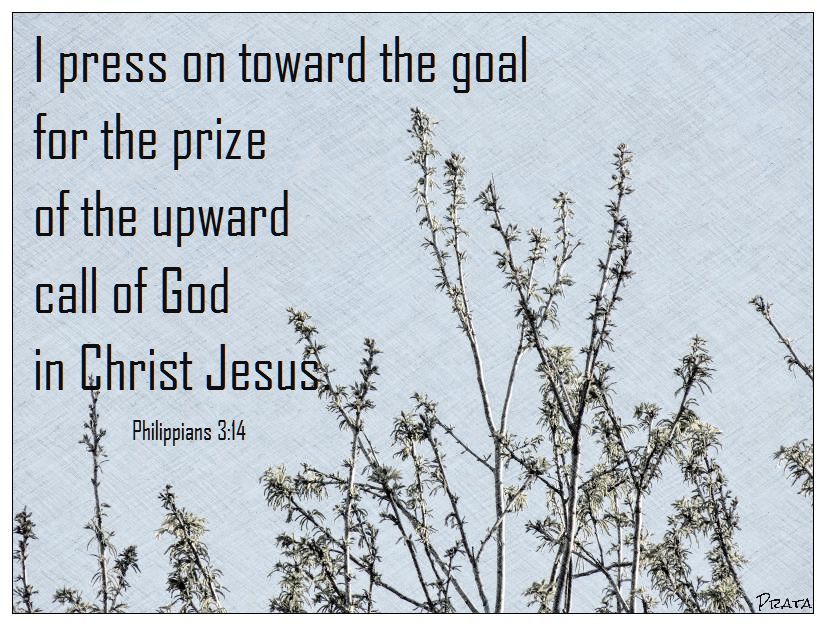
THERE is an allusion here to the prize which was offered to the runners in the Olympic games, and at the outset it is well for us to remark how very frequently the Apostle Paul conducts us by his metaphors to the racecourse. Over and over again he is telling us so to run that we may obtain, bidding us to strive, and at other times to agonize, and speaking of wrestling and contending. Ought not this to make us feel what an intense thing the Christian life is—not a thing of sleepiness or haphazard, not a thing to be left now and then to a little superficial consideration?
These elites have “fleshly minds” as the verse indicates. They were puffed up with their visions and boasting of humility and spiritual pride of ‘knowing more’ (mysticism). They had no reason to be secure. Their minds were flesh, not of Christ.
“There is a tendency in human nature to move from objectivity to subjectivity-to shift the focus from Christ to experience. This has always intimidated weak believers and threatened the church.” (MacArthur, Commentary on Colossians & Philemon.)
False doctrine is not only a corruption in the church, it does damage to you individually. One way false teaching and false teachers harm you is that following them even temporarily and certainly for a longer period disqualifies you for the prize. It is the false teacher’s intent to try and disqualify you. Even if they make you doubt, they have succeeded. Even if they make you wander, thus diminishing your effectiveness for a time, they have succeeded. That is why Paul wrote such a strong warning.
For the strong believer, what is inferred is a stronger believer’s responsibility to our brethren who are following a false teacher. How will it be when they are judged, when told to give an account of themselves (Romans 14:12, 1 Corinthians 3:11-15) and we hear Jesus say that a friend has lost some prizes because they followed a false teacher and thus were disobeying Jesus, while we knew all along and never said anything.
Jude says, But you, beloved, ought to remember the words that were spoken beforehand by the apostles of our Lord Jesus Christ, that they were saying to you, “In the last time there will be mockers, following after their own ungodly lusts.” These are the ones who cause divisions, worldly-minded, devoid of the Spirit.
Catch that. They are devoid of the Spirit. This means they do not possess the Spirit. i.e. unsaved. But Jude goes on in Jude 1:22-23,
And have mercy on some, who are doubting; save others, snatching them out of the fire; and on some have mercy with fear, hating even the garment polluted by the flesh.
This means, snatch them from wandering, grab them to prevent disqualification, help them understand in love and in discernment the person they are following will lead them AWAY from the prize.
Let’s end where we started. Don’t let anyone defraud you of the prize. The ultimate prize is Jesus, His faith, His comfort, faith in Him and Him alone.
Right click the picture to see larger in new tab. Used with permission of author.
Kay Cude Author Statement:
“I [Kay Cude] was reading the July 2022-Volume 706 Banner of Truth Magazine when I came upon an article by Nick Needham, “Shapers of Christianity-Gregory of Nazianzus (AD 330-390).”
Mr. Needham begins, “The fourth century is often considered the Golden Age of the Early Church Fathers, owing to the sheer intellectual and spiritual brilliance of that century’s Christian thinkers in expounding the faith doctrinally and practically. Among its most influential figures were the Cappadocian Fathers.”
‘”This was a group of three theologians from the Roman province of Cappadocia in Asia Minor –Basil of Caesarea, his brother Gregory of Nyssa, and his friend Gregory of Nazianzus. Of the three Cappadocians, Gregory of Nazianzus came to be the most treasured by following generations. Greek speaking Christians reverentially called him “Gregory the Theologian,” as if he were the first true theologian after the apostle John. In the Greek East, the term “theologian” had special reference to the Doctrine of the Trinity. The apostle John was held to be the first great theologian in that sense, and Gregory the second.”
As a Southern Baptist, I [Kay Cude] am insufficiently read of the early Church Fathers, but that four page article drew me into a “beginning understanding” that their unwavering dedication to stand in and teach the Doctrine of the Trinity and lead the church in rejecting and vanquishing the Arian heresy, should also be the understanding and dedication of the 21st Century’s true Body of Christ. We also are to understand that the fullness of the Trinity is wholly divine. And that should also compel us to stand unwaveringly against Arianism and any other demonically inspired weaponry raised against the Doctrine of Trinitarianism.
This dedication is perhaps more important than too many of the redeemed of the invisible church realize; for the bewitchment that is Arianism is once again an acceptable theology of a greater portion of the visible church. Far too many do not believe in the Holy Trinity; and most assuredly far too many reject the second person of the Trinity, our Lord and Saviour Christ Jesus as divine and of the same full essence and nature with God the Father.
In summary, I find that the more I seek to learn and understand, the more I realize how very little I know and how very faint is my understanding of the Holy Trinity; and yet I am compelled to want to know. And that is the excellency of the mystery of the sovereign and providential work and will in our spirits by our Father the Lord God I AM WHO I AM; that our hearts are compelled by the Holy Spirit to seek to know the Lord God I AM as He really is; and in that, to know and honor and worship the divine fullness of the Trinity and the three distinct persons, God the Father, God the Son, and God the Holy Spirit. We must desire to have a right understanding of what is the true honoring in the true worship of the “One Deity and Power, found in the Three-in Unity.”
ORATION 40, CHAPTER 41 – GREGORY OF NAZIANZUS
I set before you the One Deity and Power, found in the Three-in-Unity, Embracing the Three One by One, equal in essence and nature, Neither increased nor decreased by ideas of greater or less; In every way equal, in every way the same, Just as the loveliness and hugeness of the heavens are one: The infinite oneness of Three Infinite Ones, Each of whom is God when seen individually in Himself. As the Father is God, so is the Son, And as the Son is God, so is the Holy Spirit; And the Three are likewise One God when seen together. Each is God because they are of the same essence, And they are One God because of the single principle of Deity. The very instant I conceive of the One, I am enlightened by the brightness of the Three; The very instant is differentiate them, I am carried straight back to the One. When I regard any One of the Three, I think of Him as the Whole; My sight is filled to the brim, And the greater part of what I am thinking of eludes me! I cannot grasp the greatness of One of the Three So as to reckon a greater greatness to the Others. And when I see the Three together, I see only one torch, And I cannot divide or share out the Undivided Light.
right click to open larger in new tab. Poetry by Kay Cude