By Elizabeth Prata
Tag: book review
Summer Reading: Paradise Lost
By Elizabeth Prata
When someone says “summer reading” it usually brings to mind beach reads, AKA light novels, that are aimed to entertain. Since people take vacations in summer, they bring with them a novel that isn’t mentally demanding, just aiming to soak up the book in their hand and the sun above as they escape briefly from their workaday life.
I’m the opposite. Summer reading for me means I choose demanding books because I’m off work for the summer. During school my mental capacities are stretched to the max. I teach reading to a succession of 6 small groups over 4 different grades using 3 different reading programs. It’s a lot. I love it, but it drains me mentally.
When I get home, I’m a zombie and it takes a pot of tea and an hour to recover. I have nNo capacity for demanding novels.
So in the summer when I’m off and I’m not being challenged mentally, it’s the perfect time to make my TBR stack of classics, or ‘books I’ve always wanted to read but haven’t yet’ or ‘a book that is hard for me. Four summers ago I tackled Moby-Dick. Then it was Treasure Island. Then Joseph Conrad’s Heart of Darkness. So this summer it’s going to be…
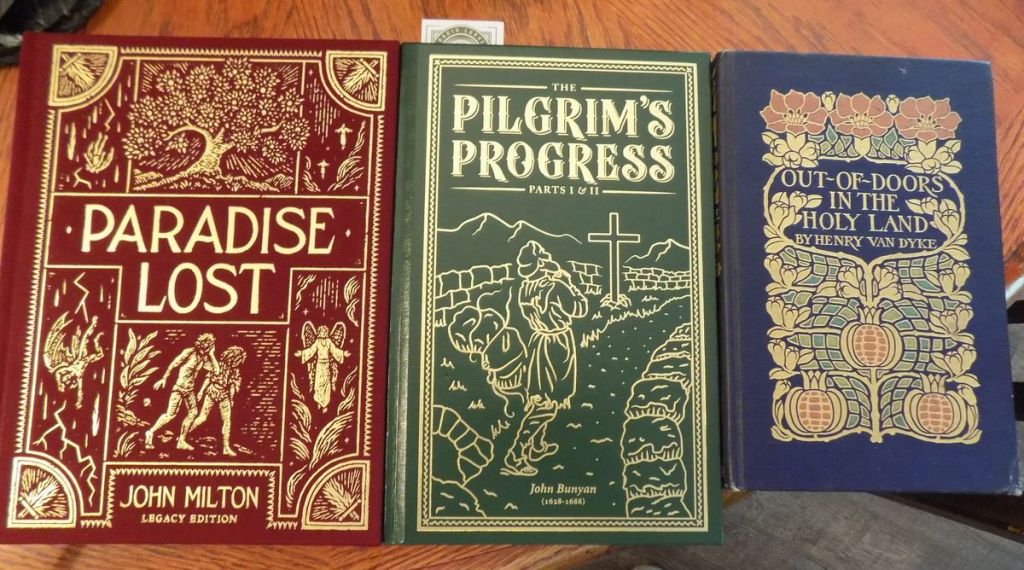
I saw it advertised on Grace Books’ website and it is not only one I’ve always wanted to read but this edition is a beautiful book. I mean, you had me at ‘gilt edged’. And ‘cloth bound’. Yes, I judge a book by its cover. Come at me, lol.
It’s John Milton’s epic poem, “Paradise Lost’. Written in 1667, the publisher promises that it is an unabridged version but there are margin notes for unfamiliar words. So already I know the language is going to be demanding. And harder for me personally, is the fact that it is written as an Epic Poem. I have a rough time with poetry, I just don’t understand it.
An Epic Poem is (according to Encyclopedia Britannica), “long narrative poem recounting heroic deeds. Outstanding examples of the written epic include Virgil’s Aeneid and Lucan’s Pharsalia in Latin, Chanson de Roland in medieval French, Ludovico Ariosto’s Orlando furioso and Torquato Tasso’s Gerusalemme liberata in Italian, Cantar de mio Cid in Spanish, and John Milton’s Paradise Lost and Edmund Spenser’s Faerie Queene in English.”
I read The Aeneid, The Odyssey and The Iliad, when I was in my early 20’s. Forty-five years later – ahem – my brain may have dimmed somewhat. In fact, I when I was in High School and just after, I read most of the standard classics listed in top 100 lists and I’m glad I did back then because reading or re-reading them now is much harder. But every summer, I select a classic to read or re-read, and that is my Summer Reading!
The version issued by Grace Books was on 40% off the regular price at the time (it’s still 10% off now), so of course I could not resist. The book itself (according to the blurb) contains:
Explanatory notes are included in the margins for allusions to Greek mythology and obscure words.
- Introduction by Dr. Leland Ryken
- Cover design by Stephen Crotts
- 50 vintage illustrations by the renowned Gustave Doré; modified to cover nudity
- Genuine cloth cover with gold foil print and a ribbon page marker
What is Paradise Lost about? Adam and Eve’s rebellion and humanity’s fall from grace. One reviewer of this edition on Amazon said,
“Having biblical backgrounds in its plot of being about Adam and Eve‘s temptation and humanity’s fall from grace, “Paradise Lost” should be read for its unparalleled sonorous language, it’s profound exploration of human freedom, disobedience and rebellion, and its impact on Western literature. It offers a complex, timeless, psychological portrait of Satan serving as a foundational text for understanding the archetypal antihero.”
OK, this should keep me busy! Here are the photos of this beautiful edition. I appreciate Gustave Doré’s illustrations. He was a famous French artist, printmaker, and caricaturist who died in 1883. He is best known for his wood-engravings illustrating classic literature, especially Dante’s Divine Comedy. What I really appreciate in this edition is that though the language has been left alone, the illustrations have been lightly edited to cover up the nudity in Doré’s illustrations.
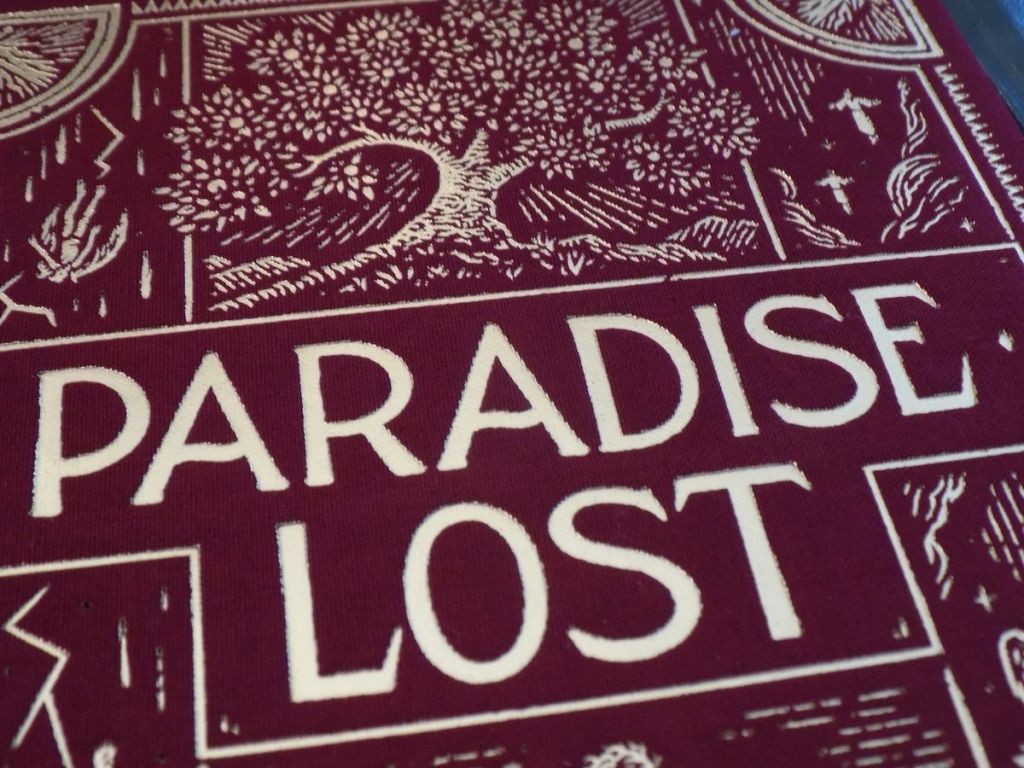

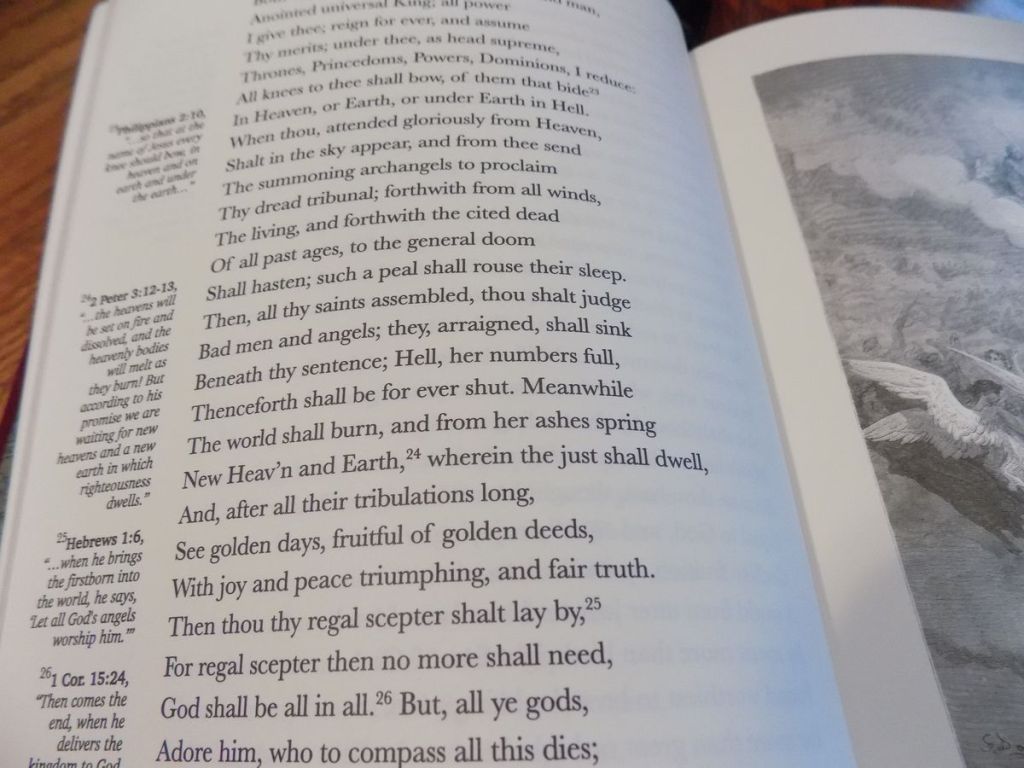
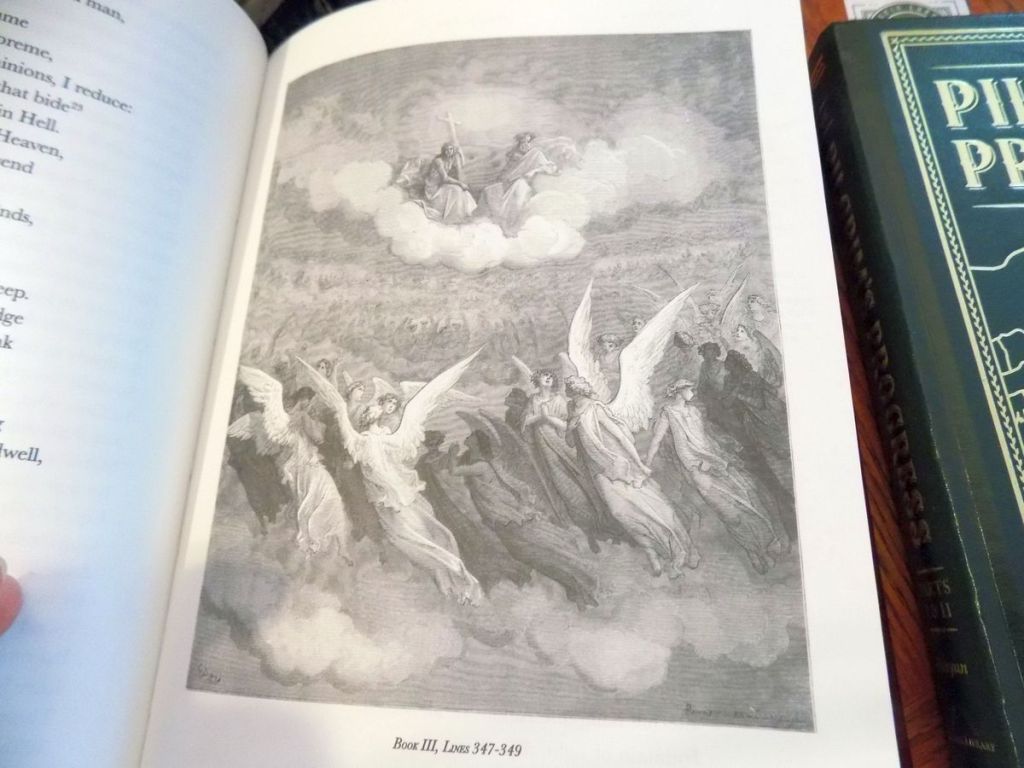
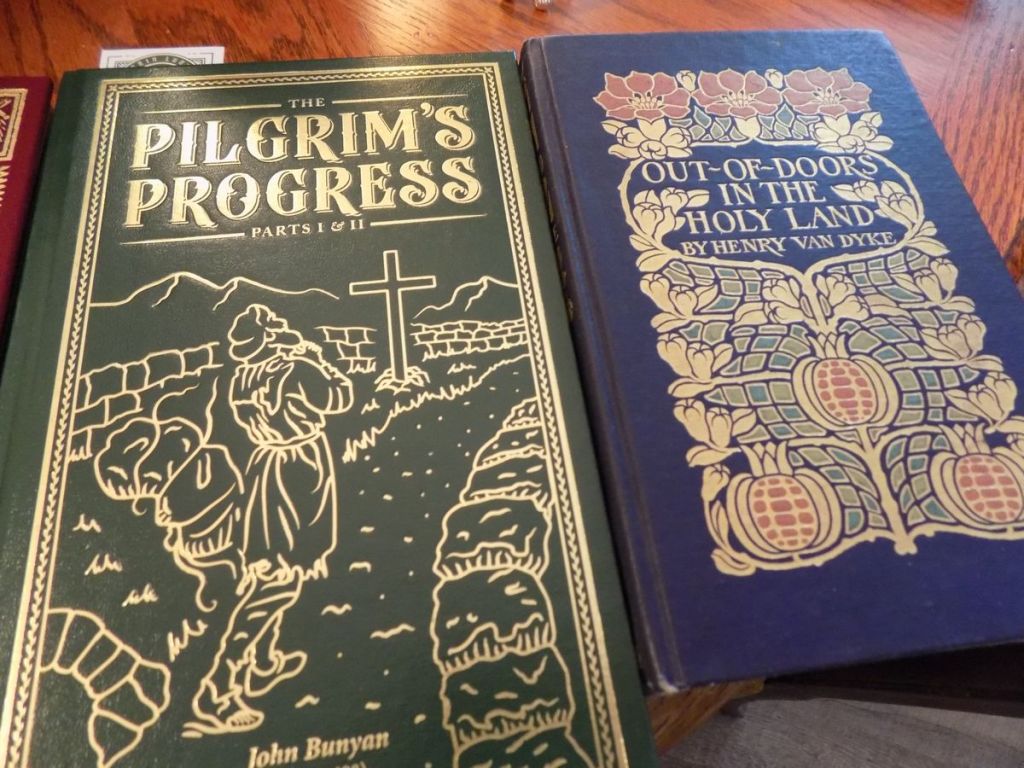
I mentioned I do judge a book by its cover. Here are two others I’ve recently acquired. The Pilgrim’s Progress was a free gift from Chapel Library, and the Van Dyke I bought myself. See what I mean? If I am going to own books, they might as well be beautiful. My other reading selection this summer is a re-read of Pilgrim’s Progress. I’ll also finish the Grisham I started, as well as Lady Audley’s Secret, Lord willing and the eyes don’t fail!
Happy reading and book-ing this summer! What is on your TBR list?
Book Review: From digital fatigue to analog renewal- Thom Rainer’s “The Revival of the Analog Church”
By Elizabeth Prata
Introduction
Have you heard of the new trend sweeping through our society from Gen Z-ers to Boomers? It’s analog. Yes, the new fashioned word for an old fashioned life- one filled with tactile hobbies like knitting and crosswords in real books and newspapers. Design trends where prospective house buyers seek a home like grandma had- with real rooms, not open concept, afghans, wallpaper, hardwood floors, sunrooms, even sewing rooms. They call it ‘a grandma house.’
The last 30 years has seen a rise of the digital, and a resulting loss of the tactile. People are tired of the constant notifications, intrusive surveillance, annoying advertisements/pop-ups, and anxiety known as FOMO (Fear Of Missing Out). When we’re always ‘connected’, we tend to compare our lives to others and covetousness, jealousy, and unease rises. Frankly, we’re tired.
The Book
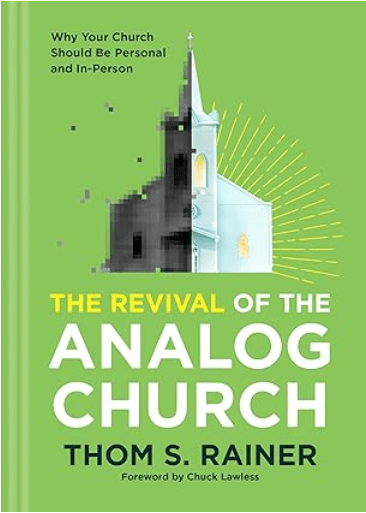
The church has not escaped the impact of the rise of digital lifestyles. Into this rising trend of concern and yearning for simpler times is Thom Rainer’s forthcoming book, “The Revival of the Analog Church: Why Your Church Should Be Personal and In-Person (Church Answers Resources)”. It is due out in October 2026, and it is being published by Tyndale Momentum.
The Problem
The church never escapes being influenced by the world around us. Even diligent churches that resist worldly trends have to fight hard to push back. Church is composed of people, and people for the last 30 years have grabbed onto all things digital. Many churches have suffered for it.
Rainer wrote, “Have we digitized what was meant to be deeply personal? The digital world gave us tools. Helpful ones. We could reach farther and faster. Sermons went online. Groups went virtual. Resources were available with a click.”
But all these tools come with a cost. We are suffering from ‘digital fatigue’ and this includes churches. It’s no so much the tools that churches use, such as streaming the sermon or digital Bibles, it is the pace at which the digital world has taught us to run. It is the brain, always pumping for more, the new, the next. Digital is a tool, but it has overpowered us and taught us that we need to always be moving. This constant movement includes a hurry-up pace in church. Yet, Rainer writes, church is exactly the place where we need to slow down, pray pensively, linger in relationship, be present emotionally, mentally, physically. He advocates for “the sacred simplicity of a Sabbath-like presence.”
Rainer’s point is synopsized with this- we are digitally numb, and ‘Digital numbness leads to spiritual numbness.’
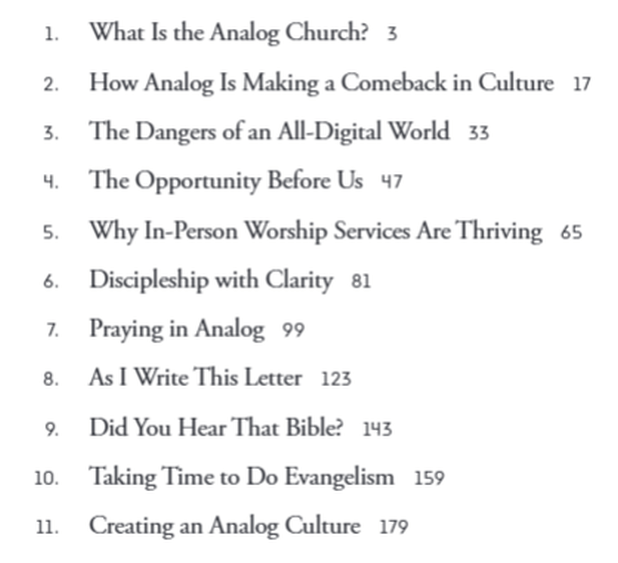
The chapters, 11 of them, describe the problem and offer solutions. Rainer includes reflection questions at the end of each chapter.
My Review
Rainer begins with a solid explanation of the difference between analog and digital, and how this is impacting the church. He humbly relates that he himself had fallen into the fast-paced digital world, at one point, to the detriment of his family. He loves the digital and assures the reader he is no naysayer, writing, “We have not sinned by embracing digital tools.”
However, Rainer makes the case that we must mindfully slow our pace, be present at church, and restore an unhurried worship.
This book is positioned well to capture this wave of analog yearning to return to an unhurried pace with real relationships. The realization that digital has its limits is fueling the desire to return to unhurried worship and discipleship in its fullest sense. In his book, Rainer describes how.
There is no doubt that digital media has drastically changed how people communicate and how people commune with each other, and the change has impacted not only worship but witnessing and evangelism. This must be a concern for us all.
His point is that “People are weary of a life that feels like it’s always in motion but never truly grounded.” It’s true that the digital world has taught us to live in fragments, when Jesus actually taught to live by thinking deeply, slowly, and intentionally in worship.
Positives:
–The author captures and crystallizes and amorphous unease many people seem to be dealing with regarding the digital lifestyle,
–His end-of-chapter questions are thought provoking,
–Rainer provides solutions, not just identifying the problem,
–He Humbly includes himself in the digital problem.
Negatives:
–I saw a few scriptures, maybe 3 or 4. I’d like to see more scripture use in a book about the importance of relational worship,
–His likening of listening to vinyl records or playing board games to church life as examples of analog were a bit of a stretch. In my opinion, he could have written more deeply about analog church life. I felt the book was more overview than deep theology. Of course, this is fine for someone new to the concept of the problem of digital vs. analog.
–The writing style was very much digital. Too many sentences beginning with ‘And’, staccato short bulleted sentences, and lots of “it’s not this, it’s that.” Rainer mentioned several times how he has absorbed and enjoyed the digital life and pace, and this absorption shows through in his writing, which definitely mimics the digital.
Conclusion
If you are new to the idea that digital fatigue is rising and beginning to permeate our society -and the church- from the oldest adult generation to the youngest, then this would be 4-stars for you. If you are already familiar with the concept and want a more deeply theological examination of the issue, then this book is a 3-star for you, with other suggestions below.
Further Resources:
Out-Of-Doors in the Holy Land by Henry van Dyke. Published 1908 and considered a classic of Holy Land travelogues. Blurb: “Van Dyke’s beautiful descriptions and thoughtful reflections on the landscape, the people, and the spiritual significance of the places he visits make this a must-read for anyone interested in travel, religion, or culture. This work has been selected by scholars as being culturally important”. The premise is that Christianity was an out of doors religion, where walking, pondering, contemplating and considering were all slow processes.
Digital Minimalism by Cal Newport. (2019). Blurb: “a book that proposes a philosophy for using technology intentionally to support your values, rather than letting it control you, advocating for a focused life by drastically reducing low-value digital activities”.
Twelve Ways Your Phone is Changing You, by Tony Reinke. (2017). Blurb- “Drawing from the insights of numerous thinkers, published studies, and his own research, writer Tony Reinke identifies twelve potent ways our smartphones have changed us—for good and bad. Reinke calls us to cultivate wise thinking and healthy habits in the digital age.”
Competing Spectacles by Tony Reinke. (2019). Blurb- “We live in a world full of shiny distractions, faced with an onslaught of viral media constantly competing for our attention and demanding our affections. These ever-present visual “spectacles” can quickly erode our hearts, making it more difficult than ever to walk through life actively treasuring that which is most important and yet invisible: Jesus Christ.”
God, Technology, and the Christian Life by Tony Reinke (2022). “Highlights: Biblical, Informed Look at Technology; Gathers Ideas from Industry Experts and Theologians by Interacting with Christian and non-Christian sources on technology and theology including John Calvin, Herman Bavinck, Wendell Berry, and Elon Musk, and is Educational: Discusses the history and philosophy behind major technological innovations.”
Amazon Bio: Thom S. Rainer is the founder and CEO of Church Answers. Prior to Church Answers, he served as president and CEO of LifeWay Christian Resources. He also served at The Southern Baptist Theological Seminary for twelve years where he was the founding dean of the Billy Graham School of Missions and Evangelism. He has been a pastor of four churches and interim pastor of ten churches. He has written several books, including “I am a Church Member” and “Simple Church”.
DISCLAIMER- My Advanced Reader Copy was provided via NetGalley. I received a free digital copy of this book from Tyndale, the publisher, in exchange for an honest review.
Not Every Christian Book Is Safe
By Elizabeth Prata
SYNOPSIS: Examining trends in Christian publishing, the article warns that bestselling breakout books often gain popularity through marketing and consumer demand rather than sound doctrine. Because false teaching can spread through widely read titles, believers should approach popular books cautiously, seek counsel, and practice discernment carefully.
Continue reading “Not Every Christian Book Is Safe”The Importance of Reading for Christians: Advice from Puritan Richard Baxter
By Elizabeth Prata
SYNOPSIS
I present the importance of reading for Christians, yet advocate for the Bible as the primary text. I reference Puritan Richard Baxter’s advice on selecting books that enhance scriptural understanding and do not present stumbling blocks to growth. Christians should be readers of all kinds of appropriate books.
Chick Lit with a Touch of Magic: Blackbird Café Review
By Elizabeth Prata
SYNOPSIS
In my review of a book set in Wicklow, Alabama, the protagonist, Anna Kate, returns to bury her grandmother and confront her family history while grappling with magic realism. I explain the genre of ‘magic realism’, discuss my genre preferences, and note that some genres present stumbling blocks to some while not to others.
Continue reading “Chick Lit with a Touch of Magic: Blackbird Café Review”Why Christians Should Embrace Reading Fiction
By Elizabeth Prata
I discuss reading fiction as a Christian. Despite the notion that some people have that “God’s word is enough” and that other reading isn’t required, I and others argue that fiction enriches our understanding of human experience and offers valuable leisure. I share insights from Leland Ryken and Tony Reinke, urging people to consider the importance of good literature in a busy life.
Continue reading “Why Christians Should Embrace Reading Fiction”John Mark Comer’s Book “The Way”: A Kind of Review
By Elizabeth Prata

I call this ‘a kind of review’ because I have not read John Mark Comer’s (JMC) book “The Way“. I am posting links from other reviewers I trust.
Prior to publishing this book, people have taken issue with Comer on other topics, such as his theological approach, his understanding of God, his emphasis on spiritual practices, and his view of the Atonement. You can already detect that this will not be a positive review.
In fact, I would like to give a general warning to my women reader-sisters. The way things are going in Christian publishing, if a new book is popular, you can almost rely on the fact that there will be theological concerns with its premise. Secondly, if a book claims to have recovered a long lost practice/approach/interpretation of the Bible, one that everyone has overlooked till now, you can 100% guarantee it is theologically unhealthy.
JMC’s ‘Way’ involves what some call too much Eastern Mysticism and Richard Foster type disciplines. In the early 2000s, Eastern Mysticism began sweeping into the church. Famously, Beth Moore participated in a DVD teaching that explained how to perform “Contemplative Prayer”. While both the words contemplate and prayer are commanded in the Bible, this particular practice adopted eastern mystic/Catholic methods. Richard Foster and Dallas Willard were primary in bringing these practices into the church and strove to legitimize them. Christian Answers for the New Age has more here on Foster & Willard.
JMC says that the word ‘Christian’ is used only 3X in the New Testament but ‘apprentice’ is used 269X. That the word “Christian” no longer means what it did back in Bible days and plus, it’s a “label Jesus never used”. While indeed earliest Christians were called that, they were also called many other things such as brethren, saints, disciples, the church and so on. But Comer takes the terms we have come to have a common understanding of, i.e. ‘Christian’ and ‘The Way‘ too far off the road of orthodoxy and too much of a stretch, in reviewers’ opinions. We seek to evangelize people to a union with Christ, not solely to ‘a way of life’. Comer’s premise tends to the latter, not the former. Focusing on THE WAY rather than the PERSON of JESUS is a trap.
JMC touts the “Rule of Life”. This is a practice that originated from a Catholic monk named Saint Benedict (named a saint by the Catholic Church) in the 400s, as a rule book for monks to develop contemplative practices.
Kevin DeYoung reviews “The Way”, saying, “The invitation to “come and see” is not about test-driving the way of kingdom love; it’s about discovering Jesus’s divine and messianic identity. That’s why Andrew says, “We have found the Messiah” (1:41) and why Nathaniel exclaims, “You are the Son of God! You are the King of Israel!” (1:49). It’s also why the chapter ends with Jesus referring to himself as the divine Son of Man from Daniel’s prophecy (1:51). Comer has taken a passage explicitly about the revelation of Jesus’s identity as the Christ, the Word made flesh, the Son of God, the Son of Man, the revelation of the Father’s glory, and the king of Israel, and turned it into a rather mundane message about discovering the best way to live. This is not a small interpretive misstep.”
Marcia Montenegro at Christian Answers for the New Age is a trustworthy discerner. She has a review of Comer’s new book about The Way, here. “Comer’s theme is that Christians must pursue the “practices of Jesus,” or the “Way of Jesus,” which are the spiritual disciplines. However, there is no evidence that the spiritual disciplines as taught by Comer and others are taught in Scripture, nor are meditation and prayer modeled in Scripture anything like what is taught by Contemplatives.”
Gary Gilley at Critical Issues Commentary also has a critique of Comer’s book The Way. The link goes to a list of 14 parts, lol, but you can read the titles and pick which critiques to read.
9Marks reviewed his book, saying, “I was left with a Jesus that would make for a great life coach, but not the Savior and Lord as revealed in God’s Word.”
The subtitle of Comer’s book “Be with Jesus. Become like him. Do as he did” reminds me of another book that urged its readers to do as Jesus did. In fact, it’s where we get the mantra WWJD, or What Would Jesus Do? It is from the 1895 book by Charles Sheldon called “In His Steps.” I reviewed that book here. While we always desire to transform our heart and mind toward Christ-likeness, an unhealthy focus on doing rather than worshiping always tips the balance toward experiential and/or Social Gospel. Whether Comer’s “Rule of Life” or Sheldon’s “What would Jesus do?” the tendency is present.
It is best to stick with Christian material that has been authored by a Christian leader who has already passed on. They can sin no more. Their legacy is cemented. They ran the race well. You may hear the phrase “Read the Christian old dead guys”. According to AI, “The phrase “Christian old dead guys” refers to significant, deceased figures in Christian history, often theologians, preachers, and writers whose works continue to be influential and studied today, offering insights into Christian faith and practice. These individuals are sometimes affectionately referred to as “old dead guys” by modern Christians who value their contributions and seek to learn from their legacy.”
The Power of Social Media Influencers in Today’s Digital Age
By Elizabeth Prata
The article discusses the internet and social media. It highlights influencer Hannah Ricketts’ negative review of Nobu Hotel, which sparked significant public response which reflected the power of social media influencing. I warn about the influence of false teachers on believers, emphasizing the need for vigilance against misleading influences in today’s digital age.
Continue reading “The Power of Social Media Influencers in Today’s Digital Age”The Christian Romance Genre: Faith and Fiction
By Elizabeth Prata
SYNOPSIS
I discuss the genre of Christian romance, with its emphasis on Christian values, faith, and wholesome themes. While this genre avoids explicit content, the field varies widely in interpretation and acceptance of certain topics. The piece also points to Harlequin’s influence in popularizing these narratives while advising readers to choose wisely.
Continue reading “The Christian Romance Genre: Faith and Fiction”
