I share my summer experiences as an educator enjoying time off to read, reflect, and engage with media. I experienced a lengthy internet outage that interrupted my studies and entertainment. I mention various books, focusing on their content and spiritual themes, while expressing gratitude for the opportunity to use my time wisely.
New Year’s Resolution. I said to myself, “Self, NO MORE BOOKS.”
There.
I lasted one month.
But what is a bibliophile to do when there is a great sale on books AND the person is a Christian who needs the money? Buy a bunch, of course.
Bibliophile: “a person who collects or has a great love of books.” I love books, everything about them. Their construction, their looks, the possibilities they offer for imagination taking flight, for reality being put aside for just a little bit. I love old books, first editions, oir just good books. They are friends.
I love finding them, inventorying them, shelving them, thinking about them.
Bookworm: “a person devoted to reading.” I love reading but admittedly as I’ve aged and I’m still working full-time in a mentally demanding job, I have little energy to read on a weekday evening anymore, pitifully.
What’s the difference between a bibliophile and a bookworm? Not much. They often go hand in hand. A bibliophile is someone who loves books and often collects them, while a bookworm is an avid reader. Bibliophiles may also enjoy the physical aspects of books, such as their smell, feel, and appearance, while bookworms may be more interested in the content, says AI. I’m both.
My home growing up didn’t have many books or even a bookshelf but both parents read. In a later childhood home there were lots of books. The downstairs den had floor to ceiling built-in bookshelves. I used to enjoy looking at the titles of these grown up books. As for me, my library card was fairly worn out with how much I was there getting more and more books to read.
I also love giving them away. If someone needs a book, either any book or a certain book, they can have it if I have it.
I’ve got three other bookcases with books in them, all secular. One is in the bedroom and two are in the living room. A small shelf in the kitchen has cookbooks, and on my table is a small shelf of ‘what I’m reading now or next.’
My theological library-
trunk is antique with an old map for its covering. both these chairs are vintage.
It’s been many years of accumulating, curating, looking. About 18 years, to get to this point.
Feminism is evil. But I didn’t know HOW evil until I read The End of Woman: How Smashing the Patriarchy Has Destroyed Us, by Carrie Gress.
I had avoided books and discussions about feminism because I’m 64, meaning, I’m old enough to have actually lived through Second Wave Feminism. It wasn’t fun. I grew up with feminists. I’ve seen the impact of the 1960s and 1970s on women, culture, the workplace, media, education, and more. Been there, done that. Even though I wasn’t saved and possessed a worldly perspective, I still didn’t like feminism. It didn’t make sense to me. So I avoided any scholarly or deep dive into feminist doctrine.
Cut to 50 years later. I follow Erin Coates on Instagram. Erin highly recommended the book, The End of Woman: How Smashing the Patriarchy Has Destroyed Us by Carrie Gress, which she had listened to on audio. On the strength of Erin’s strong faith and wise discernment, I bought the book.
I’m glad I did.
Erin was right, it was a tough read. Not a hard read due to the words, it was very well written. It’s a tough read because it’s spiritually burdensome and quite anger-inducing.
What ‘The End of Woman’ covers
The author Carrie Gress presented a historical overview of feminism from the academically accepted origins in the late 1700s, to now. However, she embedded feminist concepts against its birth milieu, the French Revolution. She showed the clear ties of feminism to Marxism. Most of all, she demonstrated the vapid, degraded, hopeless lives of history’s biggest proponents of feminism who tried to live the lifestyle to earn all its fulfillment promises but failed. Many actually committed suicide, or lived a life so depraved they died from its accumulated sins, went insane, or ended life economically impoverished.
Consider this, as Gress wrote: “The French Revolution represented a dramatic shift in culture, even more so than the American Revolution. America’s revolution was against British rule for the sake of freedom, but the French Revolution was an effort to recreate and reshape society in a world without God.”
It NEVER goes well for a society when it attempts to remove God. “Nature abhors a vacuum” is a truism. A biblical truism is that satan prowls around like a roaring lion, and his subtlety and craftiness never sleeps. The French Revolution gave rise to the doctrine of feminism in order to fill that vacuum.
Feminism is unwieldy, mainly because it is against God’s best for men, women, marriage, child-rearing, and society, but also because it just doesn’t make sense in and of itself. Something that arose frequently in the book was that adherents usually came to a crossroads with promoting the principles of feminism or succumbing to ‘societal norms’ of marriage, monogamy, and tending to children. Time and again, those who had promoted free love or a living together arrangement ended up married or leaving the commune. ‘Do as I say, not as I do.’
They discovered feminism’s limits
Mary Wollstonecraft, c. 1797, source Wikipedia
For example the ‘patient zero’ of feminism usually attributed to Mary Wollstonecraft, saw how society treated children born out of wedlock- especially her own daughter from a previous relationship. Her intended husband, anarchist Willliam Godwin, had stridently declared marriage to be “possession of a woman”, “odious selfishness,” and that the family was the enemy of unhappiness because of its unnatural enslavement of free male sexuality.
Then they got married.
The hypocrisy of feminist adherents is natural, because God’s ways are best and deep down, says Romans 1, they know it. Though they side with their fleshly desires, to the detriment of their own lives and souls, it just makes sense to marry and have a family. “They lived with a kind of hubris believing that they were new and radical by defying convention. History, of course, shows that they were not so novel…” writes Gress.
It should be noted that many if not most of the women in first wave feminism and second wave feminism were middle to upper class women. They had money, means, and time to experiment with fulfilling their sinful desires to restructure society into one that not only accepts their sinful choices but heartily approves of them. (Romans 1:32).
The second wave was worse than the first wave
Second wave feminism’s catalyst is attributed by historians to Betty Friedan and her 1963 book The Feminine Mystique. Friedan’s stance was that women were made for more than “just” their ‘mystique’ which is housewifery and mothering. They were shackled to their stoves, crying out on behalf of a “problem that could not be named” but, (according to Friedan) all of them felt. The question in housewife’s minds was, “Is this all?” Buying curtains and waxing the floor?
Friedan rebutted this ‘assumption,’ and opined that all housewives were beleaguered, voiceless drones, going so far as to compare homemaking with ‘a comfortable concentration camp.’
That book was a match that ignited women’s discontent to levels that shook the culture, turned it upside down, and still reverberates over half a century later.
Gress rightly calls Friedan’s comparison of housewifery to a comfortable concentration camp, “overwrought.” “What the starved, gassed, lice-infested, raped, brutalized, tortured, and ultimately exterminated people in real concentration camps would have given to live like the most privileged women in human history,” Gress said.
Friedan’s husband Carl acknowledges, “She had time to write it because she lived in a mansion on the Hudson River, had a full time maid, and was completely supported by me.” So when reading about Friedan’s grievance about being a full-time housewife and mother and how it led to a nameless, widespread problem of voiceless drudgery, consider the source. They were rich dilettantes who had time and means to monkey with society’s structure for the fulfillment of their own sinful desires.
Friedan in 1960. Wikipedia source
Gress wrote: “Feminism offered us women’s studies and women’s health and women’s rights, but they didn’t tell anyone, even once solid data was in, that their goals leave women miserable, unhealthy, and wondering what we did wrong. … Their goal via the sexual revolution was to reject motherhood, monogamy, and marriage in favor of hookups, money, glamour, and it has left so many unfulfilled, and deeply unhappy.”
Because they lack God.
Feminism easily mixes with other bad doctrines
Gress shows feminism’s connections to communism, lesbianism, and how it aligned with and morphed into the homosexual ‘rights’ and civil rights movements. Feminism is more than a philosophy, and it is more widespread in its pernicious evil than one would initially think. Gress shows how the feminist doctrine itself has turned into a kind of religion.
Smashing the patriarchy has harmed men, too, of course. Men are “Tossed aside, largely because they are not required to win the heart or body of a woman, and the concepts of commitment, self-mastery, self-sacrifice, and family, and many of the practical virtues that accompany them…” writes Gress.
Why read this book?
The End of Woman is not an easy read, as I mentioned. It is well written and well-researched, but the research is solid, which makes for a more academic book than a casual one. It is worth reading though. Why?
-To give you a grounding in the depths and width that feminism has infiltrated not only society but the minds of women, including you, your daughters, and your granddaughters.
-To give you proofs for rebutting the doctrine of feminism. If you are in a wellness group, homeschool group, play date group, book group, or any other group where today’s women congregate, after reading The End of Woman you will likely have a firmer grasp of how feminism operates and can be a witness for Jesus in the rebuttal, or just to strengthen your own resolve to live the Godly goal of wife, mother, and homemaker.
Far from having a ‘problem with no name’ which was Friedan’s code for an aimless, amorphous dissatisfaction with one’s role, Godly femininity is fulfilling, pleases God, and raises strong children.
-To fire you up for hating what God hates and loving what God loves. What feminists focus on are the humdrum tasks of housewifery. Granted, those can be dull at times. No one’s soul is lifted scrubbing your boys’ bathroom toilet. But the satisfaction of providing a clean, warm, safe home for the children and husband to return to, is. Ultimately what feminists leave out is the satisfaction of living inside of God’s boundaries for women, whether married, widowed, single, mother, or childless.
Conclusion
I recommend reading The End of Woman. As Erin Coates also warned, however, the author is Catholic. Coates wrote,
As well researched as this book is Carrie’s solution is sorely lacking, she believes that simply doing the opposite of what we have been doing and a rediscovery of womanhood will rescue us. I believe that that only true repentance and a turning to Christ will turn this ship around. The gospel silence was deafening.
Gress wrote, that “we have to come to know ourselves as women…” No, we have to submit our soul to the Captain of our souls for the transforming of our mind into Christ-likeness. ‘Who we are’ as women is that we are sinners. While Gress goes into the need to recover what it means to be a homemaker, and to learn lost arts of bread making, sewing and the like, and though her concluding sentence is that it is time to come home to ourselves as wives and mothers, the ultimate solution is missing. Praying for redeemed souls who understand obedience to Jesus brings the most fulfillment there is on earth.
It’s a good and interesting book. Please consider reading it.
Further Resources
Podcast from DoubleTake: The Feminine Mystake, 40 min. This podcast essentially summarizes the book reviewed here, in fact, interviews and excerpts from Gress’ book are within. Plus more!
Back in 1992 Bruce Springsteen published a song called 57 channels (and nothing on). It was during the time when streaming movie channels had gone to a 24 hour format, (yes, HBO hadn’t always been 24 hours), cable tv was expanding, and satellite television was coming in. In my day in the 1960s and early 1970s, we had 3 broadcast channels, and later Public TV added a 4th.
Many of us marveled at the expansion of available choices for personal entertainment, but shortly we were disappointed at the vapidity of them all and frustrated by the lack of quality. It was true, 57 channels and nothing on.
Thirty-three years later we have even more opportunities for our personal entertainment in not only streaming movies and TV, but music, internet content, podcasts and print media in books. Despite the widening of choices, Christian segments of each of those industries still remains small. What do we watch/listen to/read without our eyes/ears/heart becoming dispirited (or righteously offended) by the content? For readers, aren’t there ANY safe, well-written romance books? 57 Publishers and nothing to read…
Tim Challies is a reader and a book reviewer. He is the author and promoter of the Annual Christian Reading Challenge, in which I have participated in the past.
I was glad to see this article by by Jon Dykstra linked from Tim Challies’ site. I’d add the eerily prescient 1914 novella from EM Forster, “The Machine Stops“, which predicted, well, pretty much where we are now regarding media, internet, imagination, ideas, social contact and more. Pretty amazing for a hundred-year-old novella.
Dystopian is a word from Greek meaning ‘bad place’ according to the article. It’s the opposite of Utopian, meaning ‘perfect place’.
Dystopian fiction is a genre that describes people surviving or trying to, after a holocaust of some kind, or a societal collapse, or a nuclear war, and the like. The article speaks of this kind of fiction being worthwhile because it helps us in predictive prophecy of the secular kind, in connecting the dots to see a current credible future threat. The author Dykstra’s point was that this kind of fiction spins a credible threat into scenarios that help us understand where these threats may lead us.
This is a genre well worth exploring, though with care and caution. It’s a big blank canvas that insightful writers can use to paint pictures of grim futures, all in the hopes that they, and we, will ensure such futures never come to be.
Of course, the mightiest and truest prediction of all is what God has said will come, via His word in scripture. Nothing outsmarts, outpaces, outdoes God’s prophecies.
EPrata photo
I enjoy this fiction but had felt mildly guilty about it, as though I needed to be doing something more productive. I’d wonder, ‘Am I a ghoul?’ ‘Why do I find this absorbing?’
Mr Dykstra helped me see my interest in it was to go where my own imagination lacked facility, to ‘see’ a future that is all too real in some cases, and to develop opinions and thoughts to guard against it. EM Forster’s The Machine Stops is a future that is practically already here, as is Stephen King’s The Running Man. Chilling.
The most famous work of dystopian fiction is George Orwell’s 1984, which the article mentions. That work was published in 1949. Another famous work of dystopian fiction is Aldous Huxley’s Brave New World. Other classic dystopian books are PD James’s Children of Men, which discusses the childlessness of all the nations and certain doom as the already born die off with no new births coming up to replace them. In fact, birth rates are ranging from declining to collapsing all over the world right now.
Of course there’s the famous Canadian book The Handmaid’s Tale. Dystopian fiction is good where it helps us see ahead and cope with credible current or near current threats and that book’s twisted version of Christianity isn’t a credible threat.
I mentioned I’ve participated in the Challies’ Christian Reading Challenge, at the “Avid Level” (26 books to read in a year.) I added several others of my own choosing to Challies’ list, making myself a separate genre nook of dystopian books I wanted to read. They included The Running Man, The Machine Stops, and It Can’t Happen Here by Sinclair Lewis about the rise of fascism in the US.
FYI, in Stephen King’s The Running Man (1982)- The end is absolutely chilling, because the final action the main character takes has already come to pass. Remember, in Dykstra’s essay, dystopian fiction that presents credible threats help us formulate our own reactions and imaginations, and that ne came true, for sure.
William Forschen’s book One Second After (2009) depicted the effect upon America from an EMP, (electro-magnetic pulse), and the nation’s societal collapse and resulting high death rate. The author consulted with psychologists, economists, and sociologists to base his fiction on real scenarios those experts stated would most likely happen if we suffered an EMP. It was well written and horrible to think of it occurring, as the Bible hints in some form, it will.
-was one of the first apocalyptic novels of the nuclear age and has remained popular more than half century after it was first published, consistently ranking in Amazon.com’s Top 20 Science Fiction Short Stories list. The novel deals with the effects of a nuclear war on the fictional small town of Fort Repose, Florida, which is based upon the actual city of Mount Dora, Florida. The novel’s title is derived from the Book of Revelation: “Alas, alas, that great city Babylon, that mighty city! for in one hour is thy judgment come.”
Nuclear winter wasn’t a very known or understood event back then, so the survival rate of the population in Alas, Babylon, this initial entry into the American dystopian nuclear fiction isn’t realistic, but most of the rest of the book is.
As predictive or as absorbing as dystopian fiction might be for some people, the only true prediction is what the prophetic books of the Bible tell us will happen in the future, in God’s timing.
With the US election mere days away, many on both sides are saying ‘if the other side wins it will be the end of us’… Maybe, maybe not. It might tell us a bit about God’s judgment, though, or it might just tell us that we go on living long after the thrill of living is gone, as John Cougar Mellencamp sang.
People, the Tribulation is unthinkable. But we must think on it, the Lord’s wrath already hangs over the unsaved. Thoughts of the dystopian future and reading it now in His word should should spur us to witness with eagerness and fervor.
I don’t think a steady diet of this kind of material should be on our plates, but books like this can be a legitimate addition to our bookshelves or movie queue, for the reasons stated above. Happy reading…or in this case, unhappy reading.
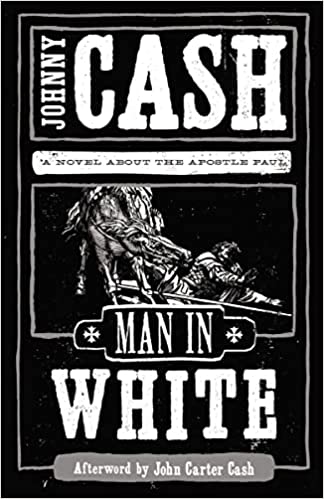
Johnny Cash wrote a novel on the life of Paul. Yes, THAT Johnny Cash, known as the Man in Black. (1932-2003).
It shouldn’t really be a surprise, because although Cash was known for his singing, he was also a songwriter. He was inducted into the Nashville Songwriters Hall of Fame in 1977. He wrote over a hundred songs. He was also an actor, appearing in television shows and movies, more of them than you think. He was creative.
Cash also is famously known for his struggles, his Christianity, and his marriage, usually all tied up on one knot.
He began drinking and using drugs in the late 1950s when his career took off and he needed to stay awake on the punishing long tours. He drank. He became drug addicted. He smuggled drugs, caused a terrible forest wildfire that nearly killed him, was arrested several times, divorced his first wife, and spun out. He sobered up stayed in control for some years in the 1970s, and got addicted again winding up in the Betty Ford clinic for drug rehabilitation in the 1980s. His final rehabilitation was in 1992.
Cash was raised by Southern Baptists. He claimed to be a Christian throughout his life. With wife June, Johnny completed a two-year course of study in the Bible through Christian International Bible College, receiving a theology degree. He and June made a pilgrimage to Israel in November 1978. He was also ordained as a minister around that time.
Johnny Cash was a creative Christian man interested in the things of Christ, so it’s no wonder he wrote a novel about the Life of Paul. It’s called “Man in White.” I looked at the question of “Is novelizing a book of the Bible or a Bible character’s life adding to scripture?” here. Some believe yes others, no.
I appreciated Cash’s preface to the book. In it, Cash described his research process, his interviews with Jewish rabbis and biblical scholars, and his trip to Israel. He described his thoughts about why he wrote the book. He explained it humbly, too, another thing I liked about the introduction. His explanations satisfied any lasting qualms I had about a novelization of a Bible character’s life.
In reading Man in White, it seemed to me that Cash took what was known about Paul, the culture of the day, the temple, the Pharisees etc, and depicted it accurately. We know of Paul’s zeal for Christ as one of Paul’s endearing and awe-inspiring character traits. We also know that Paul prior to conversion was zealous for the Temple and that he was fervent in killing Christians. Cash took that personality trait of Paul’s – his unswerving religious zeal and his staunch commitment to God – and aptly showed how the Lord turned murderous zeal into a Gospel fervor for Jesus.
For example, we know Saul had a letter from the High Priest allowing Saul to kill Christians. Cash did a good job of showing Saul’s irritation at Christians over time turned into an almost unmanageable zeal and how it seemed to be unbalancing him. Saul ignored warnings from friends and the High Priest alike. Cash used the Bible’s letter scene by showing Saul committing to a 7-day fast in preparation for putting into action his commitment to wipe out Christians everywhere he found them. Yet also sensitively showed Saul’s niggling doubts, and how he suppressed the truth in unrighteousness every time his conscience reared up.
We know that Paul had a father who was a Pharisee. (Acts 23:6). We know he had a sister and a nephew, mentioned in Acts 23:16. We also know that Jesus said he would cause division in families. (Luke 12:49-56). So Cash took that concept and made an issue with Saul’s conversion from zealous Pharisee to fervent Christian and depicted a split in the family between his sister and her husband. Cash created a fictional but plausible scenario where after Paul’s sister might have converted, and her husband then sought a bill of divorcement and also split from Paul. The sister’s resulting struggles as a hunted single Christian woman were similar to struggles we know Christian characters had with converting during that time of persecution.
I also thought Cash’s depiction of the three days of blindness Saul/Paul had after encountering Jesus on the Road to Damascus was plausible. He wrote what Paul must have been thinking, of the fears of Christians to have Paul in their midst, and so on.
Where it depicts biblical events, it’s accurate. Where it shifts into novelization, it’s plausible, staying true to the concepts of the time. All in all, my opinion is that “Man in White” is a worthwhile book.
I’m often asked to review or share my thoughts on a Christian Bible study, a new book, or other material. As someone with the spiritual gift of discernment I am happy to do this for women since the gifts were distributed for the edification of the church; local first, then global. Recently I was asked about a popular book by Emily Lex. The book is called-
Freely and Lightly: God’s Gracious Invitation to a Life of Quiet Confidence
During this short school break I managed to finish my book and watch a couple of movies. Here are some short reviews of them. In my opinion they are clean and good material, safe for Christians. Some of the diseases the explorers in the Amazon had were described – ahem – realistically…and in the three movies I do not remember any language and certainly no sexual situations. In The Booksellers one seller specializes in fringe books and a cover of a salacious book was briefly shown.
Book: The Lost City of Z: A Tale of Deadly Obsession in the Amazon, By David Grann
“In 1925, the legendary British explorer Percy Fawcett ventured into the Amazon jungle, in search of a fabled civilization. He never returned. Over the years countless perished trying to find evidence of his party and the place he called “The Lost City of Z.” In this masterpiece of narrative nonfiction, journalist David Grann interweaves the spellbinding stories of Fawcett’s quest for “Z” and his own journey into the deadly jungle, as he unravels the greatest exploration mystery of the twentieth century.” Amazon synopsis
Grann is a superlative writer, and a fantastic researcher. HOW he got access to as many of the hidden, lost, and protected primary materials, I’ll never know. Some non-fiction writers don’t want to let go of all the research they did and cram it in, bogging down the story (as happened with my book on Jesse James). Others leave out too much of the research and the reader deals with gaps of information or lack of context. It’s a delicate balance. Grann nailed it. His engaging style and the wealth of information wrapped in great storytelling made for a rollicking book. I was fascinated from start to the fantastic ending.
He seamlessly switched between Fawcett’s expeditions of the past, and his own research expedition. I was fascinated with Fawcett’s life as well as Grann’s own increasing curiosity about what happened to Fawcett. All the while gaining insight into the beginnings of the Royal Geographic Society and the early expeditions by these brave and sometimes foolhardy men. A good old fashioned story, just the way you like it. Recommended.
Of similar interest: these incidents in the Amazon were mentioned in Grann’s book, Movies Fitzcarraldo, Burden of Dreams (even better than Fitzcarraldo), and Aguirre Wrath of God. Similar adventure books are Out in the Cold: Travels North, by Bill Murray; and book The Lure of the Labrador Wild, by Dillon Wallace.
—————————————–
Documentary: The Booksellers. A behind-the-scenes look at the rare book world. I enjoyed this documentary so much. The rare book sellers are smart people, they use articulate words to fervently describe their passion, in bookish way, that is. The peek at selling books, fads in book collecting, the passion behind these important social artifacts, the history of book selling…was all touched on but in a personal way, through the eyes of people new to the profession all the way to third generation sellers. Stay on past the end credits, where Fran Liebowitz’s apparent dispassion for books is unwittingly revealed to be just as a heated passion for her books as everyone else’s, lol. Here is a review of the documentary from Variety. On Amazon Prime.
For more on the subject- Bibliostyle: How We Live at Home with Books. (Book) Midnight In Paris, Movie (must watch).
—————————————–
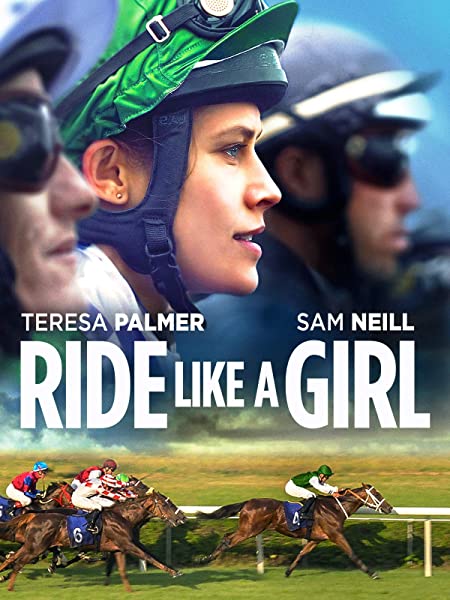
Movie: Ride Like a Girl. Based on the true story of Michelle Payne, first woman to win the Melbourne Cup. Beautiful scenery, a good story, Sam Neill as the father was terrific. Michelle’s younger brother Stevie, with whom she is very close, is a Down’s Syndrome child, and he appeared as himself in the film. I think he stole the show. A clean, good, normal movie, made all the better because it is a true story. I hadn’t realized the emotional build-up until the end when the catharsis left me in tears. On Netflix. Hollywood reporter review.
Of similar interest: Walk Ride Rodeo, another film based on true events, and the series Free Rein, all also on Netflix.
—————————————–
Movie: Enola Holmes. Adding to the ever-present canon and satisfying an apparent audience clamor for more Sherlock Holmes stuff, comes this Netflix original. Adding a younger sister to the known family of Sherlock and Mycroft Holmes, the plucky gal has been raised by her eccentric mother (Helena Bonham Carter) who nurtured Enola’s brilliant brain as well as training her physically for challenges of a life of independence. Which is just as well, because when the mother goes missing, Enola sets off to find her. She outsmarts even her brilliantly deductive brother Sherlock, and saves a Viscount in the process. Aside from the usual feminism (women can do anything a man can do…we can change the world…yadda yadda…) the movie was attractive, interesting, rollicking, and felt Disneyesque (in Disney’s earlier more innocent days). Enola’s rated PG 13 for some mild violence (a man tries to drown Enola, she’s stabbed but survives due to the whalebone corset, etc). There is no language I remember and nothing sexual at all. I enjoyed Enola breaking the 4th wall, and loved all the interstitial slides of Victorian ephemera. It is a visually sumptuous movie. I liked it, and I went into it expecting not to like it. 🙂
Of similar interest: movie The Journey of Natty Gann, series Anne of Green Gables.
——————————-
I like working in an elementary school mainly because I love kids, but also because these short breaks come up every so often. I’m looking forward to the week off at Thanksgiving. I hope to put it to good use both with applying myself to spiritual things- I want to finish Saints and Sectaries (About Puritan Anne Hutchinson) and begin a book Blood Work by Anthony J. Carter, about the blood of Christ. And make progress in my The Masters Seminary course The Doctrine of Salvation with Mike Riccardi teaching.
But I also want to read and enjoy good movies and documentaries. My next book will be Out in the Cold, the travel adventure by Bill Murray I mentioned above. I plan to watch My Octopus Teacher soon or during the next school break, as well as The Social Dilemma (if I dare). I’m also interested in Joan Froggatt in Dark Angel, a story of the infamous Victorian poisoner Mary Ann Cotton.
I hope the above suits your entertainment needs and you enjoy!
This past June, Blogger/Reviewer Tim Challies reviewed Andrew T. Le Peau’s new book “Write Better.” I’m a writer always looking for ways to hone my craft, and since Challies’ review was glowing, I bought the book. Here is my review.
It’s January, a time of year I’d not enjoyed in the past, when I was living in Maine. It’s cold, frigid, dangerously cold, and snowy. And icy. And cold. Did I say cold? Here in Georgia a cold day is temps in the upper 40s and that only lasts a few days. Then it’s warm again.