Posted in missionaries, theology

Adventurer gone wrong? Or a committed missionary?

By Elizabeth Prata

I wrote about John Allen Chau in 2018 when his apparent death at the hands of an unreached island tribe in the Bay of Bengal was reported. My essay is below.

Meanwhile, this week Stacie, host of her channel “Adventures Gone Wrong” produced a video about Chau. She covered his upbringing and early life, his growing obsession with the Sentinel Island tribe he’d heard was unreached, and explained all his preparations prior to his attempts to reaching them. She included previous attempts in history to meet with and learn about the tribe, from the unwise contact in the 1800s, through to the NatGeo attempts in the 1970s.

The North Sentinel Island is part of a chain of islands in the Bay of Bengal where the unreached tribe living on this small speck has fiercely rejected outside contact- to the point death to those who try. In modern times, two shipwrecked sailors washed up on the shores and were summarily speared and hung as scarecrows to ward off subsequent attempts. It is this island that the young man Chau was drawn to.

Questions remain in my mind. Chau didn’t seem to belong to a church or have oversight of any pastor. He did train for brief period with All Nations International, which says they “train leaders to ignite church planting movements among the neglected peoples of the earth.” Stacie covers other preparations CHau made to reach these people.

Should missionaries operate under jurisdiction and oversight from a church or closely-tied church organization? Or are those men who say they are ‘called’ to certain peoples working under the Bible’s Great Commission in Matthew 28, under the Highest Power there is? Should there be support and oversight? Or was Chau’s willingness to give up his own life something individually but supernaturally instilled? Or was he just an adventurer, unwise but sincere?

Stacie did a good job of being fair in presenting a balanced and complete picture of this extraordinary incident that for a short time, captured the world. My essay is below the Youtube from Adventures Gone Wrong. I encourage you to watch.

The End Time essay:

Finishing my missionary series, we end with a modern day missionary, or as some call Chau, a rogue adventurer. Either way, he did what he did, and his death caused a brief global conversation about unreached peoples and the cause for Christ.

chau1

In fact, a few months ago a National Geographic documentary was issued about the life of John Allen Chau, again, depicting Chau as an unmindful adventure seeker, whereupon Voice of the Martyrs’ Tom Nettleton considers him a hero. Nettleton had rebutted this perspective, after having “conducted extensive research for an in-depth backstory. Nettleton found in Chau’s journals and other primary sources that Chau underwent an intentional and intense training process to make first contact in order to obey Jesus’ command to “go into all the world and make disciples.” More here

So, what happened?

John Allen Chau, a 27-year-old American, was killed in November 2018 on Sentinel Island, part of a series of islands owned by India in the middle of the Bay of Bengal. They are restricted islands, due to the natives’ demonstrated hostility and their continued isolation with all the lack of immunity toward modern diseases. There was a buffer zone that even local fisherman were not allowed to penetrate.

An isolated tribe dwells there with whom very few people have made successful contact over the last hundreds of years. Chau, desiring to contact the tribe for the purpose of telling them about Jesus, (as his notes and journal state), was appeared to have been speared on the beach by arrows. The same fate had awaited nearly all of the visitors to the island since written records first mentioned the place. [Photo above source]

It’s interesting to read and watch India news outlets on this story. Some there, believe Chau to have been a rogue adventurer out to get more likes on his social media. Others believe him to have been a passionate missionary desiring to share the name of Jesus. He hadn’t been trained by a missionary organization, or involved in any long-term way with a supporting church. He seemed pretty much a lone guy concerned that this isolated and unreached tribe didn’t know Jesus. Whether this was a black mark against him or a white mark for him, history will tell.

Chau’s arrival wasn’t the first visit to the island by Chau, who had gone to or near the Sentinelese at least 5 times previously. He had brought gifts such as safety pins, a football, and other trinkets in hopes of proving his friendliness. This had been hard to do, as the first recorded contact in 1880 by British Officer Maurice Vidal Portman ended badly and all subsequent contact since has demonstrated only hostility by the natives.

Portman was stationed at Port Blair on nearby South Andaman Island (the port from which Chau had departed on his ill-fated trip). Portman was fascinated with the tribe, who were painfully timid, he wrote, and ate roots and turtles. He absconded with two elderly tribe members and four children, bringing them back to his house on the nearby island for observation, where the elderly members promptly died, having been exposed to diseases against which they had no immunity. Portman returned the children to North Sentinel Island and called the foray a failure.

In more recent times, a NatGeo group attempted to land on the island to film the tribe in the 1970s, but they were repelled in a hail of arrows, one of them striking the director in the leg. Sadly, in 2006 two local fishermen were stranded there after their boat engine failed, and were also immediately killed. Their bodies were impaled and erected like scarecrows on the beach, perhaps as a warning to others who might want to venture near.

Chau had stated that he was motivated by a missionary zeal. This is commendable. However, I strongly caution all of us to be discerning about those who go forth to proclaim Jesus to the nations. Just because someone claims to be a missionary, doesn’t mean they have a firm grasp of who Jesus is. Some Mormons, Jehovah’s Witnesses, Jesuits and other Catholics call themselves missionaries, yet they do not know Jesus. Chau also graduated from Oral Roberts University, which is not known for teaching the most solid of doctrine. We don’t know Chau’s doctrine. We don’t know which Jesus he was proclaiming. One hopes and prays that he was a true believer, laying down his life for his friends.

“The poor Heathen knew not that they had slain their best friends” ~John G. Paton

But moving on from that caution, Chau was motivated by a strong urge to proclaim Jesus to an unreached tribe. His writings demonstrate this.

His joy turned to sorrow as he was killed on the beach. Fishermen observed the natives dragging Chau’s body and burying it in the sand. Some still held out hope that Chau is alive, that the arrows did not slay him. This is not likely, however.

There are many facts and circumstances around the death of John Allen Chau that aren’t known yet. Some may never be known. However, I am satisfied that this death has captured the world’s attention. The lost do not know why Christians are willing to die in order to proclaim Jesus. Though there are Christian missionary deaths every day, sometimes in large groups at once, the fact that this death, a young man, solo, on the beach, with an unknown stone age tribe hostile to outsiders, captured the world’s attention for over a week and is still going strong. A week is a long time in the minute by minute news cycle.

Clipboard01
Google Earth

Because of this, people now know of the tribe and are praying. Additionally, it’s sparked a discussion about dying for the Gospel. It has baptized the ground for Jesus and for perhaps an awakening to come.

People made many comparisons of Chau’s death to the 5 Ecuadorean martyrs in 1956 (Jim Elliot, Nate Saint, Ed McCully, Peter Fleming, and Roger Youderian) but I see the comparison more toward the missionaries to the New Hebrides Islands in the 1800s. This is an excerpt from missionary to the New Hebrides, John Paton’s book, Thirty Years among the South Sea Cannibals-

Glance backwards over the story of the Gospel in the New Hebrides may help to bring my readers into touch with the events that are to follow. The ever-famous names of Williams and Harris are associated with the earliest efforts to introduce Christianity amongst this group of islands in the South Pacific Seas. John Williams and his young Missionary companion Harris, under the auspices of the London Missionary Society, landed on Erromanga on the 30th of November 1839. Alas, within a few minutes of their touching land, both were clubbed to death; and the savages proceeded to cook and feast upon their bodies. Thus were the New Hebrides baptized with the blood of Martyrs; and Christ thereby told the whole Christian world that He claimed these Islands as His own. His cross must yet be lifted up, where the blood of His saints has been poured forth in His name! The poor Heathen knew not that they had slain their best friends; but tears and prayers ascended for them from all Christian souls, wherever the story of the martyrdom on Erromanga was read or heard.

When these Missionaries “came to this Island, there were no Christians there; when they left it, there were no Heathens.”

Time will tell of the results of Chau’s death. I do have a fear that we still do not know his doctrine, thus, ‘which Jesus’ (Acts 1:11) Chau proclaimed, but the Lord will take the global conversations, the worldwide shock, and the questions about these ‘strange Christians’, and open many hearts, I am sure. The slumbering world, immune to knowledge of the wrath to come, was awakened by one man’s lone act, his death ‘for Jesus’ both angering and perplexing it. 

Below are some resources regarding the John Allen Chau issue and missions in general.

Denny Burk:
Mission agency clears away some false assumptions about John Chau’s missionary work

Interview via Quick to Listen/Christianity Today with the director of All Nations missionary organization Mary Ho about John Allen Chau

What John Allen Chau’s Missions Agency Wants You to Know

All Nations missionary organization issues letter regarding John Allen Chau

Al Mohler The Briefing

Segment 1: The morality of global missions: How should those in the developed world look at hunter-gatherer tribes?

Segment 2: Motivation vs. methodology: What the modern missions movement has taught us about how to most effectively reach the unreached.

Garrett Kell: Was murdered missionary John Chau and arrogant fool?

End of the Spear: Movie about Operation Auca and the five missionary deaths in 1956

Gladys Aylward: The Little Woman autobiography of first woman missionary to inland China

Rethinking the viability of short term mission trips

Why short term missions is really long-term missions

Incomprehensible Evangelicals and the Death of John Allen Chau

Posted in encouragement, martyr, missionary, phil masters, stan dale

Missionary Moment: 20th century Martyrs Phil Masters and Stan Dale, a story of the Yali and Kimyals

By Elizabeth Prata

in 1855 two German-born missionaries, Carl Wilhelm Ottow and Johann Gottlob Geissler, with the support of Dutch Christians, sailed for the forbidding lands of Dutch New Guinea.

After both the Dutch Indies government and the Sultan of Tidore had given permission, Ottow and Geissler left their schooner Ternate in January 1855. It was there they reportedly fell on their knees to pray and called out: “Im Namen Gottes betreten wir dieses Land” (“In God’s name do we set foot on this land”); after that they went across to the mainland to look at another site, then returned to the ship. Early in the morning of Monday, 5 February, the Ternate anchored off Manaswari to drop them off with their belongings. To this day that date is celebrated as marking the beginning of the Protestant mission in (formerly) Dutch New Guinea. (source)

One hundred years later, missionary work was still going apace in the Dutch New Guinea islands. Yet even by 1955, there were still peoples who had not even been contacted, who had not met with the outside world at all. Several missionaries resolved to correct this.

In 1968, in the same area but with a new name, now called Irian Jaya, Indonesia, two missionaries prepared to leave their mission base and penetrate the Snow Mountains. The Snow Mountains were home to one of the most feared tribes of the area, the Yali. This Stone Age tribe was heavily animistic, deeply superstitious, practiced human sacrifice, and they were cannibals. Very few men had met them and come out alive.

The two missionaries preparing to leave base were Phil Masters from America and Stan Dale from Australia, who had been working out of Korupoon for the previous 6 years. Though progress had been slow, the missionaries had seen some conversions from other tribesmen who had come to faith. For example, Masters’ work with the Kimyal (Kimjal) people had yielded some conversions in 1963 when several of the Kimyal chieftain’s sons had converted. Dale’s work with the Dani had led to conversions also. But not the Yali. They resisted, fiercely.

In this note Stan Dale wrote to his support personnel back in Australia, he said-

“Please continue to remember us in prayer. Unfortunately, there is not much interest where the visible results are small. We trust that something will happen in our areas that will bring glory to God, even though we may be unknown.”
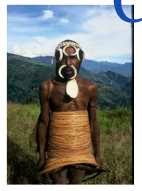
The Yali were a short tribe of people, what we used to call pygmy. The Yali men grew to less than 5 feet, the women a bit shorter. Despite their diminutive stature, they were the most feared tribe in the mountains. They were savage and aggressive, cannibalistic toward other tribesmen not only during in war but sometimes hunting humans just for meat. After killing a person they would chop them, grind their bones and scatter the dust, in order to prevent the person from ‘returning’. As a result of their fearsome demeanor and ferocious acts, the mountain tribes rarely interacted with each other.

However, the language of the Gospel is universal, and while some tribes, like the Kimyal, had been somewhat receptive, Stan and Phil were determined to reach the Yali peoples too. In 1961 on a former trek where the Gospel had been preached to the Yalis along by Stan with fellow missionary Bruno de Leeuw, Stan had been shot with five arrows, and the duo retreated. Now Stan wanted to try again, this time Phil Masters would be his companion. The two men were propelled by an equally fierce conviction that the Yalis needed Jesus, even if at the expense of their own lives.

It was a grueling journey. The geography of the region was challenging, rugged, and isolating. Trekking was arduous. Though the native people would clamber through the dense jungle and trot barefoot up inclines in the rugged terrain, never slipping, the going was harder for the missionary men and their carriers from the Dani tribe. There was one friendly Yali with them.

As the group reached Yali territory, warriors came out of their huts, and menacingly waved their arrows. Undaunted, the group of missionaries and carriers continued. The Yali tribesman with the group observed that a sign had been given that they were to be killed. The group turned around and began trekking back. When they came upon a small, level river beach with rugged mountains towering over them, the Yali let loose a volley of arrows. Stan was hit numerous times, but amazingly, he simply stood. He tore the arrows out of his body, one by one. The volley of arrows continued and still, Stan yanked them out. The Yali became fearful, knowing these men served another God. Their volley of arrows became more intense, fearing more and more the God they served and wanting the men to die so they could quickly escape the area in case there was divine retribution.

Phil was spurred on by Stan, and the two men, who supernaturally had been withstanding an incredible onslaught, finally became too weak to pull out their arrows, and they fell. Several of the carriers were killed also. The Yali chopped the men and ate them, and scattered their ground-up bones so they could not be “resurrected,” a term they had heard before when Stan had shared the Gospel in 1961.

The LeMars Daily Sentinel, September 1968:

PHIL MASTERS REPORTED MISSING ON TREK INTO INDONESIAN JUNGLE  

Phil Masters, author of the Daily Sentinel’s Missionary Diary, is reported missing in the interior of West Irian, Indonesia. A missionary for the Regions Beyond Missionary Union, Phil and his family have spent some six years in the primitive areas of what was once the island of Dutch New Guinea. The island was taken over by Indonesia over three years ago. Mrs. Masters is the former Phyllis Wills, daughter of Mr. and Mrs. Hollis Wills, Seney. It was reported by Phil’s parents, Mr. and Mrs. Tom Masters, Mapleton, were notified Monday morning by telegram that Phil is overdue from a trek into the interior. Although all the details have not been learned, it is believed Phil and another missionary went into the jungle to visit a neighboring village and haven’t been heard from since.

MRS. MASTERS DECIDES TO STAY ON ISLAND; BODIES AREN’T FOUND

Mrs. Ron Severson, LeMars, has received a news release from the Regions Beyond Missionary Union, Philadelphia, with more information about Rev. Phil Masters. The Severson family was one of the interested in LeMars area families in the work of Phil Masters. The union reported the deaths of two of its missionaries in the eastern highlands of West Irian, former Dutch New Guinea, Wednesday, Sept. 25. The date had not been reported previously. Rev. Philip Masters and Rev. Stanley Dale were killed instantly in an ambush by hostile tribes while on an evangelistic trek between the RBMU outposts of Koruppun and Ninia, the missionary union source said.

The society is one of several mission groups working in the interior of West Irian among tribes just emerging from a stone-age culture. A phenomenal response to the message of the Gospel has been witnessed among some of those warring cannibal tribes. Notably, in the Swart Valley alone, since 1960, some 8,000 of the Dani tribe have become Christians, weapons and fetishes have been discarded and literacy has become widespread.

One of the last communications received by the home office from Mr. Dale carried this significant comment—“I have a burden for these places where the way is hard. Please continue to pray for the people of the Holuk that they may break free from their fetishes and declare themselves wholly on the Lord’s side. Please continue to remember us in prayer, for we still carry some heavy burdens that are not burdens of work.”

The Lord blessedly answered the missionaries’ prayers. The various peoples of the Seng Valley in Indonesia have been released from their shackles to a ritualistic and demonic system of fear and death. They are joyously free. Though the burdens Stan and Phil (and Bruno, and the Wilsons who are still there) carried were heavy, they were temporary. The massacred missionaries are now enjoying freedom from their earthy tent of a body and dwell in glory with Christ. The day will come when the two men, shot through with arrows and ignominiously eaten, will receive new glorified bodies and eagerly and joyously greet their brethren the Yalis in heaven. Only the Gospel of Jesus Christ can cause such warm love and dramatic transformational change.

The Lord Jesus Christ loves His people, all peoples, and He died and rose again to bring a message of light and hope to all men. He sends His Spirit to indwell men and some of those, Jesus has set them apart for missionary work to bring the Gospel message to those who are in deepest darkness.

The Korowai people of that area did not emerge into the 20th century nor had they been contacted by any Westerner until 1974. Wikipedia: “The first documented contact by Western scientists with members of a band of western Korowai (or eastern Citak) took place on March 17–18, 1974.”

We are not talking long ago times of unreached people groups. Dutch Christian missionaries immediately began living among the Korowai and the first converts came to Christianity in the late 1990s. You see that the fields are white, the need is deep. These cannibalistic, stone age tribes are still emerging into the present day.

And before the Wilsons who live there now, there was Dale and Masters, and before that Bruno de Leeuw and before that Carl Wilhelm Ottow and Johann Gottlob Geissler…and before that Apostle Paul and before that…JESUS. No matter where one extends the unbroken line of missionaries back, it always ends, or begins, with the first missionary. He left His holy habitation of pure glory to descend to depraved man, bringing the Light and the Hope of the Gospel.

Thankfully, some tribes already have emerged into the Light. Here is a wonderful video of the Kimyal people, whom Phil had worked with, rejoicing when a small plane brought to them their first Bibles in their own language. Below that, the Yali themselves commemorate the day that Bruno and Stan brought the Gospel to them in 1961, which has become their TRUE Independence Day.

The Kimyal Tribe of Papua, Indonesia celebrate the arrival of the New Testament Bible in the Kimyal language:

Youtube summary of video below:
“On May 21, 1961, Stan Dale and Bruno de Leeuw made first contact with the Yali tribe in what is now Papua, Indonesia. In the week of May 16, 2011, the Yali held the Yubileum, or Jubilee: they celebrated fifty years since the coming of the Gospel to their tribe, and fifty years of its transformational impact on their society. This video captures some of the highlights of that celebration, as well as the Holuwon Yalis’ welcome of John and Gloria Wilson and their family, who had lived among them for twenty years:”

~~~~~~~~~~~~~~~~~~~~~~~~~~~

Further Reading

Challies DVD review of The Yali Story

Elisabeth Elliot: Under the Shadow of the Almighty 

Posted in theology

Sunday Martyr Moment: Davy and Natalie Lloyd, Missionaries to Haiti, Update

By Elizabeth Prata

I write earlier today about two missionaries in Haiti who were beaten, killed and burned by a vicious gangs in Haiti. In the first of two incidents on Thursday, May 23, a roving vicious gang entered the compound, tied up Davy adn Natalie, and also Jude Montis, the mission’s leader. They were beaten, and their belongigns from the Lloyd’s house and around the comploud were loaded onto a truck and stolen. Stafferes untied the thrio after the gang left.

However, a short time later, a second, even more vicious gang overcame the barricades the leaders had erected, and killed the couple. Also killed was Jude Montis. The men’s bodies were burned.

Natalie Baker Lloyd is the daughter of Missouri state Rep. Ben Baker.

On his Facebook page, Rep. Baker announced the news of the young couple’s murder. Davy was 23 years old and Natalie was just 21. The two were married in June 2022. The compound, which hosts a dormitory, bakery, dorms, home, and a church, was built and maintained by the mission, which is Missions in Haiti, founded in 1998 by Davy’s father, David Lloyd II and his wife Alicia.

David LLoyd wrote on the night in question that he had been on the phone with his son Davy when the gang arrived. Mr Lloyd Senior wrote,

Davy, Natalie and the kids were coming out of Youth at the church they were ambushed by a gang of 3 trucks full of guys. Davy was taken to the house tied up and beat. The gang then took our trucks and loaded everything up they wanted and left.

This first gang left. But another one soon arrived.

So they are holed up in there, the gangs has shot all the windows out of the house and continue to shoot. Their lives are in danger. I have been trying all my contacts to get a police armored car there to evacuate them out to safety but can’t get anyone to do. I also am trying to negotiate with the gang so how much $ to stand down and let them leave and get to safety. PLEASE PRAYit’s going to be a long night

Little did Davy’s father know how long. The worry for their children so many thousands of miles away must have been wrenching for the family.

We know from reports that Davy left the phone conversation with his dad to go see what the commotion was by the gate. That was the interruption in the conversation that later ended his life.

Rep. Baker had written that if you see a link to the bodies of Davy, Natalie, and Jude, PLEASE do not view it. An update from the family posted on Rep. Baker’s Facebook page states,

Things are looking very positive for the transport home for Davy and Natalie. There are two very good options for the family to choose from, mostly settled. Prayers for their discernment in their choice, and then for all of the logistics to be worked out smoothly as planned. Rough timeline seems to be about mid to late next week, best case scenario. Dealing with a foreign country presents its unforeseen challenges, but we are all hopeful. Another reminder that there are only 2 officially sanctioned GoFundMe pages out there, one by Jeremie Bridges, and another by Dirk Deaton and Chris Slinkard. Please report any social media posts that are advertising anything but those two.

Jeremie Brodges GoFundMe: Support for Davy and Natalie’s Funeral Expenses

Chris Slinkard GoFundMe: Support for Baker & Lloyd Families

Davy had loved Haiti all his life. He learned Creole as a tot and was eager to return from Bible college and begin serving, which he did in 2022. He ‘knew’ he would serve the Lord there even when he was a young boy. Davy wanted only to marry a woman who would joyfully serve in Haiti with him, and he found that mate in Natalie.

As Natalie’s father, Missouri state Rep. Ben Baker said in a Facebook post. “They went to Heaven together.”

Yet you do not know what your life will be like tomorrow. For you are just a vapor that appears for a little while, and then vanishes away. James 4:14.

They were there, and then they were not. The Lord took them. The Lord is good.

Source Natalie’s reel on Instagram from their wedding album
Posted in polycarp, Sunday martyr moment

Sunday Martyr moment: Polycarp

By Elizabeth Prata

Foxe’s Book of Martyrs. According to this summary from Christian Book Summaries,

Writing in the mid-1500s, John Foxe was living in the midst of intense religious persecution at the hands of the dominant Roman Catholic Church. In graphic detail, he offers accounts of Christians being martyred for their belief in Jesus Christ, describing how God gave them extraordinary courage and stamina to endure unthinkable torture.

From the same link, the book’s purpose was fourfold:

  • Showcase the courage of true believers who have willingly taken a stand for Jesus Christ throughout the ages, even if it meant death,
  • Demonstrate the grace of God in the lives of those martyred for their faith,
  • Expose the ruthlessness of religious and political leaders as they sought to suppress those with differing beliefs,
  • Celebrate the courage of those who risked their lives to translate the Bible into the common language of the people.

Text from Foxe’s Book of Martyrs:

The Fourth Persecution, Under Marcus Aurelius Antoninus, A.D. 162

Engraving by Michael Burghers, from his book ‘The Life of S. Polycarp, Bishop of Smyrna’ c 1685

Polycarp, who was a student of the Apostle John and the overseer of the church at Smyrna, heard that soldiers were looking for him and tried to escape but was discovered by a child. After feeding the guards who captured him, he asked for an hour of prayer, which they gave him. He prayed with such fervency that his guards said they were sorry they were the ones to capture him. Nevertheless, he was taken before the governor and condemned to be burned at the market place.

After his sentence was given, the governor said to Polycarp, “Reproach Christ and I will release you.”

Polycarp answered, “Eighty and six years have I served him, and he never once wronged me; how then shall I blaspheme my King, Who has saved me?”

At the stake to which he was only tied, but not nailed as usual, since he assured them he would stand immovable. As the dry sticks around him were lit, the flames rose up and circled his body without touching him. The executioner was told to pierce him with a sword, which he did. Upon being pierced, a great quantity of blood gushed out and put out the fire. Although is Christian friends asked to retrieve the body so it could be buried, the enemies of the Gospel insisted that it be burned in the fire, which was done.

“Rendering service with a good will as to the Lord and not to man,” (Ephesians 6:7)

My prayer: ‘Lord, thank You for the example of the martyrs, who were living, breathing examples of Christ-likeness unto death. Polycarp’s hospitality, prayers, and steadfastness under the most extreme pressure was an example to the pagans around him and is an example to us today. Thank you for the blood-bought opportunity to go to a worship service, the blood-bought privilege of carrying a bible to that place, and the inexpressible privilege of prayer. May we all proclaim Christ boldly, echoing Polycarp’s words, that we shall not blaspheme our King, Who saved us.’