By Elizabeth Prata
SYNOPSIS
A closed coffee shop prompts my reflection on the importance of “third places”—informal public spaces where community forms and conversations flourish. Such places often provide unexpected opportunities to speak about Jesus, influence listeners, and even lead souls toward salvation through ordinary, unplanned encounters and faithful Christian conversation.

The local coffee shop closed. It was the second time. When the shop closed the first time, another lady bought it and reopened it under her name. I frequented it occasionally for myself, they had good coffee and sandwiches and pastries and such, but more frequently I met there with a young friend. We’d buy a coffee or a tea, and sit and talk about the faith, bat questions around, consult our Bibles, laugh, and pray…all in a relaxing atmosphere in an unhurried public space.
It was nice.
Now that it has closed for the 2nd time, and no word on what, if anything, is going in that space next, I mourn the loss of this “third place”.
What is a ‘Third Place’?
These are informal public gathering spaces that foster social interaction and community building, and are distinct from home (first place) and work (second place). They are important to a community. The term ‘third place’ was coined by sociologist Ray Oldenburg in 1989, who later wrote more about third places with Karen Christensen, in their book “The Great Good Place”. These places are local coffee shops, parks, libraries, pubs, churches, clubs, bookstores…any place where a people gather informally (as opposed to a singular reason for being there such as a concert venue, football stadium, or art museum).
In The Great Good Place, the co-authors defined good third places as having 7 characteristics:
Open and inviting: You don’t need an invitation or appointment, and you can come and go as you please.
Comfortable and informal: You feel that you belong there.
Convenient: It’s close enough to visit often, ideally right in your own neighborhood.
Unpretentious: Everyone is on the same level, there’s nothing fancy or fragile, and it’s not expensive.
There are regulars: And often there’s a host or a clerk who greets people as they arrive.
Conversation is the main activity: Discussion, debate, and gossip are part of the mix.
Laughter is frequent: The mood is light-hearted and playful. Joking and witty banter are encouraged.
Libraries are third places but require a hushed conversation, and if in a meeting room, require advanced booking. Bookstores used to be a good spot to gather, I used to go to Borders a lot, but brick and mortar bookstore/cafes are rare now. Parks are nice but weather is often a factor. Indoor gathering spaces are becoming scarce.
In The Planning Commissioners Journal, we read the article “Our Vanishing ‘Third Places‘“,
Most residential areas built since World War II have been designed to protect people from community rather than connect them to it. Virtually all means of meeting and getting to know one’s neighbors have been eliminated. An electronically-operated garage door out front and a privacy fence out back afford near-total protection from those who, in former days, would have been neighbors.
Where there is no community space,
“Such embers of human association signal the flaw in much of today’s residential land use pattern — all space is used up and there’s no provision for a community life. What should be local is remote, and because it is remote it serves no community at all.” Source Planners Journal again
Third places are important to me for another reason. Informal conversations about Jesus happen in third places. In churches, yes, of course. But I first heard consistently about Jesus in a sort of third place- the Post Office lobby. I wasn’t saved yet. A local Baptist pastor would greet everyone in the lobby and mention Jesus pretty quickly. I was working at the PO at the time behind the wall of mailboxes, putting up postal box mail. You could hear everything and that meant I heard about Jesus every day he came in. I got so aggravated. Saying Jesus’ name was like acid to my sinning soul. It was a first step toward the cross on my journey to salvation.
I remember another time too about 15 years ago, post salvation. A group of us met at a local BBQ restaurant. We sat in a booth. Our conversation meandered to salvation, redemption, then eschatology. We conversed for a long while. Then we got up to pay. As we gathered our things, the couple who had been sitting in the next booth approached us and said they enjoyed listening to our talk about Jesus.
Another time more recently, in this same coffee shop that is now closed, my friend and I sipped tea and I answered her questions about theology. After a while a young man came up to us. If I remember correctly he was Mormon. We had another conversation then!
I appreciate street preachers. I believe they are adhering to the verse at Luke 14:23, “And the master said to the slave, ‘Go out into the roads and the hedges and press upon them to come in, so that my house will be filled.“
But my point is about the places where incidental conversations, overhearers, and gathering spots where Jesus will be exalted, discussed, and cherished.
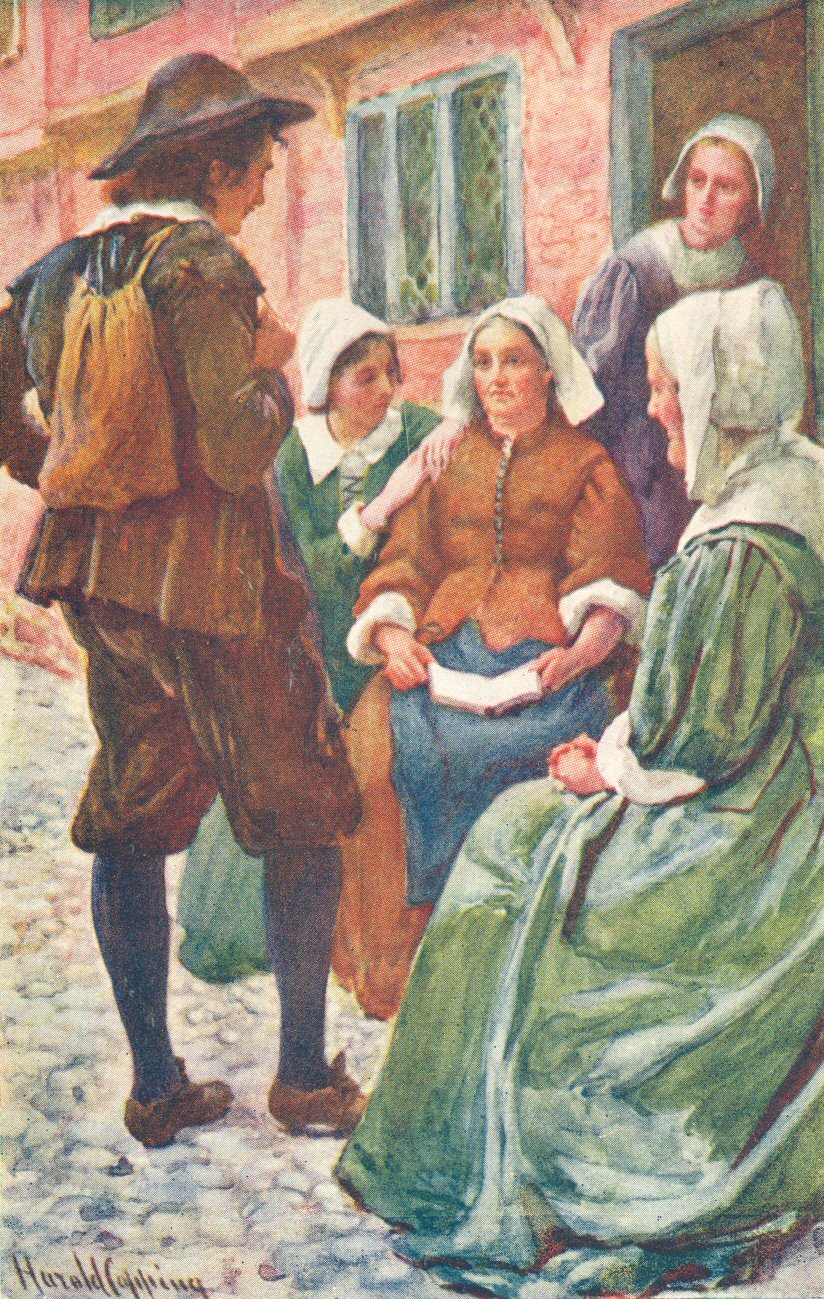
John Bunyan famously recorded his steps to the cross when he related his own ‘third place’ story. There were some housewives in Bedford, Bunyan’s town, who would sit in the sun outside one of their cottages and speak of the grace of Jesus. Bunyan was an unsaved tinker then, itinerant and mobile, so he would stop and listen. Bunyan wrote:
But upon a day, the good providence of God called me to Bedford, to work on my calling; and in one of the streets of that town, I came where there were three or four poor women sitting at a door, in the sun, talking about the things of God; and being now willing to hear them discourse, I drew near to hear what they said, for I was now a brisk talker also myself, in the matters of religion; but I may say, I heard but understood not; for they were far above, out of my reach. Their talk was about a new birth, the work of God on their hearts, also how they were convinced of their miserable state by nature; they talked how God had visited their souls with His love in the Lord Jesus, and with what words and promises they had been refreshed, comforted, and supported, against the temptations of the devil: moreover, they reasoned of the suggestions and temptations of Satan in particular; and told to each other, by which they had been afflicted and how they were borne up under his assaults. [emphasis Bunyan’s]
Despite being a ‘brisk talker’, Bunyan soon realized he did not know this Jesus at all. The new birth had never entered his mind, he wrote, and the women’s joy was a supernatural joy he did not possess.
Think if they chose not to gather in the public way, or if they did gather to talk with one another and only gossiped instead. A faith without Bunyan? What a ghastly thought! (I am only making a point, Jesus would have drawn Bunyan in another way. If you’re chosen, you’re chosen). But what grace it is for a person to be used to draw a sinner to Jesus’ bosom, and it happened in a third place.
So nowadays where can incidental or informal conversations happen? Where can neighbors gather to speak of the joys and supports of our mighty Jesus? Or just to gather and relax and be genial with a neighbor or friend? In third places that are becoming increasingly rare.
Pondering these things is a good reminder for me, that speaking of Jesus can not only bring joy to the speaker and the hearers, but can unwittingly convict the nearby sinner. Bunyan wrote-
And, methought, they spake as if joy did make them speak; they spake with such pleasantness of scripture language, and with such appearance of grace in all they said, that they were to me, as if they had found a new world; as if they were people that dwelt alone, and were not to be reckoned among their neighbours. Numb. xxiii. 9.
Look how Bunyan describes the next little while:
Thus, therefore, when I had heard and considered what they said, I left them, and went about my employment again, but their talk and discourse went with me; also my heart would tarry with them, for I was greatly affected with their words, both because by them I was convinced that I wanted the true tokens of a truly godly man, and also because by them I was convinced of the happy and blessed condition of him that was such a one.
Therefore I should often make it my business to be going again and again into the company of these poor people; for I could not stay away; and the more I went amongst them, the more I did question my condition; and as I still do remember, presently I found two things within me, at which I did sometimes marvel (especially considering what a blind, ignorant, sordid and ungodly wretch but just before I was). The one was a very great softness and tenderness of heart, which caused me to fall under the conviction of what by scripture they asserted, and the other was a great bending in my mind, to a continual meditating on it, and on all other good things, which at any time I heard or read of.
Conversations like these in third places soften the heart, convict the soul, and transform the mind of all who hear-
Let no unwholesome word come out of your mouth, but if there is any good word for edification according to the need of the moment, say that, so that it will give grace to those who hear. (Ephesians 4:29).

https://www.gutenberg.org/files/654/654-h/images/p32b.jpg

 the-end-time.org