
By Elizabeth Prata

A leader falls. He goes away, out of the public eye. He is supposed to repent, practice the discipline or the guardrails his former fellow elders placed on him, then he goes to humbly sit in the pew and worship from there from then on. His fellow congregants are supposed to rejoice with him over his repentance and move forward as if the sin that made him fall was forgotten, because God forgets it when we repent. Grace abounds.
Sadly, that is not the experience of many of the publicly fallen pastors we see. Some who are less well known, of course, follow the prescribed method for repentance and restoration to the pew. But many more who have built their platform publicly, don’t.
They offer some kind of faux repentance or washed-out apology open letter, slide out of the public eye for a while. Then they come back. They either plant a new church, or join an existing church, or start up some para-ministry and begin again as a ‘leader’.
However, a leader who falls is under reproach. He can never regain that necessary trust that’s implicit in a leader-congregant relationship. His sin made him lose the position forever. He is surely forgiven if he repents, but he cannot lead. He has squandered the enormous gift of leading in Jesus’ name.
Why do so many fallen leaders fail at this restoration-to-the-pew process? Why do so many resume leading, as if the scriptures describing what he must do don’t exist?
1 Timothy 3:1-2a says The saying is trustworthy: If anyone aspires to the office of overseer, he desires a noble task. Therefore an overseer must be above reproach…
The word for ‘noble’ in the verse according to Strong’s Greek is “properly, beautiful, but chiefly good (literally or morally), i.e. Valuable or virtuous.”
Again from Strong’s Greek, ‘above reproach’ means simply blameless, unrebukeable.
A leader who has sinned and falls under reproach is no longer able to lead because he is no longer virtuous or blameless.
Why are churches so eager to restore fallen pastors to leadership? Why don’t they walk away?
Tim Challies has some thoughts, below.
The Master’s University also has some good insights as to how to minister to the fallen leader, “The church should do everything possible to minister to those who have sinned and repented. But that does not include restoring the mantle of leadership to a man who has disqualified himself and forfeited his right to lead. Doing so is unbiblical and lowers the standard God has set” but also an excellent thought on a reason why they keep getting vaulted up to the pulpit again, here in their essay, Forgiving Fallen Pastors.
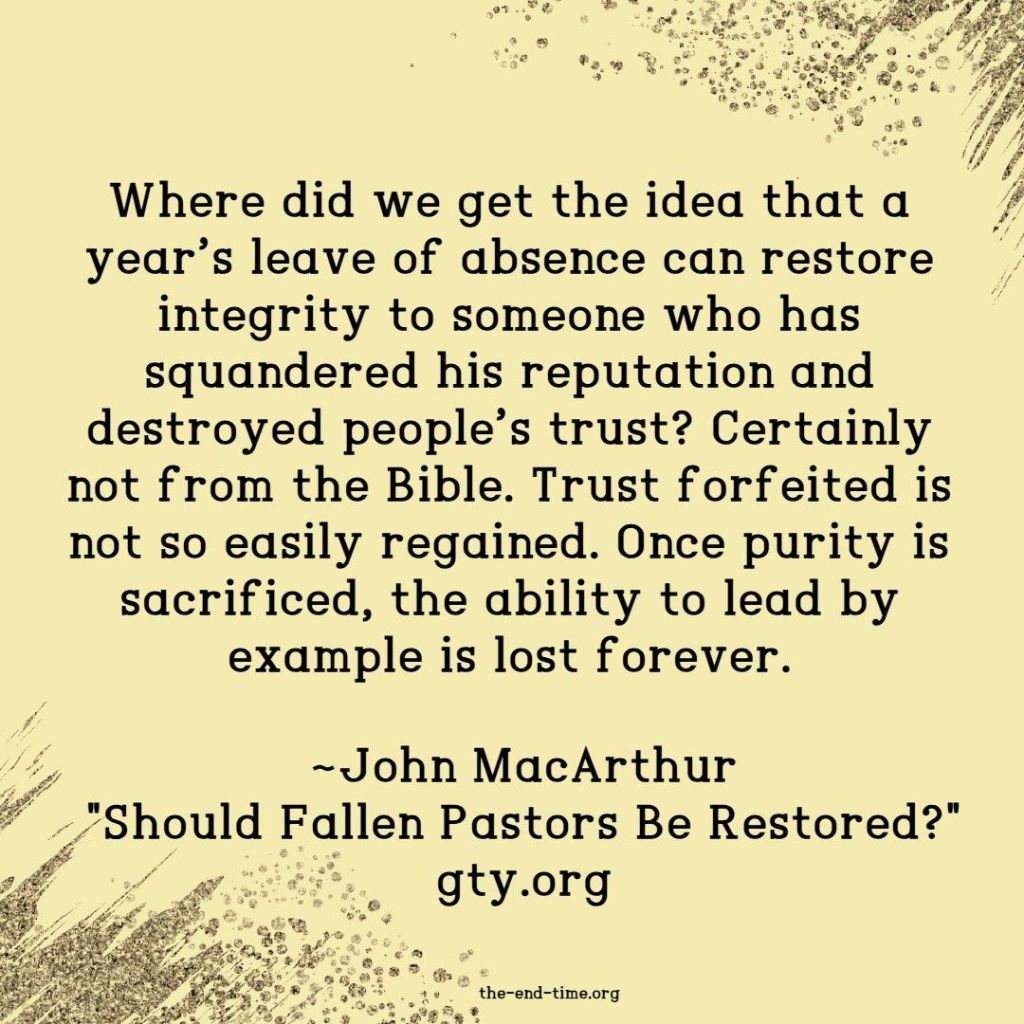
If you see a fallen pastor re-ascending to the pulpit, just know he is in rebellion. If you see a fallen pastor or leader, especially one in your congregation, humbly seek Jesus from the pew, you can and should forgive, offer grace, and love him like the restored brother he is.
Further Resources
Grace To You: Should Fallen Pastors Be Restored?
The Master’s University: Forgiving Fallen Pastors
9Marks: Why Does a Pastor Being “Above Reproach” Matter?
GotQuestions: What does it mean to be above reproach / blameless?

 the-end-time.org
It is biblical to restore a fallen leader to his office .
” For the gifts and the calling of God are irrevocable.” Romans 11:29
A fallen leader carries the burden of having to preach while no one may be listening .There should be a noticeable penalty so no gets the idea that its ok to sin .
LikeLike
1 Timothy 3:2: An overseer/pastor must be above reproach. Titus 1:6–7 says the same. The gift might still be in him, and he might still feel the calling, however, he is permanently disqualified. There ARE qualifications to lead. Gifts and calling doesn’t mean that no matter what you do you can still lead. If he sins and falls under reproach, he is done leading. In the secular world, someone might still feel called to be an executive and he might have a gift for administration and leadership, but if he embezzles from the company, he will be fired from his position. He destroyed the trust. Why would we think that being a pastor gives him license to sin and continue in his position? No, sorry. He holds so much MORE trust because he is speaking for God. A fallen pastor cannot ever lead again.
LikeLike