
By Elizabeth Prata
SYNOPSIS
An essay critiques feminism within conservative Christianity, arguing it disguises itself as ministry. Tracing roots from temperance to suffrage, it defines feminism, challenges female celebrity teachers, and claims biblical hierarchy is violated when women pursue public platforms, careers, and influence while neglecting home-centered roles scripturally.
A discussion online among professing Christians involved the word feminism. Along with feminism at one point, Beth Moore’s name was raised in conjunction with the feminist ideology. A lady replied that it was ludicrous to assign Beth Moore as a feminist.

I replied to her comment this way:
She is. She’s a 55 hour/week+ workaholic, reported as an ‘ambitious career woman’, preaches, husband picked up wifely duties and kids said “we ate a lot of takeout.” She’s President of her Corporation, leads the home in Christian duties, and is loud and opinionated, all of which violates many scriptures and in the secular world, is a feminist through and through.
The person rejoined that I must really “hate Proverbs 31”.
Sigh. It’s obvious people do not know how to debate at all any more, never mind civilly.
After that, a posting was made that showed author Jen Wilkin as one of the teachers of men in a cohort for equipping pastors. Yet another discussion ensued, with some making excuses why it was OK for Wilkin to be teaching men, or re-interpreting the verse at 1 Timothy 2:11-12. Others reminded the commenters about the right interpretation of the verse, which is clear in its command.
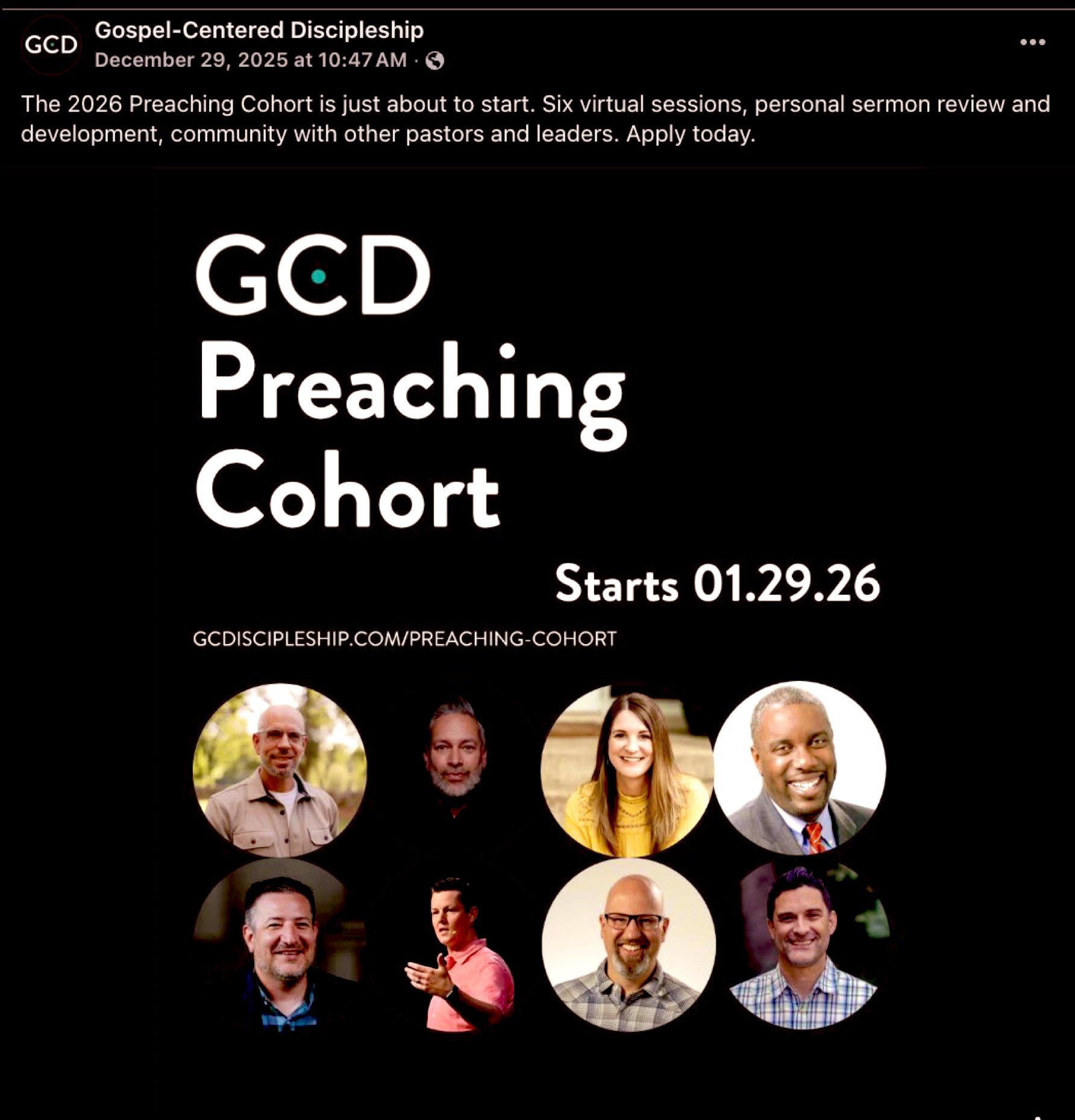
It seems that the feminist discussion continues into 2026.
In this essay, I will define terms here and then make a point. To answer the question, what is a feminist, we have to go back into history.
The Fertile Ground that Sprang up Feminism: The Temperance Movement
The first wave of the feminist movement (starting officially in 1848), was preceded by the Temperance Movement of the early 1800s. This was a movement which believed that alcohol consumption contributed to social ills, almost to the exclusion of all other ills. It taught that alcohol was a detriment to a society (they had a point) that needed its men to be healthy, strong and sober (all true). The movement was led by women, often victims of domestic violence incited by alcoholic husbands.
“Temperance began in the early 1800s as a movement to limit drinking in the United States. The movement combined a concern for general social ills with religious sentiment and practical health considerations in a way that was appealing to many middle-class reformers. Women in particular were drawn to temperance in large numbers.” (Source).
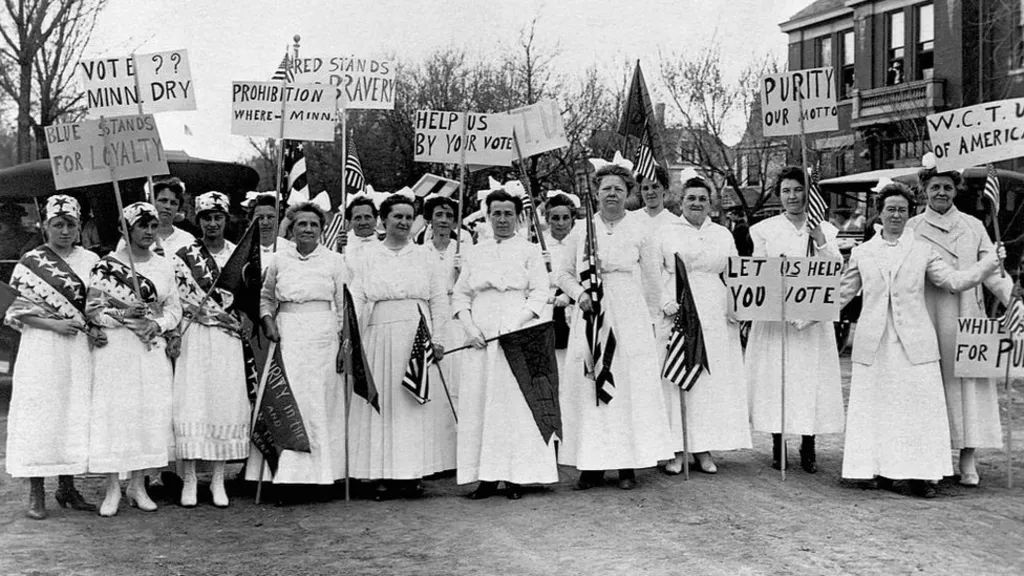
The Temperance movement picked up speed. Women organized. Women marched. Women spoke initially in churches, since “temperance was painted as a religious and moral duty that paired well with other feminine responsibilities” and churches were one place in which women could speak out. Women fundraised at first in the churches then in the secular world. The movement grew and grew. Women pressed legislators. Women wrote essays and pamphlets, and were published.
Alcohol consumption in the 1800s was much greater on average than it is today. It was a huge problem. By 1830, the average American from age 15 upward consumed at least 7 gallons of alcohol a year. As a result, alcohol abuse was rampant, health concerns abounded, and temperance advocates argued that alcohol abuse led not only to domestic violence but also to family poverty.
Temperance chapters sprung up, called the ‘Woman’s Christian Temperance Union’ or WCTU. By 1831, there were 24 women’s organizations dedicated to temperance. Women were eventually successful in advocating for abstinence from alcohol when Prohibition was passed as the 18th Amendment. This success directly fueled the next social movement that arose in the middle of the 1800s- suffrage. The success of temperance showed women they could mobilize into a national political force where their skills in public speaking and organizing were put to use – outside the home. They realized that together, they had secular power. They realized their success had led to a national impact. They were hooked.
Suffragism was born
How did the Temperance movement drift into the Suffragist movement, AKA First Wave Feminism in the mid-1800s? “Leaders of the Woman’s Christian Temperance Union like Frances Willard and Frances Watkins Harper convinced WCTU members that they could accomplish social change – if women won the vote.” (National Park Service. underline mine).
Frances Willard became a long-serving president of the WCTU, which under her tenure, became the largest women’s organization in the world. Willard herself was a proto-feminist, a forward-living woman whose preference for sexual partners gravitated to her own gender. When the Evanston College for Ladies became the Woman’s College of Northwestern University in 1873, Willard was named the first Dean of Women at the university, but was ousted after a vicious confrontation with the President of the University (and her former fiancee) when Willard rebelled against male oversight of the Women’s college. Willard then started mentoring WCTU women on becoming suffrage leaders.
Willard emphasized “what the WCTU called “organized mother love” – the belief that women could apply the ideals of motherhood to the social issues of the time – Willard built the WCTU into one of the largest women’s organizations in the world. By the late 19th century, it had over 150,000 members.” (Source).
I have seen that as long as women combine outward lip-service to expected Christian roles with suitably cloaked language about their actual careers, they can function as feminists while fooling the unwary that they are simply pious mothers advocating for Christian ideals. It worked for Temperance. It worked for Suffragists. It works now for the mothers discontent with stay-at-home who suddenly decide to become a Bible-teaching-influencer corporation and call it ‘ministry’.
It is the same today. When the words feminism and Beth Moore (or Jen Wilkin or insert most any other career ‘Christian’ woman) people balk. No, they say, Moore absolutely cannot be a feminist. Oh, but she is. So are lots of other Christian-professing ladies to whom you may not have assigned the term.
Feminism defined
What IS feminism? That term is thrown around a lot online. We’ve been living with the term for four or five generations now. Do we know what it actually defines?
Encyclopedia Britannica explains feminism is, the belief in social, economic, and political equality of the sexes.
Merriam-Webster explains feminism is the belief in and advocacy of the political, economic, and social equality of the sexes expressed especially through organized activity on behalf of women’s rights and interests
All that sounds good, and it is good. Except…the Bible already identifies God’s created human believers as equal. No matter slave or free, women or man, high born or low, we all stand level at the same blood-soaked ground before the cross of Christ. Only Christ is exalted.
However, God did institute a hierarchy of living. Jesus submitted to God in His incarnation. Pastors submit to Jesus as the head of the church. While congregants submit to Jesus too, of course, they also submit to the elders. Wives submit to husbands, children submit to parents, employees submit to employers. We all submit to secular law. Animals submit to the curse. Everyone submits somewhere.
AI (artificial intelligence) answers my question, “What is feminism?” with typical liberal jargon and perspectives:
It challenges patriarchal systems that prioritize male perspectives and disadvantage women, advocating for equal access in education, politics, the workplace (like equal pay), and reproductive rights, while also addressing intersecting forms of discrimination like racism and ableism (intersectionality).
God set up the ‘patriarchal system’. And women submitting to fathers, husbands or male church elders (the only men the Bible calls women specifically to submit to) is God’s design. Reproductive rights is the term for abortion, AKA killing your child in the womb. It would be nice to be paid equally to men in the workplace…but then again, most women are not destined for the workplace but for working at home for the home (Proverbs 31).
The Feminism Conservative Christian Women Refuse to Name
I was mulling these things over, after my brief interaction with the lady that said ‘I must hate Proverbs 31’ which, by the way, is an oft misunderstood set of verses and misused to promote feminism. Just then, Virgil Walker of the Just Thinking podcast came out with an essay describing exactly my sentiments on the topic- but better expressed. It is called The Feminism Conservative Christian Women Refuse to Name. He said,
Conservative Christian women—many with platforms, podcasts, and publishing deals—who mock feminism with one breath, then defend its assumptions with the next. Women who scoff at the Left’s slogans while living inside the same framework, just dressed better, sounding wiser, baptized with Christian language.
These are women who present themselves as counter-cultural while building careers on criticizing the culture. Women who publish books on biblical womanhood while juggling conference speaking engagements and media appearances. Women who champion Titus 2 on Instagram while outsourcing the actual work Titus 2 describes.
I just about jumped out of my seat when I read that. I have been denouncing these female hypocrites since 2011, practically the entire public life of my blog. Outsourcing child care? Yes! Some years ago, I wrote about one of the She Reads Truth ladies touting that she is a stay at home mom with her Bible flung open, only to discover that she had nannies, then fired the nannies and just dropped her child off to daycare. Women who are on the speaker circuit but leave their children at home while they go and speak, and preach, the glories of being a mother.
In 2018 I wrote about how Many Christian Celebrity Moms are Distorting Biblical Motherhood; Part 1, including how She Reads Truth founder Raechel Myers was exhilarated to post that while she was in Africa, having left behind the husband to care for their small children, to teach African women how to develop self-sustaining micro-economies, her hubby texted her a photo of her little kids watching her on a screen talking about Jesus.
Which Jesus?
A year ago I wrote in The Double Life of Christian Influencers: Beware of hypocrisy
They showed us how to carefully curate an image, they proved it was possible to live a double life, they walked the line between authentic and inauthentic. ~Virgil Walker
The pushback I received in 2016 by calling out Joanna Gaines’ hypocritical lifestyle at the height of her popularity was enormous. Feminism in Christian circles fervently defended because when these women use Christianese, the women are fooled, duped, tricked. Or, they see through the language and know what they are doing because feminism actually is their own desire.
I could go on. My archives are packed with such essays, striving to point out the hypocritical Christian ‘feminists.’ They are a pure torment to me because the children suffer in these situations. Using Jesus as the cover for their lifestyle, and calling it ministry is nigh unbearable to watch as the children wryly tell a secular reporter ‘we ate a lot of takeout’, or watch 2D mommy on a screen halfway around the world, or deal with the abandonment issues of watching mommy’s back leaving the daycare.
Virgil Walker, “The Christian woman with the demanding speaking schedule who talks about the priority of home. The author who writes about sacrificial motherhood while her children are raised by someone else. The influencer who builds a brand on traditional values while modeling anything but. … Motherhood becomes something to manage rather than embrace. Marriage becomes a partnership of equals with no clear headship.
Again, with these hypocritical women,
“Motherhood becomes something to manage rather than embrace.“
Why, ladies, WHY?
I never understood the demanding speaking schedule of the busy mother who leaves her children behind to speak to other women about the importance of raising children. There are always women in our own churches, in our neighborhoods, or workplaces who could be ministered to. Is it really necessary to go from California to Maine, or all the way to Africa to teach women? There’s NOBODY locally who could benefit from a mature woman’s teaching the younger, as in Titus 2? Why, when you have it all in Christ, must you go seeking earthly satisfactions under the guise of ‘ministry’ that isn’t?
Dorcas/Tabitha, Lois & Eunice, Lydia, Priscilla, Anna all ministered at home. Why are these women not lifted up as examples, and instead, women who have a thriving speaking roster, thriving merch sales, appeared on the most podcasts or TV interviews, or the most explosive follower growth are the ones women look to today? It is wrong.
Final word from Virgil: The problem isn’t that women work, contribute, or exercise skill. Scripture honors capable, industrious women. The problem is the story underneath it all—a story where fulfillment is self-defined, dependence is weakness, and limits are oppression.
God set those limits. Christian women operating as feminists ignore them.
If we believe in the blood of the Lamb, His substitution for us on the cross, and our imputed righteousness we receive upon repentance, we have a place. It is a place in heaven in His kingdom. What tremendous blessing! We can dwell WITH God, Emmanuel, God with us! But we also have a place here on earth until then. It is by biblical definition, one of home, marriage, children (for most women). It is tending the garden of the home life, raising a generation of believers who in turn do the same. What does earthly glory of the follower count and audience applause, high merchandise sales, podcast stats get us? Nothing.
“Do not store up for yourselves treasures on earth, where moth and rust destroy, and where thieves break in and steal. But store up for yourselves treasures in heaven, where neither moth nor rust destroys, and where thieves do not break in or steal; for where your treasure is, there your heart will be also.” (Matthew 6:19-21).

 the-end-time.org
Spot on!!
LikeLiked by 1 person
Dear Elizabeth, thank you so much for your well thought out writings on this subject. It is given me much much to reflect on and I felt this writing was truly a blessing to women. I have been feeling the same things about certain influential women podcasts doing just what you were talking about in Christianizing the femininity When coming to mine is like Allie Beth Stucky who is highly admired by so many but at what cost I was wondering, has anyone called and said well what about you writing a blog site? Do they try to put you in that same category I would not but I was just curious if you’ve had criticisms on that and how you would have responded to that my thinking is perhaps and again I could be off and again most importantly, we want to take it to the word of God, but maybe there are even seasons for these types of things these influences are teachings and speakings for women to be involved in perhaps when they’re retired and no longer raising children do you think that would make a difference I could say much but again I thank you for this writing and may God bless you and all that you do and are in Christ sincerely in Christ Judy
LikeLike
Hi Judy,
Thank you for your encouraging comment and for your readership. Also, thank you for your kind words. No, no one has charged me or accused me of violating the Lord’s standards for women due to writing essays here. I am single. I do not have a husband or children. I take Paul’s words in 1 Corinthians 7:34 to heart,
“An unmarried woman or virgin is concerned about the Lord’s affairs: Her aim is to be devoted to the Lord in both body and spirit.”
My model in this is Anna.
Blessings,
Elizabeth
LikeLiked by 1 person
Thank you Elizabeth. I realize that about you myself since I have followed you for so long but know that is always a question a person will ask back to me so was just wondering how your reply would be. 😊
LikeLike