
By Elizabeth Prata
SYNOPSIS
Modern Christian conferences have increasingly become large-scale spectacles marked by celebrity culture, political influence, and sensory excess, often eclipsing biblical discernment and local church life. The author urges believers to resist “bigger is better,” guard their spiritual intake, and pursue humble, Scripture-centered worship over show-driven faith.
A reader emailed me, asking: “Is it just my perception, or have Christian programs, content and speakers (many pastors on the roster) becoming showstopping events? With John MacArthur and Voddie gone, it is difficult to get hold of the real thing these days. It’s a good thing, in that it sends us, me, to His Word more. Could this be the point?”
I replied, It’s not your imagination, there are increasing issues on a number of fronts regarding Christian conferences. Issue: they have become quasi-political. Issue: they have become multi-multi-day spectacles. Issue: they increasingly overlook discernment and hire speakers who are not worth the air they breathe. Issue: many of these conferences have a roster of speakers so large it is impossible for the layman to properly vet them.
Her question reminded me of Tony Reinke’s book, Competing Spectacles. In this case, Reinke is using the word spectacle not as eye glasses, but as a showstopping event. Super Bowl is a spectacle. A million man march is a spectacle. Spectacle as in large-scale event to which myriads of people attend, or see (as on TV). The riot at Ephesus was a spectacle. The stadium there was one of the largest in the ancient world. The entire colosseum in Ephesus was filled with 25,000 people as they shouted for about two hours, “Great is Artemis of the Ephesians!” (Acts 19:34).
Here is a review of Reinke’s short book if you care to delve more-
In the United States we have been raised to believe ‘bigger is better’. For centuries we have led the world in finance, trade, building, military and so on. We westward expanded, making our nation bigger and thus, ‘better’. We are no micro-state, we are a world superpower!
That sense of bigness and betterness followed into the church world. We have megachurches. Often, the first question some pastors ask each other when they meet isn’t ‘how many souls saved?’ but “How big is your church?”
We are awed by the big. Soaring spires in centuries-old cathedrals. Soaring skyscrapers in a huge and bustling city. Boasting that our stadium is bigger than the next city’s. Blockbuster Broadway shows or television programs with ‘huge ratings’ capture our attention. We always want bigger. But is that the best thing for us?
And now we have mega-conferences.
I remember attending the G3 conference several times. The first time about 5000 attendees, the second, 6000 attendees, the third time, almost 8000 attended. It was a thrill and a joy to be among so many people who claimed to love the Lord. Singing in a throng of nearly 8000 people was a treasured moment I’ll never forget.
But the 3-day conference was overwhelming too. Hunting for a parking space with 8000 other people, endlessly walking the cavernous space to find our breakout room, standing in long lines to get food, overstimulated by meeting and greeting so many people- it wore me down. FOMO was real, with so many speakers we wanted to hear and learn from, we split up and agreed to meet and reteach the main points to each other when we got back to the hotel room.
One of the speakers was so popular the room was overfilled from capacity and I ended up sitting on the metal top step of the ministage for an hour, my back against the wall and my knees touching the ladies in front of me sitting on the lower steps. Other women were just on the floor.

I recollected my very first conference I’d attended as a relatively new Christian. I was brought to a Living Proof Live event led by Beth Moore, in 2011. She was at heights of popularity then and her Living Proof Live events filled stadiums. The one I attended held about 20,000 people. Some of it was closed off so about 12,000 were in attendance, the largest audience I’d ever attended for anything. In my multi-part review of the event, I had described the opening musical numbers in detail, its light show and decibels, the huge band and the thunderous floor shaking. Then I wrote,
I wondered to myself if 12,000 women from 34 states and Canada would still drive 12 hours and spend hundreds of dollars to come to a place where there would be one guy singing The Old Rugged Cross on acoustic guitar, and one woman standing behind a podium speaking only Bible truths. No light show. No concert. No personal testimony of Beth Moore’s life, no jokes about bad hair days, no sweet stories about the husband or the dog, but only hymns and Bible.
These things grow, they get out of hand. I heard one woman near me muse that in ‘the old days’ Travis Cottrell had only one or two accompanists but now he has a whole band and several singers. That’s how it goes. These things only ever get bigger. And somewhere along the way, plain Bible and plain music gets lost in an overwhelming flood of extras, extras that are then used to manipulate and distract…
And that was 2011, fourteen years ago.
My musings on that score have not changed but only solidified as I’ve watched Christian events grow larger and larger over the subsequent years.
“Artistic excellence” or fleshly ingenuity? As one pastor muses on this question regarding church worship, he wrote,
“Spectacle can draw our attention away from the transcendence of God, instead making us marvel at human ingenuity. Of course, some people mocked the cheesiness of it all. But others saw it as deeply symptomatic of the way American Christians have baptized the jubilant, technicolor liturgy of secular concerts designed to entertain people rather than lead them into worship of the one true God.” (Source).
Christian Conferences as spectacle
I’ve seen church worship grow from a simple worship session to a lights and sound extravaganza, which in turn merged into conference culture where bigger is better with more lights and sound…and attendance, to now a merging of politics and worship conflated so no one quite knows which is which, but it’s OK as long as it’s BIG.
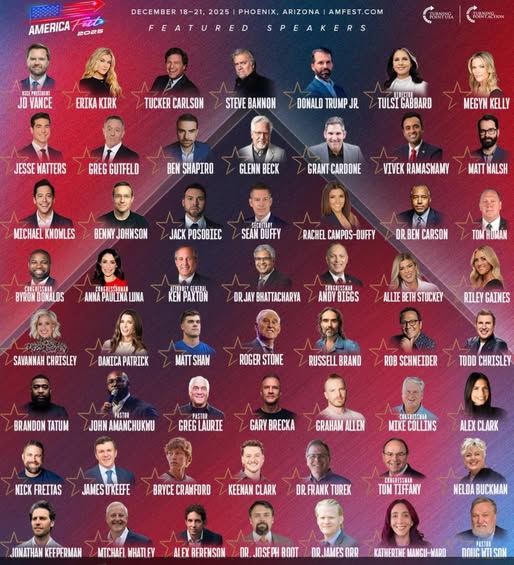
I am sure that as Christians we are familiar with the Roman attitude toward spectacle. The Colosseum in Rome is a marvel of engineering. Did you know that the Roman Colosseum had about 100 water fountains on every level, ensuring that its 50,000-plus attendees could evacuate within 10-15 minutes? That the building had advanced sewage and a retractable awning for comfort under the Mediterranean sun? The building is a showcase for engineering of large crowds and is studied to this day.
The Romans also had a ardent love of skill games. When the gladitorial combats began, they were truly impressive in featuring men of valor displaying courage and skill, qualities admired in Roman life. But the flesh is the flesh. It always wants more. This past summer as I was reading a non-fiction book recounting the history of the gladiators, I had to stop, because only a third of the way into the book it had become pornographically depraved. The Roman spectacle that passed for entertainment over the decades had slowly grown horrific in the extreme and showed a society’s seared conscience that had zero regard for life.
Romans 1:30 concludes a section describing stages of individuals and societies’ descent into sin. It says that they invent new ways to be evil. Our sin nature combined with our creativity for inventing new ways to perform evil means we all must be aware of how modern-day spectacles are influencing us. And they are. We are on our own way to descending into despicable spectacle, even in the church.
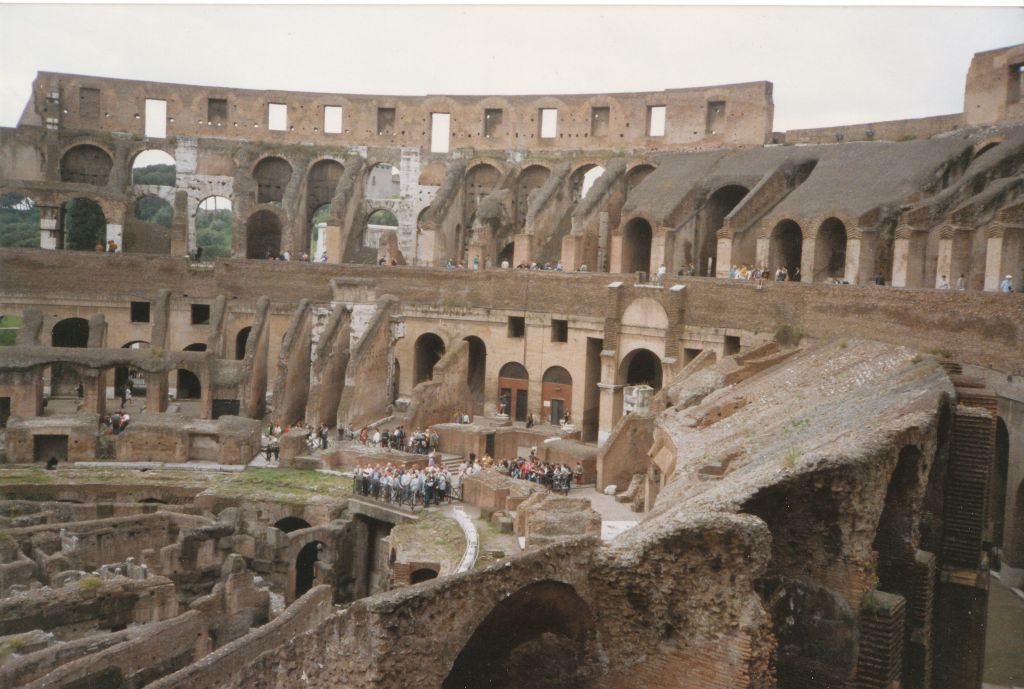
Christian conference now a quasi-political event
We have seen large-scale Christian conferences and their culture taint the church. How? They compete with and undermine the local church, even as they tout local churches and the importance of connection with them. People who attend may indeed become dissatisfied with their little no-name pastor’s preaching after hearing days worth of top tier expositors, or musicians.
Another taint comes from the celebrity culture that sprouts up around large conferences, with some of the speakers not even attached as member of a local church but living a supposedly Christian life out from under accountability from elders. Or if they do have connection with a local church whether as pastor or member, pride enters in and some fine day they are outed as a liar and a hypocrite, and adulterer or a plagiarist, or their financial impropriety comes to light. The list goes on. Needless to say, large-scale anything, whether megachurches, conferences, concerts, etc are fraught with temptations for the organizers and the attendees because of our desire for spectacle.
Here, Pat Finlow poses some good thoughts on the next level of large-scale conference is becoming. “The ARC conference conflates religion and politics. And that’s a dangerous game“, she writes. “Judeo-Christian values are good – but they are not an umbrella term to be used to support your own politics, says Pat Finlow. The gospel stands alone, and crosses all political boundaries. …
Quite right. Finlow again,
“So, I began to consider the implications of passively listening to presentations on these important topics, realising it would be easy to unthinkingly absorb their perspectives, especially if they are wrapped in Judeo-Christian packaging. Have I the time, inclination or theological confidence to discern whether their views and policy ideas are truly commensurate with Jesus’ teaching?”
We are being affected every day by what we see and hear, whether it’s passive absorption or deliberate input. Tony Reinke’s definition of a spectacle is- “a moment of time, of varying length, in which collective gaze is fixed on some specific image, event, or moment. A spectacle is something that captures human attention, an instant when our eyes and brains focus and fixate on something projected at us.” (p.14).
In this day and age, with input like no other coming from all directions, surrounding us almost every moment (have you let go of your phone for 10 minutes lately?), we must be aware of our visual and auditory diet. Remember, behind every conference, concert, or workshop, is marketing. Someone needs to pay for all of it and hopefully make a profit too. Have you unwarily become a guided leaf absorbed in their economic slipstream? Have you absorbed unthinkingly some Christian-ese sounding platitudes unhitched from the Bible? Are you seeking truth and comparing it to the Bible daily? Thinking of noble things? Are you happy with the state of your soul?
I don’t mean to be holier-than-thou. I consume a lot of TV when I am on school break. These questions are for me as well. But I am concerned with the spectacle that large-scale conferences have become, and worse, infusing secular politics into them. Why? Because I have seen many of them become bastions of false teaching which attendees return to home churches to infect. I have seen many of them succumb to celebrity culture and then fall into some disqualifying sin. I have seen the discontent they infuse. I have seen the weariness of organizers whose lives have become one of a hamster wheel as the rapidity of the conference life diverts their attention from being simply moms at home loving and raising their children.
I’m not advocating for a severely stripped down worship with no instruments and no art. God wanted beauty in his worship and instructed the tabernacle builders on how to create it. We want beauty, we want enhancements to worship. We want learning, even if it is apart from our own churches sometimes. It can be good. The biblical visionary prophets that were given a glimpse of the throne room described unutterable beauty and much worshipful activity. What I am advising is to watch the encroachment of secular doctrines and practices into large-scale events that have a Christian name attached. Especially if it is mixed with politics.
May the Lord come soon and give us a pure worship.
For this is what the high and exalted One Who lives forever, whose name is Holy, says: “I dwell in a high and holy place, And also with the contrite and lowly of spirit In order to revive the spirit of the lowly And to revive the heart of the contrite.” (Isaiah 57:15).

 the-end-time.org