Posted in encouragement, Uncategorized

Advent: Thirty Days of Jesus: Day 26, Jesus’ sinlessness

By Elizabeth Prata

This section of verses that show Jesus’ life are focused on His attributes. In His earthly ministry we’ve seen Him as servant, teacher, shepherd, intercessor, and healer. We then looked at His attributes of omniscience, His authority, and now His sinlessness.

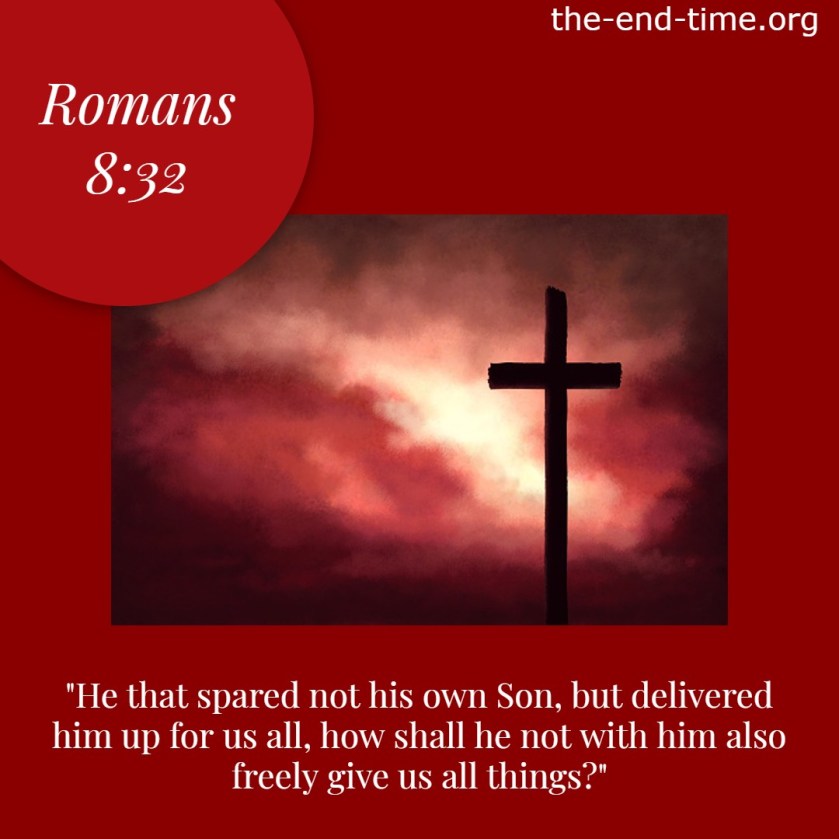
He came from glory where righteousness reigns. He descended to an earth that’s cursed where every single human is depraved, thoroughly drenched with a sin nature. He lived among us, sinlessly and perfectly fulfilling the Father’s commands for righteous living. He did this at every moment in every way. Not one blot, not one thought, not one act of anything less than perfection.

For this, He was reviled, mocked, hated, and killed.

He did it for us.

thirty daysof jesus 26

~~~~~~~~~~~~~~~~~~~~

Further Reading:

The Cripplegate/Nate Busenitz: In what way was Jesus ‘made sin’ on the cross? Excerpt:

In what sense did Jesus become “sin on our behalf”? Does that phrase mean that Jesus literally became a sinner on the cross? …

Based on the above passages, we can safely determine what 2 Corinthians 5:21 does not mean. It cannot mean that Jesus became unrighteous, or that He became a sinner, or that He took on a sin nature, or that He literally embodied sin. … So, then what does it mean? This brings us to our third point. … 3. The best way to understand Paul’s statement (that Jesus became sin on our behalf) is in terms of imputation. Our sin was imputed to Christ, such that He became a substitutionary sacrifice or sin offering for all who would believe in Him.

GotQuestions: Why does Christ’s righteousness need to be imputed to us?

On the cross, Jesus took our sin upon Himself and purchased our salvation. We have “been justified by his blood” (Romans 5:9), and part of that justification is an imputation of His own righteousness. Paul puts it this way: “For our sake [God] made [Jesus] to be sin who knew no sin, so that in him we might become the righteousness of God” (2 Corinthians 5:21). Jesus is righteous by virtue of His very nature—He is the Son of God. By God’s grace, “through faith in Jesus Christ,” that righteousness is given “to all who believe” (Romans 3:22). That’s imputation: the giving of Christ’s righteousness to sinners.

Ligonier: Jesus’ Sinless Life
Jesus lived a representative life. Jesus lived a sinless life, and it was, therefore, a life of representative sinlessness. Our Lord’s obedience stands in the place of His people’s sin. His law-keeping is counted as the law-keeping of those who have faith in Him.

~~~~~~~~~~~~~~~~~~~~

Thirty Days of Jesus Series-

Introduction/Background

Prophecies:

Day 1: The Virgin shall conceive
Day 2: A shoot from Jesse
Day 3: God sent His Son in the fullness of time
Day 4:  Marry her, she will bear a Son

Birth & Early Life-

Day 5: The Babe has arrived!
Day 6: The Glory of Jesus
Day 7: Magi seek the Child
Day 8: The Magi Offer gifts & worship
Day 9: The Child Grew
Day 10- the Boy Jesus at the Temple
Day 11: He was Obedient

The Second Person of the Trinity-

Day 12: The Son!
Day 13: God is pleased with His Son
Day 14: Propitiation
Day 15: The Gift of Eternal Life
Day 16:  Kingdom of Darkness to Light
Day 17: Jesus’ Preeminence
Day 18: The Highest King
Day 19: He emptied Himself
Day 20: Jesus as The Teacher
Day 21: The Good Shepherd
Day 22: The Intercessor
Day 23: The Compassionate Healer

Attributes

Day 24: Jesus’ Omniscience
Day 25: Jesus’ Authority

Posted in theology

Digital Necromancy: The Dark Side of AI Voice Cloning

By Elizabeth Prata

“Ghost” EPrata watercolor

SYNOPSIS

The NatGeo documentary “Endurance” employed AI voice cloning to recreate the voices of Ernest Shackleton and his crew from historical recordings and written diaries. While reanimating voices or likenesses has potential benefits, like aiding those who lost their voices, it also poses risks of misuse, including fraud and discrediting individuals, demanding vigilance and regulation. It is called ‘digital necromancy’ and necromancy is biblically forbidden. This article explores the ethical and theological issues of digital necromancy.

Continue reading “Digital Necromancy: The Dark Side of AI Voice Cloning”
Posted in theology

The Consequences of Celebrating Death: A Biblical, Ethical, and Moral Reflection

By Elizabeth Prata

SYNOPSIS

This essay addresses the ethical, moral, and theological implications of publicly celebrating the death of a political or philosophical opponent, specifically in response to the killing of Charlie Kirk. I highlight the reactions from some individuals who feel it is unfair that people celebrating his death have faced consequences, like losing their jobs. I argue that there are serious moral, ethical, and theological concerns when someone openly rejoices in the death of another.

Continue reading “The Consequences of Celebrating Death: A Biblical, Ethical, and Moral Reflection”
Posted in theology

A murderous killing and the sinfulness of sin

By Elizabeth Prata

SYNOPSIS

In the wake of the murderous assassination of Charlie Kirk, we ponder Ralph Venning’s “The Sinfulness of Sin,” which emphasizes the pervasive nature of sin, where society tolerates some sins while abhorring others. Venning contrasts God’s holiness with humanity’s sinful nature, urging believers to expect persecution and to rejoice in Christ, the light amidst darkness, who offers salvation and righteousness to repentant sinners.

Continue reading “A murderous killing and the sinfulness of sin”
Posted in theology

Caught on Jumbotron: The Impact of Infidelity

By Elizabeth Prata

Adultery betrays an intimate trust

SYNOPSIS

A couple’s intimate moment at a Coldplay concert was broadcast on the jumbotron, revealing an alleged affair between Andy Byron, a married CEO, and HR Chief Kristin Cabot. Their actions drew public scrutiny, emphasizing the harm of adultery. The incident highlights the emotional pain for families and the spiritual consequences of infidelity.

Continue reading “Caught on Jumbotron: The Impact of Infidelity”
Posted in theology

From Vanity to Victory: A Journey of Faith

By Elizabeth Prata

SYNOPSIS

The essay reflects on the futility of life pursuits outside of divine love, drawing from Ecclesiastes and Charles Spurgeon’s insights. I share personal experiences of striving after worldly pleasures, revealing a deep spiritual yearning that only God’s grace can satisfy. The journey from emptiness to fulfillment in Christ is emphasized.

Continue reading “From Vanity to Victory: A Journey of Faith”
Posted in theology

Poem: The Winds of Sin

BY Elizabeth Prata

The winds of sin blow strong
The hearts of stone weigh heavy
The minds of shadow love darkness
The evil day His will prolongs.

The wicked will not prosper
They answer for their deeds
Their names not found on the roster
They stand before Him, these weeds

The winds of grace blow strong
Sin, death and hell cast out
All is fresh and new in beauty
Jesus reigns in glory over the throng

By EPrata

Posted in theology

The Double-Edged Sword of Christian Celebrity-ism

By Elizabeth Prata

A family walks the beach at dawn. Just a gentle picture to start the essay off… EPrata photo

SYNOPSIS

Christian celebrity culture is complex, with historical examples like John the Baptist and Paul showing genuine fame while Simon Magus demonstrated misguided fame. While some ‘celebrity’ leaders genuinely point to Christ, others succumb to deceit and false teachings. Christians are urged to examine their leaders’ character, ensuring alignment with godly principles and repentance practices, and also to constantly examine one’s own self.

Continue reading “The Double-Edged Sword of Christian Celebrity-ism”
Posted in theology

Social Media: The Theater of Our Lives?

By Elizabeth Prata

theater masks

SYNOPSIS

I discuss the concept of social media as a form of theater, highlighting how users often present curated versions of themselves to avoid exposing their own sin and to manage perceptions. While recognizing the dangers of social media, I mention its potential for positive engagement, especially in sharing the Gospel and promoting truth, urging wise and intentional use.

Continue reading “Social Media: The Theater of Our Lives?”