This essay reviews Dwell Differently®, examining its theology, practices, and leadership through a biblical lens. While affirming Scripture memorization, it raises concerns about self-centered application, lack of discernment, commercialization, and the implications of corporate motherhood, concluding the ministry is not recommended.
SYNOPSIS Exploring Ezekiel 13:4, I examine why false prophets are compared to jackals, studying their scavenging, predatory, and nocturnal behaviors. By probing metaphors and using historical resources, the piece encourages deeper biblical questioning and highlights the spiritual danger posed by deceptive teachers.
I spend a lot of time outside watching the birds. There is an Eastern Phoebe nest under the awning at the patio, a Carolina wren nest in the eaves, and another wren nest at the other side of the lawn in the big birdhouse.
I watched the mom of that one go back and forth constantly, bringing food to her babies. I’d hear the baby’s racket inside the birdhouse and I’d know that the mom was back with another bug. She always swooped around looking for a tasty insect and was never disappointed. She always had enough to feed her babies.
The mama would fly off, and soon return with a bug, but not fly directly to the birdhouse. She would pause in a nearby branch, presumably to ensure that no predators were nearby. Then she’d quickly light on the birdhouse. I wanted to snap a photo of this process. I soon learned I did not have to keep my eyes glued to the birdhouse because when the mom landed, the inside of the house would erupt with chirps, lol. I’d hear the racket. Chirp! Chirp! Chirp!
The Lord takes care of them. They have food. Jesus was hungry often, (Mark 11:12, Mt 12:1), but God feeds the birds. Jesus had no place to lay His head but the birds have a nest.
And Jesus said to him, “Foxes have holes, and birds of the air have nests, but the Son of Man has nowhere to lay his head.” (Matthew 8:20).
How He takes care of us! Not only meeting our physical needs but interceding for us in heaven and in prayer! We are so blessed to have been given the grace to repent. And being in Him, we are secure in knowledge that He will provide what He knows we need.
God clothes the grass with wildflowers
26 Look at the birds of the air: they neither sow nor reap nor gather into barns, and yet your heavenly Father feeds them. Are you not of more value than they? 27 And which of you by being anxious can add a single hour to his span of life? 28 And why are you anxious about clothing? Consider the lilies of the field, how they grow: they neither toil nor spin, 29 yet I tell you, even Solomon in all his glory was not arrayed like one of these. 30 But if God so clothes the grass of the field, which today is alive and tomorrow is thrown into the oven, will he not much more clothe you, O you of little faith? 31 Therefore do not be anxious, saying, ‘What shall we eat?’ or ‘What shall we drink?’ or ‘What shall we wear?’ 32 For the Gentiles seek after all these things, and your heavenly Father knows that you need them all. 33 But seek first the kingdom of God and his righteousness, and all these things will be added to you.
34 “Therefore do not be anxious about tomorrow, for tomorrow will be anxious for itself. Sufficient for the day is its own trouble. (Matthew 6:26-34)
Lately online the most disagreements among the women I engage with involve the fact that they believe God is speaking to them directly.
He isn’t.
But crickey, is this truth resisted. Friends, the canon is closed and all scripture as given is sufficient for our life and growth in sanctification. All moral guidance, spiritual guidance, and wisdom is in the Bible. For anything we need to know or do that isn’t in the Good Book, we just decide. Yes, decide. I’ll be writing an essay about deciding later this week.
For now, let’s see about oracles.
The Lexham Bible Dictionary defines oracle as
A divine message communicated through a human mediator to one or more human recipients. Wells, S. (2016). Oracle. In The Lexham Bible Dictionary.
And Balaam lifted up his eyes and saw Israel camping tribe by tribe. And the Spirit of God came upon him, and he took up his discourse and said, “The oracle of Balaam the son of Beor, the oracle of the man whose eye is opened.” (Numbers 24:2 ESV).
So how is an oracle different from a prophecy? Technically they both are divine messages delivered from God to man.
However, oracles were usually something that humans sought from God, instead of Him delivering a message to and through a Prophet, unprompted by human inquiry, as usually happened with prophecy. These oracles were specific, someone was seeking an answer to a specific question.
Many oracles were sought by kings and leaders for political purposes (“Will I win this battle?”) but the lay-people could ask God in an oracle too. (e.g. 1 Kings 22:1-7)
Some prophets or seers received compensation for oracles, like Balaam, but sadly the tendency was then to deliver favorable oracles so the money would keep flowing.
“Anyone who has read about ancient Greece and Rome has heard about the “oracles.” Two famous oracles were the oracles of Apollos at Delphi and Zeus at Dodona. The Greeks and Romans believed that the gods took a personal interest in their lives, so they would go to these places to seek advice from the gods about their lives. The gods were supposed to answer them through these oracles. But the oracles were often very difficult to interpret, even for the priests of the temples. The expression “oracle of God” shares some of the same denotations, with one major exception: it is the one and only God who speaks—and He does so clearly”. In Holman treasury of key Bible words.
Delphi: A Greek city and sanctuary famous throughout the Graeco-Roman period for its temple of Apollo, which housed the oracle of Apollo. Photo by Sergio García on Unsplash
Are there oracles in the New Testament? Yes, oracles are mentioned.
When we come back to the New Testament, we see that Christian teachers, functioning as prophets, also spoke the “oracles” of God. Peter said, “Whoever speaks, let him speak, as it were, the oracles of God” (1 Pet. 4:11 ESV). The author of Hebrews also used the word oracles to describe the words of God that had originally been communicated to the believers (Hebrews 5:12 ESV). Source: In Holman treasury of key Bible words
You might remember the Magic 8 Ball. It was a black ball made of hard plastic that a child could hold in two hands. It had a clear window at the top and you asked it a question, shook the ball, and waited until an icosahedron floated to the window with a message in it. The answers always disappointed me as a kid. “Try again later,” or “Maybe.”
Wikipedia says “Oracles were thought to be portals through which the gods spoke directly to people“. Frustratingly, when seekers arrived and asked the oracle a question, answers that came were often vague. So if you were frustrated as a kid receiving vague answers from the Magic 8 Ball, imagine the seekers at Delphi or Dodona! Yet still, many thousands still came to seek answers from the ‘gods.’
“To look at it simply, a Magic 8 ball online is a fortune telling tool that has made its way into popular culture as a game or novelty item.” source https://magic-8ball.com/
“Preserved Assyrian oracles from Nineveh include the deity’s name, the recipient’s name, and the name and gender of the prophetic mediator. Most oracles are uttered on behalf of the goddess Ishtar.” The Lexham Bible Dictionary. Lexham Press.
Wow, the Assyrians were dedicated to their oracles, weren’t they! Well preserved, each and every one, to this day. Yet as Christianity took hold, the other ‘oracles’ fell silent.
In the New Testament, the Apostles sought God’s direction, of course. Earlier on, they might hear back in an audible voice or a tangible way (dream, vision, angel…). But as time went on the Apostles’ questions were answered through God using other people, such as Ananias to Saul/Paul, or when Cornelius (at an angel’s prompting) sent for Peter via his men.
In these days, Jesus said that He knows we need food and clothes and financial support. It pleases Him when we ask Him in trust and do not doubt. It pleases Him so much more when we ask for wisdom, discernment, the meaning of a passage, or a growth in sanctification, because tangible things are needed, but temporary. Our spiritual life is permanent. But do not expect a visible, audible reply back. His oracle is now the Bible, and everything in it is sufficient for us.
Of course, there is only one God. Only God knows the future, because He is the creator of the universe, the originator of time, and the architect of history. Seek answers from His word and trust that He hears your questions and concerns in prayer.
In these apostate times it’s easy to become depressed at all the false teaching, the turning aside of beloved friends, the wolves coming out of the woodwork. God promised this, He said it would happen and it is.
But His promises of faithfulness are just as sterling and perfect, too. There is a verse I love. It is John 10:35-
If he called them gods to whom the word of God came—and Scripture cannot be broken—
The verse is part of a longer conversation between Jesus and the Pharisees, but let’s focus on the fragment inserted into the verse: scripture can’t be broken.
In today’s world, everything breaks. I have a Weber Showcase & Fixture Co. turn of the last century Banker’s Chair. It is heavy oak, with a steampunk mounting and swivel that would hold a tank. It is well made. Only in the last year did it break. The threads stripped enough so the chair won’t stay high at the table for me to use it. In the beginning of the 20th century and the century before, they made things to last.
Now, everything’s broken. We have broken marriages, broken homes, disposable toasters, throw away watches. Your TV breaks? Buy another. Dishes are no longer carefully handed down from generation to generation, when they break, just go to Target and buy some more.
Scripture CANNOT be broken. It will never be broken. Pulpit Commentary says of the John 10:35 verse,
cannot he broken; loosed, destroyed. A fine testimony to the confidence which our Lord exercised in the Holy Scripture. He was accustomed to educe principles of life from its inward structure, from its concealed framework, from its underlying verities.
There is one other point I think we ought to notice. And that’s that little statement, “And the Scripture cannot be broken,” in John 10 verse 35. That gives us some idea of our Lord’s view of the word of God. The Scripture cannot be broken. It is of indefectible authority. It cannot fail and the things that it teaches cannot fail either. All of the designs and purposes of the word of God shall be accomplished, just as all of the designs and purposes of the Son of God shall be accomplished. The Scripture cannot be broken. That’s striking isn’t it?
What joy to see our Savior model complete trust and rest in His Father’s word. We do the same. We know that though false religions will come, and wolves and destroyers; so will peace, fulfillment of all the scriptures, and everlasting promises of the Lord our God.
The scripture cannot be broken. In wrapping ourselves in the scriptures, we cannot be broken either. No matter how upsetting, no matter how concerning, no matter how terrible things get, all the promises God said would happen will happen- including His working things to the good, our coming hope and joy, the Banquet, Jesus with us in person, eternal perfect worship. All of it. Because…scripture cannot be broken.
Sermons hit different people differently. Some say it was the best they’d ever heard, others say meh. It’s why I don’t usually post sermons claiming such things, the Holy Spirit emphasizes different things to different people. What I think is blockbuster the next person can take or leave, and vice versa.
Individually, like for myself, I can’t tell what the Spirit is doing. I can’t tell if I’d advanced in sanctification a lot or a little that day, month, year. There aren’t bells or alarms that indicate such things.
But, we KNOW that the Holy Spirit leads us. We KNOW that He advances us in Christlikeness day by day. But can we detect it?
Not usually. But sometimes.
Allow me to share my experience. In November of this past year, I tuned in to a sermon from The Master’s Seminary because I was curious about the title: “The Secret to Endurance”. It was delivered by Dr. Abner Chou. I’ve listened to him before. I went through his Seminary course in Job, twice. And Exodus. I’ve heard his sermons and Chapel talks. He talks fast and is high-level. Many times I can’t keep up. But I keep at it.
Anyway, I was curious about ‘the secret.’ I tuned in. His text was Remember Jesus Christ, risen from the dead, descendant of David, according to my gospel, (2 Timothy 2:8). The sermon was aimed at pastors and soon-to-be pastors but it is highly applicable to anyone in ministry, AND any lay person who just wants to endure.
Remember Jesus Christ, risen from the dead, descendant of David, according to my gospel, (2 Timothy 2:8)
I enjoyed the sermon. It’s good. As happens many times with the Holy Spirit, one particular thing ‘jumped out at me.’ The word “remember”.
Abner Chou can wring out more truth from one word than I think any man alive. He spent some time setting up the premise for Paul telling Timothy to remember, then explained the word remember’s meaning.
Remember Jesus Christ…
I took that part of the sermon to heart. It imprinted in me. Since early November to early December, every time I heard the word remember, I thought of that sermon. In December it drove me batty enough so I tuned back in and re-listened to that part, except longer before and after the part I was wrestling with.
And again throughout December, every time I heard the word remember. I brought it back up and read the transcript.
This morning someone posted on Twitter a JC Ryle link to a short essay called Remember Lot’s Wife. I’m curious about that scene in the Bible as well so I downloaded the link and read the essay. It’s a really good essay. (free download here).
The word remember, remember, remember kept coming up in my mind, so I looked up the sermon AGAIN today. This time I re-listened to the entire thing. Though I enjoyed it the first time in November, this time, something was happening. I cried tears after tears listening to all the explanations about the power of Jesus, the Person of Jesus, the preeminence of Jesus. Paul’s use of the term Jesus Christ, Paul’s entire goal in life to honor Jesus, verses and more verses.
Even though I’d heard the sermon before in its entirety and in parts 2X after that, this time I sat stock still, eyes glued to the screen. I did not multitask. I did not move. All I did was get tissue after tissue and listen, amazed at the beauty and grace of Christ presented through the eyes of Paul to Timothy. The Spirit was obviously doing something. What, I do not know. Knitting truth to my soul…transforming my mind…
It HAS to be the Spirit. I wasn’t moved over a romantic comedy. I wasn’t moved reading a story over a lost cat. I didn’t have tears over a sad news story. It was scripture. And if it’s scripture, it has to be the Spirit, who uses scripture to point to Jesus.
We cannot grow if we do not absorb the scriptures (hearing it or reading it for ourselves). We need to meet with Jesus to learn about Him and be pliable to have the Spirit form Christlikeness in us. If you hear something or read something and your mind keeps turning back to it, follow it up. I’m not talking about mystical signs or omens. But if you keep meditating on a scripture, or part of scripture, then, what are you waiting for? Keep digging. It may be an example of the Spirit leading you. Even if it isn’t, it’s a good thing to return to a verse and keep praying over it for deeper meaning. And if it is, you will have glorified Jesus whom the Spirit is leading you to meet with.
I humbly bow to the power of the Spirit-filled word. I am grateful to the Savior for fashioning for me a life where I can listen to sermons like this, to have time to do so and space to ruminate on the powerful preaching. He is a good, good God. I will remember.
Listen to your father, who fathered you, And do not despise your mother when she is old. Buy truth, and do not sell it, Get wisdom, instruction, and understanding. (Proverbs 23:22-23)
“Obtain the truth at all costs, then never relinquish it at any price.”
John MacArthur Daily Bible, August 22
“The kingdom of heaven is like a treasure hidden in the field, which a man found and hid again; and from joy over it he goes and sells everything that he has, and buys that field.” (Matthew 13:44).
“That of the treasure hid in the field. Many slight the gospel, because they look only upon the surface of the field. But all who search the Scriptures, so as in them to find Christ and eternal life, Joh 5:39, will discover such treasure in this field as makes it unspeakably valuable; they make it their own upon any terms.”
Matthew Henry Commentary
I counsel you to buy from Me gold refined by fire so that you may become rich, white garments so that you may be clothed and your shameful nakedness not exposed, and salve to anoint your eyes so that you may see. (Revelation 3:18)
“Buy” does not imply that we can, by any work or merit of ours, purchase God’s free gift; nay the very purchase money consists in the renunciation of all self-righteousness, such as Laodicea had (Re 3:17). “Buy” at the cost of thine own self-sufficiency, and the giving up of all things, however dear to us, that would prevent our receiving Christ’s salvation as a free gift- for example, self and worldly desires. Compare Isa 55:1, “Buy … without money and price.”
All Scripture is God-breathed and is useful for instruction, for conviction, for correction, and for training in righteousness, 17so that the man of God may be complete, fully equipped for every good work. (2 Timothy 3:16-17)
Scripture testifies to its worth. What is it worth to you?
Our teaching elder read this portion of scripture prior to the sermon. It made me smile and my soul expand with joy. I thought I’d post it so that I could read it aloud too, in hopes that someone else may also be lifted by the glorious words promising such great hope and wonder. It’s all ahead for us, sisters. It will happen!
“Nebuchadnezzar responded and said, “Blessed be the God of Shadrach, Meshach and Abed-nego, who has sent His angel and delivered His servants who put their trust in Him, violating the king’s command, and yielded up their bodies so as not to serve or worship any god except their own God. Therefore I make a decree that any people, nation or tongue that speaks anything offensive against the God of Shadrach, Meshach and Abed-nego shall be torn limb from limb and their houses reduced to a rubbish heap, inasmuch as there is no other god who is able to deliver in this way.” (Daniel 3:28-29)
THERE IS NO OTHER GOD. (He is holy and true).
There is no other God ABLE TO DELIVER. (Jesus saves)
There is no other God able to deliver IN THIS WAY. (His power is unsurpassed).
So what does all this mean?
“The time is fulfilled, and the kingdom of God is at hand; repent and believe in the gospel.” (Mark 1:15).
For to us a child is born,
to us a son is given;
and the government shall be upon his shoulder,
and his name shall be called
Wonderful Counselor, Mighty God,
Everlasting Father, Prince of Peace.
Of the increase of his government and of peace
there will be no end,
on the throne of David and over his kingdom,
to establish it and to uphold it
with justice and with righteousness
from this time forth and forevermore.
The zeal of the Lord of hosts will do this.
(Isaiah 9:6-7)
Therefore the Lord himself will give you a sign: The virgin will conceive and give birth to a son, and will call him Immanuel. (Isaiah 7:14).
The Righteous Reign of the Branch
There shall come forth a shoot from the stump of Jesse,
and a branch from his roots shall bear fruit.
(Isaiah 11:1).
But you, Bethlehem Ephrathah, though you are small among the clans of Judah, out of you will come for me one who will be ruler over Israel, whose origins are from of old, from ancient times. (Micah 5:2).
Rejoice greatly, Daughter Zion! Shout, Daughter Jerusalem! See, your king comes to you, righteous and victorious, lowly and riding on a donkey, on a colt, the foal of a donkey. (Zechariah 9:9).
When Israel was a child, I loved him, and out of Egypt I called my son. (Hosea 11:1)
And the Word became flesh and dwelt among us, and we have seen his glory, glory as of the only Son from the Father, full of grace and truth. (John 1:14).
But when the fullness of time had come, God sent forth his Son, born of woman, born under the law, to redeem those who were under the law, so that we might receive adoption as sons. (Galatians 4:4-5).
At that time Mary got ready and hurried to a town in the hill country of Judea, 40 where she entered Zechariah’s home and greeted Elizabeth. 41 When Elizabeth heard Mary’s greeting, the baby leaped in her womb, and Elizabeth was filled with the Holy Spirit. 42 In a loud voice she exclaimed: “Blessed are you among women, and blessed is the child you will bear! 43 But why am I so favored, that the mother of my Lord should come to me? 44 As soon as the sound of your greeting reached my ears, the baby in my womb leaped for joy. 45 Blessed is she who has believed that the Lord would fulfill his promises to her!” (Luke 1:39-45)
This is how the birth of Jesus the Messiah came about : His mother Mary was pledged to be married to Joseph, but before they came together, she was found to be pregnant through the Holy Spirit. 19 Because Joseph her husband was faithful to the law, and yet did not want to expose her to public disgrace, he had in mind to divorce her quietly. 20 But after he had considered this, an angel of the Lord appeared to him in a dream and said, “Joseph son of David, do not be afraid to take Mary home as your wife, because what is conceived in her is from the Holy Spirit. 21 She will give birth to a son, and you are to give him the name Jesus, because he will save his people from their sins.” 22 All this took place to fulfill what the Lord had said through the prophet: 23 “The virgin will conceive and give birth to a son, and they will call him Immanuel” (which means “God with us”). 24 When Joseph woke up, he did what the angel of the Lord had commanded him and took Mary home as his wife. 25 But he did not consummate their marriage until she gave birth to a son. And he gave him the name Jesus. (Matthew 1:18-25).
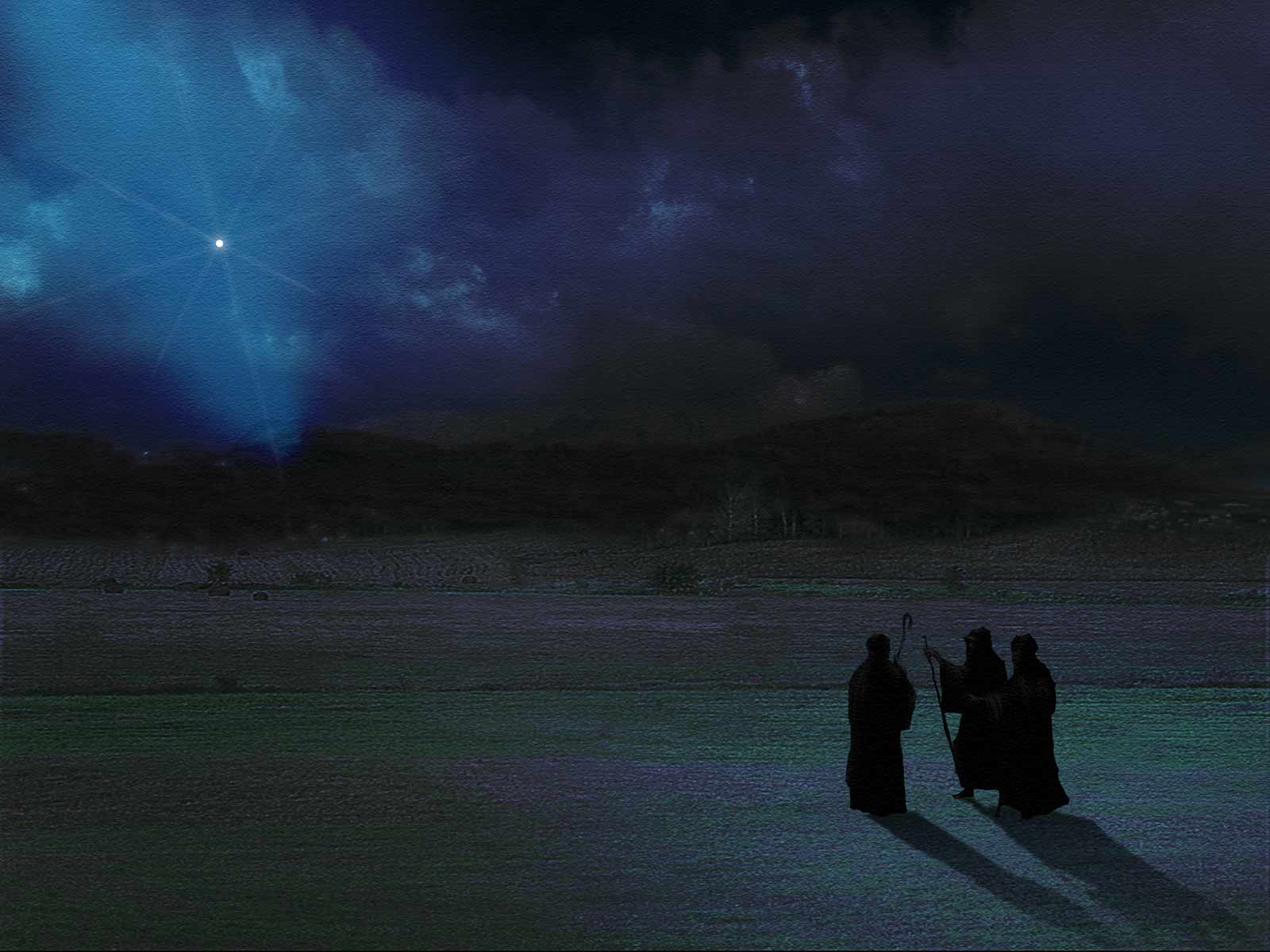
In those days Caesar Augustus issued a decree that a census should be taken of the entire Roman world. 2 (This was the first census that took place while Quirinius was governor of Syria.) 3 And everyone went to their own town to register. 4 So Joseph also went up from the town of Nazareth in Galilee to Judea, to Bethlehem the town of David, because he belonged to the house and line of David. 5 He went there to register with Mary, who was pledged to be married to him and was expecting a child. 6 While they were there, the time came for the baby to be born, 7 and she gave birth to her firstborn, a son. She wrapped him in cloths and placed him in a manger, because there was no guest room available for them. 8 And there were shepherds living out in the fields nearby, keeping watch over their flocks at night. 9 An angel of the Lord appeared to them, and the glory of the Lord shone around them, and they were terrified. 10 But the angel said to them, “Do not be afraid. I bring you good news that will cause great joy for all the people. 11 Today in the town of David a Savior has been born to you; he is the Messiah, the Lord. 12 This will be a sign to you: You will find a baby wrapped in cloths and lying in a manger.” 13 Suddenly a great company of the heavenly host appeared with the angel, praising God and saying, 14 “Glory to God in the highest heaven, and on earth peace to those on whom his favor rests.” 15 When the angels had left them and gone into heaven, the shepherds said to one another, “Let’s go to Bethlehem and see this thing that has happened, which the Lord has told us about.” 16 So they hurried off and found Mary and Joseph, and the baby, who was lying in the manger. 17 When they had seen him, they spread the word concerning what had been told them about this child, 18 and all who heard it were amazed at what the shepherds said to them. 19 But Mary treasured up all these things and pondered them in her heart. 20 The shepherds returned, glorifying and praising God for all the things they had heard and seen, which were just as they had been told. (Luke 2:1-20).





 the-end-time.org