Posted in theology

The Covenant Seasoned with Salt

By Elizabeth Prata

In 2 Peter 3:15-16, Peter wrote that there are some things Paul wrote that are hard to understand. The unstable distort those things. Perhaps the Holy Spirit did that on purpose so that it would weed out who truly sought understanding and who likes to find a chink and crowbar it further apart in order to insert their own wrong interpretation (so as to lead followers astray). This is my speculation. After all, He sends false teachers in order to test us (2 John 9-11, Deuteronomy 13:3, etc.).

But the Holy Spirit’s inspiration of God’s word through the minds and personalities of the Bible writers is remarkable for so many reasons, but for my purposes today, for its honesty.

There are hard things to understand in the Bible. The following phrase is one of them: “covenant of salt”. It is mentioned a few times in the Old Testament.

GotQuestions has some ideas, also giving a historical context as to the importance of salt. Phrases we use even today harken back to the days when salt was a precious commodity. For example, GotQuestions wrote-

There is more to salt than meets the taste buds. Salt has been used in many cultures as a valuable commodity. The word salary comes from an ancient word meaning “salt-money,” referring to a Roman soldier’s allowance for the purchase of salt. Someone who earns his pay is still said to be “worth his salt.” 
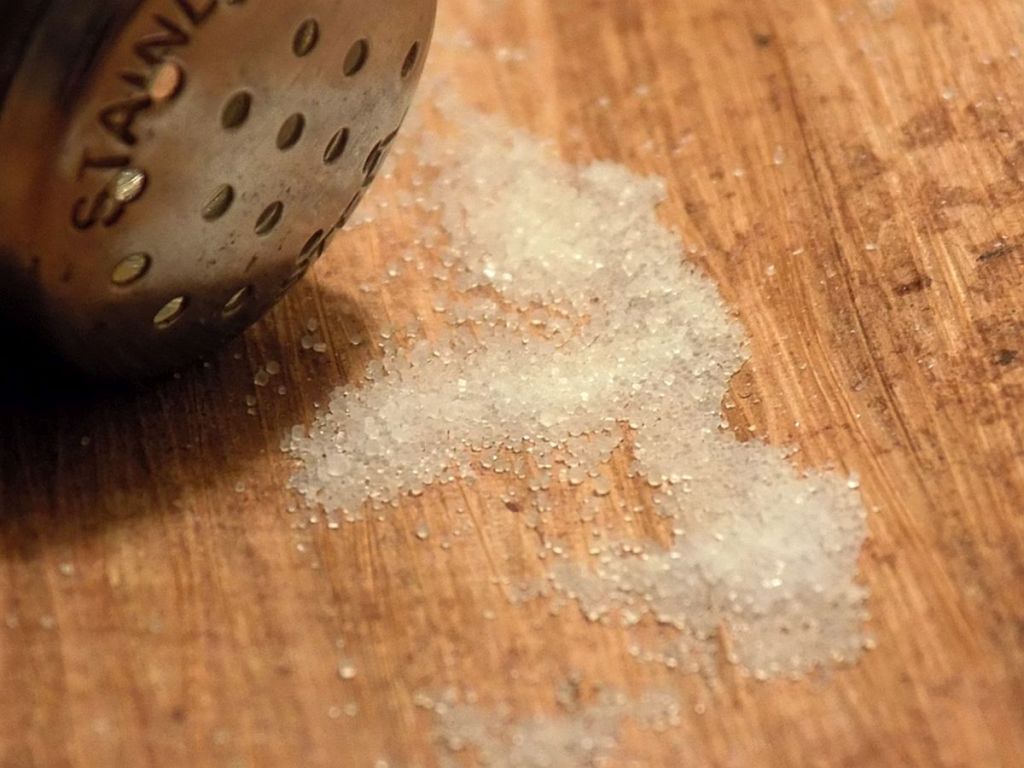
EPrata photo

Salt was used in that culture as part of a legally binding contract. That notion was carried forward into the Old Testament Law. King Abijah mentioned it in 2 Chronicles 13:5,

Do you not know that the LORD God of Israel gave the rule over Israel forever to David and his sons by a covenant of salt?

The Israelites were commanded to use salt as part of the grain offering and reminded not to forget that part of the offering, ever-

Every grain offering of yours, moreover, you shall season with salt, so that the salt of the covenant of your God will not be lacking from your grain offering; with all your offerings you shall offer salt. (Leviticus 2:13).

Matthew Henry on Leviticus 2:13, “Salt is required in all their offerings, v. 13. The altar was the table of the Lord; and therefore, salt being always set on our tables, God would have it always used at his. It is called the salt of the covenant, because, as men confirmed their covenants with each other by eating and drinking together, at all which collations salt was used, so God, by accepting his people’s gifts and feasting them upon his sacrifices, supping with them and they with him (Rev. 3:20), did confirm his covenant with them.”

Among the ancients salt was a symbol of friendship. The salt for the sacrifice was not brought by the offerers, but was provided at the public charge, as the wood was, Ezra 7:20–22. And there was a chamber in the court of the temple called the chamber of salt, in which they laid it up. Can that which is unsavoury be eaten without salt? God would hereby intimate to them that their sacrifices in themselves were unsavoury.

The saints, who are living sacrifices to God, must have salt in themselves, for every sacrifice must be salted with salt (Mk. 9:49, 50), and our speech must be always with grace (Col. 4:6), so must all our religious performances be seasoned with that salt. Christianity is the salt of the earth.

Henry, M. (1994). Matthew Henry’s commentary on the whole Bible: complete and unabridged in one volume (p. 153). Hendrickson.

Again the salt covenant is mentioned in Numbers-

Numbers 18:19, “All the offerings of the holy gifts, which the sons of Israel offer to the LORD, I have given to you and your sons and your daughters with you, as a permanent allotment. It is a permanent covenant of salt before the LORD to you and your descendants with you.

JFB commentary on Numbers 18:19, “it is a covenant of salt—that is, a perpetual ordinance. This figurative form of expression was evidently founded on the conservative property of salt, which keeps meat from corruption; and hence it became an emblem of inviolability and permanence. It is a common phrase among Oriental people, who consider the eating of salt a pledge of fidelity, binding them in a covenant of friendship. Hence the partaking of the altar meats, which were appropriated to the priests on condition of their services and of which salt formed a necessary accompaniment, was naturally called “a covenant of salt” (Lev 2:13).

Jamieson, R., Fausset, A. R., & Brown, D. (1997). Commentary Critical and Explanatory on the Whole Bible (Vol. 1, pp. 108–109). Logos Research Systems, Inc.

Here are a few resources on the fascinating topic of salt in the Bible!

TableTalk: Salt

There is a book of the history of salt by Mark Kurlansky. I thought was pretty interesting: Salt: A World History.

Finally, Mark 9:50 says,

“Salt is good; but if the salt becomes unsalty, with what will you make it salty again? Have salt in yourselves, and be at peace with one another.”

Posted in theology

Salt Represents Life and Belief in Christianity

By Elizabeth Prata

SYNOPSIS

I share my experiences in New England, relating the traditions of spring. I connect this to the biblical concept of salt, emphasizing its preservative, flavorful, and corrosive qualities. Believers, like salt, are meant to influence the world positively as “salt and light” while also understanding salt is a corrosive to some.

Continue reading “Salt Represents Life and Belief in Christianity”
Posted in theology

What does it mean that “In the Last Days, Perilous Times Will Come?”

By Elizabeth Prata

But realize this, that in the last days difficult times will come. For men will be lovers of self, lovers of money, boastful, arrogant, revilers, disobedient to parents, ungrateful, unholy, unloving, irreconcilable, malicious gossips, without self-control, brutal, haters of good, treacherous, reckless, conceited, lovers of pleasure rather than lovers of God, holding to a form of godliness, although they have denied its power; Avoid such men as these. (2 Timothy 3:1-5).

We are in the last days. We have been since Jesus ascended. The last days will end when Jesus returns. The last days have lasted so far over 2000 years. They may go another 2000 years, or they may end tomorrow with the rapture of the church and the last 7 years of fulfilling the decree. (Daniel 9:24).

The verse in 2 Timothy next speaks of “difficult times.” It’s always helpful to go the Greek and read the original language the New Testament was penned in. The word for ‘times’ is kairos. It doesn’t mean chronological time, that word is chronos. It means a suitable time, or an opportunity. When Satan finished tempting Jesus, he left Him until a more opportune time, (Luke 4:13). The word there is the same, kairos. GotQuestions explains more:

Continue reading “What does it mean that “In the Last Days, Perilous Times Will Come?””
Posted in theology

Salt is a corrosive, too

By Elizabeth Prata

I lived in Maine for 30 years, and was born and bred in Rhode Island before that, so I’m a New Englander through and through. I know snow.

It snows a lot in Maine and for a long time. While the rest of the country may be experiencing spring, where I used to live it still kept on snowing. Unfazed, locals opend up their ice cream shops and put on shorts anyway. Forget the Groundhog, Mainers have their own signals that spring is near: when Red’s Dairy Freeze in South Portland opens, as this story the other day from the Portland Press herald illustrates, it’s spring. It’s news when the seasonal shops come alive again.

reds
People brave an oncoming winter storm to line up outside Red’s Dairy Freeze as the ice cream shop opened for the 2018 season on March 7. The 2019 season started Monday. Staff photo by Brianna Soukup

In our town, it was Hodgman’s Frozen Custard, and Lonnie Dogs, the 40+ year hot dog vendor fixture. When Lonnie rolls his cart up to the parking lot and opens for business, you know crocuses are just around the corner.

plow blades
Snow Plow blades at rest during the summer. EPrata photo

One of the Public Works responsibilities of a town or city in New England is to lay road salt down in advance of and during a snow or ice storm. What is road salt? Anne Marie Hemelstine, PhD answers that here:

When cold weather arrives, stores stock up on big bags of road salt and you may see it sprinkled on sidewalks and roads to melt ice. But what is road salt and how does it work? … Road salt is used to melt snow and ice and keep water from freezing… Road salt is halite, which is the natural mined mineral form of table salt or sodium chloride (NaCl). While table salt has been purified, rock salt contains mineral impurities, so it is typically brownish or gray in color. Machines mine the salt, which is crushed and packaged for delivery.

Road salt is necessary for the motoring public in winter climes, if they want to keep driving semi-safely, that is. The cities and towns buy enough of it so that when it’s delivered, we call it ‘salt mountain’ because the pile is so high. But road salt is also a corrosive. If you don’t wash it off your car at regular intervals, it will eat away at the metal undercarriage of your vehicle, and after a while you’ll have a Flintstones car.

I have been thinking about the verse that says we believers are to be “salt and light.”

You are the salt of the earth, but if salt has lost its taste, how shall its saltiness be restored? It is no longer good for anything except to be thrown out and trampled under people’s feet. (Matthew 5:13)

We know that people regularly interpret this in a couple of ways. Salt is a preservative. Barnes’ Notes explains it this way-

Salt renders food pleasant and palatable, and preserves from putrefaction. So Christians, by their lives and instructions, are to keep the world from entire moral corruption. By bringing down the blessing of God in answer to their prayers, and by their influence and example, they save the world from universal vice and crime.

Salt is also a flavor enhancer. GotQuestions explains it this way-

Second, salt was used then, as now, as a flavor enhancer. In the same way that salt enhances the flavor of the food it seasons, the followers of Christ stand out as those who “enhance” the flavor of life in this world. Christians, living under the guidance of the Holy Spirit and in obedience to Christ, will inevitably influence the world for good, as salt has a positive influence on the flavor of the food it seasons. Where there is strife, we are to be peacemakers; where there is sorrow, we are to be the ministers of Christ, binding up wounds, and where there is hatred, we are to exemplify the love of God in Christ, returning good for evil (Luke 6:35).

But elsewhere in the Bible we also understand that we as believers are the aroma of death to those who are perishing-

For we are to God the sweet aroma of Christ among those who are being saved and those who are perishing. To the one, we are an odor of death and demise; to the other, a fragrance that brings life. And who is qualified for such a task? (2 Corinthians 2:15-16).

I think that road salt can be thought of as a corrosive element generating an acid response to those who reject, i.e.s the aroma of death, and/or an abrasive element that melts hardened icy hearts into hearts that love the Lord.

Just a thought.

Posted in prophecy, Uncategorized

Prophecy: The restrainer and salt

Now concerning the coming of our Lord Jesus Christ and our being gathered together to him, we ask you, brothers, 2not to be quickly shaken in mind or alarmed, either by a spirit or a spoken word, or a letter seeming to be from us, to the effect that the day of the Lord has come. 3Let no one deceive you in any way. For that day will not come, unless the rebellion comes first, and the man of lawlessness is revealed, the son of destruction, 4who opposes and exalts himself against every so-called god or object of worship, so that he takes his seat in the temple of God, proclaiming himself to be God. 5Do you not remember that when I was still with you I told you these things? 6And you know what is restraining him now so that he may be revealed in his time. 7For the mystery of lawlessness is already at work. Only he who now restrains it will do so until he is out of the way. (2 Thessalonians 2:1-7).

I posted the full passage so that you can read the main verse under discussion today in context. For the mystery of lawlessness is already at work. Only he who now restrains it will do so until he is out of the way.

The Second Letter to the Thessalonians was a very early letter. Paul wrote it in about AD 51, just a few months after he had written his first letter to the church at Thessalonika. In his first letter to the Thessalonians, Paul had obviously spent some time teaching the new Christians in their new church about the end times. Now, there’s proof positive that eschatology is not only for the mature, nor is it a marginal doctrine to be learned after all the other, more important doctrines have been taught. Paul launched right in to teaching about the rapture and the Day of the LORD (The Tribulation) to the newest Christians. He reminded them in the 2nd letter about the important points, probably to refute false teachers who had come in to tell the Thessalonians that the Day of the LORD had come.

dr nathan busenitz

By the way, this is another proof the rapture will happen before the Tribulation. If the sequence of events was that the rapture happens at the end of the Day of the LORD, why were the Thessalonians so concerned and sought Paul’s advice? They should have been happy. And encouraged.

Why did Paul have to calm them down and remind them of what he had already taught? And further, the pre-tribulation rapture was supposed to be an encouragement. (1 Thessalonians 4:18) if the sequence was post-tribulation rapture then they should have been encouraged, not concerned, becuase it was almost here.

Today’s verse involves the One who restrains. In the passage above, Paul is describing someone who is powerful enough to restrain the man of Sin (antichrist) and to restrain sin itself. Who is powerful enough to do that? No human, certainly. The Holy Spirit.

Paul is saying here that when the Holy Spirit ceases His ministry of restraining sin, the Man of Perdition will be revealed. The Tribulation will come into full swing.

Barnes’ Notes describes the restraining ministry’s effect:

It was some power which operated as a check on the growing corruptions then existing, and which prevented their full development, but which was to be removed at no distant period, and whose removal would give an opportunity for these corruptions to develop themselves, and for the full revelation of the man of sin.

Did you ever stop to think about the restraining power the Spirit does while He is inside of us,the Church, while we are on earth?  We hear people say that America is or was “A Christian Nation.” No, we never were. But it seemed like we were because so many people were Christians. Many of those were not, of course, but they modeled the precepts and behaved morally because so many other Christians were around. They might have had poor motivations to behave as a Christian, for business purposes, or for a social network, of for help with provision, but nevertheless, they adopted an external morality because that was the way to get along in society. Cultural pressure was brought to bear. The real Christians acted as salt.

We see this in 2 Corinthians 10:15. “We do not boast beyond limit in the labors of others. But our hope is that as your faith increases, our area of influence among you may be greatly enlarged,” When the crisis at Corinth as resolved, Paul expanded the ministry to new areas.

Salt is preservative holding back decay. We are that salt. Each Christian with the Holy Spirit in him or her, acts as salt in the world. Salt prevents flesh from putrefying. When the Holy Spirit ceases His major ministry of restraining sin, and then He takes us out of the world in the rapture, each of us as a little salt crystal-Christian will disappear. There will be nothing left to stop the remaining flesh from corrupting. When we are removed the sin of the flesh will blossom, and quickly.

To be sure, the Holy Spirit is the power. We’re not. But us as little salt sprinkles around the world…when we AND the Spirit are removed out of the way, pow! Sin will be unrestrained in the world. Just think on it.

salt