Jesus said we do not need to worry. Mt 6:25: “For this reason I say to you, do not be worried about your life, as to what you will eat or what you will drink; nor for your body, as to what you will put on. Is not life more than food, and the body more than clothing?”
So let us watch and marvel at His word and feel joy in His promises.
SYNOPSIS The hymn “Amazing Grace” presents a dual concept of fear shaped by grace: one where knowledge of Christ sparks terror and another that relieves spiritual anxiety. For believers, this fear of God is a respectful, loving acknowledgment of His majesty, contrasting with the terror experienced by non-believers facing divine judgment.
Costumed interpreters, wearing historically accurate dress, gather around a table for the Harvest Feast of 1621, or “The First Thanksgiving,” at Plimoth Plantation in Plymouth, Mass. Pam Berry/The Boston Globe via Getty Images. Source
You can’t legislate behavior. The 18th Amendment to the United States Constitution prohibited the sale, transportation, and manufacture of alcohol. It went into effect on January 17, 1920.
It didn’t work. The 21st Amendment repealed it in 1933. It had little effect on alcohol consumption.
I was watching a Youtube history video on the Renaissance in Europe. This is the period around the 1400s to the 1600s. In the video the history expert mentioned Italian “Sumptuary laws.” I learned that these were laws designed to regulate personal spending, often based on religious or moral grounds. The idea was to limit extravagant spending on food, drink, clothing, and/or household items.
Sumptuary Laws extend as far back as ancient Rome and ancient Greece. The secular point of sumptuary laws was to distinguish one’s class by the manner of dress. The religious point was to prevent lavish and wasteful expenditures on finery of those in ‘mean condition.’
The American Puritans tried Sumptuary Laws on the new colony as well. It worked about as well for them as these laws did for everyone else: not too good. But they tried it anyway, and so, the American Puritans became fashion police for a while.
Hannah Lyman was a Connecticut Puritan who, in 1676, was hauled to court for her manner of dress, along with about three dozen other women. Charged with overdressing, their crime was wearing a silk hood. In a moment of rebellion, Hannah wore her silk hood to court. The judge was not amused, and she along with the other women, were fined.
In another example of a specific sumptuary law, no one except those in high government were permitted to wear gold in their clothes. “Declaring its “utter detestation and dislike” of men and women of “mean condition, education and calling” who would wear the “garb of gentlemen,” the Massachusetts General Court in 1639 particularly prohibited Puritans of low estate from wearing “immoderate great breeches, knots of riban, silk roses, double ruffles and capes.” Women of low rank were forbidden silk hoods and scarves, as well as short sleeves “whereby the nakedness of the arms may be discovered”— the daring new fashion popular among the upper classes.” We Were What We Wore.
As the Puritan colony settled, trade resumed between our side of the Atlantic and Europe. People were just as fond of their frills and frippery as they always had been. More exotic garb was coming in, including short sleeves, gasp! This infuriated the Reverend Nathaniel Ward so much that, under a pseudonym, in 1647 he issued an angry and somewhat cryptic treatise called ‘A Simple Cobbler of Aggawam‘, and called out the ladies:
“I truly confesse, it is beyond the ken of my understanding to conceive, how those women should have any true grace, or valuable virtue, that have so little wit, as to disfigure themselves with such exotic garb, as not only dismantles their native lovely lustre, but transclouts them into gant bar-geese, ill-shapen-shell-fish, Egyptian Hyeroglyphicks, or at the best into French flirts“… geese, shellfish, hieroglyphics, and French flirts!? Egad! The reverend was truly worked up! (Source).
To be fair, the reverand also called out other religious sects, such as Familists, Antinomians, Anabaptists, and other enthusiasts…
Governing personal behavior and individual choices is always a dicey proposition. Hannah and the other women were fined. It was said specifically that Hannah was “wearing silk in a fflonting (flaunting) manner, in an offensive way…” I really don’t know how you’d wear a silk cap in a flaunting way. Perhaps she flirtatiously tipped it over one eye?
According to Claudia Kidwell, the former head curator of the Smithsonian Institution’s Costume Division, “Clothing’s most pervading function has been to declare status.” The early Puritans loved finery, but only the ones who could afford to have it tailor made enjoyed the finer points of it, and these were usually the leaders of the community, wealthy merchants, or high-born immigrants from England. It wasn’t until the late Industrial Revolution when ready made clothes appeared on the shop shelves.
But in the early days, we read,
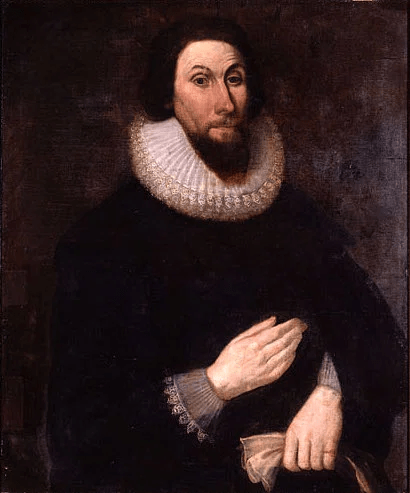
Massachusetts lawyer and later governor of Massachusetts John Winthrop with his lace collar and cuffs. Charles Osgood/Public domain
Though simplicity of dress was one of the cornerstones of the Puritan Church, the individual members did not yield their personal vanity without many struggles. As soon as the colonies rallied from the first years of poverty and, above all, of comparative isolation, and a tide of prosperity and wealth came rolling in, the settlers began to pick up in dress, to bedeck themselves, to send eagerly to the mother country for new petticoats and doublets that, when proudly donned, did not seem simple and grave enough for the critical eyes of the omnipotent New England magistrates and ministers. Hence restraining and simplifying sumptuary laws were passed. In 1634, in view of some new fashions which were deemed by these autocrats to be immodest and extravagant, an order was sent forth by the General Court.
Though we most often see a Puritan portrait where the subject is wearing black, this was not usually the case in real life. Puritans wore black for paintings becuase black was their Sunday best. Black was a hard color to achieve and it faded quickly. But their daily mode of dress sported all sorts of colors.
Margaret Winthrop, the Massachusetts governor’s wife, ordered her clothing from John Smith, her family’s tailor in London. Margaret wanted “the civilest fashion now in use.”
Even then the clothes made the man. Or woman. In 1652, Jonas Fairbanks was called to the court in Salem for “wearing great boots.” Someone had spotted him wearing them, and snitched. The court record reads: “Jonas Fairbankes presented for wearing great boots. Discharged, it appearing that he did not wear them after the law was published.” Not today, snitcher. Not today.
A few other court decisions from that time in Salem (1646-1651) read:
Henrye Bullocke fined for excess in his apparel in boots, ribbons, gold and silver lace, etc.
Marke Hoscall of Salem fined for excess in his apparel, wearing broad lace.
John Bourne and his wife presented for concealing some pieces of cloth, stuff and thread committed to them and converting them to their own use. To make treble restitution and public acknowledgment at a public meeting in Salem within one month or pay fine.
In England in the late 1500s, a sumptuary law was passed requiring wool caps to be worn. In New England, such wool caps, called Monmouth caps, proved to be practical, and the people who had come from England were used to wearing them, so they were worn without resistance. These ‘Monmouth caps’ became widely used, but as a personal, practical choice.
“Every person above the age of six (excepting “Maids, ladies, gentlewomen, noble personages, and every Lord, knight and gentleman of twenty marks land”) residing in any of the cities, towns, villages or hamlets of England, must wear, on Sundays and holidays (except when travelling), “a cap of wool, thicked and dressed in England, made within this realm, and only dressed and finished by some of the trade of cappers, upon pain to forfeit for every day of not wearing 3s. 4d.” Sumptuary Law of 1651 Massachusetts Bay Colony and the Fairbanks Family
Partly, the old issue of Job’s friend tinged the American Puritans’ thinking. They believed that wealth ordained by God, the wealthy were in favor with Him. Thus, to dress below one’s class would be highly incorrect. However, this use of sumptuary laws to identify class distinctions and maintain hierarchies in class waned as there was more socio-economic movement between classes occurring than it did in England. It became impossible to enforce, too. “Clothing is created out of motivation,” says Claudia Kidwell. “The wealthy wanted to maintain distinctions. Everyone else wanted to close the gap.”
In Puritan Massachusetts, the Sumptuary Law was instituted less to maintain a hierarchy, though that was part of it, but based on biblical standards of wise shepherding and to institute frugality. In this, New Englanders do owe a debt, because if you have heard of the “Thrifty Yankee”, that regional characteristic is real and pervasive to this day. Enacted in the Massachusetts Bay Colony in the fall of 1634, the General Court ordered,
“That no person either man or woman shall hereafter make or buy any apparel, either woolen or silk or linen with any lace on it, silver, gold, or thread, under the penalty of forfeiture of said clothes. Also that no person either man or woman shall make or buy any slashed clothes other than one slash in each sleeve and another in the back; also all cut-works, embroideries, or needlework cap, bands, and rails are forbidden hereafter to be made and worn under the aforesaid penalty; also all gold or silver girdles, hatbands, belts, ruffs, beaver hats are prohibited to be bought and worn hereafter.” (Old English updated to modern language, Source).
Problem is, Christian liberty is still Christian liberty. It should not be legislated. But it kept happening anyway, people insisting on personal choice with their money, including where or when to buy finery. The court opined there was-
“intolerable excess and bravery hath crept in upon vs, and especially amongst people of mean condition, to the dishonor of God, the scandal of our profession, the consumption of estates, and altogether unsuiteable to our povertie…”
Obedience to God’s ways is a personal choice and a matter of Christian liberty when it’s in the areas not prescribed. Attempts to regulate one’s choices, whether tobacco, alcohol, clothing, or spending have always proved impossible to enforce and have failed in almost all cases. Hannah Lyman was 16 years old when she faced the court. Her bold stand for personal fashion choice resounds to this day.
However, there IS something to “the clothes make the woman.” The Bible advises us to be modest, and it also advises to shepherd our means well. Paul wrote of women in 1 Timothy 2:9, “Likewise, I want women to adorn themselves with proper clothing, modestly and discreetly, not with braided hair and gold or pearls or expensive apparel,”
and in, 1 Peter 3:3-4, “Your beauty should not come from outward adornment, such as braided hair or gold jewelry or fine clothes, / but from the inner disposition of your heart, the unfading beauty of a gentle and quiet spirit, which is precious in God’s sight“.
In the Old Testament, showy attire is likened to haughtiness. Being haughty is behavior that attempts to bring excessive attention to self,
Isaiah 3:16-24, “The LORD also says: “Because the daughters of Zion are haughty—walking with heads held high and wanton eyes, prancing and skipping as they go, jingling the bracelets on their ankles— / the Lord will bring sores on the heads of the daughters of Zion, and the LORD will make their foreheads bare.” / In that day the Lord will take away their finery: their anklets and headbands and crescents…“
But legislation is not the way. Simple obedience to Jesus is the way. It DOES say something about a woman who wears short-shorts and halter tops. It says, ‘look at my body on display.’ It also says something if a woman goes in the other direction with a constant neck-high and floor length mode of dress, which in my opinion says, ‘look at my modesty on display.’
The indignant Reverend does make a sensible plea, “to avoid morose singularity, follow fashions slowly, showing by their moderation, that they rather draw in the other direction with their hearts, then put on by their examples.“
Any regular reader of this space knows I love the Puritans. I loved them at first historically, then after conversion, spiritually. They were an interesting group. It should be noted that God preserved a majority of their writings for us from which we are still benefiting.
John Winthrop & Puritans
The Puritans are often portrayed in secular culture as dour, joyless, strict men who suppressed their wives spiritually and emotionally. The wives in turn were usually portrayed as overtired, harried, and overworked from having so many children. Puritan wives are seen as scraggly haired, burdened women with so many children the Old Woman Who Lived in a Shoe had nothing on them, with children sleeping in nooks and cupboards and an endless conveyor belt of household tasks that drove them into an early grave.
But it isn’t universally true. People are people, of course, so here and there were a few sour notes, just like in any generation. But the Puritans were an earnest group, dedicated to the ideals held in the Bible and when their efforts to purify the Church of England were met with persecution, they bravely set out to establish a society more closely aligned with God’s standards, in the New World.
Let’s take a look at one Puritan marriage, John Winthrop and his wife Margaret Tyndal Winthrop.
John Winthrop lived from 1588 to 1649. He was an English lawyer and a leading figure in the founding of the Massachusetts Bay Colony in 1630. This was the settlement that followed the original founding of the Plymouth Colony by the Pilgrims in 1620. He then served as the settlement’s governor for 12 of the first 20 years. If you are familiar with the phrase “city upon a hill” that was John Winthrop’s vision for the colony, captured in his preserved writings. He delivered that sermon aboard the sailing ship Arbella, and it’s one of America’s most famous sermons.
John Winthrop married Margaret Tyndal in 1618. She was 27 years old. (John was 30, Margaret was his 3rd wife, the previous 2 had died). Margaret was an educated young lady who knew how to read and write. Her family was a leading Puritan family of the time, and Margaret had been raised in Puritan Christian fashion.
John was working as a lawyer in London, which was about 100 miles away, so after marriage she moved to John’s father’s estate at Groton Manor to help him manage the Manor during the work-periods John was away. She was exceptionally capable to do this.
They communicated frequently through letters, many of which were preserved. John’s letters to Margaret were mostly absent of local news, they expressed mundane household items to each other, discussed the children’s sicknesses and recoveries, servant issues, and the like. They also expressed warm endearments to each other, belying the joyless Puritan marriage so often depicted in secular media.
Here is one example of John to Margaret, with modernized spelling:
“And now, my sweet love, let me a while solace myself in the remembrance of our love, of which this springtime of our acquaintance can put forth as yet no more but the leaves and blossoms whilst the fruit lies wrapped up in the tender bud of hope. … Let it be our care and labor to preserve these hopeful buds from the beasts of the field, and from frosts and other injuries of the air, lest our fruit fall off ere it be ripe, or lose aught in the beauty and pleasantness of it.”
And Margaret to John:
What can be more pleasing to a wife, than to hear of the welfare of her best beloved, and how he is pleased with her poor endeavors. I blush to hear myself commended, knowing my own wants; but it is your love that conceives the best and makes all things seem better than they are. I wish that I may be always pleasing to thee, and that those comforts we have in each other may be daily increased as far as they be pleasing to God.
Margaret constantly prayed for her husband, unfailingly encouraged him, and always looked to her family and also the needy around her. She expressed many times how grateful she was for her husband’s counsel, and likewise John was appreciative to receive her genuine support and encouragement.
At one point, John had been taken very ill in London. He had advised Margaret not to come because winter travel was dangerous and harsh. Nevertheless, though Margaret was an obedient wife, signing her letters thus and her husband affirming it, she flew to him in haste anyway. After her return, she wrote a encouraging note to him (I modernized the spelling), reminding him of their mutual devotion to their great God:
I desire in this and all other things to submit unto his holy will; it is the Lord, let him do what seemeth good in his own eyes. He will do nothing but that shall be for our good if we had hearts to trust in him, & all shall be for the best what so ever it shall please him to exercise us withall. He wounds & he can heal. He hath never failed to do us good, & now he will not shake us off, but continue the same God still that he hath been heretofore.
Margaret’s faith was founded upon the Rock, and thus, so was her marriage.
Husband and wife continued to write constantly and with the same amount of dignity and respect for each other for the next 12 years. But then came the Puritan persecutions. John lost his position at court. He saw the handwriting on the wall. He wrote: “My dear wife, I am verily persuaded God will bring some heavy affliction upon this land, and that speedily.“
John decided to strike out for the New World. With John so often in London, Margaret had been competently handling the affairs at the manor with all it entailed: accounting and records, managing people, raising the family.
Emigrating to the New World with all its newness, dangers, and lack of comforts must have put Margaret into a tailspin. The Pilgrims had only landed there less than 10 years prior. But she handled it with godly aplomb.
On her saying she will ‘cheerfully’ leave Groton Manor, John replied, “My comfort is that thou art willing to be my companion in what place or condition soever, in weal or woe.”
Within one year of John’s losing his position at court, he’d gathered a willing group to emigrate with him, supplies, ships, and had sailed for nearly unknown shores.
Margaret stayed behind to handle the increasing pressures at Groton Manor. The Manor’s tenants knew the Master had gone and became reluctant payers of rent, and she was also pregnant, and looking after the younger children who did not go with their father to the new world. Also during this time Margaret prepared for their own journey to leave England for Massachusetts Bay Colony. With the help of John’s eldest son who stayed behind to chaperone Margaret when the time came, she arranged to sell Groton Manor.
Yet they both agreed though they will be separated, they would set aside Monday and Friday at 5 pm to spend an hour in spiritual communion with each other, praying for each other and meditating on their godly marriage.
The pair were separated a year. Margaret had given birth shortly after John departed but sadly on the way over the baby died. She was buried at sea.
LOL, when Margaret arrived John had arranged to have a military cannon salute and a ship parade around the bay as she was rowed in.
Once reunited, to their mutual joy, Margaret set about helping the needy, raising the family, and supporting her husband, now Governor of Massachusetts Bay Colony.
In 1647 Margaret succumbed to an epidemic sickness raging among the colonists and she died at age 56, an aged person for that time.
John wrote that Margaret, “left this world for a better, being about fifty-six years of age, a woman of singular virtue, prudence, modesty, and piety, and specially beloved and honored of all the country.”
The couple set their love of God as primary in life, even before their love of each other. Their marriage was one of love, mutual devotion, dignity, and godliness. If you, dear sister, are looking for a historical model of a good and godly wife, look to Margaret Tyndal Winthrop. The inscription in the book of her published letters reads,
In memory of the name she is privileged to bear, which will ever be associated with all that constitutes the grace of CHRISTIAN WOMANHOOD.
Epilogue: Margaret and John were close Boston neighbors with Anne Bradstreet & husband Simon, and Anne Hutchinson & husband William, which whom they all shared a well. I’ll re-post about Anne Hutchinson and write about Anne Bradstreet in my ‘Puritan Wives series’.
I love to read the Puritans. Darrell Harrison, Dean of Digital Platforms at Grace To You Media, recommended this book, so I took a look.
It’s The Wiles of Satan, by the previously unheard of Puritan William Spurstowe. DB Harrison said:
“Of all the Puritan books I’ve read, I have to say this little gem, “The Wiles of Satan,” by the relatively unknown William Spurstowe, is among the best. @RHB_Books.“
RHB is Reformation Heritage Books. The Publisher is Digital Puritan Press. It was out of stock at RHB but Amazon had it by the same publisher. Here is the book blurb from Amazon:
“Like it or not, every Christian is engaged in a fierce and high-stakes battle with Satan. In this enlightening book, Puritan pastor William Spurstowe succinctly illustrates from 2 Corinthians 2:11 (“…lest Satan should get an advantage of us—for we are not ignorant of his devices”) his premise: that “Satan is full of devices, and studies arts of circumvention, by which he unweariedly seeks the irrecoverable ruin of the souls of men.” Spurstowe explains how Satan’s long experience and single-minded determination make him such a formidable adversary. He then proceeds to methodically expose, explain, and disarm nearly two dozen common traps that Satan has used to ensnare every generation of the unwary. Finally, he prescribes ten helpful remedies or antidotes that can be used to counter even the most tempestuous temptation.”
“William Spurstowe (1605–1666) was a Presbyterian pastor and member of the Westminster Assembly; he served the Parliament of Richard Cromwell. Originally published in 1666, this classic treatise has been carefully prepared to benefit a new generation of Christian readers. Archaic language has been gently modernized, and dozens of helpful footnotes have been added to aid the reader. This edition includes a biographical preface, Scripture index, and review questions designed to guide group discussion or personal reflection.”
I had just written about demons the other day, since our elder is going through Matthew and we came to the Gadarene Demoniac passage. People are fascinated with satan and his unholy angels, AKA demons. The passage in Matthew 8 about the Gadarene demoniac is always astonishing when I read it. Our church elders are preaching through Matthew and we got to that passage in Matthew 8:28-34.
It’s interesting to study demons, but I offer two cautions: 1) many websites are also fascinated with the subject but tend to the sensational instead of the biblical, and 2) though it’s a biblical subject, satan would like nothing better than to ensnare you into a focus on him instead of on Jesus. Keep your eyes fixed upon Jesus.
I enjoyed CS Lewis’ “The Screwtape Letters“. I am not a fan of Lewis at all, and the only book I liked of his was Screwtape. THAT was a masterpiece, I thought. It recounts an elder demon teaching a younger one how to entice, harass, and otherwise tempt a targeted Christian. Lewis’ insight into temptation and the demonic realms was uncanny.
If you are interested in the subjects of Angelology and Demonology, Reformation Heritage Books has some for you.
–Angels: When Heaven Meets Earth by Tim Chester. –Unseen Realities: Heaven, Hell, Angels and Demons by RC Sproul. –The Scripture Revelations Respecting Good & Evil Angels by Richard Whately. This is out of stock but it may come back into stock, or find it at another online bookseller. -Also out of stock is What the Bible Teaches About Angels by Roger Ellsworth. –Spiritual Warfare: A Biblical and Balanced Perspective by Borgman & Ventura.
I offer these to you because RHB is a trusted resource. Anything on the topic of angels, demons, and spiritual warfare tends to draw a fringe crowd loaded with unbiblical notions and bad advice.
Anyway when I finish The Wiles of Satan I’ll let you know how it was. Meanwhile, keep reading! The Bible first, devotionals, and edifying books from solid authors.
Last week I had the providential opportunity of being on Fall break when the first-ever Puritan Conference occurred, hosted at Grace Community Church in Santa Clarita, CA and founded and led by Dr. Joel Beeke. I was able to watch many of the lectures live. What a blessing! [Media from all sessions will be available to the public in the coming weeks.]
One particular lecture I looked forward to was delivered by Dr. Beeke on the topic of the ‘Writing of the Puritans’. I’m a writer and I love the Puritans, so this was going to be good, I thought. It was good, but for two reasons, not just one! Winning!
We are blessed to have available to us, hundreds of years later, the Puritans’ writing. Why? Because when they were fired from their pastorates for being non-conformist, many were hired by Anglicans. The Anglican churches were drying up, since so many people wanted the sermons of the Puritans. But the Non-conforming Puritans were unable to preach, because their licenses had been revoked. The Anglicans decided to hire a Puritan and call him “a lecturer”. The Puritan was to give the Wednesday night and Sunday evening “lecture”. The Anglican priest only gave the main sermon on Sunday mornings.
Since the Anglican priest was only crafting 1/3 of the week’s sermons, he had more time to do pastoral things like visit and counsel. Since the Puritan ‘lecturer’ didn’t have to do pastoral duties, he had more time to develop lectures, research and write. The Puritan did so, and then put his lectures into books. The books were printed, and Beeke said at the time about 25% of all publishing was Christian Puritan matter. That is why we have so much of it nowadays. In today’s publishing world, only about 1% of material is Christian oriented, if that, Beeke said.
What an amazing set of providences that God orchestrated! I mulled that over for a long time, and still think about how and why God manages events for His own glory and for the good of those that love Him.
All the information Beeke gave on the writing of the Puritans; their style, their history, was interesting. But the charm came when Beeke spent the first part of his lecture on his own story. Here’s where it got so delightful for me.
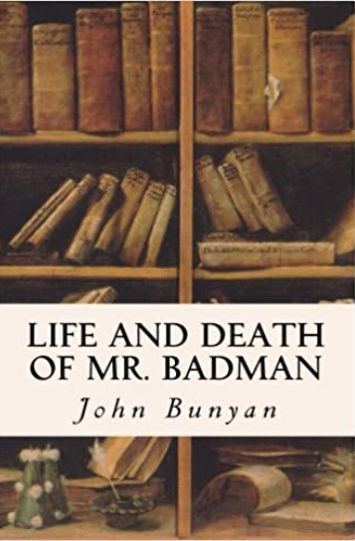
He related his origins, remembering being a young boy of about 9 years old. He’d done something bad and was punished for it. He felt terrible, and he understood he was “a bad boy” who does bad things. He went to his father’s library, which, by the way, was full of Puritan books. He looked for a book that could help him understand his badness. He found one by Bunyan called Life and Death of Mr. Badman. He thought to himself, “I’m a bad boy, here’s a book about a bad man, that’s pretty close.”
He read it and absorbed it and enjoyed it. He said the sorrowful feeling about his bad acts wore off after about 6 months though, and he wasn’t truly regenerated until his mid teens, about 16 or so, he said. But he kept reading his dad’s library chock full of Puritan books. He actually asked his father at one point if he could mark up and make notes in his books as he read them. Dad Beeke was delighted with his son’s request and generously gave him license to read and mark away!
Dr. Beeke’s interest in the Puritans only grew from that 9-year-old first foray into the world of holiness and self-denying Christian lifestyle. He kept reading his dad’s books, and decided after he was truly regenerated at around age 16 that he wanted to sell Puritan books.
At the Conference Dr. Beeke went on from there, relating how he and his 19-year-old brother started selling books, he related several adventures in book-selling, and his eventual founding of Reformation Heritage Books in 1994 which stands today as the most widespread purveyor of Puritan material in the world, by far.
So all that was interesting, but then I mulled the overarching, bigger picture. My love for Christ grew again, after hearing the Beeke origin story. I thought about how the Lord fashions us in the womb. Sets us apart by name since before the founding of the world. (Jeremiah 1:5, Ephesians 1:4). Causes us to be born to the parents He decides He wants us to be born under. Grows us in His timing, and instills in us interests, skills, and trades that if we are set apart-elect, will one day be used for His glory.
Beeke’s interest in the Puritans was awakened at age 9, and has by the Lord’s providential care, undergirded him as a mainstay throughout his next 61 years. He now writes books about the Puritans, sells Puritan books, teaches and preaches about Puritans and Puritan preaching and writing style, manages his family like the Puritans did, leads Puritan Reformed Seminary as its President, and travels the world to spread the joy of learning about the Puritans. All from one man.
God is the ultimate Sovereign. His plan from the beginning was sure to be enacted through to the end. That means all at once, before anything began, God designed all of human history, named each person who ever was to be, and gave His elect interests, physicality, intellect that would all play into His kingly plan.
For example, King Saul was extra tall and handsome, Timothy was timid, Sarai was given beauty that attracted Pharaoh. Jeremiah was appointed to be a prophet before history began. Paul was given intellect, a logical mind, and a love for the Law. Dorcas had sewing talent. Lydia a business acumen. Jacob was given an aptitude for sheep farming.
It is so encouraging to know that God has a mind that not only created (and named!) all the stars, but knows each one of us, and instilled interests and capabilities that help flourish not only ourselves, but His kingdom for His glory.
God did it all before the foundation of the world. We serve an AMAZING God!!
Our own nation was founded on principles the Puritans brought with them as they fled persecution to start afresh in the New World. As a native southern New Englander, I was surrounded in Massachusetts and Rhode Island with puritan history. Statues, plaques, history, tours, homes, ships…from the Puritan and colonial era abounded. As a child growing up and a teen and young adult, I used to wonder deeply at the impetus that brought these luminaries here, like John Winthrop, William Brewster, Roger Williams…in school we studied The Mayflower Compact, went on field trips to see The Mayflower…
I pondered and wondered and thought the nagging question in my young mind: WHY did these people leave the comforts of a known world, to drift across a wild ocean in a leaky, small boat, to land where Indians may kill them, or scarcity may famine them to death? All to pursue religion? Just for religion?? I thought it was a worthless endeavor, not being saved and not knowing God. Yet my young mind struggled with the question. After all, they upended their lives to do this thing, there must be something to it all…wasn’t there?
I wondered, until the moment arrived that God had set from the foundation of the world: I became saved and knew God and His worth. Pursuing Him across continents, oceans, and new worlds was worth it for the privilege of worshiping Him in freedom.
I owe a debt to those long-ago people who struck a blow against satan and committed to founding a ‘new world’ here on earth so they could preach and teach in freedom about the world to come. Their act ignited my young mind, which the Spirit kept aflame until the MOMENT when He designated my salvation would come to life.
Today beginning at 1:00 Eastern time (10:00 am Pacific time) is the anticipated Puritan Conference! Hosted at Grace Community Church, a slate of Puritan experts will be preaching/teaching about the Puritans and their theology, among other interesting topics. Today’s schedule begins with:
10:00 am General Session 1: The Theological and Historical Foundation of the Puritans • Steve Lawson 11:30 am General Session 2: The Puritans on Adoption • Joel Beeke
I am eagerly looking forward to this talk later today by Joel Beeke: “The Writing of the Puritans.” And on Friday, General Session 9 • Ian Hamilton “The Need for the Puritan Mindset Today.” And so on, check out the schedule at the link above.
I’m sure the livestreams will be recorded for later. I exhort you, if you have time, to tune in at some point and learn about these people who made such an impact on this world…and the next.
I love the Puritans. These are the men of the faith who followed Martin Luther into a reformation of the church. Encyclopedia Britannica defines it as-
Puritanism, a religious reform movement in the late 16th and 17th centuries that sought to “purify” the Church of England of remnants of the Roman Catholic “popery” that the Puritans claimed had been retained after the religious settlement reached early in the reign of Queen Elizabeth I. Puritans became noted in the century for a spirit of moral and religious earnestness that informed their whole way of life. (Source).
Far from being an esoteric area of study, I grew up in Rhode Island where Puritanism was all around. The puritans were real life to me. You couldn’t miss the giant statue of Roger Williams looming over Providence, which he founded, as well as the state. School field trips included visits to the Mayflower replica and Plymouth Village, a replica of the original settlement. Exiled Puritan rebel Anne Hutchinson founded Portsmouth the town next to Newport. As I read the plaques and saw the statues and visited the historical sites, I always wondered what on earth would make people leave their homeland for the sake of religion. Religion?! It floored me.
Now I know, of course, but these questions ignited my imagination and nestled a seed of religious interest that would later blossom in the timing of God.
I’d sort of been picking up bits and pieces about the Puritans as my elders would mention one, or when I came across a piece at Monergism (lots of free, edifying material there), or GraceGems (more great stuff), or Chapel Library (incredible ministry).
I read a few Puritan Paperbacks, a series of Puritan writings from Banner of Truth that present slightly modernized, lightly edited Puritan works. There’s also the Pocket Puritan series, even shorter, and a great introduction to these lions of the faith.
I enjoyed Tony Reinke’s Puritan Series, here is his blurb:
The Puritan Study was born out of two convictions. First, the faithful Puritan preachers offer much biblical wisdom to the 21st century. Secondly, the church aims to remain faithful to the expositional ministry of the Word. Without advocating an exposition that overlooks the insights of previous generations, nor placing an improper emphasis on Puritan literature over Scripture, the church needs to think about how we can complement our expositions of Scripture with the great Puritan literature. This conviction pushed me to rethink my own use of the Puritans and to re-build a Puritan library specifically suited for expositional preaching.
I also enjoyed Derek Thomas’ lecture series Part 1 and Part 2 of Puritan John Bunyan’s Pilgrim’s Progress. I took it at Ligonier for pay but recently it came up again for free. These links are to the (currently) free series of part 1. Thomas’ soothing voice, cool accent, and calm demeanor really helped me open up the sometimes mystifying allegories and symbols Bunyan used in his tremendous work.
But my bits and bobs approach, as the British say, was good, but I wanted something more organized in my learning about the Puritans. This is where Media Gratiae came in.
I always buy myself something for Christmas (practical) and I get something for my summer break (since I don’t go on a vacation anywhere). I splurged on the Puritan streaming package from Media Gratiae. It was on sale for $50. It included the 2-hour Puritan documentary and all 35 short bios of various Puritans. I’d already bought the workbook (which is really a book) that accompanies the bios.
Each bio in the workbook has a timeline of the Puritan’s life, a famous quote, a Did You Know?, and the highlights of his legacy. Each entry ends with questions to ponder and a bibliography. It’s a great resource and easy to digest.
I am enjoying watching one of the bios each day, purposely going through slowly so as to make sure I absorb all the nuggets. Yesterday was about Matthew Henry, he of the famous Whole Commentary on the Bible. This list was presented as the principles by which he grounded his work:
That religion is the one thing useful.
That divine revelation is necessary to true religion.
That divine revelation is not now to be found nor expected any where but in the scriptures of the Old and New Testament.
That the scriptures of the Old and New Testament were purposely designed for our learning.
That the holy scriptures were not only designed for our learning, but are the settled standing rule of our faith and practice.
That therefore it is the duty of all Christians diligently to search the scriptures, and it is the office of ministers to guide and assist them therein.
Good stuff, eh? It’s why I like studying these men. As Reinke said we don’t study them to the exclusion of the Bible itself, but their work was important. The Lord raised them up for a reason. In fact, when The Great Ejection occurred, the time when Puritan reformers were banished, jailed, or martyred, it ended up actually being a good thing. Since these men weren’t pastoring or preaching…they wrote. It’s why we have such a body of work from them today that remained preserved.
This essay has been an attempt to spark your own curiosity for the Puritans, and to offer some solid resources in which to browse. I hope you enjoy! Do you have a favorite Puritan? Or do you enjoy another era from Church History? Let me know in the comments. 🙂
Here are a couple of sales to alert you to right now. They are too good to pass up.
I love the Puritans. I grew up in Rhode Island, founded by exiled Puritan Roger Williams, and Anne Hutchinson, exiled Puritan woman who founded Portsmouth RI (next to Newport). Our 4th grade field trip was to Plymouth to visit the replica Mayflower, the ship that transported the Puritans to New England in 1620. Some of my friends lived in homes built in the 1600s. Others attended Harvard, founded by Puritans. You couldn’t get away from the Puritan shadow of these mysterious and incredible people (to me, growing up). I have long been interested in them!
Only God knew that He would save me from His wrath and bring me into the faith of these selfsame Puritans, and how great is the grace that He gives me to learn about them with Christ’s mind. And, someday to be with them in glory.
Here are some good, solid resources for you if you’re interested in learning about these particular forefathers and mothers.
The American Puritans, by Perry Miller (Editor). Published in 1956, this book was the standard until interest very recently revived and modern books and anthologies have been published looking at the Puritans again, at long last! (see below). Yet still recommended, it stands the test of time.
Valley of Vision: A Collection of Puritan Prayers and Devotions, Arthur Bennett. One way to get to know the Puritans is to read their collected prayers and devotions, giving insight into their love and fervor for the Lord. They way they thought about Christ, their Christian Life, and others is amazing to read.
The Puritan Paperbacks Series at Banner of Truth includes some of the most classic Puritan works published by the Banner of Truth. These books are selections of larger works from the Puritans, published in small paperbacks to make them more accessible and affordable. Notable titles include The Bruised Reed by Richard Sibbes, The Mortification of Sin by John Owen, and The Rare Jewel of Christian Contentment by Jeremiah Burroughs. Other notable Puritan writers in this series include Thomas Goodwin, Thomas Watson, John Flavel, Richard Baxter, and John Bunyan, et al.
The Pocket Puritan Series is a collection of short, accessible writings from the Puritan, again offered by Banner of Truth. Small enough to fit in your pocket, these books cover topics ranging from sin, to heaven, to growing one’s love for Christ. These are great works of ‘spiritual theology,’ and can go with you as you travel. Some notable titles include a collection of Prayers on the Psalms and selections of the writings of John Flavel, titled None but Jesus.
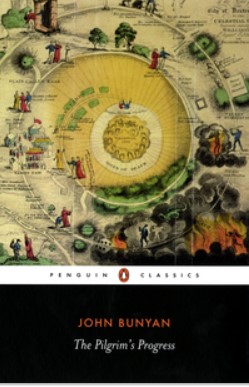
The Pilgrim’s Progress (Penguin Classics), John Bunyan, Roger Pooley edition. In continuous print since first published in 1678, it is considered a masterpiece of the English Puritan tradition. After The Bible, Valley of Vision and The Pilgrim’s Progress are two most loved books by Christians and are definitely the top two Christian books in the English Language.
Sale! Sale! Sale!
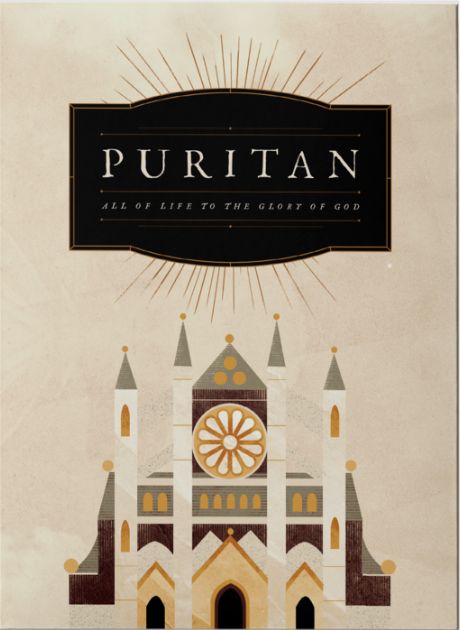
If you were excited about the documentary Puritan, but sad at the price (I totally understand) then this is the sale for you! The deluxe edition of Puritan: All of Life to the Glory of God, is half off at Ligonier today (I don’t know for how long, it’s part of the Friday Sale).
This feature-length documentary (6 DVDs) and hours of accompanying teaching sessions feature several of our Teaching Fellows and other gifted scholars and leaders. The Deluxe Edition includes a special, decorative, exclusive hardback book by Dr. Joel Beeke and Dr. Michael Reeves and the Workbook. The DVDs, Book, and Workbook are offered for $75. That’s less than $10 per item in the bundle.
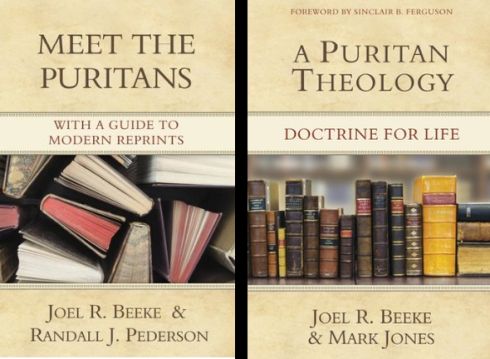
The Puritan Combo: Puritan Theology and Meet The Puritans is on sale at Reformation Heritage Books! These two hardcovers are bundled to include A Puritan Theology: Doctrine for Life, a systematic theology by Dr. Joel Beeke a professor at Puritan Reformed Theological Seminary; and Meet the Puritans, a collection of mini-biographies and book reviews that also includes helps on which reprinted editions are best. The two together are on sale where you save $58. You can also buy either of them separately on sale too. I bought Meet the Puritans.
The American Puritans by Nate Pickowicz is a new book out by this Gilmanton NH pastor and writer of Why We’re Protestant: An Introduction to the Five Solas of the Reformation, Reviving New England: The Key to Revitalizing Post-Christian America, John Cotton: Patriarch of New England
(The American Puritans Book 1) and others, recently published The American Puritans with Dustin Benge. This book tells the story of the first hundred years of Reformed Protestantism in New England through the lives of nine key figures: William Bradford, John Winthrop, John Cotton, Thomas Hooker, Thomas Shepard, Anne Bradstreet, John Eliot, Samuel Willard, and Cotton Mather. It is on sale at Reformation Heritage Books.
The super saving sales are at Ligonier’s $5 Friday sale, Reformation Heritage Books. You can also find these items at Banner of Truth Books, and of course Amazon. Enjoy!











 the-end-time.org