By Elizabeth Prata
I’m getting old. I’m officially in my senior phase now. The next phase is ‘elderly,’ and after that, death and translation to heaven. It’s remarkable how fast this life went. It really is a vapor. Things I remember clearly like ‘that new show Hawaii 5-0 reboot’ started 16 years ago. The movie Jaws which startled me so much is 50 years old. When I think of movies being that old I think of old black and whites like It’s a Wonderful Life. But that one is now 80 years old! Metropolis, that old masterpiece, is almost 100 years old. Yes, time flies.

With senior seasons of life come health challenges. It seems like a lot of people are having health challenges now. This summer I had some things pop up for which I needed to see a doctor. This was unusual for me. Normally I only go once a year for my annual checkup and that’s that.
So, in addition to being reminded every day that “life is a vapor” (James 4:14), aging also reminds me that this flesh is but flesh, transient, subject to the curse, and not meant to last. Only our glorified bodies will last, but we have to wait for those. The flesh is just a body of death waiting to break down until we die.
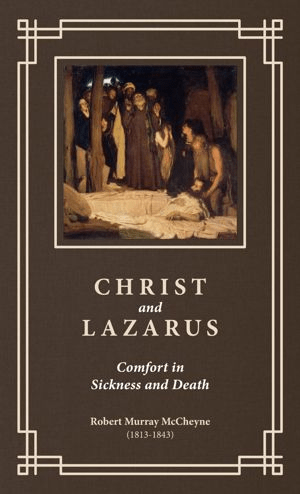
A while ago I made an order at Chapel Library. One of the pamphlets I’d ordered was called Christ and Lazarus: Comfort in Sickness and Death, By Robert Murray McCheyne. When I ordered this I did not know I’d need a doctor this summer, but the Lord did. I find the pamphlet a comfort. Here are some excerpts. You can order this for free to be sent to you in hard copy (or download yourself, or read online)
“Of Bethany, the town of Mary and her sister Martha” (v. 1).
Bethany is a sweet, retired village, about two miles from Jerusalem, in a ravine at the back of the Mount of Olives. It is at this day embosomed in fig trees, and almond trees, and pomegranates. But it had a greater loveliness still in the eyes of Christ—it was the town of Mary and Martha. Probably the worldly people in Jerusalem knew Bethany by its being the town of some rich Pharisee who had his country villa there—or some luxurious noble who called the lands after his own name; but Jesus knew it only as “the town of Mary and her sister Martha.” Probably they lived in a humble cottage, under the shade of a fig tree; but that cottage was dear to Christ. Often, as He came over the Mount of Olives and drew near, the light in that cottage window gladdened His heart. Often He sat beneath their fig tree telling them the things of the kingdom of God. His Father loved that dwelling, for these were justified ones. And angels knew it well, for night and day they ministered there to three heirs of salvation. No wonder He called the place “the town of Mary and her sister Martha.”
After that introduction, McCheyne spends a bit of time explaining why Christ sends sickness. I’ll post only the headings but be assured he explained more fully with verses:
The reasons why God sends sickness are various:
1. In some it is sent for the conversion of the soul.
2. Sometimes it is for the conversion of friends.
3. Sometimes it is a frown of judgment.
4. Another case is now before us: that of a child of God sick, (Lazarus) that Christ might be glorified in him.
“Lazarus was evidently a child of God, and yet Lazarus was sick. How he had come by his grace we are not told.“
Not how McCheyne calls illness “a grace”. This belief is hard for unbelievers to understand but it is true. A friend of mine is a paraplegic, made so in a high school football game. He said it is a grace and he would not trade it. He said he has seen and received much grace due to his condition.
But when illness comes “Learn not to judge others because of affliction.” And, “God’s children should not doubt His love when He afflicts.”
Even if the affliction continues long and hard, do not lose hope. Christ’s love is in it completely. Though you may be in pain, or adjusting to a new life circumstance, or even seeing it in others, such as the sisters Mary and Martha watched their dear brother sink, don’t doubt the love of Jesus.
“And so with Christ; He bends His eye most tenderly over His own at the time He is afflicting them. Do not doubt the holy love of Jesus to your soul when He is laying a heavy hand upon you. Jesus did not love Lazarus less when He afflicted him.”
Such afflictions, conditions, or illnesses spark the most fervent prayer in us. McCheyne-
Learn that urgency in prayer does not so much consist in vehement pleading as in vehement believing. He that believes most the love and power of Jesus will obtain most in prayer.”
Jesus sent word that the sickness of Lazarus is “not unto death”.
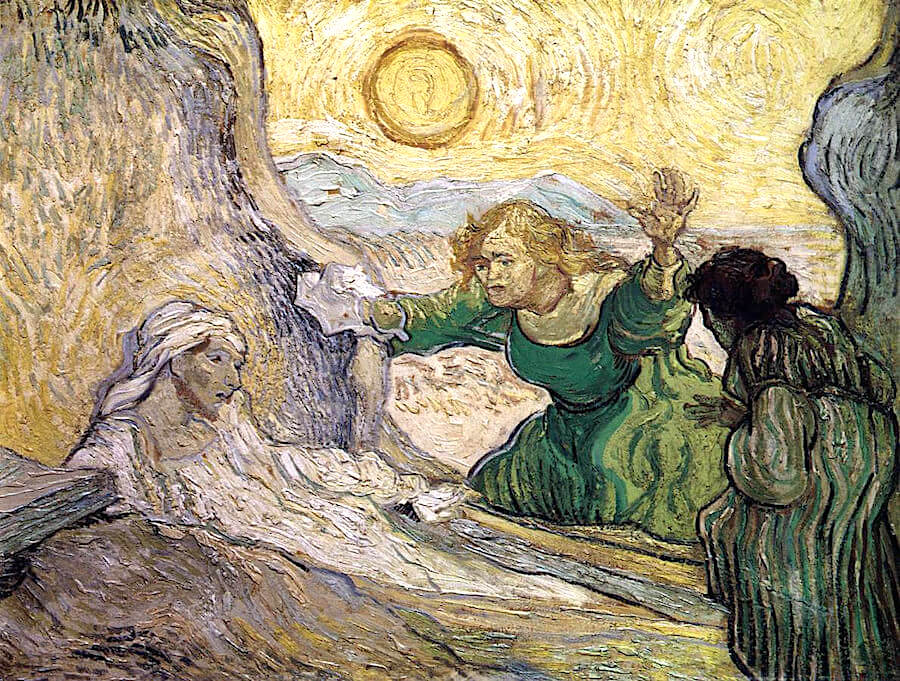
A word of promise: “This sickness is not unto death.” This was an immediate answer to prayer. He did not come; He did not heal. But He sent them a word enough to make them happy: “This sickness is not unto death.” Away the messenger ran, crossed Jordan, and before sunset perhaps he enters breathless the village of Bethany. Good news! “This sickness is not unto death.” Sweet promise! The hearts of the sisters are comforted, and no doubt they tell their joy to the dying man. But he gets weaker and weaker; and as they look through their tears at his pale cheek, they begin almost to waver in their faith. But Jesus said it, and Jesus cannot lie. If it were not so, He would have told us. “This sickness is not unto death.” At last Lazarus breaths his latest sigh beside his weeping sisters. His eye is dim, his cheek is cold, he is dead. And yet Jesus said: “Not unto death”! The friends assemble to carry the body to the rocky sepulcher; and as the sisters turn away from the tomb, their faith dies. Their hearts sink into utter gloom. What could he mean by saying, “not unto death”?
Are your hopes sinking: Is your faith weakening? Is your trust in Jesus wavering?
McCheyne: “Learn to trust Christ’s word whatever sight may say.“
Do not allow grief, pain, heartache, or affliction to prevent you from approaching Jesus. His throne is open to His children. Come often, come boldly, come believing. He may or may not heal, but the belief is in His power to do good to those who are called and love Him. The belief is in His sovereignty, that His will is perfect. That our flesh wastes away but “this sickness is not unto death”. That no matter the outcome, even amputation or paralytic or memory loss, we WILL be restored and that restoration in glory will be forever.
Or perhaps He will heal and you come out the other side saying, yes, I prayed, yes I believed, yes, it was a grace from our beautiful Savior to be so afflicted.

“Some trust Christ with their soul, but not with their body—with their salvation, but not with their health. He loves to be sent for in our smallest troubles”.-end M’Cheyne