Posted in theology

Summer Reading: Paradise Lost

By Elizabeth Prata

When someone says “summer reading” it usually brings to mind beach reads, AKA light novels, that are aimed to entertain. Since people take vacations in summer, they bring with them a novel that isn’t mentally demanding, just aiming to soak up the book in their hand and the sun above as they escape briefly from their workaday life.

I’m the opposite. Summer reading for me means I choose demanding books because I’m off work for the summer. During school my mental capacities are stretched to the max. I teach reading to a succession of 6 small groups over 4 different grades using 3 different reading programs. It’s a lot. I love it, but it drains me mentally.

When I get home, I’m a zombie and it takes a pot of tea and an hour to recover. I have nNo capacity for demanding novels.

So in the summer when I’m off and I’m not being challenged mentally, it’s the perfect time to make my TBR stack of classics, or ‘books I’ve always wanted to read but haven’t yet’ or ‘a book that is hard for me. Four summers ago I tackled Moby-Dick. Then it was Treasure Island. Then Joseph Conrad’s Heart of Darkness. So this summer it’s going to be…

I saw it advertised on Grace Books’ website and it is not only one I’ve always wanted to read but this edition is a beautiful book. I mean, you had me at ‘gilt edged’. And ‘cloth bound’. Yes, I judge a book by its cover. Come at me, lol.

It’s John Milton’s epic poem, “Paradise Lost’. Written in 1667, the publisher promises that it is an unabridged version but there are margin notes for unfamiliar words. So already I know the language is going to be demanding. And harder for me personally, is the fact that it is written as an Epic Poem. I have a rough time with poetry, I just don’t understand it.

An Epic Poem is (according to Encyclopedia Britannica), “long narrative poem recounting heroic deeds. Outstanding examples of the written epic include Virgil’s Aeneid and Lucan’s Pharsalia in Latin, Chanson de Roland in medieval French, Ludovico Ariosto’s Orlando furioso and Torquato Tasso’s Gerusalemme liberata in Italian, Cantar de mio Cid in Spanish, and John Milton’s Paradise Lost and Edmund Spenser’s Faerie Queene in English.”

I read The Aeneid, The Odyssey and The Iliad, when I was in my early 20’s. Forty-five years later – ahem – my brain may have dimmed somewhat. In fact, I when I was in High School and just after, I read most of the standard classics listed in top 100 lists and I’m glad I did back then because reading or re-reading them now is much harder. But every summer, I select a classic to read or re-read, and that is my Summer Reading!

The version issued by Grace Books was on 40% off the regular price at the time (it’s still 10% off now), so of course I could not resist. The book itself (according to the blurb) contains:

Explanatory notes are included in the margins for allusions to Greek mythology and obscure words.

  • Introduction by Dr. Leland Ryken
  • Cover design by Stephen Crotts
  • 50 vintage illustrations by the renowned Gustave Doré; modified to cover nudity
  • Genuine cloth cover with gold foil print and a ribbon page marker

What is Paradise Lost about? Adam and Eve’s rebellion and humanity’s fall from grace. One reviewer of this edition on Amazon said,

“Having biblical backgrounds in its plot of being about Adam and Eve‘s temptation and humanity’s fall from grace, “Paradise Lost” should be read for its unparalleled sonorous language, it’s profound exploration of human freedom, disobedience and rebellion, and its impact on Western literature. It offers a complex, timeless, psychological portrait of Satan serving as a foundational text for understanding the archetypal antihero.”

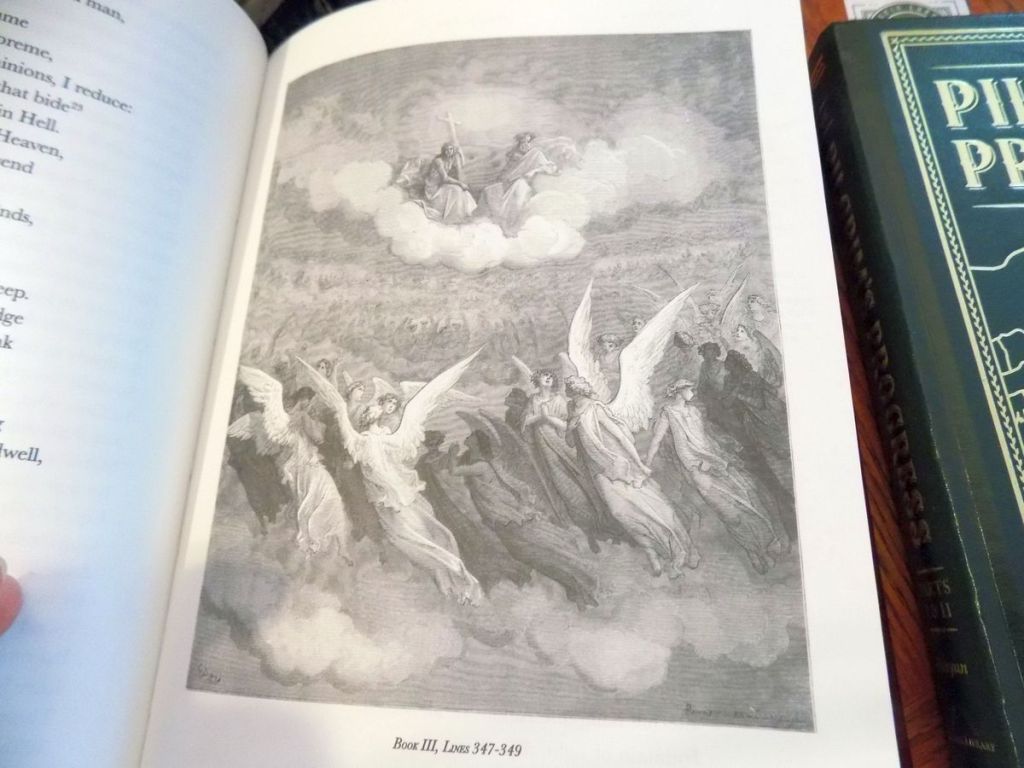
OK, this should keep me busy! Here are the photos of this beautiful edition. I appreciate Gustave Doré’s illustrations. He was a famous French artist, printmaker, and caricaturist who died in 1883. He is best known for his wood-engravings illustrating classic literature, especially Dante’s Divine Comedy. What I really appreciate in this edition is that though the language has been left alone, the illustrations have been lightly edited to cover up the nudity in Doré’s illustrations.
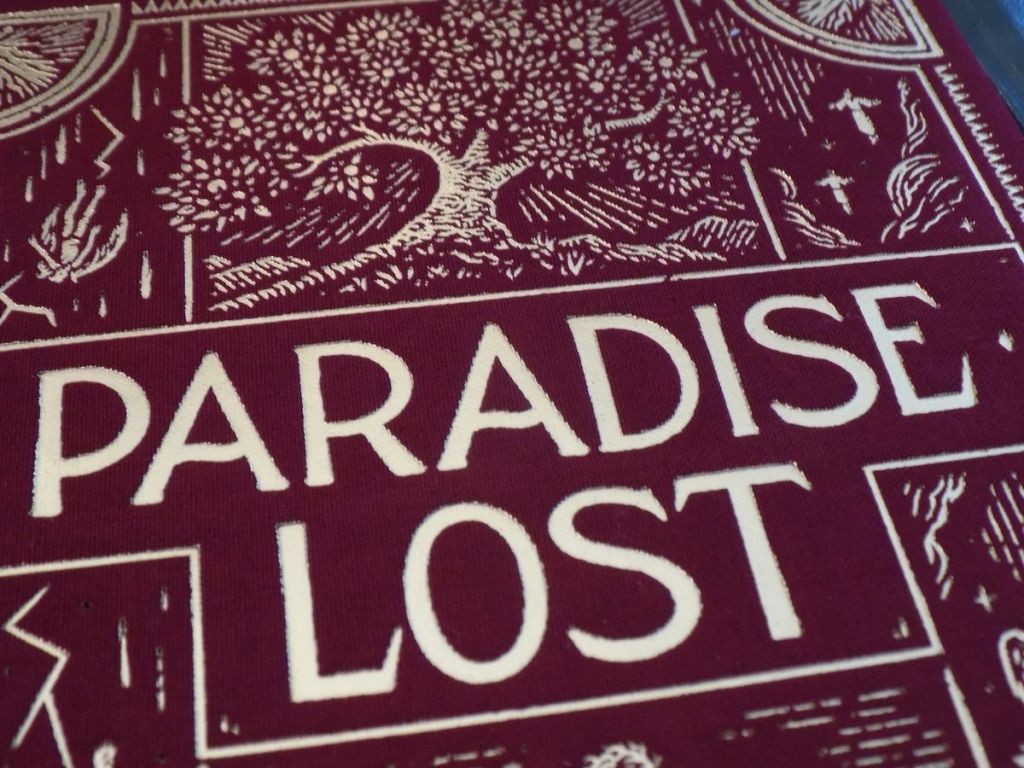
Beautifully illustrated cloth cover
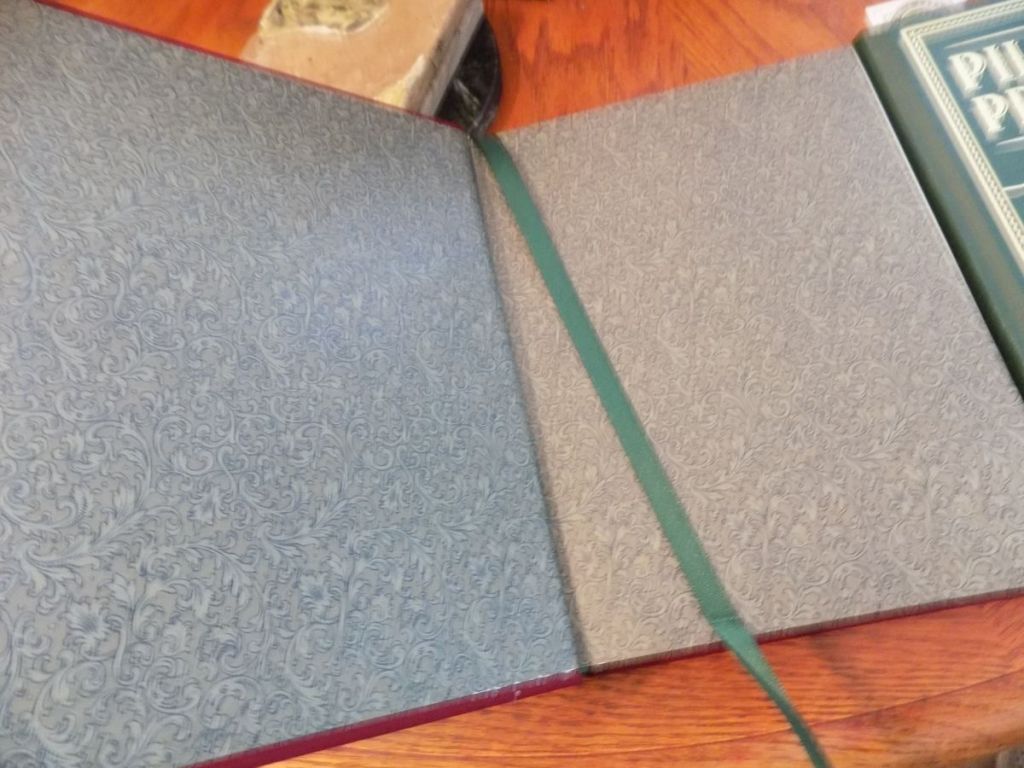
Gorgeous end papers!! AND a ribbon!
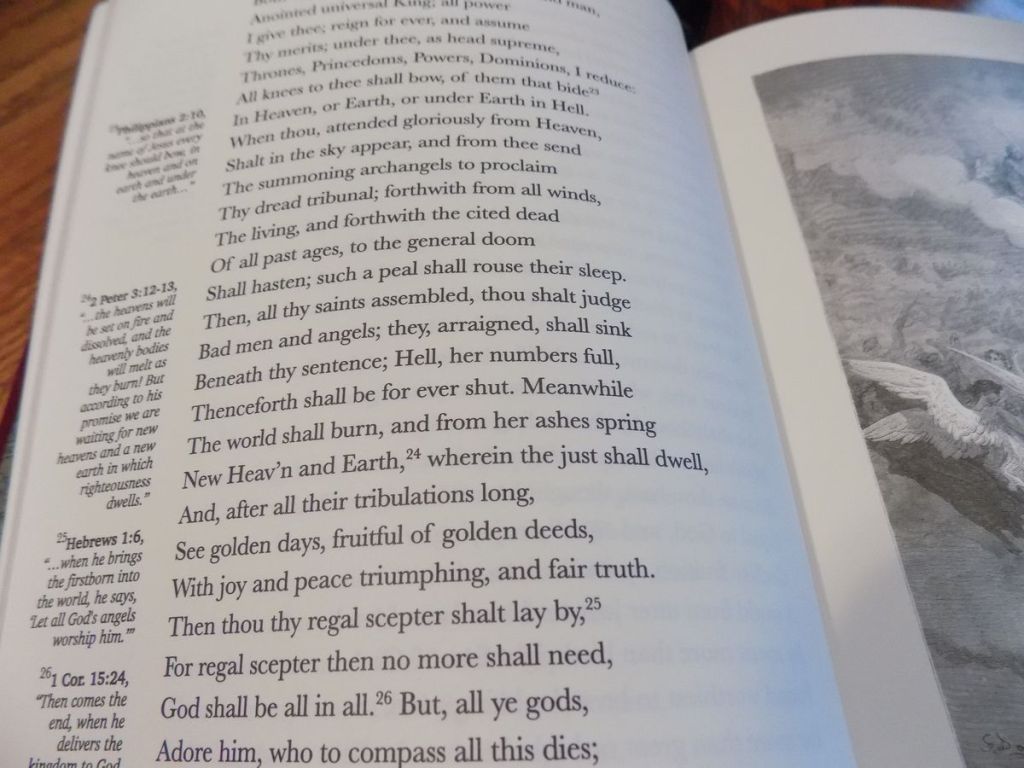
Crisp font and white pages for easy reading, side notes with explanations and scriptures.
One of Dore’s illustrations. He was a master at his craft.

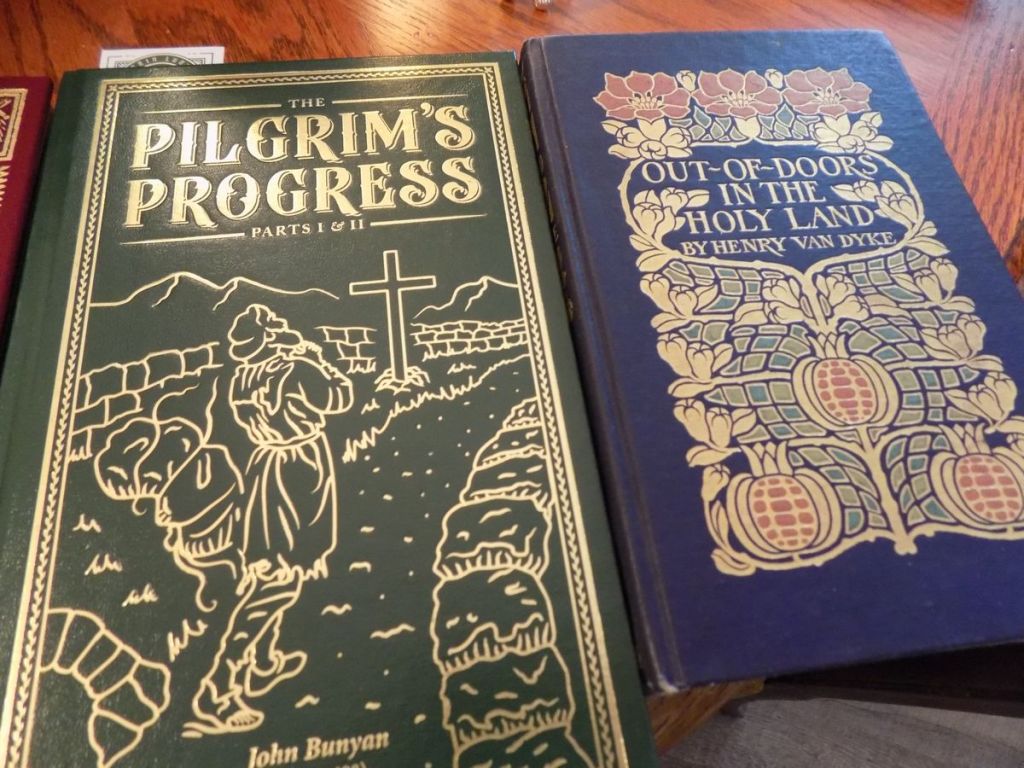
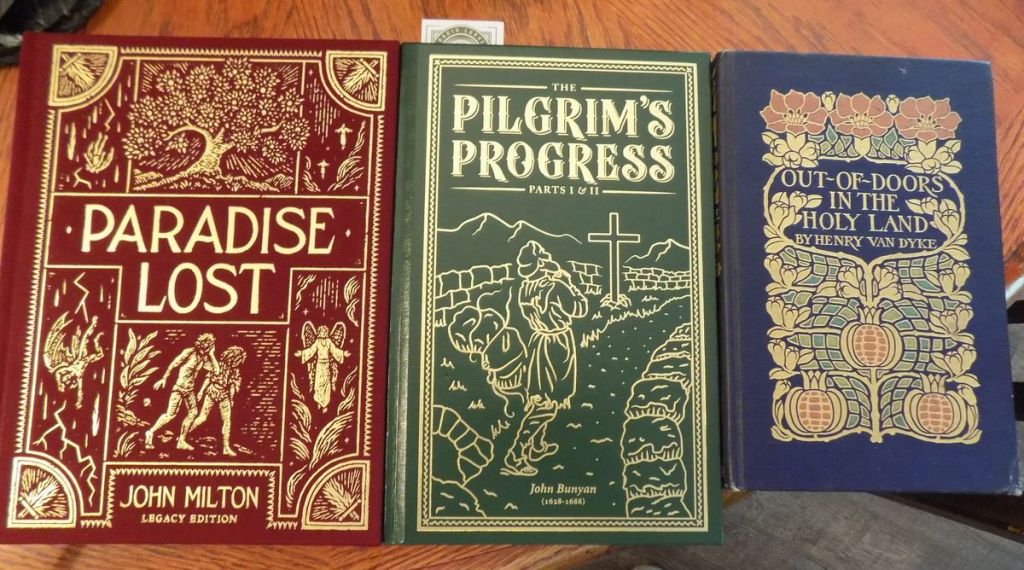
I mentioned I do judge a book by its cover. Here are two others I’ve recently acquired. The Pilgrim’s Progress was a free gift from Chapel Library, and the Van Dyke I bought myself. See what I mean? If I am going to own books, they might as well be beautiful. My other reading selection this summer is a re-read of Pilgrim’s Progress. I’ll also finish the Grisham I started, as well as Lady Audley’s Secret, Lord willing and the eyes don’t fail!
Happy reading and book-ing this summer! What is on your TBR list?

Posted in theology

Chick Lit with a Touch of Magic: Blackbird Café Review

By Elizabeth Prata

SYNOPSIS

In my review of a book set in Wicklow, Alabama, the protagonist, Anna Kate, returns to bury her grandmother and confront her family history while grappling with magic realism. I explain the genre of ‘magic realism’, discuss my genre preferences, and note that some genres present stumbling blocks to some while not to others.

Continue reading “Chick Lit with a Touch of Magic: Blackbird Café Review”
Posted in encouragement, Uncategorized

The Pilgrim’s Progress, John Bunyan, and Helpful Resources

Pilgrim's_Progress_2I really love this book. I’ve read it once, picked through it several times, and now I’m listening to Derek Thomas lecture on it at Ligonier.org’s Daily Video. (1st lecture in the series here).
There is a part 2 to Pilgrim’s Progress that Thomas urges us to read, as both parts are meant to be a coherent whole. I had not known that.

Pilgrim’s Progress was written by John Bunyan while he was in prison for 12 years for preaching the Gospel. Wilkipedia has a bio of the man, more at link

John Bunyan (unknown birth date, baptised on November 30, 1628 – August 31, 1688) was an English writer and Puritan preacher best remembered as the author of the Christian allegory The Pilgrim’s Progress. In addition to The Pilgrim’s Progress, Bunyan wrote nearly sixty titles, many of them expanded sermons.

He also penned the world’s first recognized visual theology, the Mapp Shewing Order and Causes of Salvation & Damnation“. Tim Challies updated the Map to modern graphical styles, though let it be said I enjoy the original, with its angels and dragons and soaring language. Challies said of the maps,

In a pair of side-by-side timelines he traced the salvation of the believer (or the elect) and the damnation of the unbeliever (or the reprobate). …

Let me start you with a hint: Begin on the left side and read through circles one to 25 as a big, long sentence. When that’s complete, do the same for the other side. Finally, go back to read the verses and additional information. I think you will find, as I did, that the first sentence is terrible and chilling while the second is beautiful and encouraging. Whatever you do, linger. Bunyan has a lot to teach us through this infographic.

Here’s a link to Bunyan’s original (and IMO, better) map. Bunyan’s spiritual autobiography, Grace Abounding to the Chief of Sinners, is also a wonderful book. You can find a free text version online here. Or here in .pdf form, which you can download and then send to your Kindle via Kindle email attached as a file and it will be installed on your device.

Since Bunyan is so well known for Pilgrim’s Progress, few people know he wrote so many other books.

Anyway back to the book Pilgrim’s Progress. Why is this book important?

Leland Ryken said in a foreword at Desiring God about the 2 books(s) The Pilgrim’s Progress parts 1 & 2,

The book that became known to posterity as The Pilgrim’s Progress is a Christian classic whose importance is impossible to overstate. For more than two centuries after its first publication, The Pilgrim’s Progress ranked just behind the King James Bible as the most important book in evangelical Protestant households. Te book has been translated into some two hundred languages, including eighty in Africa. Any book that has achieved such popularity has a very large claim to our attention. Facts of Publication The Pilgrim’s Progress actually has two publication dates, corresponding to the two books that comprise it. The first book was published in 1678 and bore the title The Pilgrim’s Progress: From This World to That Which Is to Come, Delivered Under the Similitude of a Dream. It tells the story of the spiritual journey of the protagonist named Christian from the City of Destruction to the Celestial City (meaning heaven).

Book II was published six years later as part of an old artistic tradition known as a “companion piece.” It tells the story of the same journey, this time undertaken by Christian’s wife, Christiana, and their four sons.

The hard part for me when reading Pilgrim’s Progress is not the 350-year-old language. Though, if the language presents a difficulty, there are free updated, modern language versions available, both for free online and in hard copy.

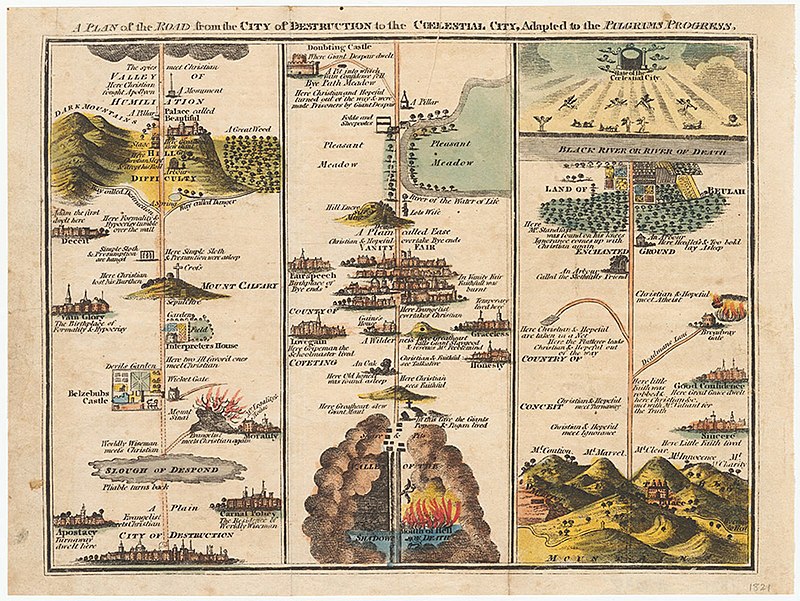
800px-John_Bunyan,_The_Road_From_the_City_of_Destruction_to_the_Celestial_City_1821_Cornell_CUL_PJM_1038_01

A Plan of the Road From the City of Destruction to the Celestial City, Adapted to The Pilgrim’s Progress, 1821. Public Domain

What I find hard is the abstractness of it, because I’m very literal. I do not understand allegory or symbols in literature.

Pilgrim’s Progress is an allegory. An allegory is a literary device. Here is allegory defined

Allegory is a figure of speech in which abstract ideas and principles are described in terms of characters, figures, and events. It can be employed in prose and poetry to tell a story, with a purpose of teaching or explaining an idea or a principle. The objective of its use is to teach some kind of a moral lesson.

Difference Between Allegory and Symbolism
Although an allegory uses symbols, it is different from symbolism. An allegory is a complete narrative that involves characters and events that stand for an abstract idea or event. A symbol, on the other hand, is an object that stands for another object, giving it a particular meaning. Unlike allegory, symbolism does not tell a story.

I enjoyed Ligonier Theologian Derek Thomas in these free 23-minute lectures explaining Pilgrim’s Progress, both parts one and two. I found them extremely helpful in understanding the book. In addition to explaining the allegories and what they (likely) stood for, Thomas folded in Puritan history and culture of Bunyan’s day and set the context for how Bunyan thought and what was happening in his life as he wrote the book. This information gives depth and nuance to understanding it.

The City of Destruction
The Wicket Gate
The Interpreter’s House
The Cross & the Sepulcher
The Hill Difficulty
The Palace Beautiful
The Valley of Humiliation
The Valley of the Shadow of Death
The Godless City: Vanity Fair
The Castle of Giant Despair
The Delectable Mountains
The Celestial City

Another resource for this marvelous book is Notes & Commentary, Guide to Pilgrim’s Progress by Ken Puls.

An additional resource is Mt Zion Chapel Library, Pilgrim’s Progress for Everyone

I hope you enjoy the resources and would consider reading The Pilgrim’s Progress.