
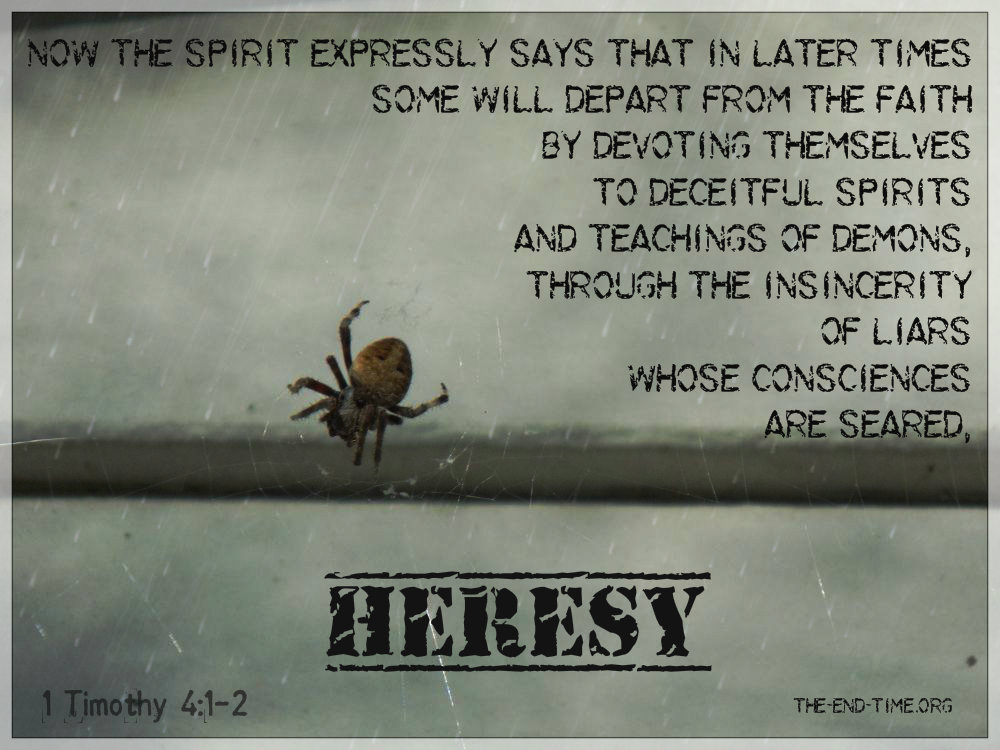
Posted in theology

Heresy and false doctrine part 3: Can they repent? Will they repent?

By Elizabeth Prata

Heresy vs False Doctrine: What are they? Part 1
Heresy vs False Doctrine: What are they? Part 2

In part 1 I looked at definitions of false doctrine and heresy and whether they were two sides of the same coin, or totally different theological issues. In Part 2 I looked at heresy and named some examples of old and heresies coming around again repackaged, naming some modern people who teach them.

In this part I’ll focus on the issue of repentance for the false teacher and the heretic. Does a false teacher or a heretic ever repent? Can they? Should we even pray for them?


After our salvation, some of us become teachers. It’s a weighty and sober task, for teachers will be judged more strictly.

And because we are all human, sometimes even teachers of the Bible sin. They may sin by teaching error, or promote someone who is a false teacher themselves. It is here that the path diverges. Some of these teachers, when alerted to their error, repent publicly. I have read occasionally of these teachers publicly repenting of their false teaching and/or promotion of false teachers. It’s always encouraging to see this.

Others double down and continue teaching the false. Their path marches ever onward toward destruction. Purposeful persistence in error would seem to indicate a hardening of heart of that person. Repentance becomes more distant possibility, but it’s never out of the realm of possibility- because there is only 1 sin that is eternal, and that is blasphemy of the Holy Spirit.

But is there a moment on that path when a teacher who has taught falsely can return? At what point does God give them over to their error? We know God does this, Romans 1:18-32 describes a hardening process. We know He gave Pharaoh over to his persistent refusal to see or accept God’s truth. We know in the end, judgment comes upon the ungodly heretics (Jude 1:4).

Example: Hymenaeus

We read of Hymenaeus, who is mentioned twice in the New Testament. The first time is in 1 Timothy, written in about A.D. 62-64.

 This command I entrust to you, Timothy, my child, in accordance with the prophecies previously made concerning you, that by them you may fight the good fight, keeping faith and a good conscience, which some, having rejected, suffered shipwreck in regard to their faith. Among these are Hymenaeus and Alexander, whom I have handed over to Satan, so that they will be taught not to blaspheme. (1 Timothy 1:18-20)

We learn that Hymenaeus rejected the faith, made a shipwreck of it, and didn’t keep it. Is he restorable? More on that question in a minute. We learn that Paul put him out of the church for his false teaching.

The second time we read of Hymenaeus it’s a couple of years later in 2 Timothy. This book was written in about 66-67 AD.

Be diligent to present yourself approved to God as a workman who does not need to be ashamed, accurately handling the word of truth. But avoid godless and empty chatter, for it will lead to further ungodliness, and their word will spread like gangrene. Among them are Hymenaeus and Philetus, who have gone astray from the truth saying that the resurrection has already taken place, and they upset the faith of some. (2 Timothy 2:15–18).

Hymenaeus is lumped in with people who promote empty and godless chatter, and what he was teaching was poison (gangrene, other translations, cancer. The Greek word is literally gaggraina). He has gone astray from the truth and is teaching something totally false.

But in the first verse, Paul put Hymenaeus out of the church for a reason. The reason is always restoration. Paul said “so he may be taught not to blaspheme.” So it seems if one can be taught something, there is wiggle room. If someone can be taught something there is room for the light to come and error to be repented of. If he can be taught, the door to restoration isn’t shut, it would seem. Hymenaeus is being punished with a hope for restoration in mind.

EPrata photo

Paul didn’t write, “I put him out so he may be condemned.” Excommunication was a last resort to be sure, a serious consequence of Hymenaeus’ error, but this punishment had the purpose of possibly Hymenaeus learning the truth and perhaps changing his ways.

To that end I have no doubt Paul prayed for Hymenaeus. Paul was a prayer, and a carer of souls.

The situation does not look to be improved a couple years later, Hymenaeus is not recorded as having been restored to the church, but is worse in his teaching. He is persisting in error. This is one of the marks of a false teacher and a heretic.

We also read in 2 Timothy 2:25,

with gentleness correcting those who are in opposition, if perhaps God may give them repentance leading to the full knowledge of the truth,[underline mine]

This word “if” does not refer to God dithering about whether to grant repentance that a person is begging for. He is not in heaven saying, ‘Hymenaeus is repenting, hmmm, shall I accept it? He did make me pretty mad…’Maybe, maybe not…”

It is simply an acknowledgement from the writer that repentance is in the hands of God. (Acts 11:18). HE gives the person a spirit of repentance. We do not know on our side of heaven which false teacher will be given the opportunity to repent and which will persist unto death and condemnation. So we pray for the person who is in error.

“Repentance of the heart is the work of God the Holy Spirit.” ~Sproul
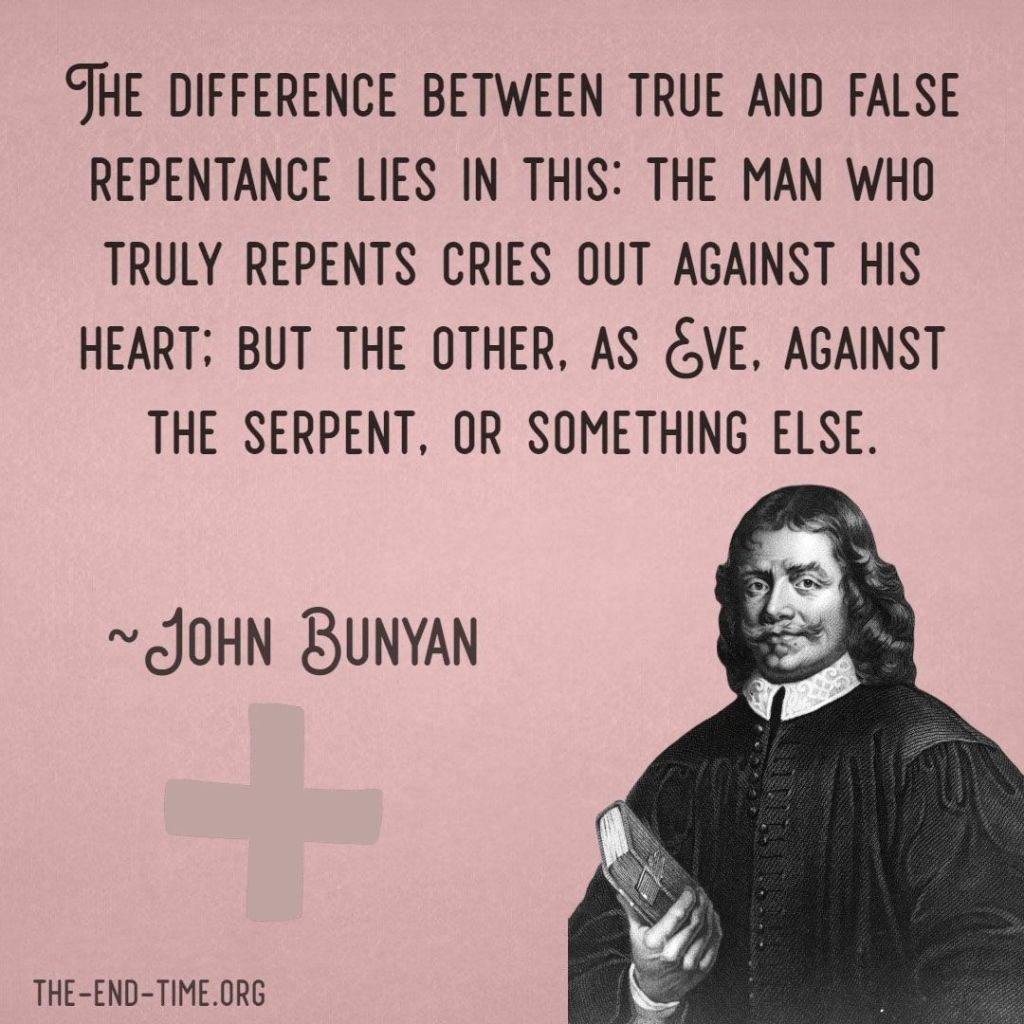
It is a weighty situation when we see someone sliding into error and then apostasy. We do know that at some point, God gives them over to their error. They will remain in their sin since that is what they have persistently and continuously striven for. God gave Pharaoh over. He gave Saul over. Perhaps He gave Hymenaeus over in between the Books of 1 Timothy and 2 Timothy.

And we know this too, Hebrews 6:4-6 LSB says it is impossible to restore some:

For in the case of those once having been enlightened and having tasted of the heavenly gift and having become partakers of the Holy Spirit, and having tasted the good word of God and the powers of the age to come, and having fallen away, it is impossible to renew them again to repentance, since they again crucify to themselves the Son of God and put Him to open shame.

These verses do NOT mean a person who is saved and has the Holy Spirit indwelling them, can lose their salvation. No. The New Testament is replete with assurances that faith, once given to a penitent, is of God and will never be snatched away by anyone or anything, including God.

You notice the words in the Hebrews verse- the person was enlightened (had cognitive knowledge) was ‘partaking’ of the heavenly gift, (around Godly events, but not indwelled), and ‘tasted’ (not digested, or consumed). These descriptions describe only a surface believer. Remember, many will say to Jesus on the Day, didn’t we do many works in your name? And He will cast them away because He never knew them.

It’s these people, the surface workers, not the committed believers, who will fall away. If a false teacher is genuine, they WILL repent. Same with a heretic. Of the sad people who ‘deconstruct’ their faith and make a once for all rejection of it, they are impossible to restore. They came close to the Light but turned away to darkness, never to see the Light again.

Should we pray for them?

So, if we accept that the spirit of repentance is a gift from above, and if we accept that some are impossible to restore, and we know that God gives some over to their sin, should we pray for false teachers, heretics, and apostates?

YES.

There is only 1 unforgivable sin, and that rejecting Jesus and dying in one’s sin. Jesus prayed to the Father for forgiveness of those blaspheming Him and mocking and spitting on Him on the cross. But if one blasphemes the Holy Spirit & dies outside of the door of Jesus, then…his sin is eternal. Until the person dies, we never know what his or her heart is doing, and we never know what God has in store for them. False teachers, heretics, and apostates are in SUCH danger, we should actually pray for them more!

Throughout his letter, the author of Hebrews warns his audience of this danger. In the past, they have professed faith in Jesus and claimed to embrace him. Now, because of pressure and persecution from unbelieving Jews, they are tempted to abandon Jesus to restore their peace and comfort. They have experienced remarkable measures of grace in association with the new-covenant people of God (Hebrews 6:4–5), but now they are nearing the brink of falling away from Christ — and Hebrews warns them of the peril: having known the truth, and rejected it, are they now coming into a kind of settled hardness of heart from which they no longer will be able to repent and thus be forgiven?

For Christians today, we need not fear a specific moment of sin, but a kind of hardness of heart that would see Jesus as true and yet walk away — with a kind of hardness of heart incapable of repenting. Again, it’s not that forgiveness isn’t granted, but that it’s not sought. The heart has become so recalcitrant, and at such odds with God’s Spirit, that it’s become incapable of true repentance. ~Dave Mathis

Has one persisted so long in their sin that they have become seared to it? THAT person cannot repent.

But do WE know when that moment is? No. When Pharaoh rebelled after the first plague, was he unredeemable? No. Or the second, third, fourth? We do not know the exact moment when God gives a person over to their sin, so we continue to pray.

Prayer changes US. It acknowledges we are finite, helpless creatures who need God to do anything. It also puts the other person on our mind instead of our own selves, prayer in this way helps us be humble and other-centered.

If you see a person sliding into falsity, or someone who has been church-disciplined and put out, pray for them. It is a serious, serious situation with their eternal soul at risk.

Posted in theology

Heresy vs false doctrine: What are they? Part 1

By Elizabeth Prata

Heresy vs false doctrine: What are they? Part 2
Heresy vs false doctrine: What are they? Part 3

Should we pray for false teachers?
Are false teachers and heretics the same thing?
Can a false teacher repent?
Can a heretic repent?

I’m asked these questions now and then. Since I do a third of my ministry here as discernment, it’s logical I get asked discernment type questions. I’ve wondered the same thing myself. I’ll answer in three parts. I’ll look at false teachers, then heretics, then whether either or both of them can repent.

First, let’s look at the question:

What is the difference between a false teacher and a heretic? Is there a difference?

God’s truth, it is the only thing that matters, the sole standard by which we live.. Yet from the beginning, satan has energized people (or serpents) to pollute the truth.

But false prophets also arose among the people, just as there will also be false teachers among you, who will secretly introduce destructive heresies, even denying the Master who bought them, bringing swift destruction upon themselves. And many will follow their sensuality, and because of them the way of the truth will be maligned. (2 Peter 2:1-3)

The distinctions between what makes a teacher false and what makes a heretic can be muddy. Suffice to say, both are bad, but heresy is worse. Here, Mark Jones at Reformation 21 wrote:

What makes someone a heretic? This topic may be more important than we might think, especially in the world of online discourse. There is a distinction between willfully committing a soul-destroying heresy and committing a theological error.

Yet also this:

To call someone a “false teacher” is to say they are unsaved (see 2 Peter 2:1). …

But then again, Jones said, All heresies are errors, but not all errors are heresies I understand heresy in the way described by George Gillespie, a Scottish commissioner to the Westminster Assembly:

The key words above are “voluntarily” (not ignorantly) and “factiously” (not quietly, but “stubbornly” [see Ames]) in terms of the manner in which a heretic promotes his or her view(s). Conversely, we may hold to an error, but (thankfully) that error is not sufficiently severe enough that it overthrows the fundamental articles of the Christian faith. –end Mark Jones quote.

The Bible speaks a great deal on false prophets (Old Testament), false teachers (New Testament), and false doctrine. Every New Testament book except Philemon warns or says something about falsity.

As to the difference between a teacher teaching falsely and a teacher who is a heretic, for example, there’s Pelagianism (a notion that original sin did not taint human nature) which is a heresy, but teaching that one must eat or not eat certain foods is a theological error. It’s a false teaching but not necessarily a heresy that makes one outside orthodoxy.

A biblical example is Peter briefly ‘behaving’ falsely. Because his behavior had a teaching component, his behavior undermined the Gospel. Therefore, Paul said he must oppose Peter to his face. Denny Burk said, “In Galatians 2, Paul says that he opposed Peter for not being “straightforward about the truth of the gospel” (Galatians 2:14).”

As a side note I’ll mention here that Peter’s brief foray into falsity was a behavioral action. He was impacting the truth of the Gospel by his behavior- he withdrew from the Gentiles, not sitting with the Gentiles out of fear of man. Often when I write about a truly false teacher’s behavior, her defenders come out of the woodwork screaming that her behavior is an untouchable component because it’s (supposedly) ‘private’, i.e. separate from her teaching. No.

‘Stop judging our favorite false teacher’s behavior and lifestyle! It’s none of your business!’ Oh, yes it is, screeching harridans. Yes it is…

A Bible teacher’s or minister’s behavior is never separate from their identity in Christ, life AND doctrine matters, as Peter’s brief deviation into falsity shows and Paul’s immediate reaction to it.

Apollos briefly taught falsely. “Apollos was a man mighty in the scriptures who taught accurately about Jesus but who nevertheless was only familiar with John’s baptism. In Apollos’ case, his deficient teaching was an error of omission.~Denny Burk

Neither Peter nor Apollos could really be termed a false teacher because their theological error was brief and they immediately corrected themselves eagerly with open heart and with humility.

False teachers exist on a spectrum. They can be detected of course by examining their teaching, but if they have been confronted with truth to slay their error and they take some time to consider this, pray. If they take a long time and come out the other side with still believing and teaching the falsity, then they are false. If Peter and Apollos had continued teaching what they taught, after a while we must accept that they are not correcting their error and are false.

When is a false teacher a false teacher? It’s when he teaches falsehood. And the chief characteristic of his teaching is falsehood. ~RC SProul

In modern times, we have seen several known false teachers claim to repent. Naïve Christians should be wise as a serpent but harmless as a dove in these matters. Too many people take these claims of a false teacher’s supposed repentance at face value without a proper measure of wisdom and patience to see of they truly correct over time.

Costi Hinn here with a 1-minute tip on how to detect if a teacher’s repentance for teaching something in error is real or not. Remember, the chief characteristic of a false teacher is that their teaching is identified with error, i.e. “its chief characteristic.”

I would just add that I think there is in the New Testament a clear reservation of that title [false teacher] not just for one who teaches falsely but for one who is uncorrectable and who resists correction. ~Al Mohler

Next part: Heretics, what is heresy and what makes a person a heretic?


Heresy vs false doctrine: What are they? Part 2
Heresy vs false doctrine: What are they? Part 3

Sources consulted in researching this essay:

The Bible

John MacArthur Commentary on 2 Timothy 2:24-25

RC Sproul Critical Questions: What is Repentance?

Nathaniel Vincent: Puritan Treasures for Today: Turn and Live

Posted in theology

Why you should not consume bad Christian books/movies

By Elizabeth Prata

But it makes me feel good…
But it has Jesus in it…
But what would be the harm if I read it…

EPrata photo

In order to seek His face, and to stay on His path, before consuming any book, media, or website, Christians should always ask these questions in daily life,

–“Will this help me glorify Jesus?”
–“Will this help me understand Jesus better?”
–“Will this help me speak of Jesus lovingly and accurately?”

Continue reading “Why you should not consume bad Christian books/movies”
Posted in theology, word of the week

Sunday Word of the Week: Heresy

By Elizabeth Prata

The thread of Christianity depends on a unity from one generation to the next of mutual understanding of our important words. Hence the Word of the Week.


Heresy

Two weeks ago in the previous Word of the Week, I’d posted about Orthodoxy. In the religious context, Orthodoxy means truth or doctrine, that is accepted and widely held the global church. Heresy is a teaching or belief that stands in opposition to the orthodox teaching, so much so that to believe it, one essentially declares himself not a Christian. Here is Matt Slick at Christian Apologetics and Research Ministry to explain.

Heresy
by Matt Slick

Heresy is a false teaching. It is a belief or idea that is in contradiction to orthodoxy. In the context of Christianity, heresy is that which deviates from standard biblical teaching. Examples of heresy would be polytheism, a denial of the resurrection of Christ, a teaching that salvation is obtained by works, etc. The Christian church has experienced many attacks by heretics throughout the centuries, but it has fought them successfully – even though many persist. There are modern-day heresies. For example, Mormonism which teaches God is an exalted man from another planet and that we can become gods. The Jehovah’s Witnesses deny the Trinity, deny the deity of Christ, and deny salvation by grace alone through faith alone. Roman Catholicism also and works to salvation and promotes Mary worship.

Error, indeed, is never set forth in its naked deformity, lest, being thus exposed, it should at once be detected. But it is craftily decked out in on attractive dress, so as, by its outward form, to make it appear to the inexperienced (ridiculous as the expression may seem) more true than truth itself,” (Irenaeus Against Heresies 1.2).

The word “heresy” comes from the Greek ‘hairesis’ which means “choosing” or “faction.” At first, the term heresy did not carry the negative meaning it does now. But, as the early church grew in its scope and influence throughout the Mediterranean area, various teachers proposed controversial ideas about Christ, God, salvation, and other biblical themes.

It became necessary for the church to determine what was and was not true according to the Bible. For example, Arius of Alexandar (A.D. 320) taught that Jesus was a creation. Was this true? Was this important? Other errors arose. The Docetists taught that Jesus wasn’t human. The Modalists denied the Trinity. The Gnostics denied the incarnation of Christ. Out of necessity, the church was forced to deal with these heresies by proclaiming orthodoxy; and in so doing, condemnation upon these heresies and the heretics became a reality.

Heretics after death will be cast into hell. Steve Lawson explains further in sermon The Great White Throne Judgment

“Hell at last, Yawning, received them whole”

Gustave Dore illustrator, Paradise Lost by Milton

hell-at-last-yawning-received-them-whole.jpg!Large


~~~~~~~~~~~~~~~~~~~~~~

Further reading

Previous entries in the Word of the Week Series-

7. Orthodoxy
6. Glorification
5. Sanctification
4. Propitiation
3. Immanence
2. Transcendence
1. Justification