Posted in encouragement, theology

From Soulmates to Sola Scriptura: Escaping the Myth of ‘The One Right Choice’

By Elizabeth Prata

SYNOPSIS

This essay explores biblical decision-making, explaining that Christians need not seek mystical signs or personal revelations to know God’s will. Instead, believers should obey Scripture, apply godly wisdom, and trust God’s providence, understanding that no decision can derail His sovereign plan or purposes.


EPrata photo

Does the Bible speak to whom we should marry? Which college to attend? Whether to join the Army? Should we relocate to another state? Change careers now, later, or never? Go back to college?

While we cannot know God’s infallible will about anything except that which is revealed in Scripture, we are not to think that we have been left on our own with no assistance from God.”

from God’s Will and Personal Decision Making, by David Boxerman, TableTalk Magazine

EPrata photo

Paul just decided things. He wrote often that he decided this or decided that. You would think, if we had to wait for a sign or a word from the Holy Spirit, which Paul absolutely directly received many other times, that he would wait to hear, watch for a sign, or listen to omens. But no, more often than we think, Paul just decided things.

2 Corinthians 2:1 But I decided this for my own sake, that I would not come to you in sorrow again.

1 Corinthians 16:6 Perhaps I will stay with you awhile, or even spend the winter, so that you can help

2 Corinthians 1:23, But I call God as witness to my soul, that it was to spare you that I did not come again to Corinth.

Acts 20:16, For Paul had decided to sail past Ephesus so that he would not have to lose time in Asia; for he was hurrying, if it might be possible for him to be in Jerusalem the day of Pentecost.

It’s OK to decide!

In the 1970s and 1980s an extremely popular author was Richard Bach. He wrote Jonathan Livingston Seagull which was on the NY Times bestseller list for years. He was New Agey, mystical, advanced soul, self-enlightenment kind of guy. Lots of man-made philosophies in his books. He followed up Seagull with The Bridge Across Forever: A True Love Story. In it he sparked a frenzy for finding one’s “soulmate.” He proposed that there was one true predestined soulmate for each of us and it is our job to find her (or him). If we do not, then we miss out on the one fulfilling relationship we could have had.

The book centered on Bach eventually finding his alleged soulmate, Leslie Parrish, whom he married. They later divorced. In fact, Bach has been married 4 times.

But it was books like his with their massive cultural impact that sent people into an anxious state of mind, thinking that everything hinges on ourselves to figure out the right decision for everything or our self-actualization will never occur.

Sadly, the Christian culture of the 90s and 2000s absorbed some of that leaven, and introduced a similar mysticism to decision-making (and to Christian life in general) that unfortunately included waiting for personalized whispers, looking for signs, or other extra-biblical methods that will guide Christians along in decision-making, a process that that forgets God’s sovereignty.

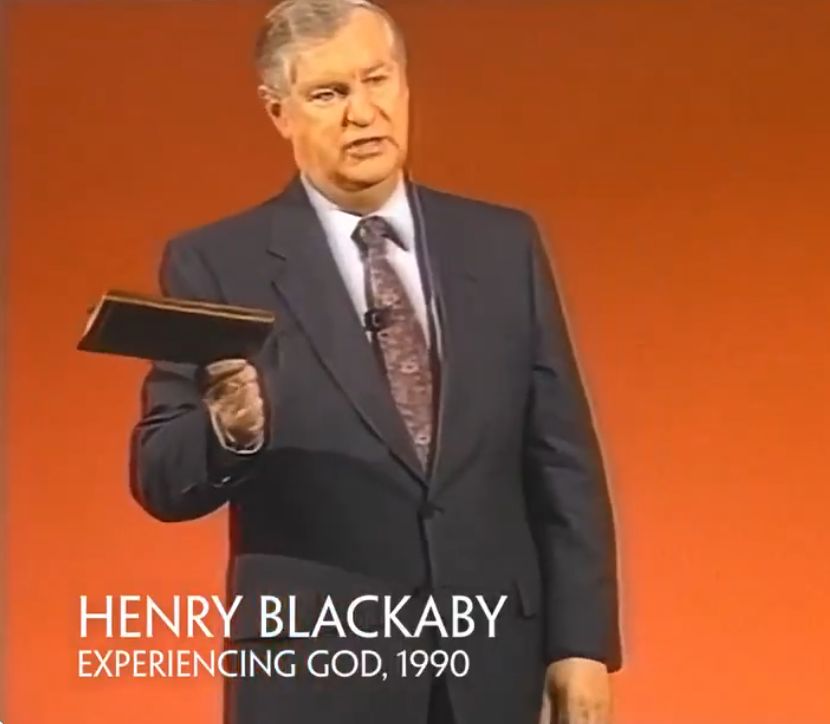
Just as much as Seagull and Bridge from Bach made a cultural impression in the previous generation, Henry Blackaby and Claude King’s book “Experiencing God” advanced these philosophies into Christian culture. Pastor Gary Gilley explained in his site Think on These Things, (TOTT), Gilley said;

For example, as in Experiencing God, the Blackabys say much about prayer being two-way communication with God (pp. 113, 117, 122, 131) — we speak, then wait for God to speak. 

At the Website Stand to Reason, we read,

“Your task is to wait until the Master gives you instructions” (141). This is the critical fourth step in the “Seven Realities of Experiencing God.” Blackaby sums it up simply as “God speaks” (52). The Christian receives an “assignment” from God that is special and unique to each individual, the specific will of God for his own life.

Pastor Phil Johnson debunked about inner promptings and whispers, (transcript here from Super Session at the 2002 Shepherds’ Conference, audio here)

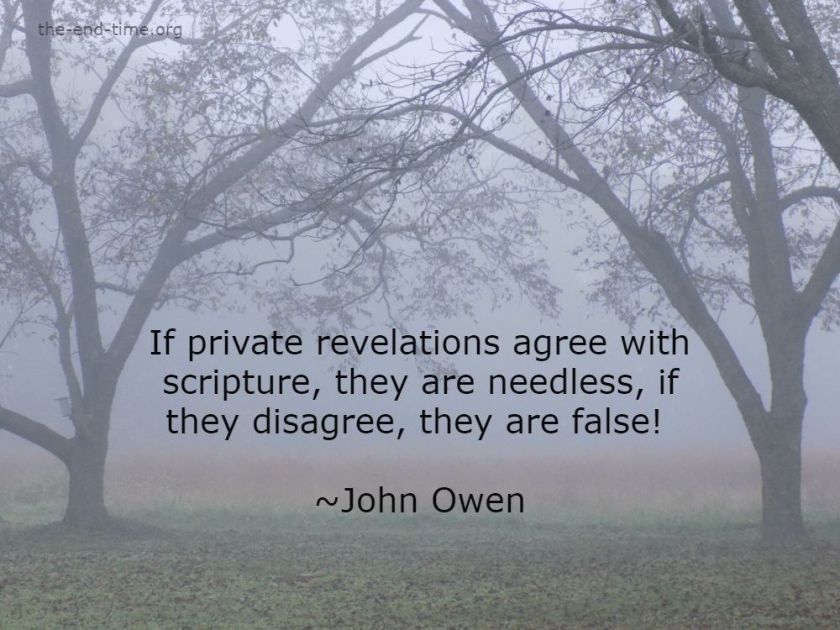
Now this kind of thinking is totally at odds with the principle of Sola Scriptura. We believe as Protestants don’t we, that the written Word of God – the Bible – contains everything necessary for our salvation and our growth in grace. 2 Timothy 3:16-17, All Scripture is given by inspiration of God and is profitable for doctrine, for reproof, for correction, for instruction in righteousness…listen to the next phrase…that the man of God may be PERFECT, thoroughly furnished unto all good works. Scripture alone is able to equip us thoroughly, perfectly for all good works. Everything we need in the process of our sanctification. There is no need for extrabiblical revelation. The Bible will equip you for all good works. It will give you all the explicit guidance you can possibly get from God. It contains principles to help you be wise and discerning as you pursue the course of your life, and beyond that we simply trust God in His providence to order our steps. You don’t need an explicit message from God telling you whom to marry, or where to go to school, or where to go to the mission field. [italics mine]


So how should we approach making decisions? As Johnson said, either there is explicit guidance in the Bible or there is wisdom to guide us as we read the Bible.

Any first step to decision making would assume first that one is saved. Apart from Christ, we can do nothing. (John 15:5). Secondly it assumes that the thing you’re undecided about does not involve sin. We never decide toward sin, we flee from sin. ( 2 Timothy 2:22; Genesis 39:12). Thirdly, it assumes that you’re relying completely on God’s word. If the item you’re trying to decide about is directly in the Bible, follow that command. “Should I submit to my husband?” isn’t really a decision to ponder, because it is already commanded.

Fourthly, the decision-making process assumes that you’ve yielded yourself to the Spirit of Christ within you. You’ve been striving for holiness, and you’re as much as a clean plate as you can be, being a sinner, lol.

Now, how to decide those things which are not directly addressed in God’s word?

Garry Friesen wrote a good book on Christian decision-making, linked above. He wrote that:

God’s guidance according to the way of wisdom can be summarized in four simple statements:

1.Where God commands, we must obey.
2.Where there is no command, God gives us the freedom (and responsibility) to choose.
3.Where there is no command, God gives us wisdom to choose.
4.When we have chosen what is moral and wise, we must trust the sovereign God to work all the details together for good.

–end Garry Friesen quote

Did you know that You Are Part of a Grand Plan? It’s not like you can mess it up. If you make this decision or that decision, it isn’t going to surprise God, or alter what He has planned for you. Providence, as mentioned above by Phil Johnson, is secure. His plan will be fulfilled, and your decision making isn’t going to change it. You aren’t going to miss out on anything. Beyond what is specifically prescribed in the Bible, and “we simply trust God in His providence to order our steps” as Phil Johnson explained.

In my own life, I moved from Maine to Georgia. I wanted a place with lower cost of living, and warmer weather. That’s it. He would have worked it out of I’d chosen Texas or North Carolina.  Deciding on Georgia wasn’t a life-or death decision, just one that wasn’t sinful, fit my lifestyle, and made sense.

When I got to Georgia I applied for a number of jobs. I applied using common sense. What did I have experience in, was trained for, and was good at? It’s not like I consulted the Lord and waited for a sign or anything. I was following the biblical principle that he who does not work does not eat. I sought jobs I thought I had the best chance of getting and sustaining myself.

Some jobs I applied for were at the University in the journalism department, some with local magazines. The one I got (in His providential care) was for the Athens Banner Herald writing feature stories of people in my county as a freelancer. Later when I decided to go back to education – subbing at first and applying for parapro jobs, I didn’t consult the Lord. I just used common sense. The freelance job simply wasn’t paying enough. A job with the County Education system would:

-be fairly secure as jobs go (education is the largest employer in the county)
-had health benefits (I was soon to be 50)
-was what I was trained for. (formerly certified teacher with Masters degree)
-I’d be working with kids (something I love).

If I’d decided to get a job as a bungee jumper trainer, lol, that would not be common sense. Watching for omens and signs, or waiting to hear directly from God would not make sense, either.

I knew the Lord would work it out. In His providence He did not ordain that I was given the first job I’d interviewed for as a parapro at another school, but a year later I got a job at the school I’m at now, a great fit. I’ve been there 17 years, 15 as a parapro. It’s not like there is only ONE decision or only ONE path.

I’ll conclude with Phil Johnson

If your life is in harmony with all the commands and principles of the Bible, you can actually do what you want to do without beating yourself up with introspection and fretting over whether God told you to do something or not. When Scripture says He orders our steps it’s talking about His guidance through His hand of providence. We step out in faith, and He guides our steps.

bible out loud

Posted in theology

When scripture becomes insufficient

By Elizabeth Prata

Why are there so many female teachers and preachers running around saying they have received a word from God or a prophecy from Jesus? Why is scripture suddenly INsufficient? Why do people seek after ‘a fresh word’? Did the Bible go stale? When was its expiration date?

These are the things I ponder as I see what is being taught or tweeted by so-called women teachers.

In truth, people have always wanted to exalt themselves within their spiritual circles by claiming to have heard from Jesus. It’s not a totally new phenomenon, because sin is not totally new. Neither are false teachers who want to cement their credibility with women who are undiscerning, to get their money. (2 Peter 2:3). However, the wider church’s reaction to such claims is what has changed.

In 1637 female preacher Anne Hutchinson had caused a ruckus that nearly split the nascent colony in two. She was holding meetings in her home where she preached, refused correction, taught that sin had no bearing on one’s attainment to heaven, and more. She held her own against the meetings she was called to with her deep knowledge of scripture and her articulate deftness of warding off opposers in her scripture war. However what did her in was her final argument at her trial, where she claimed God had directly told her she was to continue preaching and teaching. THAT was the final straw, and was a hook her adversaries could hang their hats on. Hutchinson’s fate was sealed.

“Anne was proclaimed a heretic. She and her family were banished from the colony and any supporters in positions of authority were removed. All supporters were forced to surrender arms.”

History.com

We don’t hear of people much since the mid-1600s, 1700s, and 1800s who claimed direct revelation- at least, none who were taken seriously by mainstream Christians. Hutchinson was exiled. Joseph Smith (Mormonism) Mary Baker Eddy (Scientology), Ellen G. White (Seventh Day Adventist) all claimed direct revelation and founded false sects of Christianity upon these alleged revelations from on high.

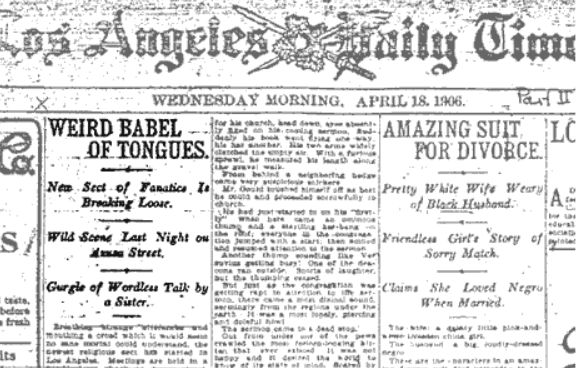
It wasn’t until 1906 when a “weird babel of tongues” as the LA Times put it, broke out at a local mission on Azusa Street.

‘New sect of fanatics is breaking loose’, ‘Wild scene last night on Azusa Street’, ‘Gurgle of wordless talk’

This new approach to Christianity, with the Holy Spirit allegedly speaking through people (and its twin soon arrived, prophecies) was not embraced widely- at first:

Christians from many traditions were critical, saying the movement was hyper-emotional, misused Scripture and lost focus on Christ by overemphasizing the Holy Spirit. Within a short time ministers were warning their congregations to stay away from the Azusa Street Mission

Washington Post

However, discontent with God’s word in the 20th century had arrived. More and more people claimed to have heard directly from God or Jesus or were prompted by the Holy Spirit…and the more that such alleged events were accepted, the more that other women and men clamored for similar experiences. Babbling in tongues and people claiming direct revelation were still marginalized throughout the early part of the 20th century. Everyone seemed to understand that the canon was closed.

Of Interest: What was the process of deciding on the New Testament canon?

Even when Henry Blackaby and Claude King published their book Experiencing God in 1976, it didn’t get a lot of traction at first. Inside the book, they taught that you can and should be hearing directly from God. The 2021 version states:

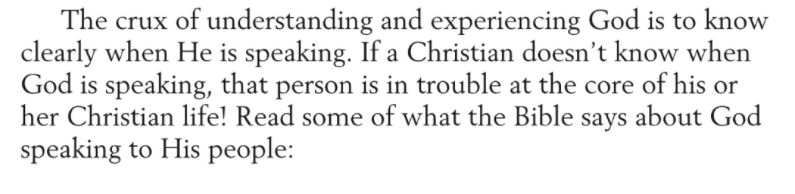
Earlier versions of the book promote a similar theological warning, for example: “If you have trouble hearing God speak, you are in trouble at the very heart of your Christian experience.” ~Henry Blackaby

When the 1976 book was revised and expanded and re-issued in 1990, THEN it took off. People were entranced with the idea that they could and should be hearing straight from God.

Blackaby was a conservative Southern Baptist, a denomination of adherents known back then as ‘People of the Book’, because people in the Southern Baptist Convention were strict about following the inerrant word of God. So they thought, if HE is saying this…and if Lifeway is promoting it…then it must have legs.

“There is nothing more important in life than understanding when God is speaking to you. If you are disoriented to God’s voice, your life is dangerously vulnerable. The Bible indicates conclusively that God does speak to people and that he does guide them in his will. The problem of not hearing from God never lies with God. He does communicate his will. It is not a matter of us searching in vain for God’s hidden will. He readily reveals it to those who show themselves obedient to do it. If you do not hear God’s voice, could it be your heart is not ready to respond to what he says?” ~Henry Blackaby

Wow. A lot of scare tactics there. ‘important’ ‘dangerous’, ‘vulnerable’, ‘problem’…

Removing the trustworthy word of God from its position from heaven outside our sinful minds and instilling a notion of God’s word emitting from a position of subjectivity and internal impressions and whispers only leads to confusion. Worse, was Blackaby blaming the believer when he or she doesn’t “hear”.

Beth Moore was also in the SBC and was considered conservative at the time she founded Living Proof ministries in 1994. She picked up on the Blackaby concepts and began to repeat them, that of hearing from God is an everyday occurrence, claiming she has direct revelations from on high, and teaching from these extra-biblical revelations.

Of course at the time there were others doing the same, claiming to hear directly from God, but those people were fringe and not taken seriously. But when Blackaby and Moore started with it, it took root.

The idea that Christians can and should hear audible words from God or rely on subjective impressions or respond to whispers, is a dangerous teaching that by nowadays has become deeply rooted in evangelicalism. 

Joanna Gaines of Magnolia industry and HGTV Fixer Upper TV show, Jennie Allen, founder of wildly popular IF:Gathering, Sarah Young of the books Jesus Calling, Lysa TerKeurst of Proverbs 31 ministry, Priscilla Shirer and others not only believe you should be hearing ‘a fresh word from God,’ but for years, these women have been actively using their ministries to teach women how.

The other day I wrote “A History of Quiet Time” that attempted to show when or where the idea of hearing God’s whispers during our Bible Study time originated. Of course, it goes all the way back to the Garden when the serpent whispered to Eve, but in modern times we can say that one place that the notion took traction was in 1898 when FB Meyer’s book The Secret of Guidance taught that we wrongly go about initiating things for ourselves “instead of ascertaining what God was doing, and where He required our presence.” If that sounds exactly like the 1990 Blackaby’s tenet, “Find out where God is at work and join Him there” well, Solomon said there is nothing new under the sun…

The Azusa Street babble, the various books through the decades promoting direct revelation from God, and the reissue of Experiencing God, combined with various women who consistently and persuasively teach and promote direct revelation has caused the unbiblical concept to become normalized. To be in the club now you have to say you’ve heard a fresh word from God and here it is…

This is sad. This causes confusion, jealousy, pietism, and ill-will.

Please rely only on the word of God. It is trustworthy, while whispers and impressions are not! The Word is Jesus and He gave us His word. It is pure, rich, truthful and dependable. Our subjective impressions are not.

Further Reading:

How Pietism Deceives Christians: The Errors of Elitist Teachings in the Church by Bob DeWaay

False prophets and lying wonders: Similar ideas have found sweeping acceptance even among non-charismatic Christians. Southern Baptists have eagerly devoured Experiencing God by Henry Blackaby and Claude King, which suggests that the main way the Holy Spirit leads believers is by speaking to them directly. According to Blackaby, when God gives an individual a message that pertains to the church, it should be shared with the whole body. As a result, extrabiblical “words from the Lord” are now commonplace even in some Southern Baptist circles.

Blackaby’s Experiencing God: if we’re to find out where God is at work and join Him there, then where is God NOT working?

A History of Quiet Time

Posted in prophecy, Uncategorized

Do we have the ability to interpret our own circumstances? Should we?

The title’s question is an important one. According to New Age-ish teachers like Henry Blackaby in his Experiencing God study,

God speaks through circumstances to reveal himself, his purposes and his ways.

What Blackaby means in using the word circumstances, is Providence. J. Vernon McGee said providence is “the means by which God directs all things — both animate and inanimate, seen and unseen, good and evil — toward a worthy purpose, which means His will must finally prevail. Or as the psalmist said, “his kingdom ruleth over all” (Psalm 103:19).” I. E. Circumstances.

Blackaby teaches people how to interpret those circumstances through which he claims God is speaking. So let’s look at an example of how well or badly this kind of personal interpretation might go.

But Jonah rose to flee to Tarshish from the presence of the LORD. He went down to Joppa and found a ship going to Tarshish. So he paid the fare and went down into it, to go with them to Tarshish, away from the presence of the LORD. (Jonah 1:3)

Let’s put that circumstance-interpreting to the test. In his sermon on Jonah 1:1-3 titled Sin’s Stupidity!, Ian Hamilton said,

When Jonah arrived at Tarshish, he might have said, ‘Oh! Wow! This is providential! There’s a ship going to Tarshish, just what I’m looking for!’ We are never the best judges in discerning the significance of God’s providence. God’s providence will never overrule His commandments. If you’re ever in a quandary, obey the commandment and leave it to God to sort out the providence. You and I, at our best, are no infallible interpreters of providence. Obey the commandment, and leave God to work out the providence. The Lord Jesus Christ ultimately did that. When all the providences around His life seemed to shout out that He had been ultimately, irrevocably and finally abandoned and forsaken, He still prayed, ‘My God, My God.’ He was obedient unto death, even death on a cross.

Look! A ship loaded and ready to go to the exact place I want to go!  It must be God’s Providence! (Prata photo)

In today’s parlance of interpreting circumstances as Blackaby advised, we might say something exactly like the hypothetical statements Hamilton said Jonah might have said. Leave the interpretations alone and stay with the more sure word. (2 Peter 1:19).

Greg Gilbert of 9Marks reviewed Henry Blackaby’s Experiencing God study. He related a similar example of a person interpreting circumstances and backward proofing it through scripture to confirm.

George Whitefield, the great preacher in the Great Awakening and Edwards’s friend, admitted that even he had fallen into this kind of error. Prior to the birth of his only son, Whitefield announced that the boy would be a great preacher and that he would be great in the sight of the Lord. Four months after his birth, though, the child died. Whitefield recognized his mistake and wrote: “I misapplied several texts of Scripture. Upon these grounds, I made no scruple of declaring ‘that I should have a son, and his name was to be John,'” (in Iain Murray’s Jonathan Edwards, p.241-2). Whitefield had taken the angel’s declaration to Zechariah as his own, and had thus fallen into error. Let that be a caution to us as Christians to always read the Bible in its context.  

No, we don’t use the scriptures to confirm what we have first intuited as a circumstance for action. Mr Gilbert continues with a solid reminder about omens, providences and circumstances.

God’s normal way of operating in His people’s lives is to shape them by His Word, to transform their minds by His Holy Spirit, and to sanctify their reason so that they can consider and weigh alternatives and make wise decisions.

Key words, “wise decisions.” Jonah had made a decision, nothing more, which happened to be in direct rebellion to God’s clear word. No amount of personal circumstance-interpreting will ever trump what God hath said. Relying on omens and circumstances shifts the onus of the decision from the person making it to some kind of externals, such as to Providence or to God. His commands and His wisdom is in His word. Let obedience begin and end there.

For the foolishness of God is wiser than human wisdom, and the weakness of God is stronger than human strength. (1 Corinthians 1:25).