By Elizabeth Prata
SYNOPSIS: Reviewing Jerry Bridges’ The Blessing of Humility, I reflect on humility as essential to sanctification, rooted in the Beatitudes, closely tied to love, and cultivated through Spirit-led self-examination, repentance, and the difficult, ongoing work of confronting pride.
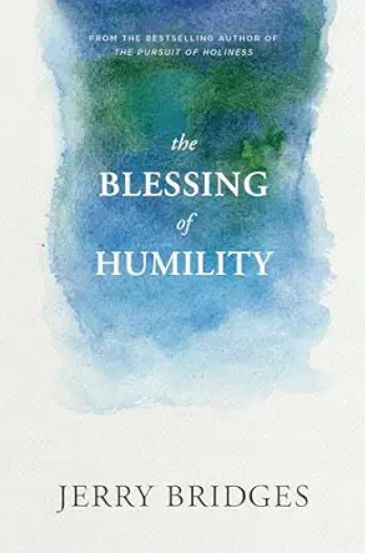
The Blessing of Humility by Jerry Bridges is a wonderful book. If we are to mortify our sin, pursue holiness, and join the Holy Spirit in the hard work of sanctification, there are many of our own sins we can pick from. It’s a blessing that Jesus does not reveal all of them at once to us. We would surely be undone, as Isaiah cried. But pride is the root of all of them, and its opposite, humility, is often overlooked as of nearly ultimate importance of a characteristic to seek.
In his book, Bridges goes through the Beatitudes and sees a pattern for action in cultivating humility. His easy writing style and clarity of each short chapter’s structure makes it easy to see both the theological foundation strongly tied to the Bible, and how to apply these truths to one’s life.
The book is an easy read mentally but do you really want to read it quickly? Sure, it’s a short book. But it is a tough read spiritually. Here is what Bridges said-
“This book can be read completely in about two hours or less. You may want to do that to get an overview of the book However, the real value of this book will come as you then read each chapter reflectively and prayerfully. Ask God to help you see yourself as you really are in the light of each of the character traits covered in the eight Beatitudes. And then ask God to help you grow in the areas where you see yourself to be most needy.“
Embarking on a study of humility and its application to my life, I first read Andrew Murray’s little book, “Humility: The Journey Toward Holiness.” It was good. He hammered the point home: humility is important. This set me up for a good absorption rate when I next turned to the always gentle and readable Jerry Bridges’ The Blessing of Humility.
I will be quoting a lot from Bridges in this essay!
“The character trait of humility is the second-most frequently taught trait in the New Testament, second only to love. At one time I counted fifty instances of love taught, either by precept or example, in the New Testament; I counted forty instances of humility. I regard these two traits as the foundational stones of Christian character. All other character traits, in one way or another, are built upon love and humility.“
I did not know how closely love and humility are, and this was a point made in Murray’s book as well. My curiosity piqued, I went on. Next I learned that humility is actually a command of God. Bridges said-
“This is a crucial point, because in our frenetic world of today, such softer character traits as humility, gentleness, and patience often get ignored or even regarded as unreal expectations in the hustle and bustle of life. But if we want to apply the Bible’s teaching to our daily lives, we cannot ignore the call to live our ordinary lives in a spirit of humility.”
OK, good. I appreciated at that point the Holy Spirit’s leading me to a study of this character trait, one I could do so much more in applying to my life, which necessitated mortifying those tendrils of pride that rear up at any or all times.
I’d said earlier that Bridges that as one goes through the Beatitudes he saw a pattern for applying humility to our lives. He said about those who mourn are blessed-
“This second character trait of the Beatitudes naturally follows the first. Those who are genuinely poor in spirit will mourn over their sin. As John Blanchard wrote, “To be ‘poor in spirit’ is to be convicted of one’s sin, whereas to ‘mourn’ is to be contrite for it.”
See what I mean about his writing and flow being so clear? So I am halfway through the book now. I’ve read the intro, the chapter on being ‘poor in spirit’, ‘those who mourn’ and now, the chapter on ‘meekness’.
This chapter on meekness really stuck with me.
It’s the pondering, praying, and mulling over how to apply the insights gained to my own sin that is the slow-down. And isn’t that the goal of any spiritual endeavor? To seek Christ-likeness? It’s not easy and it is not fast.
It’s the meek chapter that slowed me even more. I don’t know if any of this book will pierce you or which chapter if so, but for me, it was being meek.
“[W]e too often use the Scriptures not as a means of judging ourselves but as a means of judging others, especially those whose sins are more flagrant than ours. The meek person, in contrast, searches the Scriptures (or listens to it taught) not to judge others but to allow the Holy Spirit to judge him or her. In fact, the meek person earnestly desires the Spirit to use His Word to effect a deep change in his or her inner being.”
Our dear departed friend Voddie Baucham, Jr., always used to say, “If you can’t say amen, you ought to say ouch!” Meaning, if biblical truth is preached and you cannot agree with it (“amen”), it is likely because the message is convicting you of sin, or challenging your disobedience, causing spiritual pain (“ouch”).
Using the scriptures to judge one’s self takes courage and a hard look at the depravity of one’s own heart. This is necessary in order to mortify it. This book has a conviction rate of 99%!
You can see that meekness is truly humility in action. ~Jerry Bridges
Many people, especially men, avoid cultivating a trait of being meek, becuase they think it means being weak, or a spineless doormat, or timid. It doesn’t mean that. Moses was said to be the most humble person on the face of the earth. (Numbers 12:3). Yet he left the ease and comfort of the palace, stood up to Pharaoh, led millions, faced battles, and more.
“The word for meek that Jesus used is far different. Meekness is not being timid, spineless, unassertive, and easily dominated. It is not a natural niceness. In fact, it has nothing to do with one’s personality or temperament. It is the work of the Holy Spirit within. Yet it is a character trait that can and should be cultivated in our lives.“
As Christians, we all want the Holy Spirit to work in our lives. Transforming us from creatures wallowing in depravity to holy people adorning His temple means doing the hard work of unearthing the sins in us and killing them. We are so used to ourselves in our skin and sometimes so busy we forget to look up via the Bible at the purity, love, and humility of Jesus in heaven, and by comparison, our own sinfulness. Even Paul struggled with subduing his body-
For I do not understand what I am doing; for I am not practicing what I want to do, but I do the very thing I hate. (Romans 7:15).
If ypu would like a good book on the topic of humility, I recommend Jerry Bridges’ “The Blessing of Humility”.
The Free Grace Broadcaster is a monthly Journal from Chapel Library. They unearth the work of the ‘old, dead guys’ for essays and quotes on a different monthly topic. Issue 168 deals with “Pride and Humility.” It is also a great resource. It is here, and you can read online, download, or request a hard copy sent to you for free. Contents include the following essays:
Pride the Destroyer: Charles H. Spurgeon (1834-1892)
An Admonition to Humility: Charles Simeon (1759-1836)
Humble Faith: Edward Fisher (fl. 1627-1655)
A Word about Pride to All but Especially to Ministers of the Gospel: Richard Baxter (1615-1691)
Thoughts on Pride from the Book of Proverbs, Parts 1,2,3: Charles Bridges (1794-1869)
Pride and Its Cure: L. R. Shelton, Jr. (1923-2003).
Charles Spurgeon also preached on humility, in a sermon titled Humility: Micah’s Message for Today. Spurgeon concluded his sermon this way and I’ll close my essay with his words:
Oh, brethren, the Lord help us to walk humbly with God! This will keep us right. True humility is thinking rightly of thyself, not meanly. When you have found out what you really are, you will be humble, for you are nothing to boast of. To be humble will make you safe. To be humble will make you happy. To be humble will make music in your heart when you go to bed. To be humble here will make you wake up in the likeness of your Master by-and-by. The Lord bless this word, for Jesus’ sake! Amen.






 the-end-time.org